









BOB: Building a bridge between Bitcoin and Ethereum to enable smart contracts and cross-chain collaboration
TechFlow Selected TechFlow Selected
BOB: Building a bridge between Bitcoin and Ethereum to enable smart contracts and cross-chain collaboration
BOB (Build on Bitcoin) is a hybrid Layer 2 platform that combines the security of Bitcoin with the flexibility of Ethereum smart contracts.
 Navigating Web3 tides with focused insights
By: Tea House Attendant
1. Project Overview
BOB (Build on Bitcoin) is a hybrid Layer 2 platform that combines Bitcoin's security with the flexibility of Ethereum smart contracts. It supports ecosystems such as Ordinals, Lightning, and Nostr, aiming to enhance Bitcoin’s utility and expand its functionality.

In simple terms, BOB aims to spark a renaissance in Bitcoin development by supporting innovation on existing Bitcoin technology stacks including the Lightning Network, Ordinals, and Nostr. The project's vision is to enhance Bitcoin’s value accumulation over the long term through rollup technologies—particularly zero-knowledge rollups—and improve protocol-level economic sustainability. BOB will also support various cryptographic primitives, providing innovators with a space to build and experiment.
BOB’s core values include supporting experimentation and innovation, ensuring real-world impact, and offering freedom of choice. The project is still in early stages but has already released an early Alpha version. Future development will continue with research and experiments, including new trustless bridging methods between Bitcoin, Ethereum, and multi-chain ecosystems.
BOB’s first minimum viable product (MVP) already features a trustless BTC bridge and an integrated lightweight Bitcoin client. This enables cryptographic verification of the main chain, allowing the team to create trustless Bitcoin primitives such as ordinal and BRC-20 swaps.
2. Operational Mechanism
2.1 Merged Mining
Merged mining is a key mechanism in the BOB project, enabling Bitcoin miners to simultaneously support the BOB network without additional costs. This technique leverages existing Bitcoin mining resources while enhancing the security of the BOB chain.
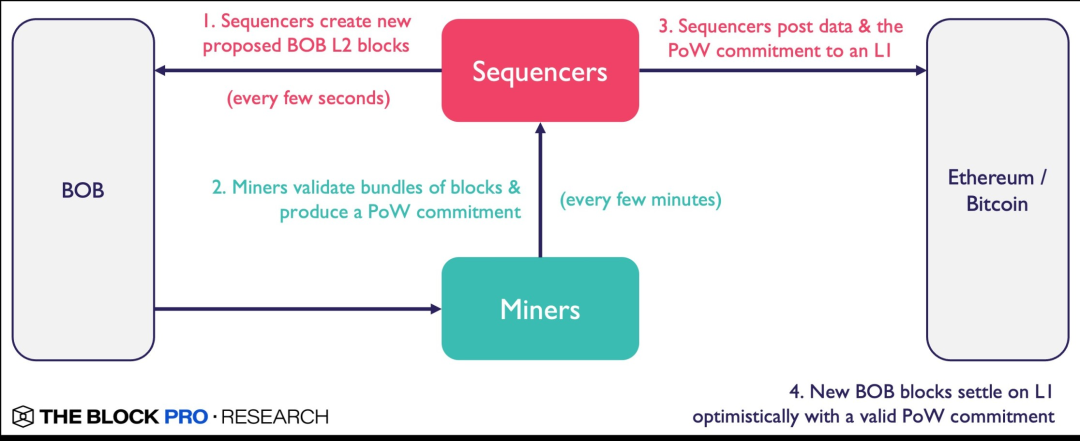
Below is a more detailed explanation of this technology:
2.1.1 Principles and Operation
Merged mining allows two different blockchains—in this case, Bitcoin and BOB—to share the same Proof-of-Work (PoW) algorithm. In practice, miners can mine blocks on the BOB chain while simultaneously mining Bitcoin. This is achieved by embedding information from BOB blocks into Bitcoin blocks, typically within an auxiliary data field.
2.1.2 Technical Details
In BOB’s merged mining protocol “Optimine,” miners generate a proof-of-work that satisfies the difficulty requirements of both networks. Miners must find a hash that meets Bitcoin’s network difficulty, which also either meets or exceeds BOB’s difficulty threshold. When a Bitcoin block is mined, it implicitly contains a valid BOB block, meaning the BOB block is considered confirmed at the same time.
2.1.3 Security
Through merged mining, BOB benefits from Bitcoin’s vast miner base and high level of security. Since BOB block validation occurs via Bitcoin’s PoW mechanism, any attempt to attack the BOB network would require simultaneously attacking Bitcoin—a task that is extremely challenging both economically and technically.
2.1.4 Efficiency and Incentives
This technique allows miners to use the same computational work to secure two networks without extra energy consumption. This improves energy efficiency and reduces the economic cost of participating in multiple networks.
Merged mining provides additional incentives for miners, who can earn BOB block rewards alongside their Bitcoin mining income. This encourages broader participation in securing the BOB network, further strengthening its overall security and decentralization.
2.2 EVM Compatibility
EVM (Ethereum Virtual Machine) compatibility is one of BOB’s core features, enabling it to run smart contracts and support complex decentralized applications (DApps). This significantly expands Bitcoin’s capabilities, transforming it from a platform primarily used for value storage and simple transactions into a richer and more diverse application environment.
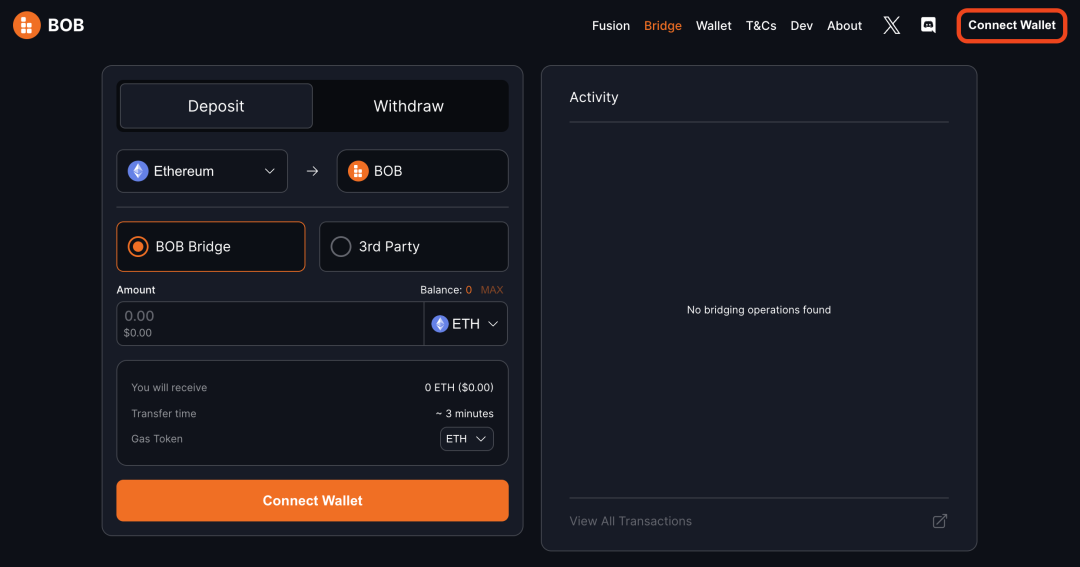
Below is a more detailed introduction to BOB’s EVM compatibility:
2.2.1 Basic Concept
The EVM is the runtime environment where all smart contracts execute on Ethereum. It is a fully isolated virtual machine, meaning code running inside the EVM operates independently of external influences. This compatibility allows BOB to leverage existing Ethereum tools and infrastructure, such as the Solidity smart contract language, development tools like Hardhat and Remix, and data visualization platforms like BlockScout and The Graph.
2.2.2 Technical Implementation
BOB achieves EVM compatibility by integrating the EVM into its L2 solution. As a result, DApps and smart contracts originally designed for Ethereum can theoretically run on BOB without modification. This enables BOB to tap into Ethereum’s mature ecosystem and large developer community while benefiting from Bitcoin’s security.
2.2.3 Smart Contract Development and Deployment
Developers can use standard Ethereum development tools to create, test, and deploy smart contracts onto the BOB network. These contracts can interact with users through standard Ethereum wallets such as MetaMask. Additionally, BOB supports Metatransactions and account abstraction to simplify user interactions, allowing users to pay transaction fees using BTC or other ERC-20 tokens.
2.2.4 Cross-Chain Functionality
EVM compatibility also enables interoperability between BOB and Ethereum or other EVM-based chains. For example, users can leverage existing Ethereum infrastructure and markets to trade assets created on BOB, or transfer assets from Ethereum to BOB.
2.2.5 Advantages and Challenges
BOB gains many advantages through EVM compatibility, including plug-and-play smart contract support, access to a wide range of developer tools and community resources, and a richer DApp ecosystem. However, challenges remain—especially regarding security and efficiency when ensuring seamless integration with Bitcoin’s main chain.
2.3 Cross-Chain Functionality
Cross-chain functionality is one of BOB’s core features, greatly enhancing interoperability between the Bitcoin and Ethereum ecosystems. By implementing cross-chain technology, BOB not only enables seamless transactions between Bitcoin and Ethereum but also connects to other EVM-based networks.

Below is a more detailed overview of BOB’s cross-chain capabilities:
2.3.1 Cross-Chain Bridges
BOB implements one or more cross-chain bridges that enable the transfer and interaction of assets between Bitcoin and other blockchain assets (e.g., ERC-20 tokens on Ethereum). These bridges use smart contracts to lock assets on one chain and mint equivalent tokens on another. For instance, users can lock Bitcoin on the BOB platform and receive an equal amount of wrapped Bitcoin (wBTC) on the Ethereum network.
2.3.2 Bidirectional Lightweight BTC Client Bridge
BOB emphasizes the development of its bidirectional lightweight BTC client bridge—an advanced cross-chain solution enabling direct interaction between Bitcoin and Ethereum ecosystems. This bridge uses lightweight client technology to validate Bitcoin transactions on EVM, allowing direct usage and management of Bitcoin without relying on centralized custodial services.
2.3.3 Metatransactions and Account Abstraction
BOB enhances its cross-chain functionality through metatransactions and account abstraction. Metatransactions allow users to conduct transactions without holding native network tokens (such as ETH) to pay gas fees. This means Bitcoin users can use BTC to cover transaction costs on Ethereum, increasing convenience and accessibility for cross-chain operations.
2.3.4 BTC Light Client and Smart Contract Interoperability
BOB employs BTC light client technology to allow smart contracts to access and process Bitcoin block and transaction data. This enables smart contracts on BOB to directly interact with Bitcoin, executing operations such as P2P swaps, ordinal auctions, or hashpower tokenization.
2.3.5 Rust and zk-SNARKs
BOB’s cross-chain functionality also benefits from its support for the Rust programming language and zero-knowledge proofs—specifically zk-SNARKs. This allows BOB to perform off-chain computations while verifying their correctness on-chain, providing secure and trustworthy validation mechanisms for complex cross-chain operations.
2.3.6 Security and Efficiency
When designing cross-chain functionality, BOB places strong emphasis on security and efficiency. Advanced cryptographic techniques and carefully designed protocols are used to minimize trust and risk in cross-chain transactions. Furthermore, BOB’s cross-chain bridges aim to reduce latency and transaction costs, enabling users to move assets quickly and economically.
3. Ecosystem
Fusion Points and Airdrops are key mechanisms within the BOB ecosystem designed to incentivize and reward user participation. These features not only encourage active community engagement but also increase platform liquidity and user base growth.
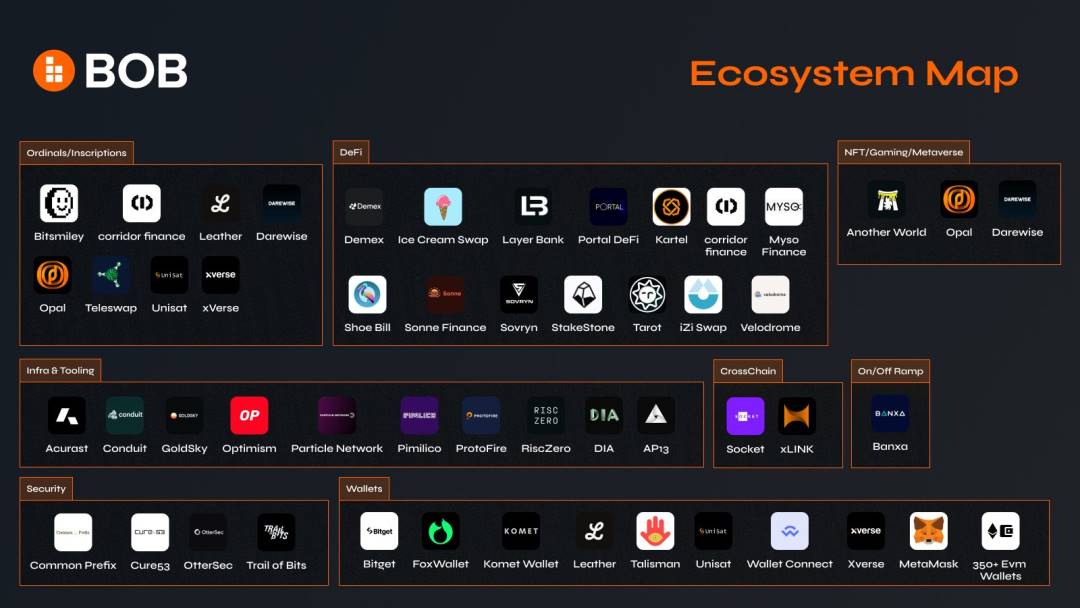
3.1 Fusion Points
Fusion Points are an incentive mechanism within the BOB network aimed at rewarding users for their contributions and participation. Users can earn Fusion Points in several ways:
-
Asset Bridging: Users earn points by bridging whitelisted assets (such as wBTC and tBTC) to the BOB platform. These actions often have high multipliers, allowing active participants to accumulate more points.
-
TVL (Total Value Locked) Contribution: Users who lock assets in whitelisted decentralized applications (DApps) can earn Fusion Points based on the amount and duration of their deposits.
-
Active DApp Interaction: Engaging with specific whitelisted DApps—such as voting, staking, or other interactive activities—also earns Fusion Points.
-
Referral Program: Users can earn Fusion Points by referring new users to the BOB platform—the more referrals, the higher the potential rewards.
3.2 Airdrop

Within the BOB project, airdrops are typically linked with Fusion Point activities in the following ways:
-
Fusion Point Conversion: Accumulated Fusion Points can eventually be converted into BOB project tokens, which can then be traded on exchanges or used for further operations and investments within the platform.
-
Community Event Rewards: Users who participate in specific community events or complete designated tasks may directly receive airdropped tokens as rewards.
-
Contribution Recognition: Users who make significant contributions to the BOB ecosystem—such as developers or active community members—may also receive airdrops to acknowledge their efforts.
4. Roadmap
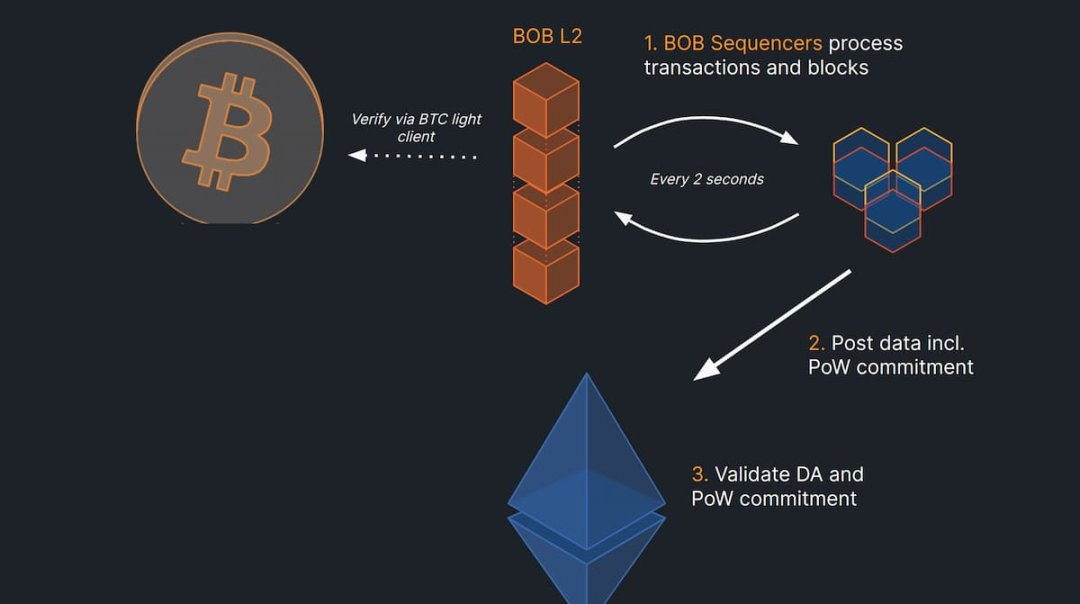
The BOB project roadmap outlines a multi-phase deployment plan, consisting of the following stages:
Phase 0: Public Testnet
This is the initial phase of the BOB project, focusing on deploying the testnet and validating basic functionalities. The goal is to ensure system stability and prepare for subsequent phases.
Phase 1: Bootstrapping BOB - Optimistic ETH Rollup
In this phase, BOB will implement an optimistic Ethereum Rollup solution. All transactions and state transitions will initially be verified and settled on Ethereum L1, though there is potential for future upgrades to more efficient systems.
Phase 2: Inheriting Bitcoin Security via New Merged Mining Protocol
This phase integrates Bitcoin’s PoW security into BOB through merged mining. This ensures the BOB network inherits Bitcoin’s high security standards while maintaining high transaction processing efficiency.
Phase 3: Upgrade from Optimistic Rollup to ZK Verification
ZK-Rollups offer higher efficiency and security compared to Optimistic Rollups. The goal of this phase is to verify transactions and state changes using zero-knowledge proofs, reducing reliance on validators and significantly improving throughput and speed.
Phase 4: BTC Staking Sequencer via BitVM, One-Time Signatures, and ZK Proofs
This phase introduces advanced features such as the Bitcoin Virtual Machine (BitVM), one-time signature schemes, and ZK proofs—all aimed at enhancing cross-chain interaction security and decentralization.
Phase 5: Multi-ZK-Rollup (Connecting Both ETH and BTC)
The final phase aims to create a multi-ZK-Rollup connecting both Bitcoin and Ethereum, greatly enhancing the flexibility and efficiency of cross-chain operations and establishing BOB as a truly multi-chain platform.

This roadmap reflects the ambition and complexity of the BOB project, aiming to address scalability and interoperability challenges by progressively introducing advanced blockchain technologies. Each stage requires overcoming significant technical hurdles, but if successful, it could substantially advance the entire blockchain industry—particularly in expanding Bitcoin’s functionality and integrating it with other blockchain systems.
5. Team / Funding Status

Dominik Harz is Co-Founder and CTO of Interlay and BOB. He holds a Ph.D. in Computer Science from Imperial College London and previously served as a research assistant at the institution.
Alexei Zamyatin is Co-Founder of Interlay and BOB, formerly a researcher at SBA Research. He is a Ph.D. candidate at the Centre for Cryptocurrency Research and Engineering at Imperial College London, focusing on blockchain security and interoperability.

Recently, BOB secured a $10 million seed round led by Castle Island Ventures. Other participants include Mechanism Ventures, Bankless Ventures, CMS Ventures, UTXO Management, and angel investors such as Dan Held and Domo, creator of the BRC-20 token standard.
This funding supports BOB’s mission to enhance Bitcoin infrastructure by enabling off-chain computation and on-chain verification (similar to Ethereum’s optimistic rollups), promoting scalable smart contract applications on Bitcoin without compromising performance.
6. Project Evaluation
6.1 Sector Analysis
The BOB project positions itself in the Bitcoin Layer 2 solutions and DeFi (decentralized finance) space, particularly in advancing interoperability between Bitcoin and the Ethereum ecosystem. By combining Bitcoin’s security with Ethereum’s smart contract functionality, BOB aims to expand Bitcoin’s capabilities to support complex financial applications—something not feasible on the native Bitcoin network. Below is an analysis of BOB’s sector positioning and similar projects:
6.1.1 BOB’s Market Segment
-
Bitcoin Layer 2 Solutions: Through technologies such as merged mining and smart contracts, BOB offers faster transaction speeds and lower fees than the native Bitcoin network while preserving core security properties.
-
Cross-Chain Technology: By achieving EVM compatibility and building cross-chain bridges, BOB enables interoperability between Bitcoin and other blockchain assets—especially Ethereum and its tokens—greatly expanding Bitcoin’s potential in DeFi and related fields.
-
Smart Contract Platform: By supporting EVM, BOB enables developers to deploy and execute smart contracts on Bitcoin—a feature traditionally associated with Ethereum—now made possible within the Bitcoin ecosystem via platforms like BOB.
6.1.2 Similar Projects
-
RSK (Rootstock): RSK was the first project to bring Ethereum-style smart contract functionality to Bitcoin. It is a Bitcoin sidechain enabling direct support for smart contracts and more complex transaction types on the Bitcoin network.
-
Lightning Network: Primarily used for payments and micropayments, the Lightning Network is another Bitcoin Layer 2 scaling solution that enables fast, low-cost transactions through payment channel networks.
-
Liquid Network: Developed by Blockstream, Liquid is a Bitcoin sidechain focused on accelerating Bitcoin transactions and issuing other digital assets.
-
Stacks: Formerly Blockstack, Stacks brings smart contracts and decentralized applications to the Bitcoin network using its unique Clarity smart contract language and Proof of Transfer (PoX) consensus mechanism.
6.2 Project Advantages
1. Security
BOB leverages Bitcoin’s Proof-of-Work (PoW) security model through merged mining, providing a security level equivalent to Bitcoin itself. Any attack on BOB would require attacking Bitcoin simultaneously—an almost impossible feat given that Bitcoin hosts the largest and most secure PoW network today.
2. DeFi and Smart Contract Applications
BOB supports not only basic Bitcoin transactions but also enables complex financial tools and services—such as lending platforms, automated market makers (AMMs), and stablecoins—through smart contracts. This broadens Bitcoin’s application scope, making it a more comprehensive financial platform.
3. Innovative Funding and Community Incentive Mechanisms
BOB encourages community participation and network growth through Fusion Points and airdrops. These incentives not only boost user engagement but also help maintain and grow the BOB ecosystem.
4. Open and Scalable Architecture
BOB’s architecture is designed to support future upgrades and expansions, including support for new cryptographic primitives and technologies such as zero-knowledge proofs and off-chain computation solutions. This ensures BOB can adapt to evolving market demands and technological advancements.
6.3 Project Limitations
1. Complexity and User Adoption Barriers
Despite simplifying user experience through familiar interfaces like MetaMask, the underlying technology—especially involving smart contracts and cross-chain interactions—remains complex. This complexity may pose challenges for new users, potentially limiting adoption among non-technical audiences.
2. Dependence on External Factors
BOB’s success heavily depends on its compatibility and interoperability with Ethereum and other blockchain technologies. Any major changes or incompatible updates on these external platforms could negatively impact BOB.
3. Difficulty in Execution and Technical Implementation
Implementing the technical features and ecosystem described by BOB requires high-level technical expertise and rigorous project management. Any errors or delays during implementation could affect the project’s overall success and market acceptance.
7. Conclusion
In summary, the BOB project stands out as an innovative Bitcoin Layer 2 solution that significantly expands Bitcoin’s application scope by integrating Bitcoin’s security with Ethereum’s smart contract capabilities. It enables cross-chain functionality and DeFi applications, and fosters community engagement through mechanisms like Fusion Points and airdrops, striving to build an active and supportive ecosystem.
Despite facing numerous challenges—including technical complexity, security risks, and intense market competition—BOB’s innovative vision and functional expansion offer fresh perspectives and possibilities for Bitcoin’s future. As blockchain technology continues to evolve and markets mature, BOB has the potential to play a pivotal role in advancing Bitcoin and the broader cryptocurrency ecosystem into a new era.
Join TechFlow official community to stay tuned
Telegram:https://t.me/TechFlowDaily
X (Twitter):https://x.com/TechFlowPost
X (Twitter) EN:https://x.com/BlockFlow_News








