Stacking DAO V2 provides solutions to the new challenges brought by Nakamoto's upgrade.
TechFlow Selected TechFlow Selected
Stacking DAO V2 provides solutions to the new challenges brought by Nakamoto's upgrade.
The Nakamoto upgrade marks a transformative era for the Stacks ecosystem.
 Navigating Web3 tides with focused insights
Preface
The highly anticipated Nakamoto upgrade will transform the Stacks ecosystem.
The Nakamoto upgrade for Stacks will accelerate block times and ensure 100% Bitcoin finality. These enhancements will boost Stacks’ capabilities, effectively creating an environment where applications can be built directly on Bitcoin.
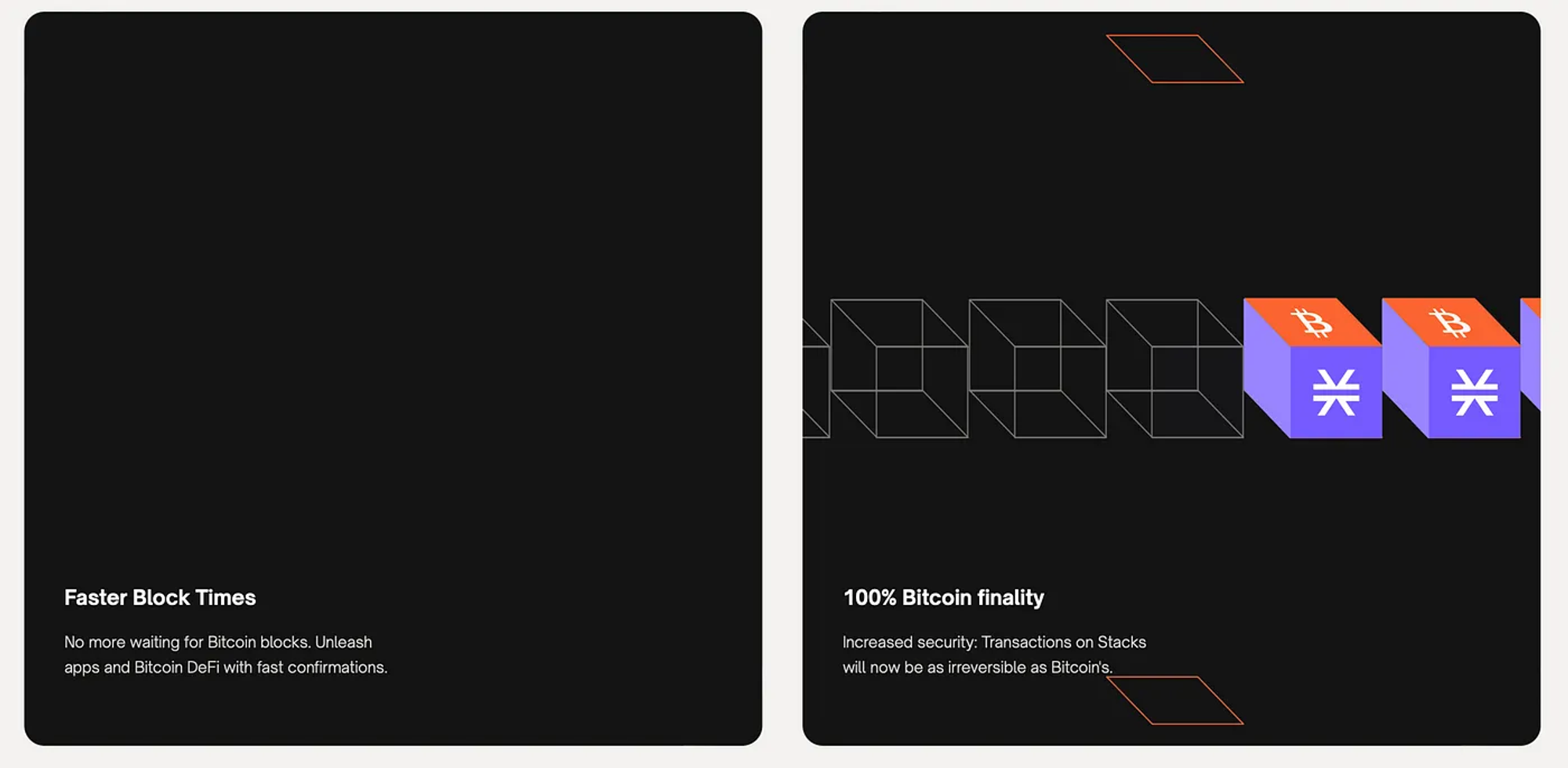
Source: nakamoto.run
After the Nakamoto update, network fees will become more predictable, improving transparency and stability across the network. Furthermore, this upgrade will reduce network costs, enabling developers building Bitcoin-centric applications to innovate aggressively.
However, this upgrade also introduces new challenges—particularly around Stacking.
What is Stacking? Stacking refers to locking STX tokens on the Stacks network to participate in the Proof-of-Transfer (PoX) consensus mechanism. It is similar to PoS staking on Ethereum, except that Stacking rewards are paid in Bitcoin (BTC)—the asset used in the PoX consensus—rather than in the native token (STX).
Beyond changes to Stacking itself, node-running Stacker operators will take on critical responsibilities to maintain network decentralization. Stacking DAO V2 aims to address these emerging challenges.
New Challenges for Signers After the Nakamoto Upgrade
One of the key changes introduced by the Nakamoto upgrade is that Stackers must run a node and effectively become active network signers. The core responsibility of signers is to validate and approve Stacks blocks generated by miners, contributing to the network’s consistency, security, and decentralization.
This added complexity presents a new challenge, as Stacker operators must not only understand how to operate a node but also ensure its continuous operation to consistently validate blocks.
Given that signers play a vital role in promoting the health and security of a decentralized network, successfully onboarding reliable nodes will be crucial to Stacks’ future success.
Stacking DAO V2
While the Nakamoto upgrade brings many benefits and improvements, ensuring a robust network of signers remains a critical task.
Stacking DAO V2 will make it easier for users to authorize their STX to node operators, simplifying the process of enabling new Stacks signers. This will incentivize the creation of new nodes and encourage participation in the Stacking DAO signer network.
Stacking DAO's mission is to support ongoing development within the Stacks ecosystem, and V2 will further enhance the growth and resilience of the Stacks network.
How Does Authorization Work, and What Are the Benefits?
Stacking DAO V2 introduces a delegation model that distributes users' STX proportionally to signers based on their performance.
This delegation system serves two key purposes:
-
Network Health: By distributing STX across multiple signers, Stacking DAO V2 promotes greater decentralization and network resilience.
-
Potential for Higher Returns: By strategically allocating STX to high-performing signers, users can earn higher yields from their STX holdings.
Stacking DAO Signer Network
The Stacking DAO Signer Program enhances the resilience and decentralization of the Stacks network. The current Stacking DAO Signer Network includes enterprise-grade Stacking providers such as Luganodes, Restake, and ALUM LABS.
Source: nakamoto.run
Recently, DeSpread officially announced its plan to join the Stacking DAO V2 signer network following the Nakamoto upgrade. By joining the Stacking DAO signer network, DeSpread will collaborate with other validators to contribute to the decentralization and stability of the Stacks chain while delivering maximum Stacking returns for Stacking DAO users.
These companies are leaders in the Web3 space, boasting 99% uptime and managing billions of dollars in assets, and have formed partnerships with major players such as Ledger, Metamask, Lido, and the Web Foundation. Collaborating with these node operators reflects a strong commitment to the growth of the Stacks network, bringing enhanced reliability to both the Stacking DAO community and the broader Stacks ecosystem.
Conclusion
The Nakamoto upgrade marks a transformative era for the Stacks ecosystem, set to elevate its performance, security, and efficiency to new heights. As the upgrade approaches, Stacking DAO V2 will guide users into the signer network, promoting decentralization by allowing STX holders to delegate their tokens to signers—helping Stacks grow stronger and more resilient.
Join TechFlow official community to stay tuned
Telegram:https://t.me/TechFlowDaily
X (Twitter):https://x.com/TechFlowPost
X (Twitter) EN:https://x.com/BlockFlow_News
 @StackingDao