








Farcaster: Reshaping connections, controlling privacy, experiencing true decentralized social freedom
TechFlow Selected TechFlow Selected
Farcaster: Reshaping connections, controlling privacy, experiencing true decentralized social freedom
Farcaster is a decentralized social media protocol built on blockchain technology, focusing on interoperability, user autonomy, and privacy protection.
 Navigating Web3 tides with focused insights
Author: Tea House Assistant
1. Project Overview
Farcaster is a blockchain-based decentralized social media protocol focused on interoperability, user autonomy, and privacy protection.
Unlike traditional social networks, Farcaster does not rely on centralized servers. Instead, it operates on an extended network built atop the Optimism blockchain infrastructure, enabling developers to leverage pre-developed smart contract functionalities to build diverse decentralized social applications while ensuring transparency, security, and decentralization.
Farcaster aims to create a censorship-resistant environment where users have full control over their data and audience. Through a sufficiently decentralized architecture, Farcaster allows users to manage their social graph and interact across different applications using a single identity. The platform functions like a unified ecosystem—users can connect social apps similar to Instagram or Facebook through a decentralized ID. This means that even if one application imposes restrictions, users retain ownership of their identity and can seamlessly migrate their connections to other apps on the network. Moreover, Farcaster is open-source and permissionless—anyone can build applications by integrating via APIs or other tools.
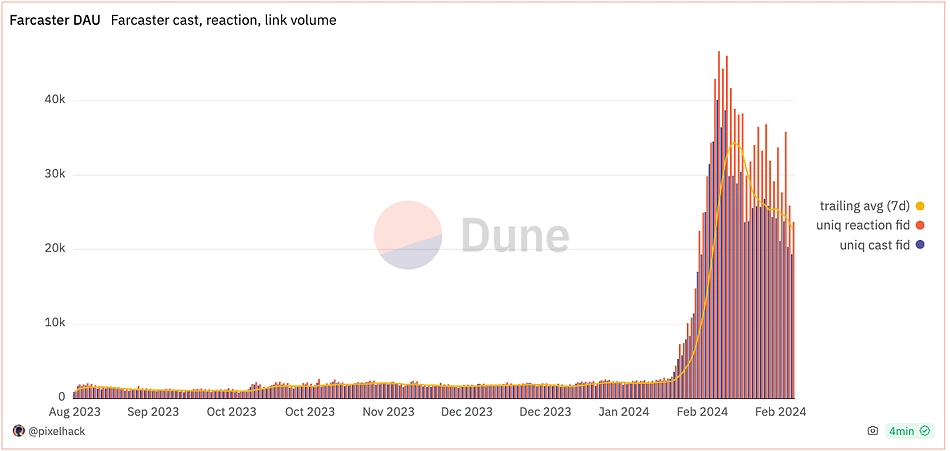
Since its launch, according to Dune Analytics, Farcaster has attracted over 200,000 users, including notable figures such as Vitalik Buterin and Base network founder Jesse Pollack. The project’s total revenue has surpassed $1.2 million, currently reaching $1,229,371.
2. How It Works
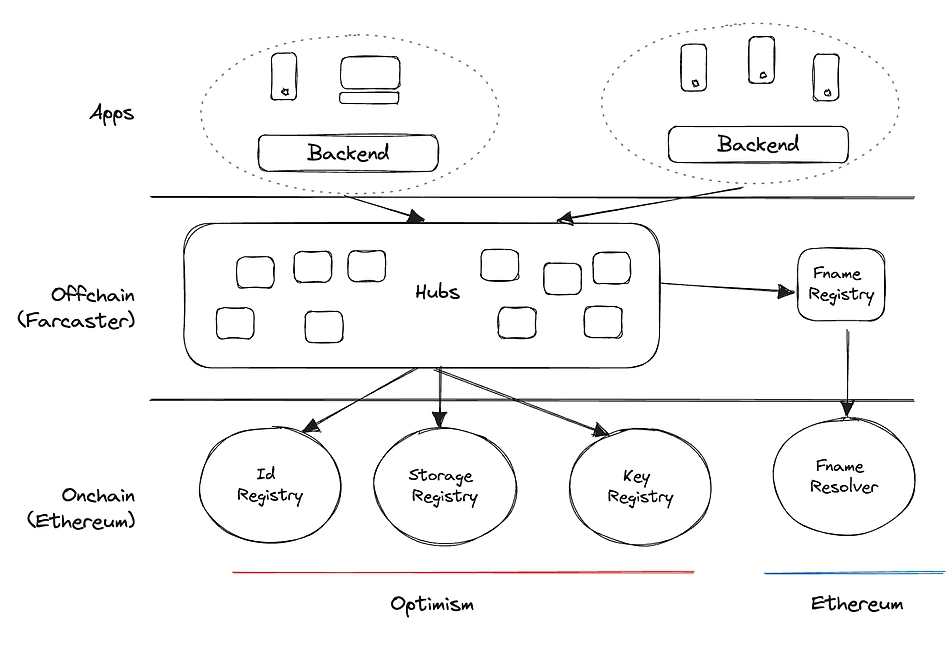
Farcaster employs a hybrid architecture combining on-chain and off-chain systems to deliver a consistent and efficient environment. Below is a detailed breakdown of its components:
1. Registry Contracts
Farcaster deploys non-upgradable contracts with limited lifespans on Ethereum's Layer 2 OP Mainnet. These contracts serve three primary functions:
-
ID Registration: Generates key pairs linked to Ethereum addresses for newly created Farcaster accounts.
-
Storage Registration: Allocates and tracks storage units assigned to each account, charging annual fees.
-
Key Registration: Allows users to authorize or revoke account ownership, enabling them to write and sign messages on their behalf.
2. Hubs
Hubs are servers running on standard hardware that provide low-level, high-performance data flow within the network. They are responsible for hashing messages and verifying their signatures against those recorded in the registry contracts.
-
Once verified, all messages are stored in databases and replicated across other Hubs in the network to ensure data consistency.
-
This off-chain server implementation enables fast and reliable data access, supporting real-time application development.
3. Usernames
Farcaster usernames function similarly to handles on typical social media platforms, serving to identify or mention accounts. Farcaster supports two types of ENS names that users can link to their accounts:
-
Fnames: Off-chain ENS names issued free of charge by Farcaster.
-
eth names: On-chain domain names controlled by users, compatible with Ethereum-based applications.
These mechanisms allow users to customize their accounts, delivering personalized experiences and facilitating connections with others. By combining on-chain and off-chain operations, Farcaster offers developers and users a flexible, efficient, and secure decentralized social media platform.
3. Core Mechanisms
3.1 Frames
Farcaster’s "Frames" feature represents a pivotal innovation, allowing users to embed and run mini-applications directly within their social media posts. These Frames significantly enhance user experience, setting Farcaster apart from other social platforms.

Below is a detailed overview of Frames:
3.1.1 Concept of Frames
Frames are small applications or plugins that run within Farcaster posts. They enable users to access various features and services directly during social interactions without leaving the Farcaster platform. These applications may include games, NFT minting tools, newsletter subscriptions, and more.
3.1.2 Functionality and Use Cases
With Frames, users can perform multiple actions directly inside social posts:
-
NFT Interactions: Users can mint, display, or trade NFTs.
-
Gaming: Play embedded mini-games within posts.
-
Content Subscriptions: Followers can subscribe to newsletters or other media content.
-
Shopping: Purchase goods or services directly from posts.
-
Social Features: Enhanced engagement options such as polls and surveys.
3.1.3 Technical Implementation
Frames are designed and implemented on the Farcaster protocol, leveraging smart contracts and blockchain technology to ensure security and reliability. Each Frame runs as an independent app but integrates tightly with Farcaster’s main network, ensuring seamless user experience and data consistency.
3.1.4 User Experience
Frames improve the user experience on social platforms by offering a more interactive and engaging way to consume content. Users don’t need to leave Farcaster to visit external websites or apps to access content or complete transactions, reducing bounce rates and increasing platform stickiness.
3.1.5 Development and Deployment
Developers can create custom Frames for Farcaster, expanding the platform’s functionality and diversity. These Frames can be developed and deployed using Farcaster’s developer tools and APIs, enabling contributors to enrich the community ecosystem with new features and services.
The introduction of Frames reflects Farcaster’s effort to redefine social media interaction—by embedding rich-functionality apps directly into posts, it delivers unprecedented convenience and interactivity.
3.2 Warpcast
Warpcast is the flagship application built on the Farcaster decentralized social protocol and was the first-ever Farcaster client. It is tightly integrated with the Farcaster protocol and data. All Warpcast accounts possess a Farcaster ID, and all generated content is stored within Farcaster Hubs. Designed similarly to Twitter, Warpcast leverages blockchain technology to offer unique features and advantages.

Here’s a closer look at Warpcast:
3.2.1 Platform Overview
As an interactive social media platform, Warpcast allows users to post and share short messages (called "casts") and engage with a global audience. These messages can include text, images, or other media. User activities on the platform are recorded and verified using blockchain technology, ensuring transparency and reliability.
3.2.2 Decentralization and User Autonomy
Warpcast emphasizes a decentralized social networking experience. Unlike traditional platforms, it does not store user data on centralized servers. Instead, it uses blockchain technology to secure data and empower users with full control. No central authority can access or exploit personal information.
3.2.3 Features and Interactions
-
Casts: Users can post brief messages up to 320 characters long.
-
Reactions: Users can like, repost, or comment on casts.
-
Direct Casts: Function like direct messages, enabling private conversations.
-
Warps: A form of in-app currency used to launch new channels or link accounts across clients.
3.2.4 Frames Integration
Warpcast supports Frames, enabling mini-apps such as games, NFT minting tools, or subscription services to be embedded directly into posts. This allows users to perform advanced functions without leaving the Warpcast interface.
3.2.5 Security and Privacy
By leveraging blockchain technology, Warpcast provides a secure environment where identities and transactions are encrypted and anonymized. This protects user privacy and prevents unauthorized third-party access to data.
3.2.6 Community and Extensibility
Warpcast is more than just a social media app—it’s an open community that empowers developers and creators to expand its functionality through Frames and other integrations. This openness and extensibility allow Warpcast to adapt to diverse needs and innovations, fostering continued growth and development.

3.2.7 Warps Points
Within Warpcast, "Warps" is an internal points system designed to reward and incentivize user participation. This mechanism enhances community engagement and activity by offering tangible rewards for contributions.
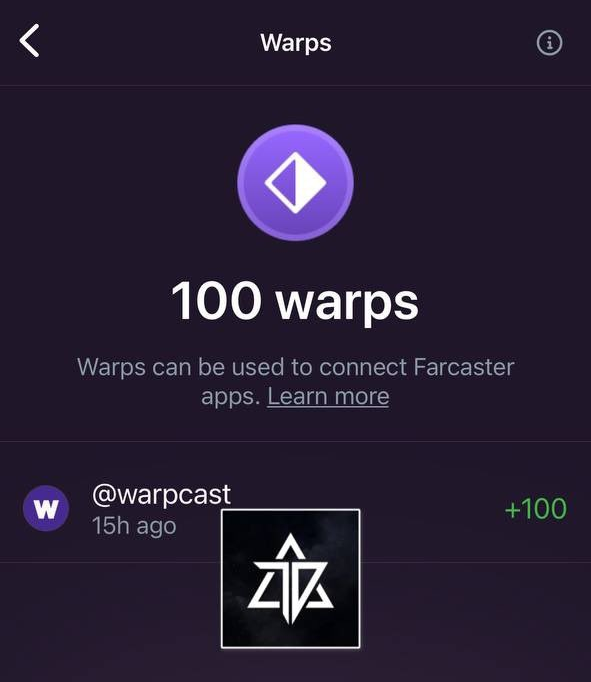
Users can earn Warps points through several methods:
-
Active Participation: Engaging with the app—posting content, reacting, etc.—earns points, encouraging frequent use and valuable content sharing.
-
Task Completion: Warpcast may introduce specific tasks or challenges; completing these earns points.
-
Community Contributions: Content creators or technical supporters recognized by the community may receive direct point rewards.
Warps points serve both as a reward mechanism and a practical resource for accessing platform features:
-
Fee Payments: Users can pay fees (e.g., for NFT minting) using points.
-
Channel Creation: Points can be used to launch new social channels around specific topics or interests.
-
Gifting: Users can send points to others as recognition for quality content or engagement.
Notably, while Farcaster and Warpcast advocate decentralization, the Warps points system is centrally managed by the Warpcast team. This means issuance, distribution, and rules are controlled by platform administrators. Unlike typical cryptocurrencies or tokens, Warps points are not issued on-chain and lack the decentralized and transparent characteristics of blockchain-based tokens.
3.3 NFT
As of current information, Farcaster itself has not directly launched or detailed any native NFTs (non-fungible tokens). However, given that Farcaster is a decentralized social media platform, it supports NFT creation and interaction through integrated applications such as Warpcast.
Potential NFT Interactions on Farcaster:
1. NFT Minting:
Users can mint NFTs directly within the Farcaster ecosystem, particularly through apps like Warpcast. This is enabled via integrated "Frames," allowing users to embed NFT minting tools directly into social posts.
2. Display and Trading:
Given Farcaster’s emphasis on decentralization and user control, the platform may allow users to showcase their NFT collections on profiles or in posts. Additionally, direct in-platform NFT sales or trades could be possible, though this would require additional integration and security measures.
3. Social Media Integration:
Using NFTs in social activities can boost engagement and add value to content. For example, users might unlock exclusive content after achieving certain engagement metrics (likes, comments).
4. Empowering Creator Economy:
The tools and platform provided by Farcaster enable creators and artists to sell unique digital artworks directly to fans and collectors via NFTs, helping establish a more direct revenue stream.
4. Ecosystem
Farcaster hosts a growing ecosystem of applications built by independent developers. Many of these apps are already advanced and have secured significant funding.
Here are some notable examples:

-
Icebreaker: A privacy-preserving professional networking app built on Farcaster.
-
Seemore: A platform enabling creators to build personal pages and portfolios.
-
Paragraph: A Web3-native publishing platform helping writers build communities around newsletters.
-
Bountycaster: Enables Farcaster users to post bounties for tasks, which others can accept and complete for payment.
-
Unlonely: A crypto-native live streaming platform featuring gamified elements like live betting and personal channels.
-
Supercast: A client similar to Warpcast but offering a distinct UX and enhanced features.
-
Launchcaster: A product launch platform for the Farcaster community, akin to Product Hunt.
5. Team / Funding
Farcaster was initiated by a group of blockchain experts and developers passionate about redefining social media. Its journey from concept to execution reflects growing interest in decentralized digital communities, sparked by Elon Musk’s 2022 acquisition of Twitter. The project is led by Dan Romero and Varun Srinivasan, two early employees of Coinbase.

Farcaster has successfully raised substantial funding, totaling $300 million. According to available records, the most recent seed round occurred on July 13, 2022, led by Andreessen Horowitz (a16z), with participation from Coinbase Ventures, Multicoin Capital, Balaji Srinivasan, and 19 other investors.
6. Project Evaluation
6.1 Sector Analysis
Farcaster operates in the decentralized social media sector, aiming to address issues related to privacy, data ownership, and censorship resistance prevalent in traditional platforms. Decentralized social projects typically emphasize user control over data and freedom from centralized governance.
Comparable decentralized social media projects include:
1. Steemit:
-
Features: A blockchain-based social and blogging platform where users earn STEEM cryptocurrency for content creation, promoting quality content and community engagement.
-
Technology: Built on the Steem blockchain.
2. Minds:
-
Features: An open-source social network prioritizing privacy and transparency. Users earn tokens for posting, voting, and commenting.
-
Technology: Uses Ethereum blockchain for token transactions.
3. Mastodon:
-
Features: While not blockchain-based, Mastodon is an open-source decentralized social network allowing users to host their own servers and create independent social spaces.
-
Technology: Decentralized server network, no blockchain integration.
6.2 Project Advantages
1. User Flexibility
Farcaster integrates multiple namespaces, including decentralized identity systems like ENS, allowing users to adopt multiple usernames. This design simplifies onboarding, delivers a smooth and user-friendly experience, and provides developers with a broader, more diverse user base—enhancing engagement and interaction.
2. Global State and Data Consistency
By storing user data on a robust network of servers called "Hubs," Farcaster ensures data consistency and reliability. Even if individual servers fail, data remains accessible, supporting smooth development and optimized user experience. This unique approach enhances network resilience, streamlines information flow, and fosters a reliable, uninterrupted, and innovative user experience in a decentralized setting.
3. Data Storage Rental Model
Farcaster adopts a data storage rental model to address scalability challenges and optimize network performance. By charging for storage space, the platform minimizes spam, encourages efficient data management, and improves network efficiency. This strategic approach ensures smooth operations, strengthens overall network health, and enhances user experience.
6.3 Project Limitations
1. User Adoption Rate
Despite the many advantages offered by decentralized platforms like Farcaster—such as data control and privacy protection—they often face lower adoption rates. Most users’ social networks are deeply entrenched in mainstream platforms, and migrating to a new platform risks losing connections and content. Therefore, attracting and retaining active users remains an ongoing challenge.
2. Complexity and Usability
While Farcaster strives for a seamless user experience, decentralized applications (DApps) generally suffer from less intuitive interfaces and interactions compared to centralized counterparts. Additionally, the complexity of interacting with crypto wallets and blockchain systems may hinder adoption among non-technical users.
3. Performance and Scalability
Although Farcaster leverages Ethereum’s Layer 2 solutions to optimize transaction speed and cost, overall network performance and scalability remain constrained by the limitations of underlying blockchain technology. Maintaining high performance and low costs amid rapid user growth continues to pose technical challenges.
4. Regulatory and Legal Risks
Decentralized platforms face uncertain legal and regulatory environments across jurisdictions. Regulations concerning data management, user behavior, and cryptocurrency transactions may impact Farcaster’s operations and user engagement.
5. Economic Incentives and Sustainability
While economic incentives (e.g., token rewards) can boost user activity, designing and maintaining a fair and sustainable incentive system is highly complex. Poorly structured incentives may lead to malicious behaviors such as spamming or manipulation of user interactions.
7. Conclusion
In summary, Farcaster stands as an innovative decentralized social media platform, offering a novel mode of online interaction through its unique technical architecture and user-centric design. The platform emphasizes user control over data and privacy, while its open-source, community-driven development model encourages broad participation from global developers and content creators. As blockchain technology advances and societal concerns over data privacy grow, Farcaster’s decentralized nature may become a key factor in attracting more users.
Join TechFlow official community to stay tuned
Telegram:https://t.me/TechFlowDaily
X (Twitter):https://x.com/TechFlowPost
X (Twitter) EN:https://x.com/BlockFlow_News






