Is the points system still effective as coupon hunting gets increasingly competitive?
TechFlow Selected TechFlow Selected
Is the points system still effective as coupon hunting gets increasingly competitive?
Market conditions appear to be more significant than the points program itself.
 Navigating Web3 tides with focused insights
Author: Three sigma
Translated by: TechFlow
This article offers a glimpse into our ongoing research on points programs. We examined several protocols on the Solana network, comparing their features to identify successful strategies and areas for improvement.
"Points provide a quantifiable answer to how much users have contributed to a project"—while this statement has almost become a meme, its essence remains true. In contrast to previous systems where users participated in protocols expecting future rewards through airdrops, points systems differentiate themselves by offering a more concrete concept. While the exact value of points may be unclear, users can monitor the evolution of their share based on their interactions.
As Arthur Hayes argued in his latest piece, the primary challenge facing new web3 projects lies in attracting users, which requires targeted efforts in marketing and business development—especially if the project lacks substantial venture capital backing. Implementing a points program can serve as an effective marketing strategy, particularly because it allows flexible adjustment of the points-to-token ratio and incentivizes desired user interactions without being constrained by a fixed token issuance schedule. This approach also appeals to retail users cautious about VC unlock timelines, offering them earlier investment opportunities and potentially better pricing. However, the success of a points program hinges on trust between users and project founders. While it offers advantages in user engagement and fundraising, abuse of that trust could undermine its effectiveness in the long term.
Let’s explore the Solana ecosystem through the lens of five protocols that have not yet launched their tokens: Zeta, Marginfi, Kamino, Drift, and Parcl (note: Parcl has since launched its token at the time of writing). As different types of protocols, each aims to incentivize various user behaviors. The question is: how exactly do they achieve this?
Transparency
First, it's evident that these protocols differ significantly in terms of transparency surrounding their points programs—particularly regarding the methodology used for calculation.
Zeta demonstrates a commitment to transparency by providing detailed documentation outlining how each action contributes to a user’s Z-Score. Their first quarter plan began around Solana Breakpoint 2023 and, as of December 31, 2023, focused on rewarding providers. However, the second quarter, starting January 10 this year, introduced Z-Score rewards for providers—building on feedback received during Q1—even acknowledging cases where users incurred slippage on the Zeta market due to pressure from market orders in order to accumulate points. Additionally, due to the protocol’s rapid growth, liquidity constraints emerged, prompting a decision to incentivize idle market maker liquidity. Notably, this transparent approach facilitated integration of user feedback, driving the evolution of the program.
However, at this stage, the method for converting Z-Scores into points remains unclear. What we do know is that 10% of the total token supply will be allocated to holders who demonstrate long-term commitment to the protocol, with a significant portion reserved specifically for active traders on the Zeta platform. Individual trader allocations will be determined by two key factors: their Z-Score and their demonstrated consistency with the protocol over time. The impact of Z-Score on token distribution might follow a direct method—proportional to the Z-Score value—or adopt a tiered system based on specific Z-Score thresholds, or possibly a hybrid of both approaches. While this aspect introduces some ambiguity into the points system, the team’s emphasis on broad communication and transparency reflects a consistent effort to manage expectations effectively.
Marginfi also provides clear guidelines on how to earn points. However, details such as the duration of the program, the conversion rate from points to tokens, and the percentage of airdropped tokens allocated to points holders remain undisclosed. The Marginfi team defends this approach, arguing that disclosing precise airdrop criteria and announcing snapshots in advance would be detrimental. They believe such transparency could attract opportunistic capital, potentially undermining the efforts of genuine early supporters contributing meaningfully to the project. Marginfi openly acknowledges that certain aspects of their points program are intentionally obscured to protect organic users.
Kamino offers a comprehensive explanation of how users can acquire points and even allows real-time observation of point balance increases within the dApp, enhancing the user experience. These Kamino Points will be distributed alongside multiple rounds of KMNO token airdrops. The initial Genesis Drop is tentatively scheduled for the end of Q1 or beginning of Q2 2024, although the protocol does not explicitly guarantee this timeline—it aligns with the team’s stated goals. Following the Kamino Genesis event, 50 million KMNO tokens will be distributed on a tiered basis to OGs (pre-points era), contributing 0.5% of the total supply toward the 7.5% allocated for the overall Genesis community.
Parcl operates its points program seasonally, with Season 1 launching on December 15, 2023. The program encourages traders and liquidity providers, slightly adjusting rates between Season 1 and Season 2, which began on January 26. Season 3 started on March 2 and was intended to be the final season before TGE. However, on March 19, Parcl introduced a new addition to its points program: perpetual points. This permanent incentive system aims to sustainably attract and align liquidity providers, traders, and core community members. Perpetual points will take effect after Season 3 concludes, including periodic distributions of network incentives.
Drift recently launched its points program, with the first points distributed on February 2, reflecting activity from January 22–31. The program includes weekly point allocations based on users’ interactions with the protocol in the prior week. However, there is a lack of clarity regarding the methodology used to calculate points. Two million points were distributed in the first week, proportionally allocated among users. Future distributions will prioritize trading activity while also rewarding other forms of participation. Drift has stated that the exact calculation method will only be revealed at the end of the program to prevent system manipulation and ensure fairness. The program is set to run for a maximum of three months.
Rewarded Actions
Different protocols reward different actions through their points incentives. Take Zeta, for example: it rewards not only trading volume but also PnL. The Z-Score derived from trading volume is calculated linearly, while PnL is rewarded proportionally, with a multiplier depending on the trader’s daily ranking. Although not yet operational, documentation indicates that ongoing activities will also be recognized, factoring in daily, weekly consecutive, or other defined periods of participation.
Within Marginfi, users can accumulate points through borrowing, lending, or referring new users. Point accumulation is calculated daily, meaning increased lending activity leads to higher point earnings. Additionally, longer lending durations correlate with higher point accrual. To emphasize the importance of borrowing as a key driver of success for a lending protocol, Marginfi allocates four times more points for borrowing than for lending activities.
Kamino’s points system applies different ratios and boosts across various asset types and strategies, including collateral assets, debt assets, collateral-debt combinations, liquidity vaults, and automated strategies like multi-position and leveraged bets (Multiply). Activities such as lending, borrowing, or providing liquidity in vaults typically earn users 1 point per dollar per day, while specific actions like lending certain assets yield additional points. Furthermore, all positions held between Kamino’s launch in August 2022 and the release of Kamino Lend beta on October 20, 2023, receive double daily points as recognition for early users (pre-points era).
During Parcl’s first quarter, traders earned one point per dollar of open interest per day, while liquidity providers earned three points per dollar deposited into pools. In Q2, the points ratio was adjusted to four points per dollar per day for LPs and two points per dollar per day for open interest. Q2 also introduced consistency snapshots, unlocking points boosts for the most loyal Parcl traders, LPs, and eligible HOA holders (Highest Overall Activity!). Q3 promised greater recognition for consistent and loyal behavior. Parcl increased daily LP points to five per dollar and daily open interest points to 2.5 per dollar. Additionally, each successful liquidation executed by technically skilled users was rewarded with 50,000 points, along with a new points boost structure and updated boost tiers.
While little information is available about Drift’s system, the first points drop rewarded traders, MM, and DLP investors for their activity between January 22 and 31. Future drops will reward other activities. Weekly trading on selected markets receives bonus multipliers. For instance, at the time of writing, trading SOL perpetual futures and spot markets offered a 5x multiplier, while W perpetual trading received a 2x multiplier.
Partnerships
An interesting aspect of these programs lies in inter-protocol collaborations, especially those involving NFTs.
At Zeta, participating in NFT collaboration weeks or reward weeks for specific assets can increase your Z-Score by up to 6x. Holders of these NFT collections enjoy special benefits throughout the season, increasing their Z-Score earning potential. They receive Z-Pass cNFTs via airdrop, which grant a 2x boost to their Z-Score for seven days when burned. Moreover, each community within these collections hosts its own “Community Week,” during which holders receive a 2x increase in earned Z-Scores. Zeta Cards introduce an innovative incentive model leveraging compression on Solana—an approach unique to the Solana ecosystem. The second-season Z-Pass collection consists of 10,000 NFTs across five distinct Zeta Explorer types, each offering varying rarity levels and boosts for Z-Scores during Season 2. During this season, Zeta also partnered with Pyth and Backpack Wallet. Users holding over $1,000 receive a 10% Z-Score boost, and those connecting to Zeta using Backpack Wallet get the same benefit.
Marginfi recently introduced partnerships as a way to earn or enhance points, notably adding a 5% points bonus for Backpack wallet users.
Kamino’s documentation suggests that boosts may be available for off-platform activities, such as operations performed on other Solana protocols or assets held in your wallet, though specific details have not been disclosed.
Users on the Parcl platform who utilize at least one HOA NFT receive additional points. Holding one NFT grants a 20% points boost, with each additional NFT adding another 5%.
Social and Referrals
Social engagement, including social media interaction and referral activities.
Recently, Zeta launched a referral program in the second season of its points initiative. Users can now distribute their unique referral links to earn 10% of their referees’ trading fees and 10% of their Z-Score. Referred users are also incentivized to use referral links, as they receive a permanent 10% increase to their own Z-Score.
At Marginfi, referrers earn 10% of the points accrued by users they refer. Additionally, referred users earn 10% of the points earned by users they subsequently refer. This cascades down the referral tree as more users continue inviting others.
Kamino has indicated that a referral program will be launched soon.
Parcl recently launched its referral program to complement the points system. By inviting others, you earn 10% of the points accumulated by each referred user. Additionally, referred users receive a permanent 5% points increase.
Although Drift has maintained a long-standing referral program, it appears to operate independently of its points program. Referrers receive 15% of the fees generated by users they invite to Drift, while referred users receive a 5% discount on their fees.
Measures Against Fake Trading and Sybil Attacks
While all protocols acknowledge the importance of addressing fake trading and Sybil attacks, there is a lack of clarity regarding the specific measures that will be implemented.
Kamino imposes certain restrictions on airdrop eligibility, including limiting points earned on positions composed solely of LSTs on both collateral and debt sides, as well as positions consisting entirely of stablecoins on both sides.
Parcl explicitly prohibits self-referrals and emphasizes that points earned through such activities may be revoked. Additionally, Parcl provides a Discord process for users who wish to voluntarily disclose self-referrals, thereby minimizing the risk of penalties.
Impact
When evaluating the impact of points programs on protocol metrics, contextual analysis within broader market trends is essential to isolate external influences. Markets have been in an upward trend for several consecutive months, driving increased user participation, trading volume, and TVL. Notably, during this period, the Solana ecosystem experienced significant growth.
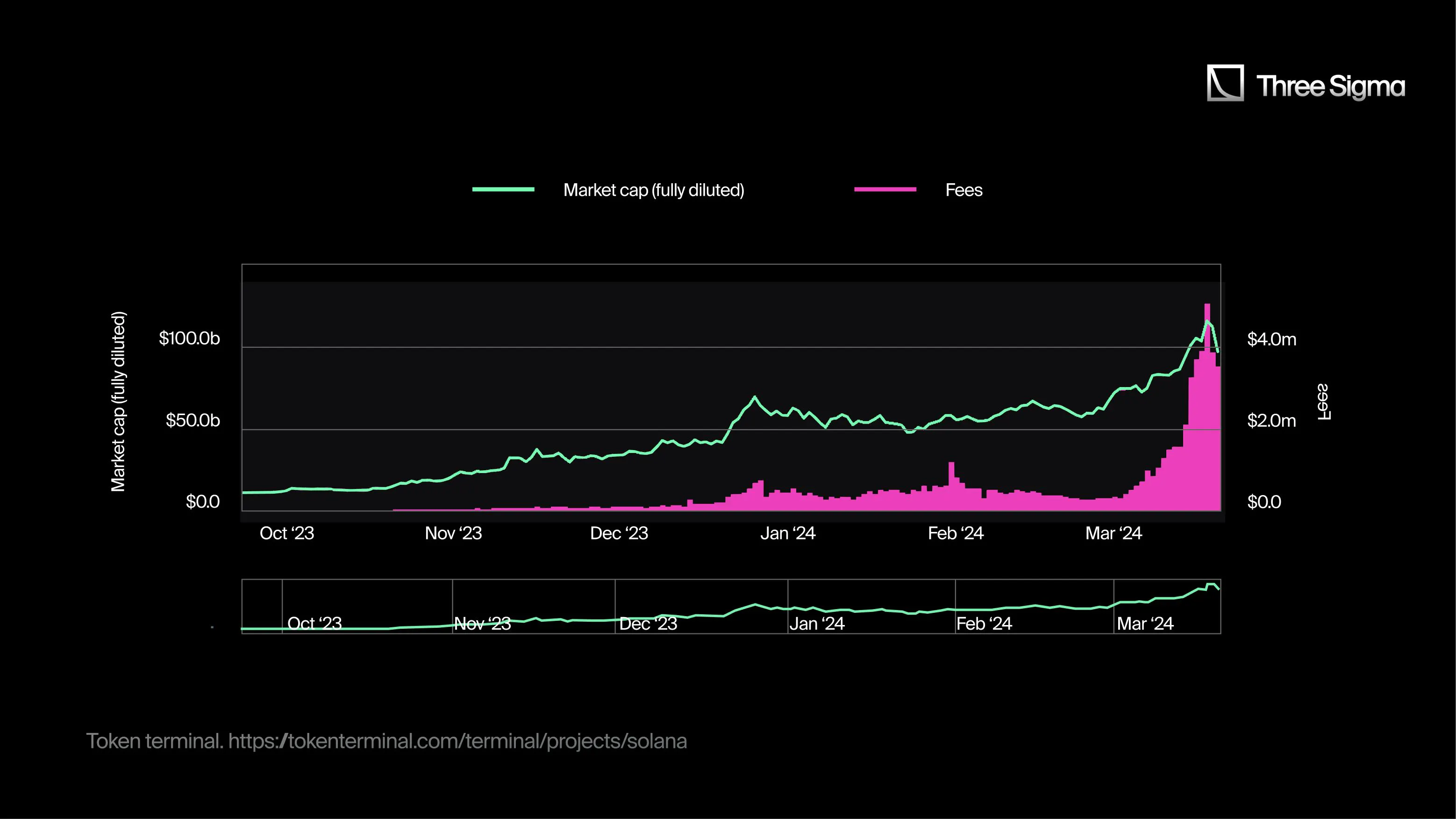
The Jito airdrop also contributed to the surge in Solana metrics, highlighting the profitability of airdrop farming. Announced on November 25, 2023, the airdrop claim window opened on December 7, 2023. Users holding at least 100 points received a share of 80 million JTO tokens. Following Jito’s TGE, the number of active addresses on Solana more than doubled in the subsequent two weeks—from approximately 413,000 on December 7 to about 981,000 on December 21.
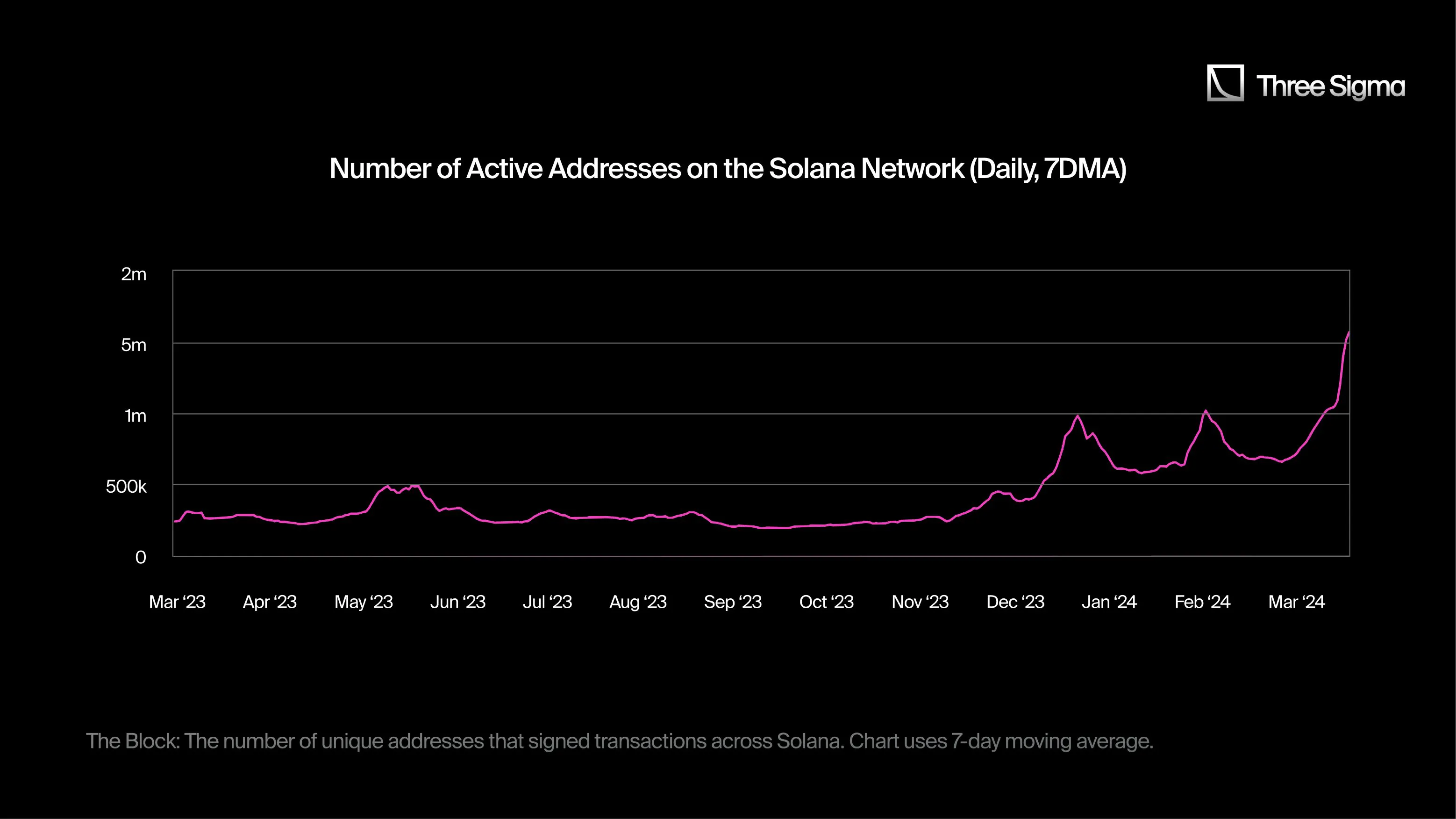
In this broader context, all five protocols benefited from increased attention, resulting in substantial rises in TVL. But what distinctions can we observe?
Zeta’s TVL initially experienced gradual growth, rising from nearly $1 million in early October to $2.8 million by early November, reaching $6.5 million on December 7. Subsequently, TVL surged dramatically, doubling in less than a week to $13 million by December 13. Another rapid increase followed, with TVL skyrocketing 100% to $133 million by December 31. In early January, TVL remained relatively stable between $13 million and $14 million. Correspondingly, trading volume spiked during periods of accelerated TVL growth. The post-December 7 surge may be attributed to JTO’s market debut. By then, Zeta had already launched its first-quarter points program, positioning itself to attract users seeking similar opportunities within the Solana ecosystem. Overall, during this rally, TVL increased by approximately 417%, from around $3 million to about $15.5 million. Interestingly, a notable spike in TVL occurred on March 20, likely driven by the introduction of the referral system on that day.
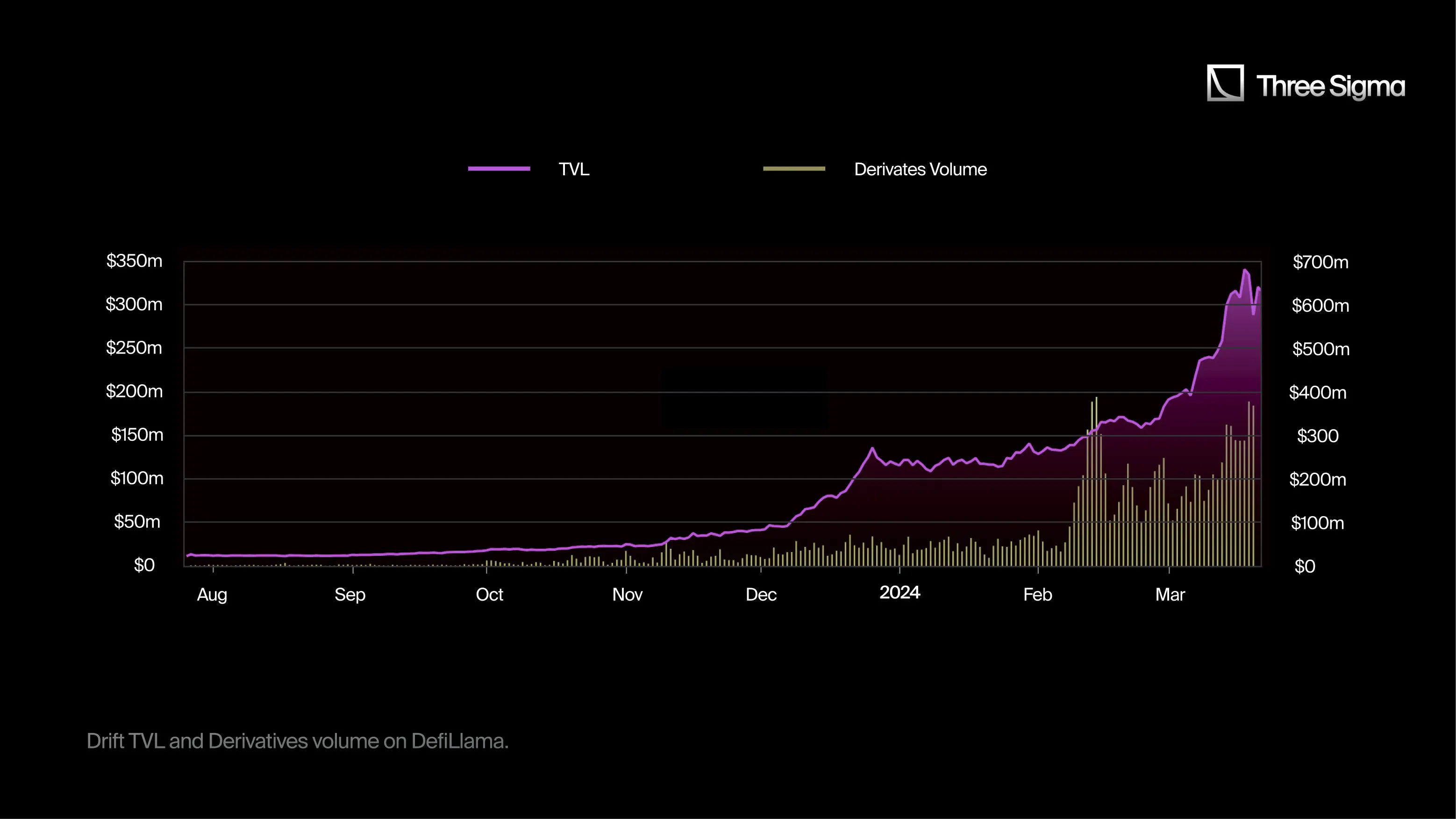
Drift’s trajectory follows a similar pattern. On December 26, Drift’s TVL peaked at $1.358 billion, representing an impressive 517% increase from the pre-November level of roughly $22 million. Interestingly, despite rapid growth, the release of the Jito airdrop did not appear to have a significant impact. Notably, Drift’s points program only began at the end of January, suggesting that the earlier surge was driven by organic protocol expansion, heightened market activity—especially within Solana—and anticipation of future points. Early February sparked renewed interest, with trading volume spiking on the platform. Derivatives trading volume rose from $132 million on February 2 to $388 million on February 14—a more than threefold increase within two weeks. Subsequently, both TVL and trading volume continued to rise steadily. Although Drift lacks explicit guidance on how user activity contributes to point accumulation, users now see weekly allocations increasing, with the program expected to conclude by April at the latest.
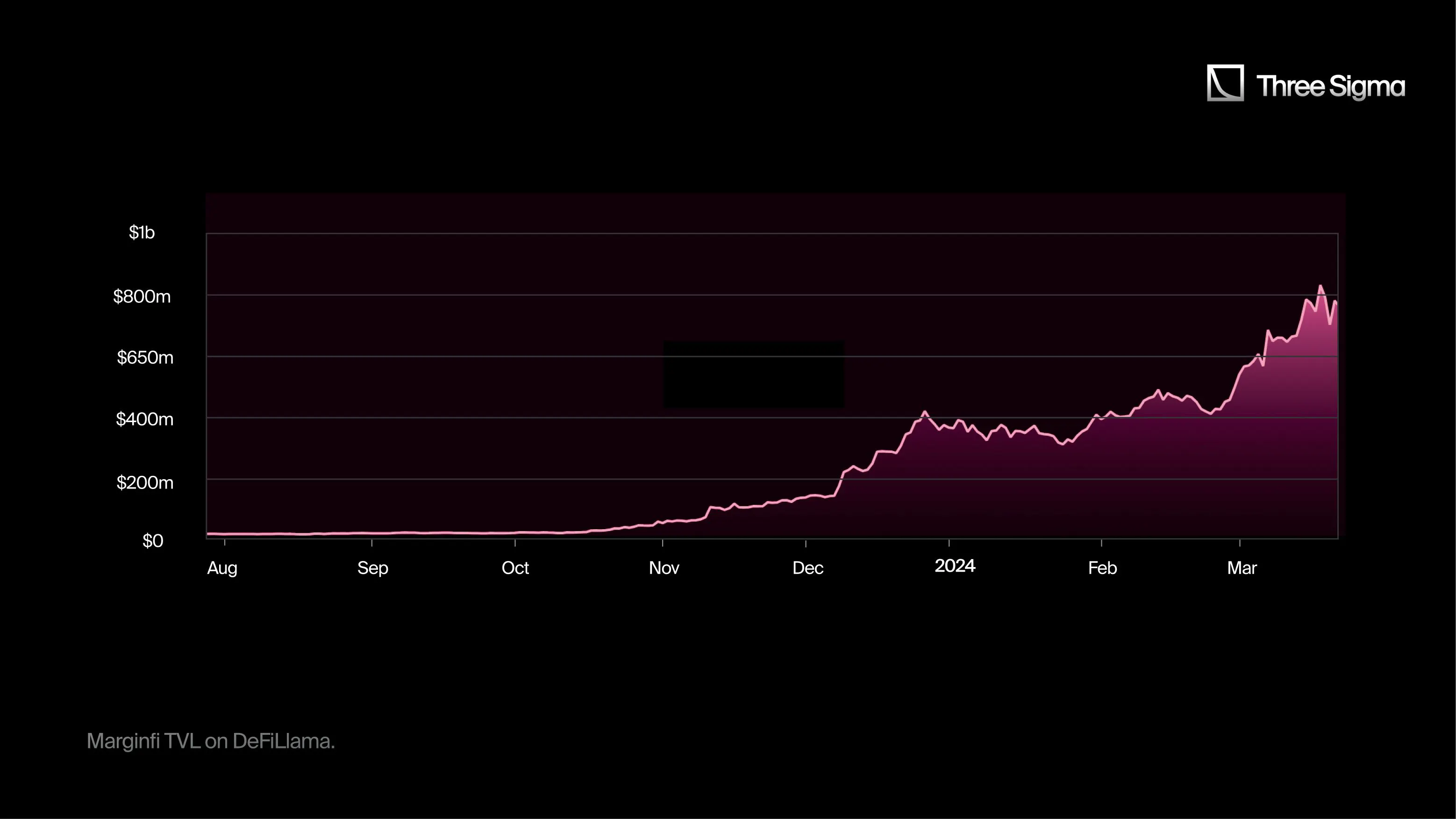
Marginfi experienced a TVL growth pattern similar to Drift’s, though less pronounced. User deposits on the platform began before November, increasing TVL from around $25 million in early October to approximately $55 million on November 1. Like Drift, December 26 marked TVL’s peak for Marginfi at $430.7 million—an impressive 683% increase since November. In this case, while we aim to isolate the impact of the points program, it's crucial to acknowledge Marginfi’s skill in capturing attention. The platform quickly enabled deposits for new tokens—for instance, listing JTO on its launch day. After a pause in TVL gains during January, deposits resumed accumulating from January 26 onward. Notably, Marginfi launched its points program as early as July 2023. This serves as strong evidence that points alone do not drive attention; rather, a thriving ecosystem, market visibility, and product-market fit are the true catalysts behind its success.
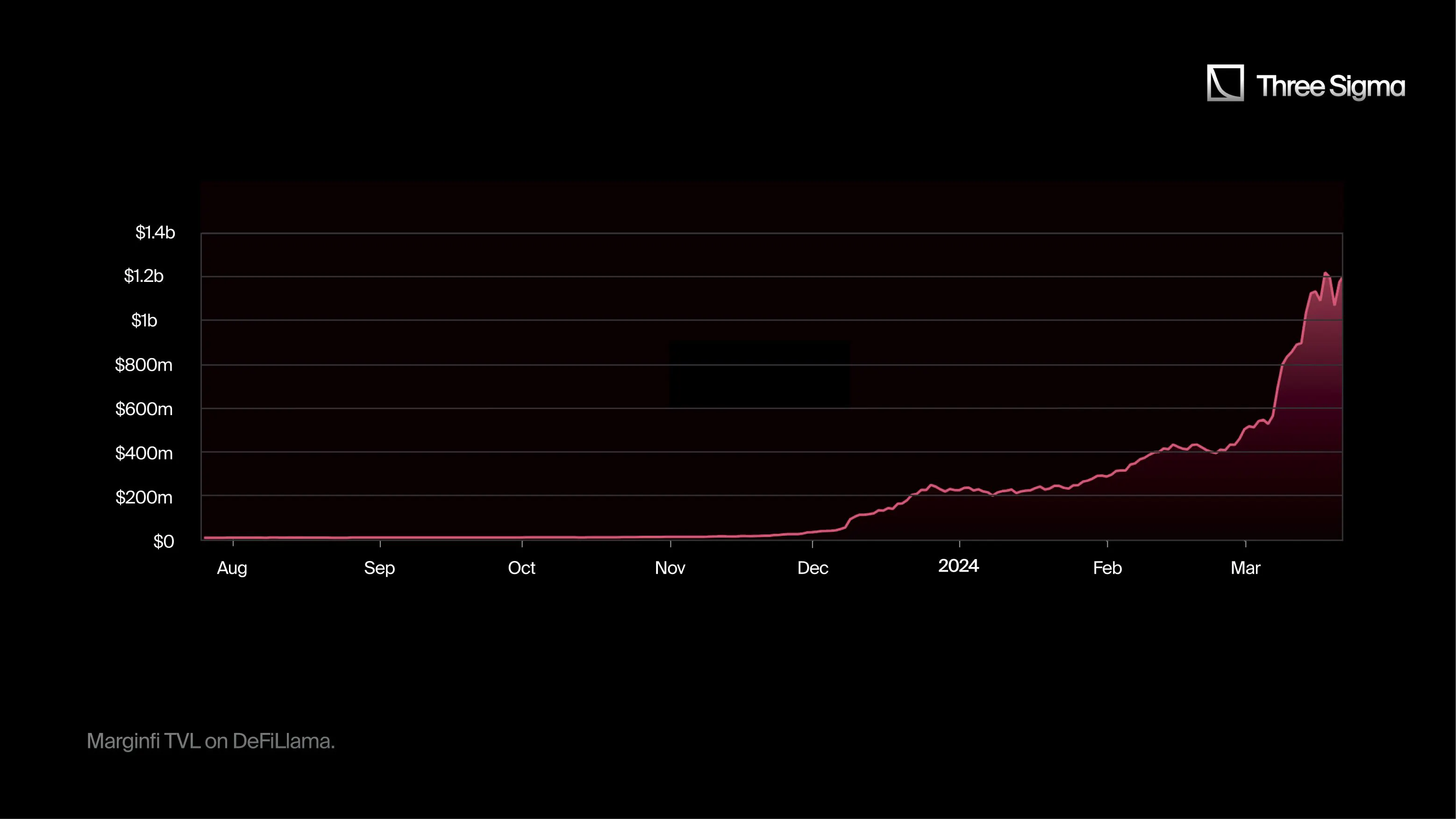
Kamino’s TVL growth followed a similar path, albeit starting later. In early November, the platform had only about $12 million, gradually growing to $48 million by December 7—the day of the JTO airdrop. This event appears to have accelerated deposit velocity, pushing TVL to its peak on December 26 at $248 million. From November 1, this represents a gain of approximately 1967%. After a relatively stable month, TVL began rising again at the end of January, likely influenced by the announcement of its points program. The platform now holds around $430 million. Indeed, Kamino did not announce its points program until January 19. Despite this late start, platform growth has been significant, increasing by 73% since the local high on December 26. While sustained popularity in February was impressive, March outperformed even further. On March 6, Drift’s TVL stood at approximately $527 million, but by March 8, it jumped to $692 million—a 31% increase in just two days. This was likely triggered by a post on X stating that the Q1 snapshot would occur on January 31. Though not actually news—as Kamino had consistently stated that Q1 would last three months and culminate at airdrop time—it clearly served as a reminder for those who hadn’t yet tried the platform. In the following days, this sparked attention and discussions on X, prompting the team to issue additional announcements about the airdrop and points mechanism, further capturing the interest of newcomers. Ultimately, this led to an impressive TVL of $1.2 billion by March 18.
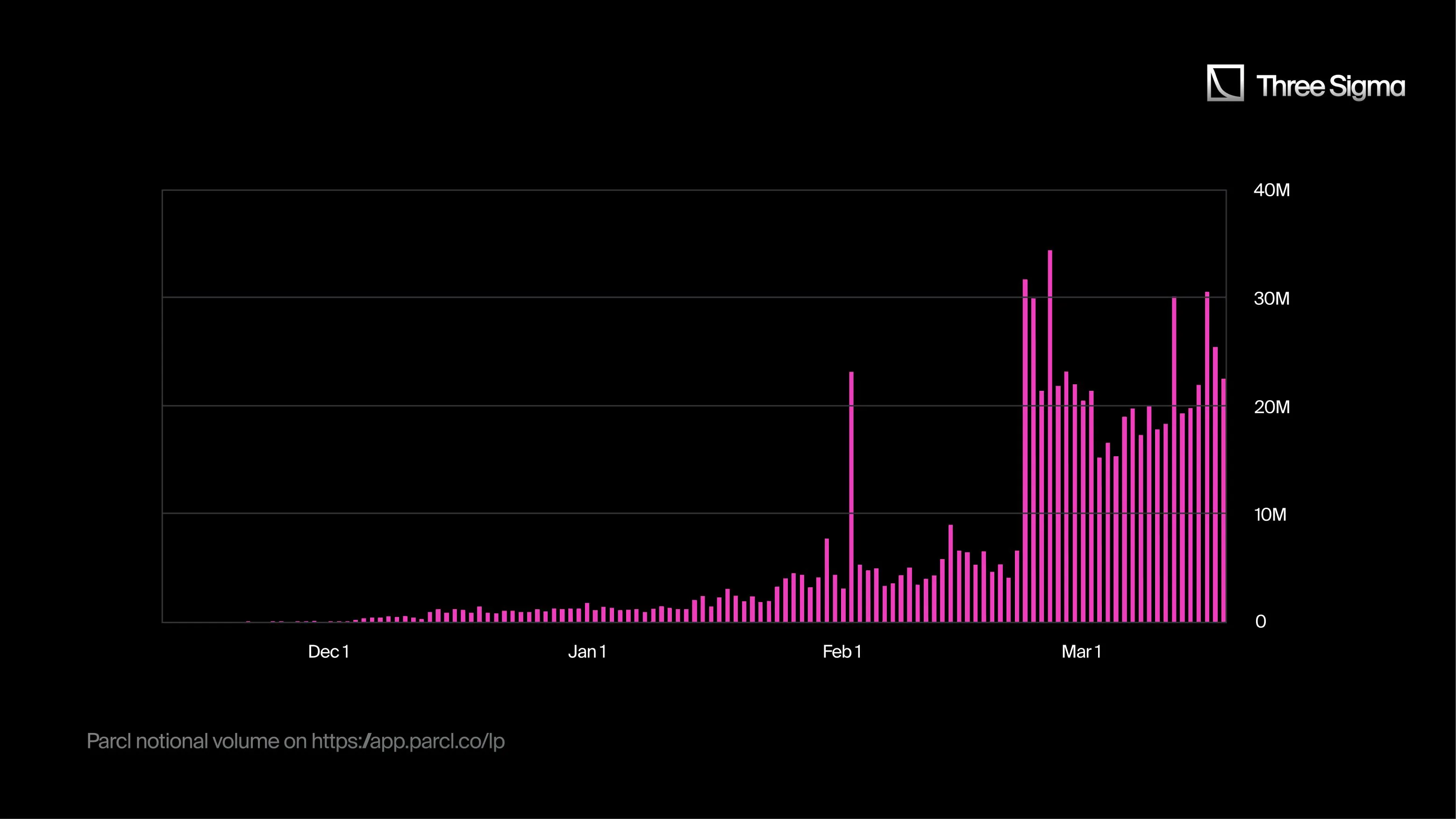
Parcl is a unique project offering users the ability to trade real estate price movements. There appears to be an error in DefiLlama’s TVL reporting, with some weeks incorrectly calculated. Nevertheless, considering Parcl’s nominal trading volume below, it becomes clear how the project benefited from similar growth dynamics observed among the other protocols mentioned here. While users had already been earning points for their activity, the full rollout of the points program officially began on December 15. Since then, trading volume has steadily increased, with notable spikes in activity. Particularly striking was the jump from $6.6 million on February 25 to $31.5 million the next day, coinciding with Aevo’s announcement of PARCL futures presale.
Key Takeaways
Many protocols are currently discussing partnerships with other projects, although details remain scarce despite expectations that referrals will eventually contribute to points. Nevertheless, this trend is expected to have a net positive impact on the space, as users recognize the benefits of engaging with multiple projects within the ecosystem.
Most programs operate on seasonal cycles, using each season as an opportunity to learn and adapt. For example, Kamino outlines that each season will feature different durations, new mechanisms, unique airdrop plans, and varied distributions. Zeta successfully adjusted its approach to meet increased liquidity demands. Flexibility is crucial for projects, as points can unpredictably affect protocol metrics or trigger sudden growth surges.
An interesting observation is that market conditions seem to matter more than the points programs themselves. For instance, although Drift and Marginfi launched their points programs at different times, their TVL charts are nearly identical. Despite Drift offering no description of how to earn points while Marginfi does, this difference appears to have little impact on TVL. Nonetheless, the mere presence of a points program, along with marketing efforts such as weekly drops, still carries significance—as demonstrated by Drift’s increased trading volume following its initial announcement.
Even for projects like Parcl, where product-market fit may be less obvious, the anticipation of a token can significantly boost metrics and drive adoption. The positive impact of referrals is noteworthy, as shown by Zeta’s TVL increase following the introduction of this mechanism.
As points programs conclude, protocols become more willing to speak publicly about further plans to attract users. Parcl has launched perpetual points, while Kamino is preparing for upcoming seasons with tailored strategies to maintain user engagement.
Overall, most projects appear to agree on prioritizing clarity and transparency while retaining flexibility. Effective marketing also plays a critical role in a project’s success. However, attributing metric improvements solely to new mechanisms within points systems can be challenging, as these gains are often influenced by marketing efforts aimed at raising awareness.
Join TechFlow official community to stay tuned
Telegram:https://t.me/TechFlowDaily
X (Twitter):https://x.com/TechFlowPost
X (Twitter) EN:https://x.com/BlockFlow_News
 @threesigmaxyz