Why hasn't a breakout blockchain game emerged in this bull market yet?
TechFlow Selected TechFlow Selected
Why hasn't a breakout blockchain game emerged in this bull market yet?
There will be new hit Web3 games emerging—everyone please wait patiently.
 Navigating Web3 tides with focused insights
By Guage, W Labs
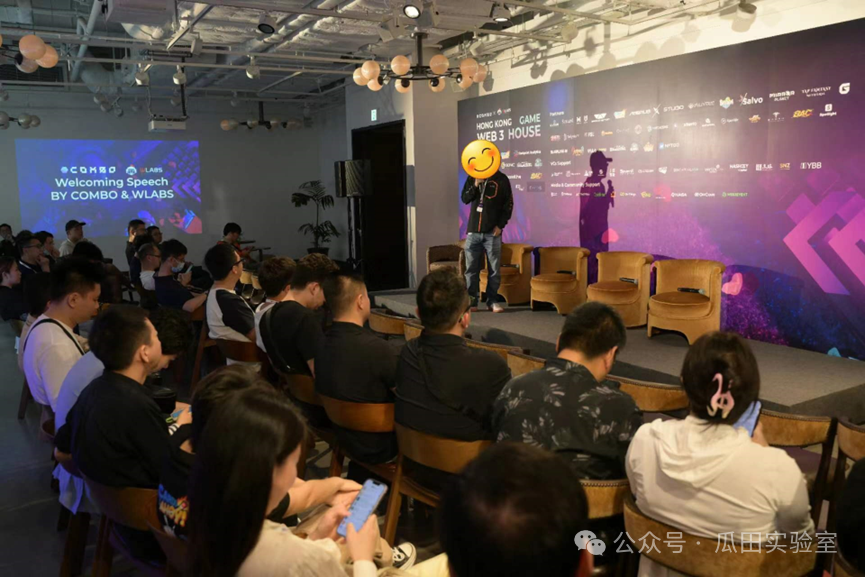
Spent nearly a week at the 2024 Hong Kong Web3 Carnival, packed with events and meetups. I envy those superhumans who can attend seven or eight sessions a day—by the time I hit three or four, I’m already deep into face-blind mode. Even now on the plane, I’m still feeling a bit dazed.
Flight mode is the best time to sort out thoughts. This time, W Labs co-hosted a GameFi-focused event called Game House with COMBO. I thought I’d have plenty of time to speak at our own panel, but no sooner had I started swaying on stage than the moderator began repeatedly pointing at his watch—already five minutes gone? Wait, I hadn’t even finished warming up! And just like that, it was over. Haha, luckily I’ve got writing as my Buff skill. So here’s the unfinished thinking I barely started—hope it helps fellow melon lovers.
First question: Has the Web3 gaming sector been disproven?
Besides our own event, we attended several panels this week. People are still debating whether there's a future for blockchain games, because so far in this bull market, we haven't seen any breakout hits like Axie Infinity or StepN during the last cycle.
But my view hasn't changed: If you believe in Web3, then you should firmly believe in Web3 gaming. History has shown that games are the foundational gateway for any emerging tech to reach mass consumer adoption (C-end).
Take computing: its development relies heavily on chip advancements. And over the past 50 years, without exception, the biggest driver behind computer chips has been the gaming industry. Fifty years ago, the widespread adoption of Atari consoles and global popularity of Pac-Man directly catalyzed the birth of the semiconductor industry—Steve Jobs even worked his only real job at Atari.
Look at Nvidia today—the star of the AI wave. But Nvidia started out making gaming GPUs. It was hardcore gamers around the world spending their hard-earned cash that provided Nvidia’s earliest cash flow.
Games are tools for ordinary people to seek fun and excitement. Whoever wins the C-end must first win gaming.
Second question: Then why hasn’t Web3 gaming taken off yet?
The answer is simple: It’s too early—and we took a wrong turn.
If we exclude CryptoKitties from 2017, blockchain gaming only really started gaining momentum with Axie Infinity’s explosion in early 2021. That’s just a few years ago—far too short a time. Let’s look back at how traditional video games evolved through two major transitions.
First transition: About 25 years ago, the industry shifted from selling hardware (like Atari and Nintendo Famicom) to selling software, thanks to the rise of personal computers. PC gaming boomed—from one-time software purchases to online game time cards or subscription models. Platforms like Steam, which moved into distribution, made huge profits.
Second transition: Around 15 years ago, mobile phones and tablets became mainstream. No need for heavy PCs anymore. The model shifted to “free-to-play, pay-to-win.” Anyone sticking to the old PC-style upfront purchase model quickly fell behind. Service-based gaming (Game-as-a-Service, or GaaS) became the dominant business model on mobile.
This second shift brought massive changes to the industry: For example, labor costs. With PC games, once launched and sold, teams would often downsize. Mobile games require continuous development, meaning growing headcounts—and more customer support staff—to keep players engaged and paying. Also, casual and five-minute games flourished, fitting perfectly into fragmented screen time on phones.
What might the next, third transformation be? Some companies are betting big on the metaverse—Facebook even rebranded itself as Meta. The metaverse sounds exciting—we all watched *Ready Player One* and felt the adrenaline rush—but it requires enormous investment and better infrastructure. Many users get dizzy using basic VR headsets; Apple’s new VR headset reportedly solves this issue.
In my opinion, Web3 gaming could also be part of this next wave. Have you ever thought about the ultimate difference between Web3 and Web2 games? If gameplay quality, accessibility, operations, talent pools—all were equal—what would remain different? Right: circulation and payment!

Web3 gaming must leverage Web3’s greatest strength: smoother payments and transactions. Whether in-game or cross-game, everything should feel seamless—without being restricted by rigid regional policies across various app stores. Meta clearly saw this potential, but their stablecoin Libra died quickly, likely due to conflicting interests. Though Libra failed, the team behind it wanted to get rich anyway—that’s how Sui and Aptos were born.
When I say Web3 gaming went off track, I mean that Axie set the template with Play-to-Earn, leading everyone to assume blockchain games can only be P2E. So nearly every project copied Axie’s model—after all, Axie made tons of money. Sometimes I wonder: What if the first viral Web3 game had been a casual card battle game—a project closer to enhancing circulation and payment? Would the Web3 gaming space be healthier today?
But going off-track is better than not moving at all. At the start of any big trend, raw earning incentives are normal. Just like the Age of Exploration—what drew adventurers wasn’t noble trade ideals (finding spices and silk in India and China), but stumbling upon silver mines in South America and the brutal yet profitable slave trade. You need that initial eye-catching profit to pull people in.
Bigger wealth creation will eventually drive more teams toward improving circulation and payment. That’s why I firmly believe the real bull market for Web3 gaming hasn’t arrived yet. This current gap is actually a great opportunity for startups preparing to enter. By the time competitors are already expanding and fighting for territory, it’ll truly be too late.
Third question: How can circulation and payment be embedded into Web3 games?
This is a huge question. We won’t touch legal or regulatory issues—that’s for executives with top-level connections to navigate across jurisdictions.
Let’s focus purely on economic modeling. If you can design a Web3 game economy—even theoretically—you’re probably at the level of a graduate economics student. Circulation and payment involve the entire economic system. Designing this is like building a real-world nation’s fiscal and financial systems: you must consider baseline development, industrial direction, cultural and cognitive levels of citizens, international relations, then define tax and monetary systems, followed by adjustments for defense, infrastructure, bureaucracy, education, healthcare, and other fixed expenditures.
Designing an economy for Web3 games differs from Web2. In Web2 games, many parameters allow high error tolerance because monetization and circulation are limited. But in Web3 games, tokens represent instantly liquid “currency” or “gold-standard” assets. Any imbalance in design can easily collapse the system. If even professional economists struggle to build stable national economies, how can we expect perfection?
Still, playing armchair economist is tempting. Why did so many learned experts love giving advice on Tianya and Zhihu back in the day? Because putting ideas on paper—even hypothetically—is deeply satisfying. Now Web3 gaming lets you build such systems yourself. Hey hero, you don’t need to fantasize about time travel—just jump in.
Of course, 100 economists have 101 theories. Even within W Labs, we disagree on game economic design. Here’s my rough take:
-
First, unlike purists who insist on full decentralization from day one, I believe early-stage projects need visible hands guiding them. Western free-market economics originated with Adam Smith’s *Wealth of Nations*, highlighting self-regulation and human nature in markets. Later, Ricardo emphasized how division of labor and trade create greater value.
Yet even Alexander Hamilton, one of America’s founding fathers and its first Treasury Secretary, didn’t follow Smith’s ideas. Instead, he adopted Friedrich List’s theory: infant industries need strong protection via tariffs to survive until mature enough to compete globally. Today’s developed nations preach free trade, but when they started, they fiercely protected domestic industries. Samuel Slater, the "father of American textiles," smuggled British weaving tech to the U.S.—he’s still considered a traitor in Britain.
The same applies to Web3 game economies: early on, you can’t let tokens circulate freely. External predators—Soros-like wolves—are waiting to pounce. Whether through centralized control or internal mechanisms, nurture the ecosystem internally before opening it up.
-
Second, once the domestic economy matures, will the team adopt the state-led models of Germany, Japan, or South Korea, or the small-government, large-market approaches of the U.S., U.K., and France? That depends on leadership style. Both paths have succeeded: the former grows fast and shows quick results; the latter sustains long-term health. These models can evolve over time—for instance, Roosevelt’s New Deal post-WWII was essentially a copy of Soviet five-year plans, yet extremely effective.
In Web3 terms, Model One focuses on asset appreciation, quickly boosting GDP (or FDV) and attracting users. Model Two relies on taxation mechanisms within transaction flows—akin to casino economics. The ideal strategy is “first one, then two,” but easier said than done. Achieving “one” alone makes you elite. To then resist greed,放弃 short-term passive income, and rebuild for a distant future? Most team members wouldn’t agree.
This also answers the core question: The next bull-run’s breakout Web3 game must bring unprecedented innovation in at least one area. Otherwise, users tired of endless “Earn” schemes won’t care—or perhaps the innovation already exists, just waiting for a spark.
-
Third, if a project reaches the “two” phase, competition shifts to whose payment and circulation system is superior. Decades of consumer behavior show that lowering transaction friction drives industry change: credit cards boosted spending vs. cash; PayPal or Alipay boosted spending vs. cards. User habits, once formed, are hard to reverse—try getting someone used to WeChat Pay or Alipay to go back to cash or cards. If Web3 lowers spending barriers further than Web2, Web3 gaming will surely thrive.
How can Web3 games sustainably progress in Phase Two? Advanced economies typically achieve three things: limited free-market freedom, shared social operating frameworks, and ongoing tech innovation. Translated to Web3 gaming: remove payment/circulation barriers, use decentralized contracts to build player consensus, and integrate cutting-edge game tech (like AI and VR).
Summary: A new viral Web3 game will emerge. Please stay patient.
End of article.
Join TechFlow official community to stay tuned
Telegram:https://t.me/TechFlowDaily
X (Twitter):https://x.com/TechFlowPost
X (Twitter) EN:https://x.com/BlockFlow_News
 瓜田实验室W Labs