








Opinion: The future of crypto is not tech coins, but cultural coins
TechFlow Selected TechFlow Selected
Opinion: The future of crypto is not tech coins, but cultural coins
Without culture, our industry will never grow.
 Navigating Web3 tides with focused insights
Author: LUCA SCHNETZLER
Translation: TechFlow
A year ago, I began re-evaluating my stance on NFTs. During the market downturn, the concept of utility felt meaningless. The idea of allocating value from X to Y seemed destined to fail. Trapped in a utility-centered mindset, I started questioning the purpose behind my efforts—until I had an epiphany: NFTs are culture, nothing more. Today, my perspective on NFTs is crystal clear: culture and identity will ultimately prevail, while everything else diminishes in importance over time. While identity may subjectively differ, the impact of culture is undeniably profound. This realization sparked my obsession with culture, and I believe the trajectory of tokenization will move in this direction.
Currently, the crypto industry focuses heavily on pursuing the next breakthrough technological innovation. It feels like 98% of the industry’s talent and resources are directed toward this goal. While I acknowledge the importance of solving infrastructure challenges, I believe the end state of cryptocurrency is not far off. So while the industry seeks to create cheaper, faster transaction solutions, let me ask you: what happens next in a world where crypto technology reaches peak performance?
I believe the future of culture is tokenization. I envision a world where most crypto tokens are cultural tokens—tokens serving as indices through which people speculate on various aspects of past and present cultures. Today, we already see signs of this through so-called meme tokens or NFTs. However, I believe the potential and opportunity are far greater than most realize.
First, let's address the obvious question: why tokenize culture? The answer has two parts. First, tokens create aligned incentives that motivate community members to champion the given culture, thereby driving its growth. Second, tokens democratize access to culture, enabling anyone with internet connectivity to participate. The combination of aligned incentives and democratized access leads me to believe that the tokenization of culture offers more benefits than drawbacks for cultural dissemination.
This opens up an entirely new category of tokens—cultural tokens. Under the umbrella of cultural tokens are the following subcategories:
-
Social Tokens (ST): Tokenization of individuals/influence
-
IP Tokens (IPT): Tokenization of intellectual property
-
Consumer Brand Tokens (CBT): Tokenization of consumer brands
-
Non-Fungible Tokens (NFTs): Tokenization of art and collectibles
-
Historical Artifact Tokens (HAT): Tokenization of historical artifacts
-
Meme Tokens: Tokenization of memes
-
Movement Tokens (MT): Tokenization of movements
Some crypto purists may scoff at these trends—I consider such views to have negative expected value. Over the past few years, all of the above have driven public interest in the crypto industry through major headlines. Why? I believe the answer lies simply in meeting consumer demand. Consumers understand memes; they understand toys on shelves; they understand Veblen goods (items that satisfy human vanity). Tokenizing culture works because people understand culture. Whether you like it or not, ordinary people don’t care about ZK proofs, optimistic rollups, or parallelized EVMs. All of these are amazing, but they aren't what brings more people in.
I see infrastructure and culture as yin and yang. Without proper infrastructure, on-chain culture can never flourish; without culture, our industry will never grow.
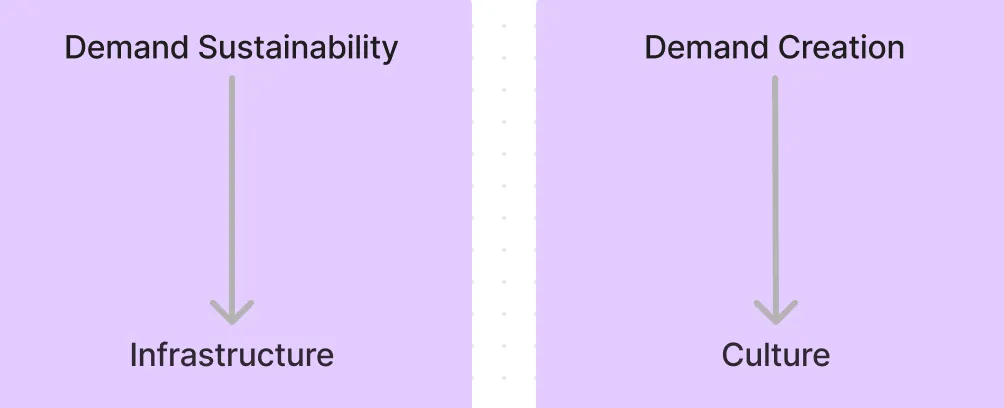
Therefore, I encourage anyone holding a negative view toward cultural tokens to reconsider their approach. Whether you like it or not, we need each other.
Building the Future of Tokenized Culture
My intention in writing this article is to help inspire more crypto builders to focus on cultural development. Although the diagram below is merely a rough sketch I made in Figma, I believe it still reflects reality: everyone is turning left, no one is turning right. At least for those reading this article, it means you’re early.
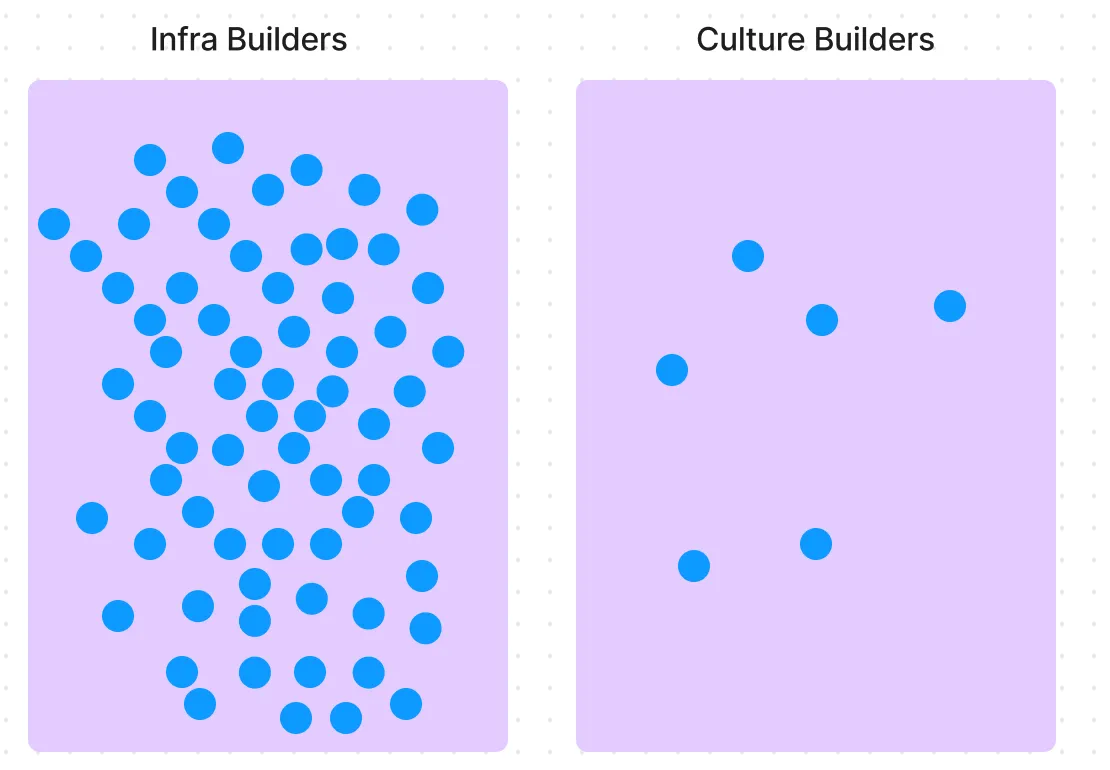
Clearly, people want culture on-chain—and they want more of it. Yet, while the industry focuses on building more efficient versions of existing systems, few builders are developing products that accelerate the growth of on-chain culture. In my view, however, this is precisely where the greatest opportunity lies today. If things go according to plan, there should exist consumer applications on-chain whose enterprise value exceeds that of the underlying blockchain itself. Culture isn’t just IP and memes—it can also be applications, markets, games, DAOs, and more. In the real world, Instagram, Snapchat, and LVMH are examples of companies that build, create, and shape culture.
Paradigm Shift
A paradigm shift is underway at the intersection of finance and culture—one occurring not only in crypto but also beginning in traditional finance. The rapid pace of crypto innovation acts like a laser, giving us a glimpse into the near-future potential of financial markets. In the 90s, you had Bowie Bonds; in 2020, you had $GME; today, you have $DJT—each representing, in some form, a version of culture. For $GME, it represented the idea of "fighting against bankers and short-sellers." For $DJT, you're speculating on Donald J. Trump—in a sense, it functions as a social token. Unfortunately, for traditional finance, this future may or may not reach its full form due to barriers to entry. Regardless, the concept of financial assets driven by culture and trends is not new—and with crypto’s speed and accessibility, it will only become more widespread.
Editor’s note: Bowie Bonds refer to $55 million in bonds musician David Bowie sold in 1997, backed by future royalties from his 25 albums recorded before 1990. $GME refers to the GameStop short squeeze event. $DJT is shorthand for former U.S. President Donald Trump; recently, a new stock trading under the ticker “DJT” has gained popularity in the U.S. stock market.
An Interesting Idea
Tokenized culture can also be interpreted literally. Imagine a world where you tokenize real-world intellectual property and bring it on-chain, letting it exist as a beacon of fun and curiosity for communities to engage with. Here’s how it could work:
Create a protocol/launchpad called X that brings real-world intellectual property on-chain. The protocol partners with Star Wars to launch an officially endorsed Star Wars token → Lucasfilm licenses its IP to the X protocol, launching the official $Stars token. As part of the licensing agreement, Star Wars receives 15% of the token supply, unlocked monthly. The X protocol promotes this officially supported $Stars token, sparking curiosity among hundreds of millions of Star Wars fans. If even 1% of Star Wars fans become interested in crypto, it would be a massive win for our entire ecosystem. The snowball effect of this model could drive significant new traffic into crypto.
Some might question the logic and benefits behind such initiatives. The answer lies in brands’ perpetual need for attention and revenue. This model both mitigates systemic risks brands face when competing for attention in an AI-dominated world and allows them to earn more from their IP—tokenized IP likely offers higher upside compared to selling outright to traditional private equity or M&A.
Final Thoughts
To me, the greatest opportunity in crypto today lies in developing the cultural layer. The best entrepreneurs don’t build for themselves—they build for their users. It’s clear that crypto users now want more culture. To all crypto entrepreneurs, I say: it’s time to give people what they want. The future of culture won’t build itself.
Join TechFlow official community to stay tuned
Telegram:https://t.me/TechFlowDaily
X (Twitter):https://x.com/TechFlowPost
X (Twitter) EN:https://x.com/BlockFlow_News
 @LucaNetz











