








The Three Pillars of Decentralized Communication and DePIN Infrastructure
TechFlow Selected TechFlow Selected
The Three Pillars of Decentralized Communication and DePIN Infrastructure
As a leader in decentralized communication, SendingNetwork highlights the critical importance of secure, private, and efficient data exchange.
 Navigating Web3 tides with focused insights
Author: Sending Labs
The Foundation of the Digital Age: Computing, Storage, and Communication
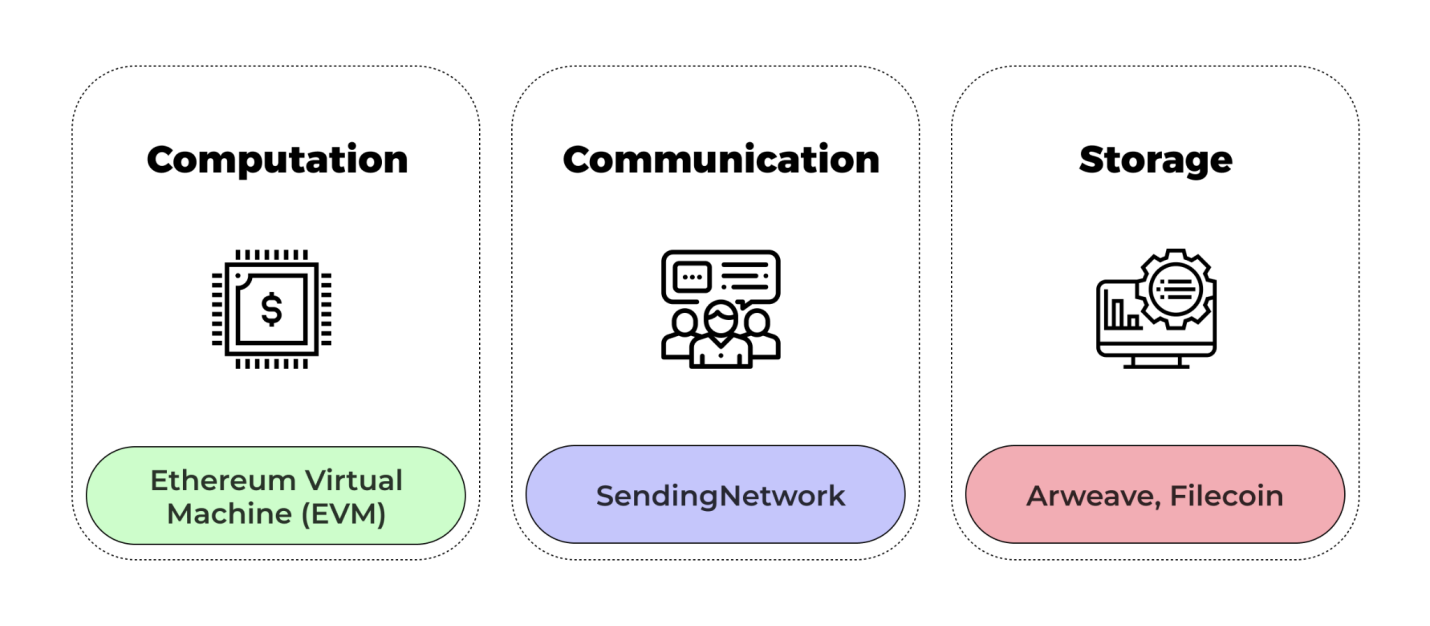
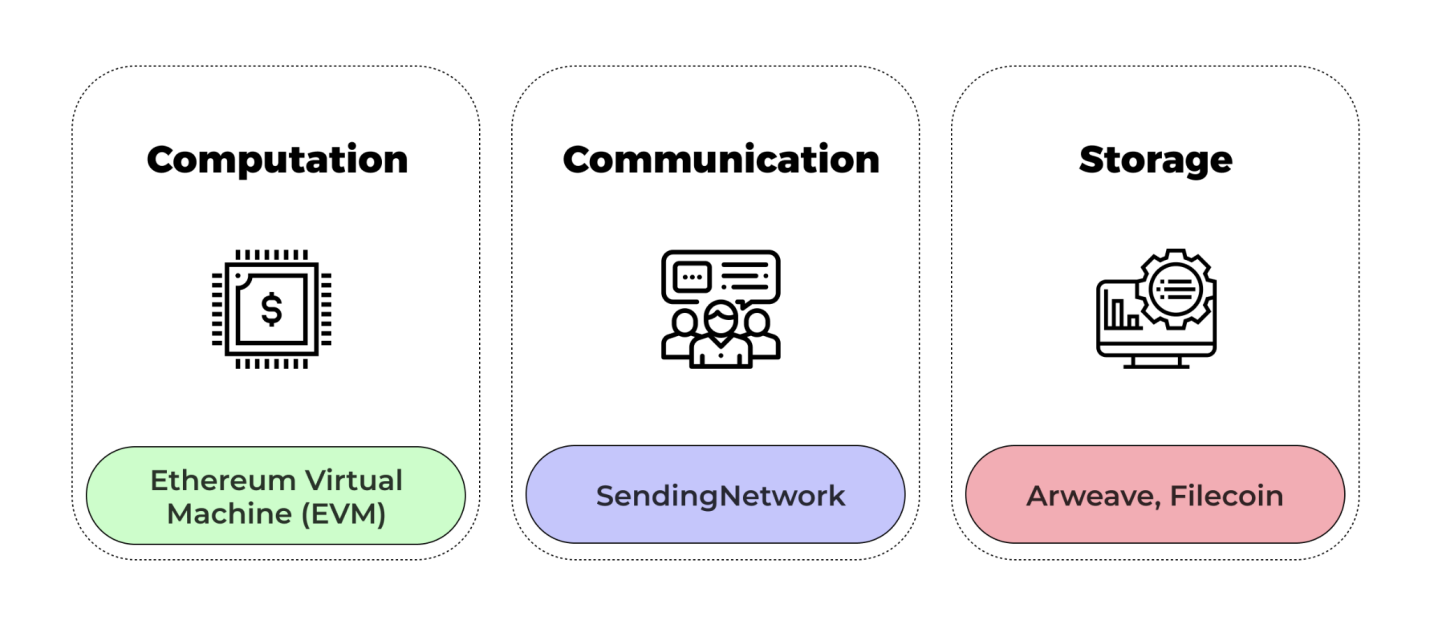
In the digital age, computing, storage, and communication form the three foundational pillars supporting the vast digital universe and its diverse applications. Each plays a critical role in enabling the seamless operation, growth, and evolution of digital services—ranging from powering processing capabilities for complex algorithms and applications, to providing the ever-expanding data storage capacity required by the digital world, to ensuring uninterrupted global information exchange through robust communication networks. Within this digital infrastructure, SendingNetwork, as a leader in decentralized communication, highlights the crucial importance of secure, private, and efficient data exchange.
SendingNetwork: Leading Decentralized Communication in DePIN
Building a complete communication infrastructure requires development across the physical, network, and application layers. At the physical layer, we will create Web3 routers as fundamental transmission units of the decentralized internet, making them common household and data center devices. This initiative aims to foster a new network protocol layer rooted in decentralization and based on wallet addresses. Additionally, the launch of a message transmission protocol built on SendingNetwork marks its first attempt at an application-layer solution, enabling private, secure, and unrestricted social interactions on this emerging decentralized internet.
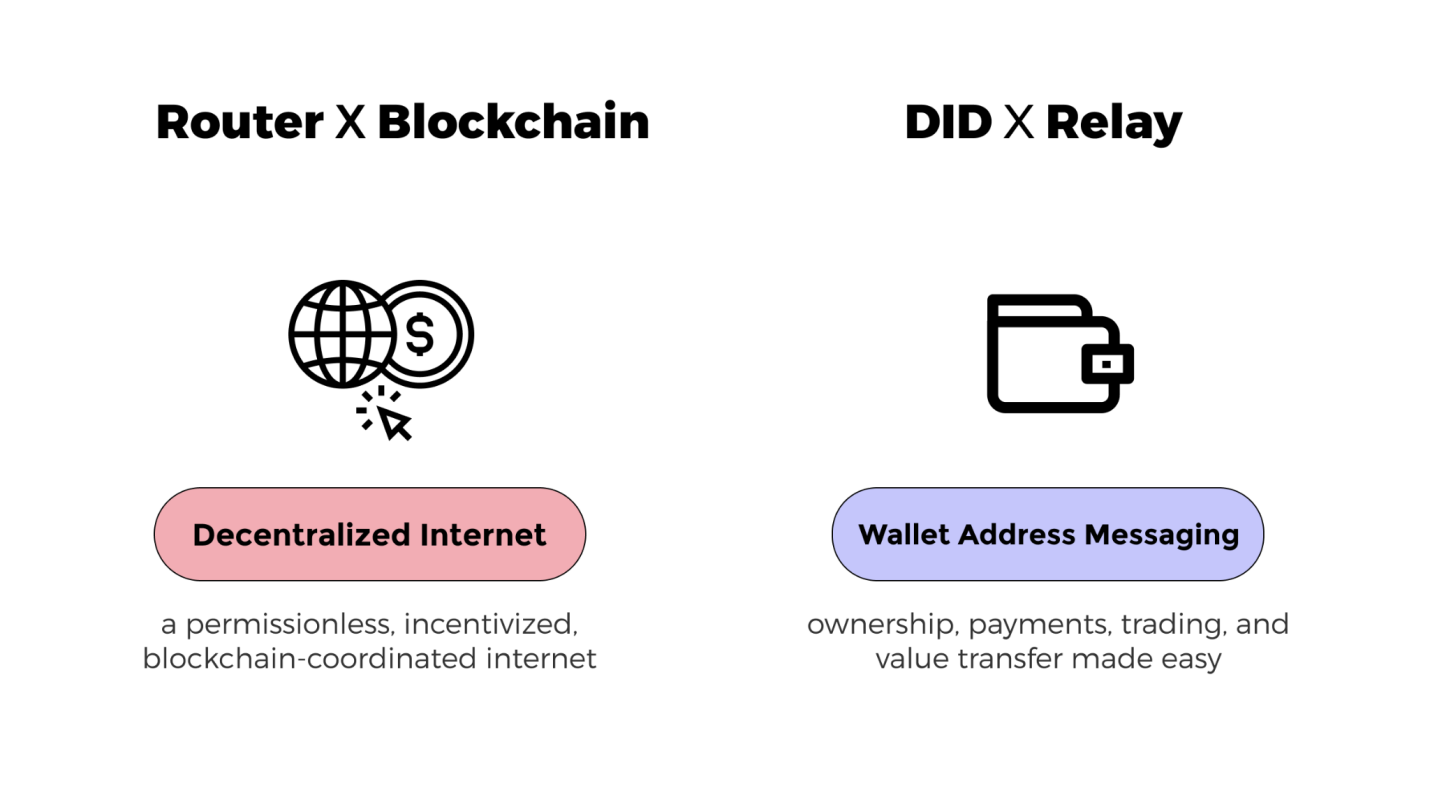
The functionality of the decentralized internet extends beyond messaging protocols, offering an ecosystem that supports applications requiring robust communication capabilities, such as live streaming and multi-party conferencing. These applications often present developers with challenges related to cost and resource demands due to high bandwidth requirements. Through SendingNetwork’s decentralized internet, a network composed of distributed nodes and incentive mechanisms optimizes users’ idle home bandwidth. This not only delivers high-speed, low-cost streaming experiences for bandwidth-intensive applications but also promotes a greener, more sustainable digital environment. Furthermore, this network architecture is ideal for building decentralized content delivery networks (CDNs), ensuring localized, fast communication services for various applications, thereby expanding the reach and efficiency of the decentralized internet. Unlike centralized domain name systems (DNS), which are controlled by a few entities capable of domain blocking and access restrictions, the decentralized internet operates on a wallet address-based system, guaranteeing open and unrestricted access.

Meeting AI's Data Demands with SendingNetwork’s Decentralized Solutions
The rapid advancement of large language models has brought AI applications into the mainstream, transforming chat prompts into the primary interface for AI interaction and positioning messaging as a key entry point for AI integration. SendingNetwork’s first application-layer protocol—the message transmission protocol—serves as a critical access point for AI within the Web3 ecosystem, underscoring its strategic significance.
In this new era dominated by large language models, data demands continue to grow, along with increasing expectations for lower transmission latency and higher throughput. The surge in data usage brings significant privacy concerns, highlighting the pivotal role of decentralized communication infrastructure: faster speeds, lower costs, and enhanced security and privacy to meet the urgent needs of our increasingly data-driven world.
The importance of decentralized communication infrastructure includes the following aspects:
- Data Privacy and Security: End-to-end encryption capabilities in decentralized communication infrastructure ensure data ownership remains with users. Combined with privacy-preserving computation, it enables AI model training and updates at user-authorized endpoints without directly exposing user data to third parties, safeguarding data privacy and security.
- Data Availability and Accessibility: When integrated with decentralized storage, decentralized communication infrastructure allows AI training and testing data to be distributed across multiple parties. The wide distribution of communication nodes and effective utilization of idle bandwidth facilitate rapid and efficient access and transmission of this data, making it more accessible and affordable, effectively supporting distributed training and testing for large-scale AI models.
- Scalability and Reliability: As AI applications become increasingly complex and resource-intensive, scalability and reliability have become paramount. The dense, widely distributed node framework provided by decentralized infrastructure enables faster and more reliable data transmission, meeting the demands of training and testing larger, more sophisticated models.
Starting at the physical layer, SendingNetwork builds the core of its decentralized infrastructure by deploying specialized routers. These routers allow users to leverage their idle home bandwidth, optimizing network capacity. Integrated with SendingNetwork’s network-layer protocols, they enhance data caching and acceleration, benefiting numerous applications. To participate in building the decentralized communication infrastructure, users need only install a dedicated hardware device at home to earn rewards by contributing bandwidth.
This device is designed to be compatible with SendingNetwork’s application-layer protocols and supports advanced privacy computing features. It can be customized with unique components such as specialized network cards and privacy chips. This adaptability not only enhances the device’s utility but also aligns closely with SendingNetwork’s mission within the DePIN framework, emphasizing the critical role of physical infrastructure in the evolution of the decentralized world.
In 2024, as DePIN gains increasing attention, SendingNetwork—as an infrastructure project within the sector—will provide stronger support for the ecological development of the DePIN space.
Website: https://www.sending.network/
Twitter: https://twitter.com/Sending_Network
Join TechFlow official community to stay tuned
Telegram:https://t.me/TechFlowDaily
X (Twitter):https://x.com/TechFlowPost
X (Twitter) EN:https://x.com/BlockFlow_News






