








FTX Faces 2.0 Liquidation Moment: A Comprehensive Claims Guide
TechFlow Selected TechFlow Selected
FTX Faces 2.0 Liquidation Moment: A Comprehensive Claims Guide
The FTX liquidation entity and claims portal have both been established and are now open, with creditor repayments set to begin shortly.
 Navigating Web3 tides with focused insights
By Xiao Sa's Team
In our previous article, Xiao Sa’s team covered the sentencing of Sam Bankman-Fried (SBF), the mastermind behind the FTX collapse, to 25 years in prison—detailing the background and implications of this landmark case (readers interested can refer to "Xiao Sa Team | Breaking! The Mastermind Behind FTX Sentenced to 25 Years – The End of an Era"). With the main perpetrator now convicted, the case has entered a new phase. For most ordinary users, investors, and creditors, SBF’s harsh sentence may bring a sense of justice or serve as headline news—but what truly matters is how the FTX bankruptcy liquidation process will unfold, as it directly determines whether our claims will be effectively repaid.
Moreover, as the largest bankruptcy case in history involving cryptocurrency assets and the biggest global crypto insolvency to date, every development in the FTX case draws attention from investors worldwide. How authorities handle the liquidation of such a massive, multinational crypto enterprise will set a precedent with significant reference value for jurisdictions globally, influencing judicial practices for years to come.
Since the FTX collapse, Xiao Sa’s team has continuously received inquiries from Chinese creditors seeking guidance on protecting their rights. From 2022 until now, multiple creditor claim filing periods have occurred. However, due to disputes over the actual execution of the liquidation plan and the inability to quickly liquidate FTX’s bankruptcy assets, the path to recovery has remained long and uncertain. Now, with the official liquidation entity and claims portal established and open, repayments to creditors are about to begin. Today, Xiao Sa’s team presents this comprehensive “FTX Creditor Claim Filing Guide” to support fellow victims in their pursuit of justice.
Background of the FTX Case and Overview of the Liquidation Team
For readers unfamiliar with the FTX case, Xiao Sa’s team provides a brief introduction.
Prior to its collapse, FTX—founded in 2019—was a world-class cryptocurrency exchange capable of rivaling Binance. Headquartered in The Commonwealth of The Bahamas (often considered America’s backyard), its primary operations were based in the United States. FTX was massive, operating hundreds of affiliated companies and serving millions of customers across the globe. After completing its Series C funding round in 2022—led by giants like Sequoia Capital, Temasek, SoftBank, and Tiger Global—its valuation soared to an astonishing $32 billion.
The downfall of FTX was swift and irreversible, embodying the crypto maxim: "One day in crypto equals one year in real life." It began when Coindesk, a prominent crypto media outlet, published a report at the end of 2022 revealing that up to 70% of Alameda Research’s assets—controlled by SBF—were composed of FTT, a token issued by FTX itself with poor market liquidity. Subsequently, Binance publicly announced plans to sell off its large holdings of FTT tokens. Amid an already fragile crypto market, this triggered widespread panic. As everyone rushed to dump FTT, FTX collapsed into a death spiral.
After FTX filed for bankruptcy, jurisdictional complexities arose. While FTX Digital—the main legal entity—was registered in The Bahamas, its core business operated through FTX Trading Ltd. in the U.S., with substantial bankruptcy assets located in both jurisdictions. On November 14, 2022, the Supreme Court of The Bahamas appointed PwC’s Bahamian office and two Hong Kong-based partners as provisional liquidators to initiate the liquidation of FTX Digital. Later, under Chapter 11 of the U.S. Bankruptcy Code, the Delaware District Court placed FTX Trading Limited and its affiliated debtors (collectively referred to as the "Debtors") into bankruptcy proceedings. On February 15, 2023, the U.S. court formally recognized the provisional liquidation initiated in The Bahamas.
By late 2023, the Supreme Court of The Bahamas had formally appointed JPL (Joint Provisional Liquidators) as the Joint Official Liquidators (JOL) for FTX Digital and its affiliates. The JOL now oversees the liquidation of FTX assets using the special-purpose legal entity FTX Digital Markets Ltd., administering the process under Bahamian law governing international business company liquidations, with the goal of compensating creditors.
Currently, the JOL has launched a dedicated FTX creditor claims website where customer claims, non-customer claims, and assigned claims are all submitted through a single platform. All claim filings must be completed by May 15, 2024.
FTX Creditor Claim Filing Guide
1. Access the FTX Claims Portal and Register Your Claim Account
First, creditors should visit the official FTX Claims Portal: https://digitalmarketsclaim.pwc.com/
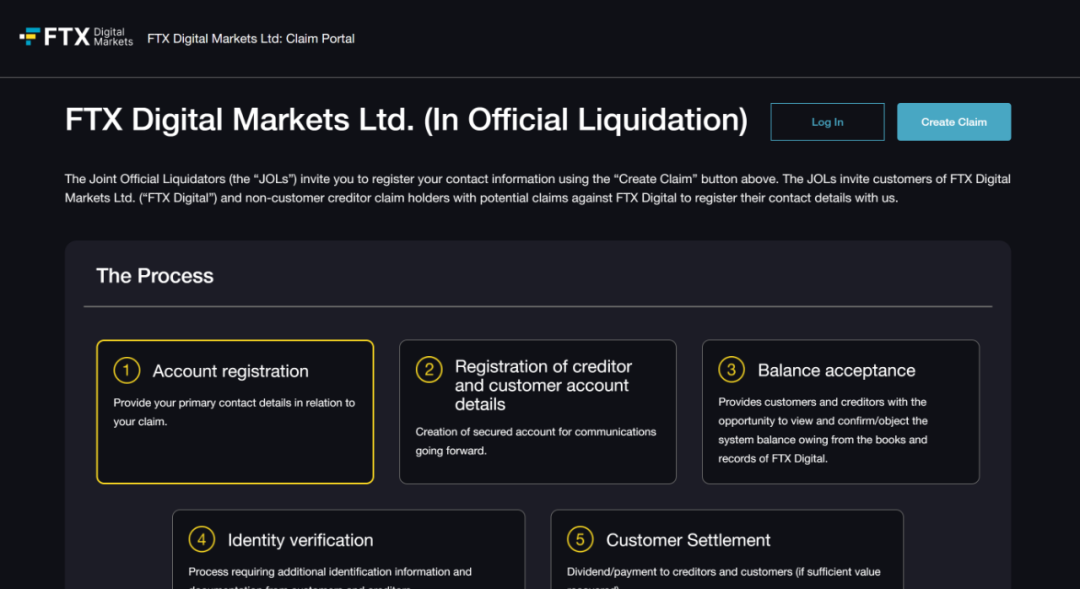
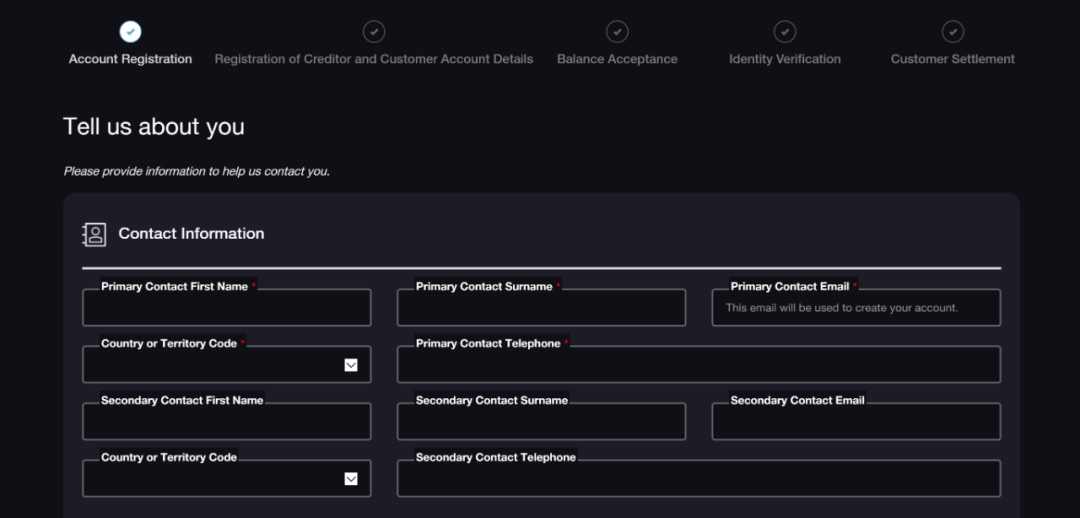
New users must click the blue box in the top-right corner to register a claims account. You’ll need to provide your name, email address, country/region, and contact information. Be sure to use a reliable email address, as login verification codes will be sent there. Any issues with your email could prevent access.
Additionally, carefully select your claimant type: “Individual customer,” “Institutional customer,” or “Non-customer creditor.” If you used FTX as an individual user under your personal name, choose “Individual customer.” If you registered via a corporate entity (e.g., a company), select “Institutional customer.” If you’re not an FTX user but have a claim arising from another relationship (e.g., as an employee or supplier), choose “Non-customer creditor.”
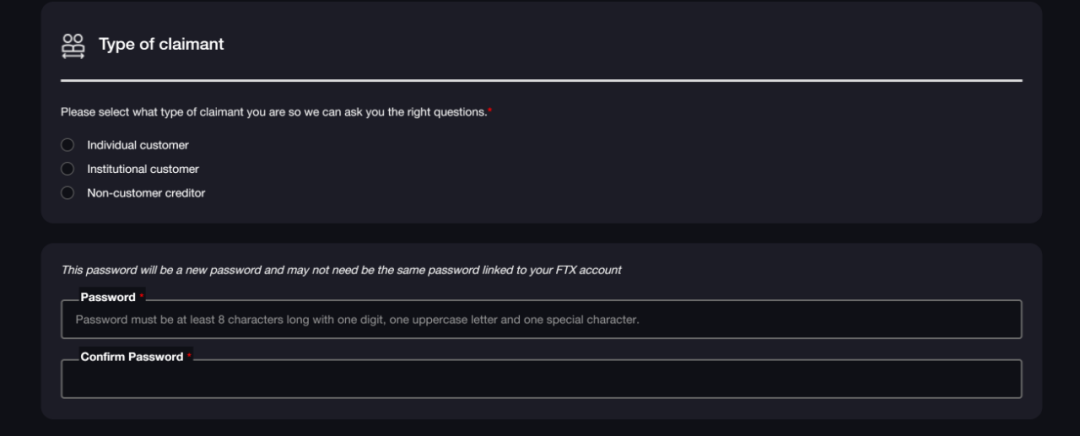
The registration process is relatively lenient—no proof of authorization is required during sign-up, even for institutional or non-customer creditors.
2. Register Creditor and Account Details
Here, it’s crucial to identify your claim type. If you’re an individual or institutional customer, simply submit your FTX account registration details on the application page (for individuals: full name, date of birth, phone number, address, country/region of residence, occupation, nationality, ID number, etc.) to link your claim account with your FTX account. Once linked, you can view your account status.
After linking, the system will redirect to a balance confirmation page. This step is critical—carefully verify that the displayed balances and assets match those in your original FTX account. If everything matches, click the blue button to confirm. These verified assets will then be included in your formal claim submission.
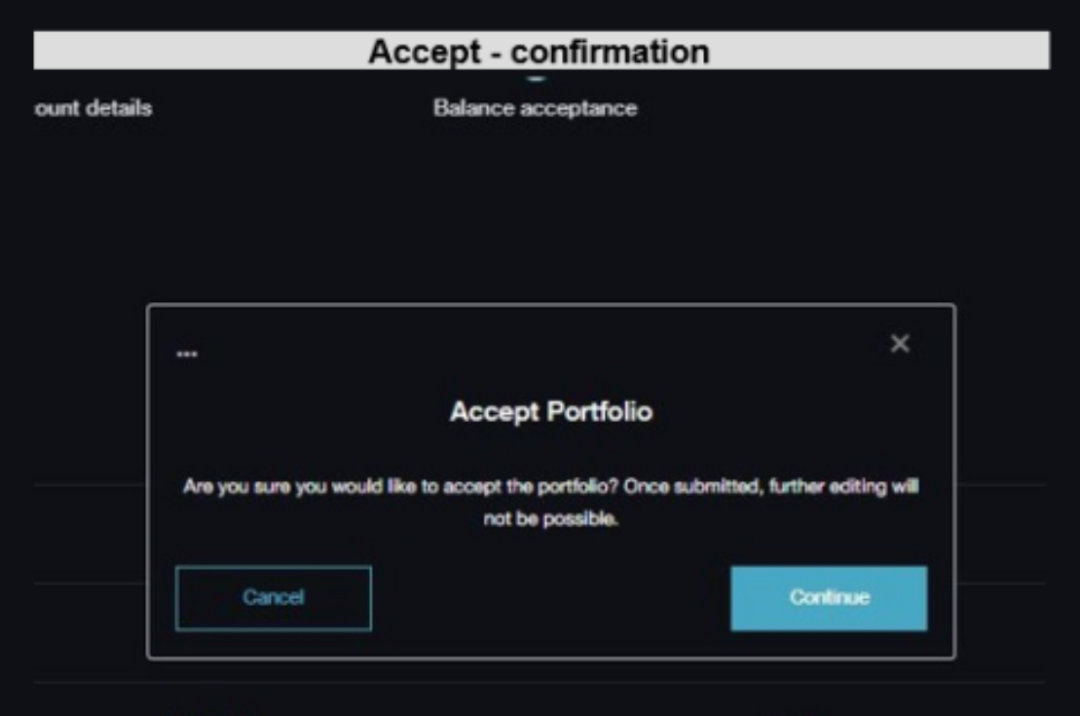
If you dispute the assets listed in your linked account, you must initiate the Dispute Portfolio process and submit additional documentation to the JOL supporting your claim. For such disputes—especially for non-customer creditors—we recommend consulting legal professionals to prepare compliant submissions. This requires expertise in bankruptcy laws of China, the U.S., and The Bahamas.
For transferred (assigned) FTX bankruptcy claims, complete proof of assignment is required. For example, if a member of our team purchased an FTX claim via Xclaim, they must submit the relevant transfer documentation as part of the claim. If your claim includes collateral or security interests, include those supporting documents as well to avoid forfeiture due to failure to declare.
Finally, complete the standard KYC procedure (an identity verification process required for anti-money laundering compliance). Once done, your claim filing is complete.
If I Already Filed a Claim with Kroll, Do I Need to File Again?
As previously noted, the U.S. bankruptcy case for FTX Trading Ltd. was accepted by the Delaware court and entrusted to Kroll, a renowned bankruptcy administration firm, for creditor claim registration. Since the U.S. moved quickly, many affected investors have already filed claims with Kroll. So, if you’ve already filed there, do you need to file again in The Bahamas?
First, understand the legal consequences of dual filings: if you’ve already filed with Kroll and subsequently file through the Bahamian FTX Claims Portal, two automatic legal effects occur:
(1) Your prior claim against FTX Trading Ltd. and its affiliated entities under U.S. bankruptcy law is deemed withdrawn;
(2) Your claim is transferred to the jurisdiction of The Bahamas, where it will be governed, verified, valued, mediated, adjudicated, resolved, and ultimately settled under Bahamian law.

Second, understand that the U.S. and The Bahamas have reached a preliminary agreement regarding asset distribution: after liquidation, all proceeds will be treated as a unified pool for allocation. Therefore, the current Bahamian-led claim filing initiative offers creditors a choice of jurisdiction and applicable law—but will not result in materially unfair treatment between claimants who choose the U.S. versus The Bahamas.
This choice does not increase or decrease the total available assets. However, the selected jurisdiction and governing law may significantly impact whether your claim is recognized, the recognition ratio, the ability to file objections, and the resolution timeline—all of which directly affect your interests. Therefore, Xiao Sa’s team strongly advises consulting qualified legal counsel before making your decision.
Join TechFlow official community to stay tuned
Telegram:https://t.me/TechFlowDaily
X (Twitter):https://x.com/TechFlowPost
X (Twitter) EN:https://x.com/BlockFlow_News






