








Value Investing Is Dead, MEME Lives Forever?
TechFlow Selected TechFlow Selected
Value Investing Is Dead, MEME Lives Forever?
MEME has become a unique cultural symbol and mode of communication in the cryptocurrency community.
 Navigating Web3 tides with focused insights
Author: Dobby, Core Contributor of Biteye
Editor: Crush, Core Contributor of Biteye
BOME and SLERF have ended their explosive rallies, and the market has once again experienced and witnessed another round of overnight wealth creation—another gold rush. Although the meme frenzy hasn't completely faded, the market has briefly regained some calm.
Beyond marveling at the astronomical returns—“a day in crypto equals a year in traditional finance”—many seasoned “degen” investors are asking a critical question: “Why did meme coins surge so early in this cycle?” In past market cycles, after new narratives and concepts peak, meme coins typically emerge as the final act, signaling the end of the bull run. But this time, the usual sector rotation seems rearranged—meme coins broke the script and became a dominant theme during the early to mid-phase of the cycle.
Within the framework of “value investing,” meme coins and shitcoins have traditionally been marginalized—even within the already speculative world of crypto. Yet, many still don’t truly understand what a meme is, let alone the difference between meme coins and shitcoins.
From Dogecoin’s Shiba Inu dog to today’s inscriptions, memes have evolved into a unique cultural symbol and mode of communication in the crypto space. So how have these seemingly absurd or humorous cultural elements gained such prominence in the world of crypto? This article explores the relationship between memes and blockchain, and their impact on cryptocurrency culture.
01 Meme Is Gene
1.1 The Origin of the Meme Concept
When discussing the origin of memes, Richard Dawkins is an unavoidable figure.
In 1976, Richard Dawkins introduced the concept of the “meme” in his groundbreaking book *The Selfish Gene*. In the final chapter, he defined the meme as a unit of cultural transmission, analogous to the gene in biological evolution. A meme can be a melody, an idea, a fashion trend, a linguistic habit, a technology, or any other culturally replicable phenomenon. It spreads from person to person through imitation, replicating itself within human culture. Like genes, memes survive and thrive based on replication fidelity, longevity, and their “attractiveness” or utility to their hosts.
Put simply, a meme can be a joke, a viral phrase, or a meme image—a subculture formed through widespread sharing. And meme coins are one way of monetizing this subcultural value.
With the rise of the internet and social media, memes have become a vital component of global cultural exchange—spreading faster and further than Dawkins could have imagined. Today, memes use humor and satire not only to rapidly disseminate entertainment and information but also to shape public opinion and cultural trends. Their influence is particularly strong in the realm of cryptocurrencies and blockchain technology.
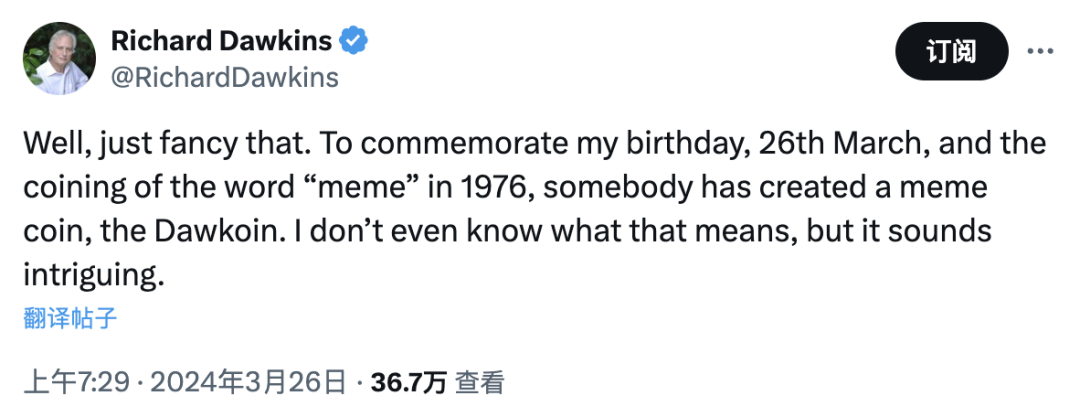
Notably, to honor Dawkins’ birthday on March 26, the community launched a meme coin called “Dawkoin.” Dawkins shared the news on social media without resistance or disdain.
1.2 Bitcoin Is the Original Meme
“In a sense, all crypto tokens contain meme content—just in varying degrees. Over 50% meme content is typical,” recently stated Lanhu Notes, one of the earliest media outlets in the blockchain industry. On a scale from 0 to 100, meme coins like Pepe and Doge score over 99.9%; AI projects carry about 90% meme content; BTC L2s around 80%; DeFi sits at 30–50%.
So, could Bitcoin be considered the original meme?
We know that in January 2009, Satoshi Nakamoto launched the Bitcoin system on a small server in Helsinki, Finland, mining the first block—the “genesis block”—and bringing the initial 50 bitcoins into existence. Technically, Bitcoin was the key that unlocked the door to blockchain, built upon decades of advancing cryptography, distributed storage, and consensus mechanisms.
Yet today, when people talk about Bitcoin, they rarely limit discussion to its technical algorithms. As the first successful cryptocurrency, Bitcoin carries deep philosophical meaning—the mysterious founder Satoshi Nakamoto, and its spirit of challenging traditional financial systems—giving it significance far beyond its technical function.
From this perspective, Bitcoin itself was the first meme—it embodies aspirations for power, freedom, and systemic change. This symbolic meaning transcends its monetary function, turning it into a cultural and social movement.
Some say meme coins represent “attention economics”—the more attention a meme coin captures, the better it is. After 15 years of development, Bitcoin surpassed $71,000—an all-time high—reaching a market cap of $1.398 trillion, overtaking silver ($1.379 trillion) and ranking as the eighth-largest asset globally. Bitcoin now accounts for 49.8% of the total crypto market cap, maintaining a dominant position in the industry.
With the approval of Bitcoin ETFs and the rise of the Bitcoin ecosystem this year, more traders and investors are returning to basics, redirecting attention and liquidity back into Bitcoin’s ecosystem.
Bitcoin is the most attention-grabbing token in crypto—so from this angle, isn’t Bitcoin itself a meme?
1.3 Inscriptions and NFTs: Memes’ “Derivatives”
If memes are seen as expressions of cultural genes, then memes will inevitably diversify—a concept supported by Richard Dawkins’ own theory in *The Selfish Gene*: memes and genes share similarities in transmission and evolution, both replicate, undergo selection pressure, and can mutate under certain conditions.
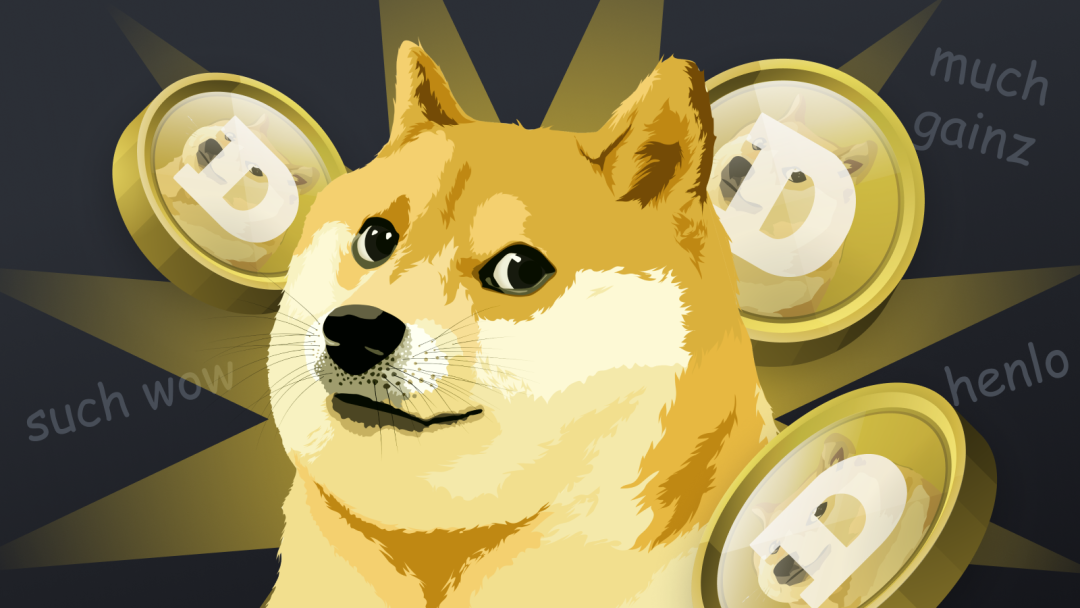
Looking back at the flagship meme coin Dogecoin, it began as a lighthearted version of Bitcoin, symbolized by the popular “Doge” meme (a photo of a Shiba Inu dog with comic inner-monologue text). Its creators never imagined this joke-based currency would gain Elon Musk’s endorsement and grow into today’s largest meme coin by market cap.
After twelve years, the crypto industry has settled into predictable patterns: project teams create new narratives, align with VC firms, farm airdrops, then orchestrate schemes to dump onto retail buyers. In this bull market, only TIA and SOL fit the old-school definition of solid projects—backed by teams, reputable VCs, Binance listings, and hyped-up narratives.
Just as everything seemed to be proceeding normally, the meme sector underwent mutation and divergence—with inscriptions emerging as the disruptor. The rise of “inscriptions” within the Bitcoin ecosystem caught everyone off guard.
From the start, “inscriptions” carried the ethos of “fair launch” and “first is first”—core values of meme culture. Since their emergence in March, skepticism has followed the Bitcoin ecosystem closely. Yet the community continues to insist: “If you have bias, we’ll make the Bitcoin ecosystem rise until you have no choice but to believe.”
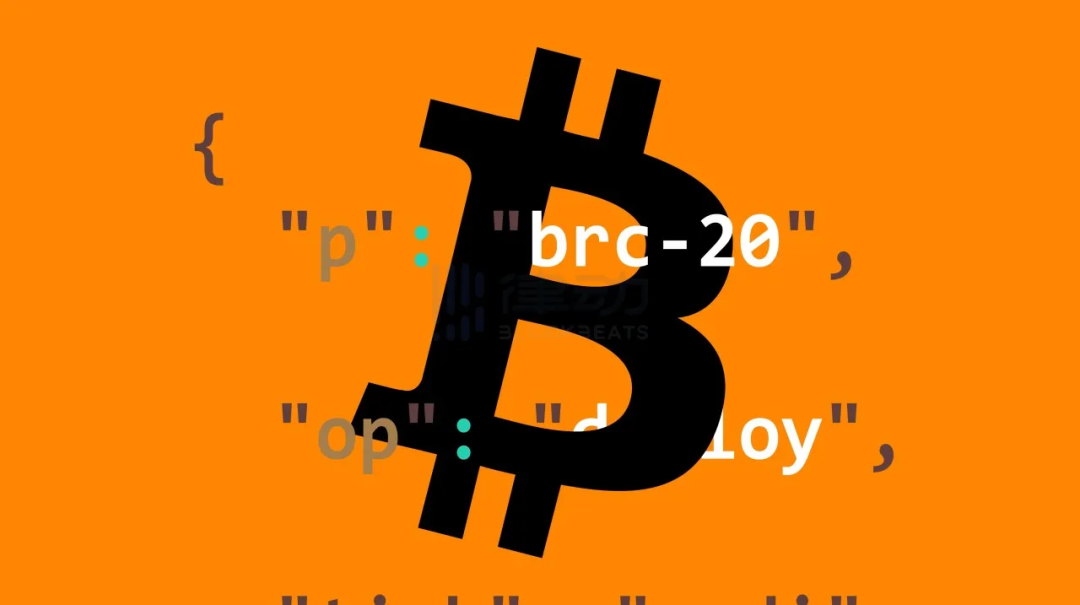
Minting one ORDI (1,000 tokens) costs $2–3. At today’s price of $60 per ORDI, that single mint is now worth $60,000. A year later, if held, this represents a return of over 20,000x.
But inscriptions aren’t the first example of meme mutation—NFTs also reflect meme diversity. As the biggest narrative of the last cycle, NFTs went through a full bull-bear cycle. BAYC, the NFT leader, once dropped below 13 ETH, and countless unsupported NFT artists face even harsher realities—prompting them to seek new paths.
The recent surges of BOME and SLERF show how meme coins can enhance the cultural value and, in turn, boost NFT liquidity. Though different in form, NFTs and meme coins share the same core: cultural expression.
Beyond broad categories, we see cultural derivatives in specific memes too—like Pepe the Frog.

Originally just a character in cartoonist Matt Furie’s 2005 webcomic, Pepe evolved into a widely recognized internet meme. Unlike memes with clear authorship, Pepe attracted a decentralized community of anonymous artists who created countless variations, each playing diverse roles across cultures and platforms.
Pepe the Frog illustrates a unique phenomenon in meme culture: how a single image can spawn a vast, diversified cultural ecosystem. This cultural derivation isn’t mere copying—it involves creative reconstruction and cultural reinterpretation.
02 Crypto Narratives Come and Go, But Meme Culture Endures
As we explore the essence of memes and their relationship with blockchain, we find that together they form a unique cultural and emotional ecosystem within crypto. Blockchain isn’t just a technological revolution—it’s also a massive emotional amplifier. Memes aren’t just jokes; they shape market narratives, drive community engagement, and propel crypto valuations in the blockchain space.
2.1 Crypto Is a Magnifying Glass for Emotion and Narrative
Wherever people gather, there’s drama. Wherever there’s drama, there’s emotion.
Crypto is filled with wild speculation and violently swinging K-lines—not just a capital magnet, but an emotional pressure cooker amplified to extremes.
From investor passion for future tech to fear and greed amid volatility, blockchain—as an emerging field—amplifies fundamental human emotions, shaping market dynamics and investment decisions.
Memes are inherently emotional—they transmit feelings from euphoria to panic, using humor, irony, or exaggeration to spread rapidly across communities, triggering emotional resonance and subtly influencing market direction.
A successful meme can quickly attract massive attention and discussion, driving investor buying behavior and causing short-term price spikes. This is especially common in crypto markets, where sentiment often heavily influences price movements.
Yuval Noah Harari wrote in *Sapiens* that early humans used gossip to exchange social information, building tight-knit groups through interpersonal evaluation.
Later, humans built broader trust through storytelling—creating shared myths like religion, nations, money, and corporations. Similarly, individuals in crypto communities form strong group identities and shared goals through memes and narratives.
This trust based on collective imagination is precisely why memes generate value in crypto—and why they attract so many investors and users.
2.2 Memes Don’t Need Blockchains—Blockchains Need Memes
From Bitcoin to Solana, and now TON and Base, every trending blockchain needs meme coins—actively encouraging or even creating meme culture.
The most iconic example is Solana co-founder Anatoly. At last year’s Solana annual community summit—coinciding with Halloween—Anatoly appeared dressed as a green dinosaur, instantly becoming the most memorable and eye-catching figure. Standing before the crowd, he introduced himself: “I’m Anatoly, and I’m a silly dragon.” He laughed awkwardly, and the entire audience burst into laughter.

What happened next is well known: “silly” became the hottest meme coin, the community rediscovered how smooth trading on Solana felt, and the “Ethereum killer” returned to relevance as the “SBF pick.”
After Solana, it became clear that blockchains could build brand identity and community cohesion through memes. A strong community centered around a specific meme can effectively promote a project, attract new users, and strengthen market positioning.
Now we see TON and Base following suit, eager to capture meme-driven liquidity. Both chains have reached record-high TVLs, with exponential growth in activity and transaction volume. The TON Foundation has even publicly announced hiring a Meme Coin Ecosystem Lead.
2.3 Have We Finally Demystified All These Concepts?
A recent joke: “VCs get excited whenever they see zk + DEPIN + rollup + AI stacked together.” Behind the humor lies a deeper question: Have we truly understood and demystified the various concepts in crypto?
The continued popularity of memes feels like a sarcastic jab at the so-called “inner circle” and their orchestrated games. This sarcasm doesn’t just question the technology—it critiques the crypto market’s blind enthusiasm for new tech and its neglect of real-world applications.
“Since I can’t understand it anyway, I might as well trade memes.” Seasoned degens feel helpless; newcomers are even more confused. Amidst the rapid turnover of crypto narratives, meme culture remains resilient. BOME’s lightning-fast listing on Binance shattered illusions—projects that spent years grinding failed to list, while BOME made it in three days.
Returning to a common community question: “Is the endgame of blockchain just memes?” Or “Is value investing dead, and memes eternal?” While these questions sound absolute, even extreme, one truth is undeniable: for the past decade, blockchain’s primary use has been speculation and trading. Perhaps that’s just reality.
Join TechFlow official community to stay tuned
Telegram:https://t.me/TechFlowDaily
X (Twitter):https://x.com/TechFlowPost
X (Twitter) EN:https://x.com/BlockFlow_News
 @BiteyeCN









