A great meme coin is itself a political movement
TechFlow Selected TechFlow Selected
A great meme coin is itself a political movement
If you're not doing well, either the "technique" is flawed or the "principle" is flawed.
 Navigating Web3 tides with focused insights
Author: Crypto Weituo
The fundamentals of memes are emotion, so I will write this long article in an emotional way—please bear with me and read through it.
First, a story unrelated to memes
In 2013, a broke international student had endured enough of working in a freezing fish warehouse and decided to become a sublandlord. The business model was simple: buy low, sell high—find the cheapest leases and rent them out at the highest possible prices.
Soon, he realized that the most profitable rentals weren’t apartments near campus leased to fellow students, but brand-new units far up north, close to a national park. These buildings were overconstructed, and locals disliked high-density housing, so rents were extremely low. Yet for weekend hikers, they were perfect—camping meant bugs, and hotels nearby were scarce. With just 50% occupancy, annual returns approached 220%.

At the time, Airbnb was just taking off. This broke student quickly became a VIP superhost in the area, managing nearly 50 units and receiving a steady stream of bookings from the platform. He wasn’t alone—over 4,000 local hosts benefited similarly.
If you lived through the “O2O” and “sharing economy” boom, you know what happened next. Like Uber, short-term rentals were deemed a “gray industry” and quietly suppressed by local governments through various indirect measures.
Fortunately, this wasn’t North India. Even under left-wing leadership, property owners still had a voice. This broke student was one of them. Frustrated by unfair treatment, he began organizing through offline community gatherings, lobbying local council members, and even developing self-check-in hardware to help landlords bypass city inspections—raising enforcement costs for authorities.
Eventually, via Airbnb and Facebook, he connected with nearly ten thousand hosts across other cities nationwide, sparking a short-term rental legalization movement—small in scale per state, but undeniably loud. By 2018, when the final state legalized short-term rentals, the movement declared victory.
That broke student was me.
What the hell is this story about?
At its core, I participated in a political movement involving:
1. An oppressed group: short-term rental hosts;
2. A shared interest: income from short-term rentals;
3. A collective demand: legalization of short-term rentals.
It brought together tens of thousands of unrelated individuals, uniting them over years to fight for the same goal using various tactics.
What pushed us past the cynical mindset of “mind your own business” or “why bother?” What made us step beyond our individual interests and join the “struggle”?
First, emotion—the sense of “Why the hell should we accept this?”
Second, interest—the necessity to fight.
Finally, a sense of achievement. Few may have joined such movements before, but once immersed, earning recognition from others (a form of informal status or power) felt more rewarding than making $40,000 a year from a single property.
What does this have to do with MEMEs?
These three elements together form a meme. A great meme coin is itself a political movement, large or small.
It can't be explained merely by memetics as a "viral idea." Memes are just the medium; a truly great meme coin must drive a specific outcome—a group rallying around shared interests to express a collective demand.
The most basic example? PEPE or SHIB in their early days. The meme itself didn’t carry a cause—but their fair on-chain launch allowed everyone (especially those burned by VC or whale pre-mines) to participate. Then came live pump sessions watched by all, turning price monitoring into a shared PvP spectacle, culminating in a push for Binance listing (the shared goal).
This entire process—the live pumping, the streaming, the influencers raging online—is itself a micro political movement. The key to success? How strongly and widely it unites a group around shared interests. (Think back to your own $SLERF rush.)
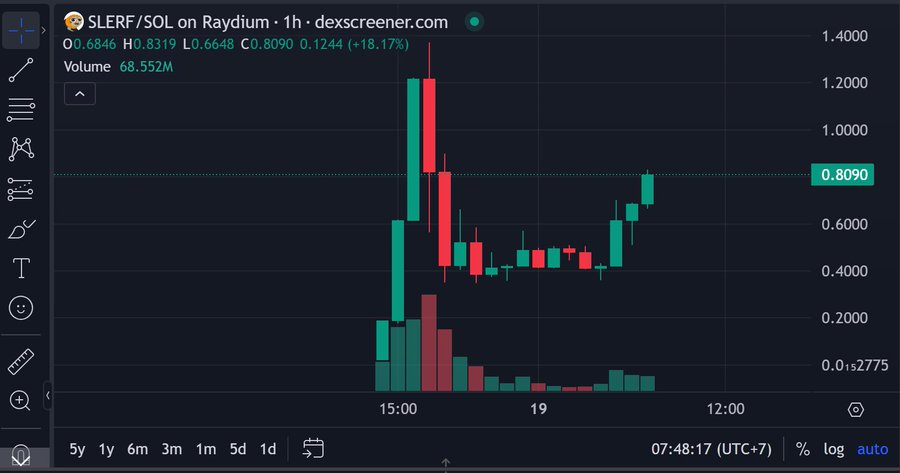
This is exactly what we intuitively feel as “meme strength”—why some make us go “Wow, these people are intense,” “Wow, SLERF’s narrative arc is insane,” or “BITCOIN is cult-level,” while others are just meh, forgotten instantly.
Meme coins are sociological transformations
Even today, VCs wrapped in the aura of “top institutions” criticize meme coins, claiming they devalue all projects and disrupt valuation systems. All I can say is either they’re bitter because their bags got rekt, or they simply lack vision.
On Nasdaq, you can clearly see Nvidia’s valuation, Tesla’s valuation. In VC markets, you can apply models based on sector, team, metrics to estimate a startup’s worth.
But let me ask you—how do you value a social movement?
How do you price MAGA, Italy’s Five Star Movement, Brexit, or Taiwan’s May 19 protests? How do you price the Airbnb legalization campaign I once joined?
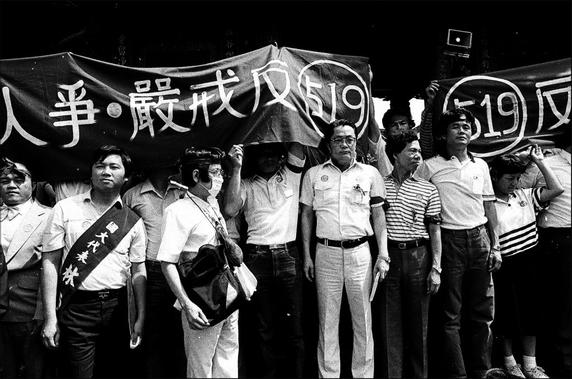
Meme coins are humanity’s first attempt to price and monetize political movements—the shortest path to aligning collective interests within a unified movement.
Ask yourself why your project loses to a meme. Maybe it’s not that they’re better at marketing—maybe your vision is just too small. At best, you’re a minor tech innovation. They? They’re a social revolution.
Why do Chinese teams generally fail at meme coins?
Failure stems from either flawed “technique” or flawed “philosophy.”
First, on “technique”: many Chinese teams sit far from the core circles of the broader ecosystem, unable to form alliances at scale or access effective distribution channels. Simply put, without established networks, insider information, or privileged access, they can’t run successful pumps.
This isn’t necessarily the team’s fault. Honestly, many Western memes aren’t inherently stronger in concept or creativity.
The deeper issue lies in “philosophy”: people raised and educated in China generally lack experience in political participation, let alone organizing political movements.
But many Westerners are different—they’ve engaged with politics firsthand since childhood. Sure, major memes like BabyDoge or Bonk were built by Chinese teams, but as the saying goes: oranges turn bitter when grown south of the Huai River. Some things can’t be mastered overnight.
This is the drunken rambling of an old-school meme player who once hit the streets for a cause. If you’re tired of running “bot honeypots” and want to create your own masterpiece, maybe this helps.
Join TechFlow official community to stay tuned
Telegram:https://t.me/TechFlowDaily
X (Twitter):https://x.com/TechFlowPost
X (Twitter) EN:https://x.com/BlockFlow_News
 @thecryptoskanda