








Why did the Stanford Student-Run Fund choose BTC as its first crypto asset investment?
TechFlow Selected TechFlow Selected
Why did the Stanford Student-Run Fund choose BTC as its first crypto asset investment?
Recently, Blyth, a student-run investment fund at Stanford University, allocated 7% of its portfolio to BTC.
 Navigating Web3 tides with focused insights
Source: zycrypto
Compiled by: Blockchain Knight
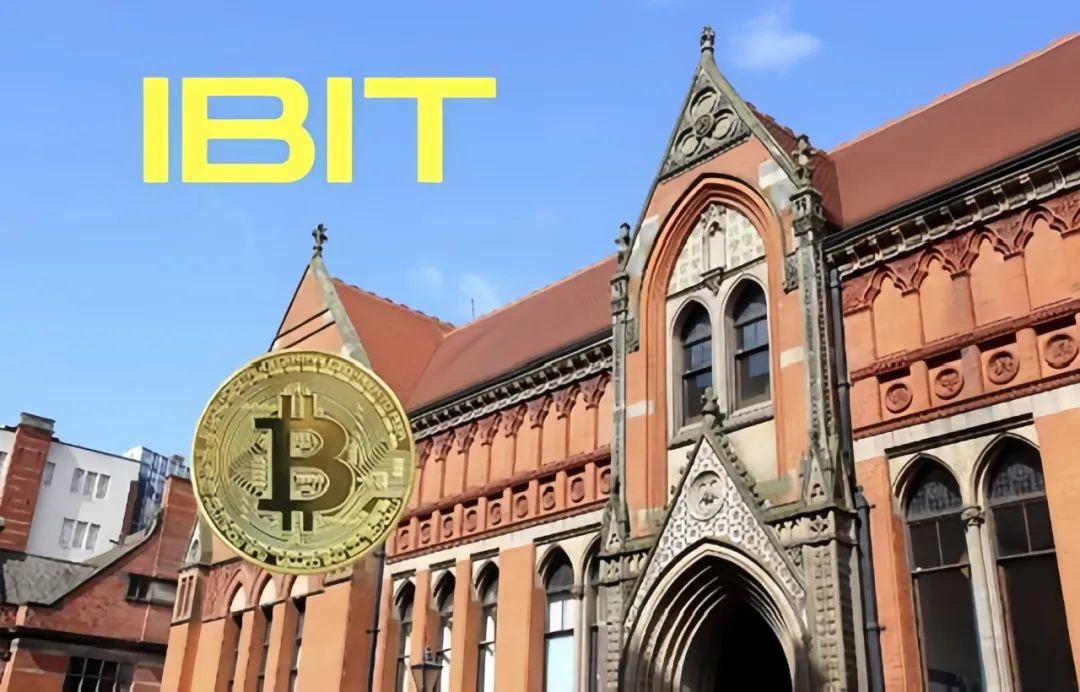
Recently, Blyth, a student-run investment fund at Stanford University, allocated 7% of its portfolio to BTC through BlackRock's iShares BTC ETF (IBIT), marking the fund’s first investment in crypto assets.
The decision to invest in BTC was proposed by Cole Lee, head of Stanford’s blockchain club, in February this year.
Notably, the Blyth Fund was established in 1978 to honor the legendary banker Charles Blythe.
The Blyth Fund manages up to $1 million in expendable funds for Stanford University and is known for its successful strategies in investing in stocks, bonds, and other assets.
On Monday this week, Lee posted on X, justifying his investment rationale based on ETF inflows, the crypto market cycle, and the prevention of "monetary chaos and war."
Lee stated that Blyth’s investment structure includes independent funds, allowing students the freedom to make their own investment decisions.
He further explained that the iShares BTC ETF presented an excellent opportunity for Blyth to purchase its first crypto asset.

Lee added: “In February this year, I recommended IBIT to the Blyth Fund, a student-run fund managing part of Stanford University’s endowment. BTC now accounts for 7% of the portfolio.”
“The ETF is BTC’s IPO moment. Now, buying BTC is as simple as buying a stock.”
Lee also predicted that, triggered by recent ETF approvals, a large number of traditional institutions will flood into the BTC space by the end of 2026.
“Following Tesla and El Salvador’s BTC purchases in 2021, I believe that within two years, multiple governments and dozens of S&P companies will add BTC to their balance sheets.”
Additionally, Lee stated that BTC’s price range in this bull market could reach between $110,000 and $130,000. Compared to current prices, this represents potential upside of 140% to 180%, a forecast based on the completion of cyclical patterns.
Previously, Lee pointed out that a BTC breakout above the $69,000 mark would trigger the liquidation of billions of dollars in short positions, intensifying upward volatility in BTC.
In a tweet on March 6, Lee added that leveraged long positions and accumulation would be shaken loose, subsequently driving BTC higher under the guidance of ETF inflows.
“If BTC fully breaks above $69,000, it will signal further upside potential for BTC.”
Lee also highlighted strong inflows into BTC and expects this trend to continue and gain even greater momentum as BTC prices rise.
Notably, on March 4, BlackRock filed documents with the SEC (U.S. Securities and Exchange Commission) to include BTC in its Strategic Income Opportunities Fund, which manages $36.5 billion in assets.
Moreover, clients of Bank of America and Wells Fargo can now access BTC on demand.
Meanwhile, Morgan Stanley has reportedly conducted due diligence on adding spot BTC ETFs to its brokerage platform.
These developments indicate growing institutional interest in BTC, which could further drive demand and push prices higher.
Join TechFlow official community to stay tuned
Telegram:https://t.me/TechFlowDaily
X (Twitter):https://x.com/TechFlowPost
X (Twitter) EN:https://x.com/BlockFlow_News










