Initia: A modular Rollup-integrated Layer 1 built by former LUNA team members
TechFlow Selected TechFlow Selected
Initia: A modular Rollup-integrated Layer 1 built by former LUNA team members
Using Celestia DA, the incentivized testnet is即将上线—get ahead and discover what sets Initia apart.
 Navigating Web3 tides with focused insights
Author: Kaori
Another modular blockchain has emerged in the Cosmos ecosystem.
On February 27, Layer 1 blockchain Initia raised $7.5 million in a funding round led by Delphi Ventures and Hack VC, with participation from Nascent, Figment Capital, Big Brain, and A.Capital. Angel investors include pseudonymous crypto trader Cobie, DCF God, Split Capital co-founder Zaheer Ebtikar, Fiskantes, WSB Mod, and Celestia COO Nick White. Last October, Initia announced it had received a pre-seed investment from Binance Labs.
Initia aims to build an Apple-like ecosystem within the blockchain space, seeking to eliminate the fragmented experience of multi-chain systems through vertical integration of its tech stack. Initia integrates its base-layer Layer 1 with Layer 2 application-specific chains (officially called "Minitias") via the Initia Rollup framework, enabling message passing between Minitias through IBC. Much like how users in the Apple ecosystem can use various frameworks (React Native, Swift, etc.) to build apps but still access native features such as ApplePay, FaceID, and cross-app communication, Initia replicates this model using modularized network products and built-in functionalities.
What enables this Cosmos SDK-based modular blockchain to prove itself capable of building an Apple-like blockchain ecosystem?
Technical Integration + Incentive Programs: Developer-Friendly
When developers launch a new rollup, they need a set of stack tools—such as indexers, oracles, block explorers, interoperability solutions—to ensure a seamless experience. Features like IBC for interoperability, CCTP for stablecoin liquidity and cross-chain transfer, along with other core infrastructure components, make Initia highly attractive to developers.
Initia’s framework includes a shared infrastructure layer that coordinates security, liquidity, routing, and interoperability across a network of VM-agnostic Optimistic Rollups on OPinit Stack—an interwoven rollup network on Initia. The OPinit Stack provides fraud proofs and rollback capabilities, leveraging Celestia’s underlying data availability (DA) layer to securely scale thousands of CosmosSDK-based rollups running on EVM, MoveVM, or WasmVM.
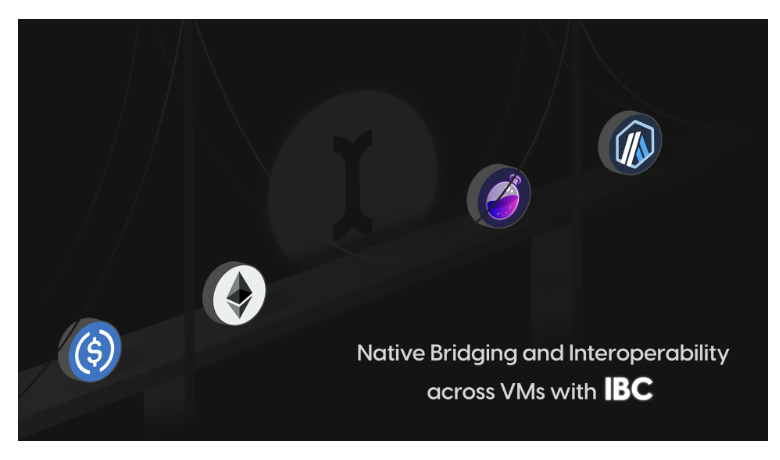
This allows its Layer 2s to instantly bridge and connect via IBC to chains within the Cosmos ecosystem—similar in concept to the modular settlement layer Dymension. According to Initia developers, the key difference is that Dymension uses sovereign rollups, while Initia employs optimistic rollups.
Initia's goal is to enable anyone to easily launch a Layer 2 and gain instant support across various Ethereum and Cosmos networks. More compellingly, Initia plans to allocate a significant portion of its token supply to incentive programs aimed at driving activity on Layer 2s.
As reported by The Block, holders of Initia’s governance token INIT will vote monthly on how to distribute token incentives across Initia’s Layer 2 chains. They can also set KPIs so tokens are only released when certain goals are achieved. “In a sense, this functions like a decentralized grant program built atop Initia, offering additional marketing incentives to Layer 2 teams to attract more users,” said one source.
With countless L1s emerging today, securing a foothold amid fierce competition depends heavily on ecosystem projects. Establishing incentive programs from day one—and knowing how to attract developers to build user-attracting, traffic-generating products—is essential for any blockchain’s success.
Out-of-the-Box Seamless Experience
For regular users, Initia believes dApps will win by delivering seamless experiences without exposing underlying technology directly to end users.
A core component of Initia is its "Enshrined Liquidity," which provides native liquidity at the heart of the Initia network, making it easier for users to swap tokens when moving between Layer 2s. This all happens through InitiaDEX, a native L1 DEX embedded into the chain and strengthened by Enshrined Liquidity.
According to Initia CEO Zon: “If you want to move from USDC on one Layer 2 to ETH on another, there will be a massive liquidity hub on Layer 1 that facilitates the swap as you send your assets.” This is because token holders can stake certain LP tokens together with INIT, and the INIT staked in these pairs can also be used for voting in the incentive program.
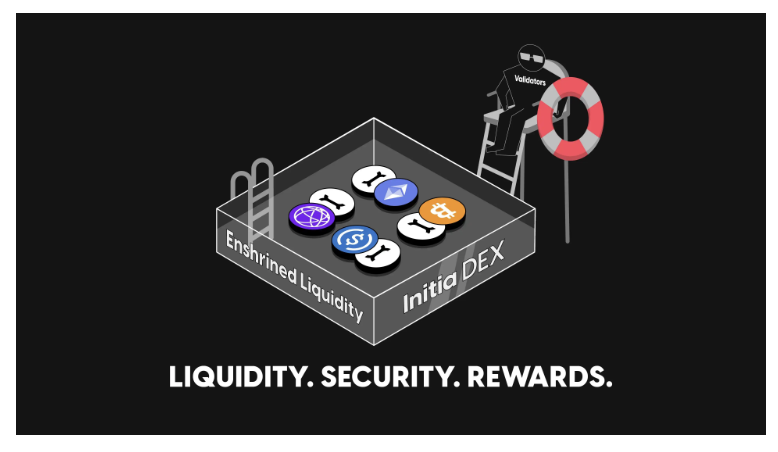
Initia L1 uses dPoS consensus with a twist—users can stake directly in the INIT-TOKEN pair (or just INIT alone) with validators to earn staking rewards, swap fees, and LST yields.
On Initia, anyone can pay transaction fees using any token provided for liquidity. On Layer 2 networks, transaction fees can be paid in any token. Additionally, Initia offers native .init usernames that work across all Layer 2 networks built on Initia, giving token holders a more user-friendly way to send and receive funds.
As previously mentioned, Initia has a shared infrastructure layer where rollups are multifunctional and product-ready, featuring a full suite of out-of-the-box capabilities. Beyond supporting development in Solidity, Move, or CosmWasm with vertical integration into the CosmosSDK side of each app chain, every rollup gains access to native USDC, built-in oracles, instant bridging, cross-chain interoperability via IBC, fiat on-ramps, decentralized sequencers, DAO tools, InitiaScan, EVM and Cosmos wallet signatures, and more.
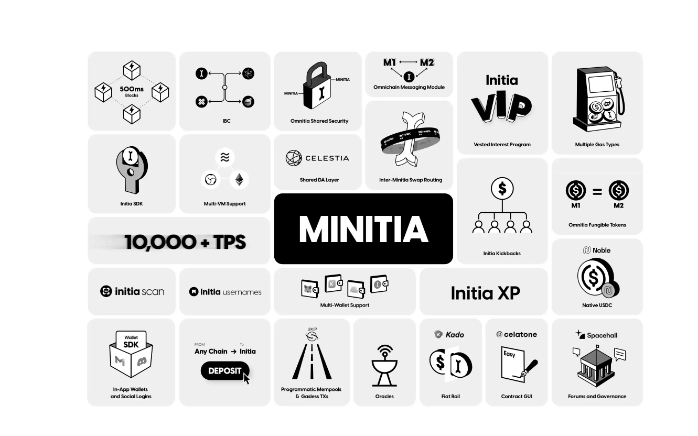
Initia’s product stack ties the entire architecture together, minimizing entry barriers. Key components include:
-
InitiaScan—a seamless multi-chain explorer system with VM-specific tools and information
-
Wallet Widget—EVM and Cosmos wallets sign in via in-app social login
-
Bridget—front-end bridge/on-ramp directly aggregated into rollups
-
Initia App—the home for everything Initia
-
Initia Username—Omnitia’s on-chain identity
-
Initia Wallet—a wallet built specifically for navigating Omnitia
Terraform Labs Roots + Cosmos Ecosystem
Beyond technical mechanisms, the founding team deserves attention.
Initia’s two core developers, Zon and Stan Liu, previously worked at Terraform Labs, the company behind Terra. Zon was a smart contract developer, while Liu focused on MEV research. According to The Block, the two left Terraform Labs to start building a Cosmos-based DeFi blockchain. However, shortly after, the Terra/Luna collapse occurred, prompting them to halt their initial fundraising efforts and return funds to investors.
Afterward, they spent time reflecting before turning their focus to Initia. They later hired developers from the core teams behind Cosmos Hub (the foundational blockchain in the Cosmos ecosystem) and Terra Station (the largest wallet in the Terra ecosystem). As a result, Initia has deep roots in the Cosmos ecosystem and adopts Celestia as its DA layer—potentially allowing TIA stakers to qualify for INIT airdrops.
Initia is currently operating on a closed testnet. Several projects are already building DeFi applications on the testnet, with plans to launch an incentivized testnet around early April and a mainnet targeted for Q2. The official website is not yet live, and further details and documentation are expected to be released following the incentivized testnet launch. Readers can join Initia’s official Discord for updates.
Join TechFlow official community to stay tuned
Telegram:https://t.me/TechFlowDaily
X (Twitter):https://x.com/TechFlowPost
X (Twitter) EN:https://x.com/BlockFlow_News
 BlockBeats