









Airdrop Historical Research Part 2: Where Is the Future for Airdrop Farmers?
TechFlow Selected TechFlow Selected
Airdrop Historical Research Part 2: Where Is the Future for Airdrop Farmers?
Points are essentially a promise of an airdrop, similar to an option.
 Navigating Web3 tides with focused insights
Author: DefiOasis
Introduction: One of the greatest values we’ve discovered in blockchain so far lies in its ability to observe the creation and distribution of capital/wealth in a highly transparent manner. Although this approach is still in an early, immature stage with many flaws, its long-term vision of "transparent and minimally intermediated asset creation and distribution" genuinely holds immense positive potential for society.
Main Content
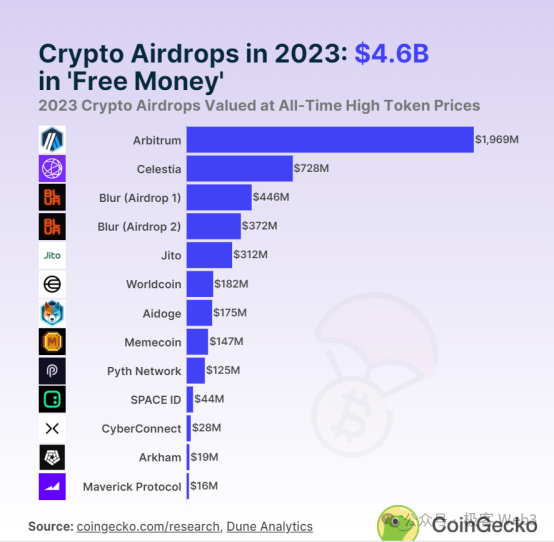
Despite 2023 being a brutally cold bear market, many projects still distributed massive airdrop rewards to users. Free money during bear markets remains irresistible—according to data from Coingecko alone, projects like Arbitrum, Celestia, and Blur have collectively distributed approximately $4.65 billion worth of airdropped tokens over the past year (valued at their all-time high prices).
It has been half a year since Geek Web3 published the educational article "A Brief History of Airdrops and Anti-Sybil Strategies: On the Tradition and Future of Farming Culture" in September 2023. Since then, the Web3 industry has evolved further, and airdrop distribution mechanisms have developed new characteristics and trends. This article analyzes and explains these recent changes in airdrop mechanisms, offering deeper insights into how future airdrop strategies may unfold and evolve.
Point systems have become the primary airdrop benchmark for most projects
The popularity of point-based airdrop systems owes much to Blur founder Tieshun. From Blur to Blast, projects’ methods of measuring user loyalty have shifted from initial trading volume to deposit amounts and duration held.
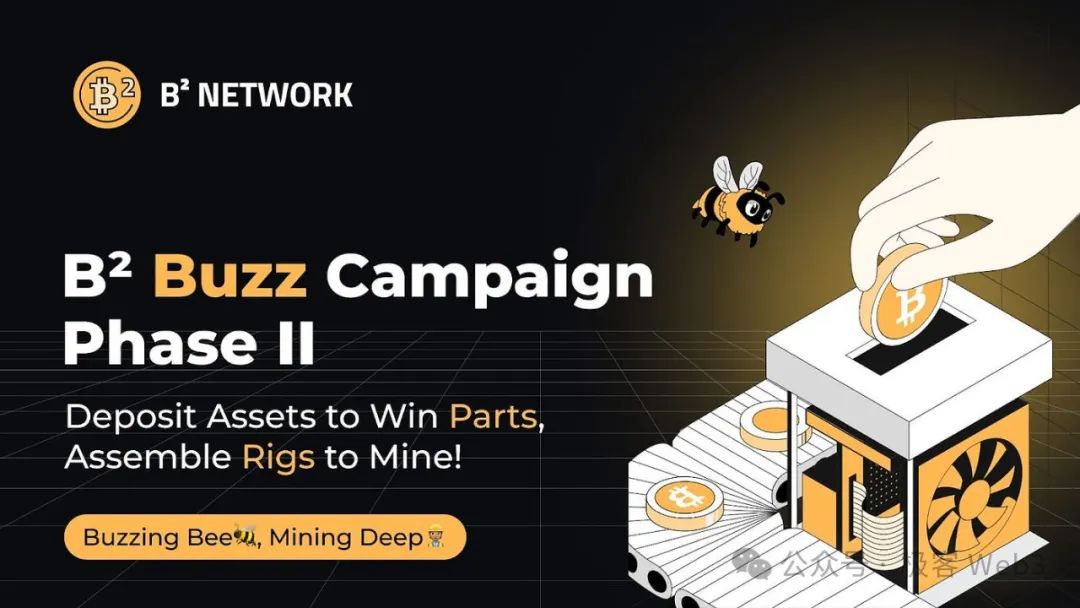
Today, point systems are widely embraced across major public chain ecosystems. Examples include Magic Eden, Marginfi, and Kamino on Solana; Bounce Bit and B² Network in the BTC ecosystem. The rise of restaking has further amplified this trend. Centered around EigenLayer points, restaking platforms such as Swell, KelpDao, and Ether.Fi have entered a "point nesting" arms race, leading to dual or even triple farming of LST and LRT points.
Currently, mainstream point systems can be broadly divided into two categories: those based primarily on trading volume and those based on deposits.
Trading-volume-based point models are common among NFT marketplaces and derivatives exchanges. These projects incentivize users to boost trading volume—a legacy mechanic from earlier airdrop eras. For users, trading volume points can be achieved by repeatedly cycling a single fund across multiple addresses, which inherently encourages multi-account behavior and makes Sybil detection significantly more difficult.
Deposit-based point systems represent another dominant model. This method is commonly adopted by lending protocols, public chains, and popular restaking projects. Points under this model are determined mainly by the amount deposited and time held.
To maximize capital attraction, such projects typically do not restrict the types of assets accepted but actively welcome diverse assets. For example, Merlin Chain’s second phase allows users to stake Bitcoin, certain Ethereum assets, and inscription assets such as BRC-20, Bitmap, and BRC-420.
In today's TVL-driven Web3 landscape, deposit-based point systems aggressively attract capital through anticipated airdrops, often locking user funds for months and imposing significant opportunity costs. In an era where Sybil farmers abound and genuine identities are hard to verify, deposit requirements drastically increase the cost of Sybil attacks—similar in effect to Proof of Stake.
The expectation of deposit-based airdrops leads to almost immediate growth in TVL, becoming a breakthrough strategy for Ethereum Layer2s. As ZK-based Layer2s launched during a bear market, ZkSync and Starknet have struggled with lukewarm TVL performance. Meanwhile, Manta and ZKFair emulated Blast and quickly surpassed these ZK giants in TVL metrics, maintaining strong data even after airdrops concluded.

Additionally, deposit-based projects often employ soft anti-Sybil measures, such as requiring wallet addresses to link Discord or Twitter accounts. However, even with these measures, complete prevention of Sybil attacks remains unattainable.
At its core, deposit-based point systems dramatically raise the cost for farming bots to execute Sybil attacks. Some projects take creative approaches by using whether users have staked in other protocols as a criterion for airdrop eligibility. For instance, Altlayer used “whether one was a staker in EigenLayer and Celestia” as a key qualification during its airdrop.

Altlayer implemented a tiered airdrop system, allocating points based on the amount of TIA staked by users on the Celestia mainnet, clearly defining tiers. Your airdrop reward depends on your historical deposit size within networks like Celestia—not on how many accounts you control. However, individual account allocations remain capped: only those meeting minimum deposit thresholds qualify, with both lower and upper reward limits explicitly defined. This is essentially a tiered incentive model akin to POS.
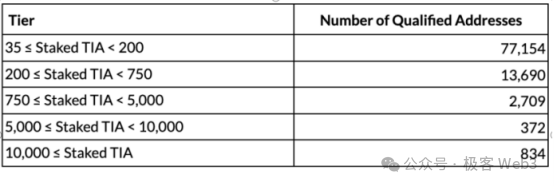
While such distribution methods resist casual farmers, wealthy whales can still split large holdings into multiple smaller deposits (similar to running multiple Ethereum validators by dividing ETH into 32-ETH chunks per node).
Conversely, small-scale farmers aiming to meet the airdrop threshold—e.g., each receiving address must have previously staked at least XX amount—often consolidate funds from multiple addresses into a single qualifying account. Yet from the project’s perspective, “capitalist” Sybils still hold value.
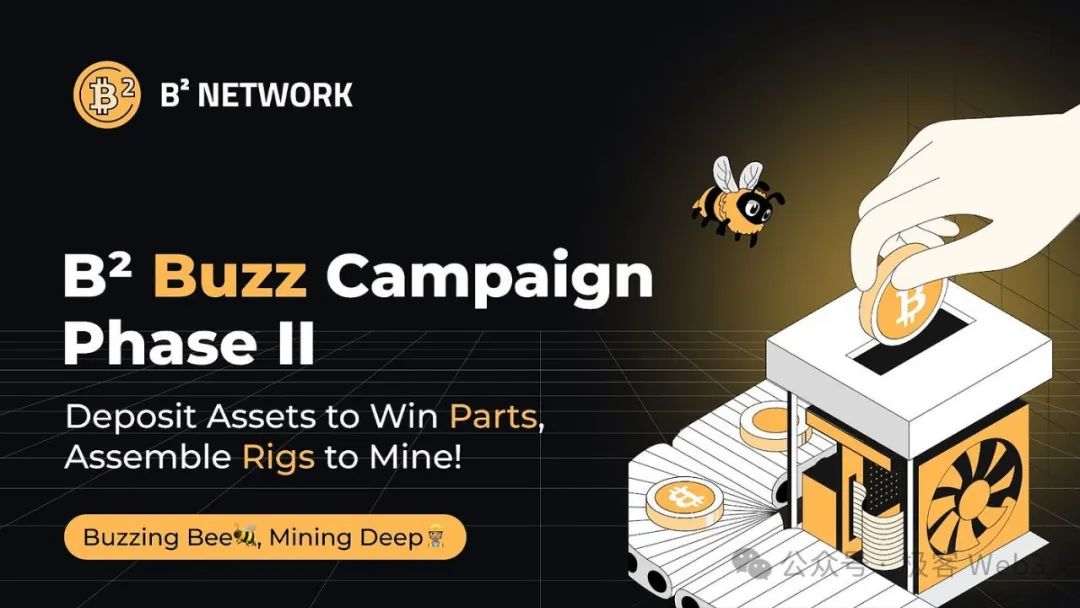
In fact, “everything can be gamified into points.” Beyond the two mainstream models above, hybrid point systems have emerged—such as LineaDeFiVoyageXP, B² Network’s B²Buzz and bsquaredOdyssey, and Galxe quests—that combine transaction volume and fund duration with check-ins, social media interactions, referrals, and team-building tasks to comprehensively measure user contribution across ecosystems.
Points, at their essence, represent a promise of future airdrops—an option-like instrument: you incur costs today in exchange for uncertain future returns.
Unlike DeFi mining with fixed APYs, point farming forces users to make decisions under uncertainty—based on unpublished tokenomics, undisclosed airdrop plans, and unpredictable market conditions. Mining points thus becomes a game of asymmetric information between users and projects, testing users’ research and analytical skills.
Moreover, airdrop points are inherently inflationary; for small holders, participation by large players dilutes individual shares. Of course, this mirrors Ethereum staking—those with larger stakes earn disproportionately higher rewards (a timeless rule).
Whether based on trading volume or holding duration, pure capital-based point systems inevitably channel most rewards to whales. To balance this, some projects introduce lottery-style mechanics—blind boxes or random point draws—to redistribute benefits to smaller participants.
However, critics argue that point systems increasingly resemble exploitative Web2 gamification, burdening users with complex tasks. Communities increasingly question: Are users experiencing the ecosystem—or becoming unpaid laborers for projects?
Airdrop targets increasingly focus on core users, with "inclusive普惠" targeting multi-chain participants
Broad-spectrum airdrops using multiple criteria once aimed to satisfy as many users as possible, winning broad community favor. But as farming syndicates intensify competition, projects now rely on stricter filters to target genuine contributors, causing EVM-wide blanket airdrops to fade away.
Non-EVM projects like Sei, Celestia, and Dymension have introduced a new twist: broad “sunshine普惠” airdrops focused on high-quality users across multiple chains.
Typically, these projects evaluate high-value users through multiple lenses—top active users on partner protocols across EVM and Solana chains with substantial capital—and assess on-chain activity via transaction frequency, interaction value, gas consumption, and other dimensions to identify truly engaged power users.
On the other hand, airdrops are frequently awarded to long-term stakers—especially large stakers—with representatives including ATOM, TIA, and INJ stakers in the Cosmos ecosystem. Strictly speaking, staking-based airdrops aren’t new—in the last cycle, ATOM stakers received airdrops from multiple Cosmos-related projects. However, during bear markets, airdrop gains often failed to offset losses from falling ATOM prices, making this benefit overlooked.
(Early Celestia stakers' profits triggered FOMO—image source: @jaga1117)
Fueled by the modular blockchain narrative, projects promoting “stake-to-airdrop” have multiplied, amplified by the popularity of restaking. This has reignited widespread FOMO across communities, with everyone hunting for the next “golden shovel.” For example, PythNetwork attracted over 100,000 stakers despite having no announced APY or airdrop details. However, as the number of staking addresses and total amounts grow, the minimum airdrop threshold will likely keep rising.
This staking frenzy has led to a self-reinforcing “stake-nesting” ecosystem. When Project A distributes airdrops to stakers of Partner Platform B’s token, and then launches its own staking mechanism, users believe locking tokens on Platform A could yield future airdrops from Projects C and D. This airdrop expectation (essentially PUA) effectively locks in capital from recipients.
Under such recursive dynamics, an infinite stake nesting loop (A→B→C→D) forms. Users ultimately sacrifice opportunity cost in pursuit of airdrop returns. Since airdropped tokens differ psychologically from purchased ones—lower cost basis and reduced mental pressure—users are more willing to lock funds long-term on platforms promising staking-based airdrops.
Beyond large stakers, some projects also grant airdrops to blue-chip NFT holders—such as Ethereum’s Pudgy Penguins, Bored Ape Yacht Club, CryptoPunks, Comomos’ BadKids, and Solana’s Mad Lads—whose holders are typically considered OG community members.

In summary, while inclusive airdrops bring joy to all, current distributions prioritize high-quality active users and large stakers. On another level, multi-chain “sunshine普惠” airdrops are typically used by non-EVM or emerging ecosystems as a “poor man’s marketing strategy,” aiming to gain reputation and attract users from other ecosystems. Ultimately, projects aim to deliver airdrops to those who contribute meaningfully to ecosystem growth, user engagement, and capital retention.
Future reference criteria for airdrop rules
Beyond the above, we’ve identified several emerging trends that could become future benchmarks for airdrop eligibility:
1. Official NFTs linked to airdrop entitlements: Official NFTs are gradually becoming de facto standards for airdrops. Though not formally tied to guaranteed allocations, frequent mentions or indirect endorsements by project teams on social media have turned them into unwritten rules.
After Altlayer OGBadge and OhOttie! NFT holders received substantial airdrops, community FOMO surged. Now, official NFTs from yet-to-airdrop projects like EigenLayer, zkSync, and Berachain are seen as essential assets to acquire.
But determining whether these NFTs are mere collectibles or actual airdrop tickets requires strong predictive ability and deep observation of project sentiment. Moreover, these “rights-bearing” NFTs have become potential pre-token monetization channels due to PUA-driven speculation, with insider trading (rat farming) rampant.
2. Growing emphasis on rewarding developers: Blast split its airdrop equally between regular users and developers. Celestia allocated one-third of its airdrop to GitHub developers. Starknet nearly openly rewarded developer contributions. Increasingly, top-tier projects are shifting airdrop focus toward developers. This turns “contributing code” or “posing as legitimate developers” into a new farming tactic. Low-quality projects are flooding chains hoping for ecosystem rewards—a trend likely to worsen. New countermeasures will likely emerge (AI moderation seems inevitable).
3. Collaborating with professional Sybil-hunting firms to screen eligible users: Recently, Celestia and Manta partnered with TrustaLabs to filter qualified users. Linea offered anti-Sybil solutions like POH verification via Nomis, Gitcoin Passport, and Clique. Such collaborations appear to be a growing trend.
These agencies analyze cross-chain data and depth of participation across airdropped projects to assess Sybil risk more holistically. However, they’re criticized for being overly strict or unintelligent, sometimes flagging genuine users. For example, malicious transfers ("poisoning") to known Sybil addresses can wrongly taint innocent wallets.
Alternative “innovation and diffusion” among farming users
1. Expansion from EVM chains to alternative chains
As information becomes more transparent and EVM ecosystems mature, airdrop allocations on EVM chains—especially crowded Ethereum Layer2s—have become a zero-sum game. Ordinary users cannot compete on capital or activity levels, and poor ROI drives farmers to explore opportunities elsewhere—on chains like Sui, Aptos, and Solana, which offer solid TVL or capital backing.
The spillover effect from EVM users is evident in recent surges in user activity and TVL on chains like Sui and Solana. Simple interactions on platforms like Jupiter can yield airdrop chances—common even in the BTC ecosystem.
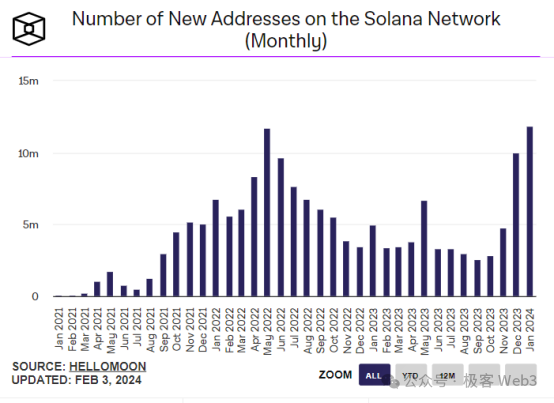
(Wealth-generation effects have reactivated many new users on Solana)
2. Shifting focus from well-funded to lean-and-mean projects
Well-funded projects, flush with cash, tend to have prolonged airdrop cycles, stretching out farmer timelines indefinitely—making delayed returns the norm. Additionally, heavy funding implies stability, attracting mass participation that dilutes individual airdrop shares.
Thus, some farmers are pivoting to leaner, niche projects—with modest disclosed funding but fewer participants, offering better farming ROI. Once-popular “three clowns”—Starknet, LayerZero, and zkSync—have seen varying degrees of declining activity.
Another farming strategy involves targeting projects backed by major exchanges. Since airdrop token value hinges on listing expectations, many farming efforts center on projects affiliated with Binance, OKX, Coinbase, etc.—such as those funded by Binance Labs Fund, Coinbase Ventures, or built within exchange-owned public chain ecosystems. Another niche strategy focuses on lesser-known projects funded by top VCs like Paradigm or a16z, especially when investment sizes are small.
Other obscure airdrop rules—like consistent NFP check-ins or Arkham registration—can yield satisfying per-capita rewards. But once a rare rule generates wealth effects, it quickly becomes consensus-driven and saturated. Copypasting such strategies for sustained gains may no longer be viable. This market—and the world—is full of uncertainty. Past experiences don’t guarantee future results. Every “rule” or “convention” may soon be rewritten.
Perhaps every category leader attempts to invent new airdrop rules, potentially bringing innovation. But fundamentally, projects consistently reward users who are “early, deeply involved, and capital-contributing.”
Controversy: The博弈between farming users and projects
Recently, Starknet sparked backlash by calling airdrop-focused users “digital beggars” and creating a dedicated “digital beggars” channel on its official Discord. Similar conflicts occurred with Scroll, where team members later personally clashed with the community, even blocking users on social media—triggering outrage. Though apologies followed, community resentment lingered. This PR crisis created reverse marketing effects—worth analyzing as a case study.
This incident exposed the delicate relationship between airdrop farmers and project teams. An implicit understanding formed over years of airdrop culture—but misaligned expectations have caused friction. Many users view airdrops as earned “wages,” arguing that their activity during bear markets—paying fees, generating volume, creating illusions of prosperity—deserves compensation. Yet projects may not fully recognize such instrumental motivations.
During the early days of airdrops (perhaps pre-2021), when farming groups were smaller and real users dominated, projects welcomed low-net-worth participants due to good retention rates. But as discussed, the influx of mass farmers has steadily eroded this mutual recognition model.
Furthermore, airdrops should not be treated as endpoints. Successful airdrop programs can actually boost post-airdrop user activity. After Jupiter’s first airdrop, its DAU briefly surpassed Uniswap’s. Arbitrum’s STIP grants and Optimism’s Op Grants have kept both chains’ activity consistently high.
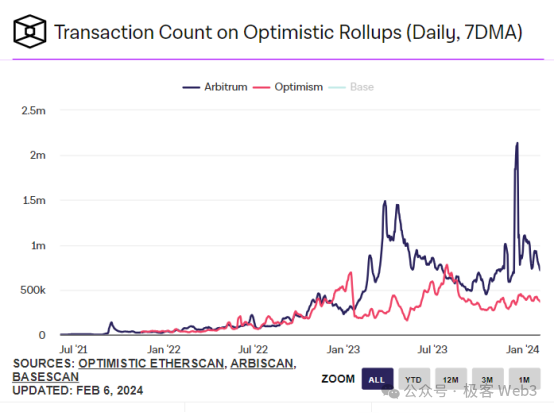
(Arbitrum and Optimism remained active post-airdrop)
Some projects find alternative ways to lock capital—by supporting ecosystem apps or developers. Even Base, which hasn’t issued a token, attracted large investors through profitable applications like friend.tech and Bold, building protocol stickiness. Yet even stellar apps like Uniswap faced stagnant TVL before launching their tokens. In short, airdrops are powerful tools when communities stall, growth falters, or decline sets in—but they should never be the final resort.
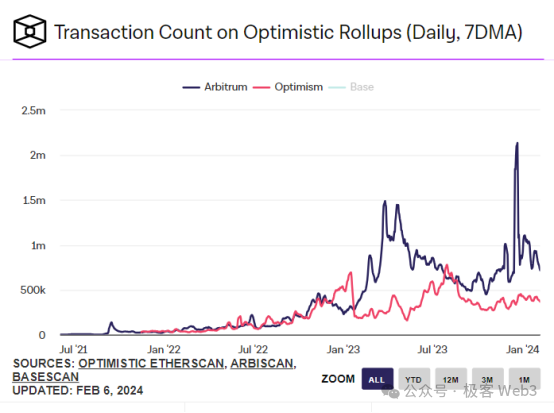
(Throughout the long bear market, farming users generated significant revenue for ZkSync)
Conclusion
Community members commonly complain: farmers sustain on-chain metrics, helping projects survive bear markets. Yet many projects treat farmers with indifference while subtly encouraging interactions through hints or third-party tasks—PUA-ing users into farming without disclosing airdrop plans. This hypocrisy breeds negative sentiment.
Deposit-based airdrops, which directly attract capital, essentially rent user liquidity in exchange for future airdrop promises. Users must weigh opportunity costs carefully.
From interaction-based to deposit-based criteria, the future standard may increasingly revolve around users’ locked capital—a reflection of evolving demands and negotiations between users and projects. However, this tension may ease as bull markets approach and crypto conditions improve. The prisoner’s dilemma of bear-market airdrops could resolve as capital flows back into the market. Recent jokes about “restaking protocols holding more ETH than users” highlight the imbalance. As the dynamic shifts from too many users to too few, project attitudes may change—from rejecting farmers to competing for them.
Projects don’t intend to alienate communities—they simply need to tread carefully amid thousands of farming studios. Today, getting rich via airdrops is largely unrealistic without exceptional research skills or extraordinary luck in spotting undervalued niche projects. For farmers, the golden age of universal airdrops and easy money is over. Where airdrop narratives go from here depends on that classic truth: “Success requires personal effort—but also timing and historical context.”
Join TechFlow official community to stay tuned
Telegram:https://t.me/TechFlowDaily
X (Twitter):https://x.com/TechFlowPost
X (Twitter) EN:https://x.com/BlockFlow_News
 @godrealmx










