The First Starknet Appchain! A Quick Read on the Derivatives Exchange Paradex
TechFlow Selected TechFlow Selected
The First Starknet Appchain! A Quick Read on the Derivatives Exchange Paradex
Incubated by the institutional liquidity network Paradigm and developed in collaboration with StarkWare, quickly read about the Paradex architecture and points program.
 Navigating Web3 tides with focused insights
Author: Karen, Foresight News
As the first appchain on Starknet and a cryptocurrency derivatives exchange, Paradex is emerging into the spotlight and has gained official recognition and exposure from StarkWare.
What is Paradex?
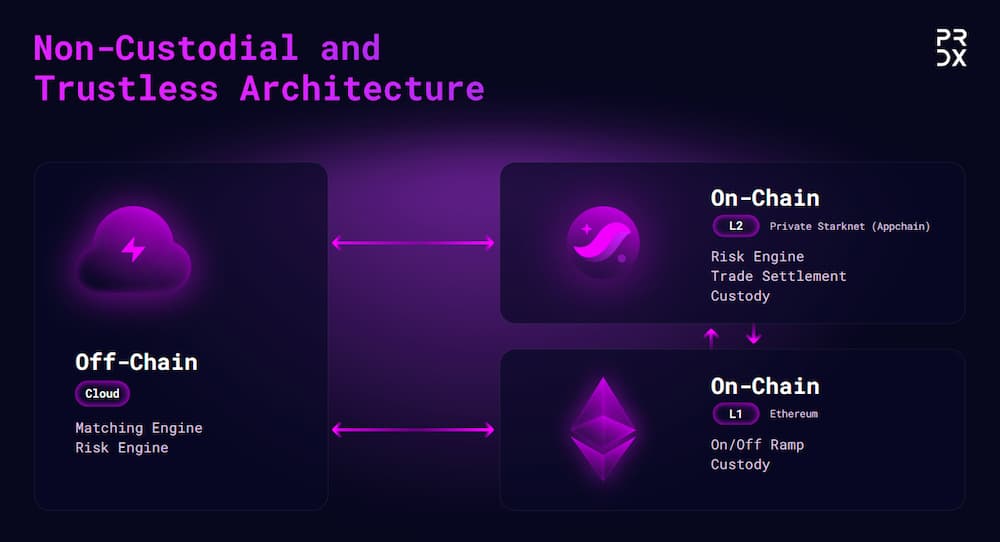
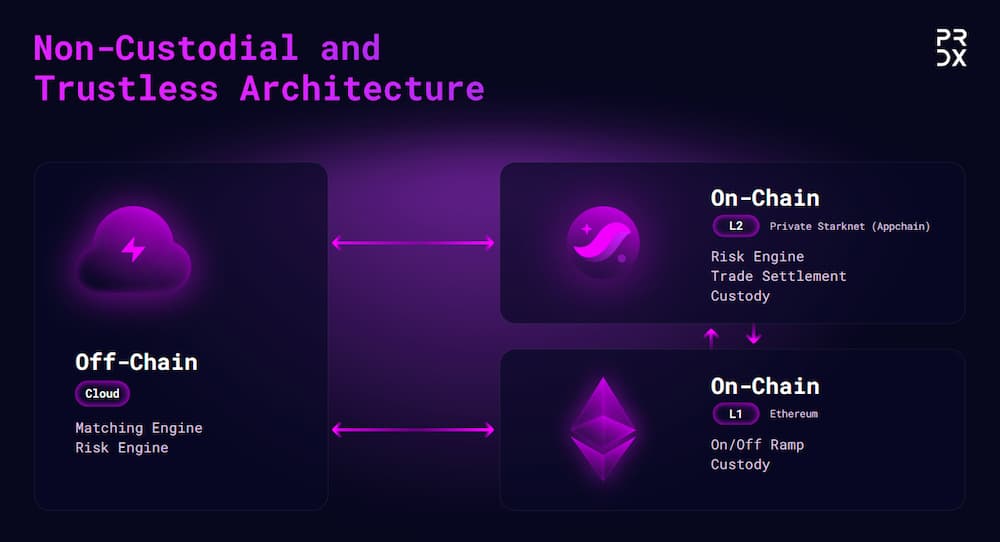
Paradex is the first Starknet appchain and a high-performance cryptocurrency derivatives exchange built on a Starknet-based application-specific chain. Paradex offers users derivative services through self-custody and trustless infrastructure, with its matching engine operating off-chain and risk engine on-chain—striking a balance between transparency, liquidity, and capital efficiency.
Paradex was incubated by Paradigm, an institutional crypto liquidity network (unrelated to the venture firm of the same name), and developed in collaboration with StarkWare.
Paradigm aims to provide traders with on-demand liquidity while balancing trading preferences, execution costs, and immediacy. According to its official website, Paradigm has achieved a cumulative trading volume of $348 billion. In December 2021, Paradigm raised $35 million in a Series A round led by Jump Capital and Alameda Ventures, with participation from Genesis Trading, QCP Capital, among others. Earlier seed investors included Dragonfly Capital, Digital Money Group, and Mirana Ventures.
Paradex Architecture and Features
Paradex is a hybrid trading system composed of both off-chain (cloud) and on-chain components—a key differentiator. The risk engine runs on-chain, while the matching engine operates in the cloud. Users interact by submitting orders. The cloud evaluates whether an order would cause an account to exceed its risk limits; if so, the order is rejected. Once an order matches with another on the cloud-based order book, it is sent on-chain. Off-chain account balances are then updated, allowing users to continue trading.
Regarding fee structure, Paradex applies two distinct rates for makers and takers, aiming to incentivize liquidity provision and balance market supply and demand. Maker orders add liquidity to the order book (remaining listed until matched), whereas taker orders match against existing orders, removing liquidity. On Paradex, the maker fee rate is -0.005%, and the taker fee rate is 0.03%.
That is, if a user places a maker order with a notional value of $10,000, they will receive 0.005% of the notional traded amount as a rebate—$0.50. If placing a taker order of $10,000 notional value, the user will be charged 0.03% of $10,000.
Currently, Paradex only accepts USDC as collateral but plans to transition to a multi-collateral model supporting more cryptocurrencies. Additionally, all profit and loss calculations are denominated in USDC.
Paradex currently supports only cross-margin mode. To open isolated positions, users can register a new account. For liquidations, Paradex conducts regular health checks—comparing account value against maintenance margin requirements. If an account's value falls below this threshold, it is marked as unhealthy and may be force-liquidated. All liquidations are handled internally by the insurance fund.
To ensure platform solvency, Paradex employs a tiered approach:
1. Insurance Fund;
2. External Liquidator Program (not yet launched);
3. Socialized Losses.
Another key feature of Starknet is reduced onboarding complexity. To allow users to avoid managing separate Starknet wallets while still using familiar tools like MetaMask, Paradex has embedded a Starknet wallet directly within its application.
Within the Paradex app, users first connect their Ethereum wallet and then sign an "Onboarding" transaction in the Paradex UI. This generates a Starknet private key deterministically based on the user’s Ethereum L1 signature. During transactions, this Starknet private key signs all Layer 2 authorized actions, with the UI automatically executing these signatures when needed. Note that transfers from non-Paradex L2 wallets to Paradex L2 wallets are currently unsupported—users can only perform cross-chain operations via the Paradex Portfolio page from their Ethereum wallet.
Paradex Points Program
Paradex launched its public testnet on the mainnet on February 19 and introduced a points program and leaderboard to incentivize user participation.
According to Paradex’s published roadmap, governance will begin in Q2 2024, enabling community voting on protocol upgrades. This suggests that Paradex may launch a token in Q2.
Currently, Paradex Points can only be earned through providing liquidity and trading. Liquidity provision includes liquidity supplying and maker trading volume. A dynamic score (Liquidity Provider Score) is calculated per wallet based on quote quality and maker trading volume across contracts. Then, each wallet’s percentage share of the total score pool determines its allocation of points per instrument.
Under the trading fee points program, a dynamic score (Trading Fee Score) is calculated per wallet based on recent fees paid per instrument (e.g., BTC-USD-PERP). Each wallet’s percentage of the total score pool determines its share of overall trader points per instrument.
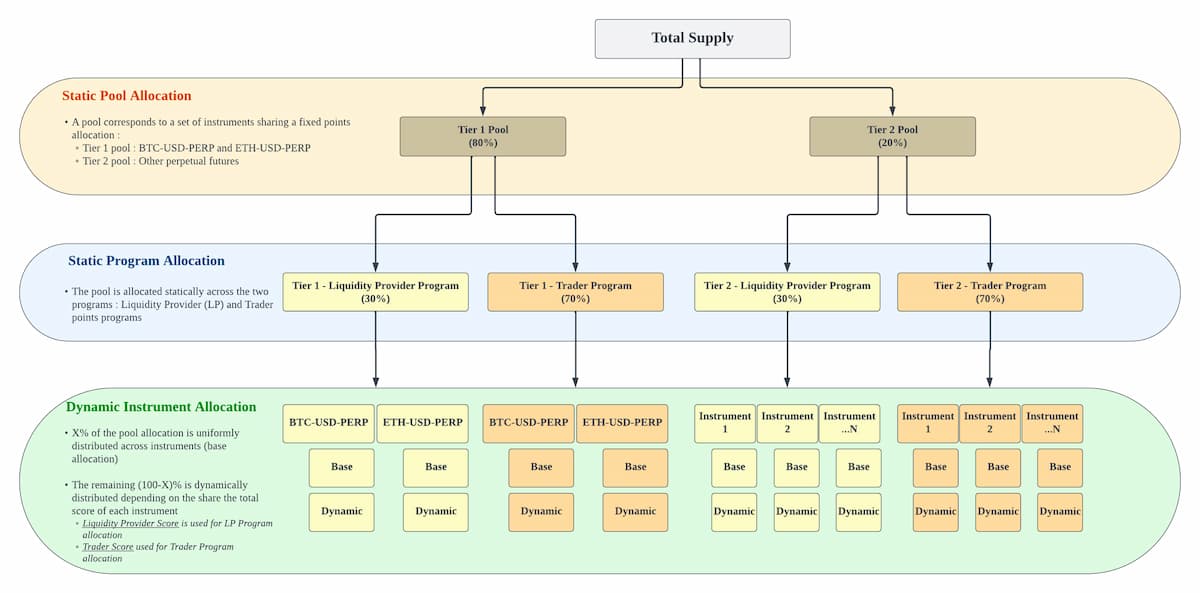
According to official data, Paradex has recorded a cumulative trading volume of $8.6 billion, with daily average volume reaching approximately $170 million over the past week. Current open interest stands at $3.9 million, TVL at $6.9 million, and total user count at just 191.
Overall, as a high-performance cryptocurrency derivatives exchange built on Starknet, Paradex features a unique architecture and incentive mechanism, delivering an efficient and transparent trading experience. However, while its in-app wallet provides convenience, it may also limit interoperability and broader user experience. As markets evolve and competition intensifies, Paradex must continuously innovate and refine its products and services to meet changing market demands.
Join TechFlow official community to stay tuned
Telegram:https://t.me/TechFlowDaily
X (Twitter):https://x.com/TechFlowPost
X (Twitter) EN:https://x.com/BlockFlow_News
 Foresight News