








Hal Finney in the New Emails: The Person Closest to "Satoshi Nakamoto"?
TechFlow Selected TechFlow Selected
Hal Finney in the New Emails: The Person Closest to "Satoshi Nakamoto"?
Hal could be Satoshi Nakamoto, or part of Satoshi Nakamoto, but it gradually encompasses all of us.
 Navigating Web3 tides with focused insights
Author: Adam Cochran
Translation: Frank, Foresight News
Editor's Note: Recently, Martti Malmi (Foresight News note: an early Bitcoin developer, better known in the community by his pseudonym Sirius), a former collaborator of Satoshi Nakamoto, disclosed his complete email correspondence with Satoshi—a critical addition to the "Satoshi" archive. (Recommended reading: Unearthed After 15 Years: The Untold Story of Satoshi and Bitcoin Hidden in Emails).
Hal Finney, as a pioneer and core developer of Bitcoin, was the first person ever to receive Bitcoin via a transaction—on January 11, 2009, Hal Finney posted the first public tweet mentioning Bitcoin: “Running bitcoin,” after which Satoshi sent him 10 BTC.
Thus, Hal Finney has long been considered one of the most likely real identities behind 'Satoshi Nakamoto'. This article aims to dissect the newly disclosed email records to further explore any potential connection between Hal Finney and the identity of 'Satoshi'.
I have always believed that Hal Finney (Hal finney) was the central figure behind the persona of 'Satoshi', possibly accompanied by one or two minor collaborators, and I believe that the recently released email correspondence between Martti Malmi (Sirius) and Satoshi strongly supports this view:
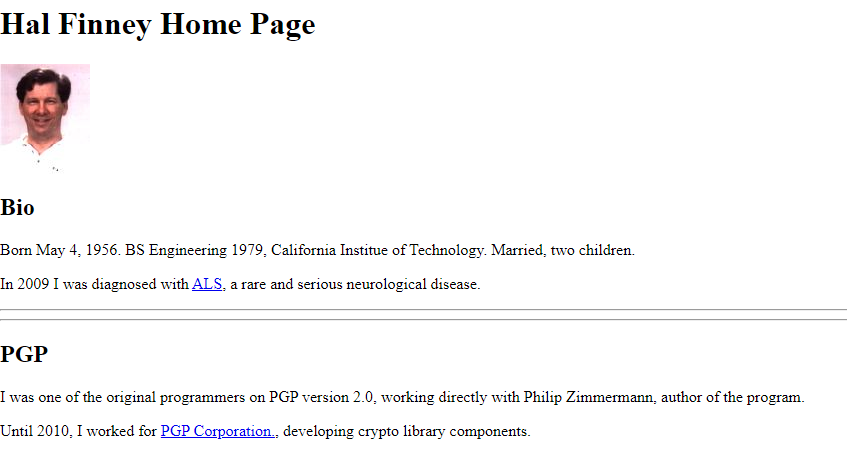
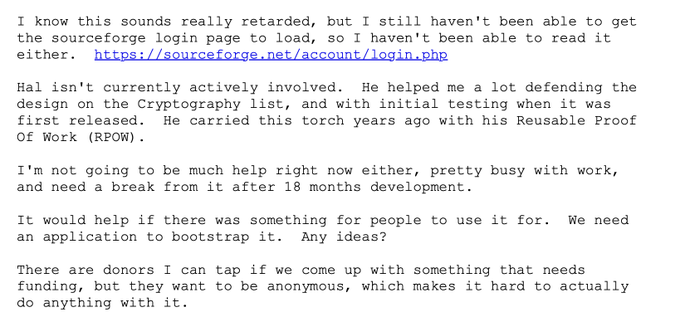
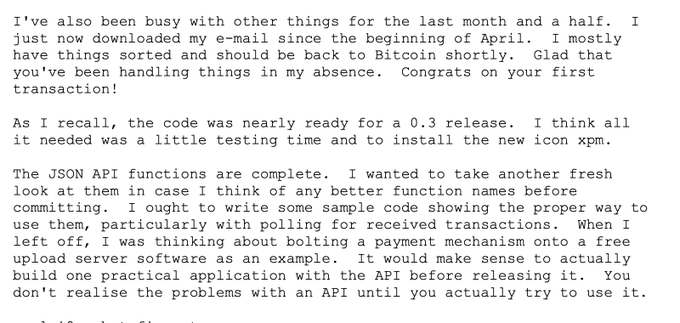
First, we now know that in July 2009, Satoshi indeed had another job—and at that time, Hal Finney was working at PGP Corporation, a U.S.-based cryptography company, creating a clear temporal overlap. In the months leading up to this period, Hal Finney’s health began deteriorating rapidly, and he was diagnosed with ALS (Amyotrophic Lateral Sclerosis, or “Lou Gehrig’s disease”) in August.
Around that time, the email records show that Satoshi mentioned Hal would be very busy.
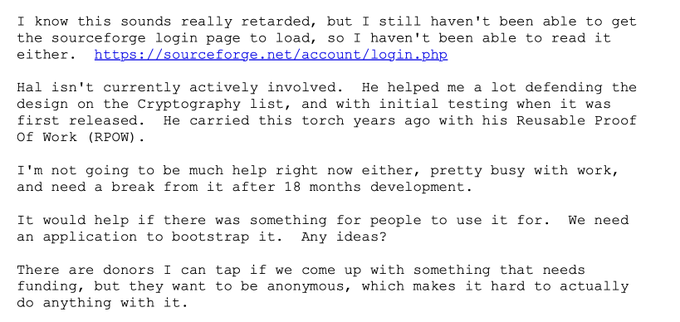
Between March 7, 2010, and May 16, 2010, Satoshi disappeared for a period, stating he was occupied with other matters.
This coincides exactly with the period when PGP Corporation was sold to Symantec (April 2010), as well as when Hal began experiencing a sharp decline in his health.
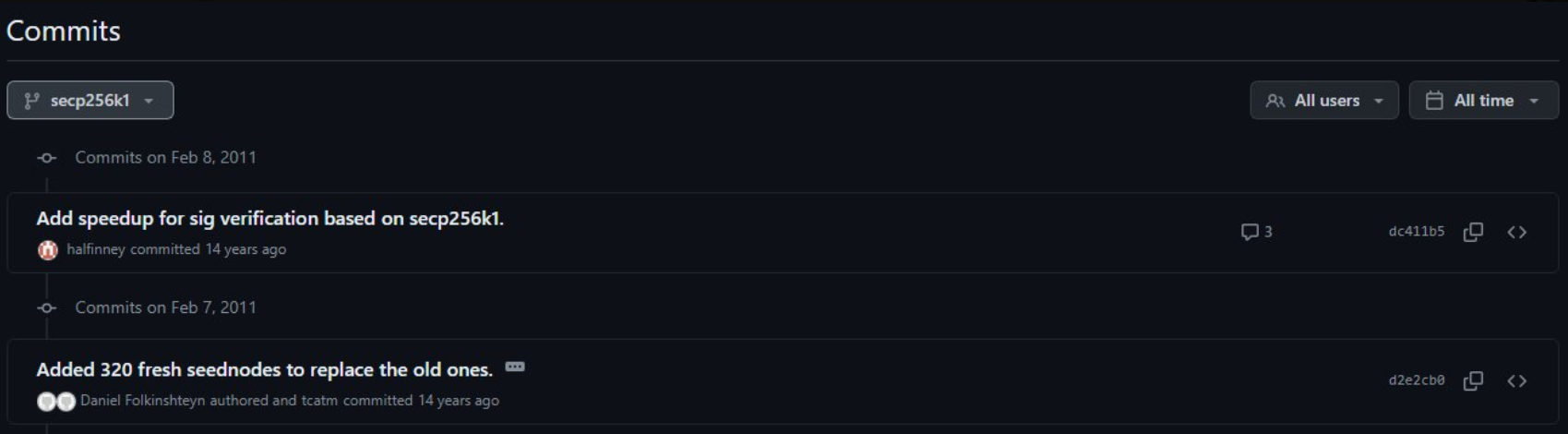
In November 2010, after a long period during which he made little contribution under his own name, Hal “resumed” work on Bitcoin-related projects.
He joined Bitcointalk and became active again, proposing improvements for faster Bitcoin signatures and publishing these suggestions months later.
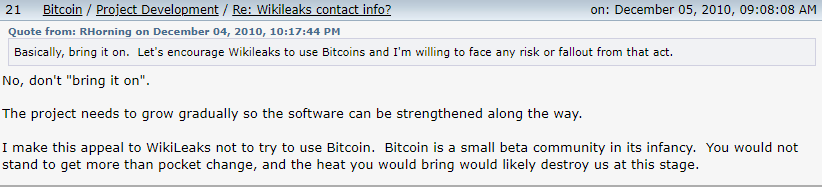
On December 5, 2010, Satoshi expressed concern that WikiLeaks should not use Bitcoin, fearing retaliation.
Then, on December 11 and 12, we received his final public messages about WikiLeaks having “stirred up a hornet’s nest”—suffering DDoS attacks.
On December 7, 2010, Satoshi sent an email to all major contributors requesting their names be listed on the website.
At the same time, he removed his own information from the site—clearly aware that he would eventually step away, though he never explicitly told anyone.

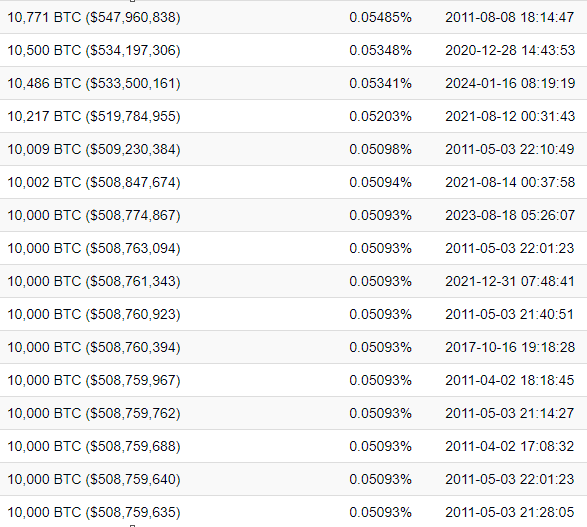
Between 2010 and 2011, numerous top Bitcoin wallets were created and have never since moved funds (this will become critically important later).
On February 22, 2011, Satoshi sent the final email to Martti Malmi, including a PGP-signed message containing the administrator password for the website.

On April 26, 2011, Satoshi sent his last known private email to Gavin Andresen (Foresight News note: Gavin Andresen, an early technical pioneer in the Bitcoin community, led the development of Bitcoin Core and the Bitcoin Foundation after Satoshi's departure), stating he had “moved on to other things.”
This was also after Hal had resumed contributing and participating in Bitcoin signature verification efforts.
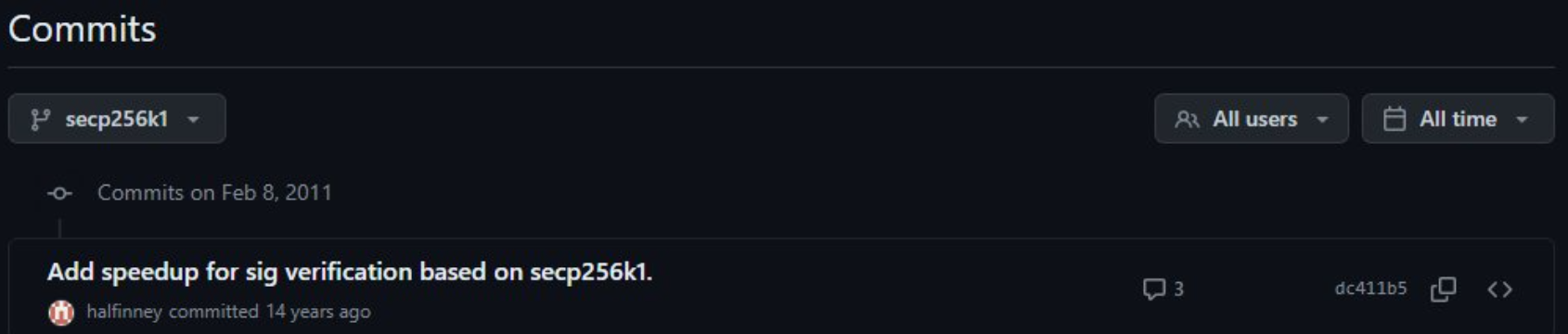
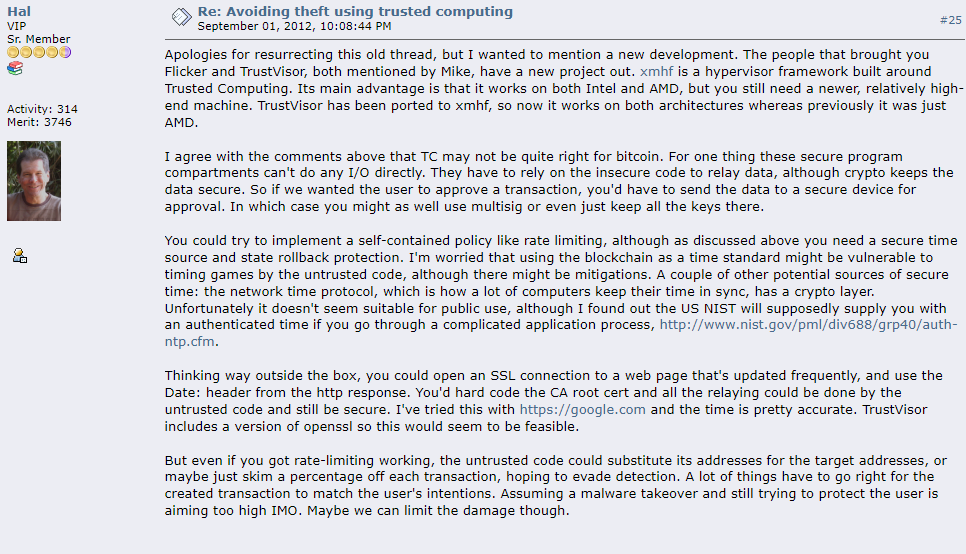
Around September 2012, Hal began exploring ideas around Trusted Platform Modules (TPM).
By March 2013, he submitted code for BFlick (Bitcoin Flicker) on GitHub and announced it on March 17.

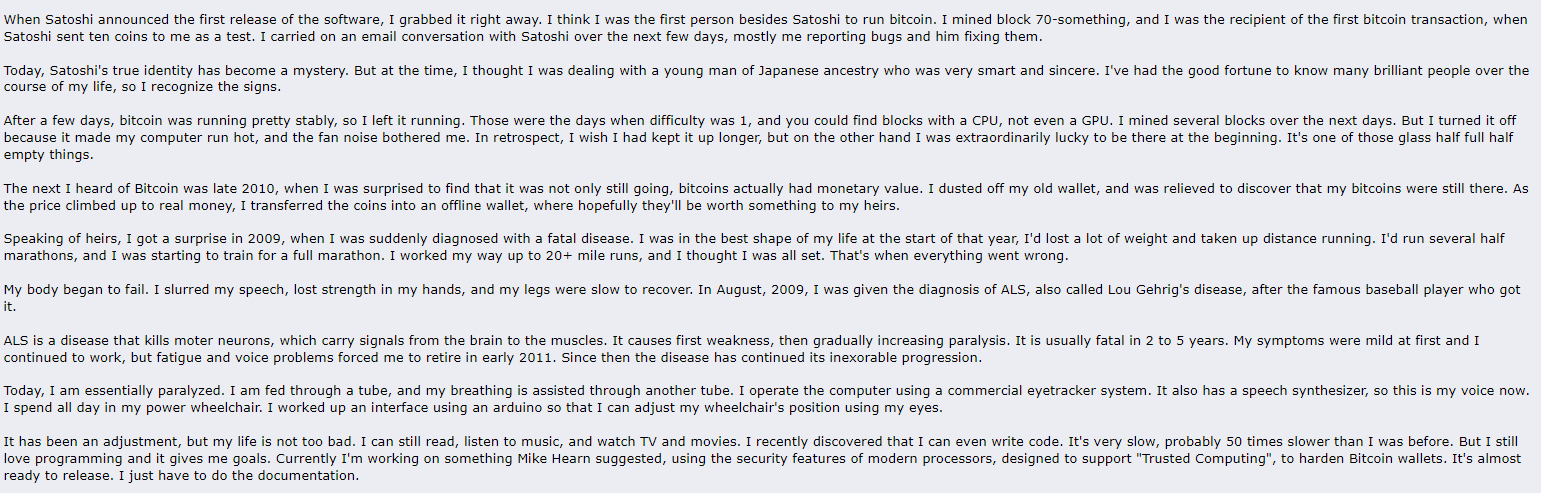
On March 19, 2013, Hal Finney published a post titled “Bitcoin and Me,” discussing how he was diagnosed with ALS in 2009, and noted that prior to diagnosis, he had already begun noticing physical deterioration—around the same time Satoshi went silent in 2009.
He stated he was “forced into retirement in early 2011”—exactly when Satoshi transferred control of Bitcoin to others.

Yet, Hal had already left PGP during its acquisition by Symantec in April 2010, and by early 2011, according to public records, he had no known employer.
Clearly, he wasn’t referring to retiring from employment for someone else, since he continued writing code like BFlick as late as March 2013.
In the same post, he added that he was still coding, albeit slowly, and that “programming gave him purpose.”
So what, then, did he mean by retiring in 2011?

He also claimed that when he “resumed” work on Bitcoin in 2010, he transferred most of his Bitcoin into cold storage to leave to his heirs.
This could explain the large inflows into certain wallets from late 2010 to mid-2011, followed by minimal outflows and extremely low spending activity.

Regarding the original Satoshi wallet, we learned from a 2012 post that the private key for the wallet where Hal first received Bitcoin transactions was stored on an old computer.

Given the progression of his illness, it is likely that by late 2009 to early 2010, Hal had transitioned to using non-traditional computing interfaces (Foresight News note: possibly speech-, touch-, or motion-based systems designed for ALS patients).
The last outgoing transaction from Satoshi’s initial wallet address occurred in January 2009.

On March 22, 2013, Hal praised Satoshi’s decision to “gracefully disappear” from the project. This is odd because Satoshi never explained his departure to anyone.
He vanished, and many would have done the opposite.

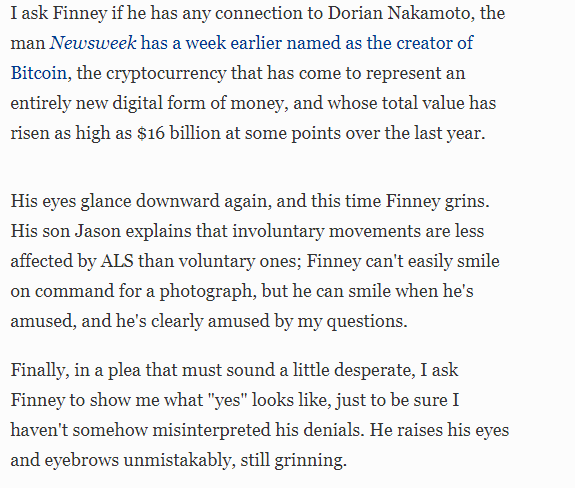
Then, in a 2014 interview, we learned that Hal’s condition had deteriorated to the point where he could only answer yes-or-no questions.
Yet, according to Zimmerman, his former boss at PGP (Foresight News note: creator of the PGP encryption algorithm), Hal was actually responsible for writing much of PGP 2.0.

Zimmerman himself had nearly faced prosecution for violating weapons export controls due to cryptographic software, which may explain why Hal wanted to downplay his involvement.
This could also explain Satoshi’s fear of the controversy surrounding WikiLeaks—he may have seen the pressure his former boss endured.
That interview took place about 20 days after the P2P Foundation account posted the statement “I am not Dorian Nakamoto” (Foresight News note: On March 7, 2014, a Newsweek article claimed Bitcoin’s creator was a 64-year-old Japanese-American man named Dorian Nakamoto; the P2P Foundation account later posted a clarification: “I am not Dorian Nakamoto.”).
That statement could have been posted by a family member, as logging into the account required no PGP key, and Hal passed away in August 2014.

But what about when Hal went running?
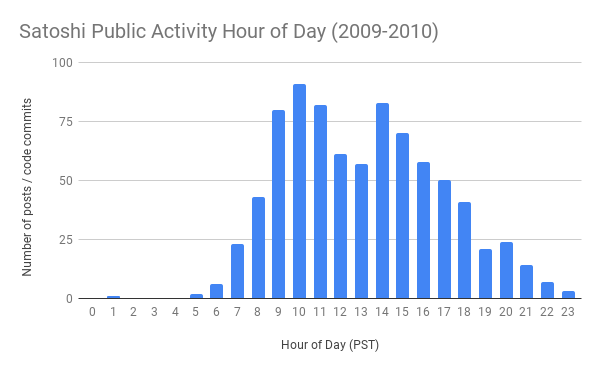
Interestingly, on April 18, 2009, Hal participated in a 10-mile race, finishing at 9:18 AM Pacific Standard Time.
During that window, Satoshi sent emails and Bitcoin transactions.

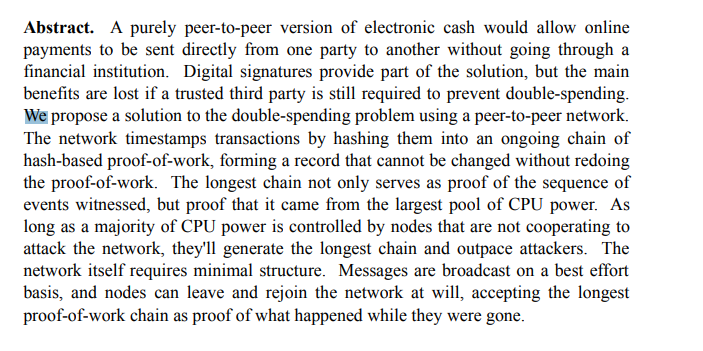
In both the Bitcoin white paper and early emails to Adam Back (Foresight News note: CEO of Blockstream), the abstract states “we propose.”
It’s often said that certain parts of Bitcoin don’t match Hal’s style and span multiple disciplines.

But as we see from his emails with other contributors, Satoshi frequently sought input and collaboration, and all of his communication times fall within the PST time zone.
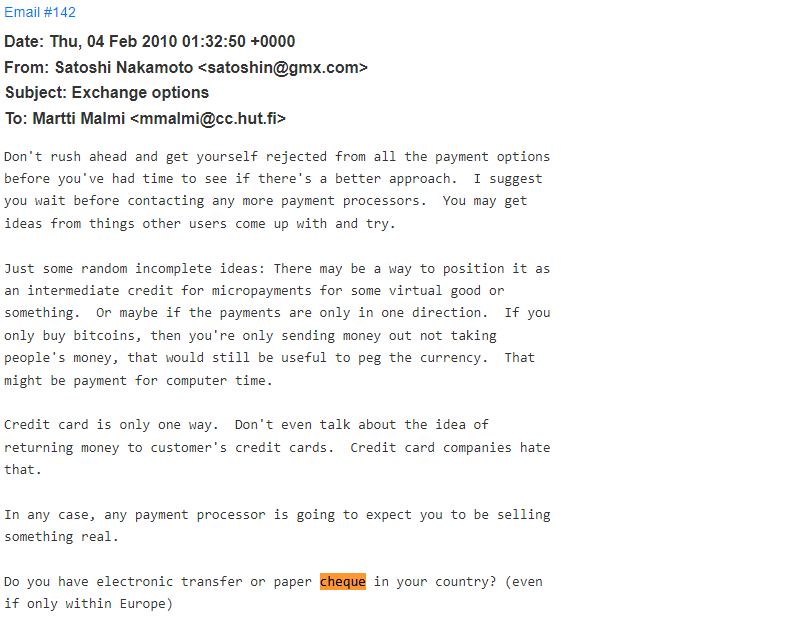
However, some of his emails still use Commonwealth spelling conventions.

Although he used the word “cheque” in a 2010 email, he later had to ask Martti Malmi about payment methods in Europe.
Britain is part of the EU/EEA—an elementary fact for any British citizen.
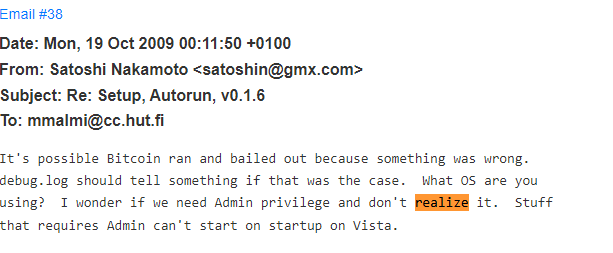
In 2009, he used “realize,” an American/Canadian spelling, seemingly ruling out Australian/British origin.
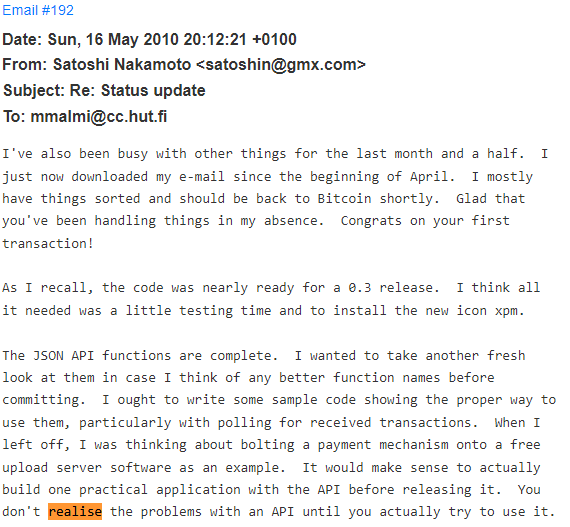
But by 2010, after his sudden return, he began using “realise.”
Certainly, many English speakers worldwide mix American and British spellings, but they usually remain consistent. A shift in spelling may suggest either different authors or deliberate obfuscation of writing patterns.
Ultimately, I believe Hal, along with a few other minor early contributors, stepped back from Bitcoin early on, but that “Satoshi was mostly him.”
By 2010, he knew he was dying, and the death of a “Bitcoin developer” could kill the project he loved.
So Satoshi disappeared, and Hal re-engaged, making whatever contributions he could amid his declining health.
He moved his Bitcoin into cold storage for his children and descendants, passed responsibilities to others, and in a sense, let them become Satoshi.
Having seen his former boss Zimmerman nearly prosecuted for writing cryptographic code deemed a weapon, he went to great lengths to conceal his identity.
So from the start, he altered his writing style—referencing British culture—but still slipped up privately by showing ignorance of the EEA/EU.
Perhaps Dorian Nakamoto was an early contributor who received BTC from Hal while he was out running, or perhaps Hal simply adopted a local name, never imagining Bitcoin would grow so large.
In his final post, Hal said of Satoshi: “How do you find someone who spent their life covering their tracks?”
Only in 2014 did we learn how pivotal Hal truly was in PGP 2.0—so hidden that even code comparisons wouldn’t reveal his full role.
BTC Maximalists dislike the idea of Hal being Satoshi because Hal remained open-minded about Bitcoin’s future:
He wanted it to be more eco-friendly, supported forks, BitDNS, zerocoins, and used OP_PUSHDATA to enable other protocols atop Bitcoin.
This contradicts the maximalist narrative of an immutable Bitcoin.
But Hal was a visionary and brilliant thinker—he saw what it could become, not just what it was.
Some prefer never knowing who Satoshi was, believing it undermines the “we are all Satoshi” ethos. I disagree.
If Satoshi were a dead, captured, or government-shutdown anonymous agent, I’d care far less.
But if he truly foresaw the need to vanish humbly—to ensure Bitcoin’s survival—that fascinates me. And I believe that’s the truth, thanks to Hal.
By stepping back, he made Bitcoin something everyone could co-own; he made everyone into Satoshi. That small decision is something no other pure PoW cryptocurrency can replicate.
That moment defined Bitcoin—not by passing it to a successor, but by giving it a soul:
The soul of a ghost who can never fully belong.
Join TechFlow official community to stay tuned
Telegram:https://t.me/TechFlowDaily
X (Twitter):https://x.com/TechFlowPost
X (Twitter) EN:https://x.com/BlockFlow_News
 @adamscochran











