POKT Network: A DePIN veteran is moving toward the AI narrative
TechFlow Selected TechFlow Selected
POKT Network: A DePIN veteran is moving toward the AI narrative
POKT Network has completed the early launch of its DePIN network, with growing node count and business data. Token economic parameters are being continuously adjusted to reduce inflation, transitioning from the early launch phase toward sustainable development.
 Navigating Web3 tides with focused insights
Authors: Charlotte, Kevin, Metrics Ventures
TL;DR:
-
POKT Network builds a decentralized RPC node network, which is of great significance for decentralizing Web3 data. Compared to centralized providers, POKT Network offers higher scalability, lower operational and maintenance costs, cheaper usage fees, and more stable infrastructure, avoiding transaction censorship and single points of failure.
-
POKT Network has completed the early launch phase of its DePIN network, with growing node count and business metrics. Token economic parameters are being continuously adjusted to reduce inflation, transitioning from initial bootstrapping toward sustainable growth.
-
POKT Network recently launched the Gatewayverse modular strategy, decoupling demand-side operations into multiple independent gateway operators. The core protocol will focus on serving as an underlying layer supporting diverse gateways, emphasizing node incentives and network expansion.
-
POKT Network is evolving into a universal data service provider, opening up markets beyond native Web3 services. Its primary development focus is currently open-source LLM hosting and entry into the LLM inference market—this could significantly expand POKT’s market size and demand, though actual implementation remains to be seen.
-
From a capital perspective, POKT tokens have been largely unlocked, inflation rates are steadily declining, half of the circulating supply is staked, and ownership concentration is high—making it a promising asset fundamentally.
1 What Decentralization Gap Does POKT Network Fill?
To understand POKT Network's role in the industry, we must first answer: what specific gap in decentralization does POKT address? And why is POKT indispensable for the ecosystem’s development? We begin by examining the two most fundamental aspects of blockchain data: writing and reading.
1.1 On-chain Data Writing
Data writing refers to the process of sending and finalizing a transaction on a blockchain. A transaction goes through several stages:
(1) The application frontend prepares the transaction and submits it for user signature; the user approves it via their wallet (e.g., MetaMask);
(2) MetaMask sends a JSON-RPC call to an Ethereum RPC node, which verifies the signature, balance, and input validity, then broadcasts the transaction to other nodes where it enters the mempool;
(3) Miners select transactions to include in blocks, which propagate across the network; once a block is finalized, the transaction becomes part of the blockchain record;
(4) An RPC node returns the result so users can query the outcome.
At which stage might a transaction face issues?
A critical risk lies in step (2): default RPC nodes can refuse to broadcast transactions, preventing them from being included in blocks. Users may switch nodes, but most RPC nodes today are operated by centralized entities running on existing Web2 platforms (like AWS). For example, MetaMask’s default node provider is Infura. Due to an Infura configuration error in March 2022, certain regions experienced service outages, rendering MetaMask unusable. Centralized RPC nodes introduce risks of single points of failure and transaction censorship.
1.2 On-chain Data Reading
Demand for data reading is constant. Developers need real-time data display in dApps and fast responses to user queries; analysts and investment firms rely on deep analysis of on-chain data for market insights and strategic decisions. There are two ways to access this data:
-
Run your own Ethereum client (e.g., Geth) and sync blockchain data locally
-
Use a node service provider by making API calls to RPC nodes to retrieve public chain data
Running one’s own node requires significant time and resources. Node service providers offer a convenient alternative, allowing access to blockchain data without self-hosting. As a result, most decentralized applications today fetch data directly from third-party nodes. However, relying on centralized RPC providers means trusting their results. While projects like The Graph and Covalent have made progress in decentralizing upper-layer data indexing, centralized data retrieval remains a key vulnerability at the foundational level of the Web3 data stack.
1.3 Summary: POKT Network Enables Decentralized RPC Nodes
Major current RPC providers such as Infura, Alchemy, Flashbots, and QuickNode are largely centralized, with most nodes operated by central entities and hosted on servers like Amazon or Google Cloud. Thus, within crypto’s otherwise top-down decentralized architecture, there exists a critical centralized weak link—we must accept some degree of transaction censorship, risk of central failure, blind trust in returned data, and monopolistic pricing.
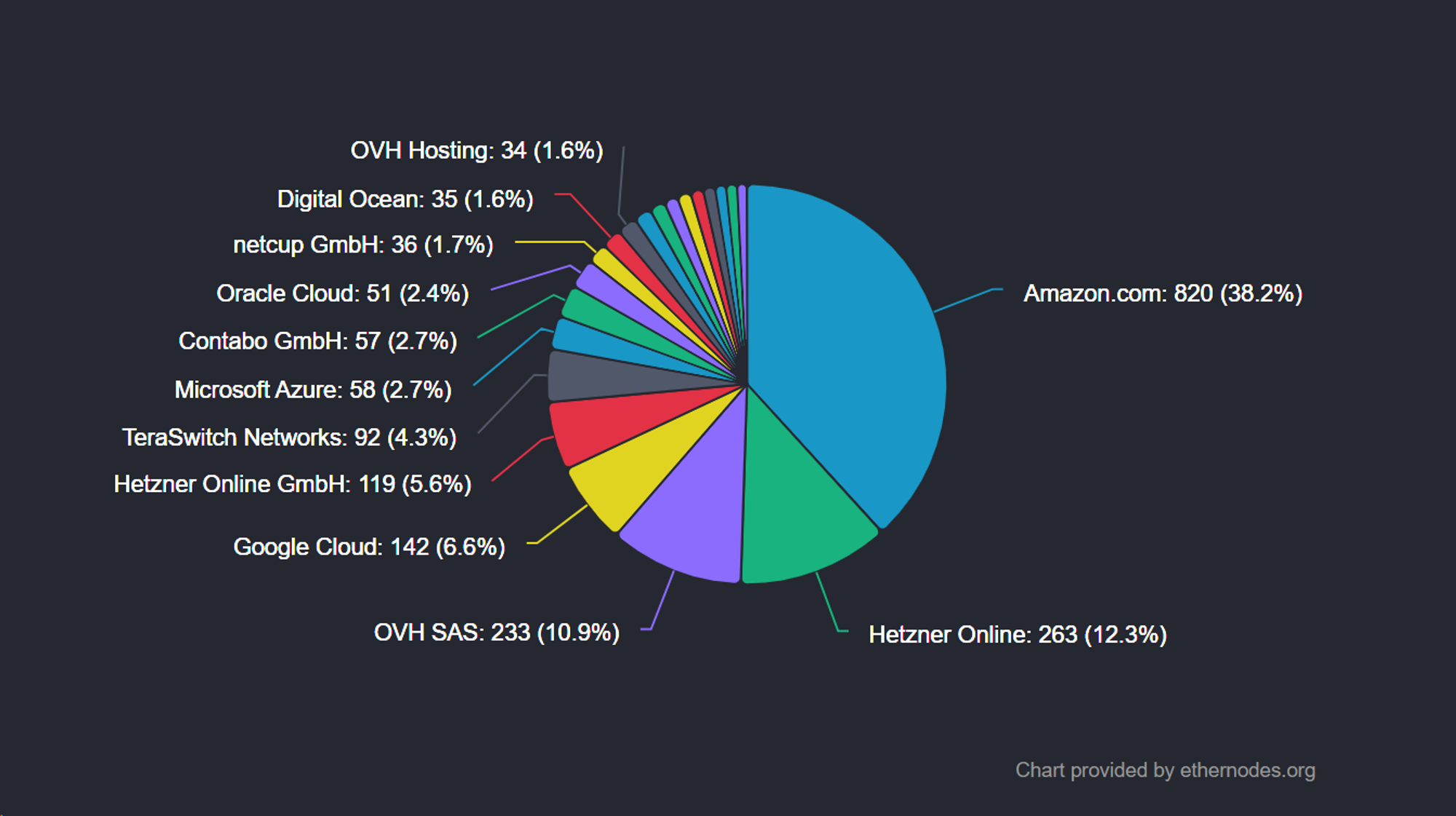
POKT Network solves this issue through a decentralized node "market." Unlike Infura or Alchemy, POKT Network operates no team-run nodes. Its redundancy design has ensured 99.9% uptime over more than three years on mainnet. Currently, the POKT Network comprises over 15,000 nodes distributed across 22 countries. Infura and Alchemy function more like companies offering node services—they must build and maintain nodes themselves. In contrast, POKT Network focuses solely on protocol development and incentive layer optimization, attracting independent node operators and matching supply with demand, without needing to operate any nodes directly.
2 DePIN Narrative: How POKT Achieves RPC Decentralization
Decentralized RPC node networks are also a key component of the DePIN narrative. The core logic of DePIN is using token incentives to encourage participants to contribute resources, while the network collects fees from users, forming a decentralized resource marketplace. POKT Network uses POKT tokens to incentivize RPC node operators across various blockchains. Demand-side users request data or submit transactions via the POKT Network and pay usage fees in return.
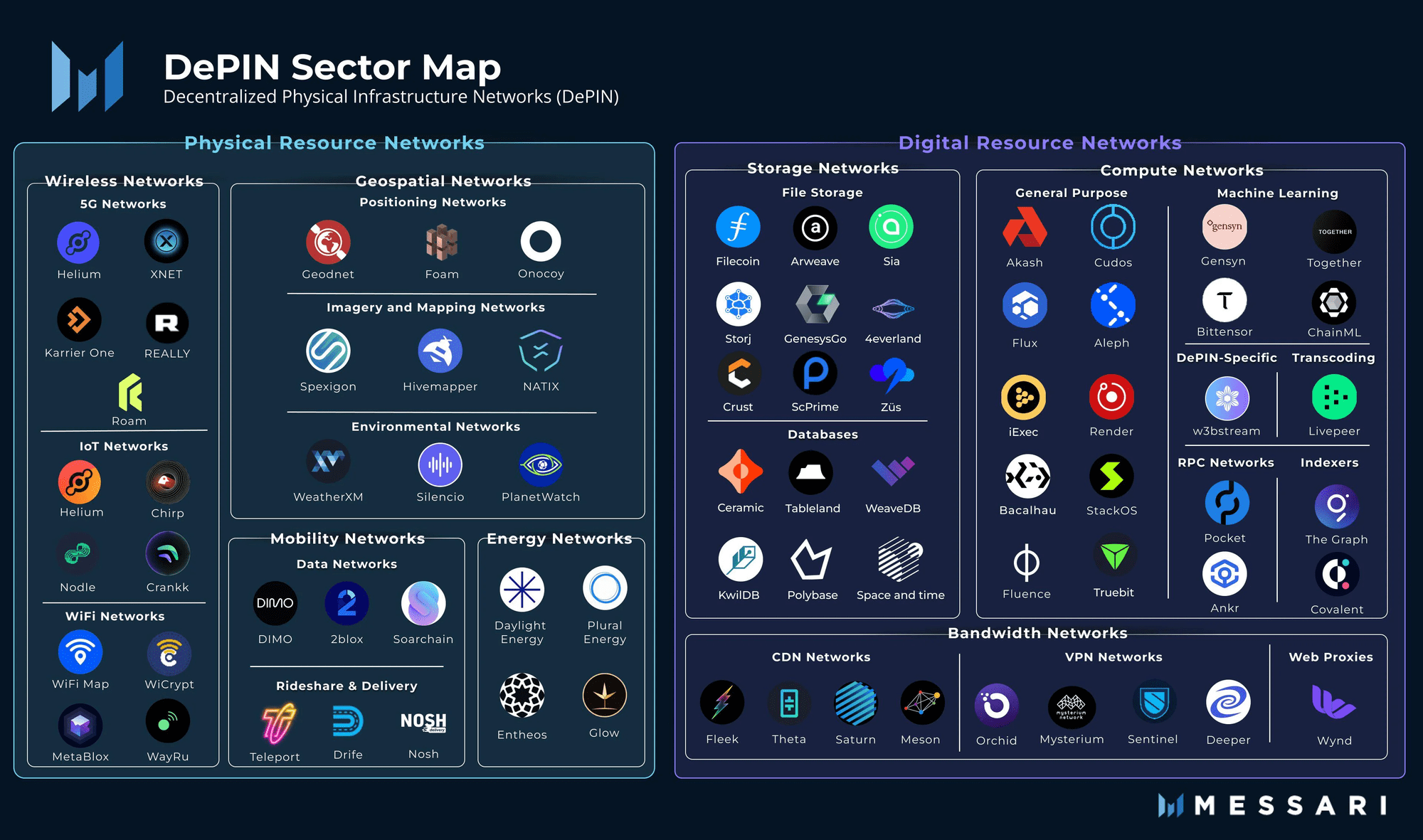
The modular architecture of POKT Network is shown above. The Gateway ecosystem replaces the previous single POKT Network portal, built atop the RPC network and POKT base layer. It abstracts away protocol complexity, enabling application developers to connect to POKT’s node cluster through Gateway operators. Current Gateway providers include Grove, Nodies, and Liquify, which was recently announced. Grove is rebranded from the former Pocket Network Inc and served as the first gateway on POKT Network. Nodies became the second Gateway provider in December 2023, founded by ex-AWS engineers, and also serves as the provider of POKT Network’s public endpoints.
In terms of value flow: users pay usage fees to Gateway providers; Gateways pay a weekly Gateway Operator Fee based on the number of relays sent to the POKT Network—$0.00000085 per relay, paid by burning POKT tokens; and the POKT Network rewards node operators via POKT token inflation. A deeper analysis of the tokenomics and value circulation will follow in Section 5.
Building a Gateway ecosystem is currently one of POKT Network’s strategic priorities—the so-called “Gatewayverse” strategy. A richer Gateway landscape will significantly reduce developer onboarding costs and enhance the overall system’s service quality and competitiveness. Gateways abstract away the complexity of direct interaction with the POKT Network protocol. Without a Gateway operator, developers must go through these steps when interacting directly with POKT:
-
Generate an AAT (Application Authentication Token)
-
Send a request to a full node on the POKT Network to retrieve the latest nodes in a session
-
Construct and sign a relay proof, then submit it to a node in the session
-
Receive the node’s response
-
Determine whether the response is valid
-
Proxy the response back to the web application
Gateways eliminate the need to manually retrieve sessions or sign relay proofs, improving developer experience and usability, while enabling innovation through added-value services. POKT Network is actively engaging with multiple institutions to onboard additional Gateway providers. After the upcoming Shannon upgrade (expected Q2 2024 mainnet launch), developers and node operators will be able to become Gateway providers permissionlessly. Development efforts to support Gateway creation are ongoing—for instance, on February 8, 2024, Nodies released an open-source Gateway Server integrated with the POKT protocol, maintaining familiar HTTP JSON-RPC interfaces for sending and receiving RPC requests. This allows developers to quickly build custom Gateways tailored to their needs, further simplifying integration with the POKT protocol.
In summary, by offloading Gateway operations, POKT enables decentralization on the demand side, focusing the protocol itself on building and maintaining the underlying RPC node network. This strategic path offers several advantages:
(1) Enables more customized Gateway services to meet diverse developer needs, encouraging operators to develop value-added features that improve user experience;
(2) Strengthens distribution—each Gateway operator acts as a sales channel for POKT Network, enhancing the protocol’s business development capabilities and driving demand growth;
(3) All Gateways partnering with POKT Network agree not to issue their own tokens and use $POKT for transaction settlement, ensuring all ecosystem growth continues to benefit $POKT and avoids value fragmentation.
3 AI Narrative: Unlocking POKT Network’s Potential as a Universal Data Provider
POKT Network is currently the leading底层 protocol for blockchain data services and is actively expanding to serve broader open databases, aiming to become a foundational DePIN layer for decentralized data relay services.
Two proposals from October 2023—PIP-31 and PIP-33—opened non-native Web3 service markets for POKT, unlocking its potential as a universal RPC provider. RPC request services are not limited to blockchains but can support other data services such as LLM inference. Specifically, POKT can enable node operators to host open-source LLMs and perform inference tasks. Unlike stateful blockchains requiring continuous synchronization, LLMs are stateless and only require manual updates upon model upgrades.
According to Michael O'Rourke, co-founder of POKT Network, opening up the LLM inference market could increase POKT Network’s total addressable market by approximately 30%.
Currently, PIP-31 and PIP-33 have passed community voting. POKT’s decentralized node network can now support inference for hundreds of models. LLM inference will be a major development focus for POKT in 2024, and the official POKT Twitter account has already begun promoting its expansion into the LLM market. Compared to centralized providers, decentralized solutions offer significantly lower costs. POKT’s greatest competitive advantage lies in its mature incentive mechanism and massive node network—already comprising over 15,000 nodes, making it the largest decentralized RPC network in Web3, offering strong narrative appeal. Additionally, since RPC nodes are the entry point for reading and writing blockchain data, they can directly benefit AI products that perform inference on blockchain data. AI + crypto has become one of the most compelling narratives of this cycle. POKT’s pivot toward AI is still in its early stages and remains undervalued—making it a potentially attractive opportunity for early positioning.
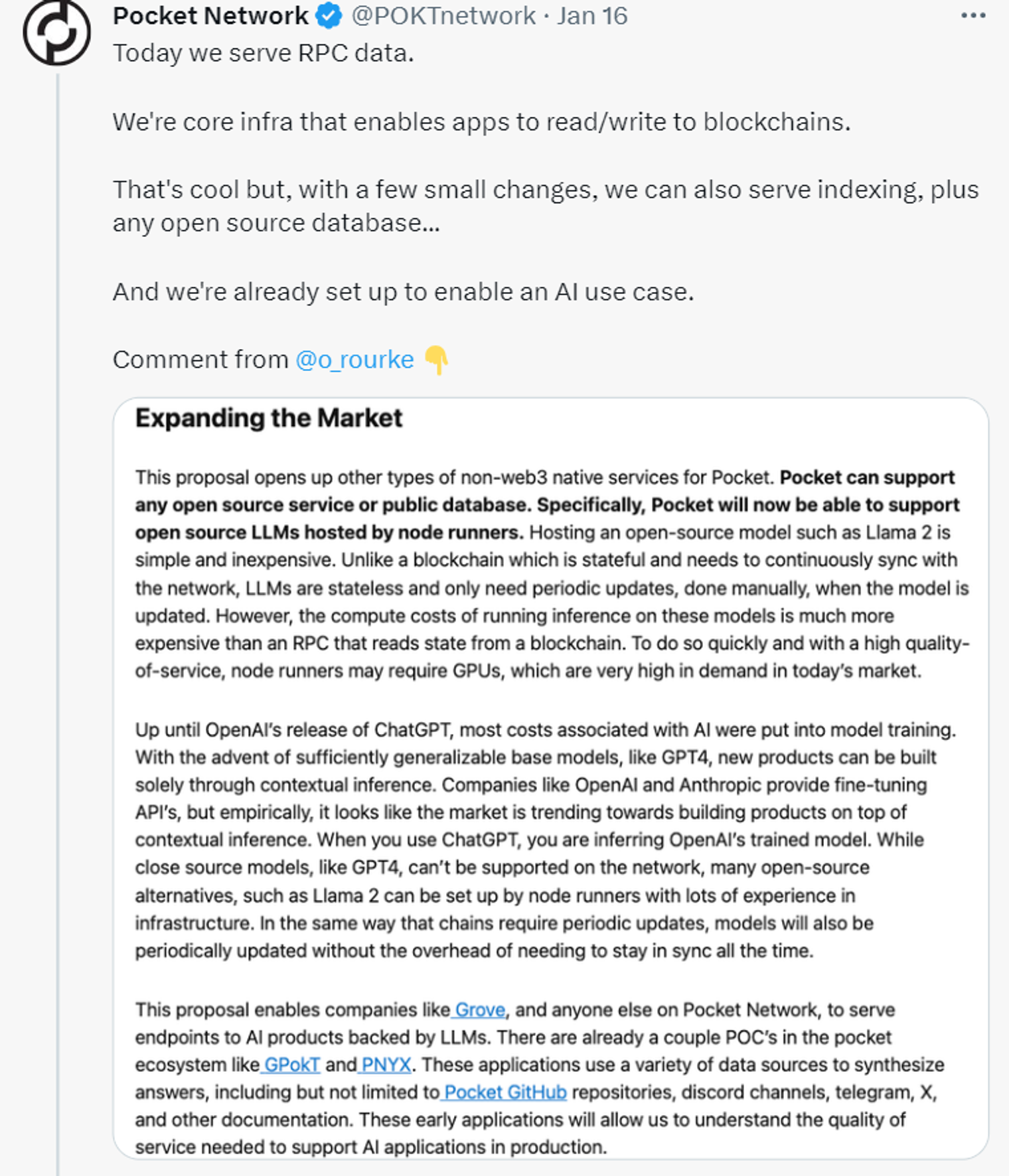
However, it should be noted that official development plans and roadmaps remain unclear. Running inference workloads involves high computational costs and hardware requirements—node operators may need GPUs—and actual feasibility is uncertain. Continued monitoring of progress in this direction is essential.
4 Market Landscape and Business Data Comparison
Based on estimates from POKT Network’s founders, the conservative daily paid RPC request volume in the current Web3 market is around 100 billion. Assuming a cost of $3–6 per million requests, the total annual market value for Web3 RPC services ranges between $100 million and $200 million. With the arrival of a bull market and the proliferation of new blockchain networks, RPC request volumes are expected to grow further.
In terms of market positioning, POKT Network is currently the undisputed leader among decentralized RPC providers. Its main competitors are centralized players like Infura and Alchemy. Below is a comparison of POKT Network with key centralized RPC service providers.
In terms of business metrics, POKT Network currently hosts over 15,000 RPC nodes across 22 countries. Over the past year, the average daily relay count was 950 million, peaking at 2 billion. Since November 2023, however, relay volume has declined significantly, stabilizing around 400–500 million daily. This drop is attributed to Grove, the largest Gateway operator, announcing independence, shutting down its public endpoint, and reducing its free-tier offerings. In terms of blockchain distribution, Ethereum accounts for about 15% of relay demand—the largest share.
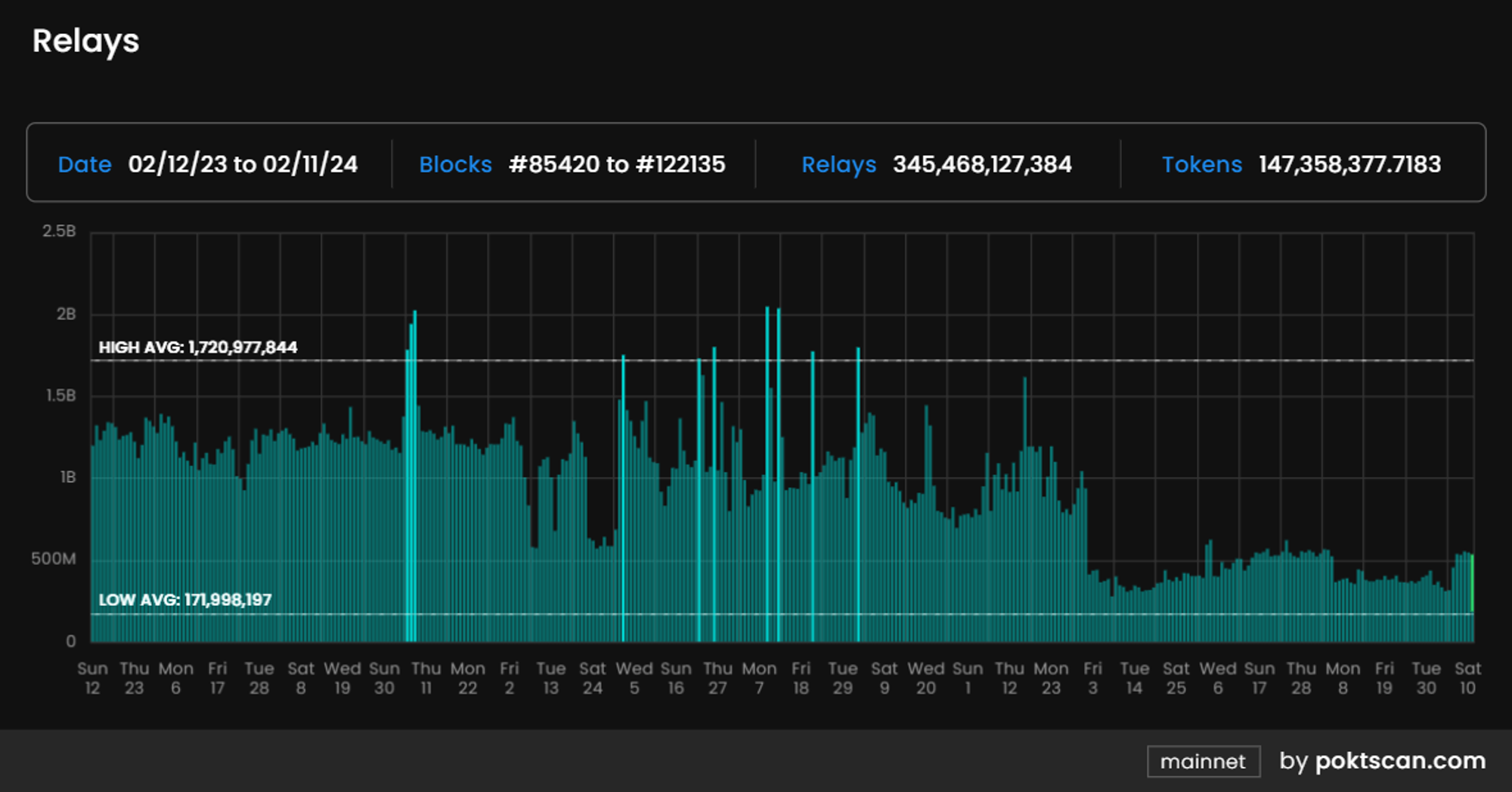
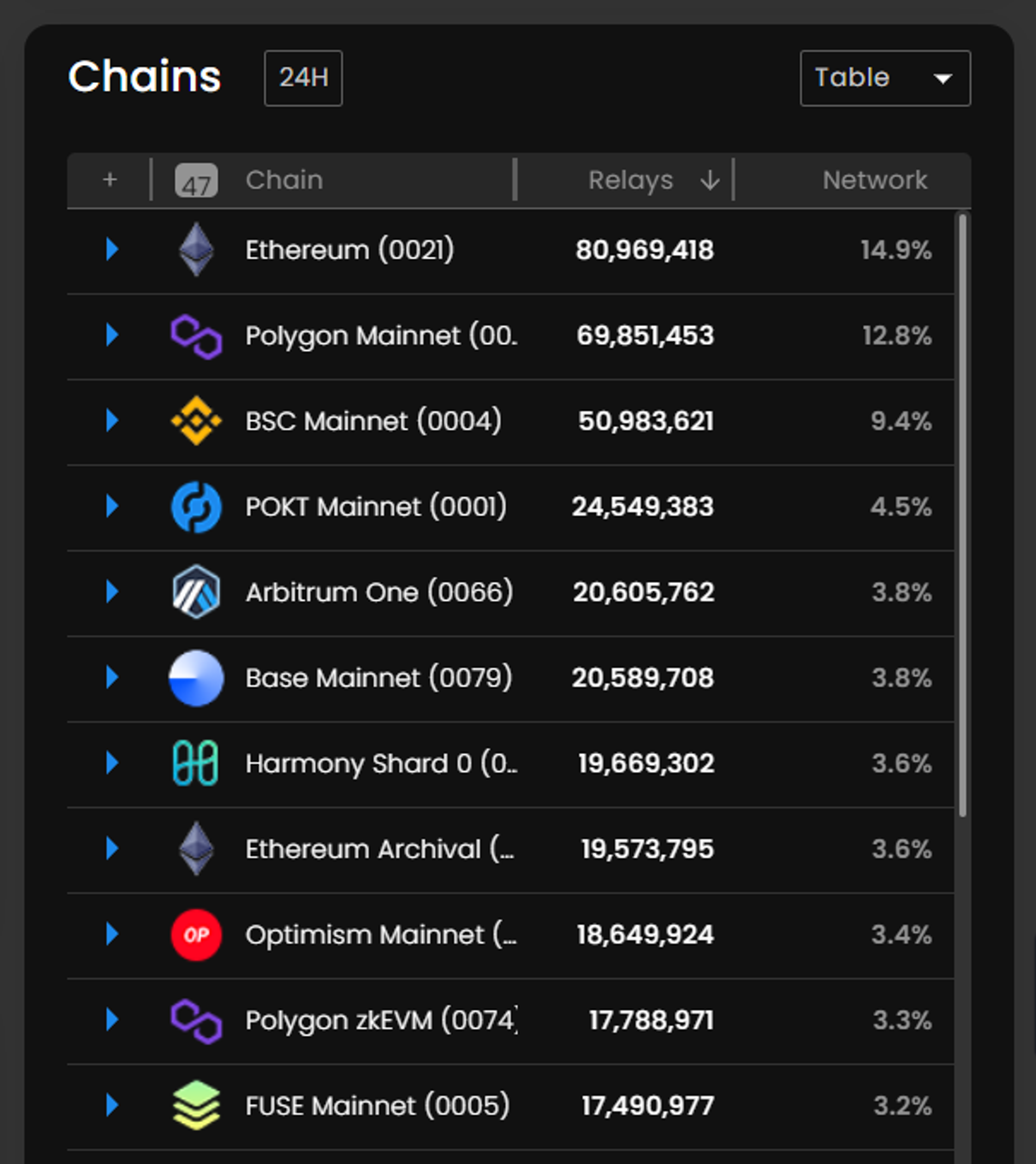
In terms of relay volume, POKT Network still holds a small market share. Centralized providers like Infura and Alchemy remain the preferred choice for most applications, with estimated daily relay volumes reaching hundreds of billions or even trillions. From a competitive standpoint, POKT faces strong rivals and a challenging landscape—but also possesses substantial room for growth.
In terms of supported blockchains, POKT Network supports over 75 blockchains for RPC requests, compared to just nine supported by Infura and Alchemy. By incentivizing full-node operators from various chains rather than building nodes in-house, POKT achieves far greater scalability.
Regarding pricing plans, both POKT Network and Infura charge based on relay counts, whereas Alchemy uses compute units. Currently, POKT charges $0.85 per million relays for Gateways. For comparison, Infura’s cheapest Growth plan charges $6.67 per million relays—about eight times more than POKT. However, most developers access POKT through Gateway providers, who do not use subscription models but instead bill directly per relay volume. For example, Grove charges $7.456 per million relays beyond its free tier, Nodies charges $4.5, and enterprise users pay $3.4. While Grove’s pricing is relatively high, increased competition among Gateways—and permissionless onboarding post-Shannon upgrade—will gradually mature the marketplace. Developers can also run their own Gateways to reduce costs.
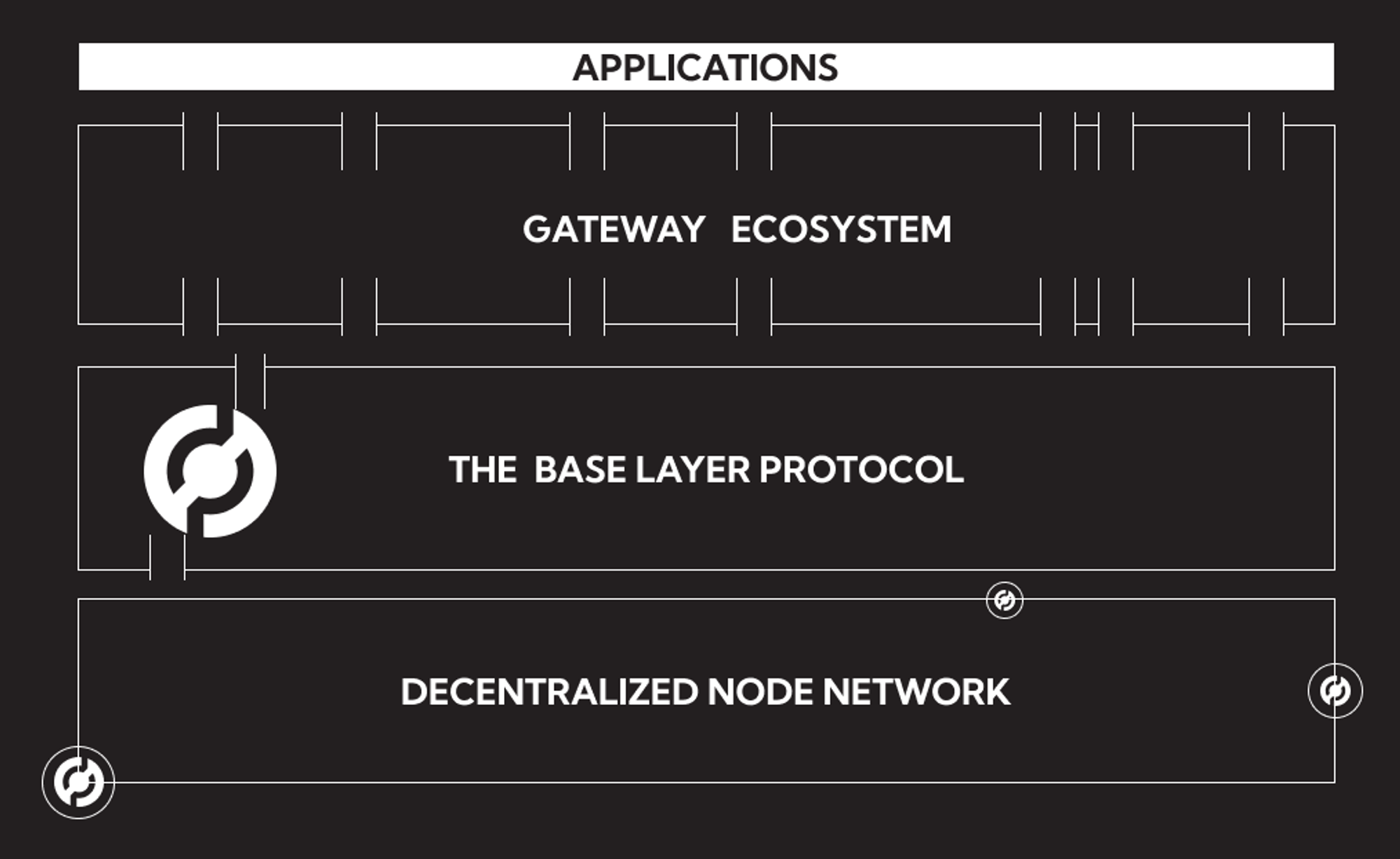
In terms of valuation comparisons, there is currently no direct decentralized competitor to POKT Network. Relevant reference points include: (1) centralized RPC providers like Infura and Alchemy; and (2) Web3 data infrastructure projects like The Graph and Covalent. Both Infura (ConsenSys) and Alchemy are valued significantly higher than POKT Network due to greater market share and broader product suites. POKT’s competitive edge lies in its “decentralization” proposition—if this argument gains wider acceptance among investors and developers, POKT could enjoy a unique advantage. The Graph and Covalent belong to the same Web3 data infrastructure category and are similarly classified under the DePIN sector by Messari, but POKT sits upstream of both. The Graph is valued much higher than POKT, while Covalent’s valuation is relatively low. Overall, the decentralized data infrastructure space remains relatively early-stage and poised for valuation growth as demand increases during bull markets and interest in decentralization grows.

5 Tokenomics and Holder Structure
5.1 Token Economy and Value Cycle
As previously discussed, the core principle of DePIN is incentivizing contributors with tokens. The foundation of a DePIN network is individual suppliers providing hardware or services in exchange for token rewards. In the early stages, high inflation is necessary to attract participation through generous token payouts. As the project matures, reducing inflation becomes essential to avoid excessive dilution of token value, eventually transitioning toward low inflation or even deflation. This principle applies equally to POKT Network—maintaining a balanced and healthy economic system is crucial for long-term sustainability.
On the supply side, the latest POKT issuance schedule was set by proposal PUP-32, passed in June 2023: 220,000 POKT are minted daily, distributed as follows:
-
85% to node operators,
-
5% to POKT Network validators,
-
10% to the DAO treasury
On the consumption side, POKT Network burns the service fees paid by Gateway providers. Currently, each gateway relay costs $0.00000085 (POKT adopts USD pricing to align with dominant centralized RPC competitors who price in USD). Based on the weekly number of relays sent by each Gateway operator, the required fee is calculated and converted into a corresponding amount of POKT using the 7-day average POKT price, then burned weekly from the Gateway’s pre-funded POKT balance.
POKT’s net inflation rate depends on both issuance and burn volumes. With issuance remaining relatively stable, the inflation rate is influenced by relay pricing, relay volume, and the POKT token price. From a business standpoint, higher relay prices and higher relay volumes lead to lower net inflation. The POKT Foundation is actively working to reduce inflation and aims to transition into a deflationary economy in the future.
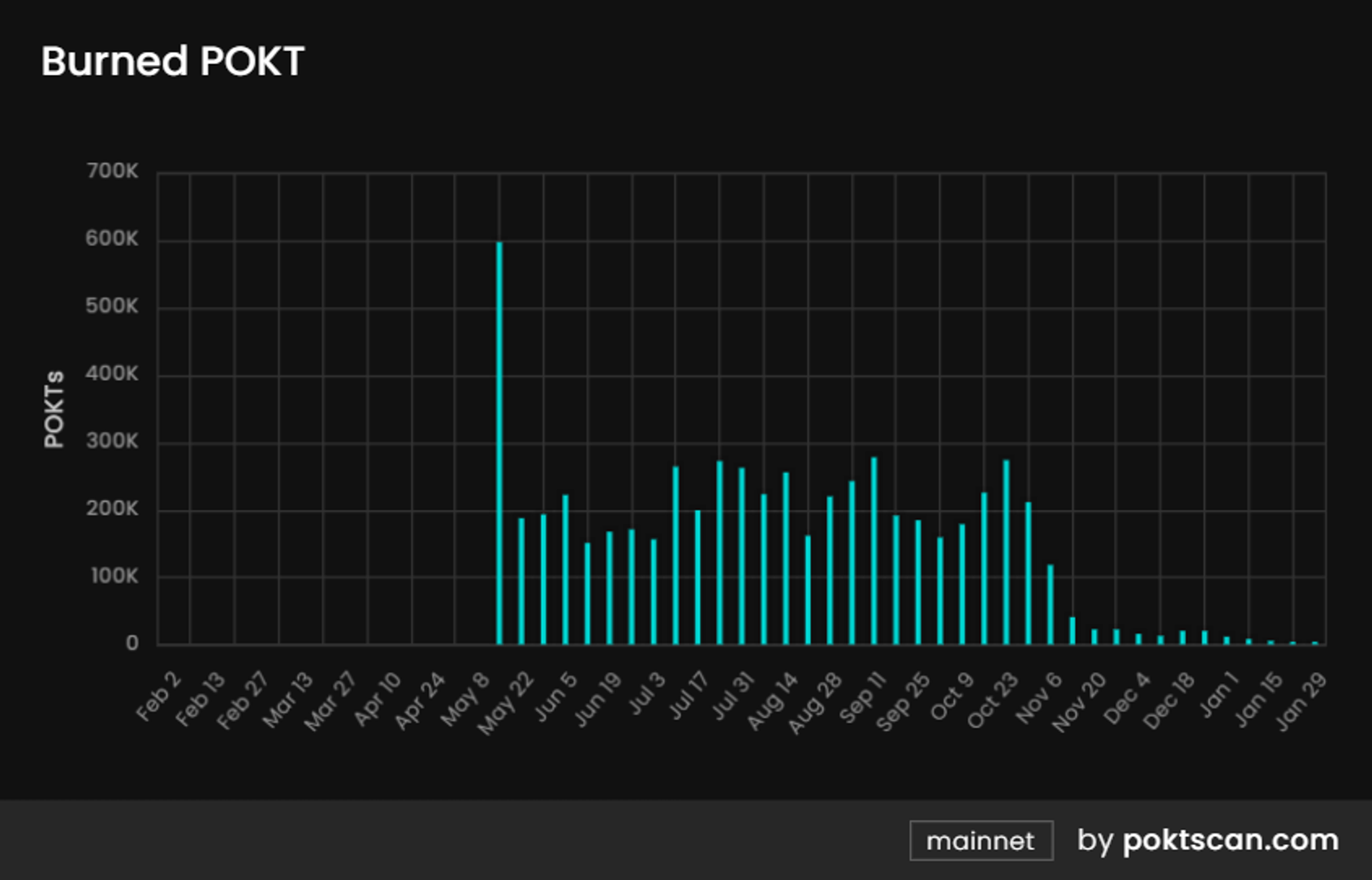
Looking at concrete figures, the growth rate of total token supply (Monetary Base) has gradually slowed over the past year. After PUP-32 passed in June 2023, newly minted POKT dropped significantly, stabilizing at around 1.5 million per week. POKT burning began in May 2023, initially averaging around 200,000 POKT per week, but sharply declined after November due to reduced relay volume.
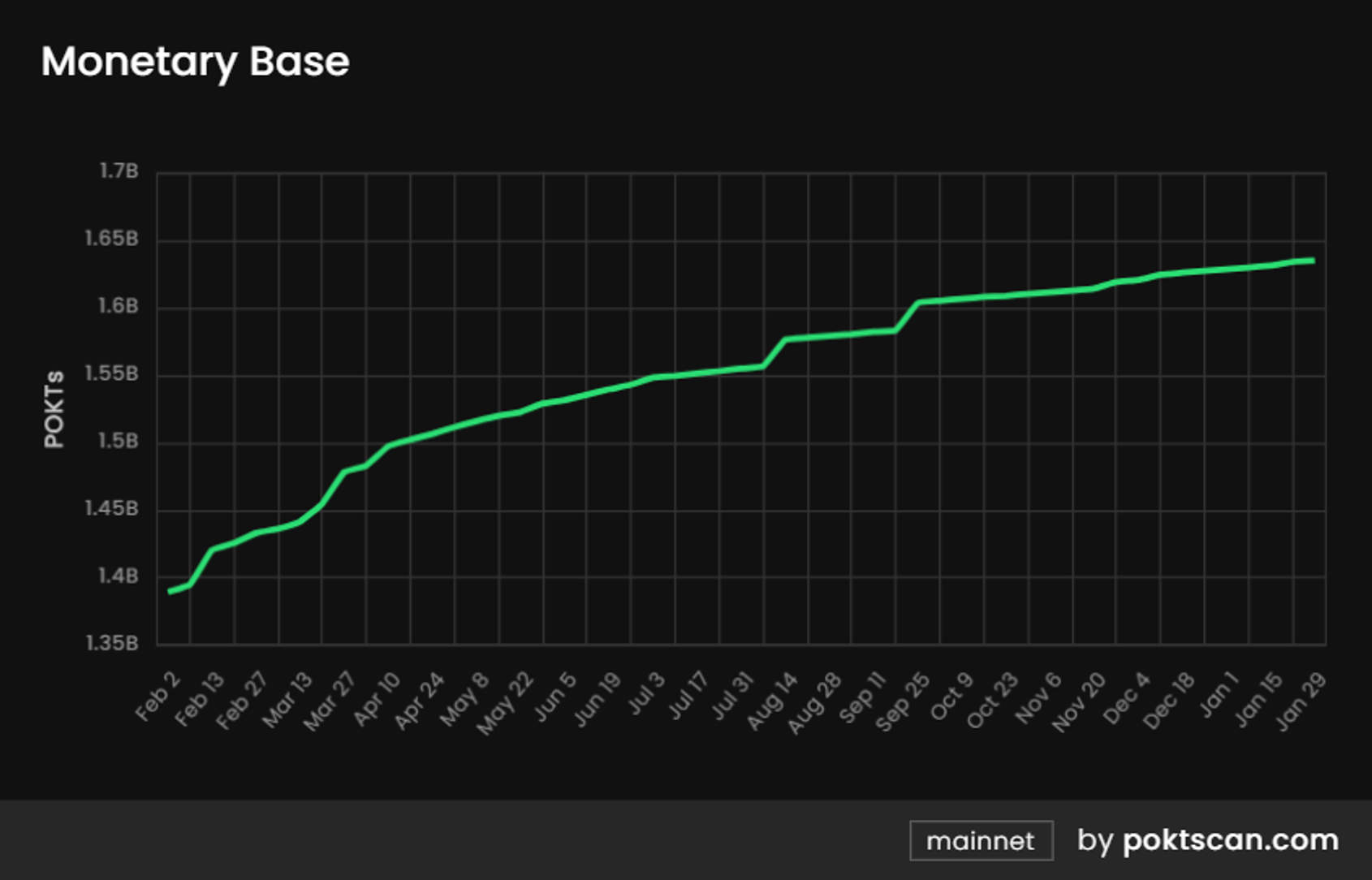
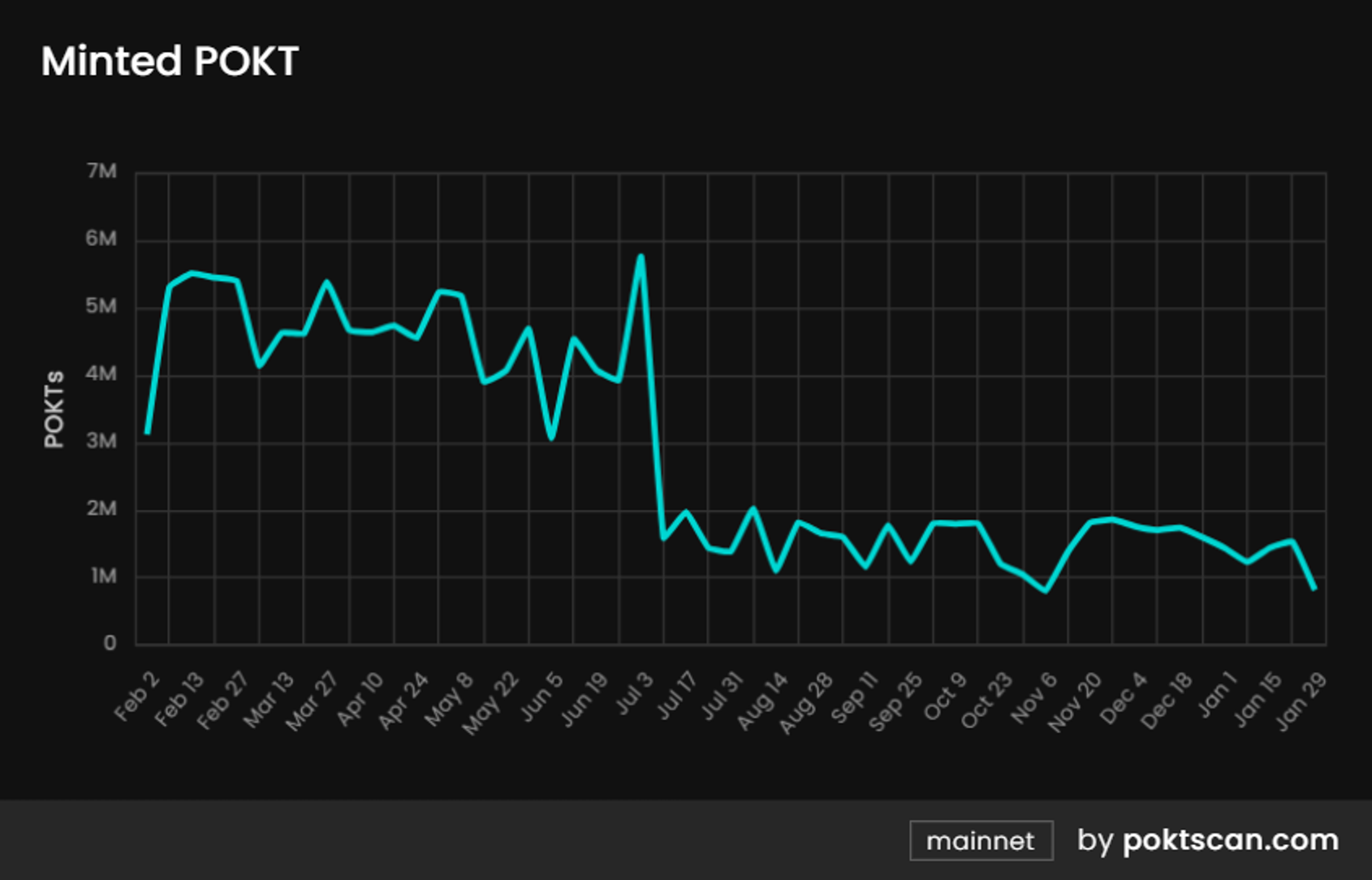
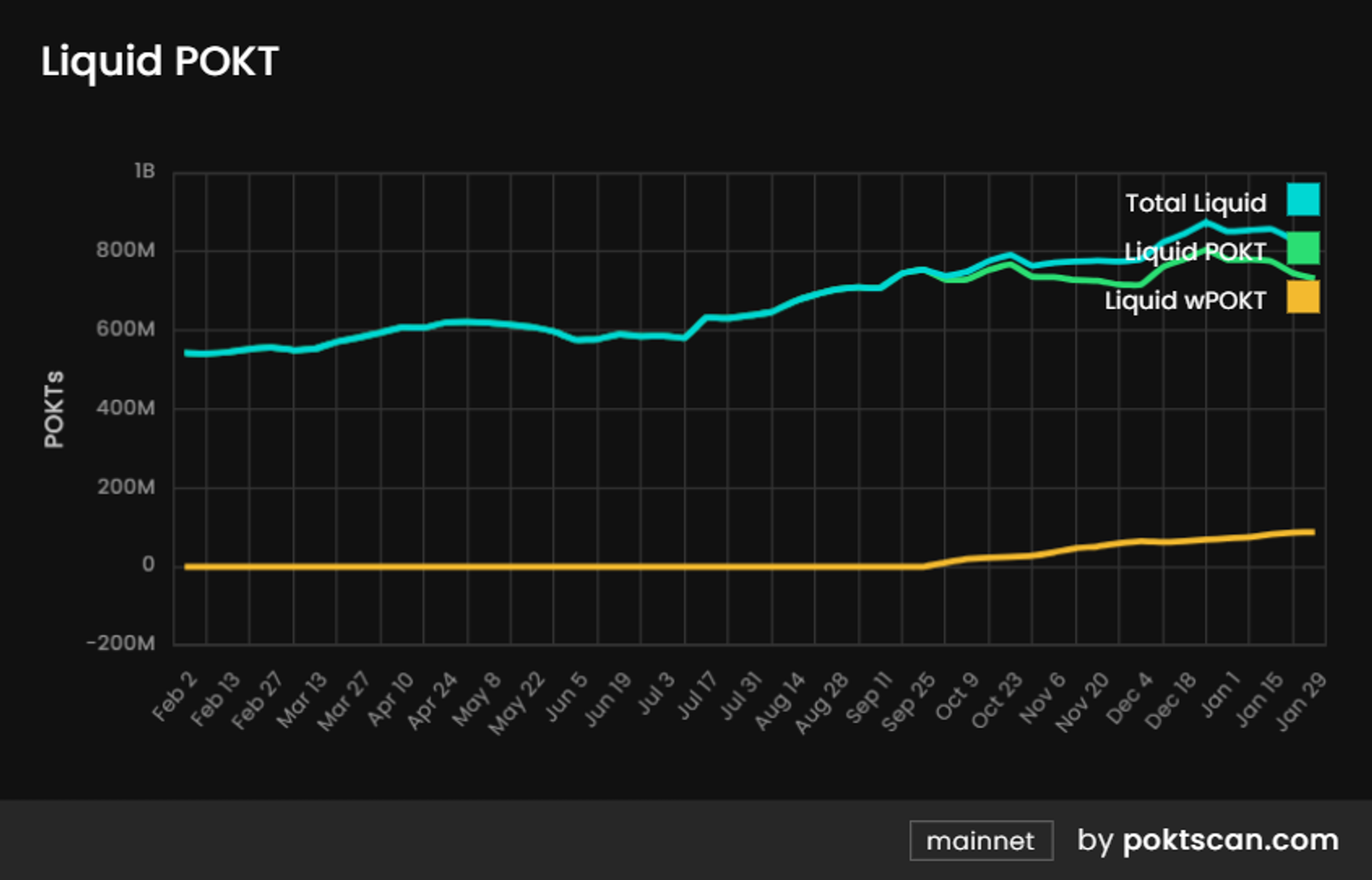
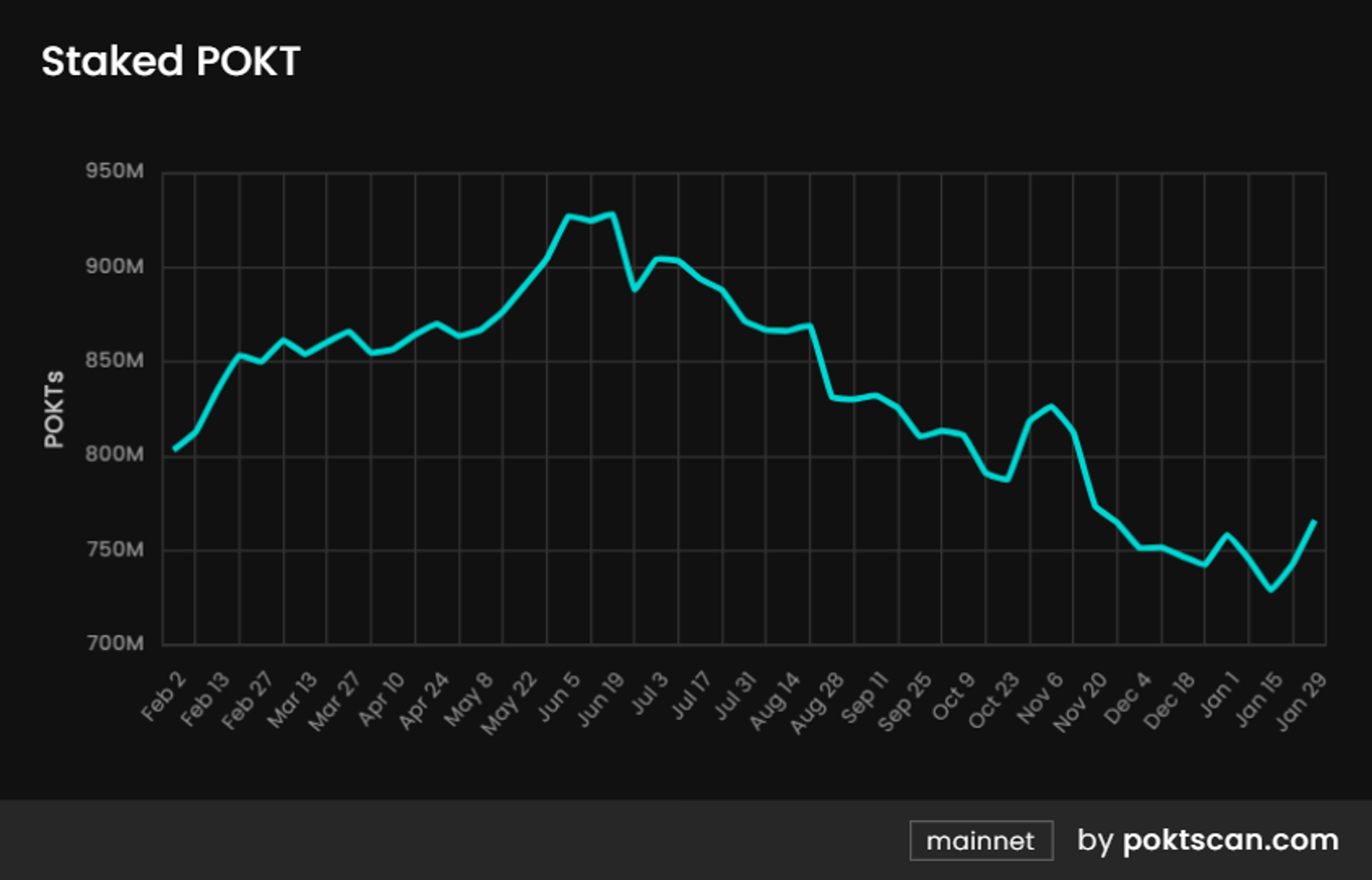
Token liquidity also depends on total supply and staking levels. Node operators must stake at least 15,000 POKT to join the network. The top 1,000 stakers become validators. According to Poktscan, the minimum stake required to become a validator is currently 75,100 POKT. Since June 2023, total staked POKT has slightly declined, causing Liquid POKT—which had been relatively stable—to gradually increase.
5.2 POKT Holder Structure and Token Performance
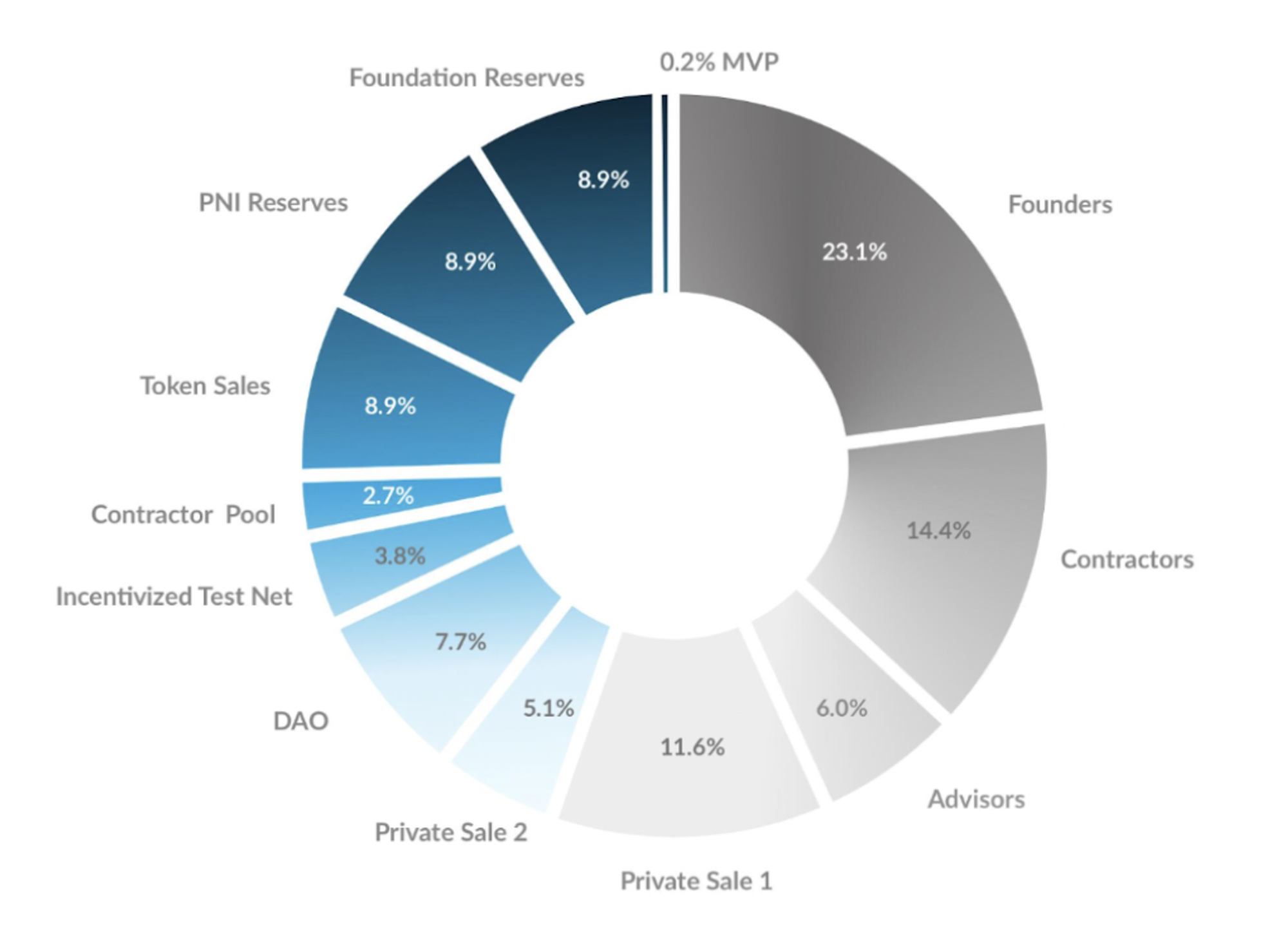
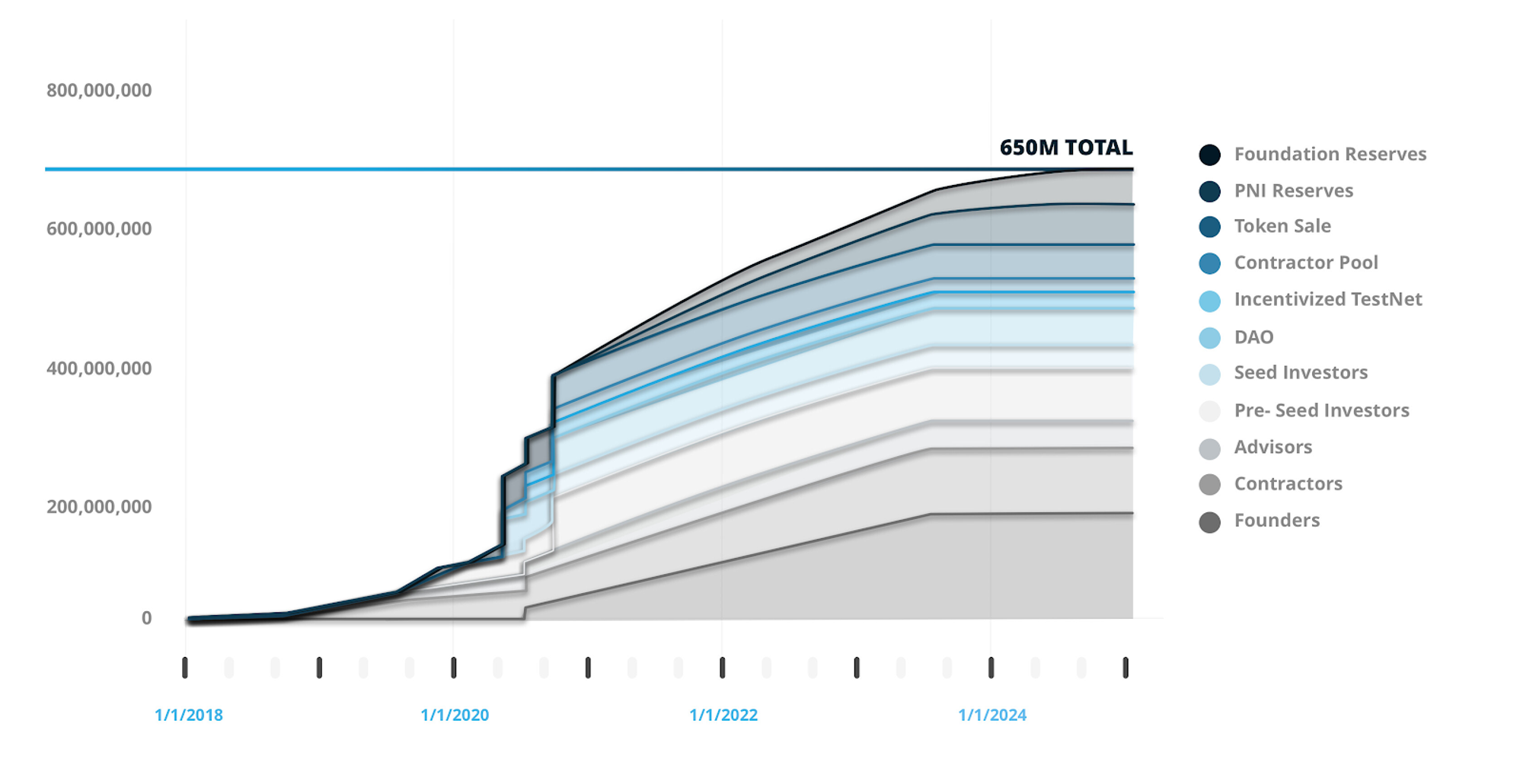
POKT had an initial supply of 649,984,998 with no maximum cap. The initial token allocation and unlock schedule are shown below. The current total supply is 1,637,686,745, with a circulating supply of 1,548,744,251 (per CoinGecko), indicating extensive unlocks—most investor and team tokens have already been released.
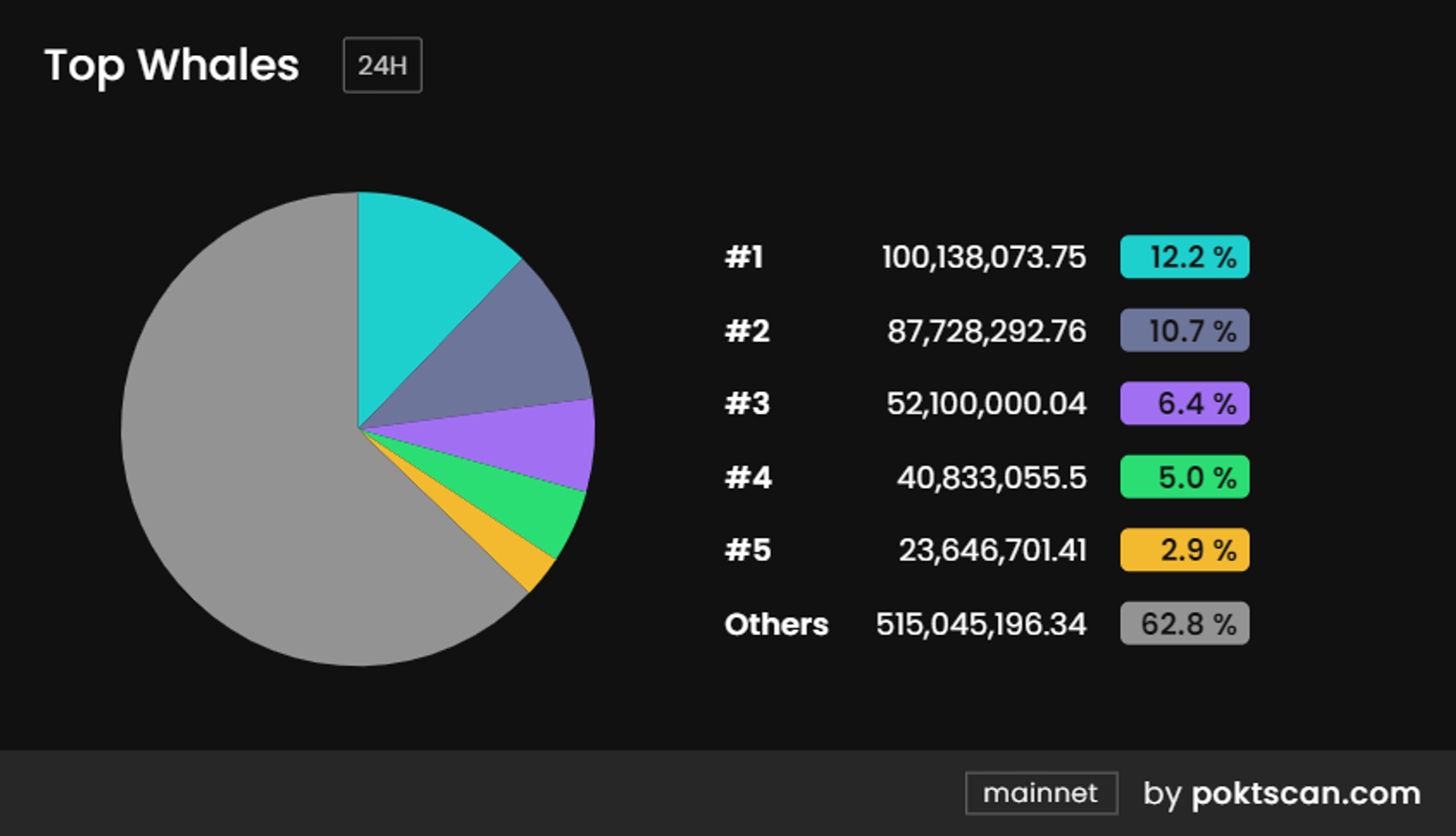
In terms of token distribution, 766,214,731 POKT are currently staked—approximately 50% of the circulating supply—indicating meaningful utility for half of all POKT tokens. According to Poktscan, there are around 10,000 addresses holding POKT. The top 5 addresses collectively hold 304,546,121 POKT. Excluding staked amounts, the top 5 wallets control 38.2% of liquid holdings—indicating concentrated ownership.
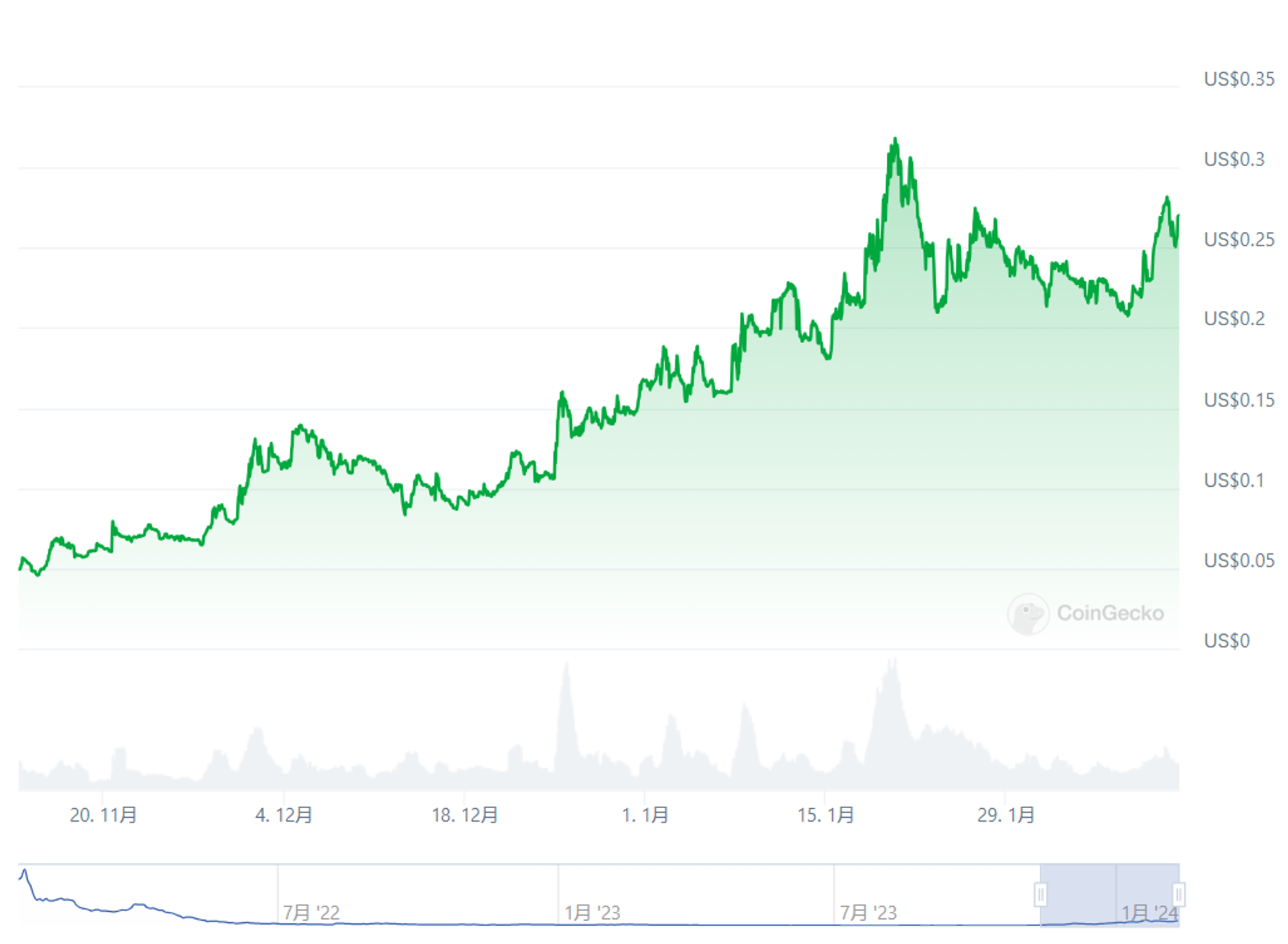
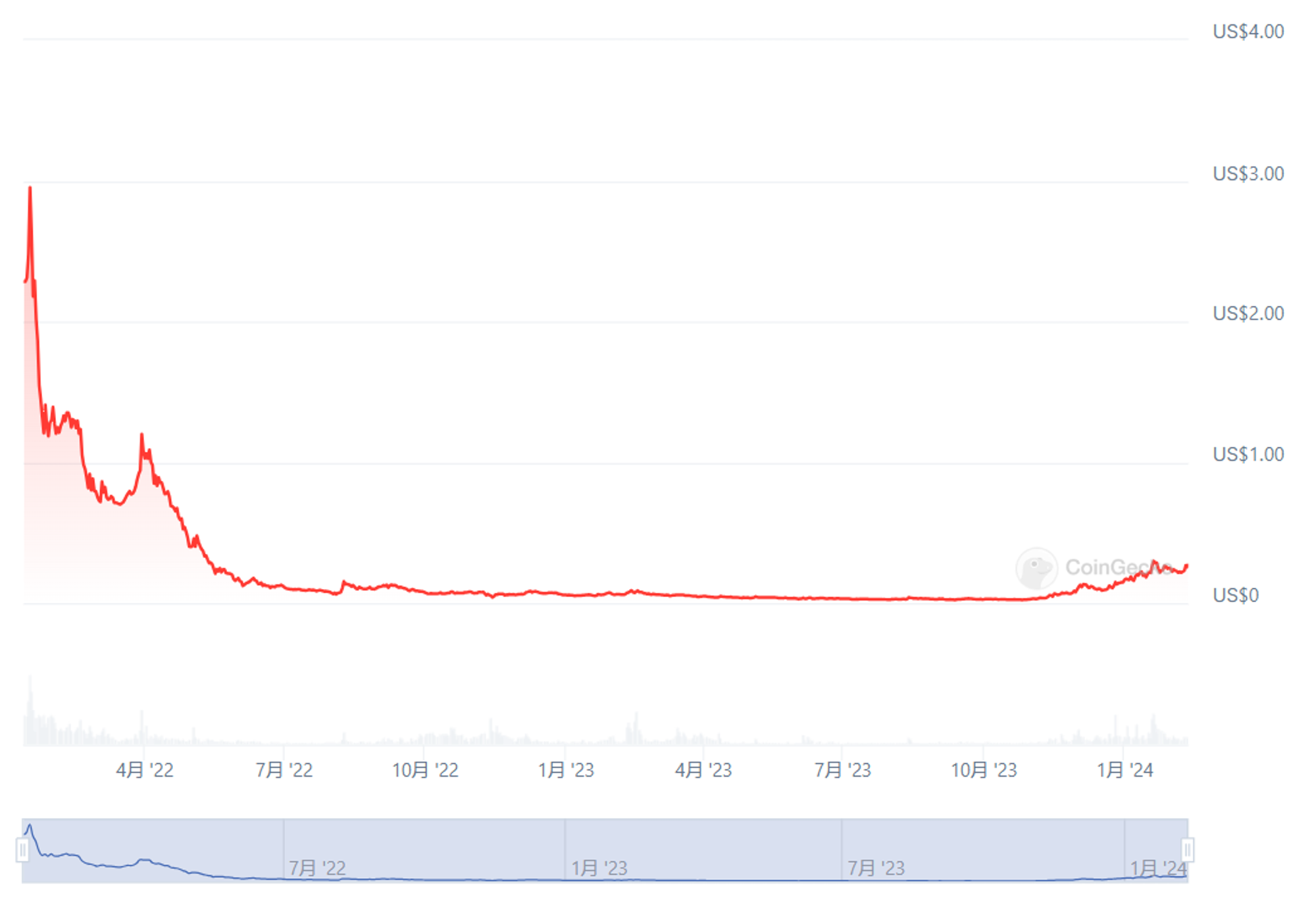
In terms of token performance, POKT currently has a market cap of $359,266,960 and an FDV of $368,776,455. Over the past three months, it rose nearly tenfold from its lowest to highest point, completing a round of value discovery—though it remains over tenfold below its previous all-time high.
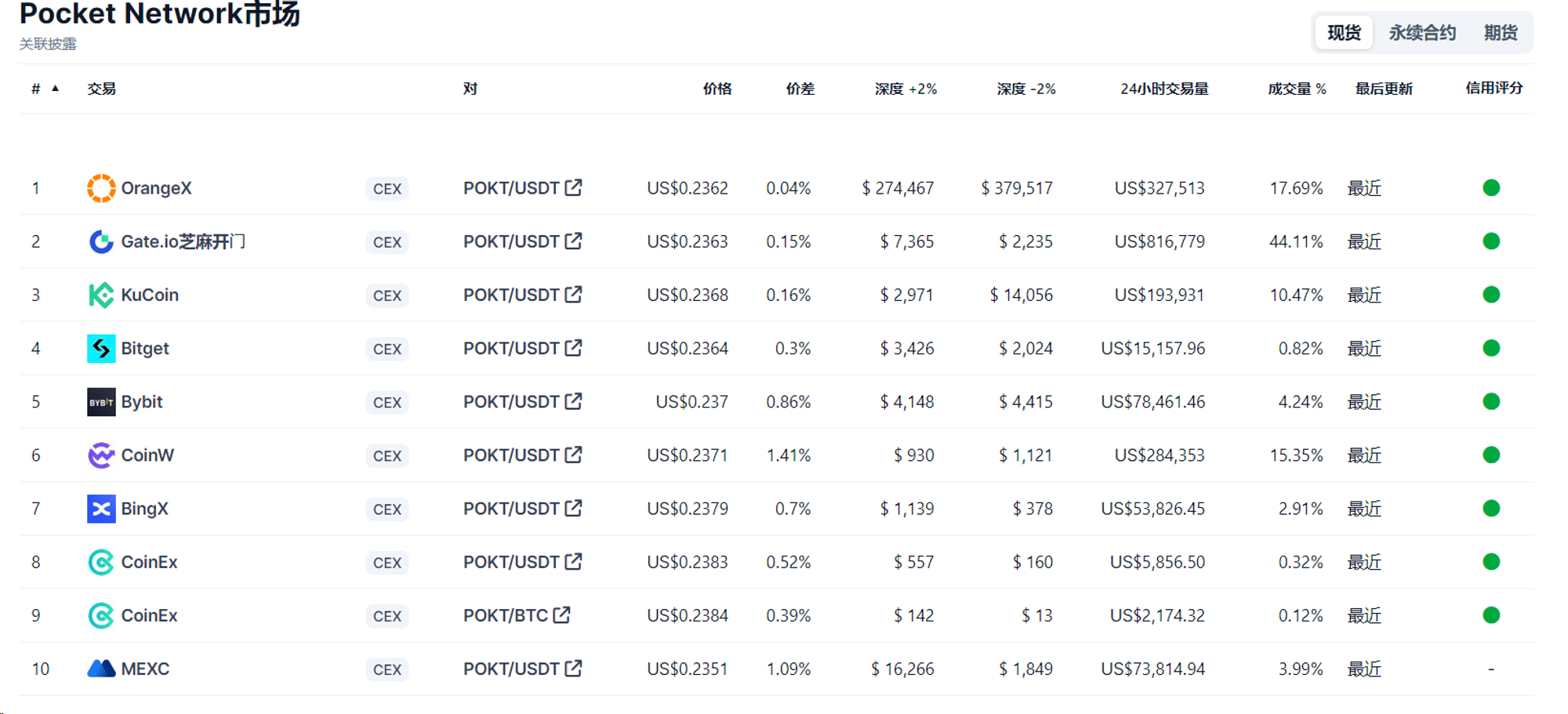
 On exchanges, Gate.io currently handles the majority of POKT trading volume. POKT has not yet listed on major Tier-1 exchanges, resulting in some liquidity discount.
6 Conclusion: POKT Network Is Transitioning Toward Sustainable Growth
Fundamentally, we believe POKT Network stands out for the following reasons:
(1) A decentralized RPC node incentive protocol occupying a vital niche in the Web3 ecosystem: RPC nodes are the gateway for users and developers to interact with blockchains, read and write data, and sit at the very bottom layer of the Web3 data stack. Their importance cannot be overstated. Centralized RPC nodes pose risks of censorship and single points of failure. POKT Network delivers decentralized RPC services, filling a critical gap in the market with no direct competitors in the decentralized RPC space. Compared to centralized providers, POKT offers superior scalability, lower operating costs, cheaper usage fees, and more resilient infrastructure.
(2) Successfully completed early-stage DePIN network bootstrapping and is now maturing into a sustainable growth phase: POKT Network has successfully launched its node network, proving the protocol’s viability. It is now transitioning from early-stage activation to long-term sustainability—a shift evidenced by: ① business metrics: a large node base and growing daily relay volume; ② tokenomics: steadily declining inflation and ongoing adjustments to economic parameters.
(3) Launching a new demand-side strategy with a modular structure and growth roadmap aligned with its development stage: POKT Network’s Gatewayverse strategy decouples demand-side operations into multiple independent Gateway providers. The core protocol focuses on serving as a foundational layer supporting diverse Gateway needs, prioritizing node incentives and network growth. Multiple Gateways will diversify service offerings and enable experimentation with non-native Web3 services like AI, expanding POKT’s utility. As discussed earlier, having established the supply side of the DePIN network, shifting focus to demand-side growth is a natural and appropriate next step.
From a capital perspective, POKT tokens have been substantially unlocked, inflation is steadily decreasing, and thanks to the burn mechanism, inflation is inversely correlated with daily relay volume—meaning rising relay activity during a bull market will further suppress net token issuance. Half of the circulating supply is staked, and holder concentration is high—making POKT a fundamentally solid investment candidate.
From a narrative perspective, POKT Network currently aligns with two major trends—DePIN and AI—both of which are experiencing intense market enthusiasm.
Key risks to monitor going forward include:
-
Market share evolution in the RPC node space: POKT’s current market share remains low compared to centralized providers. The Gatewayverse restructuring has led to a decline in daily relay volume—core business metrics warrant close attention.
-
Changes in node count and staking levels: both factors impact fundamentals and market dynamics. Recent temporary declines in node numbers and staking represent potential risk areas.
-
AI narrative execution: Whether the node network can effectively support open-source LLM inference remains uncertain. With growing competition in decentralized AI inference, POKT’s practicality and competitiveness in this domain remain unproven.
Join TechFlow official community to stay tuned
Telegram:https://t.me/TechFlowDaily
X (Twitter):https://x.com/TechFlowPost
X (Twitter) EN:https://x.com/BlockFlow_News
 @MetricsVentures