Founded just one year ago, valued at $2.5 billion—what did Moonshot AI get right?
TechFlow Selected TechFlow Selected
Founded just one year ago, valued at $2.5 billion—what did Moonshot AI get right?
Only with tech-savvy leaders at the helm can domestic large models thrive.
 Navigating Web3 tides with focused insights
Author: Ju Daminger
Recently, a domestic AI team named "Moonshot AI" has shaken the entire tech industry with a massive funding round exceeding 1 billion U.S. dollars.
This financing is not only an endorsement of Moonshot AI's capabilities but also signals that the "backbone" of China’s large AI models is gradually strengthening.
Founded in March 2023 and led by Professor Yang Zhilin from Tsinghua University's Institute for Interdisciplinary Information Sciences, Moonshot AI includes talent from international tech giants such as Google, Meta, and Amazon on its team.
Its previous funding round took place in 2023, raising over 200 million U.S. dollars from investors including Sequoia Capital China and ZhenFund.
With this latest round, Moonshot AI has achieved a valuation of approximately 2.5 billion U.S. dollars in less than a year since its founding.
So what exactly does Moonshot AI possess that has captivated the capital markets and prompted such significant investments?
Team Overview
Moonshot AI stands out due to its young, professional, and highly experienced team composition. Founder Yang Zhilin, though a post-90s generation entrepreneur, boasts deep academic credentials.
He holds a computer science background from Tsinghua University and earned his Ph.D. from Carnegie Mellon University. He has co-authored research papers with multiple Turing Award winners, lending strong technical credibility to Moonshot AI through his academic achievements and industry experience.
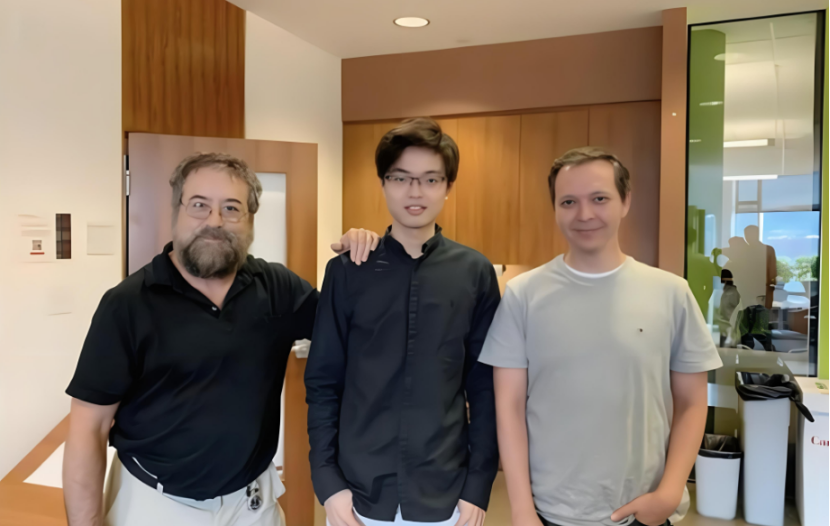
Yang Zhilin (center)
Similarly, other key members such as co-founders Zhou Xinyu and Wu Yuxin bring both Tsinghua University backgrounds and work experience at renowned technology companies like Megvii and Meta. Having participated in projects including Google Gemini, Google Bard, Pangu NLP, and Wudao, these individuals equip Moonshot AI with leading-edge R&D capabilities in large models.
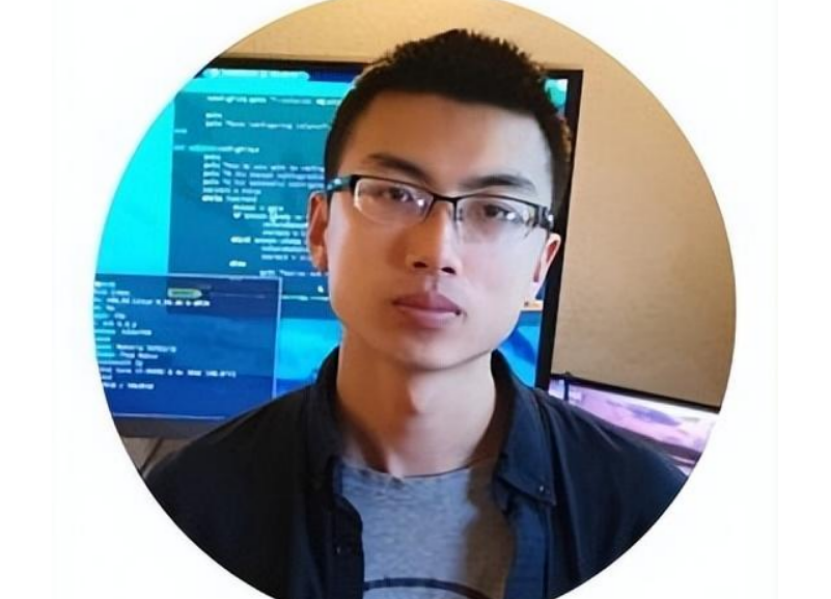
Wu Yuxin
In short, robust technical expertise, strong R&D capability, and the diverse backgrounds of team members are key reasons why investors view Moonshot AI favorably.
Only with solid technical strength and diverse perspectives can a team better understand and meet market demands.
Product Overview
Compared to some all-encompassing large models currently available, Moonshot AI's model Kimi Chat focuses more specifically on long-text processing capabilities.
For example, it supports context lengths of approximately 200,000 Chinese characters—about 2.5 times longer than Anthropic's Claude-100k (tested at around 80,000 characters) and eight times longer than OpenAI's GPT-4-32k (tested at about 25,000 characters).
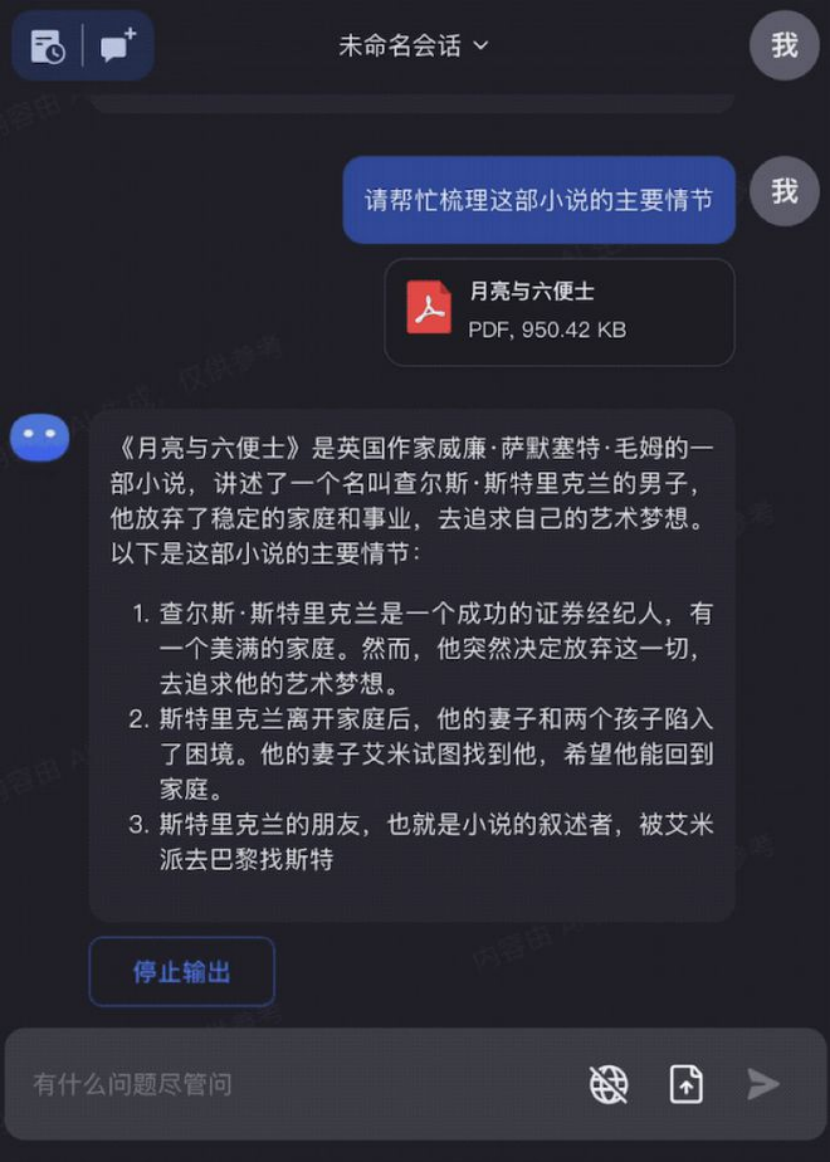
Moreover, through innovative network architecture and engineering optimization, Kimi Chat achieves lossless long-range attention mechanisms at the scale of hundreds of billions of parameters without relying on performance-damaging "shortcuts" such as sliding windows, downsampling, or smaller auxiliary models.
These improvements allow Kimi Chat to process inputs up to 200,000 Chinese characters in length without compromising comprehension or generation quality—an extremely rare capability among current AI models.
This advantage gives Kimi Chat tremendous potential in fields such as finance, law, and scientific research, where rapid analysis and summarization of lengthy documents are required.
Summary and Analysis
From both technological and market perspectives, there are two main reasons why Moonshot AI and its large model Kimi Chat have stood out among numerous domestic large models:
First, Kimi Chat targets a core technical challenge in today’s large models.
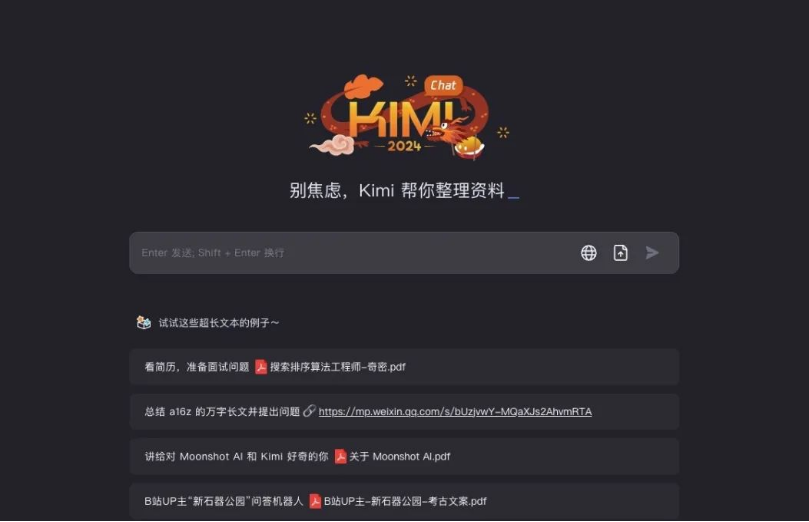
After all, current AI large models were fundamentally created to assist humans in managing information overload during this era of data explosion. Only entrepreneurs like Yang Zhilin, who possess deep academic foundations, can truly grasp this insight.
Therefore, Kimi Chat’s long-text processing capability directly addresses the market need for handling massive volumes of information.
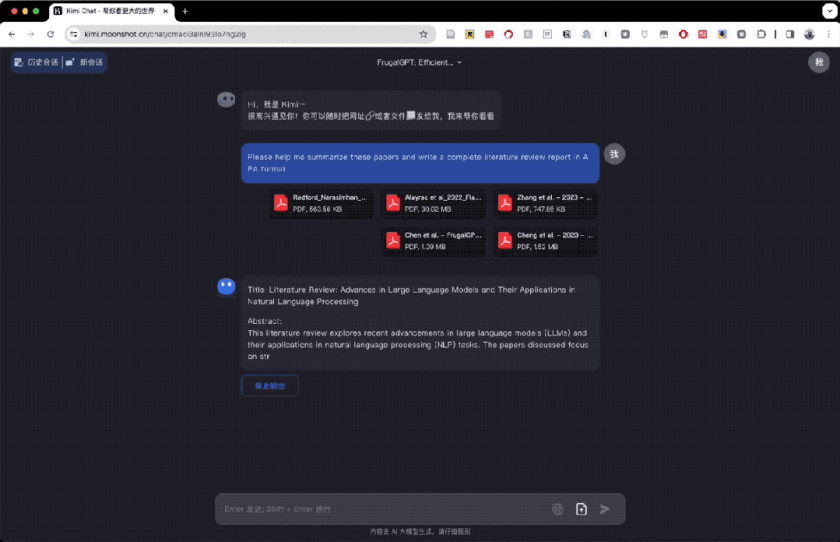
Second, Kimi Chat adopts a clear positioning in the consumer (C-end) market.
While many other domestic large models cautiously or conventionally target enterprise (B-end) markets, Kimi Chat clearly positions itself toward consumers, offering personalized and convenient AI services that differentiate it from competitors.
Additionally, C-end users typically provide direct feedback on product experience and functionality. This real-time feedback mechanism enables Kimi Chat to rapidly iterate and optimize its product, helping it maintain a leading position in a fiercely competitive market.
Join TechFlow official community to stay tuned
Telegram:https://t.me/TechFlowDaily
X (Twitter):https://x.com/TechFlowPost
X (Twitter) EN:https://x.com/BlockFlow_News