









After Jupiter's token launch: 60% of addresses received only 200 JUP; the airdrop effect drives on-chain activity to a new high
TechFlow Selected TechFlow Selected
After Jupiter's token launch: 60% of addresses received only 200 JUP; the airdrop effect drives on-chain activity to a new high
On the day of the JUP airdrop, Solana's active addresses hit a one-year high, with at least 50% of active wallets claiming JUP on the network.
 Navigating Web3 tides with focused insights
Author: Tom Wan
Translation: TechFlow
Recently, Jupiter's airdrop has become the focus of market attention, sparking widespread discussion and analysis. This article will examine the airdrop from aspects such as JUP claim statistics and Solana on-chain data.
Main Content
To date, over 440,000 addresses have claimed 622 million JUP tokens from Jupiter. Approximately 54% of eligible wallets have not yet claimed their JUP, leaving around 378 million JUP unclaimed.

Most recipients received fewer than 1,000 JUP—59% of airdrop farmers (261,000 wallets) received only 200 JUP, while approximately 1,500 wallets received between 100,000 and 200,000 JUP.
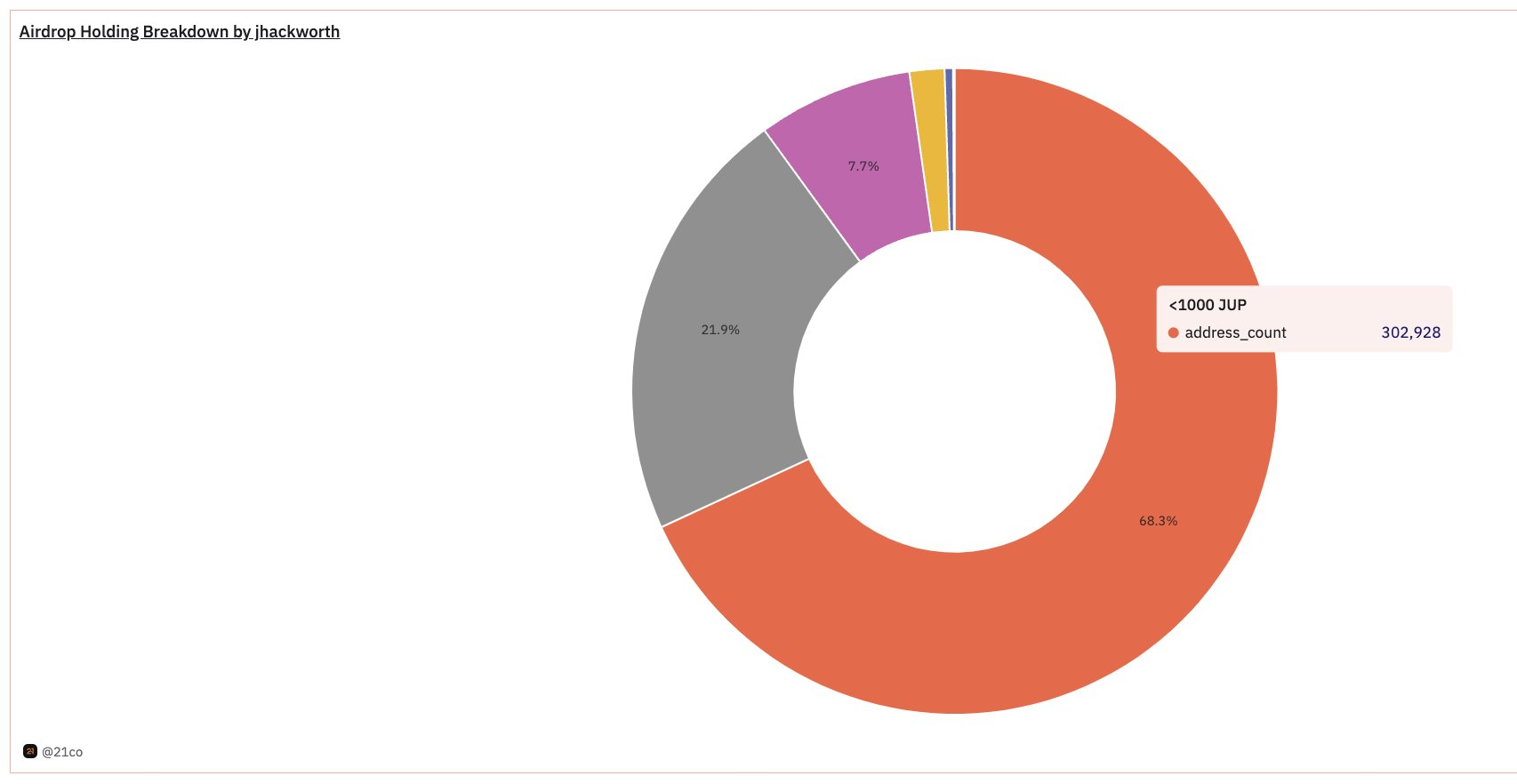
Recipients who received larger airdrop amounts tend to still hold their JUP, whereas 72% of those who received fewer than 1,000 JUP no longer hold any. The most loyal recipient group consists of wallets that received 50,000–100,000 JUP. Note: Holders may be using their tokens for DeFi activities.

Next, let's analyze the data on Solana.
Currently, Solana is processing 13% more transactions than it did over the past 90 days, while maintaining block times close to 400 milliseconds.
While this may seem normal for Solana, more wallets are now transacting on the network and competing for faster inclusion.
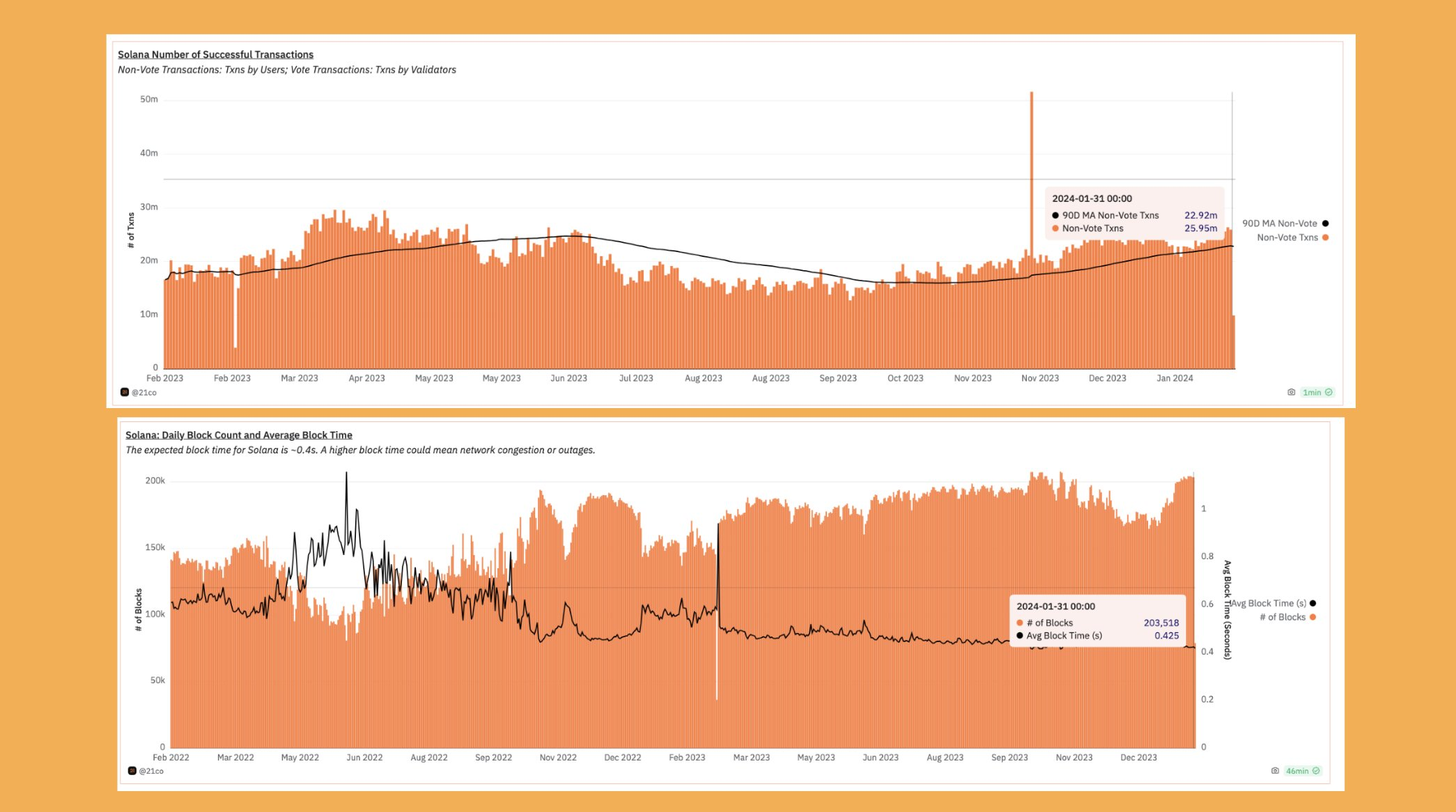
On the day of the JUP airdrop, active addresses on Solana reached a one-year high, with at least 50% of active wallets claiming JUP on the network. As the number of wallets transacting on Solana increases, we expect average transaction fees to rise accordingly.

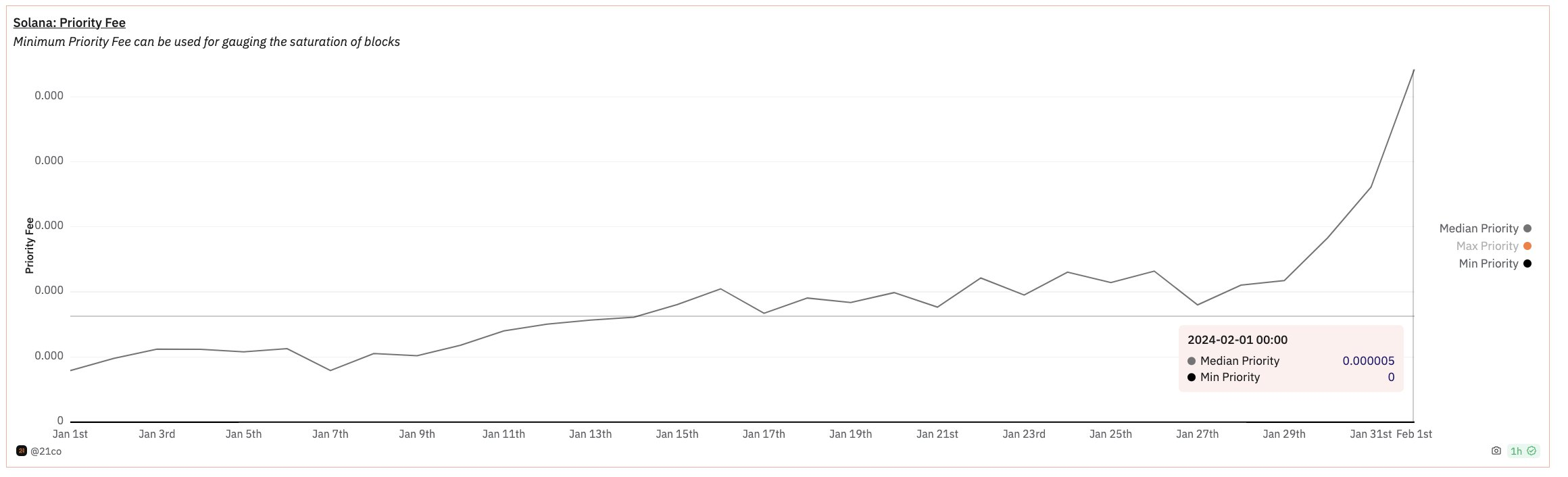
Solana’s average transaction fee was twice that of the previous day (January 30), but remains very low for users—approximately $0.017 per transaction.

The median priority fee surged, but the lowest priority fee remained at 0.
This means that despite competition for transaction inclusion, the network can still process regular user transactions that pay zero priority fees.
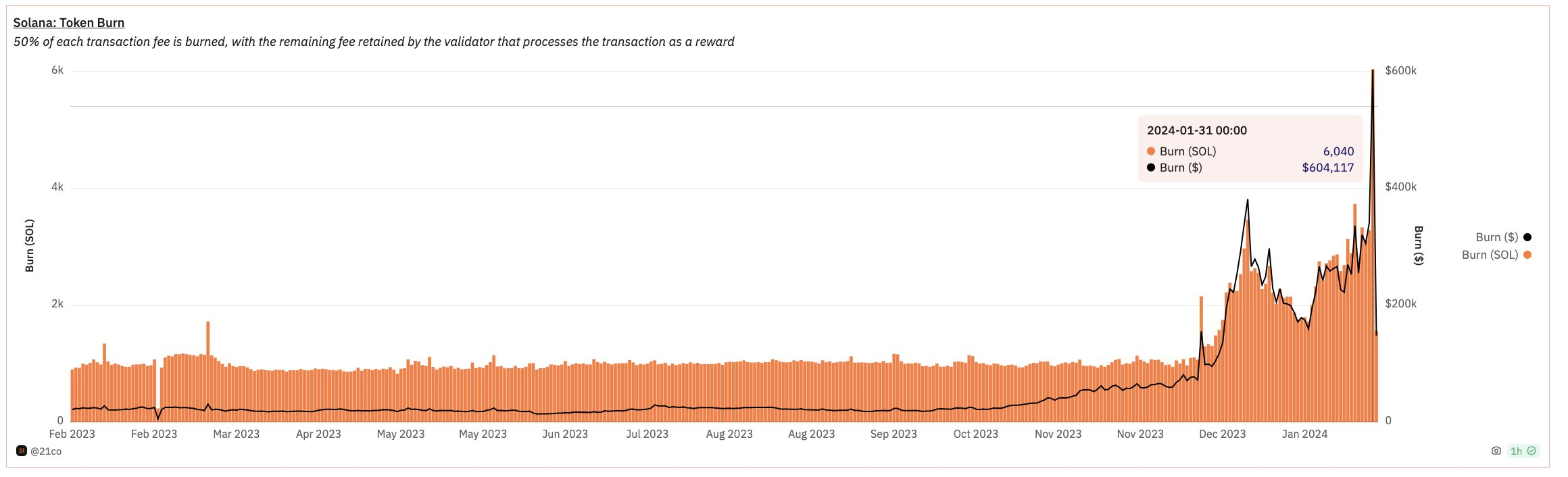
So far, 6,000 SOL—worth approximately $600,000—has been burned on the network.
Jito validator tips also hit an all-time high, receiving 8,370 SOL (worth $837,000) in a single day.
As we can see on the network, some advanced users are executing complex bundled transactions, which may require more compute units to process.

Join TechFlow official community to stay tuned
Telegram:https://t.me/TechFlowDaily
X (Twitter):https://x.com/TechFlowPost
X (Twitter) EN:https://x.com/BlockFlow_News
 @tomwanhh











