








Only 42% of people trust human news anchors—what would happen if AI reported the news instead?
TechFlow Selected TechFlow Selected
Only 42% of people trust human news anchors—what would happen if AI reported the news instead?
Being able to truly identify newsworthy events and report on them is also one of the challenges AI may face.
 Navigating Web3 tides with focused insights
Text: Getty Images
Translation: MetaverseHub
A startup is developing a news service hosted by AI presenters. Could this disrupt the decades-old relationship between TV viewers and on-screen anchors?
The footage wouldn't look out of place on many news channels around the world.
A video posted on social media shows, over 22 minutes, various meticulously groomed news anchors standing in front of cameras delivering the day's headlines. But none of them are real—they're generated by AI.
The video was produced by Channel 1, a Los Angeles-based company founded by entrepreneurs Adam Mosam and Scott Zabielski, who plan to launch AI-generated news on a streaming television channel later this year.
"Using AI to personalize content for individuals seems like an interesting opportunity to enhance the news user experience," said Mosam.
AI technology can also translate scripts and interviews from one language to another, features demonstrated by Channel 1 in a promotional video shared in December.
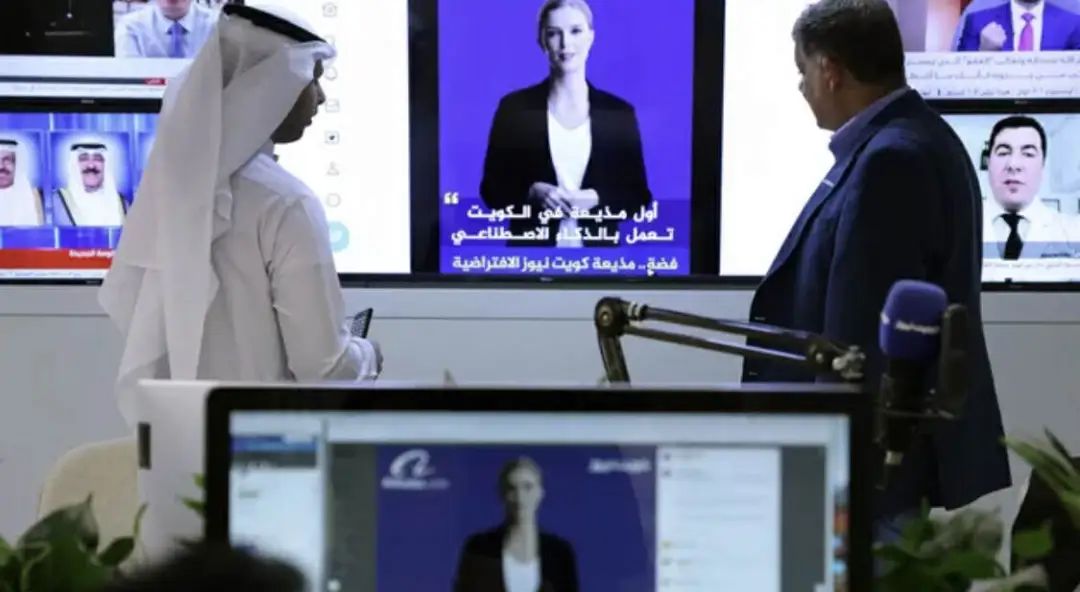
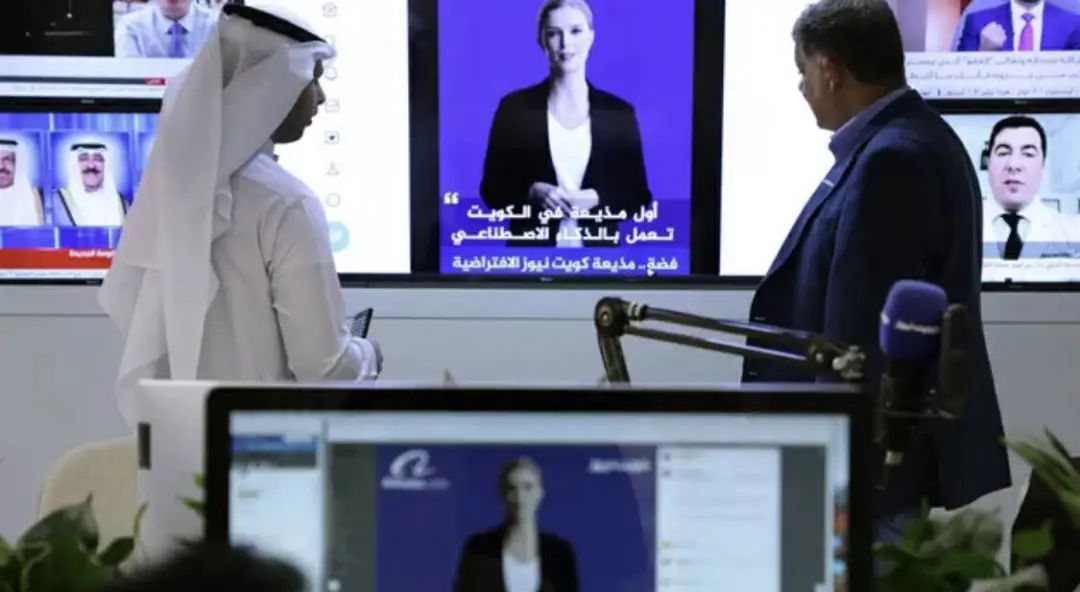
Channel 1 represents the latest example of AI news anchors globally. In Kuwait, an AI character named "Fedha" delivers headlines for Al-Khaleejia News.
In May 2023, Greece’s national broadcaster ERT used an AI-generated deepfake figure, Hermes, for news briefings; South Korea's SBS Broadcasting plans to hand over five months of news broadcasts to an AI-generated anchor named Zae-In this year; similar applications exist in India and Taiwan.
But one critical question remains unanswered: Will audiences trust news delivered by AI rather than humans?
According to a survey by Ipsos, a public opinion research firm, trust in news presenters has dropped to a historic low.
Only 42% of people in the UK trust television news presenters, a decline of 16 percentage points within a single year. Doubting that news anchors are impartial arbiters of truth is an unusual modern phenomenon, with many now turning to individual creators or online bloggers for their news.
This connection between social media influencers and their audiences is known as 'parasocial influence.'
The concept of parasocial relationships was first proposed by scholars at the University of Chicago in the 1950s. It describes how viewers watching evening news programs feel that the anchor behind the desk is speaking directly to them through the lens. News presenters are no longer just reporters reading the news—they become friends who accompany viewers in their living rooms each night.
Influential social media personalities have similarly adopted this direct-to-camera format, leveraging personal charisma to build strong audience connections—and achieving great success.
Christine H Tran, a researcher at the University of Toronto studying digital platforms and labor, said: "Interestingly, the label 'parasocial' has evolved from describing an individual's sense of closeness to remote news anchors into something much broader."
"You can form a parasocial relationship not only with a journalist or a news Twitch streamer but also with a YouTube celebrity, a singer, or even a couple on Instagram."
However, whether AI can replicate such personal connections is far less certain. Mosam admitted: "The connection you have with AI will never be the same as with another human being."
Still, Mosam added: "We're not developing this AI news service because we think robots do it better than humans—that would be absurd."

The idea of journalists not reading the news isn't new—even the notion of computer-generated news isn't particularly novel.
Nic Newman, senior research associate at Oxford University's Reuters Institute for the Study of Journalism and former BBC editor, said: "When I started in journalism, news was read by actors, and people were generally okay with it."
Newman believes that since journalists don’t always read the news themselves, this experiment could succeed. However, there are limitations—it works best for short news bulletins.
Yet Newman remains uncertain about whether audiences will accept relationships with AI anchors. After all, humanity still matters greatly in news programming.
This is also what makes Tran uncertain. "If AI-generated broadcasts are accurately labeled as 'AI content,' and audiences know there's no personal life beyond the screen, will they inspire the same level of parasocial engagement?"
"It depends on whether the platform hosting the AI anchor labels its content as AI-generated, as some platforms like Instagram are considering."
Channel 1 and NewsGPT claim to be the world's first fully AI-generated news channels—but perhaps another question needs answering: Is it possible to completely eliminate human involvement?
Currently, Channel 1 employs nearly ten staff members who review AI-generated scripts and select which stories to cover.
Mosam said Channel 1 follows 13 steps before any report airs, ensuring issues related to AI generation aren’t broadcasted. This includes guarding against "hallucinations"—instances where AI tools fabricate information, a clear taboo in journalism. The company behind Channel 1 plans to hire a chief editor early next year.

Both Mosam and Newman believe that identifying newsworthy events and reporting on them may pose another challenge for AI. Channel 1's test programs heavily rely on stories discovered and footage shot by human journalists.
"Without these sources—or if those sources were cut off—I really can't imagine how AI could find newsworthy events," said Newman. "Without that raw material, AI would be completely helpless."
"Certain elements of the reporting process can be handled by AI," said Mosam, "but others simply cannot."
"You'll never effectively gather intelligence from person-to-person interactions, nor conduct meaningful human interviews. But I can fly a drone and analyze everything I see."
Fully AI-driven news gathering without any human participation is not currently part of Channel 1's plans.
Join TechFlow official community to stay tuned
Telegram:https://t.me/TechFlowDaily
X (Twitter):https://x.com/TechFlowPost
X (Twitter) EN:https://x.com/BlockFlow_News











