








What Are Frames, the New Farcaster Feature Praised by Silicon Valley Startup Guru Paul Graham?
TechFlow Selected TechFlow Selected
What Are Frames, the New Farcaster Feature Praised by Silicon Valley Startup Guru Paul Graham?
Frames provide a canvas on which developers draw content.
 Navigating Web3 tides with focused insights
Author: Cobo Argus
Summary: For Web3 to succeed, it must achieve at least two things: deliver crypto-native functionality that Web2 lacks, and make blockchain nearly invisible to users. Frames accomplishes both.
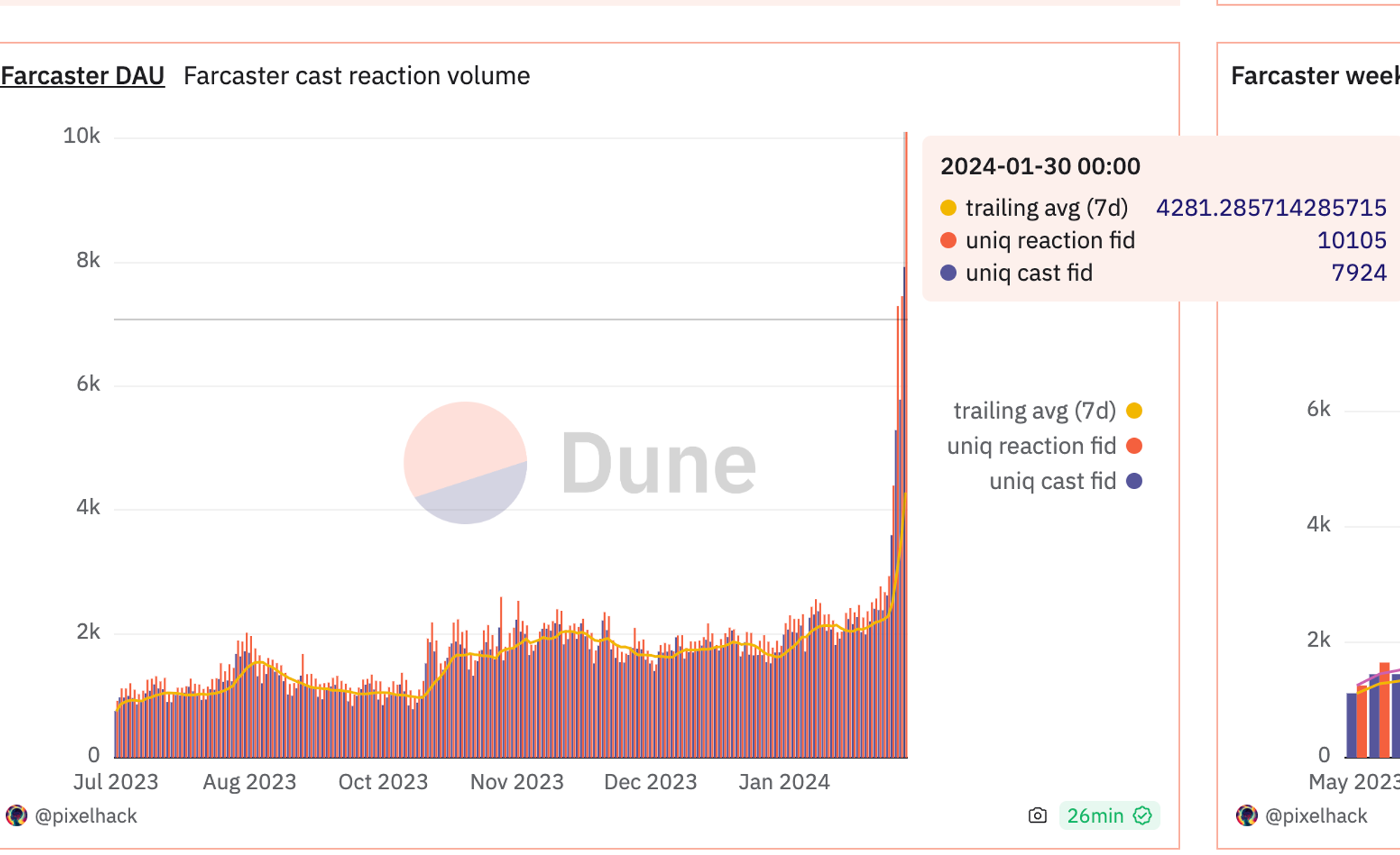
Farcaster, the decentralized social platform led by a16z, recently launched a new feature called "Frames," sparking an unprecedented wave of application development and driving record-high DAUs (daily active users). Unlike most trends in the crypto space, this time Farcaster is primarily attracting developers, which in turn fuels greater end-user engagement—even earning praise from Silicon Valley startup mentor Paul Graham.
What are "Frames"?
Before understanding Frames, let's first get familiar with Farcaster.
Farcaster is a decentralized social network founded by Dan Romero and Varun Srinivasan.
Farcaster itself is a protocol, much like SMTP—the underlying protocol for email. It manages user handles, casts (Farcaster’s version of tweets), and other interactions such as likes and reposts. For end users, a client application—like Warpcast—is required to access the network.
Clients serve as the interface through which users access their feeds. Today, we rarely hear the term “client” anymore because, in most modern centralized social networks, the protocol and the client are one and the same. Twitter once had third-party clients like Tweebot, TweetDeck, and Twitterific, until it shut off API access, effectively ending the client era. Now, Twitter is just Twitter (or, as it may now be called, X).
The Farcaster team built its own official client, Warpcast, but third-party developers are actively encouraged to build their own. Anyone can freely build a client on top of Farcaster, using its data while offering different front-end experiences. a16z crypto maintains a list of general and vertical clients in its Awesome-Farcaster repository, including Supercast, Yup, Searchcaster, Launchcaster, Kiwi News, and Casthose.
A few months ago, Farcaster introduced Channels—a feature allowing conversations to be organized by topic, similar to Douban groups or Reddit subreddits. Any user can now pay WARP tokens to create themed channels.
What are Frames?
Last Friday, Farcaster launched Frames, enabling mini-applications to be embedded directly within casts.
True to their name, Frames are small interactive iframes embedded within a cast, allowing users to include custom interactive actions such as voting, galleries, surveys, prediction markets, and more—all without leaving the Farcaster feed. Opening a Frame is like opening a door into another app, letting external applications directly engage the user. From a Web2 perspective, this might seem similar to embedding a website inside another using <iframe>. But the key difference lies in blockchain’s shared state, which makes these embedded experiences feel as native as the apps themselves.
Compared to Web2, Frames introduce a new Web3 primitive: a simple way to run app Y while the user is inside app X, with almost no coordination required between the two. Interoperable identities and transaction records on the blockchain, combined with seamless handling of money and digital ownership, enable a unified, cross-application map of user actions—a level of integration even Facebook at its peak could not achieve.
At the technical level, every interaction is signed using the Farcaster user’s EdDSA key. This enables automatic authentication, compatibility across all Farcaster clients, and eliminates the risk of losing funds.
An Unprecedented Developer Boom Around Frames
Frames provide the canvas—and developers are painting on it.
In just five days since launch, this seemingly simple feature has unleashed incredible developer creativity: minting NFTs directly within the Farcaster feed, subscribing to newsletters in-feed, claiming testnet faucet tokens, generating artwork, playing text-based adventure games, using an app that automatically checks for unclaimed airdrops, implementing on-chain shopping carts and checkout flows powered by tokens, and even creating wallets and sending tips via command line. A developer hackathon for Farcaster Frames in New York is currently underway.
Degen Jeeves is a $DEGEN automation bot that allows users to send specific amounts of $DEGEN tokens to any Farcaster user via the !tip command. Before tipping, users must first use !create to automatically generate a Base wallet.
Farcaster Community Token $DEGEN
In fact, another key factor behind Farcaster’s recent surge in DAU is the second round of airdrops for the community token $DEGEN.
$DEGEN is a token initiated within the Farcaster degen channel. In this second airdrop round, users earn Farcaster points based on the total amount of tips they receive. Every Farcaster user (who has posted at least three original casts) receives an initial tipping allowance, with the size determined by ratios of replies to posts. To tip on a specific post, simply comment “amount + $DEGEN,” for example, “420 $DEGEN.” Tips given within specific channels carry higher airdrop weight. Since the start of the second airdrop, $DEGEN’s price has increased by 230%. Due to widespread airdrop farming caused by this distribution method, $DEGEN developers are building an automated detection system.
$DEGEN is by far the most successful meme coin to emerge organically from Farcaster, and it represents a truly community-driven meme project. Its fair launch, grassroots culture, bottom-up expansion, and organic community growth—managed through a loose, unofficial DAO structure—have created natural advantages for integration. Developers on Farcaster have experimented extensively around $DEGEN, showcasing rare consumer-facing use cases in the crypto industry.
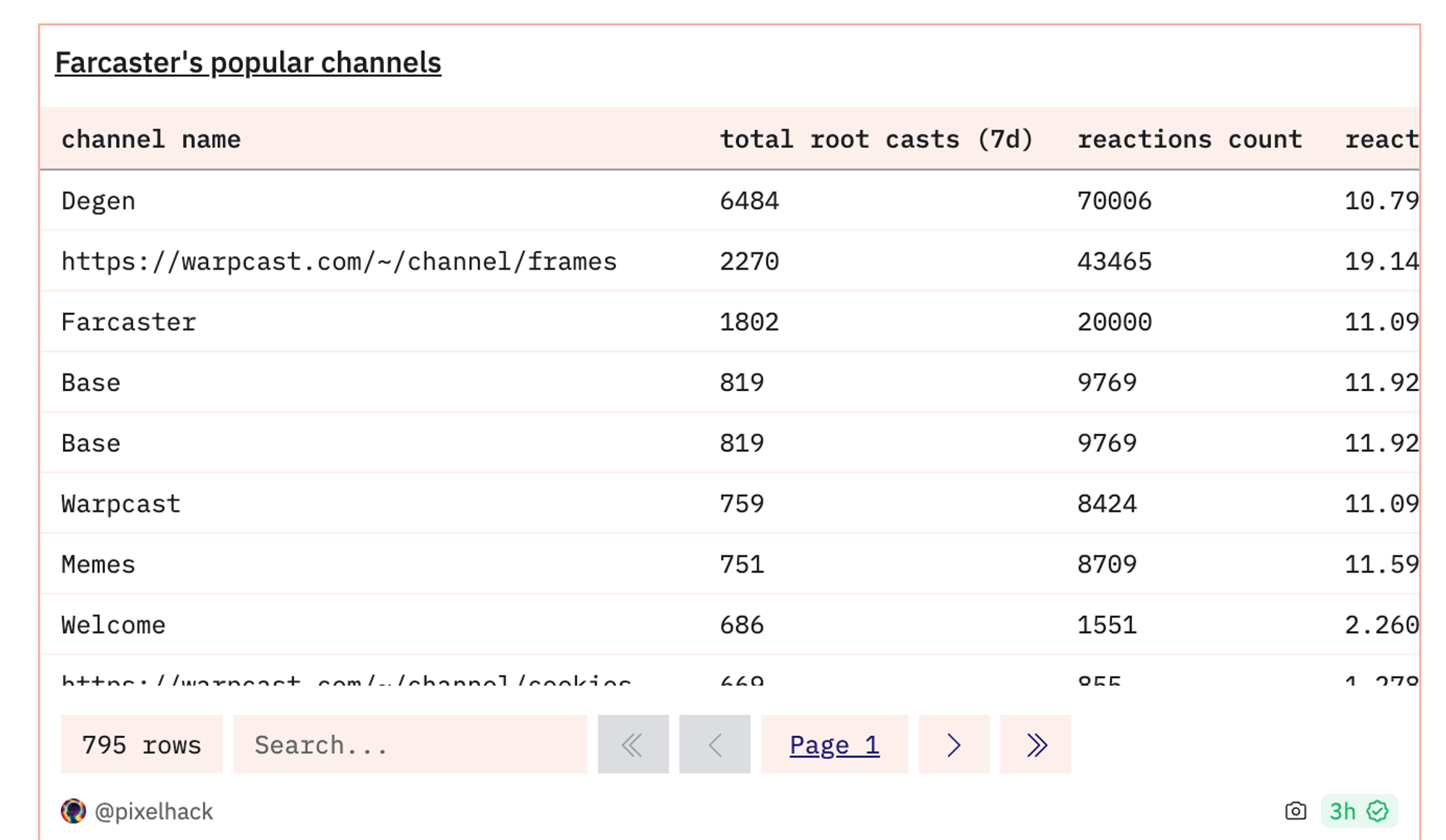
Today, Degen has become the central hub of social interaction on Farcaster. The Degentlemen and Degentlewomen who represent the Degen project now drive its DAU. Data shows that $Degen is the most active channel on Farcaster, surpassing the combined activity of all other topic channels.
In essence, by introducing Frames, Farcaster delivers a seamless, crypto-native social experience built atop the blockchain—one where users hardly notice the blockchain at all. While Twitter under Musk increasingly restricts third-party developers and faces growing criticism, Farcaster offers developers a mobile-first, distribution-friendly (cold-start enabled), permissionless crypto-native development environment—revealing real potential for “Farcaster flipping Twitter.”
Like Silicon Valley startup guru Paul Graham, we believe in Farcaster’s long-term value—not just for the future of crypto, but as a vital counterbalance to an increasingly closed internet.

We hope Farcaster brings us closer to the original vision of the World Wide Web.
Join TechFlow official community to stay tuned
Telegram:https://t.me/TechFlowDaily
X (Twitter):https://x.com/TechFlowPost
X (Twitter) EN:https://x.com/BlockFlow_News
 Cobo
Cobo






