









CoinGecko Report: Over 50% of Crypto Assets Since 2014 Have Already "Died"
TechFlow Selected TechFlow Selected
CoinGecko Report: Over 50% of Crypto Assets Since 2014 Have Already "Died"
There is a clear correlation between market cycles and project failures.
 Navigating Web3 tides with focused insights
Source: bitcoinist
Compiled by: Blockchain Knight
CoinGecko recently conducted a comprehensive analysis of the crypto asset market, and its report reveals the troubling fate of digital currencies.
The report shows that since 2014, more than 50% of the 24,000 cryptocurrencies listed on the platform have died.
As many as 14,039 crypto assets have been labeled "dead" or "failed," either due to prolonged inactivity or an inherent lack of viability as effective mediums of exchange.
The report paints a vivid picture of a market fraught with challenges and uncertainty, highlighting a clear correlation between bull markets and project failures.
During the boom period of 2020–2021, the sharp surge in prices and speculative enthusiasm led to the highest number of casualties, with 7,530 crypto assets collapsing in the subsequent downturn, accounting for 53.6% of all failed currencies.
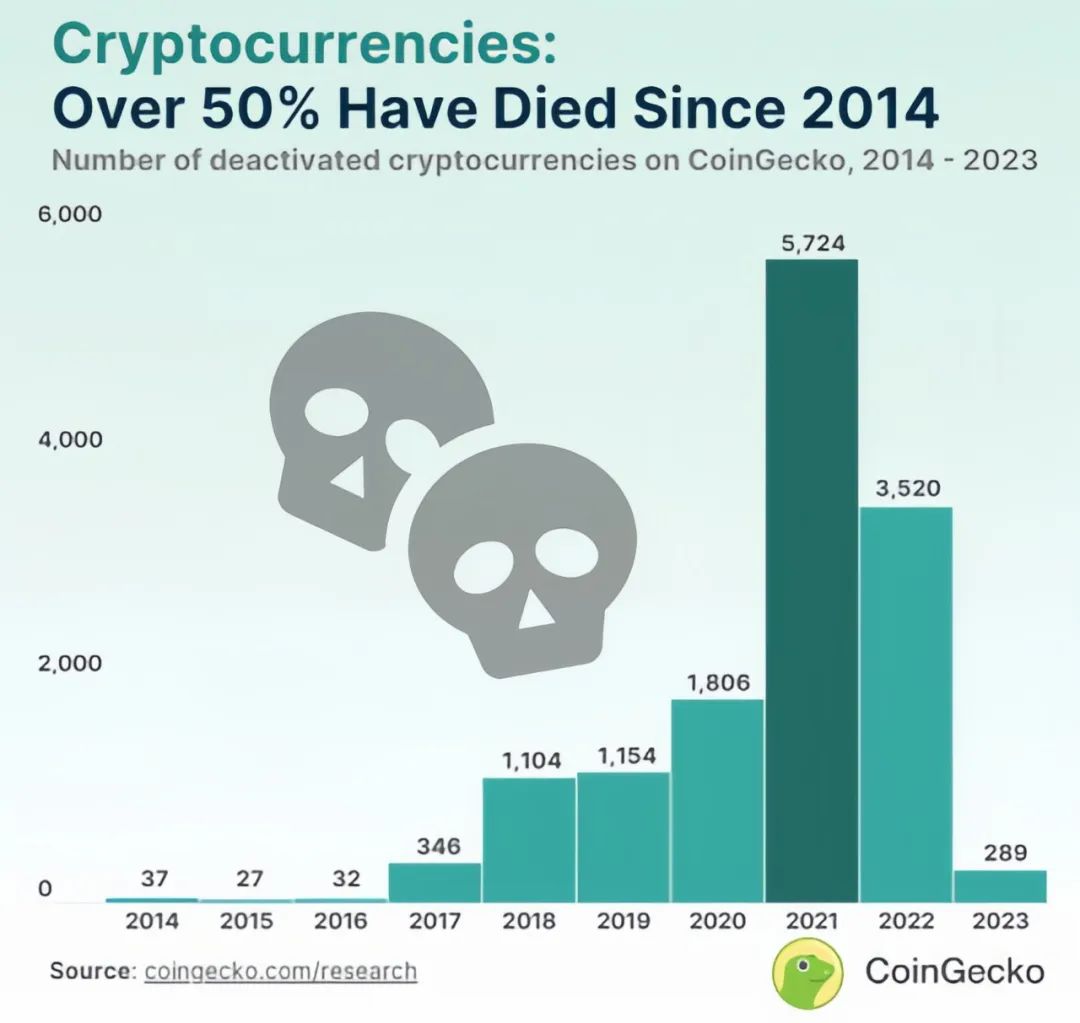
This period also witnessed a surge in meme coins, characterized by weak technological foundations and unclear use cases, leading to their rapid rise and subsequent decline.
As of January 2024, a total of 5,724 crypto assets have failed, with those launched in 2021 performing the worst.
2021 was the worst year since CoinGecko's launch, with over 70% of the crypto assets listed on the platform that year now defunct.
Next are the crypto assets launched in 2022, of which 3,520 have failed, representing approximately 60%.
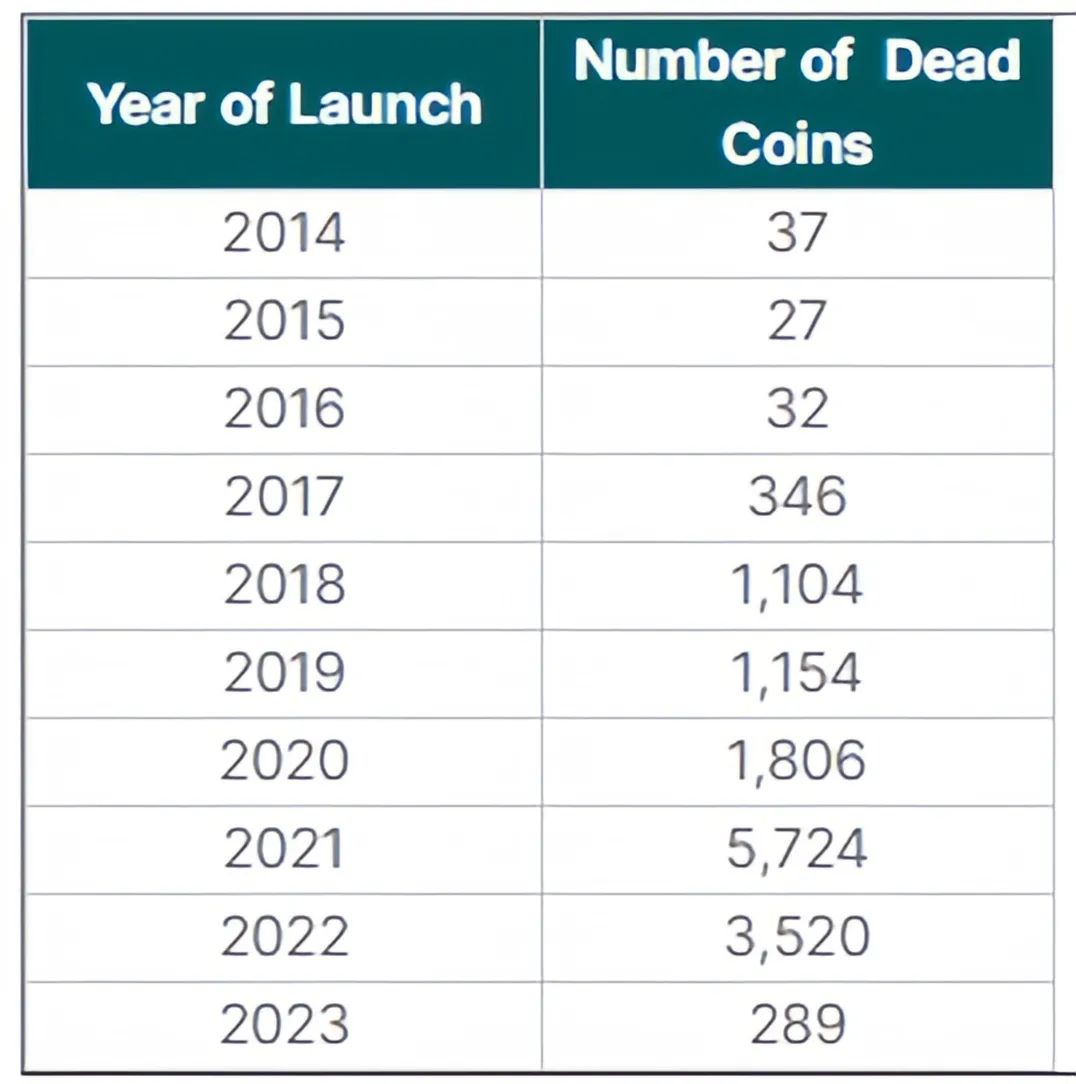
In 2023, 289 assets listed by CoinGecko failed. That year saw over 4,000 crypto assets launched, with a failure rate of less than 10%, a significant decline compared to previous years.
Amid this sobering assessment, 2023 data offers a glimmer of hope.
The failure rate for crypto assets launched that year dropped significantly, with only 289 out of more than 4,000 dying off so far—a probability of less than 10%.
This positive trend can be attributed to several factors, including a possible shift toward better-structured projects with stronger value propositions, as well as a maturing investor base conducting deeper research and due diligence.
The report identifies several primary reasons for crypto asset shutdowns on the CoinGecko platform.
Prolonged inactivity exceeding 30 days ranks at the top, followed by media reports or credible evidence exposing scams or fraudulent activities.
Additionally, team dissolution, rebranding, or the inability to use the crypto asset are also considered key factors leading to deactivation.
Ultimately, CoinGecko’s report serves as a cautionary tale for investors navigating the turbulent crypto asset market.
Given such high failure rates, the necessity of conducting thorough research and careful evaluation of individual projects becomes evident.
Join TechFlow official community to stay tuned
Telegram:https://t.me/TechFlowDaily
X (Twitter):https://x.com/TechFlowPost
X (Twitter) EN:https://x.com/BlockFlow_News
 @bitcoinist









