









Bitcoin drops below $40,000 as FTX sells off its holdings in Grayscale's GBTC—when will the market rebound?
TechFlow Selected TechFlow Selected
Bitcoin drops below $40,000 as FTX sells off its holdings in Grayscale's GBTC—when will the market rebound?
The crypto market did not experience the anticipated "bull run" following the approval of spot Bitcoin ETFs. Instead, it has been hit by a heavy sense of selling pressure. What exactly caused this downturn?
 Navigating Web3 tides with focused insights
Author: Jordan, PANews
At the beginning of 2024, the cryptocurrency market is once again facing a test.
In the early hours of January 23, Bitcoin's price dropped below the key support level of $40,000 for the first time since last December. Although it briefly rebounded after touching a low of $39,507.94, it has yet to achieve a sustained breakout. Clearly, the crypto market did not experience the anticipated "bull run" following the approval of spot Bitcoin ETFs. Instead, it has been hit by heavy selling pressure. What caused this downturn?
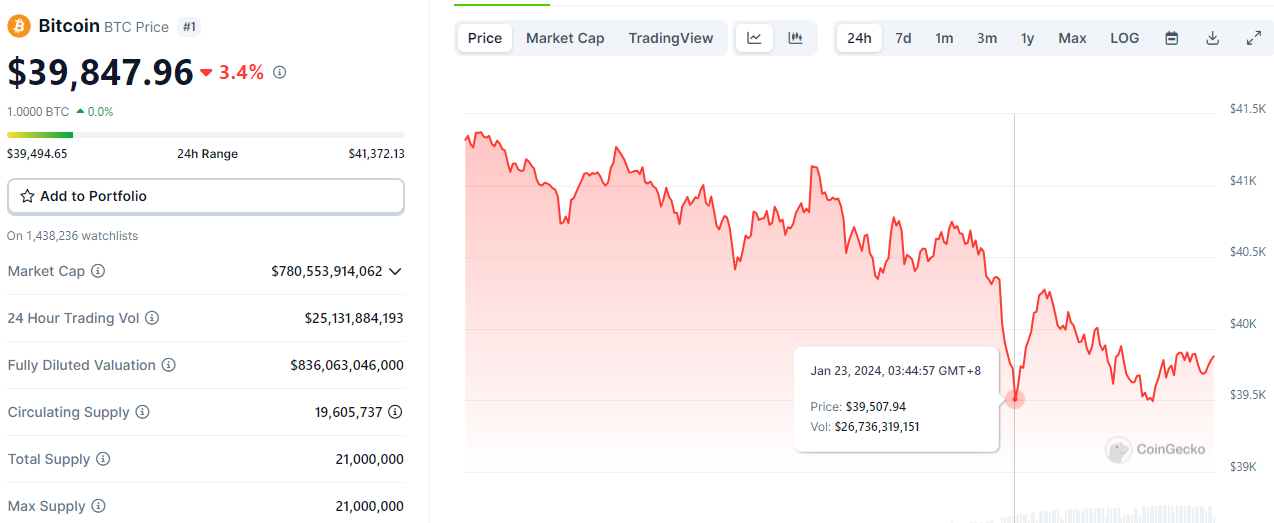
Grayscale’s Sell-Off Pushes Bitcoin Into “Bearish” Territory—Is FTX to Blame?
Spot Bitcoin ETFs, including Grayscale's GBTC, were approved for listing on January 11. The news initially pushed Bitcoin’s price up to $49,000, but the rally didn’t last long. As significant outflows emerged from GBTC, the market faced clear selling pressure.
Grayscale's GBTC has existed for 10 years as a closed-end fund (which had limited appeal to investors). By the time the U.S. Securities and Exchange Commission approved spot Bitcoin ETFs, GBTC’s assets had reached nearly $30 billion. Once GBTC transitioned into a more liquid spot ETF, early shareholders unsurprisingly began selling their shares:
-
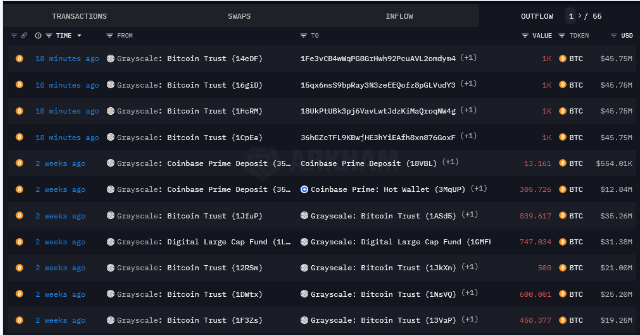
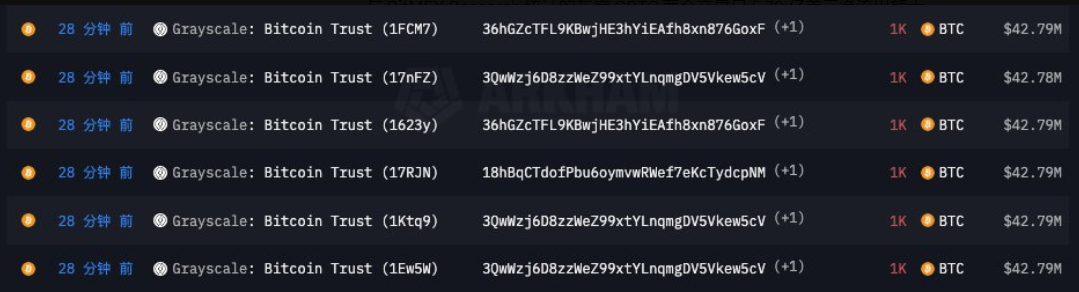
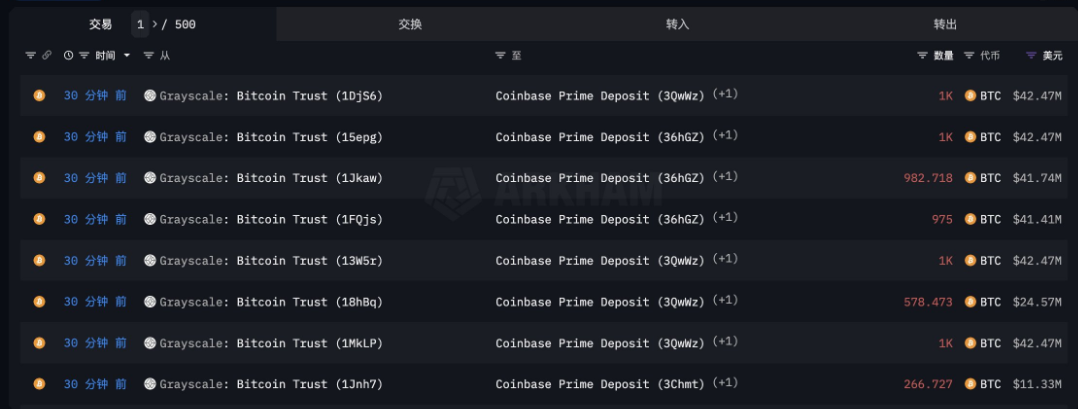
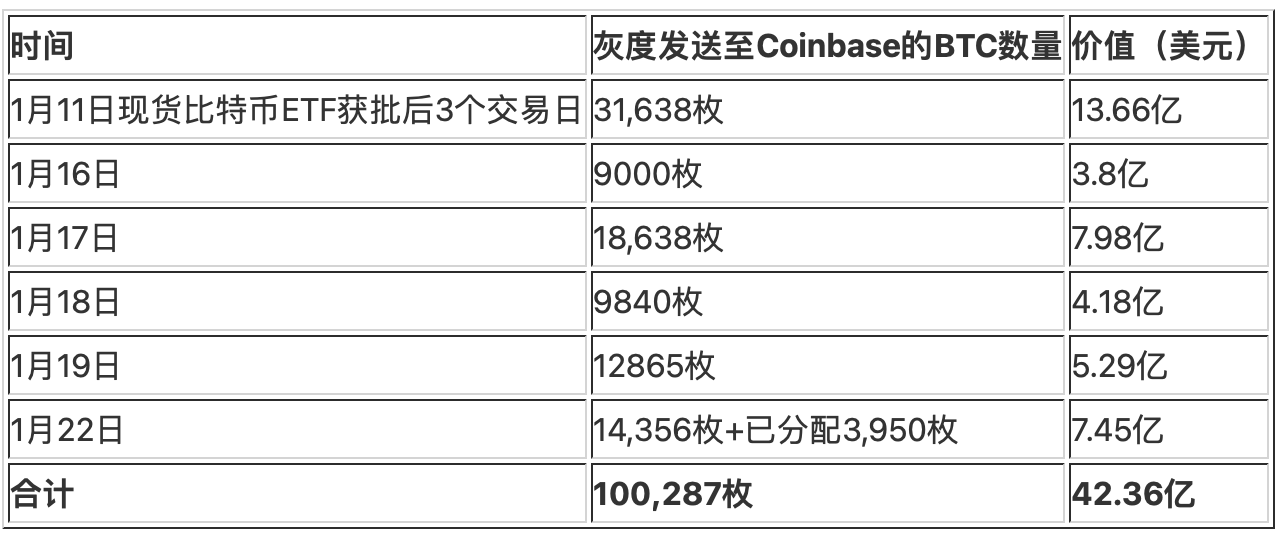
After trading commenced on January 11, Grayscale transferred a total of 31,638 BTC (worth approximately $1.366 billion) to Coinbase Prime over three consecutive U.S. trading days.
-
On January 16, Grayscale transferred 9,000 BTC (~$380 million) to Coinbase Prime.
-
On January 17, Grayscale transferred 18,638 BTC (~$798 million) to Coinbase Prime.
-
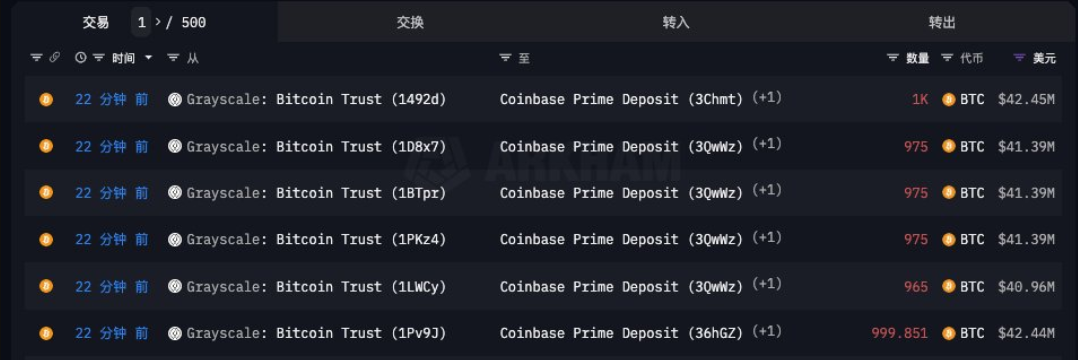
On January 18, Grayscale transferred 9,840 BTC (~$418 million) to Coinbase Prime.
-
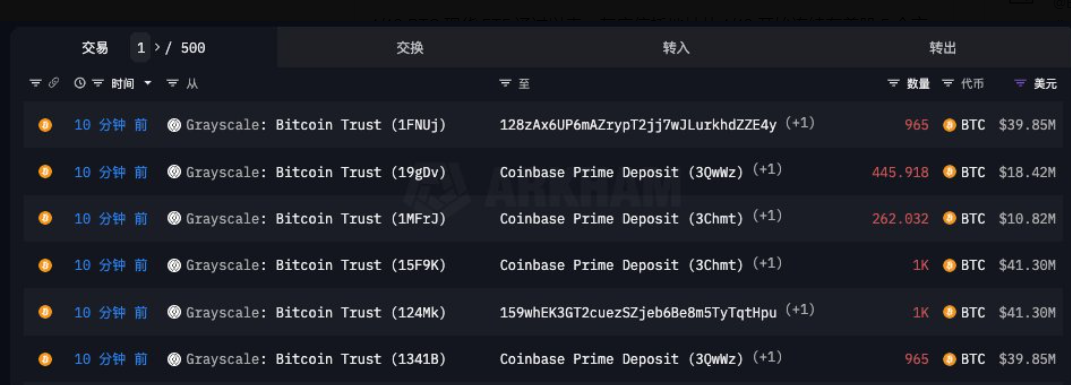
On January 19, Grayscale transferred 12,865 BTC (~$529 million) to Coinbase Prime.
-
On the evening of January 22, an address labeled “Grayscale: Bitcoin Trust” transferred a total of 14,356 BTC (~$585 million) to Coinbase. Additionally, 3,950 BTC (~$160 million) were distributed across four addresses and are expected to be sent to Coinbase soon (miner fees have already been received from a Coinbase Prime address).
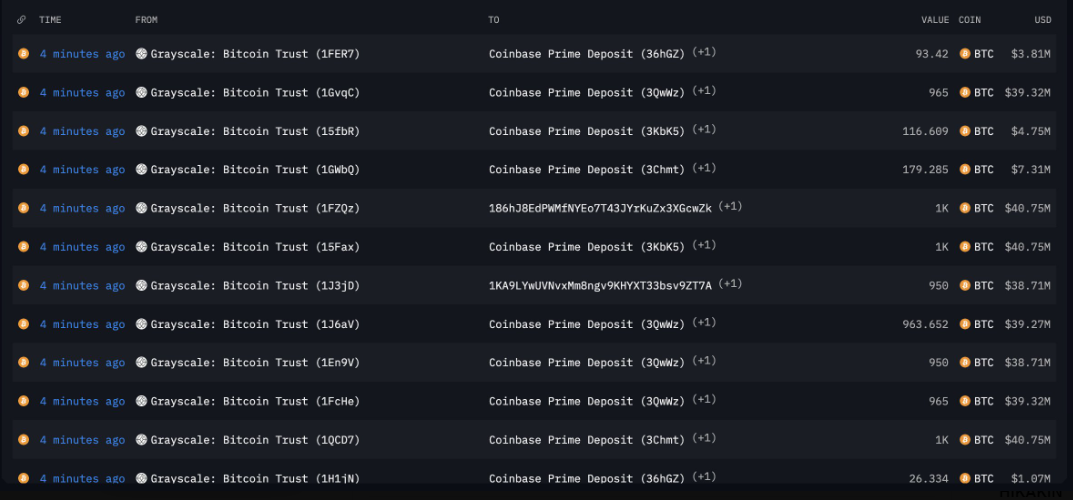
However, during the outflow from GBTC, one entity caught the attention of the crypto community: FTX. On the evening of January 22, two sources revealed that the bankrupt cryptocurrency exchange FTX sold its entire holding of 22 million GBTC shares, with a significant portion flowing out—valued at up to $1 billion—leaving FTX with zero ownership in GBTC.
According to a document released by FTX on November 3, 2023, FTX held shares in five Grayscale trust funds through a brokerage account at ED&F Man Capital Markets (now Marex Capital Markets Inc.), along with nearly 3 million shares in a fiduciary trust managed by Bitwise. Like many large crypto entities, FTX profited from the price spread between Grayscale’s trust shares and the net asset value of the underlying Bitcoin. At the end of October 2023, FTX’s GBTC holdings were worth about $597 million. However, on the first day of trading for the Grayscale Bitcoin ETF on NYSE Arca, the closing price reached $40.69, increasing the value of FTX’s GBTC shares to around $900 million.
Coincidentally, just one hour before FTX sold its GBTC shares, its subsidiary Alameda Research suddenly withdrew its lawsuit against Grayscale. Alameda had previously accused Grayscale of profiting at the expense of shareholders, claiming in a March filing in Delaware court that Grayscale charged excessive fees and blocked investor redemptions from two crypto trusts (GBTC and Grayscale Ethereum Trust). Given that FTX and its affiliated debtors recently reached a global settlement with joint official liquidators—and considering the withdrawal of the lawsuit—it appears linked to FTX’s decision to cash out its GBTC holdings. However, Grayscale, FTX, and Galaxy Digital—the crypto trader assisting in the sale of FTX’s bankruptcy assets—have not responded to requests for comment.
Bottom? Rebalancing? Rebound?
Shortly before the GBTC sell-off, Arthur Hayes, co-founder of BitMEX, posted on X suggesting the market was approaching a bottom and expressed bearish sentiment about Bitcoin’s future price trajectory. He predicted the price would fall below $40,000 and has already purchased put options expiring March 29 with a strike price of $35,000. Hayes also speculated that Bitcoin’s downward trend could signal future issues with dollar liquidity—a trend that may persist until the U.S. Treasury’s quarterly refinancing announcement on January 31.
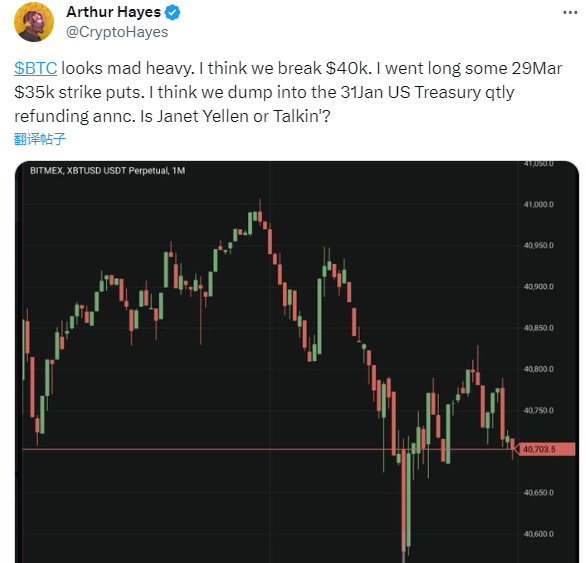
Hayes’ “bottom” theory holds merit. At first glance, spot Bitcoin ETF products should bring substantial new capital into the crypto market—for example, BlackRock (IBIT) and Fidelity (FBTC) each surpassed $1 billion in assets under management (AUM) within a week of launching. However, as investors take profits or shift to lower-cost alternatives, combined with billions of dollars flowing out of GBTC and withdrawals from existing spot Bitcoin ETPs in Europe and Canada as well as futures ETFs like ProShares (BITO), the spot crypto market hasn’t seen the expected inflow of new capital. This dynamic must be rebalanced.
From this perspective, now that FTX has completed its GBTC share sell-off, overall market selling pressure may ease, as the liquidation of bankruptcy-held assets is a relatively unique event.
On the other hand, while Grayscale has been selling during this period, other spot Bitcoin ETFs have been actively buying. According to data compiled by CC15Capital, spot Bitcoin ETFs had a net purchase of 27,717 BTC by January 19.
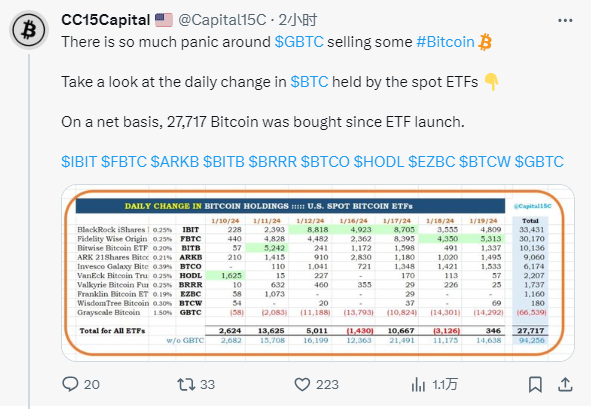
Of course, in the short term, GBTC’s reduction in assets under management may continue to exert selling pressure in the coming week. But as the ETF market stabilizes, other ETF participants may absorb the outflows from GBTC—a view echoed by Michael Novogratz, CEO of Galaxy Digital, the crypto trader assisting in the sale of FTX’s bankruptcy assets. On January 21, Novogratz posted on social media that while investors may sell GBTC, most will likely rotate into other ETFs. He is not concerned about current volatility and predicts the market’s “indigestion” will resolve within six months, leading Bitcoin to new highs.
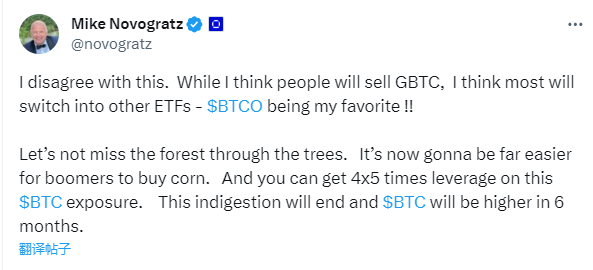
While opinions on the current crypto market trend vary, one thing is undeniable: the industry is broadly entering a new bull cycle. With Bitcoin’s fifth “halving” approaching, the evolution of market dynamics warrants close attention.
Join TechFlow official community to stay tuned
Telegram:https://t.me/TechFlowDaily
X (Twitter):https://x.com/TechFlowPost
X (Twitter) EN:https://x.com/BlockFlow_News
 PANews










