Decoding Akash Network: Unleashing the Decentralized Cloud Computing Revolution
TechFlow Selected TechFlow Selected
Decoding Akash Network: Unleashing the Decentralized Cloud Computing Revolution
Akash is an open network for buying and selling cloud resources using the native token $AKT.
 Navigating Web3 tides with focused insights
Author: Revelo Intel
Translation: TechFlow
Akash sits at the intersection of several narratives, including interest in Cosmos chains, AI, and DePIN. In this report, we'll explore Akash, its new initiatives, the role of $AKT, and more. We’ll also examine other protocols in the decentralized computing space and compare them.
Background on the Akash Network
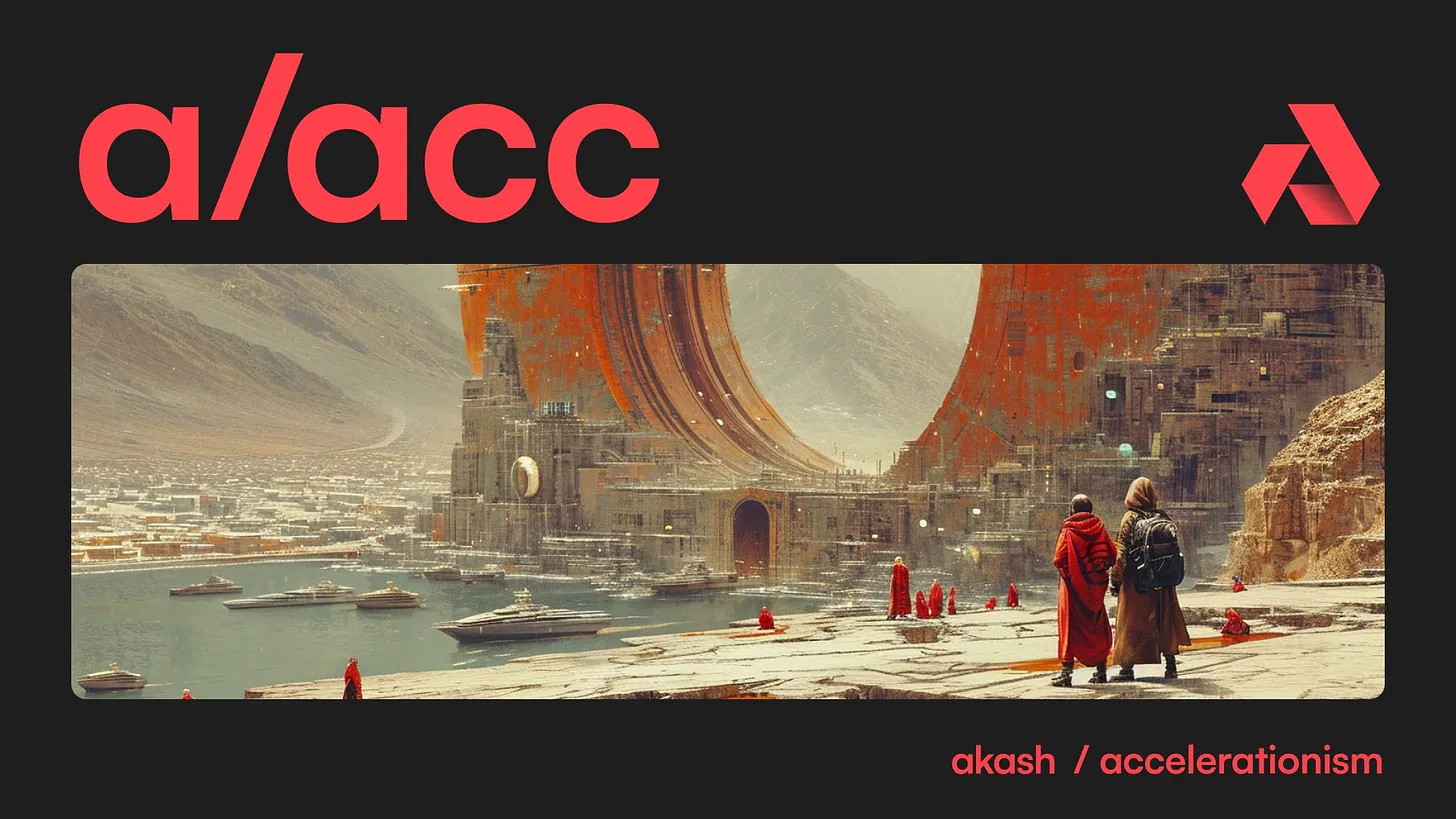
Akash is an open network for buying and selling cloud resources using its native token, $AKT. It primarily connects individuals who want to sell excess CPU/GPU power with those looking to purchase it. Users can rent cloud computing resources in a more decentralized manner, facing fewer barriers compared to traditional cloud service providers like AWS and Microsoft Azure.
The protocol operates as a Layer 1 built with the Cosmos SDK, offering autonomy and security maintained by active validators. It aims to become the first "supercloud" providing permissionless access to cloud resources. Originally launched as a decentralized CPU marketplace, the protocol has since expanded to include other offerings such as GPU and even dedicated IP leasing.
$AKT has risen over 800% in the past year (current price: $2.53), although it remains approximately 68% below its all-time high of $8.07.
$AKT has a fixed total supply of approximately 389 million tokens, with 100 million initially released. The current circulating supply stands at around 226 million tokens.
Many providers are staking their tokens to earn attractive rewards, which also contributes to further decentralizing the network, as staking is diversified. $AKT plays a crucial role within the network, serving both as a key component of governance and as an incentive mechanism for cloud providers.
This theme is reflected across many decentralized cloud and DePIN projects. Recently, we covered Hivemapper, a project aiming to build more affordable digital mapping technology to compete with Google Maps and Apple Maps. Like Akash, the protocol seeks to break monopolistic, one-size-fits-all pricing models of existing providers by offering more accessible alternatives for small businesses. Decentralized protocols can use tokens to incentivize and crowdsource the acquisition of needed resources or data, then monetize them.
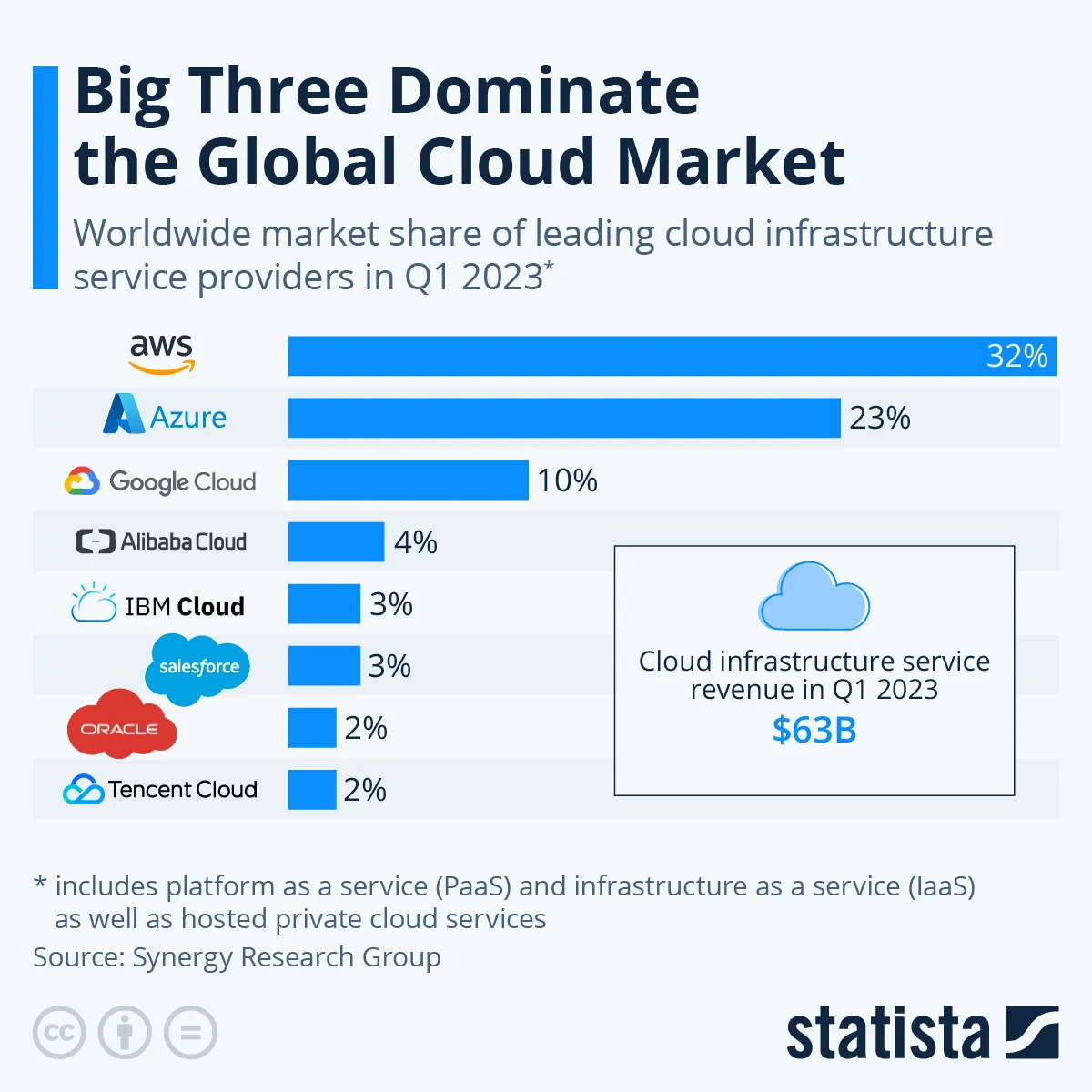
Decentralized computing protocols like Akash aim to disrupt a massive and critically important industry—one that continues to grow rapidly amid surging demand for these services. AWS, Microsoft Azure, and Google Cloud together control about 65% of the market.
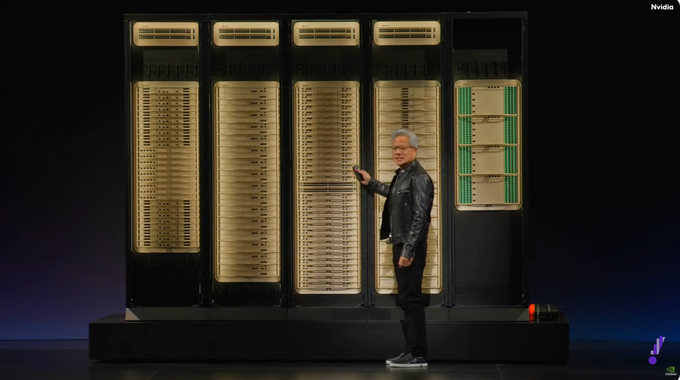
Akash's Expansion into GPUs
Last year, amid growing AI enthusiasm and increased attention on projects like Render, Akash announced its entry into GPU services. The protocol launched a testnet followed by the mainnet. The team developed specific strategies to incentivize GPU providers, particularly those offering Nvidia’s H100 and A100 GPUs. Akash aims to create pools with specific hardware configurations and distribute tokens to these pools, initially offering high rewards to attract providers. This mirrors the initial distribution of $AKT, where early providers—especially those using their own hardware—received outsized incentives.
Over $400 million worth of $AKT has been reserved for on-chain incentive programs rewarding user behavior. Akash also proposed a pilot launch program allocating $5 million (in AKT) specifically for GPU incentives. The team estimates this proposal will attract an additional 1,000 A100 GPUs, priced at $0.79 per hour. High-density GPUs like the A100 reportedly achieve utilization rates above 95% on Akash.
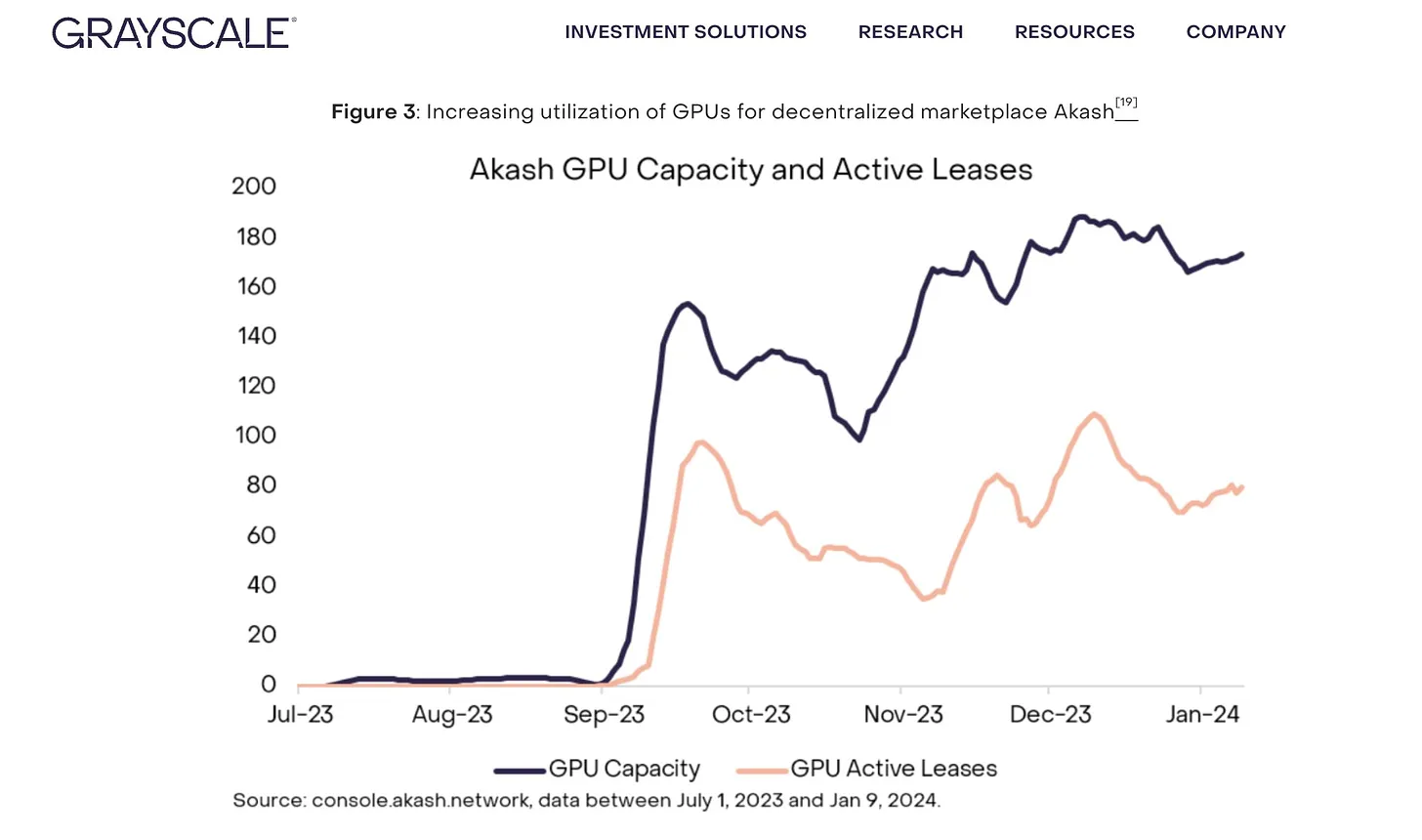
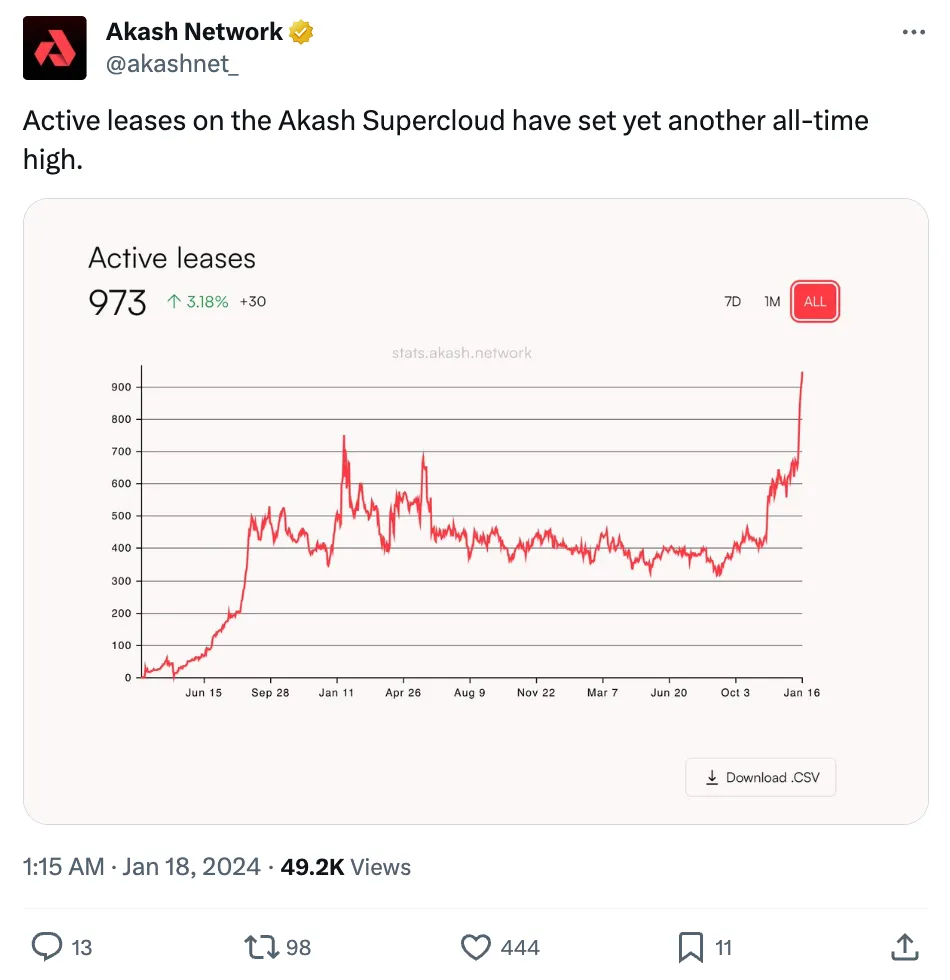
The pilot program runs for 90 days, allowing the team to observe user behavior and adjust the plan as needed. Over 280 proposals have already been submitted to the Akash network, making governance a major activity. Moreover, 90% of contributions to the Akash network come from outside the core organization, highlighting the protocol’s openness and collaborative nature.
Transparency and openness are top priorities, with all meetings and product development tracked publicly on GitHub and summarized regularly. This practice enables anyone to stay updated and participate in community discussions.
Akash ML
During the AI boom, large machine learning (ML) companies have renewed interest in Akash, especially its A100 GPUs. GPU shortages and financial incentives are contributing factors driving capital inflows and increasing interest.
In fact, this surge in interest led to the creation of Akash ML—a suite of services designed to boost adoption of Akash, including features like credit card payments for ML services.
Other Decentralized Computing Projects
ICP (Internet Computer Blockchain) is a general-purpose blockchain designed to replace traditional IT and cloud infrastructure, enabling Web3 dApps to run entirely on-chain.
-
ICP hosts projects across diverse sectors, including DeFi, NFTs, gaming, metaverse, and even social media
-
ICP aims to eliminate reliance on third-party cloud hosting by enabling smart contracts that can directly handle HTTP requests
-
ICP reduces costs and potential issues for developers by keeping everything on-chain
Filecoin is an open-source, decentralized network providing cloud storage.
-
Filecoin offers a peer-to-peer cloud storage marketplace, a concept similar to Render—but while Render focuses on GPU rendering, Filecoin targets secure cloud storage
-
Filecoin is one of the more popular decentralized computing platforms, originating in 2014
-
Its native token $FIL currently ranks among the top 50 cryptocurrencies by market cap, valued at $2.5 billion
ShdwDrive, launched by blockchain infrastructure provider GenesysGo, aims to deliver decentralized storage services competitive with Filecoin and others.
-
The protocol also aims to serve as a data availability (DA) layer, similar to Celestia and EigenLayer
-
The protocol is currently running an incentivized testnet, rewarding node operators, stakers, and token holders with additional $SHDW
-
The protocol recently submitted a token listing application to five CEXs
$SHDW remains a favorite among some on Solana due to its significant valuation (around $180 million) and integration with multiple DeFi applications on the Solana network.
Render Network provides an open marketplace for idle GPU capacity—similar to Airbnb, but for GPUs.
-
Render is tied to the AI narrative, as AI could drive increased demand for GPU-intensive graphic creation
-
While stocks like NVDA and AMD are publicly traded, there’s no clear crypto way to bet on chipmakers and companies benefiting from rising demand for video and content creation
-
Render ($RNDR) has been competing with Bittensor ($TAO) for the title of leading AI cryptocurrency
Join TechFlow official community to stay tuned
Telegram:https://t.me/TechFlowDaily
X (Twitter):https://x.com/TechFlowPost
X (Twitter) EN:https://x.com/BlockFlow_News
 Revelo Intel