








China has become the world's largest adopter of automation—Are robots gradually "replacing humans"?
TechFlow Selected TechFlow Selected
China has become the world's largest adopter of automation—Are robots gradually "replacing humans"?
Artificial intelligence has already enabled machines to perform more tasks, but whether it will ultimately replace humans remains to be seen.
 Navigating Web3 tides with focused insights
Author: Aaron Raj
Translation: MetaverseHub
Virtual humans and humanoid robots represent a trend for future applications across many industries. While technology has already made these realities possible, a growing concern is what will happen to humans when automated solutions begin replacing them?
01. Robots Are Becoming More Widespread
Today, whether at work or at home, humans have grown accustomed to relying increasingly on technology to enhance their experiences. Enterprises have greatly benefited from sustained productivity gains delivered by machines, automated processes, and seamlessly integrated tools.
Consumers also continuously use technology to simplify daily activities. In the past, people had to go out in person to hail a taxi. Now, they can book ride services online through an app on their mobile devices. Self-driving cars are addressing most of the pain points drivers face on the road, while automated surveillance robots and drones are helping businesses and consumers achieve better security.
Interestingly, the "World Robotics Industrial Report 2020" shows that 2.7 million robots are already working globally. The report also indicates that sales of new robots remain high, with 373,000 units shipped worldwide in 2019.
To date, China remains the largest adopter of automation, with 783,000 robots deployed in 2019. Japan ranks second with 355,000 robots, followed by the United States, South Korea, and Germany. Adoption rates of human-robot collaboration are also rising, with installations of collaborative robots increasing by 11%.
In countries experiencing population aging, robots are increasingly replacing human workers. Reuters reported on a study analyzing demographic and industry data from 60 countries, finding that age accounts for 35% of the variation among nations adopting robots—countries with older workforces being more likely to adopt robotic technologies.
02. Will the Number of Robots Exceed That of Humans?
Amazon has just released its first home robot, Astro. This robot aims to enhance smart homes with new capabilities.
Astro is designed to assist customers with various tasks such as home monitoring and staying connected with family members. Amazon also operates several other robots aimed at helping enterprises, including autonomous robots in warehouses and delivery robots.
Tesla's robot, introduced some time ago by Elon Musk, uses much of the same technology found in Tesla's self-driving cars.
Although this robot is designed to handle dangerous, repetitive, and monotonous tasks in extreme environments, concerns remain that such robots could eventually replace more jobs in the market.
Tesla’s humanoid robot, named “Optimus,” has sparked even greater concern due to some of its features. Some believe the robot might develop self-awareness and potentially destroy humanity.
While Amazon and Tesla are busy developing humanoid robots to facilitate future human life, Huawei is also actively working behind the scenes—the tech company long viewed as a threat in the United States.
Huawei has developed its first virtual human, "Yunsheng," making it the company's first virtual employee.
Reports indicate that Huawei used technologies such as AI-powered automatic modeling, AI voice driving, and AI rendering acceleration to create Yunsheng—three key technologies enabling Huawei to build a near-perfect virtual human.
At Huawei Connect 2021, Yunsheng formally debuted, introducing use cases of Huawei Cloud in an engaging and unique manner.
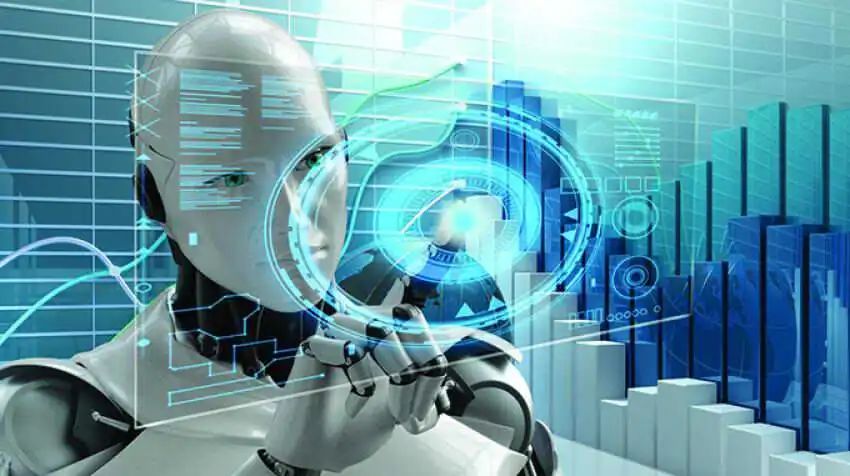
It remains unclear exactly what roles Huawei’s virtual human will perform, but on the surface, Yunsheng appears to be a mainstream pioneer among future virtual humans—with far more advanced functionalities to come.
In fact, judging from demonstrations during the summit, virtual humans may initially serve to improve customer experience in e-commerce, delivering seamless, human-like interactions.
03. How Will Robots Evolve in the Future?
As Astro, Optimus, and Yunsheng demonstrate how they can collaborate with humans, the question now becomes: what will happen to humans if robots do everything for us?
Will humans ultimately free themselves from all mundane tasks, allowing them to focus on higher-quality work for the rest of their lives—or will people simply become lazier as technology takes over every aspect of their work?
Artificial intelligence has already enabled robots to read, write, and learn. Deep learning AI allows machines to do more and make more accurate decisions. 5G enables stronger connectivity between machines than ever before, and digital currencies are becoming “more valuable” than physical money.
Most technology experts believe humans will ultimately remain in control of their own lives and downplay the dystopian scenarios often portrayed in Hollywood robot movies. But the reality is that robots are gradually replacing human jobs and increasing their presence around us.
They are observing humans, learning new skills. They are predicting what we need and what we want. They are also providing services for our health and daily lives.
Only time will tell whether these machines will rule the world.
Join TechFlow official community to stay tuned
Telegram:https://t.me/TechFlowDaily
X (Twitter):https://x.com/TechFlowPost
X (Twitter) EN:https://x.com/BlockFlow_News











