Bitcoin spot ETFs set sail: what challenges will the fund managers overseeing them face?
TechFlow Selected TechFlow Selected
Bitcoin spot ETFs set sail: what challenges will the fund managers overseeing them face?
Managing the Bitcoin Foundation presents challenges and complexities that traditional foundations do not face.
 Navigating Web3 tides with focused insights
Author: Daniel Truque
Translation: Luffy, Foresight News
After the collapse of FTX, scornful critics mocked Caroline Ellison's approach to stop-loss mechanisms. "I just don't think they're effective risk management tools," she told the public during FTX’s heyday. But was she actually right?
The field of crypto asset management presents a series of challenges fundamentally different from those in traditional fund management. In this introductory article, we will explore the key issues aspiring fund managers face when launching Bitcoin-sector funds and examine the major differences that arise when stepping beyond the world of traditional asset management.
Volatility and Risk Management
One of the most significant challenges facing Bitcoin-sector funds is the extreme volatility inherent in cryptocurrency markets. Bitcoin has shown strong bullish momentum, generating excitement among investors. Yet it has also experienced crash-like declines, leading to substantial losses for those unprepared for such price swings. Managing risk in such a turbulent environment requires sophisticated strategies, rigorous risk frameworks, and a deep understanding of market trends.
Unlike most traditional and mainstream blue-chip assets, which typically experience relatively stable price movements, Bitcoin’s price can shift dramatically within hours. As a result, fund managers in the Bitcoin sector must be fully prepared to handle sudden price fluctuations to protect investor interests. Traditional stop-loss structures may fail to deliver their intended effect, as order book slippage and rapid price movements mean market close orders could execute at prices far below the preset trigger level—a phenomenon known as “catching a falling knife.” Relying solely on strict stop-losses as a core risk management mechanism can also leave you completely out of the market. For instance, during a flash crash, positions might be automatically sold at a loss even if the market recovers minutes (or seconds) later.
While stop-losses are an option, a better alternative is options. Options are contracts you can purchase that give you the right—but not the obligation—to buy or sell a given asset at a predetermined price (the strike price) by a specified time (the expiration date). A call option gives you the right to buy an asset, while a put option gives you the right to sell it. Buying put options (especially those with strike prices well below the current market price) can act as insurance against sharp downturns. The premium paid for the option can be viewed as the cost of insuring your position.
At times, to guard against binary outcome events or periods of exceptionally high volatility, the best strategy may simply be to close positions entirely and remain risk-free, waiting for the next opportunity in the Bitcoin market. Examples include key protocol upgrade dates, regulatory decisions, or the next Bitcoin halving. However, keep in mind that markets often move ahead of these events, so proactive action may be required well in advance.
Developing an effective risk management plan for a Bitcoin-sector fund may involve using a range of hedging techniques, products, and tools (potentially across asset classes), exchange risk scoring, risk-adjusted allocation, dynamic position sizing, dynamic leverage settings, and employing robust tools to monitor market sentiment, latent risks, and operational vulnerabilities.
Custody and Security
Custody of Bitcoin and other cryptocurrencies is a key area where Bitcoin-sector funds differ from their traditional counterparts. Unlike traditional exchanges, which merely match orders, Bitcoin exchanges are responsible for order matching, margin handling, settlement, and asset custody. Exchanges themselves become clearinghouses, centralizing rather than mitigating counterparty risk. Decentralized exchanges also introduce unique risks—from miner-extractable value to vulnerability to hacking attacks.
For these reasons, protecting digital assets from theft or cyberattacks requires robust security measures, including but not limited to multi-signature protocols, cold storage solutions, and risk monitoring tools. The responsibility for securing private keys, as well as selecting and monitoring reliable exchanges, falls entirely on the fund manager. This added burden of monitoring the market infrastructure itself introduces technical complexities absent in traditional fund management, where custody and settlement are standardized, commoditized, and handled by independent systems.
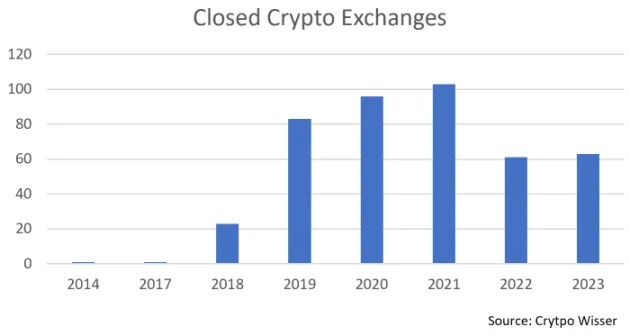
Custody solutions for Bitcoin-sector funds must be chosen carefully to safeguard assets against cyberattacks and internal threats. Given the high-profile nature of exchange hacks in the cryptocurrency space, investors are particularly concerned about the safety of their assets, and any security breach could lead to significant financial losses and reputational damage for the fund.
Conclusion
Launching a Bitcoin-sector fund is an exciting endeavor, offering unprecedented opportunities for investors seeking exposure to the rapidly growing cryptocurrency market. However, it's important to recognize that launching a fund is no simple task—there are numerous pitfalls beyond just achieving trading success. It’s therefore unsurprising that the number of funds shutting down each quarter may rival the number being launched.
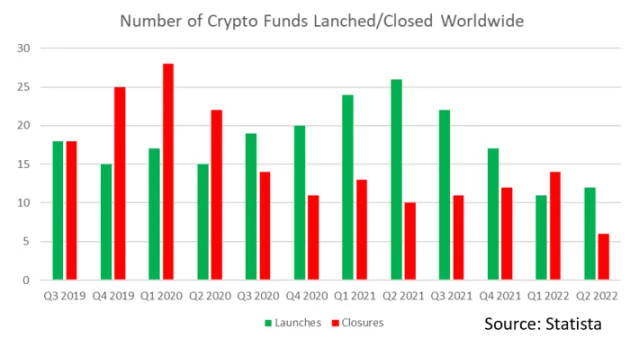
Those entering the Bitcoin-sector fund space should approach it with a pioneering spirit, stay well-informed, and embrace the inherently volatile nature of this exciting emerging market. While the path may be fraught with challenges, the potential rewards for successful Bitcoin-sector fund managers could be astronomical.
Join TechFlow official community to stay tuned
Telegram:https://t.me/TechFlowDaily
X (Twitter):https://x.com/TechFlowPost
X (Twitter) EN:https://x.com/BlockFlow_News
 @BitcoinMagazine