Revisiting STX: On-Chain TVL Reaches All-Time High, Investment Opportunities Remain Amid BTC Halving Expectations
TechFlow Selected TechFlow Selected
Revisiting STX: On-Chain TVL Reaches All-Time High, Investment Opportunities Remain Amid BTC Halving Expectations
Stacks is the first SEC-approved compliant security token issuance project in history.
 Navigating Web3 tides with focused insights
Author: Jake Pahor
Translation: TechFlow
2024 is a pivotal year for Bitcoin, with the approval of Bitcoin ETFs and the halving event serving as two major catalysts. Stacks is Bitcoin’s smart contract layer—does it still hold alpha potential? Cryptocurrency researcher Jake Pahor published an in-depth analysis of Stacks, which TechFlow has translated in full.
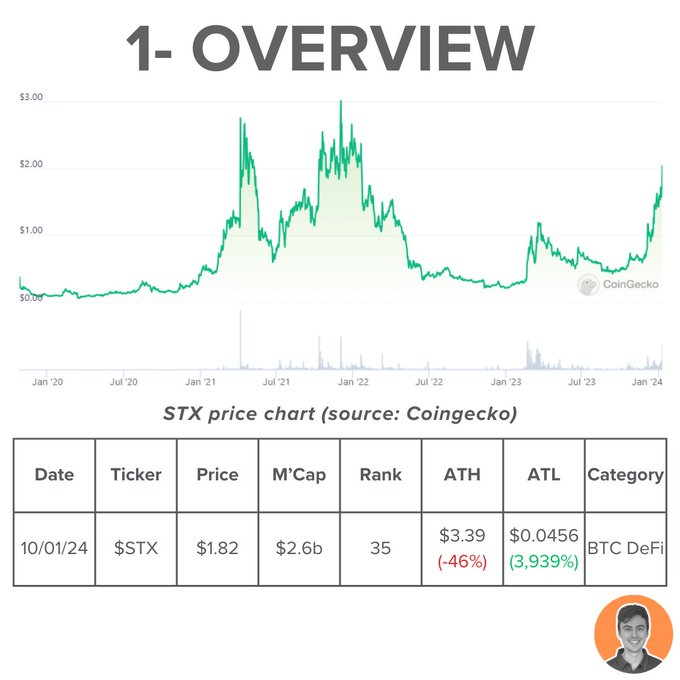
Overview
Stacks is the smart contract layer for Bitcoin. Traditionally, Bitcoin has been viewed as a store of value or digital gold.
Stacks unlocks novel use cases for BTC holders, including:
-
Bitcoin-backed lending
-
Bitcoin DeFi
-
NFT trading using Bitcoin
Use Cases
Stacks aims to bring DeFi to Bitcoin, unlocking over $90 billion in crypto capital.
It uses the Bitcoin network as a settlement layer while adding smart contracts and programmability. Applications will run on the Stacks blockchain itself, rather than on centralized servers.

The Stacks ecosystem is continuously growing, with over 30 teams actively developing on the platform.
Some notable projects include:
-
Alex (DEX)
-
StackingDAO (liquid staking)
-
Arkadiko (CDP)
Stacks aims to help scale the Bitcoin economy.

Adoption
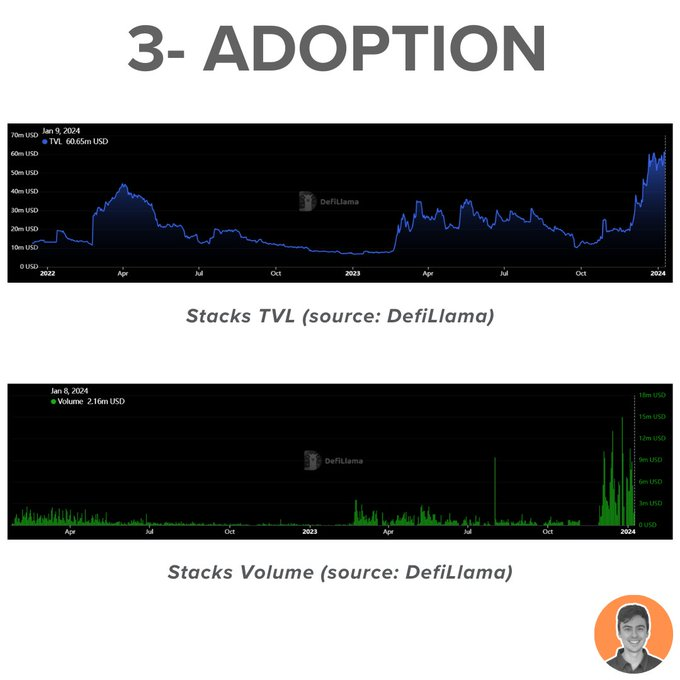
Currently, TVL on the Stacks chain has reached an all-time high of $63 million—an increase of approximately 6x from its low point in September 2023 ($10 million TVL).
Trading volume has also surged significantly over recent months. Adoption across NFTs, DEXs, and domain services has seen sharp growth as well.
Revenue
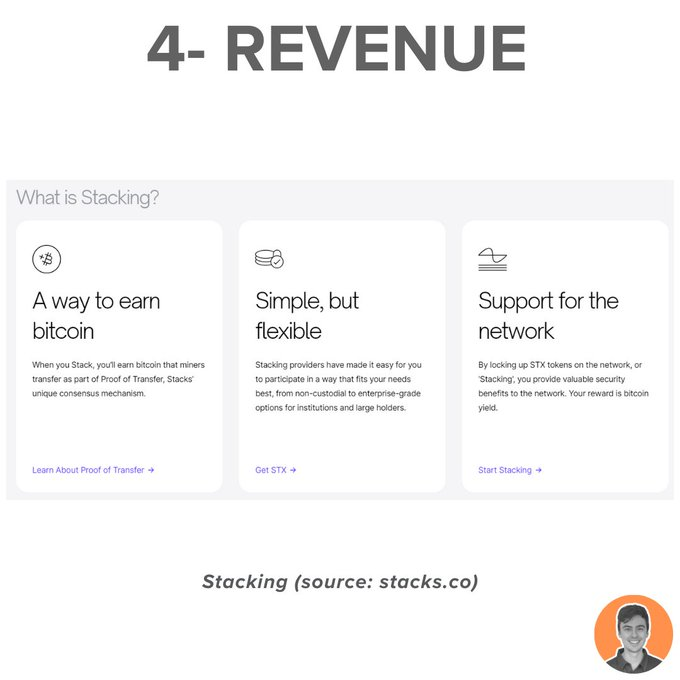
Stacking (staking) secures the Stacks network and provides stakers with real yield in BTC (currently around 7%). Yields are tied to network activity. As activity grows and blocks become more valuable, BTC yields rise, delivering higher returns to STX stakeholders.
Tokenomics
Proof-of-Transfer (PoX) is the mechanism underpinning the Stacks blockchain. Miners bid BTC to validate transactions and earn STX rewards.
STX is the native token of Stacks and can be used for:
-
Paying transaction fees
-
Stacking (locking up tokens to earn BTC rewards)

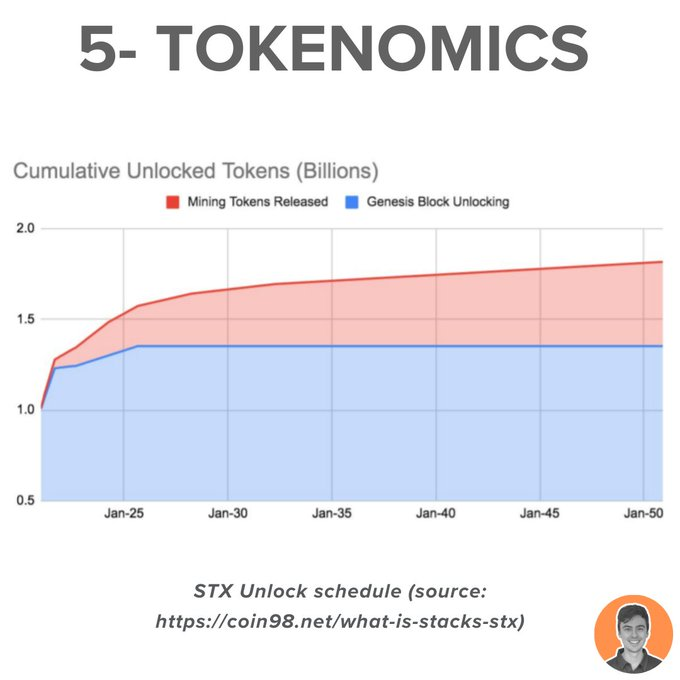
Like Bitcoin, Stacks follows a halving schedule, reducing miner rewards by half in value each cycle.
STX also features a fixed and predictable future supply, halving every four years. By 2050, the total supply of STX is expected to reach 1.82 billion.

Current supply metrics:
-
Circulating supply: 1.43 billion STX
-
Max supply: 1.82 billion STX
-
Market cap: $2.6 billion
-
FDV: $3.3 billion
-
Market cap / FDV ratio: 0.79
Treasury
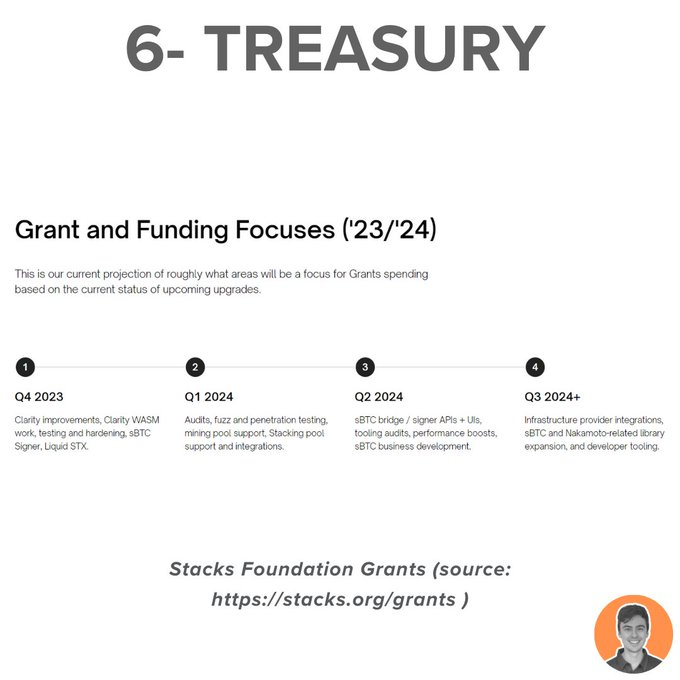
According to the token unlock schedule, there are two main treasuries:
-
Hiro PBC Treasury: holds 200 million STX (~$366 million)
-
Stacks Foundation Treasury: holds 100 million STX (~$183 million)
Governance
Anyone in the Stacks community can submit SIPs (Stacks Improvement Proposals).
Each SIP is then discussed and voted on by a steering committee. Membership on this committee requires approval from the Stacks Foundation Board. This process remains relatively centralized.

Team and Investors
Stacks was founded in 2017 by Muneeb Ali and Ryan Shea.
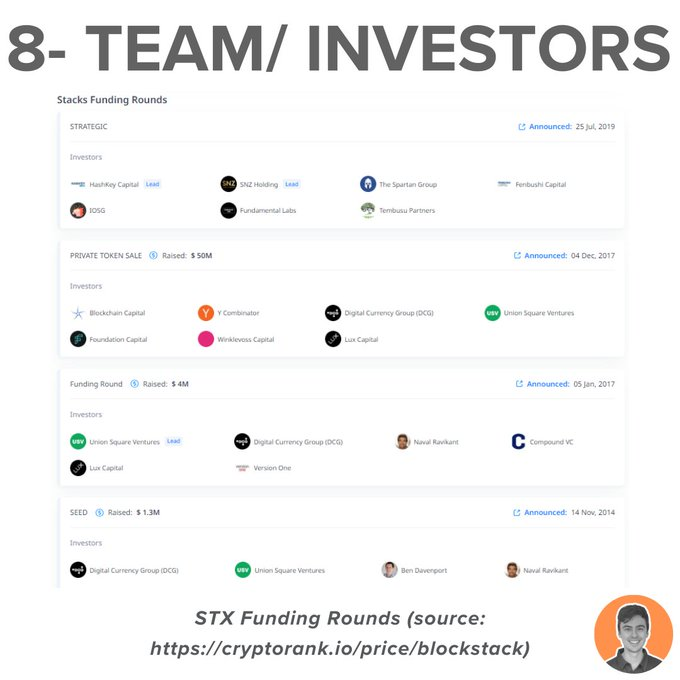
Over the years, it has raised over $45 million through multiple funding rounds, private placements, and an ICO.
Notable investors include Hashkey, SNZ Holding, Blockchain Capital, DCG, Winklevoss Capital, and Naval.
Competitors
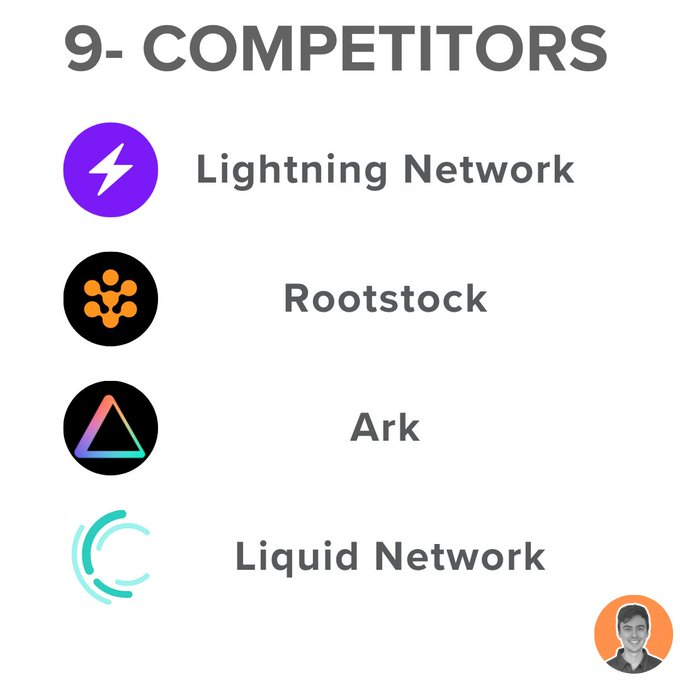
There are other solutions addressing Bitcoin's inefficiencies, including the Bitcoin Lightning Network, RSK, Ark, and Liquid. However, Stacks is unique because it is the only project with its own native token, giving it a significant competitive advantage.
Risks
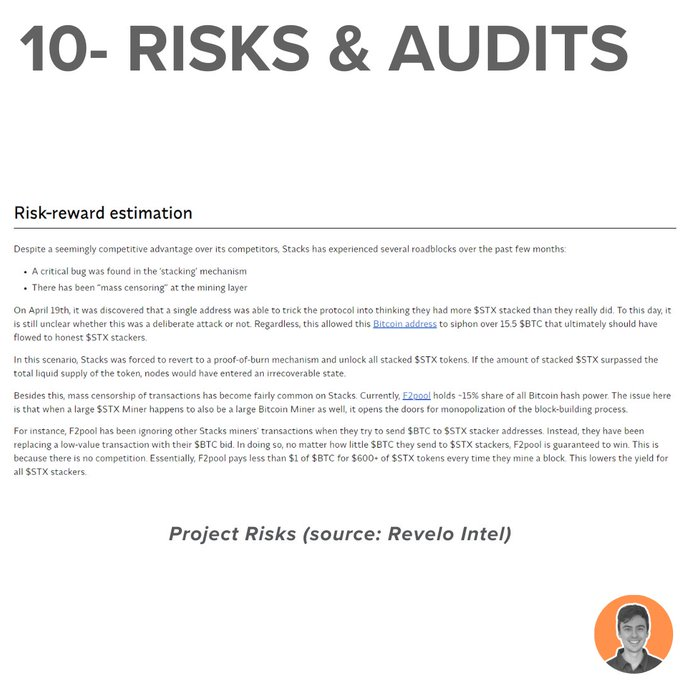
In recent months, Stacks has faced several challenges:
-
A critical vulnerability discovered in the "Stacking" mechanism
-
A "mass censorship" incident on the mining layer
Interestingly, Stacks is the first-ever compliant security token offering approved by the SEC.
(Further reading: Exclusive Interview with CEO of Blockstack (STX), the First SEC-Compliant Project: How to Navigate Compliance After Ripple)
Conclusion
The Bitcoin ecosystem holds immense growth potential, and Stacks is one project I’m closely watching.
There are numerous ongoing and upcoming catalysts within the Bitcoin ecosystem:
• Approval of BTC ETFs
• BTC Halving (April 2024)
• Satoshi upgrade
• Upcoming launch of sBTC
• Growth in Bitcoin DeFi and NFT trading
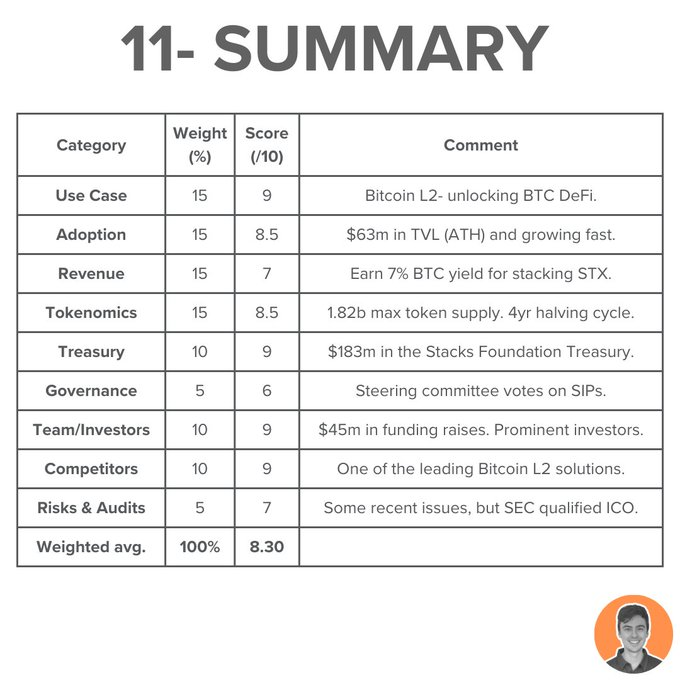
Taking all factors into account, I would rate Stacks an 8.3 out of 10. Looking forward to seeing even stronger performance ahead!
Join TechFlow official community to stay tuned
Telegram:https://t.me/TechFlowDaily
X (Twitter):https://x.com/TechFlowPost
X (Twitter) EN:https://x.com/BlockFlow_News
 @jake_pahor