








Cheap means profit? Behind the fee war of Bitcoin spot ETFs...
TechFlow Selected TechFlow Selected
Cheap means profit? Behind the fee war of Bitcoin spot ETFs...
The fee-cutting trend is an inevitable path for ETFs, and Bitcoin is no exception.
 Navigating Web3 tides with focused insights
By Peng SUN, Foresight News
In recent days, at the request of the U.S. Securities and Exchange Commission (SEC), issuers including BlackRock, ARK 21Shares, VanEck, Fidelity, Grayscale, and Franklin Templeton have successively submitted final amended filings for their ETF applications. Notably, these issuers are racing to slash ETF fees, with some even proposing zero-fee waivers for the first six months.
Meanwhile, SEC Chair Gary Gensler has twice taken to Twitter to warn investors about the risks associated with crypto assets. On the market front, since 00:00 on January 9, Bitcoin has broken through successive levels of $45,000, $46,000, and $47,000. Currently, Bitcoin's price hovers around $46,842.
The fee-cutting spree among institutions, mixed warnings from the SEC chair, and rising Bitcoin prices all suggest that a regulated spot Bitcoin ETF may finally be imminent. Amid this tense tug-of-war between bulls and bears, the escalating "fees war" among ETF providers is staggering. But what exactly is this fee? Why are institutions slashing them so aggressively? How do spot Bitcoin ETF fees compare with those of traditional ETFs? And behind these low fees, is it really beneficial for investors?
1. What Is Sponsor Fee?
In spot Bitcoin ETFs, the sponsor fee first appeared publicly on November 20, 2023, when ARK Invest added a sponsor fee clause to its spot Bitcoin ETF application, initially setting the rate at 0.8%.
The sponsor fee relates to the fund’s sponsor—the entity responsible for managing and operating the fund, as well as marketing. This fee covers the costs of managing the ETF, including custody expenses, personnel salaries, trading costs, legal fees, and more.
2. The Fee War: An Inevitable Trend
From January 8 to 9, all 11 issuers applying for spot Bitcoin ETFs continued to lower their fees in final amendment filings, triggering a “fee-cutting wave” across the Bitcoin ETF landscape. As of January 10, the latest fee schedules of each issuer (ranked from highest to lowest) are as follows:
-
Grayscale: 1.5%
-
Hashdex: 0.9%
-
Valkyrie: 0.49%
-
Franklin Templeton: 0.29%
-
Fidelity: 0.25%
-
VanEck: 0.25%
-
BlackRock: 0.2% for the first 12 months; increases to 0.3% after 12 months or if AUM reaches $5 billion
-
Galaxy Invesco: 0% for the first 6 months; increases to 0.39% after 6 months or if AUM reaches $5 billion
-
WisdomTree: 0% for the first 6 months; increases to 0.3% after 6 months or if AUM reaches $1 billion
-
Ark/21Shares: 0% for the first 6 months; increases to 0.25% after 6 months or if AUM reaches $1 billion
-
Bitwise: 0% for the first 6 months; increases to 0.2% after 6 months or if AUM reaches $1 billion
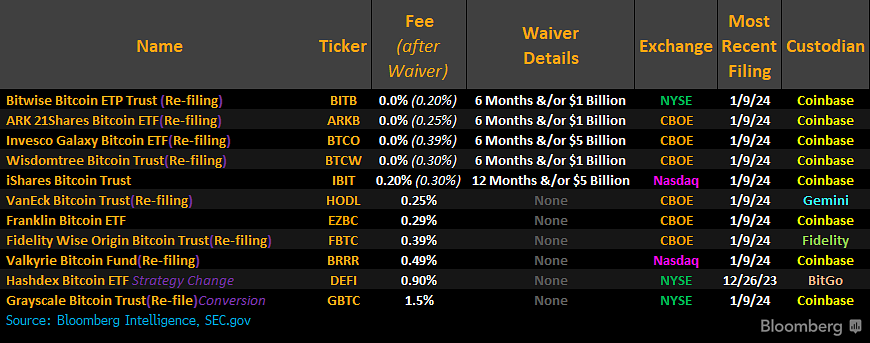
Source: James Seyffart
Among the 11 institutions, eight have post-waiver fees below 0.4%, and the average post-waiver fee across all applicants stands at 0.478%.
In fact, since 1997, the global trend of declining ETF fees—both active and passive—has been irreversible. For instance, renowned low-cost leaders in the U.S. such as Vanguard, Schwab, and BlackRock’s iShares offer ETFs with fees as low as around 0.03%. According to the Investment Company Institute (ICI), one of the main associations for regulated funds in the U.S., fees for equity ETFs, bond ETFs, and mutual funds have dropped by over 50% in the past 26 years, with many now below 0.1%. A 2021 report by Huobi Research Institute indicated that the average cost (including management fees) of U.S. ETFs was approximately 0.44%. Therefore, the current fee reductions by U.S. issuers in spot Bitcoin ETFs align with industry norms—this is simply how the U.S. ETF market operates.
However, compared to other regions globally, U.S. fees are notably lower. For example, Canada’s Bitcoin ETFs, represented by BTCC, charge a 1% fee, while the average fee across Europe’s top 10 largest Bitcoin ETPs/ETNs is 1.047%.
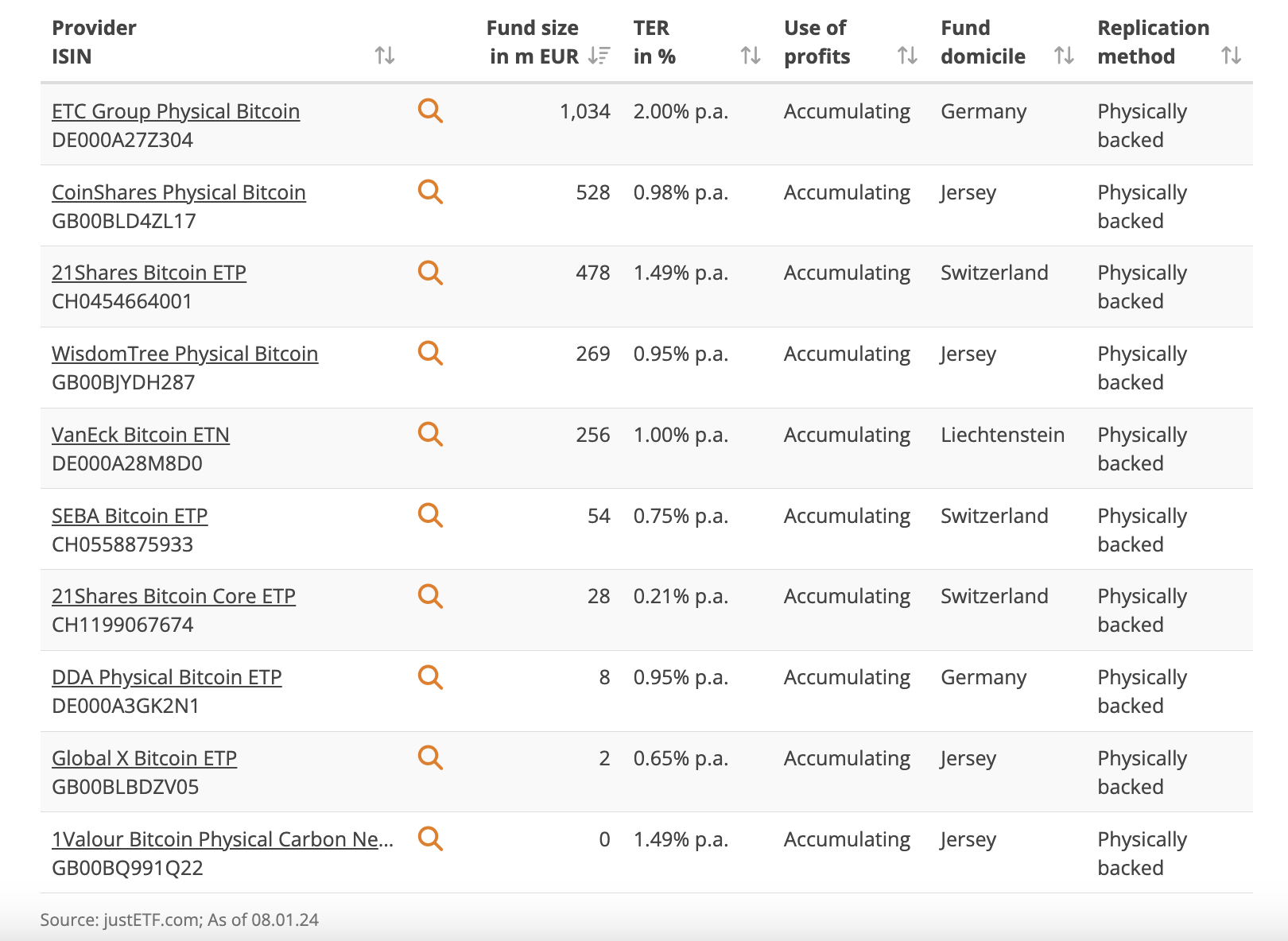
Given that user bases and capital scales in Canada and Europe pale in comparison to the U.S., and considering American investors’ strong preference for ETFs—especially low-cost ones—it’s no surprise that U.S. issuers are fiercely competing on price. After all, as the world’s largest ETF market, fee cuts are an inevitable path in a highly commoditized environment—and Bitcoin ETFs are no exception.
3. Fee Cuts: Is Cheap Always Better?
Lower fees aim to attract more users, capital, and market share—but does a low fee always mean it’s cheaper for investors?
“When fees fall below cost, how can fund managers possibly profit?” This is the question raised by Caitlin Long, founder and CEO of Custodia Bank, regarding the current wave of fee reductions in spot Bitcoin ETFs.
Ben Johnson, Global Director of ETF Research at Morningstar, also noted: “There’s no such thing as a free lunch. If you’re getting something for free, you’re likely subsidizing it by paying more elsewhere.” Typically, zero-fee ETFs generate revenue by lending out securities, selling other products, or offering lower interest rates on cash holdings. But could spot Bitcoin ETFs face similar issues? How will issuers recoup lost revenue? That remains unclear.
The low-fee trend has also raised concerns from Gabor Gurbacs, strategic advisor at Tether and VanEck, who commented: “I get nervous when I earn little or nothing. Issuers will find alternative ways to profit—like securities lending or trading. Personally, I prefer higher upfront fees that provide clear, sustainable incentives. Whenever possible, dig into total holding costs. But that’s not how ETF fee wars work. People just love seeing low numbers.”
Of course, all these concerns seem insignificant before the ETFs are officially approved—we are witnessing history. Each new ETF approval in the U.S. opens up a blue-ocean market worth trillions. With Bitcoin’s current market cap at $800 billion, a rebound to the trillion-dollar mark would offer millions more investors a diversification option beyond U.S. Treasuries. Few things could be more exciting than that.
Join TechFlow official community to stay tuned
Telegram:https://t.me/TechFlowDaily
X (Twitter):https://x.com/TechFlowPost
X (Twitter) EN:https://x.com/BlockFlow_News
 Foresight News










