









Operation Guide: The Endgame for ETFs Is Approaching—What Investment Strategies Are Suitable Now
TechFlow Selected TechFlow Selected
Operation Guide: The Endgame for ETFs Is Approaching—What Investment Strategies Are Suitable Now
The Red Book of Volatility: Trading on volatility is a smart choice.
 Navigating Web3 tides with focused insights
Author: Loopy Lu
As the final "judgment day" for spot Bitcoin ETFs on January 10 draws near, sentiment in the cryptocurrency market continues to heat up. Significant developments emerged last night and this morning regarding spot Bitcoin ETFs, and BTC has once again surged sharply.
Currently, there are fewer than 24 hours remaining before a final decision is reached on the ETFs. When the outcome is announced, regardless of whether prices rise or fall, market consensus expects substantial volatility. Spot Bitcoin ETFs are just one step away from reality.
In the face of such potential volatility, how should retail investors act? How can they profit from the impending market swings? Odaily Planet Daily compiles several possible strategies below:
Leveraged Trading Variants
Futures contracts and leveraged trading represent the most accessible, basic, and highest-return (or loss) options available. Facing upcoming market volatility, correctly positioned long or short positions could yield significant returns.
Currently, major CEXs offer various forms of leverage including coin-denominated futures, USD-denominated futures, spot margin, and leveraged tokens. Additionally, users can employ DeFi lending protocols to borrow stablecoins and execute leveraged trades on-chain.
Odaily Planet Daily reminds investors that leveraging is an extremely high-risk strategy in crypto markets.
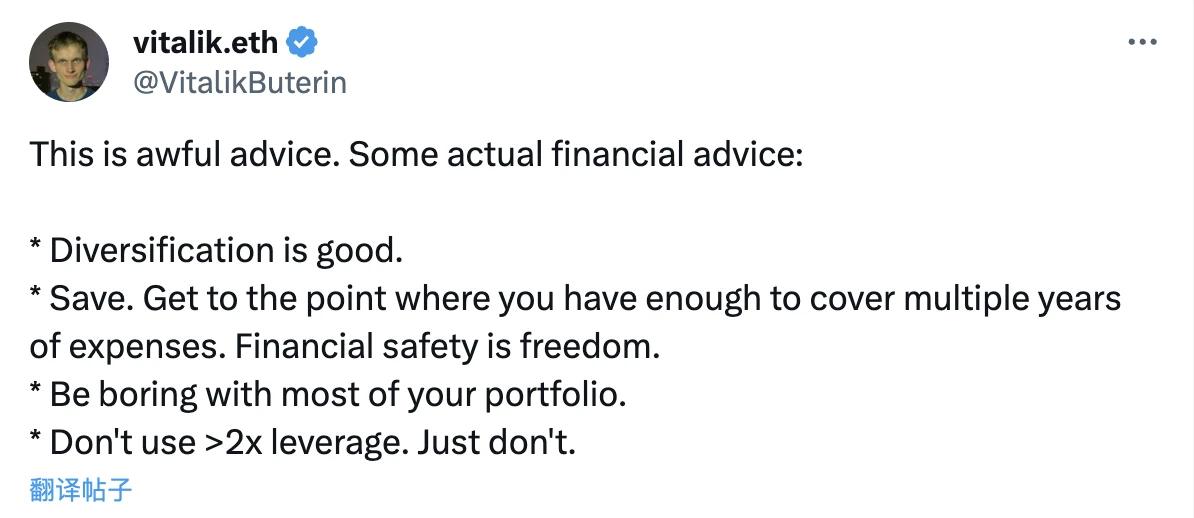
On January 7, Vitalik Buterin posted on X advising against using more than 2x leverage: “Don’t use more than two times leverage. Seriously.”
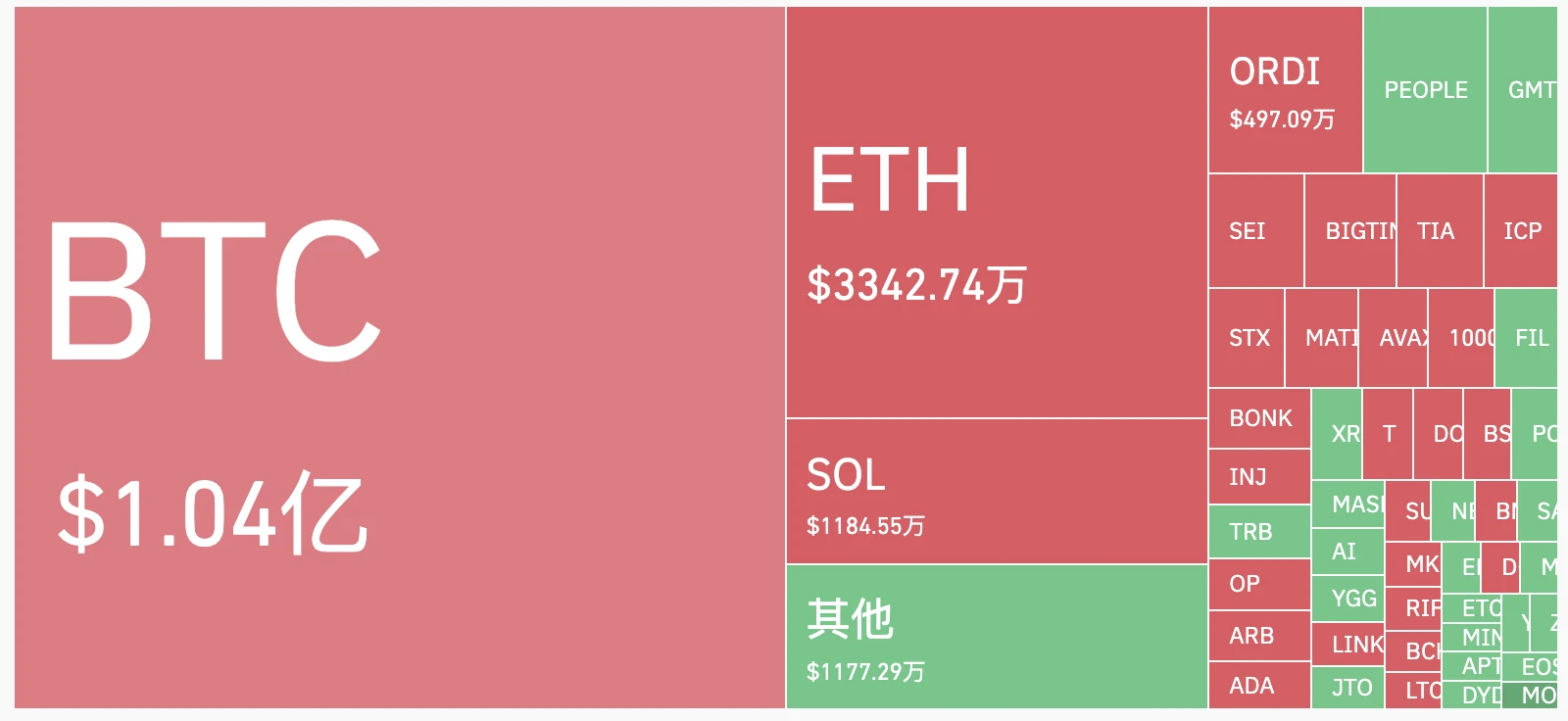
During yesterday’s volatile market session, Coinglass data showed $208 million in liquidations across the crypto market within 24 hours, with over $100 million in BTC-related liquidations alone. A total of 60,036 traders were liquidated, with the largest single position losing $9.4389 million.
Going Long on Volatility
Although it remains difficult to predict BTC's direction after the ETF announcement, the market broadly anticipates sharp volatility following the news.
Therefore, going long on BTC volatility presents a compelling opportunity.
Back during the FTX era, FTX innovatively introduced volatility tokens as a simple product. However, with FTX now defunct, no clear successor dominates the space today.
Nonetheless, we’ve identified some interesting alternatives in the DeFi ecosystem:
Crypto Volatility Index (CVI)
CVI (Crypto Volatility Index) refers both to an index and the name of a DeFi project. The CVI index tracks overall crypto market volatility—higher volatility leads to higher index values. To simplify (though not perfectly), think of this index as the IV (implied volatility) of the entire crypto market.
In essence, the project offers CVI tokens whose price correlates with the CVI index, includes built-in funding fees, and rebalances daily.
If users expect future volatility to increase, they can buy the token and sell when volatility rises. Conversely, if users anticipate declining volatility, they can mint the token and earn funding fees during each rebalance.
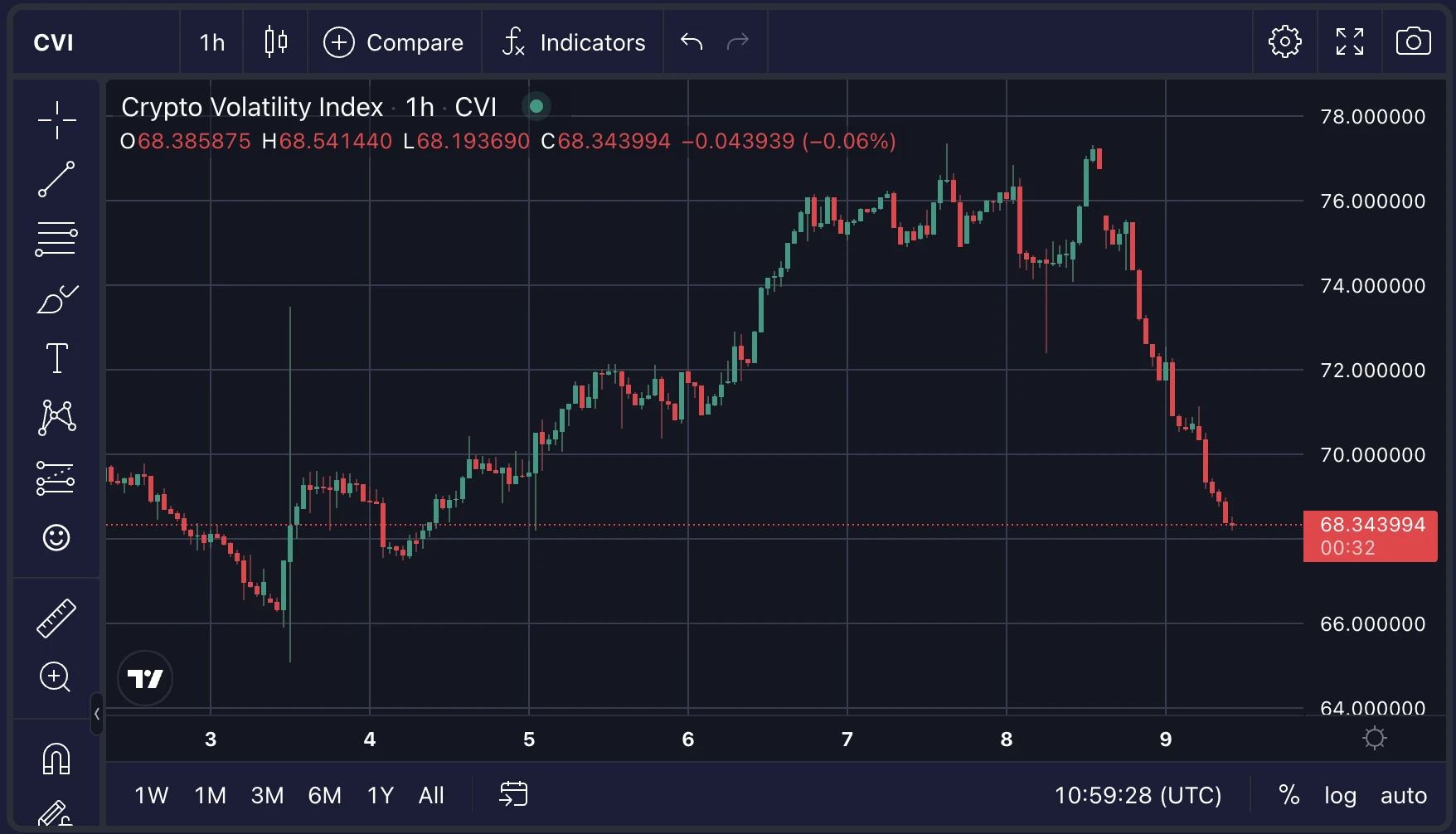
Hourly CVI Index Chart Today
Volmex
Volmex is another DeFi protocol offering volatility trading. It features its own crypto volatility indices—BVIV and EVIV—which differ from CVI by focusing specifically on individual assets: BVIV represents Bitcoin implied volatility, while EVIV reflects Ethereum implied volatility.
On Volmex, users can trade these indices directly, provide liquidity, or even swap between Bitcoin and Ethereum volatility exposure.
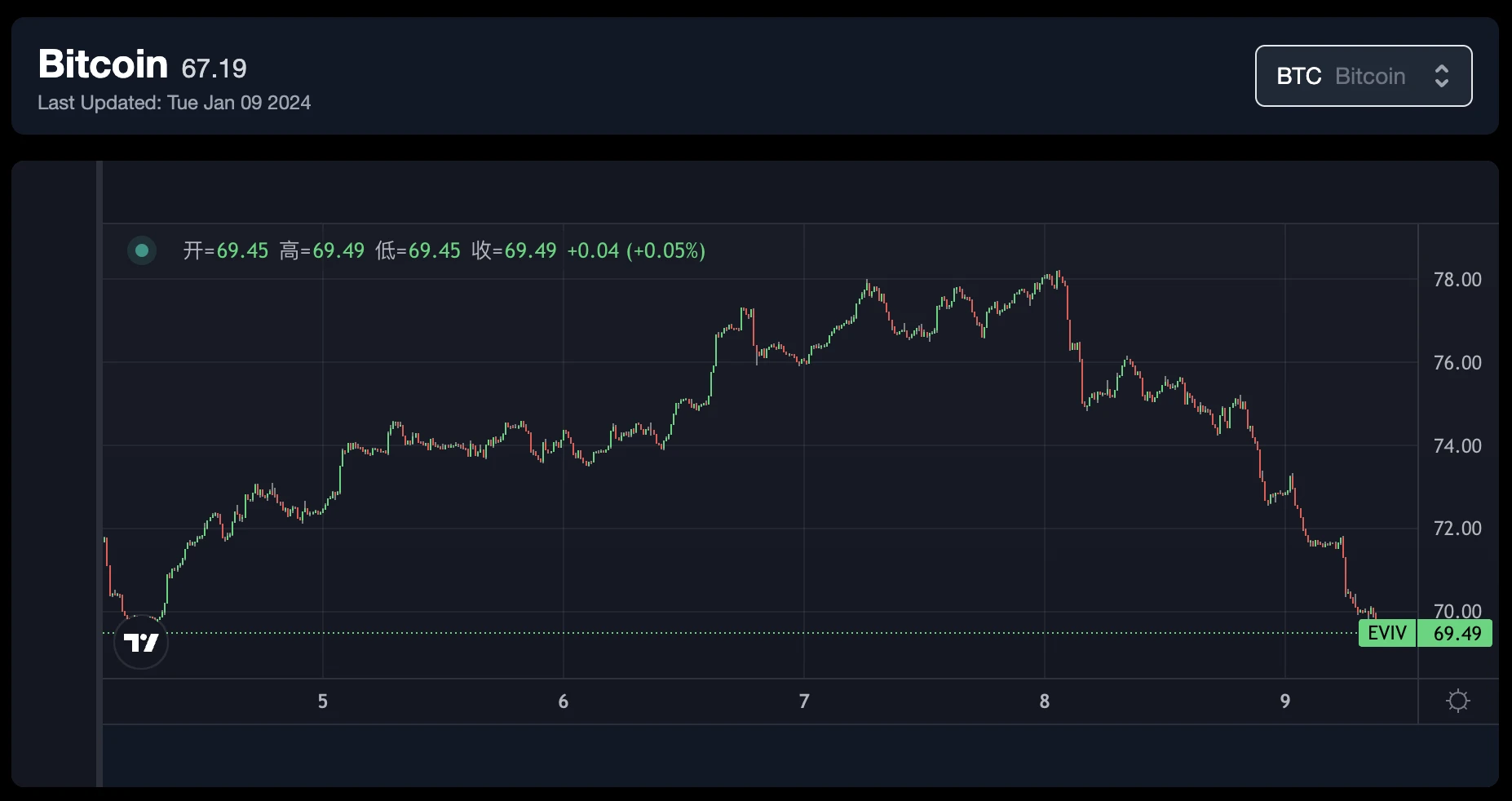
Hourly Volatility Chart on Volmex Today
Volmex aims to give users a simple way to gain exposure to cryptocurrency volatility, enabling sophisticated trading strategies using this instrument.
Options Trading
Currently, major CEXs like Deribit and certain DeFi protocols offer cryptocurrency options markets to investors.
Purchasing call/put options expiring on January 12 is the simplest way to go long or short BTC via options.
However, unlike perpetual futures on CEXs, options automatically settle upon expiration. If the price prediction is incorrect, the option expires worthless. (For example, buying a BTC call option with a strike price of $50,000 when BTC is at $40,000 would result in total loss of premium if BTC reaches only $49,999 at expiry, yielding zero return.)
Alternatively, users may sell put options to collect premiums. However, being an options seller carries higher risk, as theoretically unlimited losses are possible.
Options products are complex; Odaily Planet Daily recommends new traders study thoroughly before participating. We have previously published a series of guides on options basics.
Of course, for simple directional bets, options might be overkill. Their true strength lies in hedging and combining positions (e.g., with spot, futures, or other options) to implement advanced strategies.
How to Use Options to Go Long on Volatility?
Constructing a straddle is the simplest way to bet on increased volatility.
For instance, when BTC is at $40,000, simultaneously purchase a $40,000 call and a $40,000 put. The investor pays two premiums upfront and profits if BTC moves significantly upward or downward beyond the combined cost. A straddle is a straightforward volatility-long strategy, theoretically offering limited downside (loss capped at paid premiums) and unlimited upside (since price movement has no ceiling).
Straddle Profit/Loss Diagram
Conversely, executing the reverse—acting as the option writer—is a volatility-short strategy, profiting from stagnant market conditions through collected premiums.
Practical Example
Taking the current market as an example, constructing a basic straddle still holds profit potential but appears less attractive.

Using BTC options expiring January 12 (current price: $46,632), combining BTC-46500-CALL and BTC-47000-PUT requires approximately $3,000 in premium. BTC must move above $49,932 or below $43,362 for the position to become profitable.
Unidirectional Bullish/Bearish: Spread Strategies
If a trader has a unidirectional outlook, bull or bear spreads offer suitable approaches.
Take the bull spread: buy a lower-strike call and sell a higher-strike call with the same expiry. For example, if BTC is at $40,000 and bullish, one might buy a $45,000 call and sell a $50,000 call.
This strategy yields profit within a finite range—i.e., roughly when BTC settles between $45,000 and $50,000. (Approximate values due to net premium calculations.)
Practical Example
Compared to simply buying a single call, this strategy reduces entry cost by acting as a seller. With slight modifications, capital efficiency can be further enhanced.
Again using BTC options expiring January 12 under current market conditions:

Buying BTC-48000-CALL and selling BTC-52000-CALL incurs ~$900 cost and earns ~$200 premium, resulting in a net outlay of ~$700.
At expiry on January 12, the strategy profits if BTC trades between ~$48,700 and $52,000. Above $52,000, the sold call begins to lose value, offsetting gains from the long call dollar-for-dollar, thus capping upside profitability.
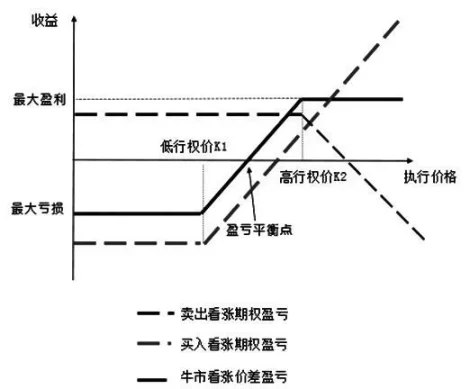
Why adopt this approach? As noted, the net cost is only ~$700 versus ~$900 for a standalone call. Compared to a single-leg trade, this two-leg combination improves capital efficiency by a remarkable 22%.
Can we maintain improved capital efficiency while removing the profit cap?
Yes—with slight adjustments. In the earlier spread, the portfolio Delta was nearly zero (but not exactly). By increasing positive Delta exposure, we can remove the upper limit.
Using the same structure but buying three calls and selling two, or buying two and selling one, allows breaking the profit ceiling and establishing a pure bullish options position.
The above strategies are simplified examples. However, options trading carries significant risks. Odaily Planet Daily urges all users to assess risks independently and proceed cautiously.
Options are well-established in traditional finance. Investors can learn more by studying stock options markets.
Stock Trading
Amid rising volatility, trading crypto-related equities offers another avenue to speculate on the crypto market.
Cryptocurrency-linked stocks like COIN have historically moved in tandem with broader crypto trends. The maturity and accessibility of equity instruments provide additional avenues for betting on crypto—whether going long, short, or playing volatility. Selecting crypto-sector stocks as trading vehicles is a solid choice.
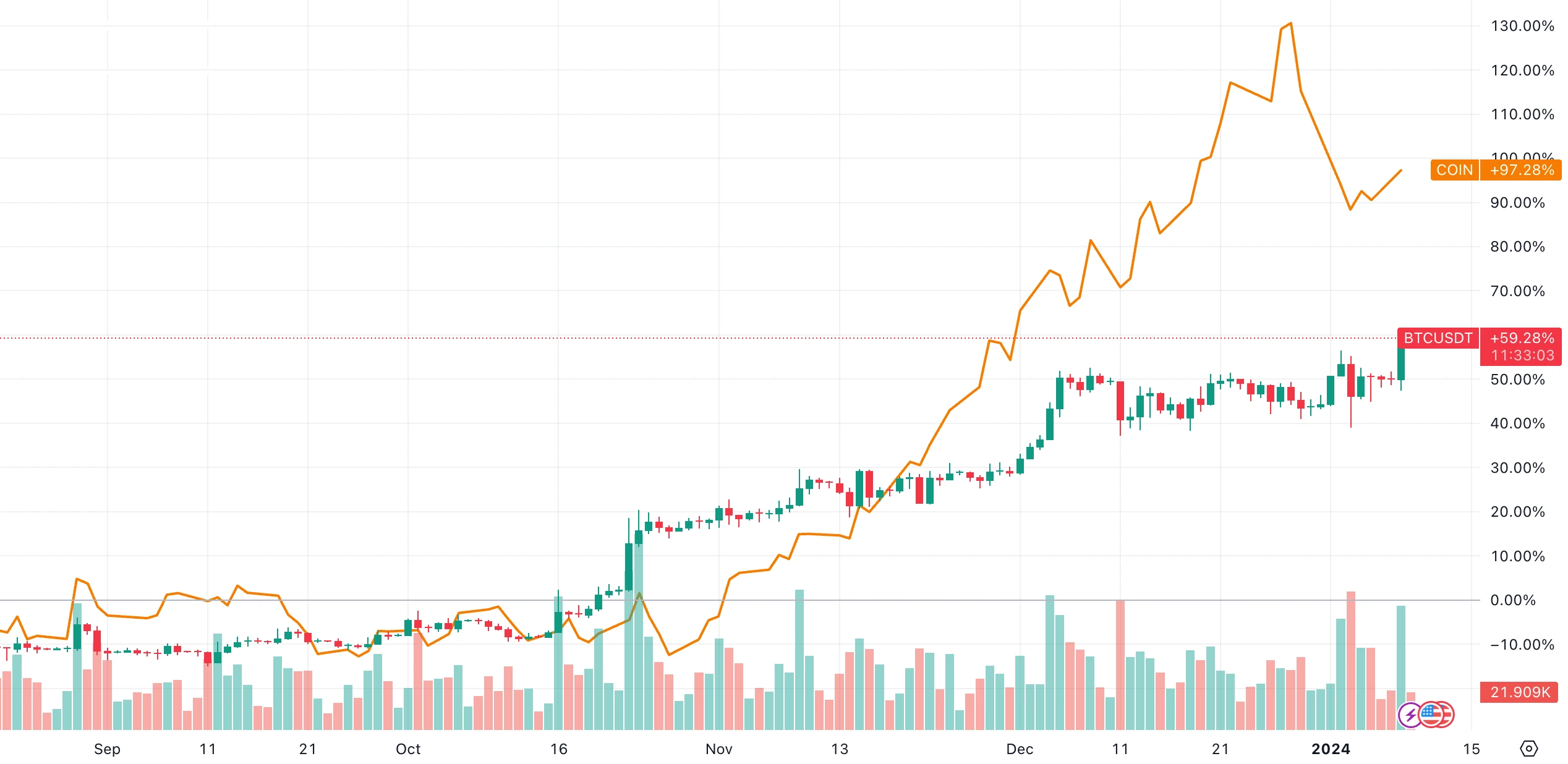
COIN vs BTC Price Comparison
Beyond COIN, numerous other instruments exist: mining firms, “alternative BTC leveraged” plays like MicroStrategy, and Grayscale’s GBTC shares.
Additionally, if GBTC gains approval, arbitrage opportunities may emerge between GBTC and BTC. Currently, GBTC trades at a -6.82% discount.
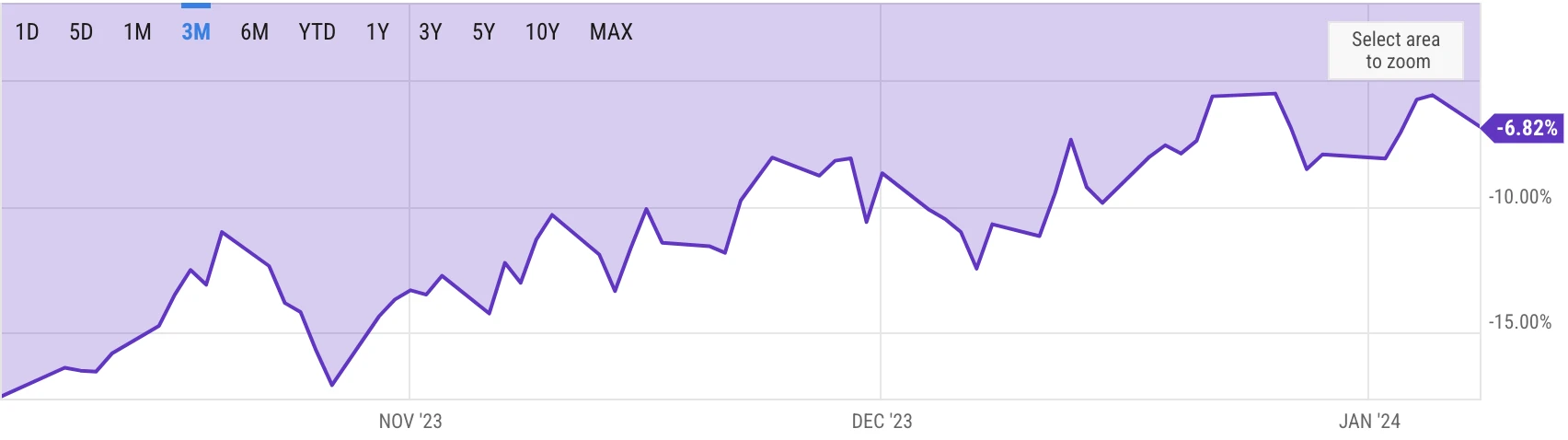
GBTC Premium Rate Over the Past 3 Months
CEX Products
Besides trading tokens, what else do CEXs offer? Robo-trading tools and financial products are excellent choices.
During volatile markets, grid trading proves highly effective.
Grid strategies profit from price oscillations. Whenever the asset hits preset grid levels, automated buy/sell orders execute to capture gains.
For example, on OKX, top-ranked official grid strategies (by default sorting) have delivered strong returns during prior sideways markets.
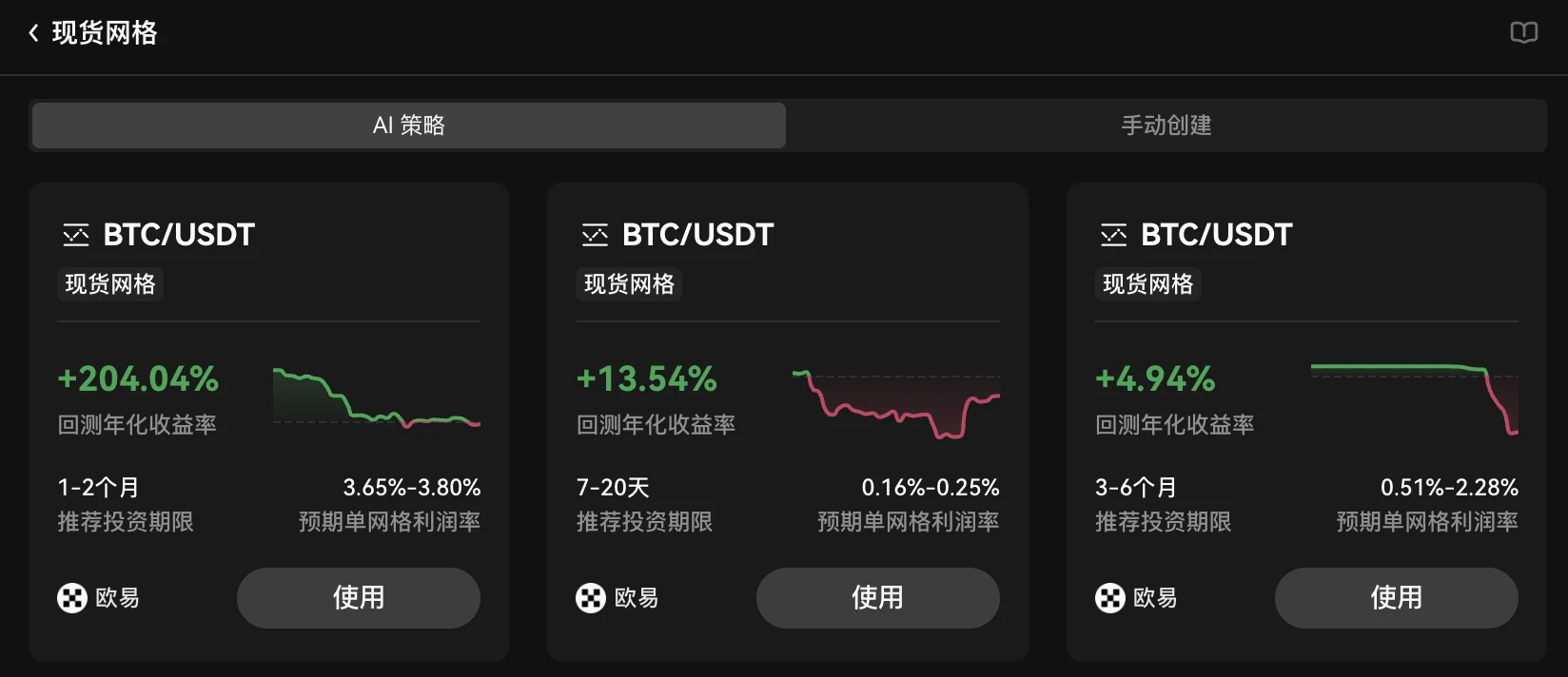
Financial products are also worth considering.
Recently, market sentiment has remained strong and optimistic. This fuels demand for leverage, driving borrowing needs and keeping interest rates elevated.
Correspondingly, lenders enjoy high “passive income.”
On OKX, stablecoin financial products currently offer 8% annualized returns. Over the past 30 days, this rate peaked at 58%, consistently staying above 20%. Under strong market sentiment, CEX stablecoin wealth management presents a relatively low-risk, attractive option.
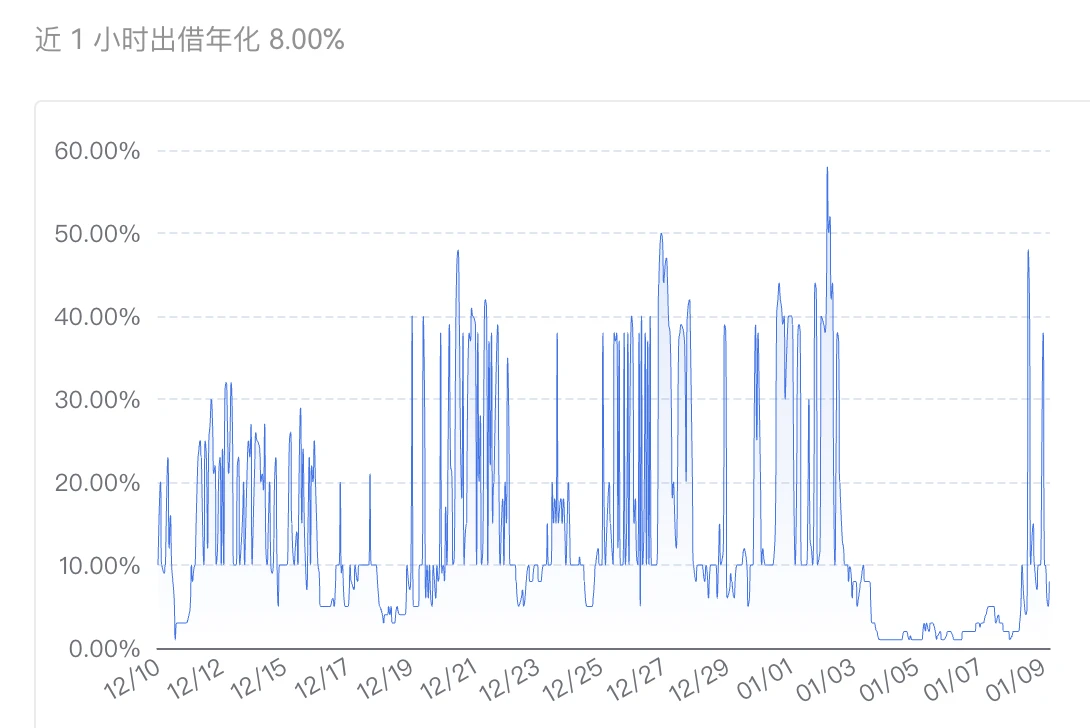
OKX USDT Financial Product Yield Trend
Likewise, on-chain lending demand remains robust. On Aave, average APR for USDC over the past month exceeded 8% on both Polygon and Optimism markets.
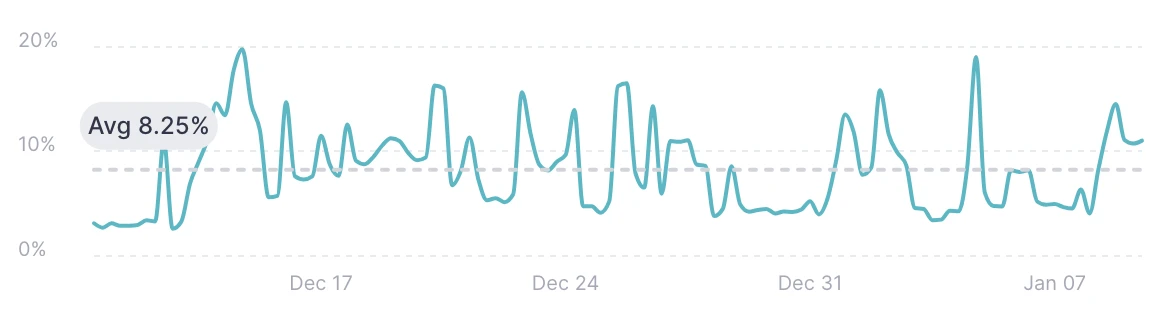
Aave Optimism USDC Interest Rate
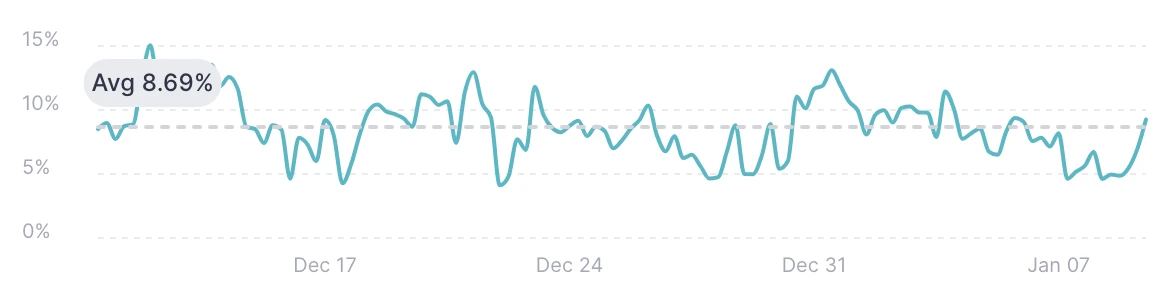
Aave Polygon USDC Interest Rate
With ETF Approval Imminent, What Should I Do?
Currently, the sole factor determining whether spot Bitcoin ETFs will be approved rests with the SEC commissioners (five members including Gary Gensler) and their voting stance. No one knows the final outcome, and this event is nearly impossible to predict.
For most investors, remaining cautious about risks and managing position sizes remains the best approach.
Market opinions remain divided on whether the ETF will pass or fail. The final result will be revealed within the next 24 hours.
Join TechFlow official community to stay tuned
Telegram:https://t.me/TechFlowDaily
X (Twitter):https://x.com/TechFlowPost
X (Twitter) EN:https://x.com/BlockFlow_News
 Odaily










