








A New Paradigm for Full-Asset Lifecycle: Understanding Smart Layer and Executable Assets
TechFlow Selected TechFlow Selected
A New Paradigm for Full-Asset Lifecycle: Understanding Smart Layer and Executable Assets
A new paradigm for assets, a new experience for applications.
 Navigating Web3 tides with focused insights
Author: Nan Zhi, Odaily Planet Daily
Introduction
Recently, Polygon announced "Smart Cat Loot" on the X platform—a pioneering asset-backed xNFT issued by Smart Layer on Polygon, which sold out within four hours of launch.
What is an xNFT? Its full name is Executable NFT, meaning it contains built-in executable code in addition to functioning as a digital asset. Compared to traditional NFTs, xNFTs offer higher utility and greater extensibility. Similarly, there are also Executable Tokens with similar characteristics.
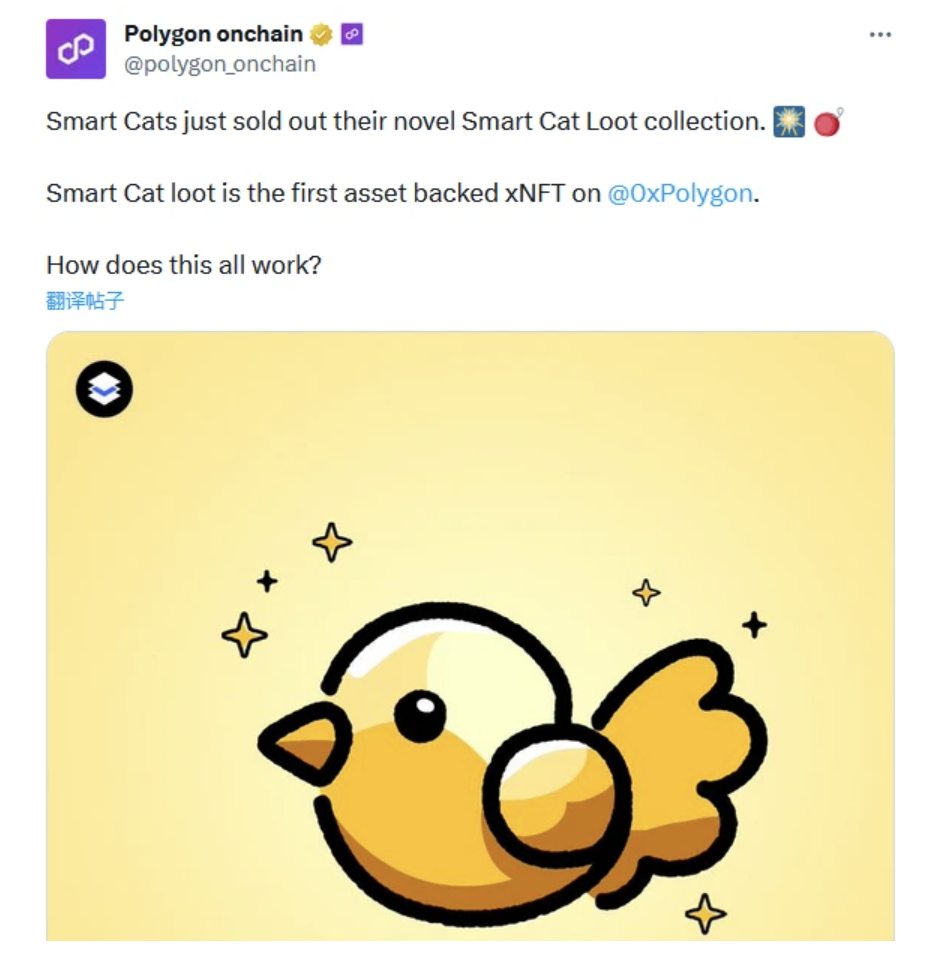
"Smart Cat Loot" features an innovative "Burn and Return" mechanism along with dynamic pricing. NFT holders can burn their tokens at any time to reclaim the minting cost. Moreover, as secondary market trading volume increases, the refund value from burning also rises accordingly.
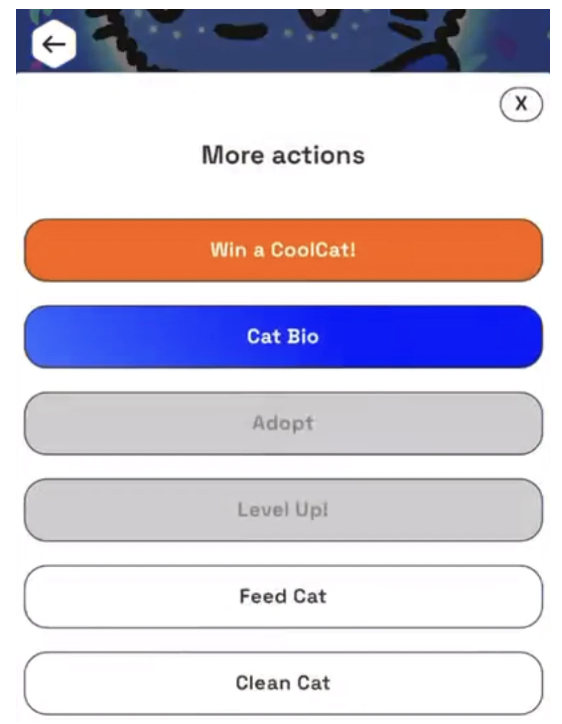
These asset-side features of Smart Cat Loot enable interactive gameplay with Smart Cats—also issued by Smart Layer—to earn points and unlock community rewards. Notably, this interaction requires no separate website visits or additional DApp downloads; all actions can be executed directly within the user's wallet.
The aforementioned capabilities of Smart Cat Loot are enabled by Ethereum standard ERC-5169 and TokenScript. ERC-5169 allows tokens to be linked to external scripts, transforming them into multifunctional assets. TokenScript is a programming interface for tokenization that abstracts token information, access methods, and UI presentation, providing a higher-level interface that significantly enhances token interoperability and integration. Additionally, TokenScript enables developers to define token properties and operations—such as transferability—facilitating inter-token operability without requiring updates to DApps or smart contracts.
In short, Smart Layer’s Executable Tokens/NFTs, powered by ERC-5169 and TokenScript, greatly enhance asset extensibility. This not only improves user experience but also introduces new paradigms in asset development, distribution, and application, aiming to revolutionize production and consumption pathways for DeFi, brand loyalty programs, and Web3 gaming.
A New Asset Paradigm, A New User Experience
A New Answer to Application Distribution and Management
In typical Web3 scenarios, end users often face a wide variety of DApps. Especially when migrating to new blockchains or encountering new asset types, users encounter numerous challenges throughout the entire lifecycle:
-
Assets serve merely as payment and transfer mediums. Transfer events usually require separate applications and markets, each demanding dedicated development and high customer acquisition costs. For example, niche inscriptions today often rely on OTC trades conducted one-by-one, requiring double deposits and 1%–3% service fees—resulting in prohibitively high costs;
-
For new applications, users must invest effort in discovery and learning. With phishing websites on Google and fake accounts rampant on X, inexperienced users are especially vulnerable to scams;
-
Users face ongoing management challenges—including asset custody and security risk mitigation. When holding assets across dozens of chains, each requiring at least one Swap, lending, or cross-chain app, management complexity grows exponentially. Furthermore, frequent attacks in the Web3 space mean every DApp carries hacking risks, demanding constant vigilance and verification from users.
For instance, the core reason behind OKX Web3 Wallet’s rise in 2023 lies in its resolution of these information and management cost issues between users and DApps. By directly connecting project teams with users, it reduces information friction; through multi-platform coordination, it lowers learning curves; and the aggregation platform itself acts as a trust layer.
Executable Tokens/NFTs represent another, even more direct and lower-cost solution:
-
By embedding fundamental functions like Earning and Swap—along with unique features—directly into the asset, users are natively connected to applications, minimizing information overhead;
-
Applications no longer need multi-platform adaptation; users can perform all necessary actions directly within their wallets, simultaneously reducing both development and learning costs;
-
Moreover, having project-developed programs embedded in the asset means users avoid verifying DApp authenticity or managing multiple apps—what you see is what you get, ready to use anytime.
The New Asset Paradigm Led by Executable Tokens
In early blockchain days, chains and coins could do just one thing—transfer value. Project teams gathered miners to issue assets and run transfers, with each chain supporting only one asset. As markets matured, demand emerged beyond mere exchange media—specifically, programmability needs—leading to hard-coded smart contract projects that couldn’t be upgraded online and required miner forks for every update.
Then came Ethereum, introducing smart contracts with Turing completeness, offering sufficient flexibility for complex computations rather than simple asset transfers. After the ICO era and DeFi Summer, smart contracts became an indispensable, standard component of the blockchain world.
However, current blockchain systems remain largely finance-focused, with each ecosystem building self-contained trading and lending frameworks that operate in isolated loops. As blockchain adoption becomes more compliant and mainstream, new use cases beyond payments and finance continue to emerge—use cases that existing technical architectures cannot adequately support, creating new foundational demands.
What disruptive mass-market needs does Web3 fulfill? One of the most important is data ownership. In Web2, user data is monopolized by platforms, leading to information silos and high friction costs. On one hand, users must repeatedly fill in personal details when switching platforms, while platforms rebuild user profiles from scratch to deliver accurate services. On the other hand, users worry about privacy leaks, while platforms hover near ethical boundaries, building data moats or acquiring data through gray channels. In summary, Web3 thrives by breaking down data silos and enabling integration—but its growth is limited by inadequate security and privacy protections.
Therefore, Smart Layer has developed a unique solution based on TokenScript technology—Executable Tokens—that address integration, privacy, and trust challenges in digital environments. Executable Tokens carry information, representing diverse assets and rights, while also possessing rich functionalities enabling complex interactions with other tokens and systems (as described earlier).
Let’s explore the appeal of Executable Tokens through an official example:
-
Users can create a token for a specific car based on national vehicle identification standards, representing ownership;
-
Authorized users can unlock corresponding car functions—such as digital keys for starting and locking the vehicle—and access real-time data including location and condition;
-
Third-party companies can access authorized vehicle data—for instance, insurers can accurately and affordably assess whether a user needs coverage, reducing customer acquisition and communication costs;
-
Ownership transactions become highly standardized. Developers can embed key vehicle attributes during token design, making online purchase decisions more efficient. Transaction events can also integrate with official systems (e.g., DMV), eliminating paperwork;
-
Digitized vehicle ownership via Executable Tokens enables various on-chain operations—such as borrowing funds on NFT lending platforms or fractionalizing ownership via fragmentation protocols—greatly enhancing asset utility and efficiency.
Take the popular 2023 concept of RWA (Real World Assets), where physical assets like real estate, securities, and stocks are placed into special purpose vehicles (SPVs) and tokenized. For bond-like products with relatively simple income models and data structures, traditional ERC-20 tokens suffice for linking assets and distributing returns. However, more complex underlying assets like real estate require entirely different technical implementations. Real estate operational revenues and costs vary widely; buyers need layered data on location, property condition, and management status. These assets also involve multiple tax jurisdictions. Relying on manual off-chain coordination, management, and calculation before updating on-chain records is too costly, undermining the very purpose of RWA. With ERC-5169 and TokenScript integrated with technologies like edge computing, off-chain and on-chain data can be synchronized in real time, accurately and efficiently.
In conclusion, Executable Tokens introduce a completely new model for asset development and application, providing foundational technological infrastructure that fully leverages Web3’s unique characteristics and advantages.
Redefining Production and Consumption Pathways Between Brands and Users
As discussed, Smart Layer’s unique solution breaks down information silos and redefines the relationship between brands and users, fundamentally transforming their production-consumption dynamics:
-
Solves the challenge of precisely identifying target users. Consumer footprints become transparent, allowing brands to conduct business analytics on solid data and match services accurately with intended audiences.
-
Open, permissionless deployment means project teams focus more on product quality. With clear user bases, only superior services attract users—especially in Web3, where switching costs are extremely low. Only projects that consistently and proactively deliver exceptional value can maintain user retention.
For example, SushiSwap’s attack on Uniswap once threatened Uniswap’s dominance, forcing major innovations. Conversely, LooksRare failed to surpass OpenSea in service quality and rapidly declined after initial hype.
-
ERC-5169 promoted by Smart Layer links assets to external scripts, avoiding expensive on-chain operations for some users and facilitating broader adoption.
This transformed relationship is called Open Loyalty, aiming to further harness Web3 advantages and drive new market narratives and developments.
New User Acquisition and Experience Models for Gaming
Executable game NFTs can embed mini-games and interactive tasks, allowing users to interact with these elements directly in their wallets—even before the full game is built. The key innovation is merging assets and DApps, changing how mini-games acquire users. Instead of installing a separate DApp, users simply receive an asset with built-in game functionality and begin interacting immediately. Think of it like a WeChat Mini Program—by shortening the path between user and application, acceptance rates increase dramatically.
On another level, Executable Tokens/NFTs go beyond being in-game assets—they can integrate with real-world actions, adding new dimensions to gameplay and player interaction. Through scripts linked to external data and combined with AR, VR, or AI technologies, possibilities expand exponentially.
Conclusion
Smart Layer’s Executable Tokens/NFTs introduce a new asset paradigm, reshaping the entire lifecycle—from creation and distribution to operation. Their extensibility, when combined with emerging technologies, scenarios, and processes, unlocks infinite potential for future asset development.
Join TechFlow official community to stay tuned
Telegram:https://t.me/TechFlowDaily
X (Twitter):https://x.com/TechFlowPost
X (Twitter) EN:https://x.com/BlockFlow_News
 Odaily







