









Can BendDAO rejuvenate by embracing the BTC ecosystem?
TechFlow Selected TechFlow Selected
Can BendDAO rejuvenate by embracing the BTC ecosystem?
Rather than a proactive pursuit of change, it is more accurate to say they are being carried along by the overwhelming market trend.
 Navigating Web3 tides with focused insights
Author: 0xAyA, Odaily Planet Daily
Finally, BendDAO has also entered the world of inscriptions — a protocol previously focused on the NFTFi space and dedicated to providing greater liquidity for blue-chip NFTs, ultimately unable to resist the surging wave of the BTC ecosystem and inscriptions. Two weeks ago, BendDAO announced that its team planned to propose a solution to embrace the Bitcoin NFT ecosystem, enabling seamless interactions between Bitcoin NFTs and BendDAO, along with supporting WBTC liquidity pools as borrowable assets.
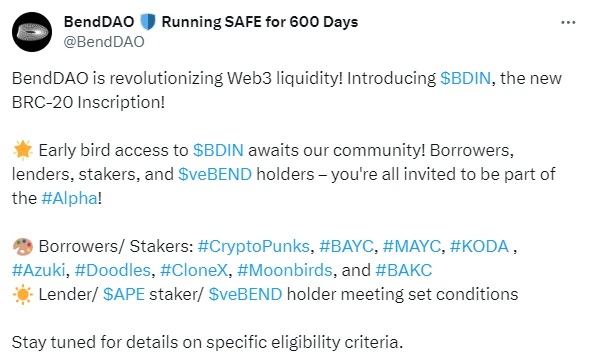
Subsequently, BendDAO revealed plans to bridge BRC-20 and ERC-20 liquidity and is preparing to launch BendDAO BRC-20, offering lending and cross-chain bridge services for the Bitcoin ecosystem. Yesterday, the official announcement confirmed the upcoming launch of the BRC-20 token BDIN, which will grant priority benefits to borrowers, lenders, stakers, and veBEND holders.
BRC-20 is a token standard for issuing fungible tokens on the Bitcoin network. It leverages the Ordinals protocol by embedding JSON-formatted data into inscriptions to configure token contracts, minting, and transfers. We can understand it as a mutated form of ordinal NFTs: while NFT inscriptions typically engrave images, BRC-20 inscriptions use uniform JSON-formatted text data (text). In BRC-20, the inscription itself serves as the ledger for tracking every token transaction. ERC-20 tokens, on the other hand, are built on EVMs using smart contracts. Due to Bitcoin's lack of native smart contract support, tokens issued under BRC-20 have limited functionality compared to ERC-20.
Although both are token standards, ERC-20 and BRC-20 fundamentally share little in common. By providing cross-chain bridge services, BendDAO will undoubtedly significantly reduce the gap between them. This cross-chain support could enhance liquidity between the two most important ecosystems, holding potentially significant implications for improving asset utilization and the overall future development of the Bitcoin ecosystem.
This isn't the first time BendDAO has pursued such liquidity-enhancing initiatives — back when Ethereum NFT narratives were just emerging, BendDAO set its sights on the most valuable segment: the blue-chip NFT market. Through its "peer-to-pool" design and dual-sided mining incentives, BendDAO quickly attracted capital-efficient blue-chip NFT holders, leading to one BAYC after another being deposited into its staking pools.
However, flaws inherent in BendDAO’s design combined with接连 market failures triggered consecutive liquidation events. Although the team swiftly adjusted the liquidation mechanism after the August incident — gradually lowering the liquidation threshold from 90% to 70%, reducing the auction period from 48 hours to 4 hours, and removing the restriction requiring initial bids to exceed 95% of floor price — they still couldn't avoid a liquidity crisis.
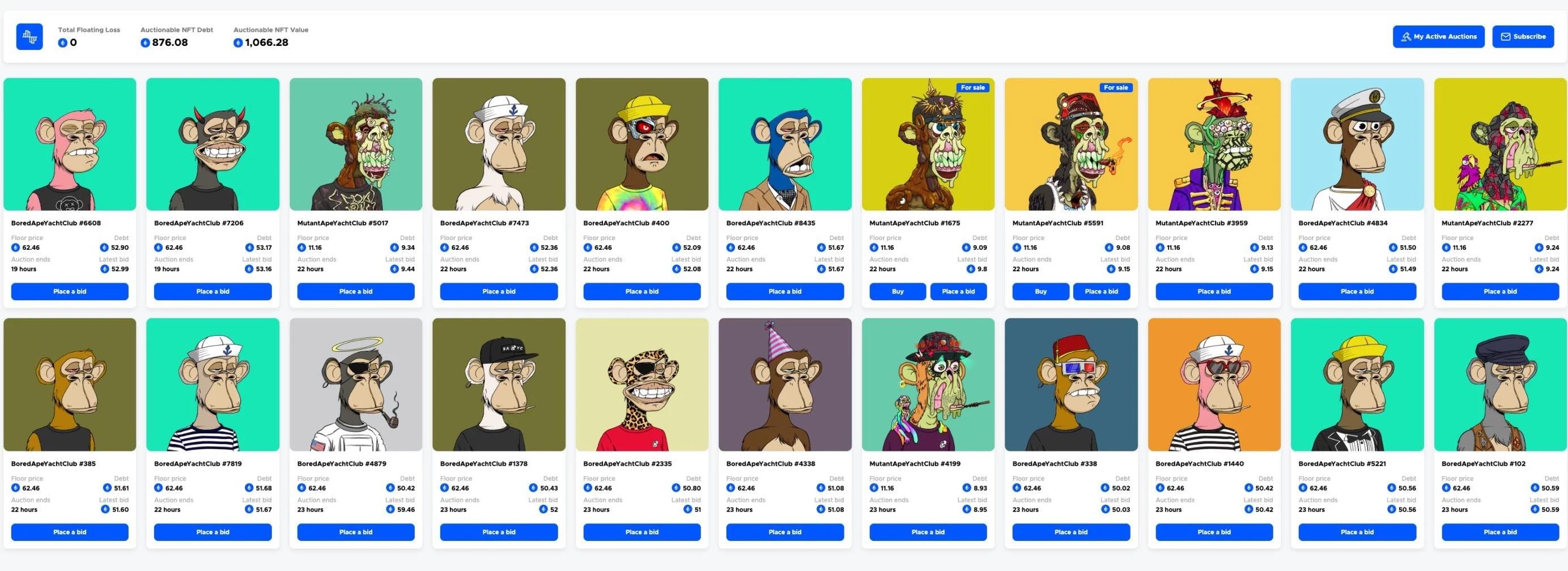
As market enthusiasm for NFTs gradually cooled, blue-chip NFTs fell into a prolonged downtrend this year, with floor prices of top projects dropping more than half from their peaks. The once-thriving NFTFi narrative has since become largely ignored.
BendDAO’s current move may be less about proactive transformation and more an act of necessity driven by broader market trends — amid the rising hype around inscriptions and launchpads, projects like HOOK and LEVER have already pivoted, and now BendDAO has followed suit. Whether this new attempt will succeed remains to be seen — only time will tell.
Join TechFlow official community to stay tuned
Telegram:https://t.me/TechFlowDaily
X (Twitter):https://x.com/TechFlowPost
X (Twitter) EN:https://x.com/BlockFlow_News
 Odaily










