








Analysoor (0, 1): A New Battlefield for 100x Returns, Reinventing the Fair Launch Journey
TechFlow Selected TechFlow Selected
Analysoor (0, 1): A New Battlefield for 100x Returns, Reinventing the Fair Launch Journey
As market demand for fairness and transparency continues to grow, Fair Launch mechanisms will inevitably become the prevailing trend.
 Navigating Web3 tides with focused insights
TL;DR
-
Analysoor is the first Meta Protocol on Solana, adopting a unique approach to creating and distributing NFTs and tokens. It provides a Fair Launch minting mechanism by using block hash values as random number generators and selecting winners per block. This mechanism has proven successful in eliminating bot manipulation during the launches of $ZERO and Index ONE NFT.
-
Fairness and liquidity bootstrapping are the core value pillars of Fair Launch. Under this model, there are no pre-sales or whitelists, no team allocations, and no gas wars. Everyone starts from the same starting line, and differences in capital size do not confer advantages during minting. All fees generated from minting go entirely toward creating liquidity, which feeds back into the ecosystem and community, forming a positive flywheel effect.
-
Analysoor is building strong community consensus, with its value and potential increasingly recognized. Meanwhile, its developers continue innovating to further combat potential bot behavior, ensuring fairness can be maintained long-term. The application of AI algorithms and machine learning may be among the next key developments we observe.
-
Compared to the market caps of other leading launchpad projects like Auction, Turt, and Bake on various blockchains, Analysoor’s current valuation appears significantly undervalued. Given that Solana currently lacks a dominant launchpad protocol, Analysoor is well-positioned to become that leader, offering substantial room for future value growth.
-
Demand for fairness and transparency in markets continues to rise. Fair Launch mechanisms are poised to become an inevitable trend. Thus, 2024 could mark a breakout year for Meta Protocols—especially on high-performance chains like Solana—and Analysoor, as the pioneer of Fair Launch on Solana, holds immense potential and a compelling vision. We may see it expand into more diverse use cases beyond just meme coins and NFTs, evolving into a multifunctional launchpad.
Introduction
Since the crypto market entered 2023, blockchain inscription markets represented by the Ordinals protocol and its derivatives have seen explosive popularity. However, behind this frenzy lies growing demand for more efficient blockchain functionality, lower GAS fees, reduced operational complexity, and fairer market participation.
At this juncture, the Solana ecosystem has experienced an impressive rebound. Driven by a wave of innovative projects and a robust ecosystem, Solana is once again emerging as a top contender in the next bull run—particularly due to its high throughput and low-latency transaction capabilities, which are critical for inscriptions and NFT markets. As of December 17, 2023, the total number of inscriptions on Solana has surpassed 1 million.
Analysoor leverages the strengths of the Solana ecosystem to build an innovative Fair Launch mechanism, aiming to solve fairness issues in traditional models and bring transformative change to the inscription and NFT markets.
1. Project Overview

Analysoor Protocol is an innovative inscription and NFT minting protocol on Solana and the first Meta Protocol within the Solana ecosystem. It beautifully combines Solana’s high throughput, low transaction fees, and fast confirmation times with the essence of the Ordinals protocol, creating a lottery-style “block lottery” minting mechanism. Its core value lies in solving fair distribution and liquidity bootstrapping during inscription and NFT minting. By maximizing Fair Launch principles, it filters out bots and “degen scientists,” creating a fully transparent, low-barrier, user-friendly minting environment accessible to genuinely passionate participants.
When other developers use Analysoor for minting and distribution events, the Fair Launch mechanism effectively attracts large numbers of real users. These users quickly generate significant buzz and discussion around the project, accelerating community consensus formation. Under the Fair Launch model, whether you’re a whale or a new retail investor, everyone starts from the same line with equal opportunity to earn returns. More decentralized and equitable distribution also strengthens community governance. We have strong reasons to believe Analysoor is driving a disruptive wave across blockchain inscription protocols and could emerge as the leading launchpad for inscriptions and NFTs within the Solana ecosystem.
Analysoor is still in its early stages, with vast room for imagination and development potential. To date, the protocol has not conducted any fundraising and has no plans to do so.
2. Developer and Community Development
Analysoor was founded by @Pland__, a data scientist and engineer with exceptional technical skills and innovative thinking. Since its launch, Analysoor has sparked widespread discussion in the crypto community and attracted significant user interest. Pland has stated in the community that, drawing from his background in data science, he is actively exploring integrating AI algorithms into the protocol to continuously improve and innovate—further raising community expectations for Analysoor’s future.
While Pland has invested heavily in protocol development and innovation, he has also dedicated considerable effort to community building. He actively engages with participants daily, soliciting feedback and answering questions—a crucial factor in maintaining community activity and consensus. Additionally, Pland has established multilingual discussion channels (e.g., Chinese, Japanese, Korean, French) within the Discord community, preventing misunderstandings due to language barriers and providing native speakers with dedicated discussion spaces, facilitating broader international adoption.
As of this writing, according to Solscan on-chain data, the $ZERO token has 7,866 holders. Within 48 hours of opening the Discord community, membership surpassed 500 and continues to grow (access requires holding at least 100 $ZERO or one Index ONE NFT).
3. Protocol Revenue Sources
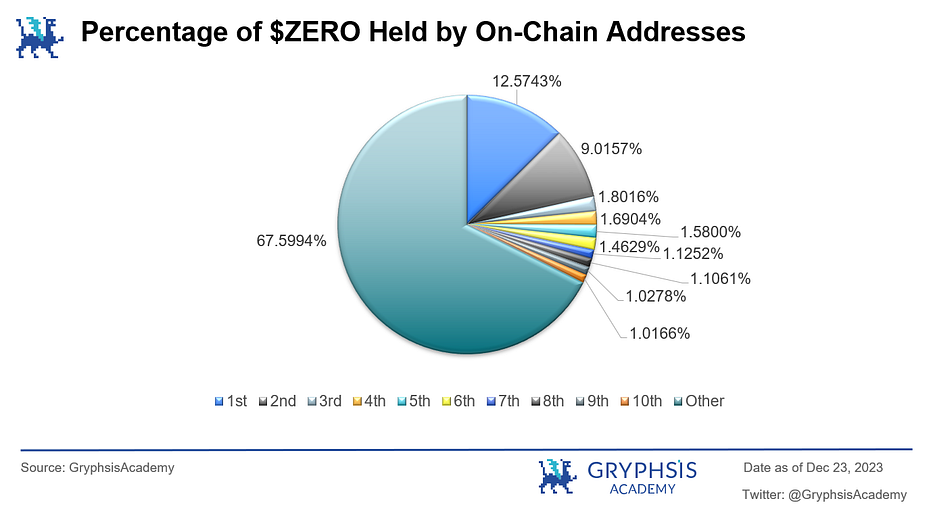
Currently, the developer collects only a 2.5% royalty fee from the Index ONE NFT project. Pland states this revenue is sufficient to sustain protocol operations. Additionally, Pland holds approximately 1.69% of the total $ZERO supply (currently the fourth-largest holder, ~355,000 tokens), and he has repeatedly emphasized his focus remains on the protocol’s long-term development rather than short-term profit-taking.
3.1 What problems exist in traditional deployment mechanisms?
On October 3, 2023, a Twitter user named Rijndael exploited the BRC-20 “first-come, first-served” model and public nature of most Bitcoin transactions to launch Sophon, a BRC-20 sniper bot. Sophon monitors inscription deployment transactions and frontruns them by increasing GAS fees. This allowed Rijndael to consistently win blocks and establish his transaction as the “official” one, giving him control over the token’s total supply and maximum mint limit.
Rijndael then set the supply of each deployed token to 1, meaning each token had only one owner, effectively halting further development.
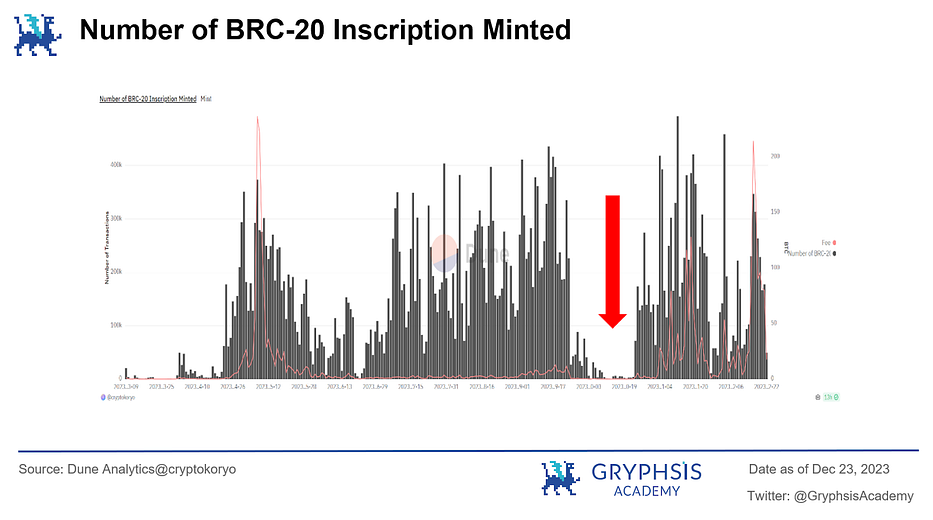
As shown in the chart, after Sophon’s deployment, BRC-20 inscription activity on-chain plummeted to near zero per day. Only after Sophon ran out of funds did activity return to previous levels. According to Rijndael’s own data, Sophon spent only 0.0129 BTC to achieve a 75% success rate in frontrunning—single-handedly triggering a temporary “bear market” in the otherwise booming BRC-20 inscription space.
Although Rijndael later clarified this was merely a stress test and not intended to harm the ecosystem, the incident serves as a warning: what if multiple Sophons existed? Would ordinary users still have a chance? When a few individuals can dominate the market via technical or financial advantage, retail investors’ interests are completely unprotected.
3.2 How does Analysoor’s Fair Launch mechanism work?
With Analysoor’s Fair Launch model, users no longer need to engage in GAS fee bidding wars typical of traditional minting. Instead, each participant pays a fixed cost per attempt. Each mint attempt can be viewed as purchasing a “block lottery ticket.” The randomly generated block hash determines the winning transaction (ticket) within that block.
In general, the first digit of the block hash serves as the winning number, while the parity (odd/even) of the numeric sequence determines counting direction (most hashes contain at least one digit). The winner selection logic thus falls into two scenarios, illustrated below:
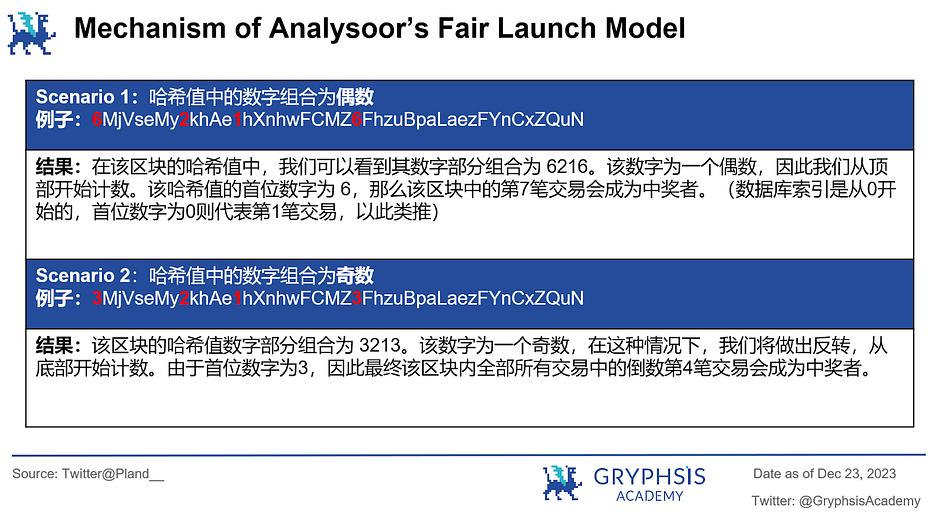
This logic creates a dual-layer security mechanism for mint allocation. To manipulate the process, one would need to purchase a large number of “tickets” (ideally at least 20) within a single block to occupy both top and bottom positions with transactions numbered 0–9—an extremely costly gamble.
Additionally, Analysoor’s developers reserve the right to make minor, randomized adjustments to the selection logic before each future minting event. Details will be published post-mint and made verifiable by users. The goal is to prevent bots from exploiting fixed patterns, further reducing the risk of fairness being compromised.
Moreover, in the Analysoor protocol, costs incurred during minting do not go to miners as GAS fees or to the developer’s wallet. Instead, all fees directly benefit the project being minted. For example, during $ZERO’s mint, all proceeds were added to an AMM pool to provide liquidity. For the Index ONE NFT mint, all collected fees were used to support the floor price of ONE, guaranteeing holders can always sell ONE for at least 2.5 SOL. This prevents liquidity from draining out of the inscription ecosystem, and the resulting benefits encourage reinvestment, creating a positive feedback loop.
3.3 Is Analysoor’s Fair Launch model effective?
Here, we analyze statistical data from the $ZERO mint to assess whether Analysoor’s Fair Launch truly achieved fair distribution.
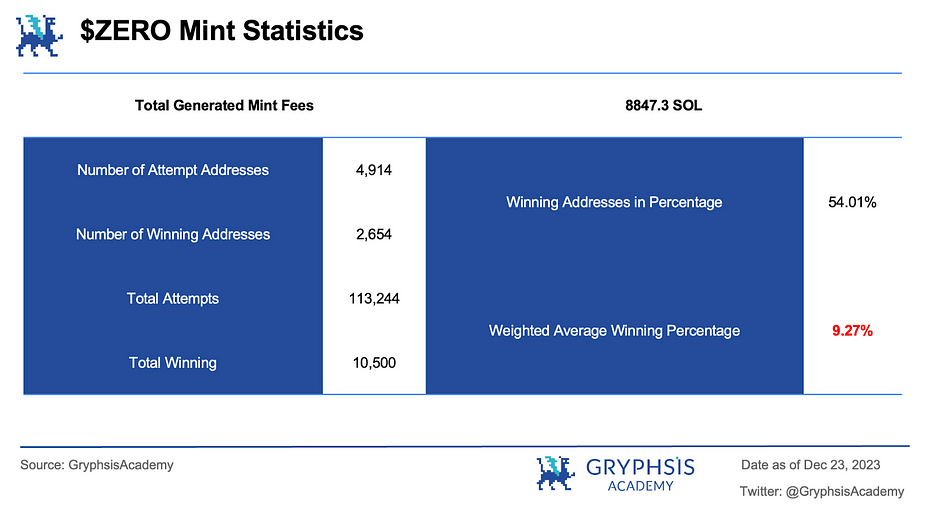
Mint statistics show 4,914 addresses participated in the $ZERO mint, with 2,654 (54%) successfully minting at least once. There were 113,244 total attempts, yielding a weighted average win rate of 9.27%. We now plot each participant’s attempt count against their win rate in a scatter plot.
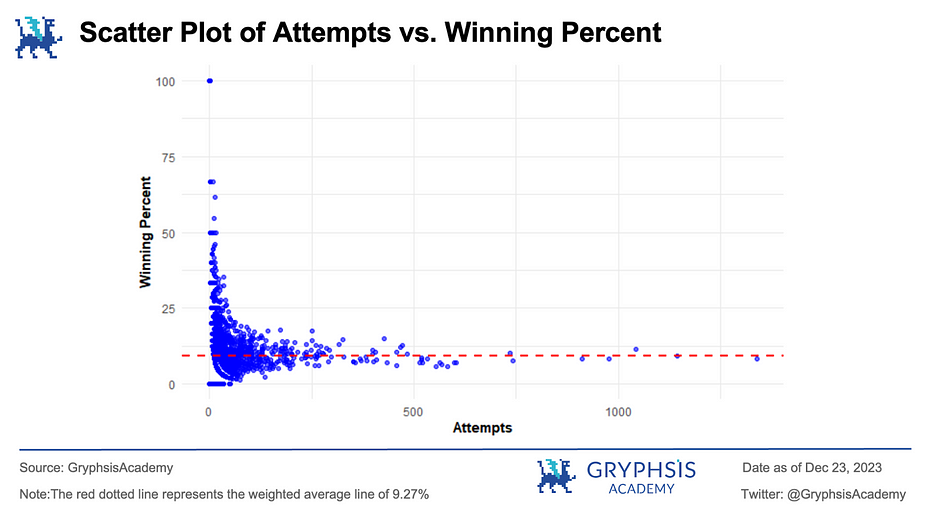
The chart shows that under Analysoor’s Fair Launch model, win rates remain relatively flat as attempt counts increase, without significant improvement. In fact, “lucky” winners often come from low-attempt participants. The more attempts made, the closer the win rate converges to the weighted average.
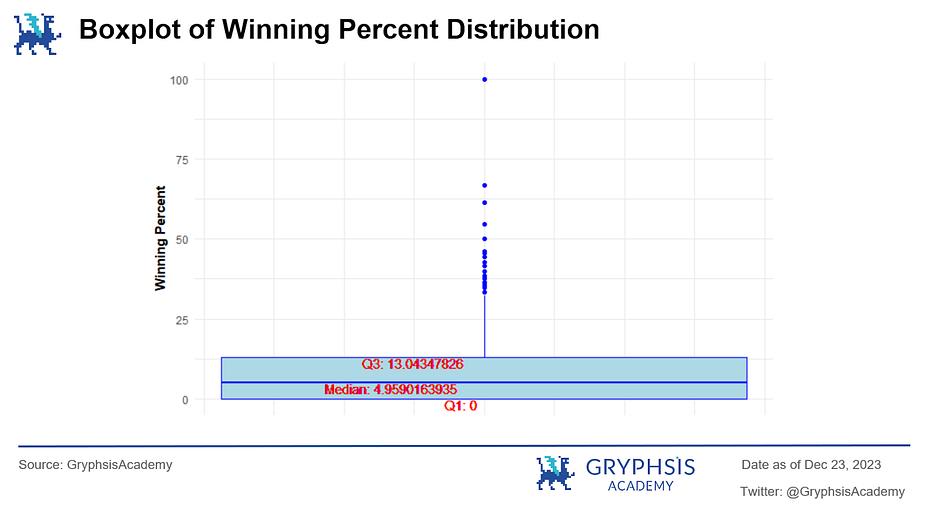
The box plot further illustrates win rate distribution. The third quartile (Q3) is ~13.04%, indicating 75% of participants had win rates below this. Combined with the scatter plot, we see the top 25% consists mainly of low-attempt “lucky” participants—a normal occurrence in lotteries that doesn’t undermine expected fairness.
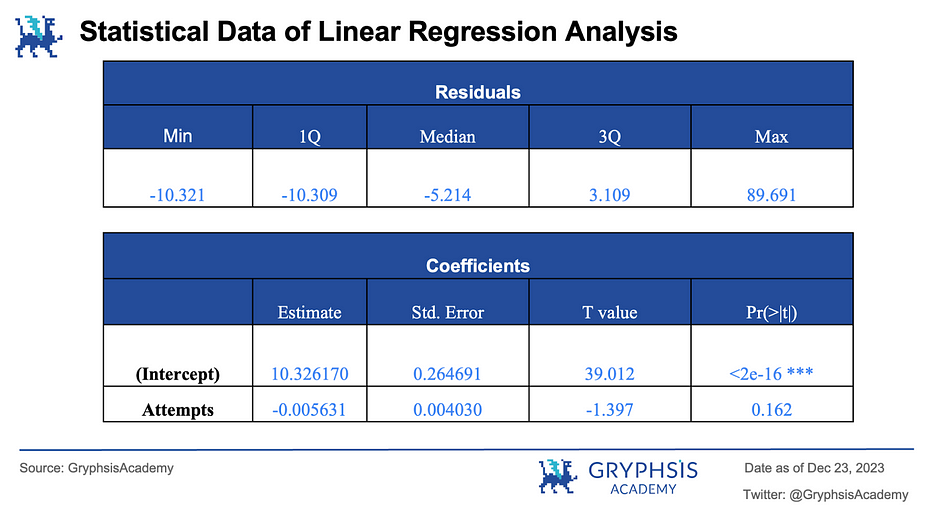
Linear regression results show the coefficient for attempt count is -0.0056, and the p-value of 0.162 means we cannot reject the null hypothesis. This confirms no significant linear relationship exists between attempt count and win rate. Therefore, increasing costs or capital to suppress others does not work under Analysoor’s model. Participants need not worry about capital size affecting fairness. This validates our earlier claim: Fair Launch gives retail and whales equal footing, and no indicators of unfair manipulation appeared during the $ZERO mint.
3.4 How can machine learning and AI algorithms help address potential risks?
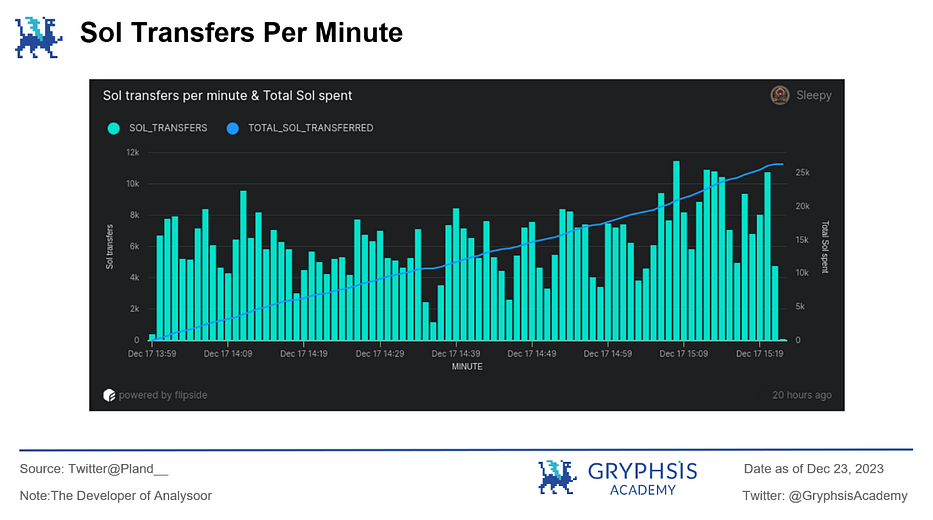
Thanks to Solana’s high throughput and fast block times, using block hashes as random number generators and selecting one winner per block delivers exciting fairness. However, risks remain. During the Index ONE NFT mint, Solana saw ~7,000 transactions per minute (~120 TPS), solely from this single event.
With rising demand for Fair Launch and increased on-chain minting activity, high load could overwhelm individual blocks, disrupting minting. More critically, this would break the fairness of the block-hash-based lottery, limiting Analysoor’s scalability.
Thus, exploring alternative solutions becomes essential. Machine learning and AI algorithms offer promising directions.
Pland proposes classification algorithms in AI as a viable solution. Specifically, AI would be trained on Solana’s full historical data to identify legitimate participants based on secondary market activity. Multiple data oracles would feed into the system, helping AI assign weights to addresses based on factors like transaction frequency, volume, market influence, and asset size.
In simple terms, AI would filter suspicious bot addresses (similar to spam filtering), with threshold levels selectable by each token deployer. The draw method would shift from “one winner per block” to “drawing all winners at once from a larger pool.”
Unlike the current model, liquidity bootstrapping wouldn’t be mandatory. After results are announced, only winners would pay the fee; non-winners would get refunds. The exact implementation can be adjusted based on market needs.
This approach would push Analysoor toward true decentralization, solve potential Solana block congestion, and lay the foundation for broad adoption. As a launchpad provider, diverse and flexible deployment options would let issuers customize TGEs on top of Fair Launch, greatly enhancing Analysoor’s appeal.
However, several key concerns remain. The biggest challenge is ensuring fairness while balancing multiple factors in weight calculation. If thresholds are too low, bots could use many addresses to boost odds; if too high, it risks recreating whitelist effects, violating fairness. Another open question: will algorithm-assigned weights affect win probability? This could spark debate over fairness. Additionally, oracle attacks by hackers must be considered.
If these challenges are properly addressed, we have every reason to believe Analysoor is writing a new chapter in on-chain token issuance and could see massive value appreciation. We eagerly await concrete implementation plans from Analysoor in this area.
4. Tokenomics
4.1 $ZERO
$ZERO is the first token launched by Analysoor using the Fair Launch model and its sole SPL token (Solana smart contract token). Total supply is 21 million, with 10.5 million (50%) distributed to winning minter addresses and another 10.5 million (50%) used to create AMM liquidity. There is no team allocation, private sale, or pre-sale. 98% of the LP tokens in the AMM are locked until April 20, 2026, and generated yields are automatically reinvested to expand liquidity. The minting authority for $ZERO has been renounced, and no future minting will occur.
During the $ZERO mint, 8,847.3 SOL in fees were collected and deposited into Metaora’s AMM.
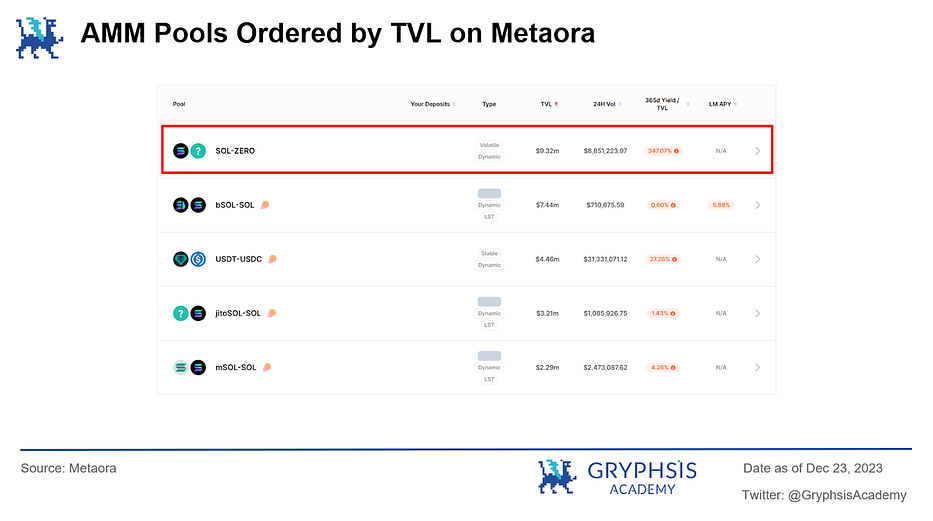
According to Metaora data, the SOL-ZERO trading pair AMM pool has reached a TVL of $9.32M, making it the largest AMM pool on Metaora.
In terms of market cap, $ZERO currently stands at $38.01M (price ~$1.81). Given that Analysoor pioneered Fair Launch on Solana, combined with its ambitious vision and rising market demand for fairness, its valuation likely remains undervalued.
4.2 Holder Distribution
According to Solscan data, there are 10 addresses holding more than 1% of $ZERO, totaling 32.4% of supply, while the remaining 67.6% is distributed across other addresses. Developer Pland, the fourth-largest holder, owns 1.69%.
4.3 Value Capture
There is currently no definitive utility defined for $ZERO. In Analysoor’s third deployment—the community meme coin $WHEN—each mint attempt required 1 $ZERO and 0.05 $SOL.
However, this is not a long-term utility for $ZERO. All collected $ZERO fees are held in a wallet to accumulate sufficient liquidity for future listings on major centralized exchanges. While this creates expectation for exchange listing, $ZERO’s long-term use cases remain undefined.
4.4 Index ONE NFT
Index ONE is the first NFT launched on Analysoor, with a total of 10,002 units. Two rare NFTs were excluded from deployment. Of the remaining 10,000, 9,708 were successfully minted. To ensure fairness, the unclaimed 292 were burned.
During the mint, ~25,000 addresses participated, making 536,136 attempts and generating ~26,000 $SOL in fees, with an average win rate of ~2%.
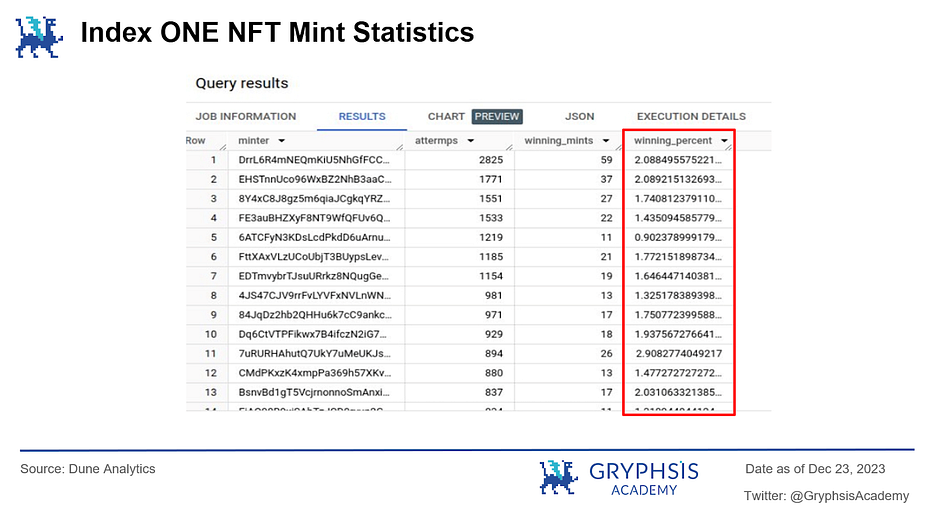
Statistics show that even the most active minters did not achieve win rates significantly above the 2% average, confirming capital size does not yield competitive advantage under this Fair Launch model. Notably, not all 10,000 NFTs were minted because, near the end, blocks saw up to 110–130 mint requests per block, suggesting possible bot activity. The mint was ended early to preserve fairness.
Of the total fees, 5,000 $SOL were allocated to floor-price protection across four NFT marketplaces, ensuring ONE never trades below 2.5 SOL. If someone sells at this price, the NFT is burned and removed from circulation. Another 21,000 $SOL were staked at 7.3% APY, with $100,000 worth allocated to compensate the ONE NFT artist. The use of remaining staking rewards is undecided—possibly to reinforce floor protection.
ONE is already usable for NFT lending on Banx and will expand to more platforms. The final design of ONE will be decided by community vote, aiming to create an NFT on par with or superior to Bitmap and Solmap. For comparison, Bitmap has a market cap of ~$254M, Solmap ~$15M, while ONE is currently valued at ~$6.6M.
4.5 A Misconception
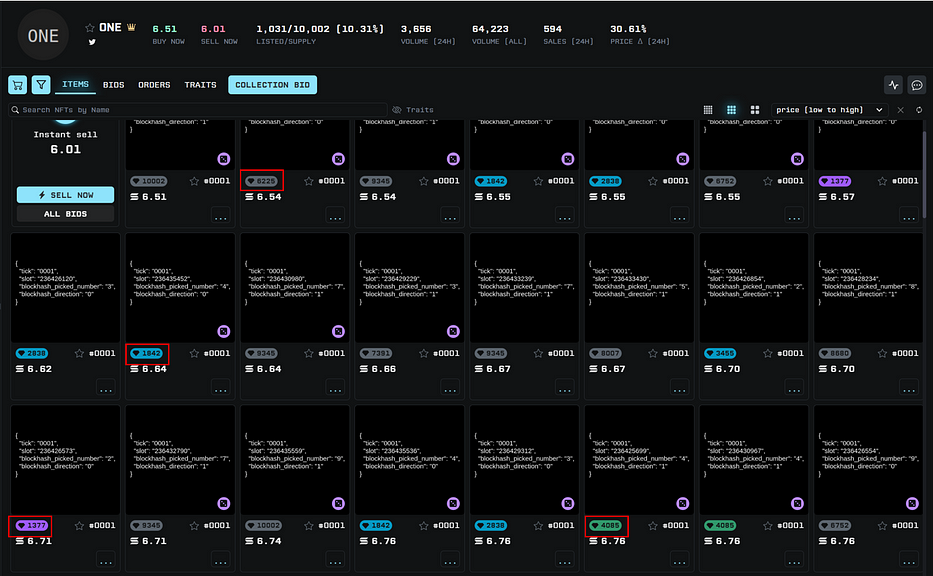
Source: https://www.tensor.trade/trade/one
When trading Index ONE on NFT marketplaces, you may see rarity rankings, with higher-rarity ONES priced significantly above lower ones.
However, developer Pland has stated in the community that this rarity is a bug, not intentional. Only two of the 10,002 ONES are truly rare.
We can't rule out future reconsideration of this trait, but for now, investors should be aware of this when making purchasing decisions.
4.6 Value Capture
Like $ZERO, ONE NFT currently lacks definitive utility. In the $WHEN meme coin mint, ONE holders received a shared airdrop of 3% of the total supply.
Again, this is not a long-term utility. Analysoor won’t mandate future projects using its launchpad to airdrop to ONE holders, as this could deter potential issuers and hinder long-term growth.
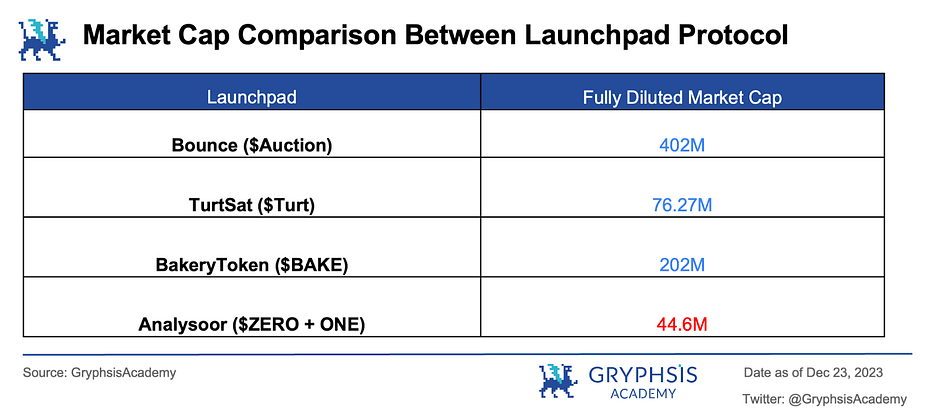
In overall market cap, we compare Analysoor with three other major launchpad services, showing Analysoor still has significant upside potential.
Overall, while long-term utilities for $ZERO and ONE remain undefined, the developer has expressed intent to explore ways for both assets to jointly capture value without compromising protocol growth. What we do know is that $ZERO and Index ONE will remain the only two assets tied to Analysoor’s ecosystem value—the pioneering “totems” of Fair Launch on Solana—providing early adopters motivation to hold with expectation of future appreciation. Core value will stem from growing market demand for Fair Launch mechanisms.
5. Future Development Plans
Developer Pland has stated that before allowing other projects to use Analysoor for token deployment, he will first focus on establishing a stronger legal structure, including creating on-chain verification channels for mint outcomes. He will also advance community building for the $WHEN meme coin and artistic development of the Index ONE NFT, while improving the Analysoor website for better new-user experience. Most importantly, the team will continue fighting bot manipulation—potentially using AI—to maintain a stable, long-term Fair Launch mechanism.
Looking ahead, we may see Analysoor collaborate with more Solana ecosystem projects, extending its Fair Mode beyond meme coins and NFTs into broader use cases.
Outlook: How will Fair Launch change the market?
As demand for fairness and transparency grows, Fair Launch will become increasingly preferred. Especially in crypto, where decentralization and equal participation are highly valued, Fair Launch aligns perfectly. With maturing regulations, Fair Launch may also be seen as a more compliant way to launch. Key features and advantages include:
-
Fairness and Equal Opportunity: Fair Launch ensures equal opportunity for all participants, regardless of background or financial resources. This increases inclusivity, trust, and broader adoption.
-
No Pre-mine or Pre-sale: All tokens are created and distributed transparently at launch. No group gains unfair early advantage. Often, liquidity is directly added to DEXs, enabling immediate trading (as Analysoor did with $ZERO).
-
Prevents Price Manipulation: Fair Launch teams implement anti-bot measures to maintain market fairness and prevent manipulation.
-
Community Participation: Emphasis on community involvement—voting, open discussions, forums—ensures broad input in project development. This fosters long-term engagement, loyalty, and a more resilient, decentralized network.
-
Risk Reduction: By leveling the playing field and involving broader communities, Fair Launch reduces overall risk for new crypto projects. This helps prevent scams and fraud—major concerns in the space.
Overall, Fair Launch is a powerful concept revolutionizing crypto, blockchain, and finance. By promoting equality, transparency, and community involvement, it redefines token distribution, prevents wealth concentration, and drives growth of decentralized networks. As the industry evolves, embracing Fair Launch principles will become essential for projects and investors alike.
With growing emphasis on fairness and transparency, Fair Launch is poised to gain popularity. As the pioneer of Fair Launch on Solana, Analysoor stands to benefit significantly as the ecosystem expands and demand grows.
If you're an enthusiast of inscriptions and NFTs who desires fair market access and is tired of endless GAS fee "wars" in the chaotic inscription frenzy, Analysoor’s Fair Launch mechanism offers a golden opportunity worth exploring.
6. Conclusion and Risk Warnings
In summary, we can outline Analysoor’s main advantages and risks as follows.
Advantages:
-
Analysoor has a strong vision and narrative, introducing new dimensions and possibilities for NFT minting and token distribution in the Solana ecosystem. This forward-looking initiative strongly meets investor and market demands.
-
Given multiple projects have already adopted the mechanism, we believe Analysoor can leverage its first-mover advantage to pioneer and integrate various micro-innovative Fair Launch formats. This will offer more diverse TGE options for deployers and participants, ultimately transforming Analysoor into a multifunctional launchpad on Solana.
-
Analysoor’s approach reflects a commitment to innovation and adapting to evolving market trends and user needs, helping build a stronger community and more resilient ecosystem.
-
The protocol is still in early stages, and both $ZERO and ONE remain undervalued, offering investors favorable risk-reward ratios. The idea of combining $ZERO and ONE for joint utility opens greater future potential for holders.
Risks:
-
Fair Launch does not guarantee project success or viability—it only offers a fairer starting point. Ensuring true fairness and transparency remains challenging, and the process may still be vulnerable to manipulation by those with greater resources or technical expertise, including smart contract bugs, hacks, or other security issues.
-
Analysoor’s current level of decentralization is limited, with the developer retaining final decision-making authority.
-
As Analysoor moves toward open-source, its innovative Fair Launch mechanism could be copied. Given the small team size and limited funding, imitation by larger teams with more capital and stronger development resources could threaten Analysoor’s influence.
Overall, we remain strongly optimistic about Analysoor’s Fair Launch model and future prospects, anticipating it could become the leading Fair Launch and launchpad protocol on Solana, ultimately leading a transformative wave across the entire crypto industry.
Join TechFlow official community to stay tuned
Telegram:https://t.me/TechFlowDaily
X (Twitter):https://x.com/TechFlowPost
X (Twitter) EN:https://x.com/BlockFlow_News
 @gryphsisacademy







