









Paxos partners with Solana ecosystem, is USDP springing back?
TechFlow Selected TechFlow Selected
Paxos partners with Solana ecosystem, is USDP springing back?
Perhaps the beginning of the Nth stablecoin war.
 Navigating Web3 tides with focused insights
Author: Loopy, Odaily Planet Daily
Recently, a regulatory development involving Paxos caught our attention. Paxos has received approval from the New York Department of Financial Services (NYDFS) to expand its stablecoin issuance operations onto the Solana blockchain. Notably, even BUSD, which previously had significant scale, was only permitted by regulators to operate on the Ethereum network.
This move marks the first time Paxos has extended its business beyond Ethereum into the broader crypto ecosystem.
Paxos once gained prominence through its BUSD offering. In February 2023, BUSD faced regulatory intervention from NYDFS. After being halted from issuing BUSD, Paxos gradually weakened within the competitive stablecoin landscape. Now, with its expansion onto Solana approved, could this become a new growth engine for Paxos—and possibly disrupt the relatively stable hierarchy of the stablecoin market?
Shrinking Market Share, Fading Challenger Status
Viewing Paxos’s journey across market cycles reveals a dramatic evolution.
Historical data shows that during the 2022 bear market, the market caps of USDT and USDC—the two dominant players—gradually declined. Meanwhile, Paxos's BUSD steadily rose, reaching an all-time high of over $23 billion.
However, after regulatory sanctions, Paxos lost the ability to issue BUSD. Its replacement, USDP, has since failed to make a major impact in the stablecoin market.
According to DeFiLlama, the stablecoin market remains dominated by two key players. Although BUSD once ranked as the third-largest stablecoin, Paxos’s current flagship product, USDP, holds only a minor market share.
DeFiLlama data indicates the total stablecoin market cap is approximately $130.7 billion, with USDT and USDC collectively capturing 88% of the market.
While USDP ranks as the ninth-largest stablecoin, its market presence pales in comparison to the long-standing duopoly.
Currently, USDP’s total market cap stands at just $370 million—only about 1.6% of BUSD’s peak value.
This figure appears disappointing for a former top-three contender. The recent announcement of expanding operations into the Solana ecosystem may inject new vitality into Paxos.
Solana Stablecoin Use Cases on the Rise—Can Paxos Ride the Wave?
In recent months, the continuous surge in SOL’s price has brought the Solana ecosystem back into the spotlight. Data from DeFiLlama shows that Solana’s TVL has increased nearly fivefold year-to-date.
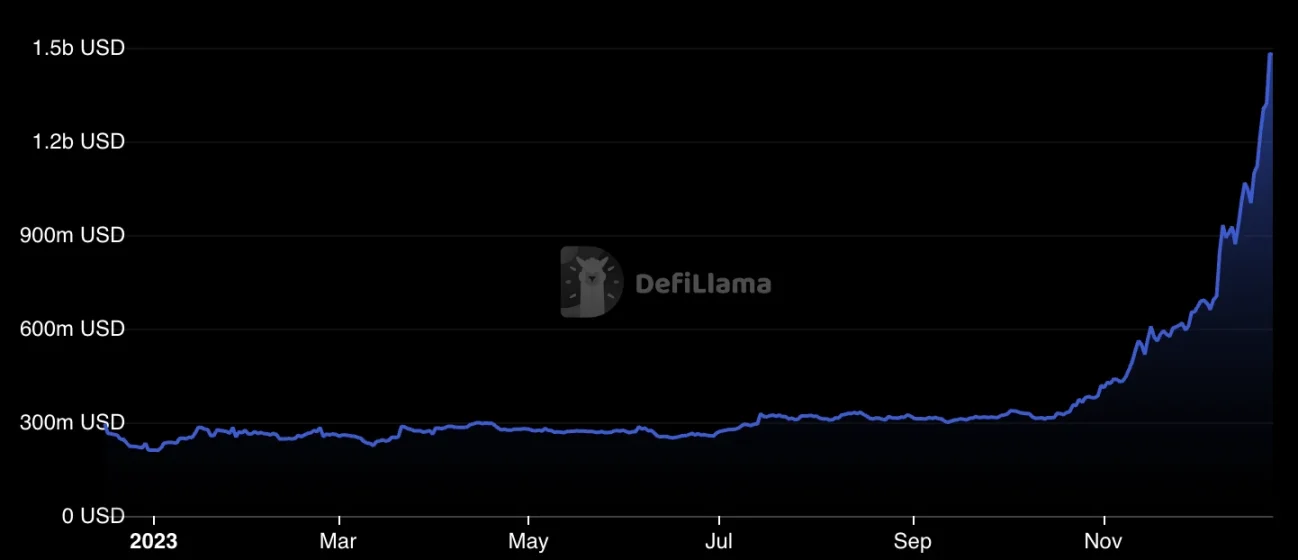
As Solana rapidly advances, while its ultimate trajectory remains uncertain, both the community and markets hold high expectations.
Going forward, regulatory compliance appears to be one of Solana’s potential narratives.
Currently, SOL ranks as the fourth-largest cryptocurrency by market cap. Excluding USDT, SOL is the third-largest crypto asset after BTC and ETH. If Solana evolves into a next-generation crypto giant, stablecoins will remain an essential component of its ecosystem and use case infrastructure.
The stablecoin market still faces considerable regulatory uncertainty. While USDT and USDC have maintained long-term stability, USDP stands out due to its strong compliance foundation.
More notably, although BUSD once captured a solid market share, the version widely known and deployed on BNB Chain differs from the regulated BUSD issued by Paxos on Ethereum. Paxos only directly issued BUSD on Ethereum; versions on other chains were bridged by third parties. Odaily Planet Daily previously published an in-depth analysis of Paxos and BUSD.
As investors, we cannot definitively claim which stablecoin brand is safer or more reliable. But based purely on "paper credentials," USDP is undoubtedly among the most compliant leading stablecoin brands.
Paxos’s regulatory approval to extend its operations beyond Ethereum represents not only confidence in USDP’s potential but also signals regulators’ positive stance toward Solana. A reasonable assumption is that if Solana continues emphasizing compliance, a “compliant stablecoin” may become an indispensable piece of its ecosystem puzzle.
How Active Are Stablecoin Use Cases on Solana?
Paxos’s latest expansion is seen as a milestone move. Looking ahead, this step could spark the next stablecoin battle—or even reshape the entire stablecoin market.
Currently, Solana’s stablecoin market is highly active.
According to Artemis, an institutional crypto data platform, daily stablecoin transfer volume on Solana has surged 600% since early December, reaching $16.6 billion—making it one of the primary blockchain networks for stablecoin usage.

Stablecoin Transfer Volume on Solana Network
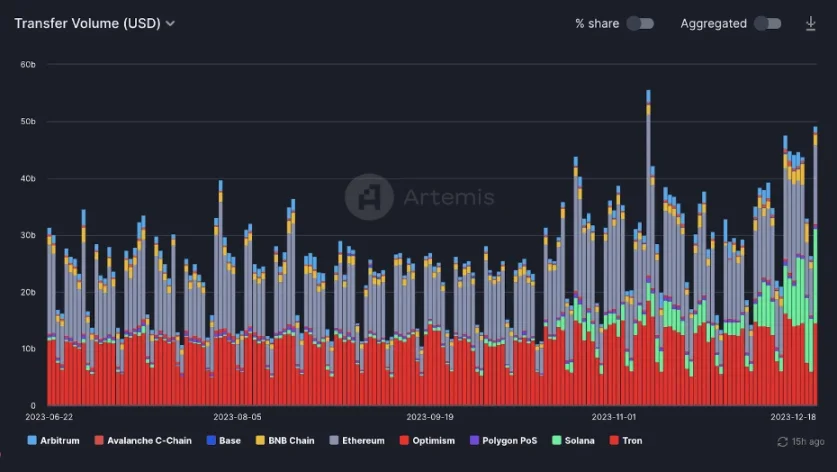
Comparison of Stablecoin Transfers Across Networks
In terms of activity, Solana is unquestionably one of the main hubs for stablecoin usage. With USDP progressing through compliance channels, will Solana embrace it as a tightly integrated native stablecoin?
Paxos has long been known for its compliance focus and is the issuer of PayPal’s stablecoin PYUSD. Raj Gokal, co-founder of Solana, publicly commented on Paxos’s expansion: “Paxos’s decision to bring stablecoin issuance to the Solana blockchain demonstrates how Solana’s high-performance network and low transaction fees can support regulated financial products.”
Looking back, each generation of crypto leaders has at some point pushed for their own tightly integrated, “native” stablecoin. Now, Solana has risen again, accompanied by widespread demand for stablecoins. While it remains uncertain whether Solana can fully restore its previous “giant”-scale ecosystem, the mere possibility of a “compliance-first” narrative is enough to send ripples through the stablecoin market landscape.
Join TechFlow official community to stay tuned
Telegram:https://t.me/TechFlowDaily
X (Twitter):https://x.com/TechFlowPost
X (Twitter) EN:https://x.com/BlockFlow_News
 Odaily







