From Moonbeam to Bittensor: A Look at Representative Projects in the Polkadot Ecosystem
TechFlow Selected TechFlow Selected
From Moonbeam to Bittensor: A Look at Representative Projects in the Polkadot Ecosystem
The upcoming Polkadot 2.0 version heralds significant changes, lowering the barrier for developers and further stimulating ecosystem vitality.
 Navigating Web3 tides with focused insights
The long-dormant Polkadot network began showing signs of revival on December 20, marked initially by a surge in transaction volume. On that day, the number of transactions on the Polkadot relay chain surpassed one million—a remarkable figure. This spike was driven by an emerging trend known as "inscriptions."
Over the following two days, transaction volumes on the Polkadot relay chain continued to hit record highs. On December 21, the volume reached 5,970,000 transactions, and on December 22, it climbed further to 6,930,000. These numbers far exceeded any previous records since 2021, when the prior peak of 941,000 transactions was recorded on May 5, 2021.
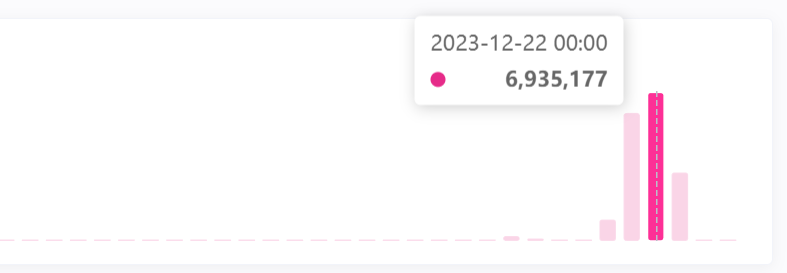
Notably, on December 22 alone, Polkadot processed a staggering 6.9 million transactions, with an average of 416 transactions per block—equivalent to about 70 transactions per second. This surge generated 120,000 DOT in fees, of which 96,000 DOT flowed into the treasury, representing a value of approximately $768,000. Surprisingly, individual transaction fees ranged only between 0.01 and 0.017 DOT, or roughly $0.08 to $0.15 per transaction.
This surge in transaction volume triggered by inscriptions is not just impressive numerically—it also highlights the exceptional performance and vast potential of the Polkadot network. As a result, many investors now believe that the value of the Polkadot ecosystem has been severely underestimated.
Looking back at 2023: A year of positive progress for the Polkadot ecosystem
For Polkadot, 2023 was a pivotal year marked by a series of constructive achievements, including:
1. Launch of DotLake: In 2023, DotLake was established—an efficient, scalable data platform hosted on Google Cloud. Designed to store and process massive datasets from over 70 Polkadot and Kusama chains, DotLake significantly enhances data transparency and accessibility across the Polkadot ecosystem by streamlining the handling of blocks, events, and external factors.
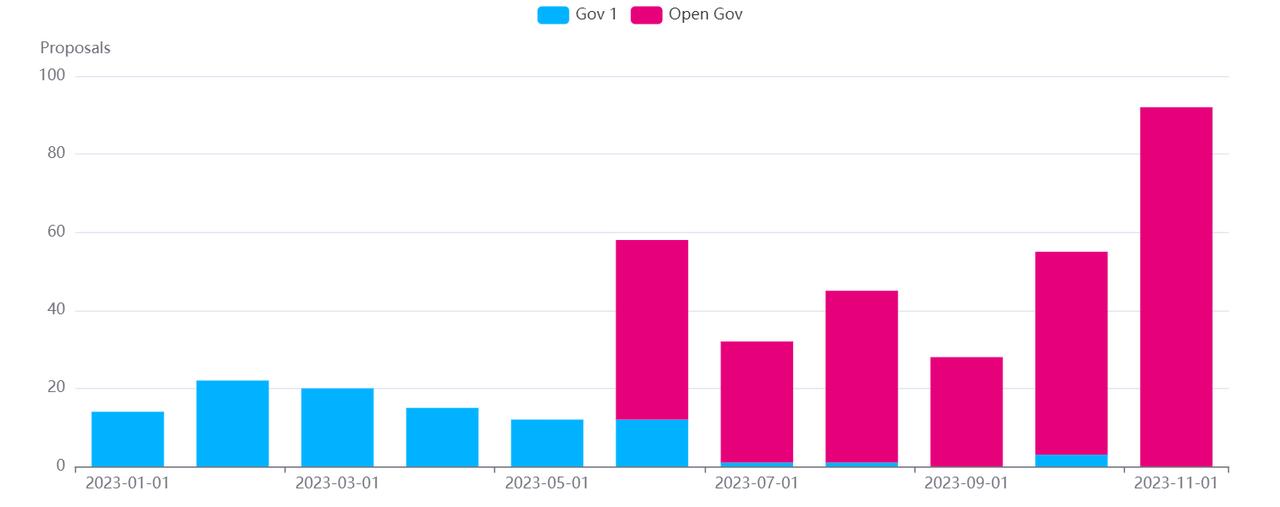
2. Introduction of OpenGov: Launched in June 2023, OpenGov transformed Polkadot’s governance model by emphasizing direct community control and enabling more efficient decision-making. Since its rollout, the number of proposals has noticeably increased, reinforcing the role of the community in shaping the network's future.
3. Release of Polkadot 1.0: In July 2023, the launch of Polkadot 1.0 realized the original vision of heterogeneous sharding and cross-chain communication, marking a significant step toward decentralization. Notably, the introduction of native USDC on Polkadot in September strengthened the ecosystem’s stablecoin functionality, supporting broader financial applications.
4. High Nakamoto Coefficient: By November 2023, Polkadot achieved a Nakamoto coefficient of 93, indicating a very high degree of decentralization. This metric reflects the network's healthy and stable development.
5. Treasury inflows: In 2023, the treasury received 1.825 million DOT.
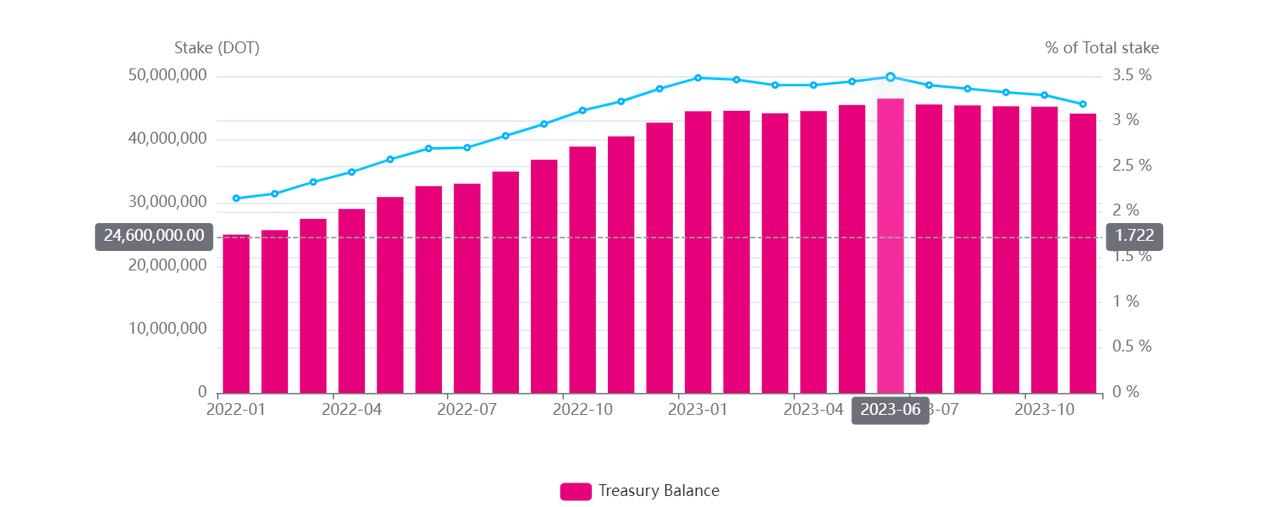
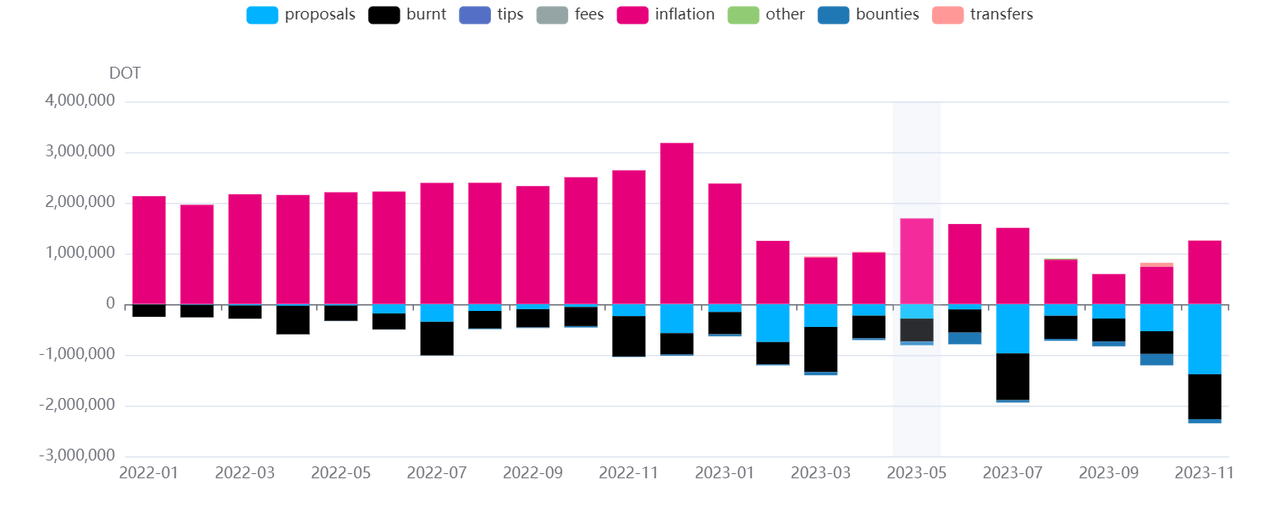
6. Treasury inflows primarily came through bounties and proposals. Approximately 5.356 million DOT were allocated via proposals, while 949,000 DOT were distributed through bounties. Most DOT entering the treasury originated from network inflation, with additional sources including transaction fees and miscellaneous transfers from other wallets. Overall, inflows clearly exceeded outflows in 2023.
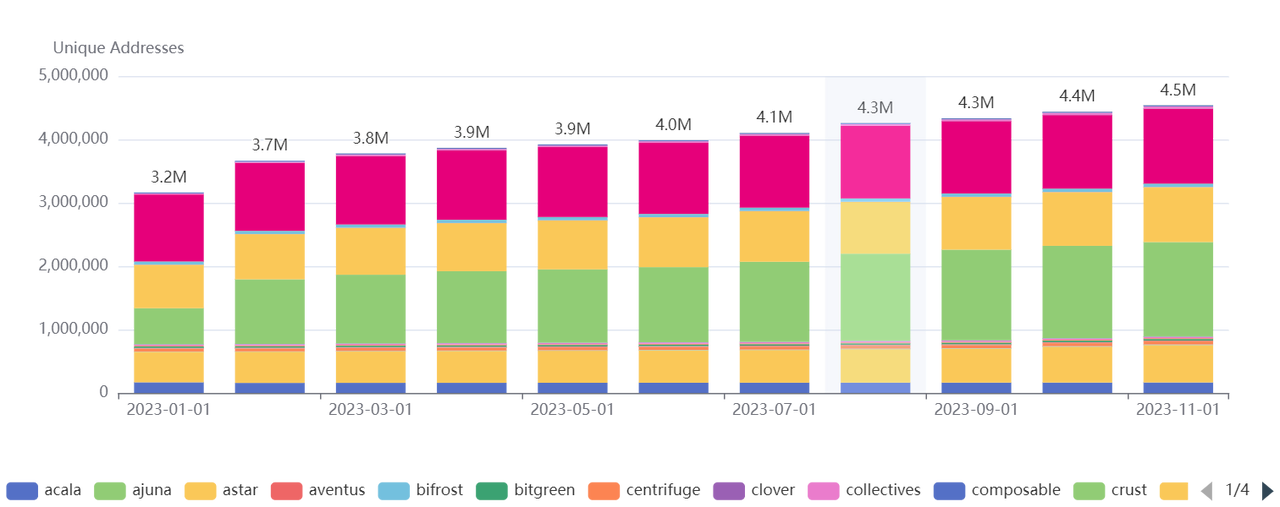
7. Growth in unique addresses: The number of unique addresses grew by 44% in 2023, rising from 3.162 million in January to around 4.54 million in November—evidence of increasing user and holder engagement within the Polkadot ecosystem.
8. Developer contributions: More than 800 distinct developers contribute weekly to Polkadot’s codebase, demonstrating strong activity and diversity within the developer community.
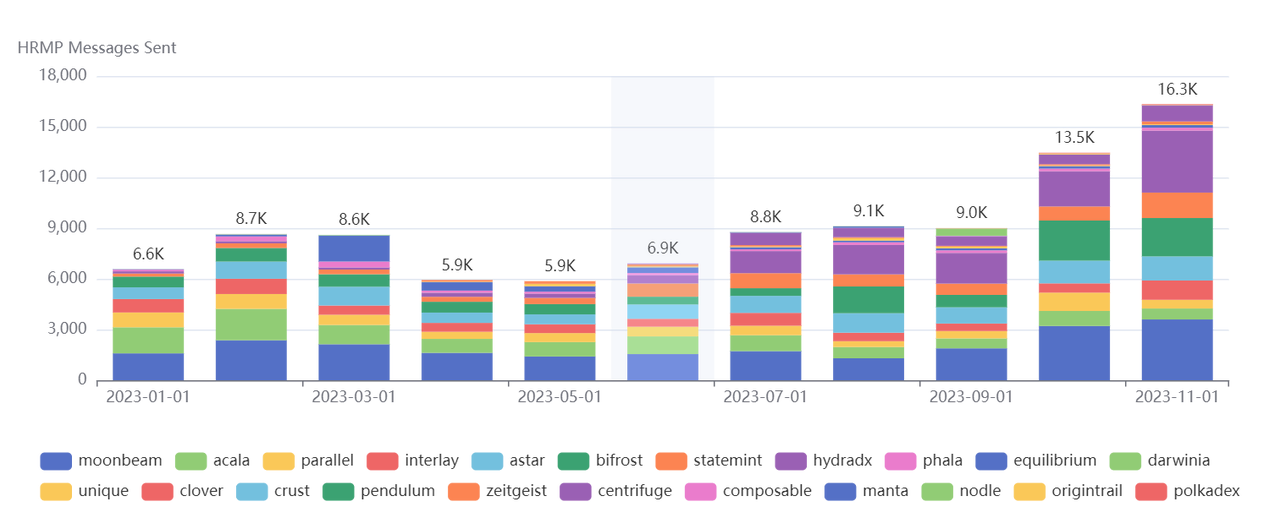
9. XCM v3 integration: The integration of XCM v3 in January introduced advanced programmability, improved bridging capabilities, and support for NFTs. Data shows a 60% month-on-month increase in XCM parachain activity, reflecting ongoing improvements in cross-chain communication support.
How will Polkadot 2.0, launching in early 2024, reshape the project ecosystem? Speculation mounts
Developing on Polkadot has traditionally involved relatively high costs. However, the upcoming release of Polkadot 2.0, expected in Q2 2024, could bring transformative change. Polkadot’s architecture consists of the relay chain, parachains, parathreads, and bridge chains. The relay chain serves as Polkadot’s main chain, responsible for security and governance, but does not natively support smart contracts. Therefore, current application development options are limited to either becoming a parachain or building applications on existing parachains.
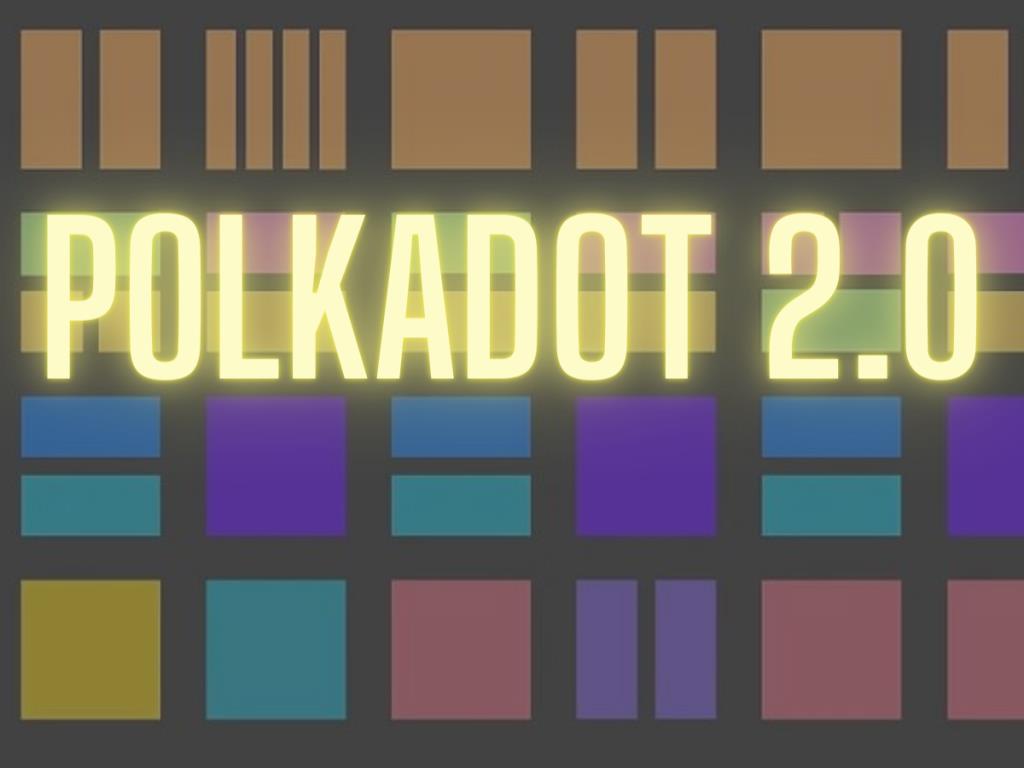
Becoming a parachain requires participating in slot auctions, which can be costly due to the expensive nature of securing slots through bonded auctions. For most developers, a more feasible path is building apps on existing parachains, which offers lower entry barriers.
According to announcements on the Polkadot forum, Agile Coretime (Polkadot 2.0) is scheduled to launch on the Rococo testnet by year-end, followed by deployment on the Kusama canary network in Q1 2024, and finally on the Polkadot mainnet in Q2. This means projects will soon gain direct access to relay chain services without needing to lease parachain slots long-term—dramatically lowering development thresholds and stimulating ecosystem growth.
Additionally, in November 2023, the Polkadot ecosystem launched the “Decentralized Futures” grant program, aimed at funding developers. With total funding of $20 million and 5 million DOT available, both for-profit and non-profit initiatives focused on Polkadot can benefit. This financial support is expected to accelerate innovation and expansion within the ecosystem.
Overall, the imminent arrival of Polkadot 2.0, combined with new funding initiatives, opens up greater opportunities and potential for the Polkadot ecosystem, offering developers and projects expanded room for growth and accelerating the network’s momentum.
Spotlight on key projects in the Polkadot ecosystem: From Moonbeam to Astar Network
Let’s review some representative projects in the Polkadot ecosystem.
Moonbeam: Creating a native Ethereum execution environment to reduce migration costs for developers
As a Polkadot parachain, Moonbeam provides an Ethereum-compatible smart contract platform—a highly sought-after feature. Built on the Substrate framework, Moonbeam creates a native Ethereum execution environment with full Web3 RPC and EVM implementation, ensuring seamless compatibility with most Ethereum-based DApps. This greatly reduces time and cost for developers migrating their applications.
Compared to other contract platforms in the Polkadot ecosystem such as Acala, Plasm, and Patract, Moonbeam stands out in two key areas:
High compatibility and stability: While many EVM-compatible public chains exist, they often face security vulnerabilities and reliability issues. Moonbeam uses Frontier as its core module, placing strong emphasis on true Ethereum compatibility—not just marketing claims. Developers can build confidently on Moonbeam, assured of robust interoperability and system stability.
Attracting developers and users: Moonbeam actively supports developers through grant programs and accelerator initiatives, providing both funding and technical assistance. It also focuses on delivering intuitive, user-friendly experiences, easing the transition for users moving onto the platform.
Within the Polkadot ecosystem, Moonbeam co-hosted the 2023 Winter Polkadot Hackathon with Parity and OneBlock, with submissions due by December 22. Moonbeam sponsored two bounty tracks—one focused on developing LST (vToken)-related applications using Moonbeam’s EVM environment, and another centered on Web3 gaming. The team encourages participation regardless of project scale, welcoming diverse game types from RPGs to platformers, aiming to enrich the Polkadot ecosystem with innovative applications.
Moonbeam also offers various precompiles accessible via simple Solidity interfaces, empowering developers with advanced features like gasless transactions, batch operations, and randomness generation. Leveraging these tools, developers can build compelling applications and compete for rewards.
Several games are already live on Moonbeam, including Moonscape, Evrloot, Playtge, and Blockchain Monster Hunt, enhancing the ecosystem with engaging entertainment and interactive experiences. Moonbeam’s outlook remains bright, injecting fresh vitality into Polkadot’s diversity and innovation.
Acala: Has burned 80% of transaction fees, yet introduced a new fee-burning mechanism
Acala is a financial services platform built on the Polkadot network, serving as a liquidity hub designed to drive financial innovation. It provides critical DeFi functions such as lending and stablecoins for the broader Polkadot ecosystem. Often regarded as Polkadot’s DeFi hub, Acala was the first DeFi protocol developed through a Polkadot parachain auction, establishing foundational financial infrastructure for the entire network.
In September 2023, Acala unveiled its Acala 2.0 initiative, introducing AcalaStaking and Exodus network upgrades, along with enhancements to its tokenomics.
ACA, Acala’s governance token, officially launched the Acala Staking program via referendum on October 16, 2023. The program targets a 10% annual percentage rate (APR) for ACA stakers, incentivizing community participation to strengthen network security and governance.
Furthermore, Acala implemented new rules governing token emissions and burns to foster a more balanced ecosystem. Under the updated model, 100 million ACA are emitted annually—50% allocated to staking rewards and the remaining 50% dedicated to liquidity provision and ecosystem adoption. Additionally, unused emission portions are periodically burned—for example, 1% monthly—and 20% of accumulated network fees are subject to burn-through governance decisions. These measures aim to enhance ACA scarcity and long-term value proposition.
Through continuous evolution, Acala strengthens Polkadot’s financial backbone, offering users and developers a richer suite of financial tools. Playing a vital role in advancing decentralized finance, Acala is poised to keep contributing to the ecosystem’s growth and innovation.
Astar Network: Building a multi-chain smart contract platform supporting multiple Layer 1 blockchains and diverse smart contract engines
Astar Network is a Polkadot parachain and a multi-chain smart contract project formerly known as Plasm, developed using the Substrate framework. Astar aims to become a unified platform where developers can build applications across multiple Layer 1 blockchains and leverage different smart contract runtimes, all without worrying about scalability or interoperability challenges.
Recently, the Polkadot parachain project Astar entered a new phase with the launch of Astar Tokenomics 2.0, featuring a novel staking-and-burn mechanism. While 80% of transaction fees have already been burned, Astar introduced a new DApp Staking burn model.
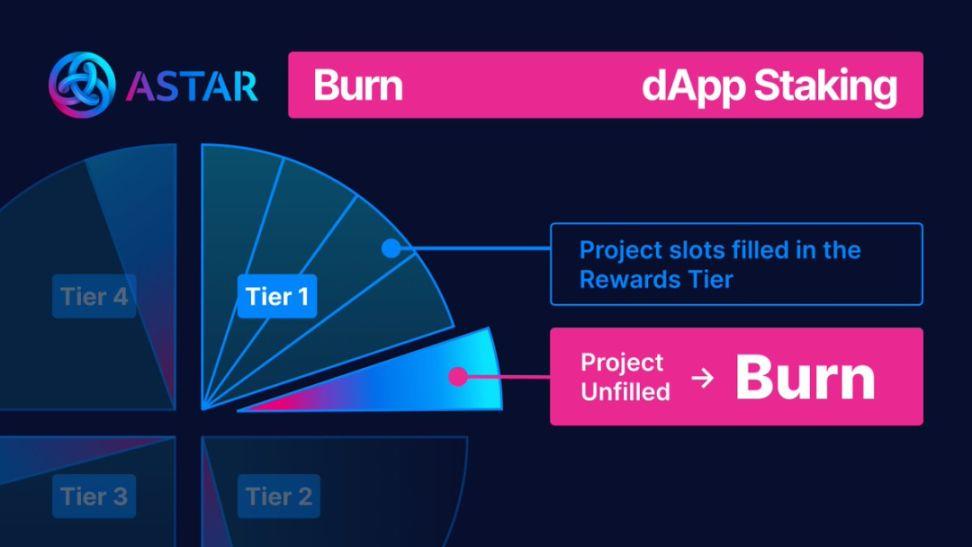
Under this mechanism, projects are ranked based on their contribution to the Astar network. As the ecosystem grows in value, supported projects receive proportionally higher rewards—encouraging top-tier developers to participate actively. However, each tier has a limited number of reward slots; if slots remain unfilled, the corresponding unclaimed rewards are permanently burned. This ensures unused incentives are removed from circulation, maintaining a healthier economic balance.
Sota Watanabe, founder of Astar Network, revealed that two-thirds of the STR Tokenomics 2.0 framework has been completed, with the final third expected by year-end. Once activated, the new model will halve ASTR’s inflation rate and introduce a refined DApp staking mechanism—measures expected to energize Astar’s long-term development and ecosystem prosperity. These changes position Astar to continue evolving as a source of innovative financial solutions within the Polkadot ecosystem.
DePin projects hold a significant place in the Polkadot ecosystem, with several innovations worth watching
Recently, DePin (Decentralized Physical Infrastructure) projects have gained market attention, and those within the Polkadot ecosystem possess unique advantages and promising prospects. DePin projects typically involve creating decentralized hardware networks combining blockchain infrastructure with physical devices. Such networks often require specialized consensus mechanisms to assess participants’ contributions and distribute rewards accordingly.
Among existing chain-building frameworks—including Polkadot’s Substrate, Cosmos SDK, and OP Stack—Substrate stands out as the only one offering comprehensive, fully customizable tooling. Unlike others, it doesn’t mandate specific consensus algorithms, allowing developers to implement custom models and rapidly deploy blockchains. This flexibility aligns perfectly with DePin requirements, making Polkadot particularly conducive to nurturing such projects. Compared to other multi-chain ecosystems, Polkadot holds greater inherent potential in this domain.
Here are some notable DePin projects gaining traction in the Polkadot ecosystem:
Bittensor: Advancing collaborative training of machine learning models in distributed environments
Bittensor is an open-source protocol supporting a decentralized, blockchain-based machine learning network. Its goal is to enable collaborative training of AI models across distributed nodes, rewarding participants based on the informational value they contribute to the network. Bittensor seeks to accelerate AI advancement through an incentive-driven, iterative ecosystem that promotes model interoperability, knowledge sharing, and fairer ownership and access models. Ultimately, it envisions a fully decentralized AI marketplace—an open, trustless environment for producers and consumers of valuable AI assets.
Deeper Network: A blockchain-based cybersecurity and privacy infrastructure project
Deeper Network is a blockchain-powered cybersecurity and privacy infrastructure initiative aiming to provide users with freer, safer, and more private internet connectivity. Leveraging blockchain protocols, advanced security technologies, and the Substrate development framework, Deeper Network is laying the groundwork for Web3.0 and the next-generation internet. Its core technologies include AtomOS (a lock-free cybersecurity operating system), Trident Protocol (a decentralized communication protocol), and NPoW (Next-Generation Proof-of-Work). The project has also launched hardware products like Deeper Connect—the world’s first blockchain-based home cybersecurity device—designed to enable decentralized private networks and circumvent internet censorship.
The emergence of these DePin projects brings new opportunities and possibilities to the Polkadot ecosystem, driving innovation in decentralized networks and physical hardware. They are set to fuel further growth within Polkadot and offer users enhanced choice and security. Their success could solidify Polkadot’s leadership in the decentralized infrastructure space.
Will 2024 bring new narratives for cross-chain ecosystems? Watch Polkadot’s technical advancements unfold
The Polkadot ecosystem is entering an exciting phase of development. From surging transaction volumes to the rise of innovative DePin projects, Polkadot’s vitality and creative potential are undeniable. Key milestones throughout the year—including the launch of DotLake, Polkadot 1.0, and native USDC—have laid a solid foundation for sustained growth.
The upcoming Polkadot 2.0 promises major transformation, lowering barriers for developers and unlocking new levels of ecosystem dynamism. Projects like Moonbeam, Acala, and Astar Network exemplify the diversity and ingenuity within the ecosystem, delivering tailored solutions across domains. Meanwhile, the emergence of DePin projects opens new frontiers in cybersecurity and decentralized hardware infrastructure.
In summary, the future of the Polkadot ecosystem brims with opportunity and challenge. We look forward to witnessing more groundbreaking projects emerge, while hoping the ecosystem maintains its neutral and open ethos—fostering global innovation and collaboration. The broad-based momentum within Polkadot is becoming increasingly evident, and we will continue to monitor its evolution closely.
Join TechFlow official community to stay tuned
Telegram:https://t.me/TechFlowDaily
X (Twitter):https://x.com/TechFlowPost
X (Twitter) EN:https://x.com/BlockFlow_News