








Latest Scams and Risk Prevention in NFT Minting within the Crypto Community
TechFlow Selected TechFlow Selected
Latest Scams and Risk Prevention in NFT Minting within the Crypto Community
A detailed explanation of inscription scam schemes.
 Navigating Web3 tides with focused insights
By Lawyer Liu Honglin
Hey there, have you been inscribing lately? How’s your sleep quality these days?
It's said that crypto investors who aren't participating in "inscriptions" are now labeled as classical crypto asset holders. In contrast, inscription hunting has become the new norm for the latest generation of coin speculators. Whether a bull market has truly arrived remains unclear, but one thing is certain—Bitcoin miners are definitely enjoying their springtime. Just the other day, a friend recommended I purchase a so-called “wealth code” on a certain Web3 wallet chain. I checked the Bitcoin network gas fees and found they were nearly as high as the token price itself—clearly, inscribing is something I can’t afford.
Opinions vary within the community about whether this inscription wave is a bubble, though patterns do emerge. Generally speaking, those criticizing inscriptions tend to be early players who never actually participated in minting. Meanwhile, those hailing inscriptions as a paradigm shift in "minting rights" are often early adopters who hoarded numerous inscriptions or hold influential roles in key communities. When these two groups meet, they probably exchange some rather icy glances.
From an impartial observer’s standpoint, both praise and criticism are understandable. The crypto and blockchain space is inherently experimental, navigating uncharted waters with various competing technologies and approaches. Labeling any emerging trend as purely good or bad might be premature. One timeless truth remains: position determines perspective.
As someone focused on risk prevention in this industry, having observed many friends chasing wealth through inscription activities, I’ve noticed several potential risks worth highlighting. So I’ve taken the time to write this brief article as a friendly reminder to all my millionaire (or aspiring millionaire) readers.
While researching, I came across an excellent article written by a netizen (GoPlus Security), which technically outlines common scams encountered during inscription activities and offers preventive advice—very well-written, though admittedly some technical details went over my head. Combining that analysis with my own user experience and observations from friends, I’ve compiled the following summary of potential risks. Hope it helps.
01 Phishing Website Scams
This type of scam is extremely common in the crypto world. Not only exchanges but also wallets can be faked. Scammers are industrious—they quickly clone whatever is trending. For example, since Unisat is popular for inscriptions, fraudsters create fake websites and use SEO optimization and paid ads on platforms like Baidu or Google. Unsuspecting users searching for the official site may click on these malicious links, register accounts, and later discover their assets gone—even though they never revealed their seed phrases. Why? Because when transferring crypto into the app’s internal wallet, the funds go directly into the scammers’ hands.
How to avoid this? My suggestion is to always access links via official project Twitter accounts or verified community channels. Frankly, Telegram groups are no longer safe—in just the past week, two of my crypto friends lost their assets after clicking download links shared in such groups. Of course, even Twitter accounts can be impersonated—many fake accounts with identical names exist within communities, which brings us to the next common scam.
02 Fake Popular Inscriptions
Not only exchanges and wallets can be forged—inscriptions themselves can be counterfeited. When I searched for specific terms in a Web3 wallet, I found multiple inscriptions with identical names. For instance, searching for DOGI—a currently hot inscription—yields four seemingly identical results, making it hard to distinguish the genuine from the fake. This happens because platforms typically display only certain metadata fields upfront, allowing scammers to exploit this behavior for phishing or spoofing.
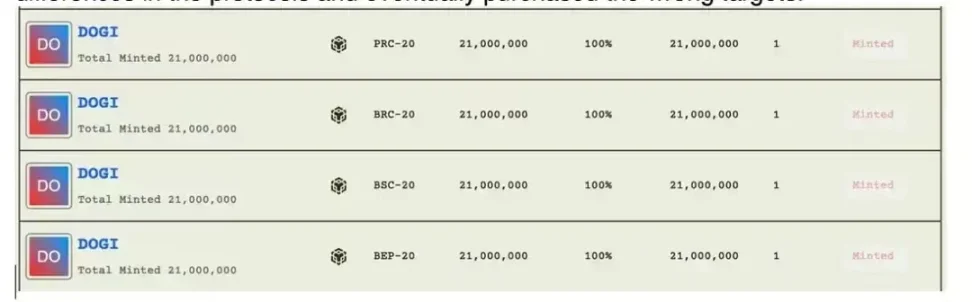
How to protect yourself? Stick to wallets or trading platforms operated by reputable companies. For example, some well-known Web3 wallets (no product endorsement intended!) implement front-end verification mechanisms. Additionally, always double-check the inscription format and protocol before confirming any transaction to prevent accidents.
03 Bait-and-Switch Scams
Trading on secondary markets isn’t exciting enough—many believe real riches come from actively minting inscriptions. Fraudsters take advantage of public enthusiasm for new inscriptions by launching counterfeit ones solely to collect fees. Here’s how it works: the scammer deploys a fraudulent minting contract and lures users into participating. After paying exorbitant gas fees, participants receive nothing but a worthless image inscription. How to prevent this? Before joining any mint event, spend time verifying the legitimacy of the smart contract and pay special attention to whether its fee structure appears unreasonable.

04 Private Key Theft Scams
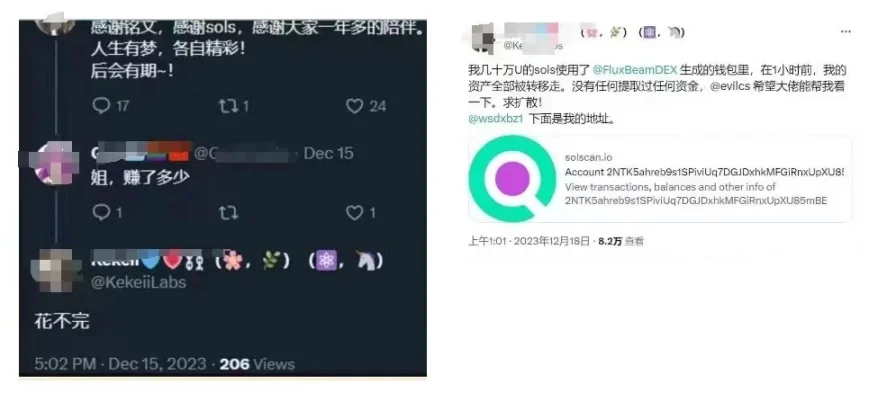
During inscription activities, users often create multiple wallets. To avoid manually writing down seed phrases, many copy-paste them into text files or chat apps like WeChat. Others participate in obscure projects' staking or airdrop campaigns and end up clicking suspicious links. These actions make it easy for hackers to steal private keys and silently drain wallet balances. While writing this piece, I saw a tragic post on social media where a user who earned hundreds of thousands through inscriptions lost everything overnight. Prevention tip: Always verify any mint-related information found online. Never blindly click on links or download attachments shared by random “helpful” users on Telegram or Twitter.
05 Conclusion
There are many fascinating security and legal issues surrounding inscriptions. One reason inscriptions feel so empowering is the belief that they represent a "fair launch"—no central issuer, just users paying gas to mint. But I’ve also observed another scam pattern: creating a fake inscription, having insiders aggressively mint large quantities, then building hype via popular Twitter and Telegram communities. Once sufficient interest is generated, prices are pumped, leaving latecomers holding bags at the peak. On the surface, this doesn’t look like an ICO (since funds go to miners, not developers), yet something still feels off. I’ll continue exploring legal aspects of inscriptions in future posts. If you find this useful, please consider liking and following!
Join TechFlow official community to stay tuned
Telegram:https://t.me/TechFlowDaily
X (Twitter):https://x.com/TechFlowPost
X (Twitter) EN:https://x.com/BlockFlow_News











