"Like pear blossoms blooming on thousands of trees," a comprehensive overview of the Bitcoin ecosystem
TechFlow Selected TechFlow Selected
"Like pear blossoms blooming on thousands of trees," a comprehensive overview of the Bitcoin ecosystem
Perhaps we are on the verge of an ecological boom, similar to the public blockchain race at the beginning of the 2021 bull market, which also sparked a flourishing "hundred flowers blooming" scenario.
 Navigating Web3 tides with focused insights
Author: @YBBCapital Researcher Ac-Core

Introduction
2023 has been a pivotal year for the Bitcoin ecosystem, marking a new peak in its evolution. Amid significant challenges faced by both digital assets and traditional markets, the Bitcoin ecosystem experienced a revival toward year-end after a period of dormancy. While some remain skeptical about the surge in inscriptions, it is undeniable that market enthusiasm has brought back a "builder culture" to Bitcoin. This momentum has driven an innovation wave within Bitcoin, most notably channeling the intense market excitement around inscriptions into narratives that have spread across other public blockchains. This article explores the current development trajectory of the Bitcoin ecosystem, offering an overview without any investment advice.
BTC Market Hot Protocols
The first quarter of 2023 witnessed rapid growth in Bitcoin asset issuance protocols, culminating in a thriving landscape by Q4. Particularly within the Ordinals protocol ecosystem, token standards like BRC20 triggered clear wealth effects, fueling FOMO sentiment in the market. Despite being merely JSON script files added to the Bitcoin blockchain, they gained market validation through price appreciation. Over time, more notable protocols emerged—Ordinals, Atomicals, Taproot Assets, Runes, and PIPE—clearly indicating that the Bitcoin ecosystem is evolving toward greater diversity and innovation. These asset issuance protocols offer broader choices and richer opportunities for market participants.
Ordinals Protocol (BRC-20)
Image source: Hiro
In January 2023, Bitcoin developer Casey Rodarmor released the Ordinals protocol—an asset issuance protocol built on Bitcoin comprising two core components: Ordinal numbering theory and Inscription. Through inscription, Casey embeds content onto UTXOs, assigning unique identifiers to each of Bitcoin’s smallest units—the 210 trillion Satoshis. Inscription refers to the process of associating data with unspent transaction outputs (UTXOs). The asset issuance process under the Ordinals protocol involves writing information into witness data and recording token details in JSON format via the BRC20 standard.
BRC-20 Tokens
BRC-20 is an experimental token standard for Bitcoin created by Domo on March 8, 2023. Its core concept leverages JSON data from Ordinal Inscriptions. With the BRC-20 standard, users can easily perform key functions such as deploying token contracts (Deploy), minting tokens (Mint), and transferring tokens (Transfer). As of December 18, 2023, the total market capitalization of the BRC-20 sector reached $640 million, highlighting the significance of this token standard within the Bitcoin ecosystem and opening new possibilities for digital asset development.

BRC-20 Trading Volume Source: GeniiData
BRC-100
BRC-100 is a Bitcoin DeFi protocol built on top of Ordinals. Beyond its native token functionality, BRC-100 also serves as an application layer, enabling developers to build DeFi and other application-based products using the BRC-100 protocol. According to developer MikaelBTC, BRC-100 introduces protocol inheritance, nested applications, state machine models, and decentralized governance, bringing computational capabilities to the Bitcoin blockchain and making it possible to construct native Bitcoin decentralized applications such as AMM DEXs and lending platforms.
Ordinals NFTs
Software engineer Casey Rodarmor launched the Ordinals NFT protocol on the Bitcoin blockchain, which is now live. Users can now create and own NFTs on Bitcoin’s smallest unit—the Satoshi (Sat)—using a random yet logically consistent ordering system that makes each sat unique. Compared to Ethereum NFTs, Ordinals NFTs differ primarily in three ways:
● All associated data is stored directly on the Bitcoin network, eliminating reliance on external storage systems like IPFS or AWS S3;
● Permissionless: transactions can be completed in a decentralized manner via PSBTs without requiring "approval";
● Minting cost scales proportionally with transaction volume.
BRC-420
According to the official RCSV Gitbook, BRC-420 focuses on modularizing on-chain inscriptions, featuring two key components: a metaverse standard and a royalty standard. These define open, flexible formats for assets in the metaverse and establish specific on-chain protocols for creator economies. Unlike other Ordinals protocols based on single inscriptions, BRC-420 uses recursive combinations of multiple inscriptions.
Atomicals Protocol (ARC-20)
Image source: Atomicals Guidebook
Atomicals, also known as the Atomic Protocol, supports various asset types including fungible tokens (ARC20 standard), NFTs, Realms, and Collection Containers. As a UTXO-based blockchain asset issuance protocol, Atomicals offers two minting methods: decentralized minting and direct minting. Decentralized minting introduces Bitwork Mining, a PoW (Proof-of-Work)-based approach. The protocol treats Bitcoin’s smallest unit—the Satoshi—as the base unit for issuing assets. Currently, ATOM has a minimum divisible unit of 546, meaning at least 546 ATOMs must be sold or transferred together.
Unlike Ordinals, Atomicals does not rely on third-party sorters for asset transaction ordering. It enables the creation (minting), transfer, and upgrading of various digital items—including native NFTs, games, digital identities, domains, and social networks. Additionally, the protocol supports interchangeable tokens named ATOM (distinct from Cosmos’ ATOM despite sharing the same name).
Recently, founder Arthur shared his views on meta-protocols in an interview on December 13. He described meta-protocols as a novel method allowing developers to design their own data structures and rules without being constrained by rigid existing frameworks. Protocols like Atomicals are emerging examples, giving developers opportunities to use smart contracts to create entirely new architectures. This trend allows creators to focus more intently on the Atomicals Virtual Machine (AVM). The AVM enables developers to build smart contract programs on the Bitcoin network, providing unprecedented creative freedom. This means innovators can concentrate on implementing smart contracts within the Bitcoin ecosystem, advancing digital innovation.
Atomicals Asset Types:
● ARC20: A token format standard similar to BRC20 on Ordinals;
● Realm: A new concept introduced by Atomicals aimed at redefining traditional domains, used as prefixes;
● Collection Containers: A data type designed to define NFT Collections, primarily used for storing readable NFTs and related metadata. As of December 20, TOOTHY leads in market cap at 46.12 BTC, with a 7-day trading volume of 25.74 BTC.

Image source: Atomical Market
ARC-20 AVM
On December 13, Atomicals founder Arthur stated in an interview that meta-protocols represent a new way for developers to create custom data structures and rules, free from constraints imposed by existing rigid architectures. The rise of meta-protocols like Atomicals Protocol empowers developers to leverage smart contracts to build entirely new systems. This enables creators to focus on the Atomicals Virtual Machine (AVM), which allows developers to construct smart contract programs on the Bitcoin network.
Runes Protocol (Runes)
Proposed by Casey Rodarmor, the creator of the Ordinals protocol, Runes aims to address efficiency issues inherent in BRC-20. Unlike more complex protocols, Runes features an elegant and minimalist design. By utilizing OP_RETURN in transactions, Runes assigns tokens to specific UTXOs using tuples containing output index, token amount, and token ID.
Runes is a fungible token protocol based on Bitcoin's UTXO model, managing and transferring tokens via simple tuples (ID, OUTPUT, AMOUNT) and OP_RETURN operations. Its main advantages include simplicity, support for partial operations without additional off-chain data or native tokens, and optimized on-chain data usage.
The Runes protocol was conceived by Casey due to dissatisfaction with how BRC-20 generates excessive UTXOs via the Ordinals protocol. Thus, he proposed a new fungible token protocol leveraging Bitcoin’s UTXO model. Currently, Runes remains a conceptual framework without a full client or development tools, although it has sparked debate in certain circles.
PIPE Protocol
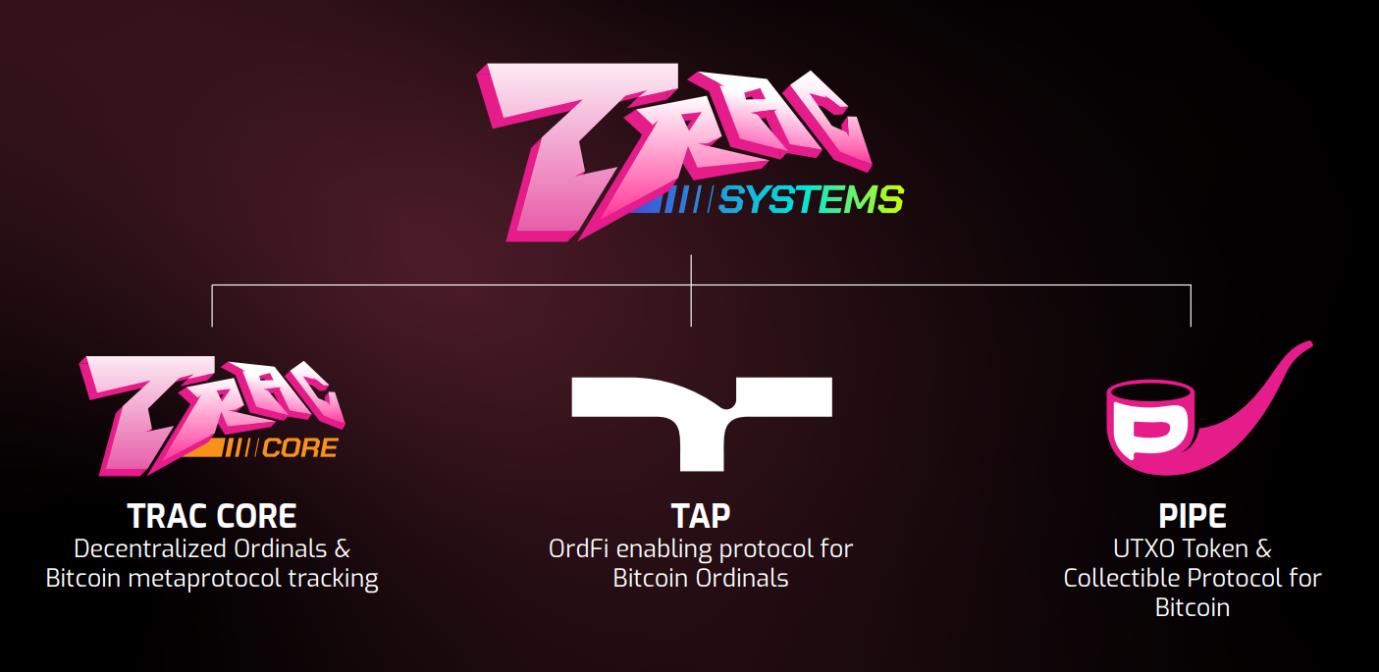
Image source: Trac Official
Developed by Benny, inspired by Casey’s Runes protocol and Domo’s BRC-20 standard on Ordinals, the PIPE protocol integrates features from both. Within the BTC ecosystem, it launched three protocols: Trac Core, Tap, and Pipe (collectively known as TTP or Trac Systems).
Key functionalities of the PIPE protocol include Deploy, Mint, and Transfer—abbreviated as DMT. These allow assets to be easily created, distributed, and transferred within the Bitcoin network. In addition to supporting fungible tokens, PIPE provides complete data structures and standards for non-fungible tokens.
● Trac Core: Oracle and decentralized indexer for Bitcoin inscriptions;
● Tap: An extension—not a fork—of the Ordinals protocol, ensuring seamless compatibility with BRC-20;
● Pipe: A new protocol forked from Ordinals, though liquidity must be re-minted;
● Trac Token: Deployed on the Ordinals-BRC20 protocol, later serving as the governance token for the Tap protocol;
● TAP Token: Deployed on the Ordinals-Tap protocol.
Stamps (SRC-20)
On December 6, Bitcoin core developer Luke Dashjr revealed on social media that inscriptions were exploiting a vulnerability in the Bitcoin Core client to send spam data to the blockchain. This flaw allowed users to bypass size limits when setting extra data during transaction forwarding or mining. Inscriptions circumvented these restrictions by disguising their data as program code. Dashjr announced the bug would be fixed in version v27 next year. However, in later responses regarding Ordinals, he claimed inscriptions do not truly exist and called them a scam.
This statement cooled enthusiasm in the Ordinals ecosystem, causing sharp volatility in BRC-20 token prices—ORDI dropped over 25% in a single day. Critics argue that the Bitcoin network belongs to the community and no single developer should unilaterally decide the fate of the Ordinals protocol based on personal preference. Even if Dashjr updates the Bitcoin software, the entire network cannot upgrade unless miners adopt the new version.
Although the debate over inscriptions remains unresolved, this controversy has prompted reflection on the nature of Ordinals and blockchain fundamentals, while drawing attention to alternative standards like SRC-20 and the Bitcoin Stamps protocol. The Ordinals protocol is a derivative protocol using Bitcoin UTXOs as data storage, storing arbitrary data via Bitcoin’s OP_RETURN function. This increases block sizes, raising centralization risks and increasing network operating costs. In contrast, the Bitcoin Stamps protocol, created by Mike In Space and based on the Counterparty (XCP) protocol, is the first NFT token standard on Bitcoin. Stamps encode image data as Base64 strings stored in Bitcoin UTXOs, emphasizing data reliability and immutability—data cannot be permanently removed from the Bitcoin public ledger.
This controversy has spurred deeper thinking about Ordinals and the essence of blockchains, increasing interest in the SRC-20 standard and the Bitcoin Stamps protocol. SRC-20 resembles BRC-20 but avoids the controversies associated with Ordinals. Bitcoin Stamps writes image data directly into Bitcoin UTXOs, prioritizing data integrity and permanence.
Extending Turing Completeness:
Alan Turing
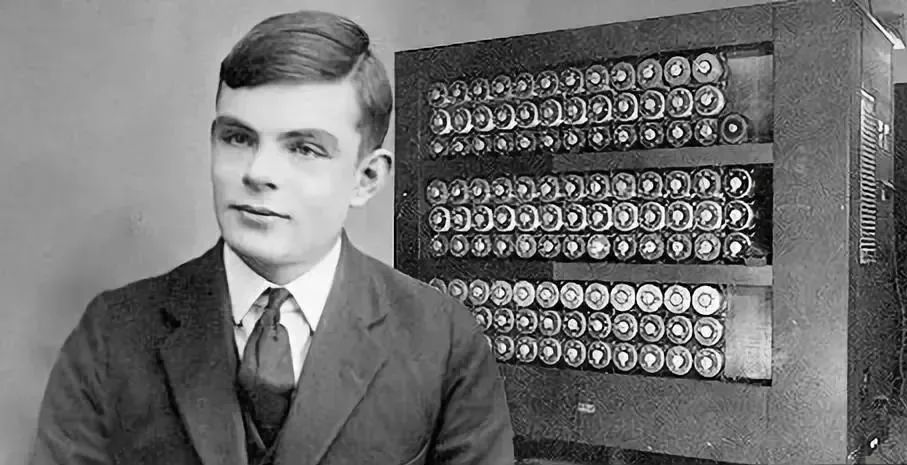
The Turing machine, proposed by Alan Turing in 1936, is an abstract computational model used to define computability. Turing completeness is a concept in computation theory referring to whether a system can simulate the computational process of any Turing machine. Specifically, if a system is Turing-complete, it possesses the ability to execute any computation a Turing machine can. Notably, the Bitcoin blockchain itself is not Turing-complete. Within the blockchain trilemma, Bitcoin sacrifices scalability entirely to achieve decentralization and security. This design choice helps prevent malicious code execution on the network, thereby safeguarding its security and stability.
BitVM
On October 9, Robin Linus, lead of the ZeroSync project, published a whitepaper titled “BitVM: Compute Anything On Bitcoin,” sparking discussions on enhancing Bitcoin’s programmability. BitVM stands for “Bitcoin Virtual Machine.” It proposes a solution for achieving Turing-complete contracts on Bitcoin without altering network consensus, enabling verification of any computable function on Bitcoin and allowing developers to run complex contracts without modifying Bitcoin’s fundamental rules.
BitVM represents a new computational paradigm combining Optimistic Rollup, Fraud Proofs, Taproot Leaves, and Bitcoin Script. It allows developers to simulate program behavior without imposing load or changes on the actual Bitcoin network. Key roles in BitVM include:
● Prover and Verifier: The prover creates proofs based on input data, while the verifier checks the correctness of the computation result without accessing the actual data, ensuring accuracy;
● Off-chain Computation and On-chain Proof: Without changing Bitcoin consensus, BitVM necessarily moves heavy computation and expansion off-chain to enhance flexibility.
RGB
RGB is developed by the LNP/BP Standards Association (Lightning Network Protocol / Bitcoin Protocol), a nonprofit organization overseeing multi-layer development of Bitcoin, covering Bitcoin protocol, Lightning Network, and RGB smart contracts. RGB is a scalable and privacy-preserving smart contract system for Bitcoin and the Lightning Network, aiming to introduce complex smart contracts on UTXOs into the Bitcoin ecosystem. Officially described as a suite of scalable and confidential smart contract protocols for Bitcoin and Lightning, it supports asset issuance, transfer, and broader rights management.
Layer 2 Scaling Solutions:
Image source: Bitcoin Layer 2: Your Complete Guide
Stacks
Stacks is a Bitcoin Layer 2 enabling smart contracts, linked to the Bitcoin chain through its unique Proof of Transfer (PoX) consensus mechanism. This achieves high decentralization and scalability without additional environmental impact. An open-source second-layer blockchain, Stacks brings smart contracts and decentralized applications to Bitcoin. Originally named Blockstack, foundational work began as early as 2013. Its technical architecture includes a core layer and subnets, offering developers and users options: the mainnet is highly decentralized but low-throughput, while subnets trade decentralization for higher throughput. The Nakamoto upgrade significantly enhances network performance and introduces a key product—SBTC.
● Stacks rolled out the Nakamoto update, enabling settlement of Bitcoin transactions, upgrading to 100% Bitcoin reorganization resistance, and reducing block times to approximately 5 seconds;
● SBTC introduces decentralized, native pegging mechanisms to boost Total Value Locked (TVL) and user adoption on Stacks, facilitating stablecoins backed by SBTC.
Lightning Network
The Lightning Network is a second-layer scaling solution for Bitcoin, addressing scalability and transaction speed limitations. It is a smart contract-based payment protocol enabling fast, low-cost microtransactions without recording every transaction on the Bitcoin blockchain.
Participants open multisignature payment channels, conducting transactions internally for near-instant payments without settling on the Bitcoin mainchain. Settlement occurs only when opening or closing channels. This greatly improves Bitcoin’s processing capacity, reduces fees, and accelerates confirmation times.
The Lightning Network operates via interconnected payment channels, routing payments across nodes to form a network-wide payment layer. This enables cross-node, cross-channel transactions, achieving high interoperability. Core features include:
● Stablecoin Issuance: Leverages Bitcoin’s intrinsic value to provide stablecoins in borderless finance—e.g., creating taUSD—and allows depositing both BTC and taUSD into Lightning channels via a single Bitcoin transaction for DeFi use;
● Multiverse Mode: Universes are repositories storing all information required to initialize and synchronize specific Taproot Asset wallet states;
● Asset Issuance & Redemption API: Enables users to trade various assets on Bitcoin as easily as investing in stocks or bonds, mapping real-world asset issuance;
● Asynchronous Receiving: Provides developers tools to attach Uniform Resource Identifiers (URIs) to on-chain addresses;
● Scalability: New `build-loadtest` command allows developers to stress-test software.
MVC
MVC is a revolutionary public chain integrating multiple innovations. On December 8, Jason Kwok, COO of Bitcoin sidechain MVC, unveiled the roadmap for Q1 2024, announcing completion of a trustless cross-chain bridge. Based on UTXO and PoW models, MVC achieves breakthroughs in high performance, low cost, and strong decentralization. Leveraging Layer1 DID and smart contract technology, it provides the Bitcoin Virtual Machine (MVC), aiming to become a leading blockchain ushering 8 billion users into the Web3 era.
The Q1 2024 roadmap includes nine major upgrades: launching a trustless asset bridge; releasing two Bitcoin-compatible wallets; launching a new block explorer; native support for Ordinals and BRC-20; Metacontract IDE integration; MetaID Bitcoin version; MVC/BTC-compatible DEX Orders.Exchange; initiating Phase 1 of Proof of Building; and launching MVC Node V0.2.
BEVM
BEVM is a fully decentralized BTC Layer 2 project that enables trustless cross-chain movement of BTC to BTC Layer 2 using MuSig2 multi-signature aggregation and Bitcoin light nodes. By EVM compatibility, BEVM expands Bitcoin’s smart contract scenarios, freeing BTC from Bitcoin blockchain’s non-Turing-completeness and lack of smart contract support, enabling decentralized applications natively powered by BTC as gas.
Leveraging Schnorr signatures and MAPO contracts from the Taproot upgrade, BEVM uses over 1,000 Bitcoin light nodes to achieve decentralized BTC bridging. Within its network, BTC flows freely between L1 and L2 without trust, using BTC as gas and maintaining EVM compatibility—quickly gaining support from the Bitcoin community and attracting developers and users to rapidly close the commercial loop for BTC L2.
As an EVM-compatible Layer 2, BEVM allows deployment of any dApp deployable on ETH’s EVM, differing only in using BTC as gas. Every BEVM transaction is batched and submitted to BTC L1 in a 10:1 ratio via sequencers, enabling BTC L2 to inherit BTC L1’s security. Long-term, BEVM’s BTC L2 solution will enhance Bitcoin’s scalability, reduce fees, and foster a safer, more decentralized financial ecosystem—holding significant importance for Bitcoin’s long-term development.
Sidechain Scaling Solutions:
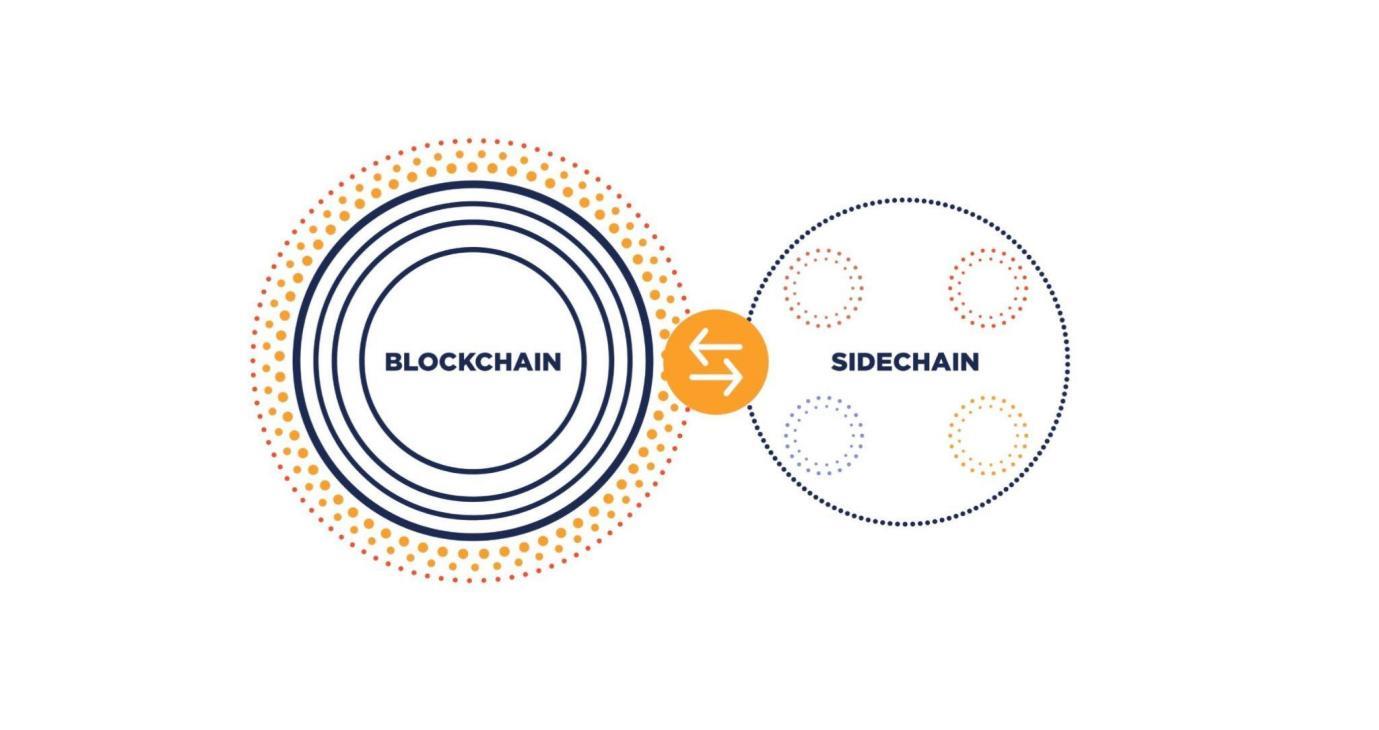
Image source: DCX Learn: What is a Sidechain
RSK
RSK is the first EVM-compatible sidechain on Bitcoin, a stateful smart contract platform secured by Bitcoin miners. Miners earn rewards through merged mining, actively participating in the smart contract revolution. RSK aims to deliver smart contracts, instant payments, and greater scalability, enhancing Bitcoin’s utility and value. A key feature of RSK smart contracts is leveraging Bitcoin’s mining mechanism for network security—providing higher security and decentralization than Ethereum while avoiding scalability and performance bottlenecks seen in Ethereum.
RIF is a network built on RSK smart contracts, offering infrastructure services (DeFi, storage, domain services, payment solutions) to address challenges in Layer 2 ecosystems—including technical complexity, poor UX, insufficient security, and lack of unified standards.
Spiderchains
Spacechain is a recent proposal for Bitcoin sidechains, combining mining so miners simultaneously run Bitcoin nodes and desired sidechain nodes. Transaction chains start from a UTXO, with each transaction creating two outputs: the first is a marker UTXO linking the chain to a specific Spacechain; the second is a small-denomination UTXO spendable by anyone (though requiring additional inputs/outputs due to its tiny size). Starting from the second transaction, anyone can spend the second output and use it to commit their sidechain block header. Meanwhile, Spiderchain, built atop the mainchain base layer and created by Botanix Labs in September this year, aims to port the Ethereum Virtual Machine to a platform anchored to the Bitcoin network. Uniquely, it does not involve miners in consensus nor use merged mining. Instead, Spiderchain employs multisig and custodial staking to create a proof-of-stake second layer atop Bitcoin, deployable without any changes to Bitcoin itself.
Softchains
Ruben Somsen proposed Softchains in January 2021, originating from his earlier “PoW Fraud Proof” idea aimed at improving SPV (Simplified Payment Verification) security. In Softchains, mainchain nodes must download and verify block headers from each Softchain sidechain. During chain splits, nodes must retrieve relevant blocks and validate them using UTXO set commitments, forming the basis of a bidirectional peg mechanism.
Other Protocols:
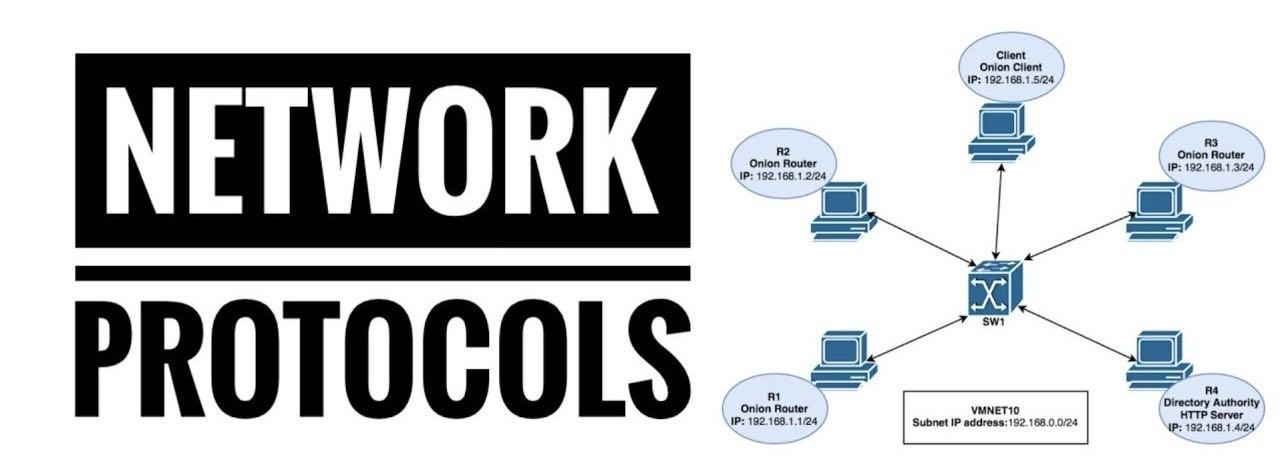
Image source: What is a Network Protocol and How Does it Work
Omni (Stablecoin)
JR Willett proposed the Omni protocol in January 2012—a digital currency and communication protocol built on the Bitcoin blockchain, using Bitcoin’s blockchain to enable smart contracts, user assets, and decentralized peer-to-peer exchanges. In 2014, USDT became the first stablecoin issued on Bitcoin via the Omni Layer protocol. This early mover advantage captured much of the crypto stablecoin market—Omni-USDT uses BTC addresses for deposits, transacting over the BTC network.
Colored Coins (Asset Issuance)
Chia is a more efficient, eco-friendly cryptocurrency platform created by Bram Cohen—the same person who invented the BitTorrent protocol. Chia introduces a new consensus mechanism called Proof of Space and Time (PoST), an alternative to traditional Proof of Work (PoW). The recently popular scripting protocol traces back to 2012, when the concept of asset issuance on Bitcoin already existed.
DLCs (Scalable Smart Contracts)
On November 4, DLC.Link officially announced dlcBTC—a novel solution enabling secure Bitcoin-powered DeFi operations on Ethereum. Scheduled for launch in February 2024, dlcBTC will allow Bitcoin holders to seamlessly participate in DeFi protocols like Curve and Aave without relying on custodians or third parties.
Ethscriptions (Inscription Protocol for Content Creation and Transfer on Ethereum)
The original Ethscriptions protocol was created in 2016, but Tom Lehman developed the current product implementation on June 17 this year. Ethscriptions is an inscription protocol for creating and transferring digital content on Ethereum using transaction call data. It bypasses smart contract storage and execution by applying deterministic protocol rules to Ethereum call data to compute state, enabling trustless agreement on contract outcomes without relying on oracles or third parties.
Multibit (Cross-chain Bridge)
Designed to bridge the Bitcoin network with EVM-compatible networks via the Multibit cross-chain bridge, currently connecting ETH, BNB, and BTC. Its primary goal is to provide DeFi services for BRC-20 assets.
Conclusion:
2023 has undoubtedly been a pioneering year for the Bitcoin ecosystem. Despite inherent limitations due to Bitcoin’s lack of Turing completeness making development extremely challenging, the breakout success of inscriptions has redirected market attention to Bitcoin’s ecosystem and attracted numerous developers. We may well be standing at the dawn of an explosive phase of ecological growth—mirroring the early days of the 2021 bull market’s smart chain wars, potentially unfolding into a vibrant era of "a hundred flowers blooming."
Protocols capable of standing out in the current landscape are certainly worth watching and discussing. The circulation and transmission of digital gold remains an ongoing journey.
Join TechFlow official community to stay tuned
Telegram:https://t.me/TechFlowDaily
X (Twitter):https://x.com/TechFlowPost
X (Twitter) EN:https://x.com/BlockFlow_News
 @YBBCapital