Podcast Notes | Interview with ENS Founder: Hoping ENS Becomes the Global Dominant Namespace and Integrates with Other Naming Services and Chains
TechFlow Selected TechFlow Selected
Podcast Notes | Interview with ENS Founder: Hoping ENS Becomes the Global Dominant Namespace and Integrates with Other Naming Services and Chains
ENS plays a crucial role in the Ethereum ecosystem by providing users with decentralized domain name services.
 Navigating Web3 tides with focused insights
Compiled & Translated by: TechFlow
TL;DR by Kaito.ai
TechFlow Selection: This podcast was selected for translation because it reviews the strategies ENS (Ethereum Name Service) has taken or is planning amid rapid industry development. ENS plays a critical role in the Ethereum ecosystem by providing users with decentralized domain name services. Understanding ENS's latest developments is essential for the Ethereum community and digital asset holders. This Thursday, December 14th, ENS will host its Q3-Q4 2023 Town Hall Meeting, where community members will reflect on the second half of the past year and look ahead to ENS priorities in 2024. Attendees will hear from members of ENS Labs and working group leads.
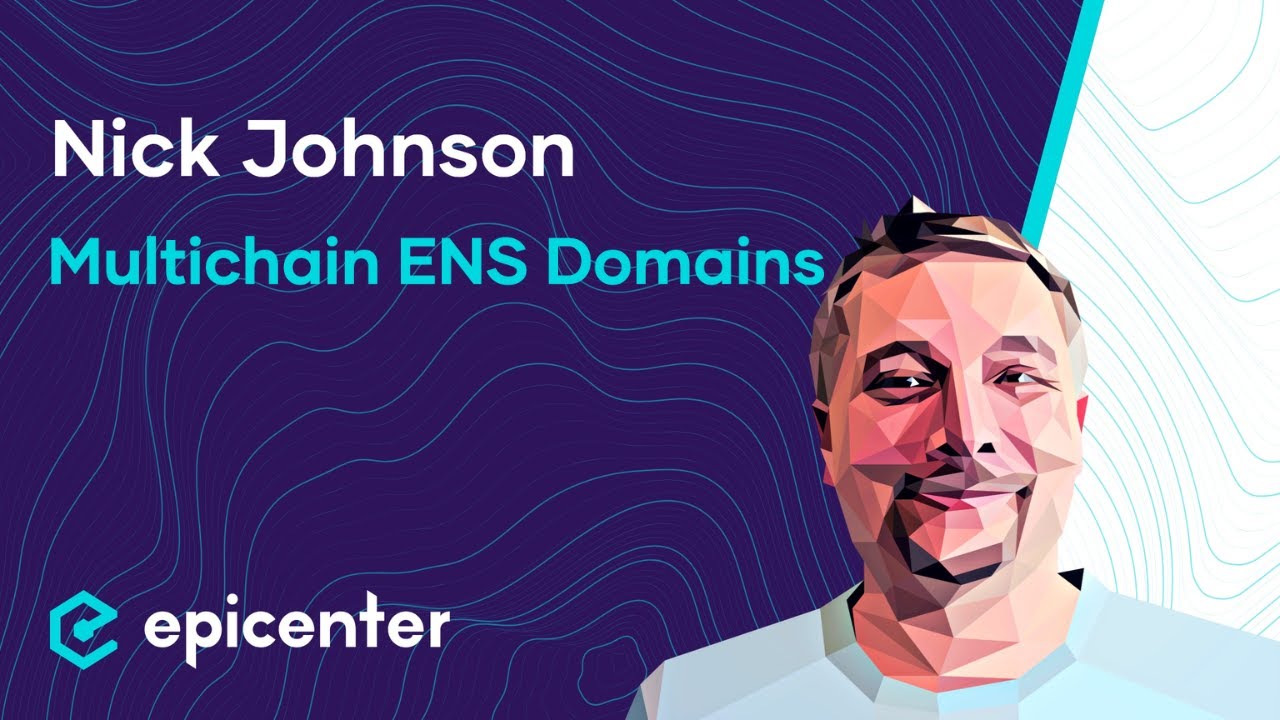
Host: SEO, Epicenter Podcast
Guest: Nick Johnson, Founder of ENS
Original Title: 《Nick Johnson: ENS - Multichain ENS Domains and Decentralised Identities.》
Release Date: November 4, 2023
Background
The nature of Ethereum addresses—random hexadecimal strings—poses a major barrier to mass adoption due to their lack of human readability. ENS domains were conceived not only to solve this issue and provide a seamless user experience but also as a foundational element for on-chain identity. However, in today’s multi-chain landscape, numerous decentralized naming services have emerged, leading to a fragmented domain pool. As a result, ENS plans to expand to L2s and non-EVM chains, aiming to provide consistency, further reduce user friction, and minimize domain conflicts.
This podcast features Nick Johnson, founder of ENS, discussing the current state of decentralized naming services from a multi-chain and Layer 2 perspective, and how these ultimately connect to decentralized identity. As one of the largest DAOs in the Ethereum ecosystem, ENS’s governance and operations offer valuable insights.
Summary
-
Nick Johnson, founder of the Ethereum Name Service (ENS), discusses his background and interest in decentralized naming services.
-
ENS is a decentralized naming service built on the Ethereum blockchain.
-
Johnson talks about ENS growth and future plans, including its expansion to Layer 2 solutions.
-
He envisions ENS becoming the dominant global namespace, integrating with other naming services and blockchains.
-
Use cases for ENS include programmatic integration and DNS integration.
-
Johnson discusses ENS's interactions with ICANN and the challenges of collaborating with traditional domain registrars.
-
ENS collaborates with ICANN domains via DNSSEC (Domain Name System Security Extensions), and efforts are underway to reduce gas costs for DNSSEC verification on Ethereum.
ENS Competitive Advantage: The Future of Standardized Decentralized Domains
-
Layer 2 solutions aim to maintain Ethereum-level security while reducing transaction fees.
-
With Layer 2s, ENS can update and issue subdomains without requiring transactions on Layer 1.
-
The CCIP Read method simplifies wallet and application integration across multiple Layer 2 chains.
-
ENS wrappers allow subdomains to be treated as NFTs and inherit properties from parent domains.
-
CCIP Read is not limited to ENS—it can also retrieve off-chain data for tokens.
-
Discussed ENS compatibility with non-EVM Layer 2s and the importance of a unified namespace.
-
ENS adoption on Layer 2s has been slow, but efforts are ongoing to make it easier for users to migrate names and hosting to Layer 2s.
-
Coinbase’s integration of ENS with cb.id names brought millions of new users to ENS.
ENS Integration with Layer 2 Solutions
-
ENS currently focuses on integration with EVM-compatible Layer 2s, but expects future support for non-EVM Layer 2s.
-
A unified namespace and the ability to resolve names across different Layer 2s are crucial for ENS.
-
CCIP Read bridging enables ENS compatibility with non-EVM Layer 2s, provided responses can be verified.
-
Due to limited resources for building portals, ENS adoption on Layer 2s has been slow, but progress is being made through universal portal solutions.
Privacy and ENS Governance
-
Discussed privacy issues in cryptocurrency transactions and the challenges of implementing stronger privacy features on Ethereum.
-
Mentioned the potential role of account abstraction in building decentralized identities.
-
Discussed ENS growth and governance, including revenue generation and its use in funding development.
-
Also mentioned scalability of ENS governance and the potential for large organizations to participate in the future.
ENS Revenue Model and Governance
-
Fees for registering ENS names are designed to regulate system usage rather than generate revenue.
-
Collected fees fund ENS development and other projects within the ecosystem.
-
A foundation has been established to ensure ENS stability and longevity, currently holding around $50 million.
-
ENS governance involves working groups and delegates authorized to make day-to-day decisions.
-
Participation from large organizations and stakeholders is important for ENS governance.
-
Discussed ENS growth and adoption.
Overall, the podcast covers various aspects of the Ethereum Name Service (ENS), including its growth, integration with Layer 2 solutions, interaction with ICANN, revenue model, governance, and privacy considerations.
Join TechFlow official community to stay tuned
Telegram:https://t.me/TechFlowDaily
X (Twitter):https://x.com/TechFlowPost
X (Twitter) EN:https://x.com/BlockFlow_News
 深潮TechFlow