








Variant Fund: New Signs of Life for NFTs on Ethereum and L2
TechFlow Selected TechFlow Selected
Variant Fund: New Signs of Life for NFTs on Ethereum and L2
By reducing the overall financial cost of NFTs, more non-crypto users will join the upcoming wave.
 Navigating Web3 tides with focused insights
Author: Variant Fund
To the outside world, NFTs are dead.
When you look at secondary market sales data—the most commonly cited metric—it’s undeniable. From the peak of the NFT market in January 2022 to November 2023, Ethereum’s secondary trading volume dropped by about 90%, and the number of unique addresses buying NFTs on secondary platforms declined by approximately 82%. September 2023 marked the lowest month for Ethereum NFT trading volume and buyer count since June 2021.
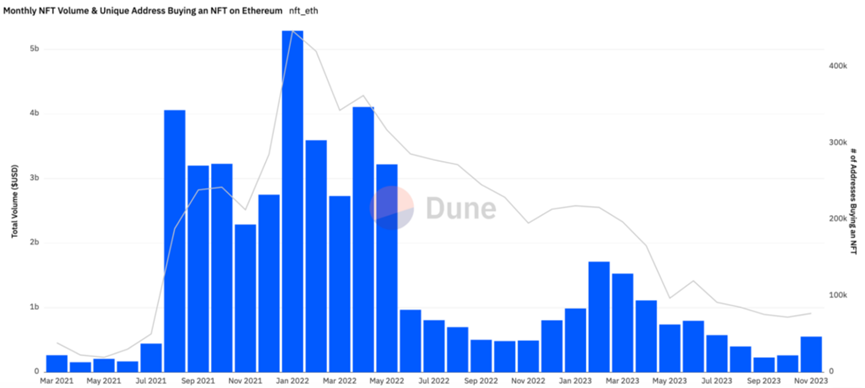
But the secondary market (which has been rebounding over recent weeks) only tells part of the story. When you look elsewhere, you’ll find new signs of life in NFTs.
One encouraging indicator of NFT adoption is that creation and collecting activity on Ethereum as well as Layer 2 chains like Base, Zora, and Optimism are growing. In terms of collecting, the increasing number of paid NFTs held by unique addresses over time suggests new participants are minting on-chain.
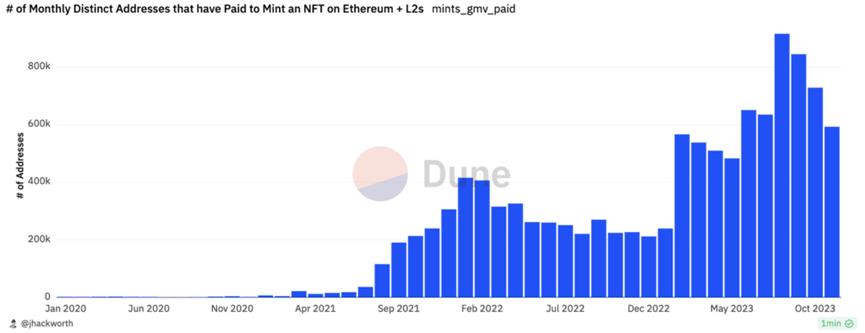
Growing collection activity coincides with an increase in new NFT contracts on chains such as Zora and Base—driven by a suite of creation tools making it easier than ever to create NFTs.
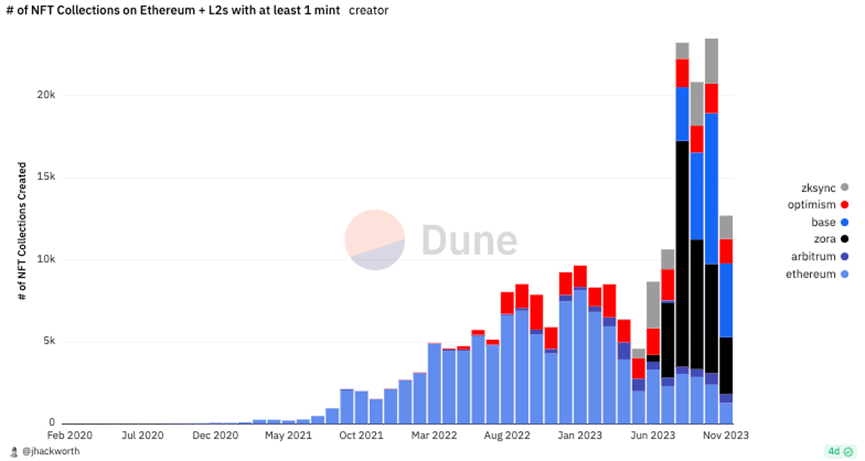
While some spam and airdrops exist within this data, the trends remain encouraging.
A possible explanation for the growth in unique addresses and new contracts follows a simple Occam’s Razor view: As more projects, use cases, and art emerge, more crypto users engage with NFTs. By lowering the overall financial cost of NFTs, even more non-crypto users may join the coming wave.
We might also be witnessing a shift in how people perceive and use NFTs. In the past, rarity, exclusivity, and high-end trading defined the NFT market, making it harder for broader audiences to enter crypto. Now, the proliferation of diverse NFT forms and use cases beyond premium collectibles opens new opportunities to attract users and drive widespread adoption.
Barriers to NFT Adoption in the Past
During the last bull run, NFTs emerged as a new asset class on Ethereum. In January 2022, NFT trading volume peaked at $16 billion ($5.2 billion after excluding wash trades). Yet despite high volume, only 447,260 unique addresses actively purchased NFTs on secondary markets that month. This indicates that even at the market peak, overall NFT adoption remained relatively small, dominated primarily by an active core group of collectors and enthusiasts.
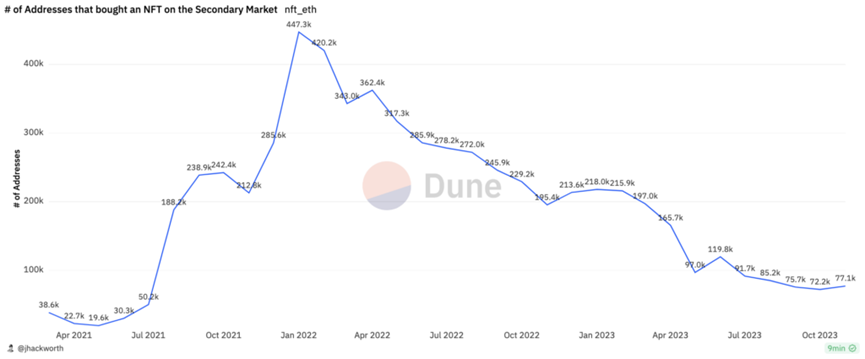
Why was adoption lower than many expected? High costs, limited use cases, and whale-dominated speculation likely deterred broader participation.
Looking at the table below, you can see how expensive it was to mint, trade, or create NFTs on-chain: the average deployment cost for an NFT contract in 2021 was $812, with minting costing $115.
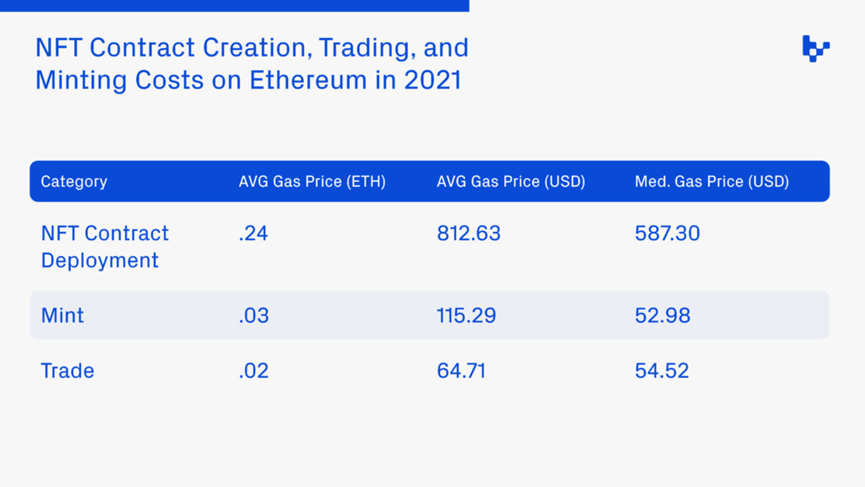
High gas fees became a barrier, limiting both new entrants’ ability to use NFTs and artists’ and builders’ capacity to create on-chain.
This hindered early NFT adoption, favoring higher-priced assets like art or PFPs, whose appreciation potential could justify on-chain costs.
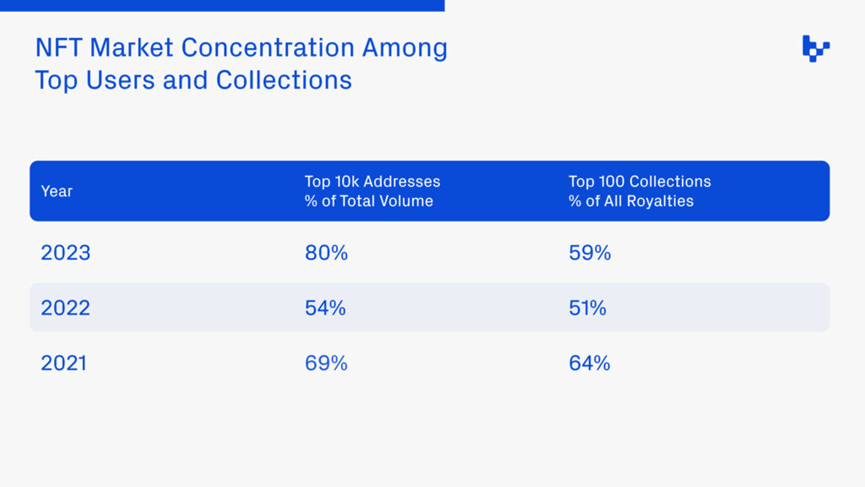
Further analysis shows NFT market activity was concentrated among a small number of collectors and traders. In 2021, just 10,000 unique addresses (0.73% of all buyers) accounted for 69% of total trading volume, and the top 100 collections captured 64% of all royalty-bearing items.
Of course, these barriers—high costs and limited use cases—are not unique to NFT adoption.
New technologies often follow similar adoption patterns, where early adopters are typically affluent individuals, niche communities, and speculators. In the early days of the internet, usage was limited due to challenges in building and interacting online. Like NFTs, speculative investments flooded into internet companies, driving valuations to unsustainable levels until the bubble burst. But the underlying potential of the internet remained intact, and as infrastructure improved and user experience evolved, the internet transformed society.
I believe a similar transformation is beginning for NFTs. Attention is shifting from investment and luxury toward a technology that brings a revolution in digital ownership to the masses. As the saying goes, yesterday’s luxuries become today’s necessities.
I cannot predict what will happen next in the NFT market. However, three on-chain trends point us toward the future of NFTs:
1. Infrastructure and tools have improved, reducing minting costs and expanding potential use cases for embedded NFTs (minting, collections, and collecting) within applications
2. New models of community engagement—beyond simply holding NFTs—offer opportunities for sustained participation, such as on-chain governance, management, and protocol rewards
3. Beyond PFPs and art, new forms of NFTs are gaining traction, including gaming, real-world assets, and token-bound accounts
Minting Costs Are Declining
As any technology advances, costs decrease and new demand areas emerge. We’re now seeing this play out with NFTs, as Layer 2 solutions, improved tools, and better infrastructure reduce the overall cost of minting NFTs.
Recently, the cost of conducting one million NFT transactions was $2.5 million on Ethereum, but only $629,200 on Base and just $75,990 on Zora. Meanwhile, the number of free mints is rising: around 62% of Ethereum and L2-based NFTs can now be minted for free.
Cheap NFTs are a feature, not a bug. Lowering cost barriers enables more collecting, experimentation, and building. More affordable NFTs also unlock new use cases where the NFT is the “how,” not the “why”.
For example, Blackbird uses NFTs to track restaurant visits as part of a loyalty program, rewarding diners for eating at their favorite spots. This application is enabled by Base, which allows NFT minting for cents, along with improved tools like Privy that enhance user experience.
Many Blackbird users may not even realize they hold NFTs. Looking ahead, I hope more applications will leverage NFTs to interact with consumers in innovative ways.
Empowering Communities
While the previous bull market focused largely on selling NFTs, we’re now seeing a renewed emphasis on holder communities.
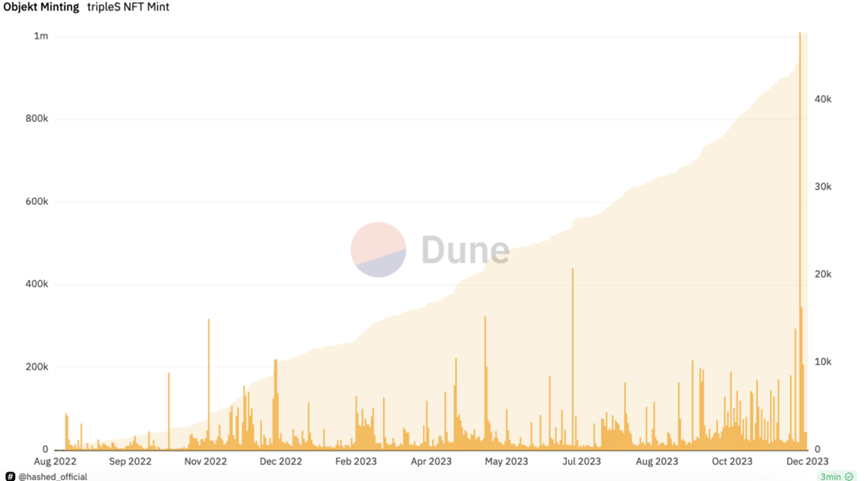
Companies like Botto and Basepaint involve their communities in collaborative processes and voting to decide which themes or artworks should be created. Others are exploring new models of NFT governance. For instance, the K-pop group TripleS uses NFTs called “Objekts” to let fans vote on the band’s future—such as choosing song titles or selecting subunits of the 24-member girl group to record songs. So far, results have been positive, with over 1 million mints and 87,000 collectors, plus millions of streams on Spotify and YouTube.
Initiatives like Zora’s protocol rewards have demonstrated ways to incentivize users to create and participate on-chain. The project has seen early success, distributing over 1,130 ETH (approximately $2.5 million at the time of writing) to thousands of collectors, creators, and builders across the network.
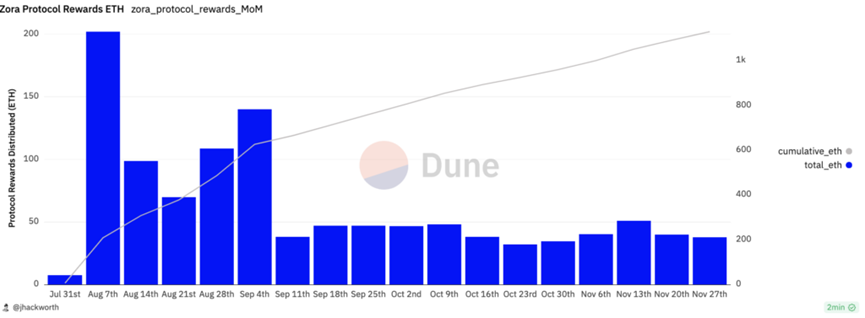
What makes these initiatives exciting is that they allow community members to play a more active role in growing the network.
NFTs Are Taking New Forms
In the last market cycle, PFPs dominated—the public display of owning a rare or high-priced image. While some of the most prominent collections may always retain value, NFTs are evolving into various formats, such as game-related items, music, or even tokenized versions of real-world assets. Courtyard recently began tokenizing Pokémon cards, tapping into a market that saw over $9.7 billion in card sales in 2022, opening up a more liquid marketplace for this asset class.
Beyond ERC-721 and ERC-1155, new standards are emerging, such as ERC-6551, or Token Bound Accounts (TBAs). Token-bound accounts transform NFTs into independent wallets capable of holding assets. While the total number of NFTs remains small—around 52,000—since June 4, TBA counts have grown at a monthly compound growth rate of about 90%.
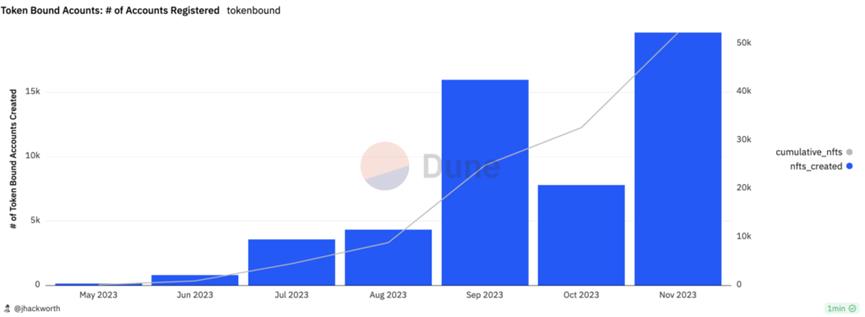
Token-bound accounts offer more than just NFT ownership—they can form profiles with embedded social graphs and inventory systems. This concept has already been applied by Lens to social media profiles and could expand into future possibilities, such as the account becoming an avatar in a video game, or a specific Bored Ape evolving into a character with its own fan base.
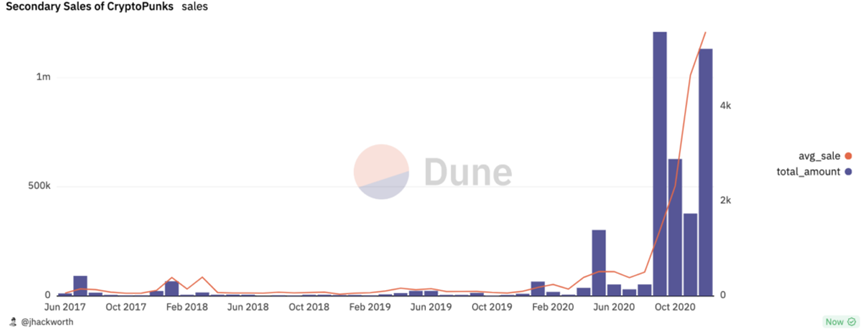
We’re still in the early stages of NFTs as an asset class, and it’s hard to predict exactly how everything will unfold. After all, CryptoPunks were originally free, saw little activity for years after debuting in June 2017, and only exploded in price during the NFT boom. In 2017, few could have predicted that by 2021, some punks would trade hands for $10–20 million.
I’m excited to see how NFTs continue to evolve. There’s a tremendous amount of experimentation happening in the space, which is encouraging. As NFT use cases grow, NFT minting will become more commonplace. Internet users might soon hold hundreds or even thousands of NFTs in their wallets across various applications.
If you, like us at Variant, are excited to help grow existing NFTs, you can collect and mint this article as an NFT on Mirror.
Disclaimer: This article does not constitute investment advice. Readers should consider whether any opinions, views, or conclusions expressed herein are suitable for their particular circumstances and comply with applicable laws and regulations in their respective jurisdictions.
Join TechFlow official community to stay tuned
Telegram:https://t.me/TechFlowDaily
X (Twitter):https://x.com/TechFlowPost
X (Twitter) EN:https://x.com/BlockFlow_News
 Variant


