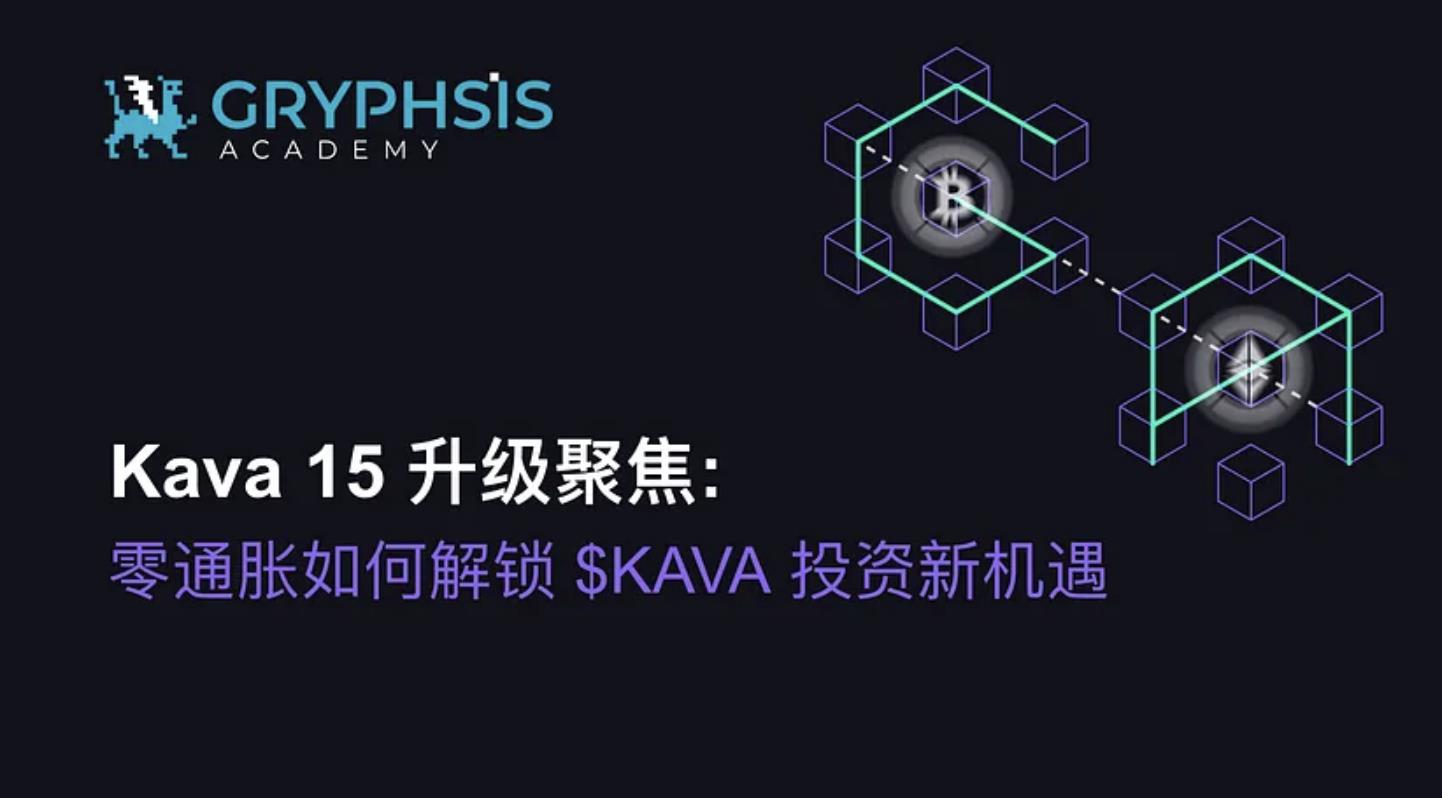
Kava 15 Upgrade Focus: How Will Zero Inflation Unlock New Investment Opportunities for $KAVA?
TechFlow Selected TechFlow Selected
Kava 15 Upgrade Focus: How Will Zero Inflation Unlock New Investment Opportunities for $KAVA?
Kava is built on Cosmos and can operate as an independent blockchain, so it can also be understood as aiming to become the first DeFi Hub chain on Cosmos.
 Navigating Web3 tides with focused insights
Investment Summary:
-
Kava is the native USDt DeFi Hub chain within Cosmos, holding a prominent position in stablecoin liquidity.
-
As a Layer 1 bridging cross-chain interoperability between Cosmos and EVM, Kava ranked among the top 10 Layer 1 projects by market cap (as of October), leading the Cosmos ecosystem in stablecoin market value with optimistic ecosystem development.
-
Kava has a clear roadmap outlining expectations for EVM asset types, cross-chain bridge integration, and asset circulation.
-
Kava's ecosystem is growing rapidly. The arrival of well-known DeFi products like dYdX in the Cosmos ecosystem brings greater financial liquidity potential to DeFi Hub chains such as Kava.
-
Kava has partnered with market maker DWF Labs, significantly enhancing liquidity and market participation while positively impacting Kava’s brand image.
1. Project Overview
1.1 Project Introduction
Kava originally started as a CDP (Collateralized Debt Position) automated lending platform similar to MakerDAO, where users could deposit diversified cross-chain assets such as BNB, BTC, XRP, and BUSD to borrow the collateralized stablecoin USDX. It also launched the Harvest.io lending protocol (later renamed Hard Protocol, then Kava Lend), together forming Kava’s DeFi services.
Built on Cosmos, Kava operates as an independent blockchain and can be seen as aiming to become the first DeFi Hub chain on Cosmos.
However, with the evolution of DeFi interoperability, Kava 10 launched in 2022, officially transforming into a Layer 1 built using the Cosmos SDK, employing a Proof-of-Stake mechanism and EVM compatibility, focused on cross-chain interoperability and asset circulation between the Cosmos and EVM ecosystems.
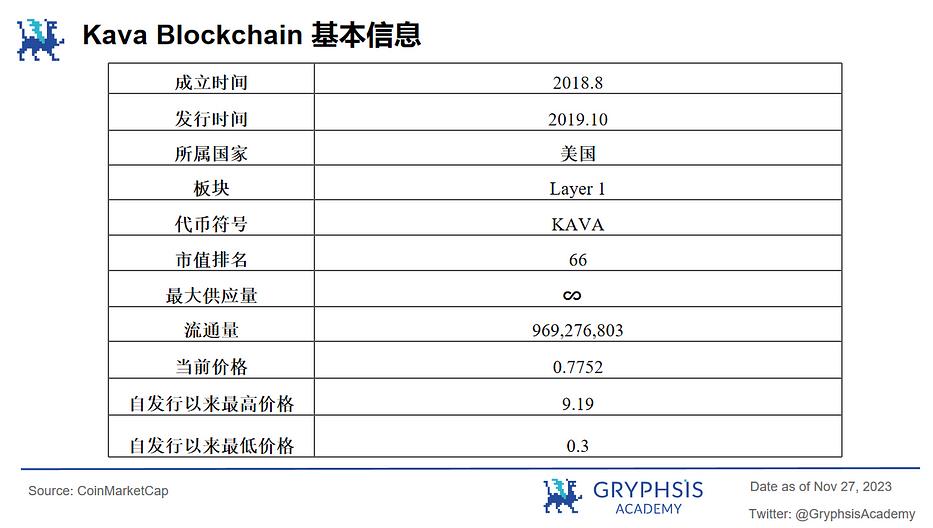
1.2 Basic Information
2. Project Details
2.1 Team
The team currently consists of 45 members, with an average tenure of 2.2 years. Core board members such as Brian Kerr and Scott Stuart have remained stable, serving for up to seven years.
-
Brian Kerr: Co-founder and board member of Kava Labs, previously founder and CEO of Fnatic Gear.
-
Scott Stuart: Co-founder and CEO of Kava
-
Kevin Davis: Chief Engineer
-
Aaron Choi: Vice President
-
Ruaridh O’Donnell: Chief Developer and Co-founder
-
Jack Zampolin: Investment Advisor
2.2 Funding Status
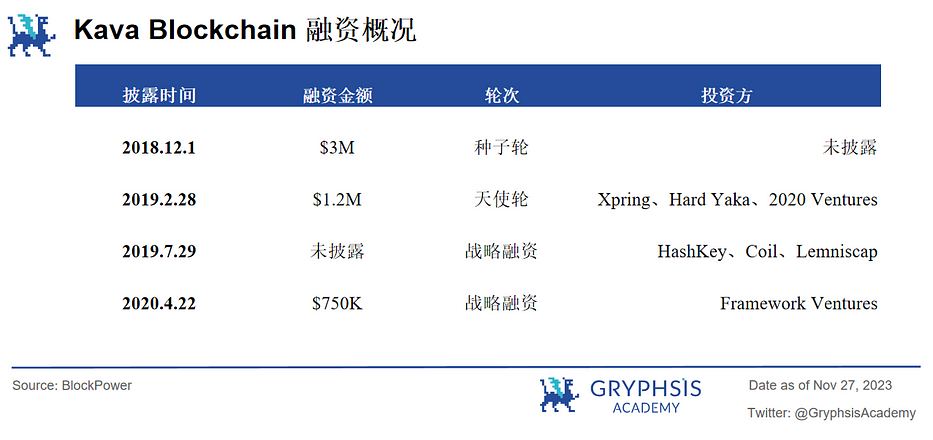
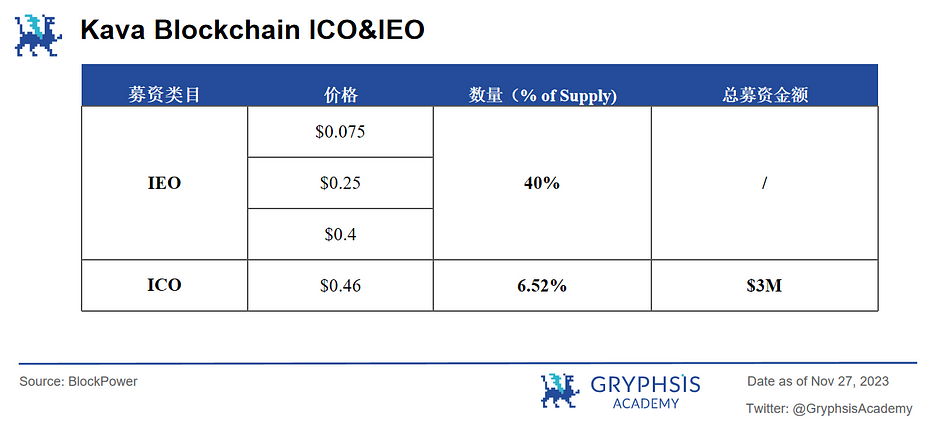
Kava has disclosed nearly $5M in funding from investors including Binance Labs, HashKey, Xpring, and Framework Ventures. On October 16, 2019, $KAVA was issued, selling 40% of the initial supply through multiple private rounds, and an additional 6.25% of the total supply was publicly sold on Binance Launchpad at $0.46, raising $3M in total.
2.3 Technical Architecture
Kava’s architecture consists of a Cosmos Co-Chain and an Ethereum Co-Chain, both built on the Cosmos Tendermint consensus engine. The Ethereum Co-Chain allows developers to deploy or directly migrate applications to Kava using Solidity, while the Cosmos Co-Chain communicates with the broader Cosmos ecosystem via the IBC protocol. A Translator Module connects these two execution environments, enabling easier access across both.
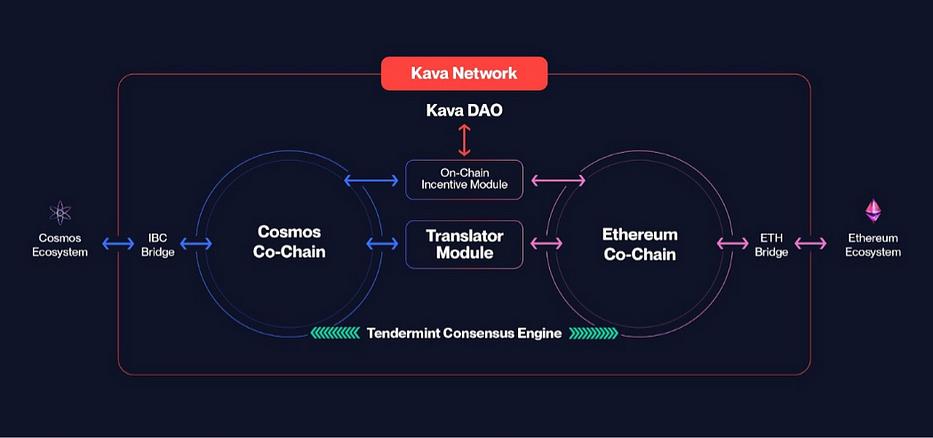
Source: Whitepaper
Internally, Kava is divided into Kava IBC (Cosmos environment) and Kava EVM (EVM environment):
1) Cosmos to EVM:
Native internal bridge launched on Kava14, implemented as a Cosmos SDK module that can be integrated into various apps and wallets. It enables users to transfer Cosmos assets into the EVM environment in ERC20 format, facilitating asset transfers. For example, $KAVA can be wrapped into $wKAVA (ERC20) for use within the EVM environment.
Unlike external bridges, Kava’s internal bridge performs asset transfers within the same ledger, similar to how the IBC protocol changes states across different ledgers, ensuring consistency and compatibility.
2) EVM to Cosmos:
Currently supports cross-chain transfers from Kava EVM to Kava IBC, allowing $USDt and $ATOM transfers between Osmosis and Injective on the Cosmos side and Evmos on the EVM side.
It is evident that Kava’s support for EVM-side asset transfers is limited. The only supported chain, Evmos, is not part of the Ethereum ecosystem but rather another Layer 1 compatible with both EVM and Cosmos. Therefore, full interoperability with the Ethereum ecosystem has not yet been achieved. Currently, only bridges like Stargate or other cross-chain aggregators support transferring EVM assets into Cosmos; Kava’s internal support remains narrow.
2.4 Product Ecosystem
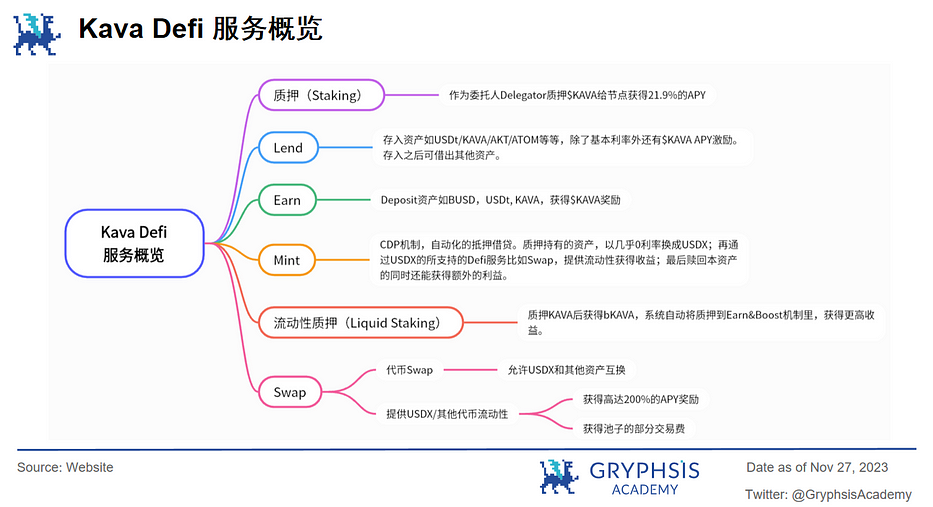
Kava Labs primarily offers the following DeFi services:
-
Kava Staking: Retail holders of $KAVA can delegate their assets to validators and earn rewards.
-
Kava Lend: Evolved from Harvest to Hard Protocol and later renamed. Allows users to supply various assets such as BTC, XRP, BNB, and BUSD across ecosystems to borrow other assets. The ecosystem provides not only base interest incentives for borrowers but also $KAVA mining rewards.
-
Kava Earn: A DeFi yield strategy incentivizing users to lock $bKAVA for high APY, thereby increasing Kava’s TVL.
-
Kava Mint: Renamed from the Kava CDP protocol, it allows users to mint the collateralized stablecoin USDX by pledging cross-chain assets.
-
Liquid Staking: Stake $KAVA to receive $bKAVA, with the system depositing $KAVA into the Earn mechanism to generate higher returns.
-
Kava Swap: An AMM-based swap mechanism allowing seamless trading of various assets across blockchains or earning extra yield by providing liquidity.
2.5 Ecosystem
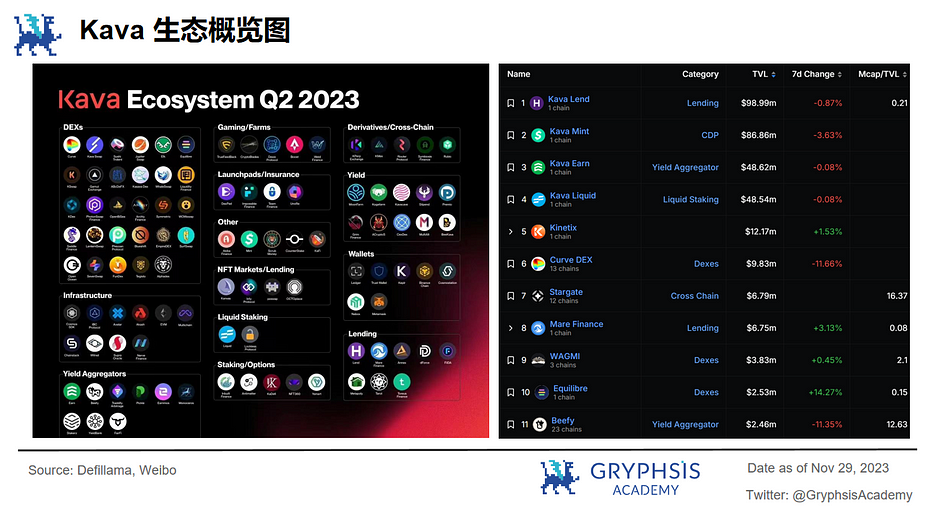
Kava currently has a total TVL of $340.67M, stablecoin market cap of $129.06M, and daily trading volume of $1.44M. Over 116 protocols are deployed on Kava, predominantly in the DeFi category. However, according to protocol rankings, Kava’s native DeFi services still dominate, with the top five mostly occupied by Kava Lend, Kava Mint, Kava Earn, etc., lacking standout native independent protocols like Blur on Arbitrum.
3. Development Timeline
3.1 Major Historical Events
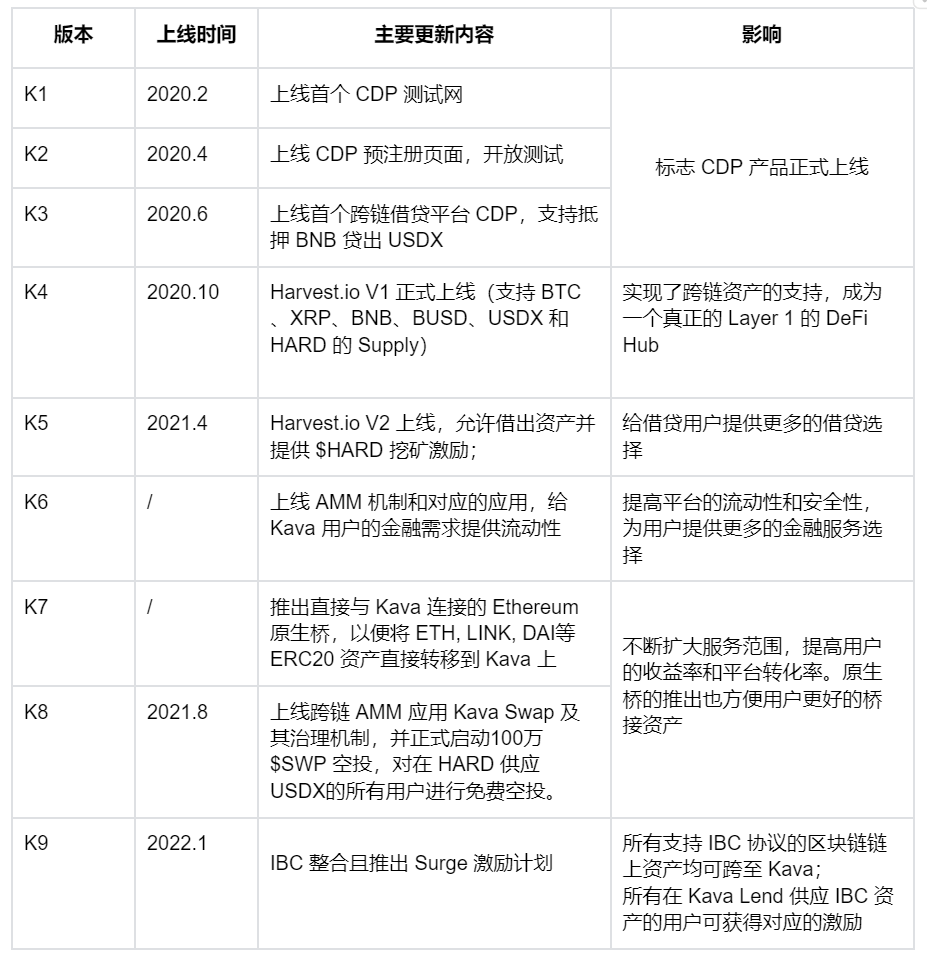
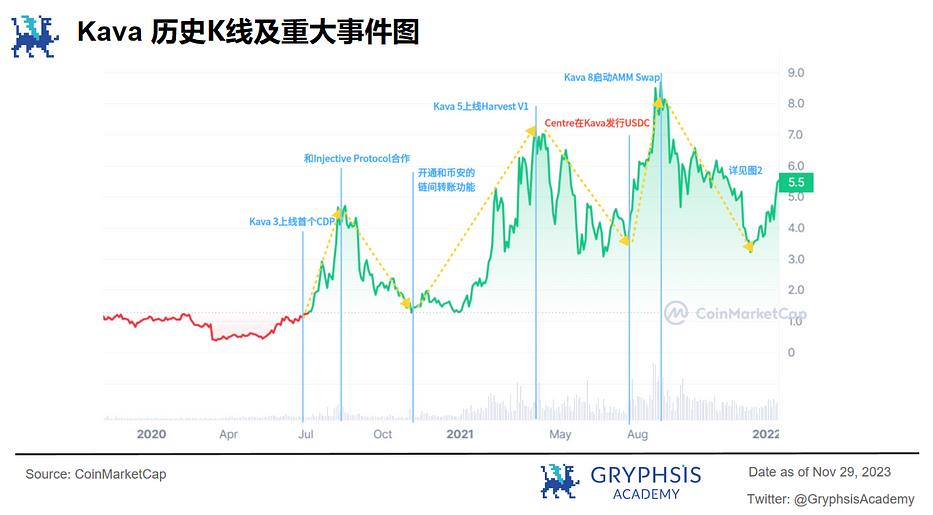
First, let’s review Kava’s major milestones since inception.
March 1, 2019: Kava raised $1.2M in a round led by Venture Capital
February 5, 2020: Kava launched the testnet for its first cross-chain lending platform, CDP
February 27, 2020: Officially announced integration with Trust Wallet, supporting $KAVA storage, transfers, and staking
March 25, 2020: Announced long-term strategic partnership with Chainlink
April 16, 2020: Became one of the first partners in OKChain’s open-source cross-chain ecosystem
April 30, 2020: Launched CDP pre-registration page, opening user testing
May 15, 2020: Established on-chain governance committee mechanism
June 11, 2020: Kava3 launched the first CDP, supporting BNB collateralization to borrow USDX
August 13, 2020: Formed partnership with Injective Protocol
October 15, 2020: Kava4 supported Harvest.io V1
November 6, 2020: Cross-chain transfer functionality activated between Binance Chain, supporting BTC, XRP, BNB, and BUSD
February 9, 2021: Passed CertiK audit
April 9, 2021: Kava5 launched Harvest V2, enabling borrowing with $HARD mining incentives
July 26, 2021: Kava5 mainnet rollback
July 27, 2021: Centre planned to issue USDC on Kava
August 31, 2021: Kava8 launched AMM Swap mechanism
September 22, 2021: Launched Kava Rise incentive program with $185M to attract projects
January 20, 2022: Kava9 integrated IBC protocol, expanding into the broader Cosmos ecosystem
March 3, 2022: Launched $750M Kava Rise developer incentive program
April 7, 2022: Ethereum Co-Chain Alpha
April 27, 2022: CosmosEVM Era officially launched
May 25, 2022: Kava10 EVM went live, officially becoming a Cosmos & EVM interoperable Hub chain
June 21, 2022: Partnered with Celer cBridge for cross-chain asset transfers
September 9, 2022: Curve Finance launched on Kava
October 26, 2022: Kava11 launched $bKAVA to improve staked token liquidity
January 12, 2023: Kava12 launched DAO
March 15, 2023: Kava13 launched EVM 2.0
April 4, 2023: Community proposal to create dual foundation structure
May 12, 2023: Kava EVM roadmap launched
June 22, 2023: Tether announced USDT launch on Kava
July 13, 2023: Kava14 successfully upgraded, deploying internal cross-chain bridge to convert native Cosmos assets into Ethereum ERC20 standard
July 14, 2023: Kava14 opened native Cosmos assets to Ethereum
September 2, 2023: Stargate launched native USDt liquidity pool on Kava
November 15, 2023: Kava formed strategic partnership with DWF Lab
December 7, 2023: Kava15 achieved zero inflation
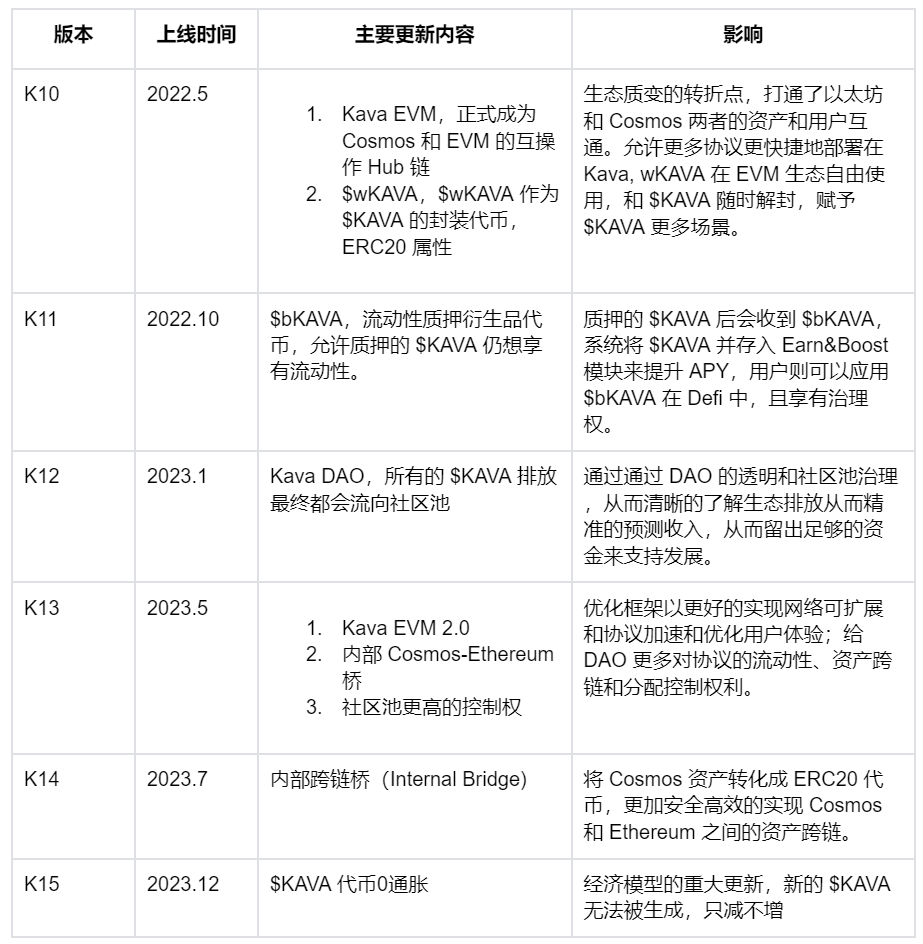
3.2 Price Chart Trend
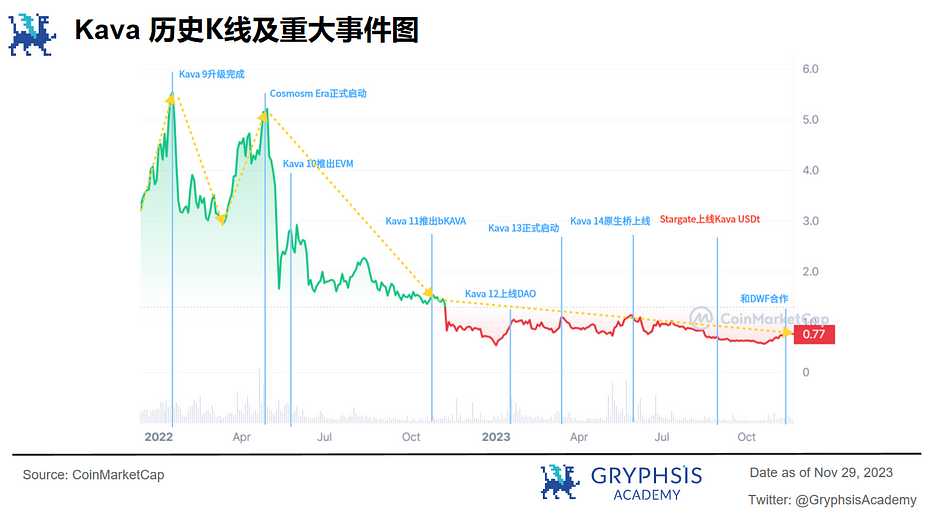
3.3 Kava 15
Kava 15 mainnet officially launched on December 7. Proposal 141, crucial to K15, outlined future Roadmap under three pillars: Adoption, Security, and Governance.
1) Adoption:
Kava aims to position itself as the stablecoin hub within the Cosmos ecosystem, integrating various stablecoins onto Kava to become the dedicated stablecoin Hub chain for Cosmos, enabling better interaction with application chains like dYdX and Osmosis. For instance, Injective already supports Kava’s BTC/USDC and ETH/USDT perpetual pools.
On the EVM-native bridge front, Kava plans to integrate with mainstream bridges such as LayerZero, Wormhole, Multichain, and Axelar to enable more efficient and seamless interactions with EVM-native assets. At the token level, it will consider integrating more wrapped tokens like WBTC and WETH. Stargate already supports wETH on Kava.
By connecting EVM liquidity, native protocols within the ecosystem can benefit and attract more investment and centralized exchange liquidity.
2) Security:
Focuses on node availability and software scalability—optimizing nodes to enhance reception, processing, validator interaction, and decentralized service distribution; improving software scalability to support higher transaction volumes and requests.
3) Governance:
While maintaining Cosmos' principle of sovereign autonomy, Kava extends community governance to the Kava EVM layer to ensure governance consistency across both frameworks. In the future, two independent foundations will be established to jointly maintain Kava’s sustainable development, managing all net surpluses beyond staking rewards within the ecosystem.
4. Economic Model
4.1 Model & Distribution
4.1.1 Token Model
1) Dual-Token Economic Model
Kava employs a dual-token economic model with $KAVA as the utility and governance token and $USDX as the stablecoin.
$KAVA: Widely used across the ecosystem—for POS staking, inflation rewards, transaction fees, voting, and governance.
-
$bKAVA: Liquid staking derivative token allowing staked $KAVA to retain liquidity.
-
$wKAVA: Wrapped version of $KAVA with ERC20 properties.
$USDX: Native stablecoin of the system, primarily used in CDP protocols. Users pledge assets to mint USDX, gaining higher liquidity—similar to DAI in MakerDAO.
2) $KAVA Use Cases:
-
Transaction Fees: Ecosystem transactions—including asset transfers, opening/closing CDPs, and trades—require $KAVA. A portion of CDP fees is distributed to validators and delegators.
-
Staking Rewards: Staking $KAVA yields APR between 3%–20%, based on network-wide staking ratio.
-
Validator Commission: Validators earn a commission from rewards generated by their delegators.
-
Community Governance: Holders can propose and vote on platform rule changes.
3) Deflationary Mechanism:
New $KAVA is minted with each new block as validator rewards, projected at a 7% annual inflation rate. However, each CDP incurs a stability fee, which is paid in $KAVA and subsequently burned, creating a balancing deflationary effect.
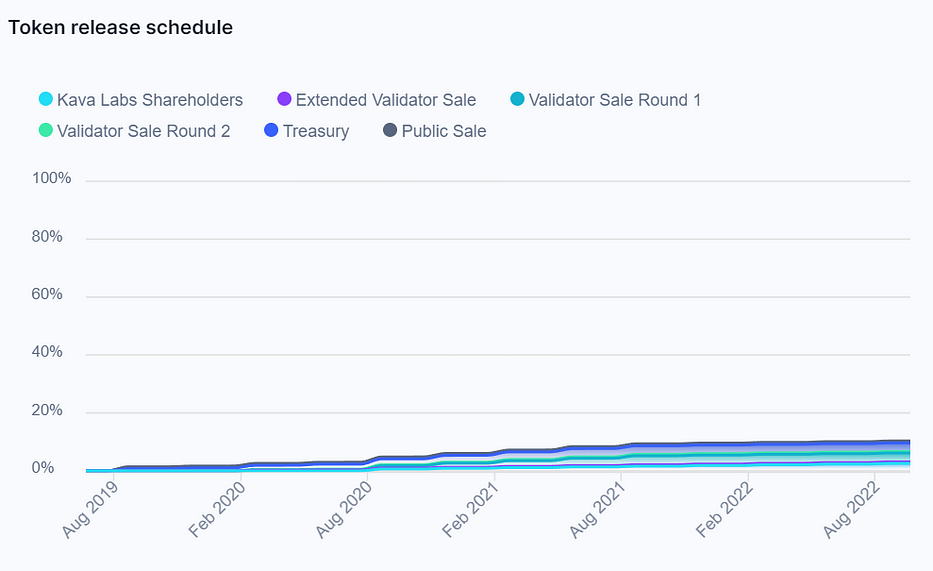
4.1.2 $KAVA Distribution:
No hard cap on token issuance, but genesis supply was 100 million.
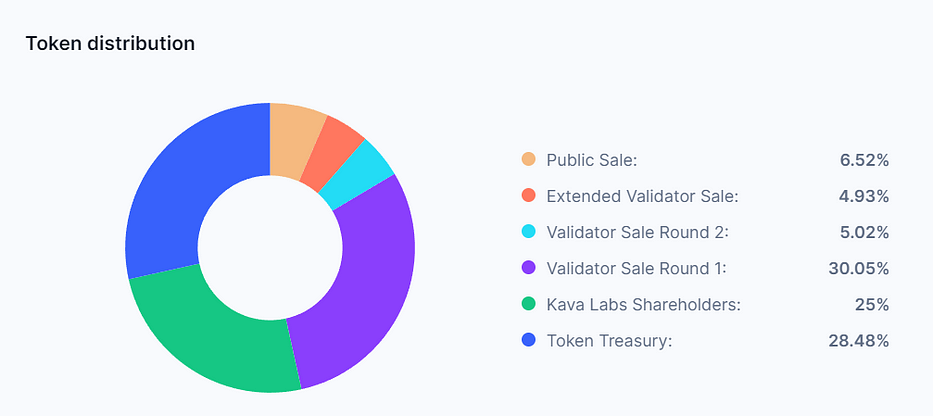
Source: CoinMarketCap
Source: CoinMarketCap
4.1.3 $USDX Peg Mechanism
USDX is a CDP-backed stablecoin soft-pegged 1:1 to the USD, using elastic supply algorithms to adjust supply and maintain price stability.
When users mint USDX by pledging assets, a collateralization ratio applies. For example, depositing $150 worth of assets to borrow $100 of USDX, with pricing linked to the collateral asset.
If the collateral asset price drops too quickly, the system triggers liquidation or debt auctions, selling collateral below market price and increasing USDX supply to lower its price and restore peg stability. If market movements exceed automatic adjustment range, $KAVA acts as the "lender of last resort," undergoing inflation and auctioning to back USDX.
Additionally, Kava has optimized USDX pricing mechanisms:
-
Using Chainlink’s Oracle Feed for high-quality market data to precisely anchor collateral and USDX prices.
-
Supporting multiple collateral assets to diversify risk. When the system must sell collateral at a loss, profits from other collateral assets can offset deficits, enhancing risk resilience.
However, USDX has experienced short-term severe de-peg events—on April 11, 2023, USDX dropped to $0.1 before rebounding to $0.8. Founder Scott Stuart noted that strict price stability isn't essential, suggesting USDX should instead track market volatility.
4.2 Kava 2.0 Update
With the upcoming K15, Kava explicitly plans to eliminate inflation—circulating token supply becomes the maximum supply. No new $KAVA will be created, with inflation permanently reduced to 0 by December 31.
$KAVA surplus will come from native project emissions, transaction fees, and foundation reserves. Instead of going directly to validators, this portion will return to the community, whose members will decide whether to burn or reinvest it—further decentralizing the network.
Thus, total $KAVA supply will only decrease over time. As demand for $KAVA grows due to its role in ecosystem fees and governance rights, demand-side pressure will intensify.
5. Sector Analysis
5.1 Sector Overview
Kava belongs to the Layer 1 sector. Following pioneers like Ethereum and Bitcoin, numerous emerging Layer 1 networks such as BSC, Sui, Aptos, and Solana have flourished, contributing to a vibrant overall ecosystem. As of writing, the sector’s market cap stands at $1125 billion, ranking second in the blockchain space. Ethereum leads, with strong performances from Tron, BSC, TON, and Solana.
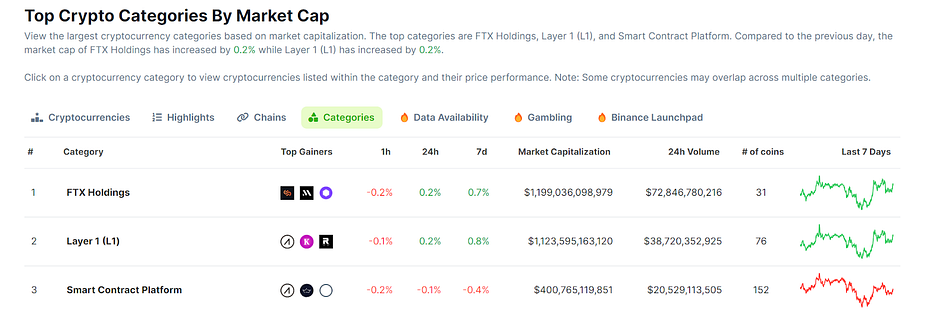
Source: Coingecko
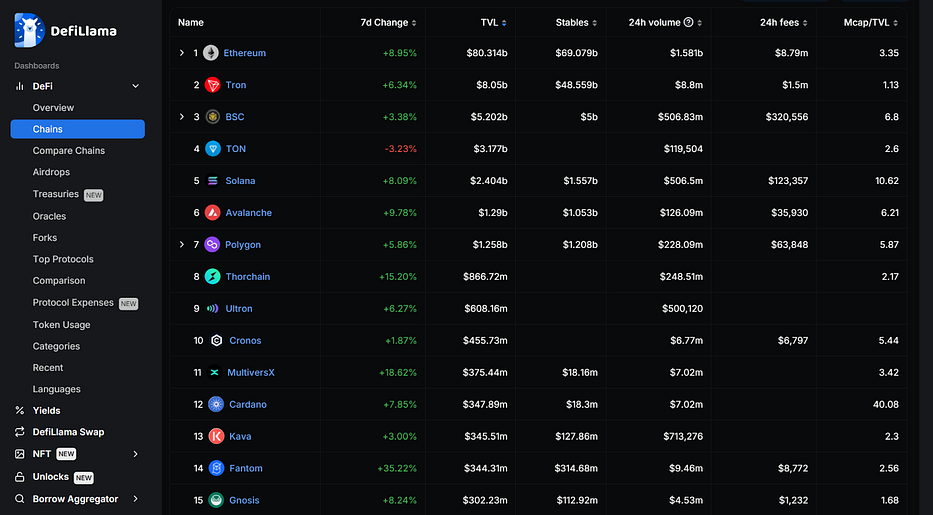
Source: Defillama
Layer 1 blockchain foundational protocols—module architecture, consensus mechanisms, block structures—significantly impact performance and scalability. Different design choices lead to varied characteristics: some prioritize transaction speed, others privacy and security.
Categories can be defined by features—Ethereum and EVM-compatible chains form one group, non-EVM-compatible chains another, and standalone chain-focused platforms like Cosmos & Polkadot form a third...
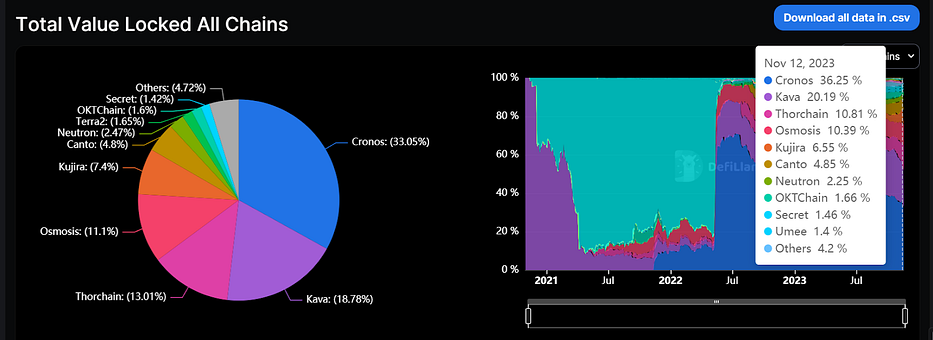
Kava specifically falls within the Cosmos ecosystem, focusing on connecting Cosmos and EVM ecosystems with cross-chain interoperability. Within Cosmos, it ranks third in TVL.
5.2 Competitor Projects
Let’s examine Kava’s competitors among Cosmos & EVM-compatible Layer 1 public chains.
1. EVMOS
Source: Website
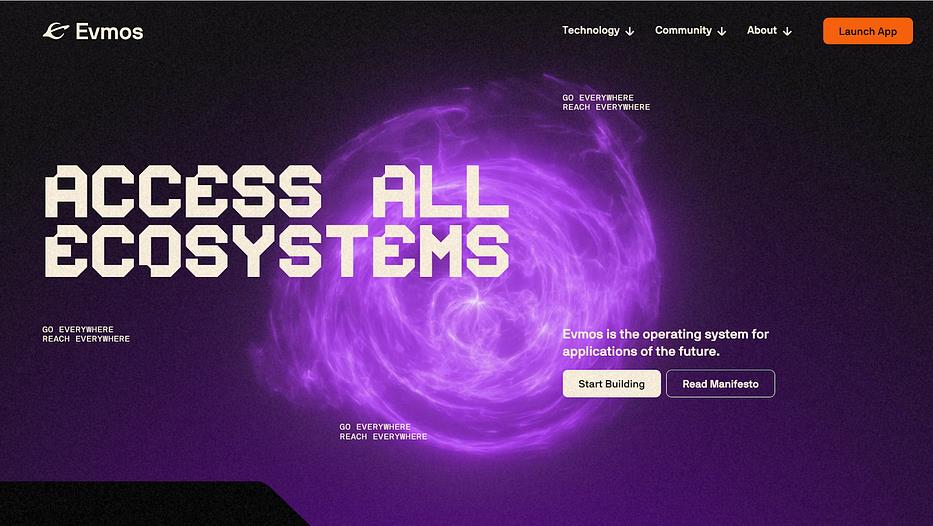
EVMOS originated from Ethermint, an EVM chain built with the Cosmos SDK, designed to link Ethereum and Cosmos ecosystems via the Tendermint consensus protocol.
The team later recognized mutual growth opportunities between Cosmos and Ethereum, founding EVMOS to build an EVM Stack solution on Cosmos, enabling rapid deployment of existing EVM communities while providing interoperability.
In 2022, Ethermint successfully rebranded to EVMOS, bringing EVM chains, applications, assets, and users into the Cosmos ecosystem. As of writing, EVMOS has a TVL of $4.52M, stablecoin market cap of $130K, and 24-hour trading volume of $160K.
2. Cronos

Source: Website
Cronos is another Cosmos SDK-based chain leveraging the open-source Ethermint project (formerly EVMOS) to rapidly connect with Ethereum and other EVM ecosystems, using IBC protocol to communicate with other Cosmos chains. Focused on DeFi, NFTs, gaming, and Metaverse, it launched its mainnet in November 2021, quickly accumulating millions of users and over 500 applications.
It launched a dedicated NFT marketplace for users to create and trade NFTs and implemented cross-chain bridging to transfer assets from other blockchains to Cronos, though EVM-layer support remains incomplete. As of writing, Cronos has a TVL of $453.34M, stablecoin market cap of $5.9K, and 24-hour trading volume of $4.2M.
5.3 Kava’s Competitive Advantages
1) Ecosystem Position
As the native USDt DeFi Hub chain in Cosmos, Kava holds a dominant position in stablecoin liquidity. As a Layer 1, it ranks among the top 10 in overall market cap (October 2023); within the Cosmos ecosystem, it ranks second with leading stablecoin market cap and optimistic ecosystem prospects.
Source: Defillama
Moreover, Kava has a clear roadmap for EVM asset compatibility, outlining expectations for asset types, cross-chain bridge integrations, and future asset circulation with other Cosmos application chains.
With notable DeFi products like dYdX joining the Cosmos ecosystem, momentum is strong, offering greater financial liquidity potential for DeFi Hub chains like Kava.
2) Partnership with DWF Market Maker
On November 15, Kava formed a partnership with market maker DWF Labs. Their announcement stated that beyond basic risk management, clearing mechanisms, and fee structures, DWF will provide strategic guidance, initiate proprietary trading on Kava’s DEX, and achieve trading volume equivalent to 7.5% of the current total DEX volume on Kava.
This significantly boosts liquidity by adding more trading pairs and depth, increasing market participation. Such a strategic partnership also positively impacts Kava’s brand image. Overall, the collaboration benefits both market and product development.
3) Strong Community Expectations (Mainnet & Economic Model)
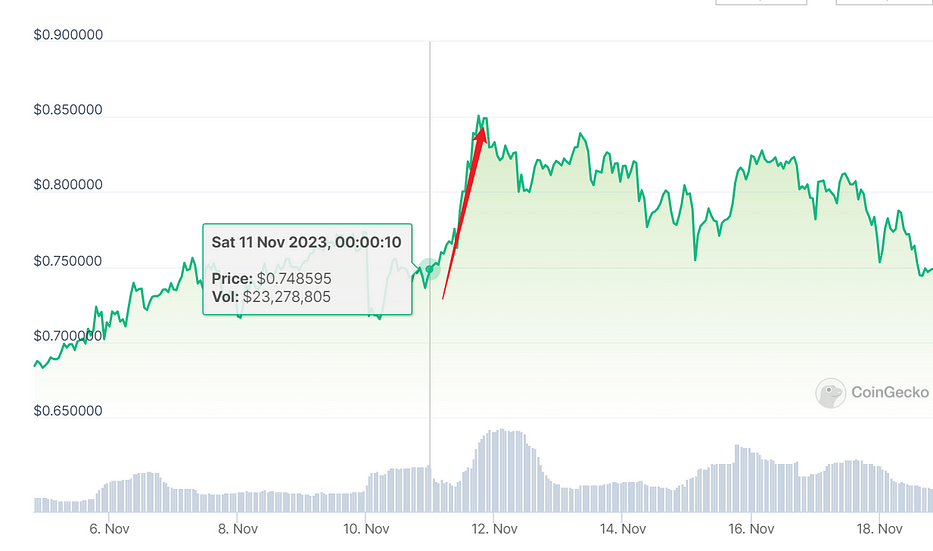
After Kava officially announced on November 11 that the K15 mainnet would launch on December 7, the token price rose 13.7% that day, indicating strong community anticipation for the upgrade. Combined with the post-launch economic model changes limiting $KAVA circulation, this could catalyze a new surge in $KAVA value.
Source: Coingecko
5.4 Cosmos Beta
Beyond Kava, the Cosmos ecosystem has recently shown strong momentum. Below are several promising protocols recommended as beta plays:
5.4.1 Neutron ($NTRN)
Neutron is the first chain launched on Cosmos Replicated Security, enabling projects to rapidly deploy by hosting smart contracts on the Cosmos Hub.
Positive narratives:
-
Revenue-sharing models established: Mars Protocol V2 will deploy on Neutron, allocating a portion of tokens to Neutron; Apollo, a LSDfi protocol on Cosmos, has successfully launched on Neutron.
-
Acquired 25% equity in CosmWasm developer Confio
-
Neutron increases demand for $ATOM, gaining stronger endorsement from the Cosmos team. By sharing validators with the Hub chain, projects must pay $ATOM as service fees. If projects build self-sustaining ecosystems using their own tokens, $ATOM’s utility diminishes.
5.4.2 THORchain ($RUNE)
THORchain is a cross-chain liquidity protocol supporting native DEX cross-chain swaps (focused on fully native asset swaps), lending, and other DeFi yield functions. Its AMM-based DEX stands out with impermanent loss protection and dynamic slippage fees.
Positive narratives:
-
LiFi will soon integrate THORchain to expand swap capabilities
-
Native BTC swap support meets rising demand amid growing BTC ecosystem activity, indirectly boosting LP incentives and driving $RUNE purchases.
-
THORchain forks will be powered by $RUNE to support liquidity across protocols, simultaneously increasing $RUNE holding demand.
5.4.3 Celestia ($TIA)
Celestia is a POS blockchain based on CometBFT and Cosmos SDK, focused on modular data availability.
Positive narratives:
-
Launched Ethereum fallback feature to ensure user funds won’t get stuck in Layer 2 contracts.
-
Integrated with Manta public chain
-
Technical integration with OP Stack, using Celestia as the DA layer.
5.4.4 Injective ($INJ)
Injective is an interoperable Layer 1 blockchain designed for building DeFi applications, supporting cross-chain interoperability between Ethereum, IBC-compatible chains (like the Cosmos ecosystem), and non-EVM-compatible chains (e.g., Solana).
Positive narratives:
-
Volan mainnet update imminent
-
$INJ burn mechanism
6. Risks & Challenges
-
Native protocols dominate the ecosystem, with Kava Lend alone accounting for one-third of total TVL. Other supported DeFi protocols like Curve and Sushi are not native to Kava. This concentration risks over-reliance on a single service type, suggesting Kava remains in the DeFi service phase and needs time to evolve into a full-fledged public chain ecosystem.
-
Cross-chain asset conversion maturity is low. While the internal native bridge strongly supports transferring Cosmos assets to EVM, inbound EVM-to-Cosmos services are shallow. Currently, only Stargate or other DEX aggregators support moving EVM assets into Kava. Given Ethereum’s strong financial attributes, this limitation is amplified.
-
Kava’s growth is tied to Cosmos itself and its ecosystem. If Cosmos is overtaken or replaced by other underlying cross-chain protocols, its dependent DeFi ecosystem will suffer accordingly.
7. Conclusion
As a Cosmos and EVM interoperability chain, Kava has relatively weaker internal support for EVM-side assets compared to Cosmos-side, but still holds advantages over competitors. Notably, it holds $72.5M in USDT (EVM) stablecoin assets in treasury, laying a foundation for future Cosmos ecosystem interactivity.
Moreover, in today’s “app-chain” narrative, whether Layer 2 stacks or Layer 1 platforms like Cosmos & Polkadot, ecosystem growth hinges on interoperability. As an interoperability chain, Kava is poised to serve as a DeFi intermediary between major EVM and Cosmos app chains.
Notably, $KAVA—the ecosystem and governance fee token—achieved zero inflation on December 7. Halting supply-side issuance amid expanding use cases will inevitably drive demand-side growth. Combined with its formal partnership with DWF, $KAVA is likely to deliver further surprises ahead.
Join TechFlow official community to stay tuned
Telegram:https://t.me/TechFlowDaily
X (Twitter):https://x.com/TechFlowPost
X (Twitter) EN:https://x.com/BlockFlow_News
 @gryphsisacademy