Bitcoin faces a security budget issue: seeking stable growth in transaction revenue and application innovation
TechFlow Selected TechFlow Selected
Bitcoin faces a security budget issue: seeking stable growth in transaction revenue and application innovation
A reduction in Bitcoin's security budget leads to fewer miners, thereby decreasing the hash power securing the network and making attacks on the chain more economically feasible.
 Navigating Web3 tides with focused insights
Written by: Jack Inabinet
Translated by: TechFlow
Bitcoin faces a major problem: its security budget!
Miners securing the Bitcoin network rely on inflationary block rewards and user transaction fees for income, but Bitcoin's issuance is cut roughly in half every four years.
The next Bitcoin halving, expected in April 2024, will reduce block subsidies, forcing miners to rely more heavily on transaction fees. Without a corresponding increase in fees, Bitcoin’s security budget will shrink.
A reduced security budget leads to fewer miners and less hash power protecting the network, making attacks on the chain economically more feasible. While this may not be an immediate threat, ensuring Bitcoin can afford its security costs long-term is a top priority for the network.
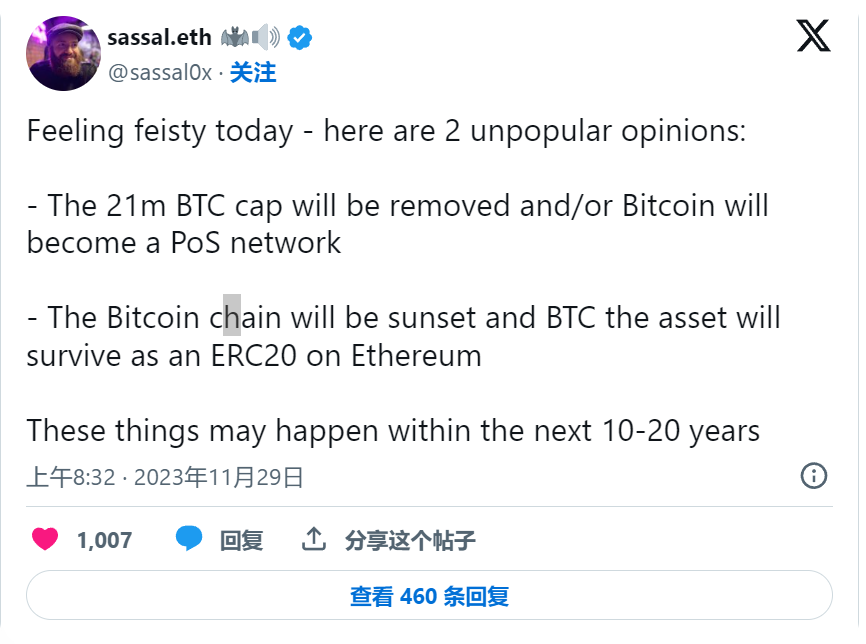
The actions suggested above could help Bitcoin avoid a future security crisis. However, the network’s conservative community is unlikely to embrace alternatives that compromise core principles.
To ensure its long-term sustainability and reduce reliance on block subsidies, Bitcoin must increase transaction fee revenue—but to do so, it first needs to give users a reason to use it.
Undoubtedly, Bitcoin users face an uphill battle if they aim to boost transaction revenue without adopting more radical proposals. Yet their efforts are not hopeless: in 2023 alone, transaction revenue on the Bitcoin network surged twice.
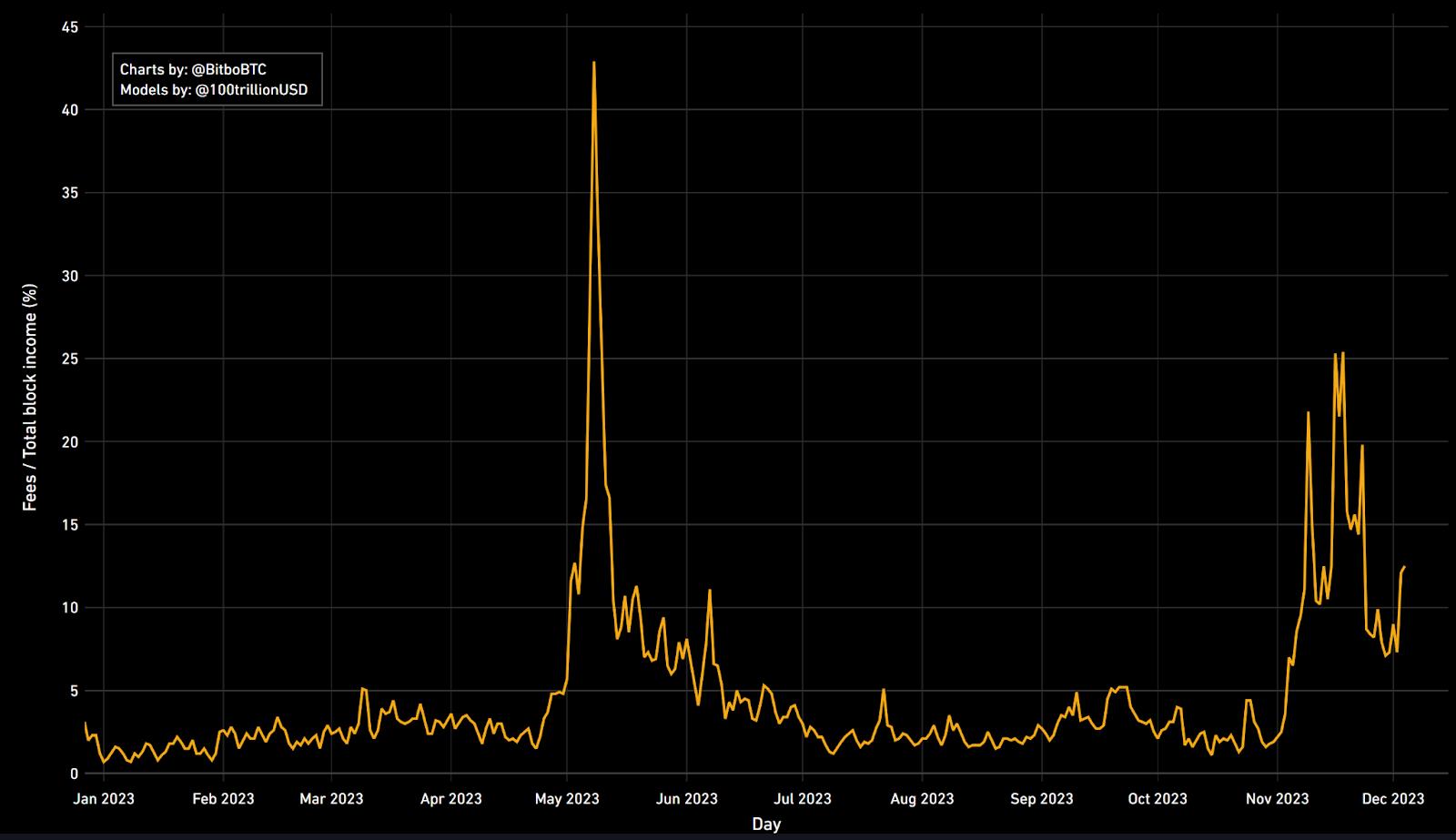
These spikes in activity were driven by ecosystems like Ordinals and BRC-20s—applications built using Bitcoin’s Taproot upgrade, which enhanced chain usability!
Unfortunately, as shown by the fact that transaction fees accounted for less than 10% of Bitcoin’s block reward over a six-month period, the usage of these applications is highly volatile and entirely dependent on market speculation.
Fortunately, new initiatives are underway to bring additional vitality to Bitcoin, potentially fostering more consistent on-chain transaction activity.
Botanix is bringing the EVM to Bitcoin via Layer 2 technology, with its testnet recently launched. EVM support allows developers on Botanix to write and deploy apps using Solidity—the primary programming language in crypto—and remain compatible with existing Ethereum infrastructure such as MetaMask wallets.
Although BitVM requires no fork and adds minimal complexity to Bitcoin, its two-party design severely limits applicability, meaning it cannot support large-scale decentralized applications involving multiple participants.
Bitcoin Improvement Proposal (BIP-300) seeks to introduce programmability through sidechains. However, this proposal would add significant complexity and require a soft fork to implement. Given Bitcoin’s historically conservative upgrade path, such a change is unlikely to happen.
Key Takeaway
While current investor enthusiasm around Bitcoin NFTs and meme coins may not represent the pinnacle of technological innovation, the emergence of new use cases capable of generating substantial transaction fee revenue suggests Bitcoin could one day become self-sustaining—even without block rewards.
What Bitcoin needs now is genuine application innovation that encourages repeated on-chain transactions. The simplest way to achieve this is by creating an environment where people can build useful applications!
Join TechFlow official community to stay tuned
Telegram:https://t.me/TechFlowDaily
X (Twitter):https://x.com/TechFlowPost
X (Twitter) EN:https://x.com/BlockFlow_News
 Bankless