From "The Dark Forest" to "Sky Strife": The Quest for the Holy Grail of Fully On-Chain Games
TechFlow Selected TechFlow Selected
From "The Dark Forest" to "Sky Strife": The Quest for the Holy Grail of Fully On-Chain Games
This article aims to explore the native possibilities brought by blockchain and the potential classic paradigms of fully on-chain games that may emerge from them.
 Navigating Web3 tides with focused insights
Author: ck, MetaCat
Preface
While the Ethereum ecosystem has given rise to the conceptually groundbreaking narrative of "Autonomous Worlds," in practice, Fully On-chain Gaming has yet to produce a true killer application or paradigm. This article explores the native possibilities brought by blockchain and the potential emergence of canonical paradigms in fully on-chain gaming—let’s embark together on the quest for the "Holy Grail" of on-chain games!
Insights from Dark Forest
Dark Forest, the pioneer of fully on-chain games, is a perfect fusion of two key innovations:
-
A "digital physics" built upon blockchain's immutability
-
Imperfect information gameplay (fog of war) enabled by zero-knowledge proofs (ZKP)
Digital Physics
The physical world functions reliably because of immutable laws such as gravity, conservation of energy, and Archimedes' principle. All human creations must operate within these constraints—laws that exist independently of human will. As the saying goes: "Nature follows constant laws; it does not exist because of Yao, nor perish because of Jie."
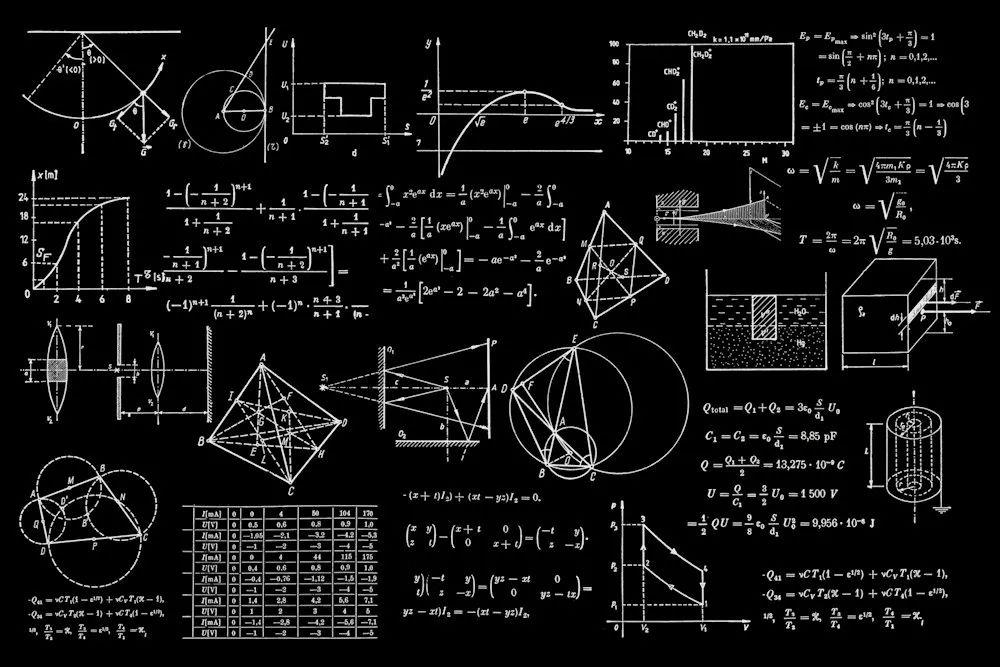
At its core, an Autonomous World is self-growing, self-organizing, and self-sustaining—just like the physical world. Therefore, its normal operation depends on establishing immutable "digital physical laws." This is precisely why Ludens emphasized in "Autonomous Worlds (Part 1)" that "blockchains are a type of substrate for worlds." Currently, blockchain remains the only medium capable of establishing immutable digital physical laws in digital space.
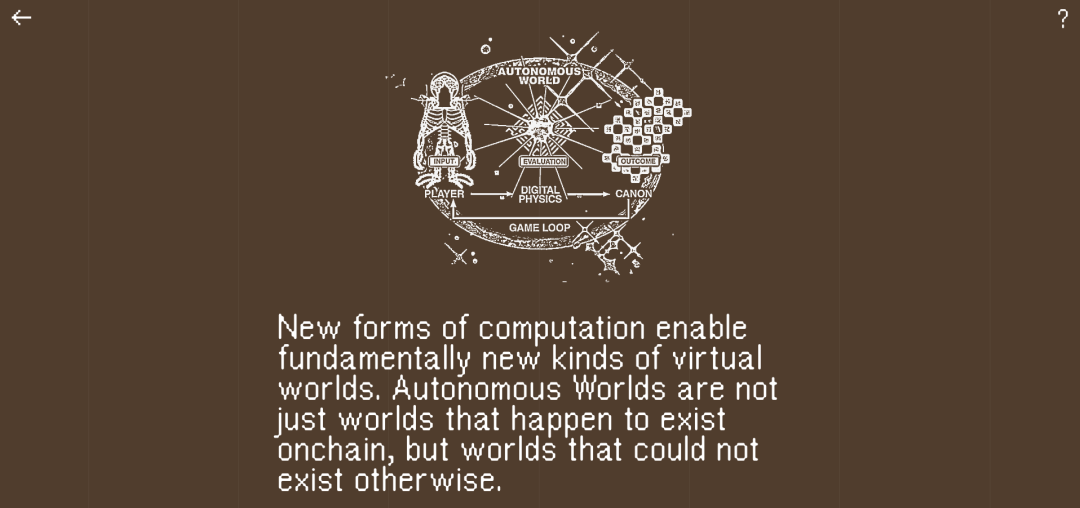
Autonomous Worlds
In a sense, we are gods of Autonomous Worlds—we define their physical laws, create beings, and shape civilizations. And perhaps we ourselves are artificial constructs within a higher-order physical reality. If the physical world is a first-order metaverse, then through Autonomous Worlds we are building second-order metaverses, which may in turn spawn third-order ones—does this not resemble the Buddhist notion of "thousands of great worlds" or the layered realities depicted in The Matrix? :)
In summary, blockchain is the sole pathway to realizing digital physics, and thus a critical starting point in our pursuit of the ideal form of fully on-chain games. For on-chain games to truly win users, they must offer something fundamentally absent in traditional games.
Imperfect Information Gameplay
Imperfect information gameplay is common both in the physical world and in traditional games—examples include business negotiations, sealed-bid auctions, poker, mahjong, and real-time strategy games like StarCraft. In the physical world, we rely on social rules to maintain information asymmetry; in traditional games, centralized servers enforce it.

In blockchain, elliptic curve cryptography enables zero-knowledge proofs (ZKPs), allowing for more "perfect" implementations of imperfect information mechanisms (like fog of war in Dark Forest). Here, "perfection" refers to the elegance and cost-effectiveness of the solution—the latter being crucial for widespread adoption.
Within Ethereum's Layer 2 roadmap, ZK Rollups represent a strong integration of blockchain and zero-knowledge proofs at the infrastructure level, laying the foundation for future applications.
In Dark Forest, "digital physics" and "asymmetric information gameplay" were seamlessly combined for the first time. Yet, in subsequent developments in fully on-chain gaming, we have not seen further advancement of this powerful synthesis. From a first-principles perspective, deepening and elevating this fusion may well be the path toward the Holy Grail of on-chain gaming.
Divergence in On-chain Gaming
The current landscape of fully on-chain gaming can be broadly divided into two camps based on game engines:
-
Explorations based on the MUD engine and OP Rollup scaling solutions, represented by Sky Strife, OpCraft, Word3, and Network States
-
Explorations based on the Dojo engine and ZK Rollup scaling solutions, represented by Loot Survivor, Roll Your Own, and Shoshin
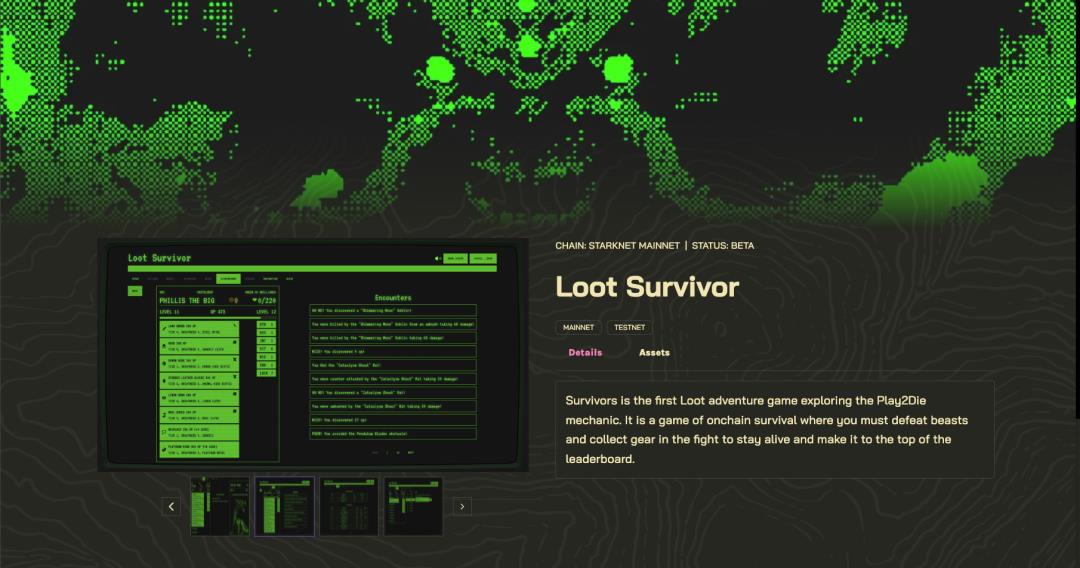
Loot Survivor
Games in both camps are either exploring how best to use on-chain game engines or determining which traditional game models can be effectively ported to on-chain environments. From the author’s perspective, neither direction has yielded truly impressive results. Additionally, recent hands-on experience in developing on-chain games (see here) reveals a broader trend: while on-chain game engines feature native innovation, actual game design still lacks sufficient novelty.
The Road Ahead
Drawing from these insights, the author believes that further integrating and elevating "digital physics" and "imperfect information gameplay" represents a more promising direction for fully on-chain gaming—a view also supported by another line of reasoning.
On one hand, superior product or technology alone does not guarantee market success. Casual games, for instance, are far simpler to develop than MMOs, yet thrive due to their alignment with human nature and attract large user bases. However, when considering such models in the context of on-chain or blockchain games, we quickly realize that Web3 wallets and cumbersome deposit/withdrawal processes deter most users.
On the other hand, from a crypto-native perspective, only radical innovation can push the boundaries of blockchain to their fullest extent. Only through such innovation—and the resulting surplus value—can we achieve a "downward-dimensional strike" to win over users. After all, the automobile did not triumph by being a better horse carriage.
Moreover, we observe that across time—past, present, and future—there will always emerge products that appear uninnovative and counterintuitive, yet gain massive popularity by tapping into human psychology or specific emotional currents. This does not diminish the importance of innovation; rather, it reflects another form of "involution" born precisely from a lack of true innovation.
Join TechFlow official community to stay tuned
Telegram:https://t.me/TechFlowDaily
X (Twitter):https://x.com/TechFlowPost
X (Twitter) EN:https://x.com/BlockFlow_News