DevConnect concludes: How did Chinese participants stand out in the hackathon?
TechFlow Selected TechFlow Selected
DevConnect concludes: How did Chinese participants stand out in the hackathon?
ETH Global has a large number of participating projects, so from an evaluation perspective, the final 10 winning teams must be distinctive and representative.
 Navigating Web3 tides with focused insights
DevConnect Istanbul has come to a close. This year's ETH Global hackathon was the most attended in history, with 1,350 hackers participating and over 420 projects submitted. In addition, numerous large and small hackerhouses were held around the city.
Prior to DevConnect, GCC—a community fund dedicated to supporting public goods in the Chinese-speaking world—launched a "Free Flights to Istanbul for 10 Builders" campaign. Amid fierce competition, four out of the ten public goods builders funded by GCC achieved notable results at the Istanbul hackathons!
Some made it into both the main ETH Global final and the Zusocial Hackerhouse final; others won multiple sponsor bounties or placed in the Starknet Hacker House. Riding on the momentum of their recent achievements, we spoke with them about their competition experiences, reflections on winning, observations of DevConnect, and advice for Chinese-speaking developers.
Pablo: Building Buddy Guard for Safer Nighttime Travel
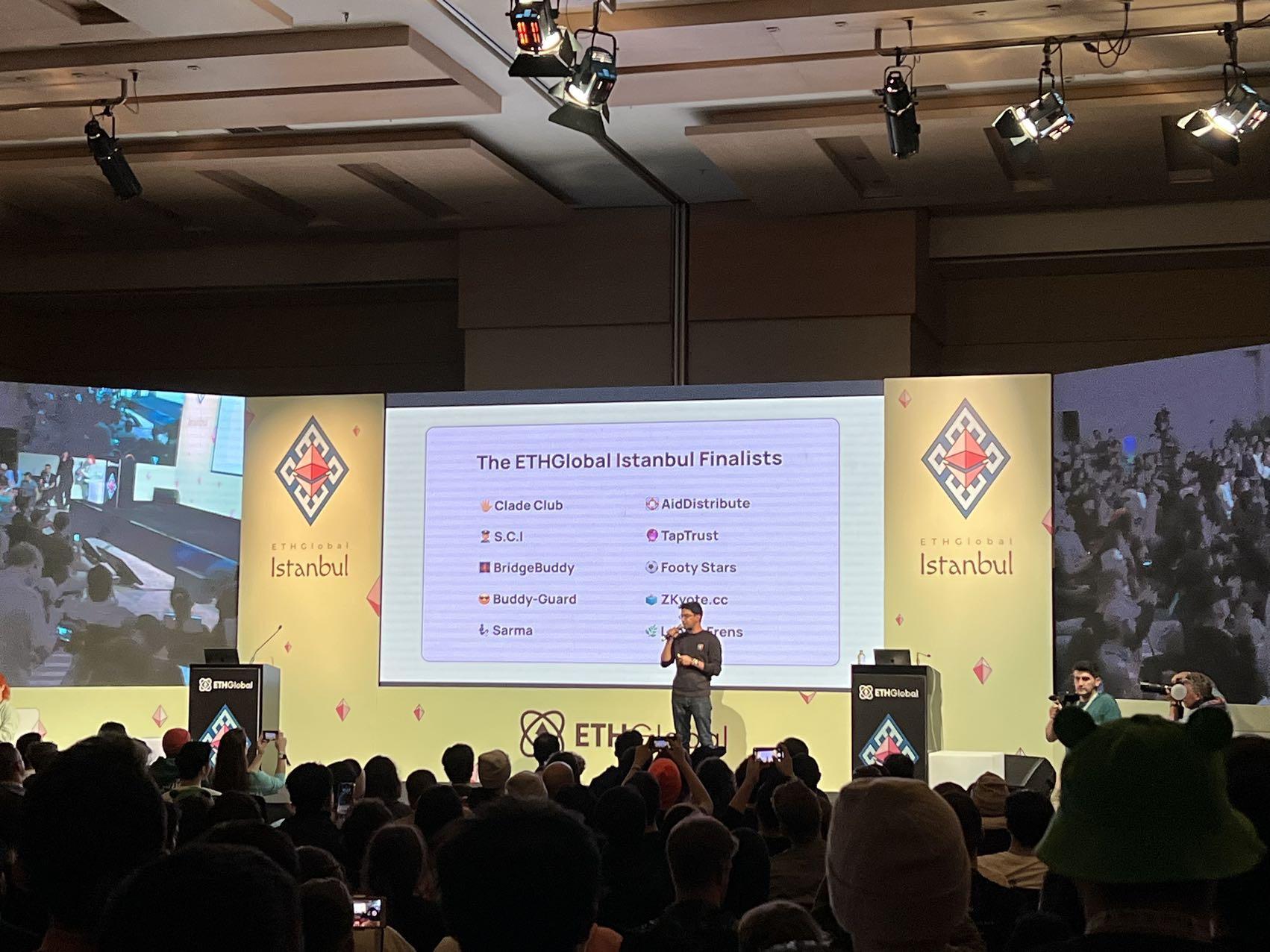
Pablo, from the Ethereum builder community PlanckerDAO, was one of the few Chinese-speaking participants to reach the finals of the main ETH Global track.
His project, Buddy Guard, is a social safety app designed for people—especially single women—who need to travel alone after late-night gatherings. A user (the person being protected) can create a protection order using staking tokens like ApeCoin or GHO, then add friends as guardians by tapping their NFC cards (Arx). Guardians are responsible for monitoring the user’s location and providing support when needed until the user cancels the order. Guardians earn online certifications to build reputation. If the user fails to cancel the order or update their status after a critical time window, the guardian must trigger an alert and provide assistance.

Where did this idea come from? Pablo explained that the concept originated from two female team members, Joy and Raigal. At crypto events, parties often go late into the night, creating safety concerns in cities with less secure environments. The inspiration came after a raave event, when a female roommate shared an Uber tracking link in their group chat upon returning late. Combining that moment with the NFC card infrastructure introduced during Zuzalu via Jumoji, the team created Buddy Guard.
On his winning strategy, Pablo emphasized relentless effort and intense development cycles. “Working nonstop was key,” he said. Only such dedication could allow a team to build a truly original product from scratch within the tight deadline, rather than just modifying existing tools.
But beyond hard work, there was also smart strategy. “With so many entries at ETH Global, the final 10 teams must stand out through uniqueness and representativeness,” Pablo noted. Buddy Guard used NFC cards, which differentiated its user experience. Combined with strong product vision and ethical values, these factors played a major role in the judging. On top of making the ETH Global final, Buddy Guard also won an award at the Zusocial Hackerhouse—the ultimate double win.
Project Link:
https://ethglobal.com/showcase/buddy-guard-1ivrj
0xhardman: TagTrove, Powered by ZK, Bringing Web2 Users into Web3
Hardman is a graduate student at Beijing University of Posts and Telecommunications. He is also the product manager and full-stack developer of Donate3, a product incubated by the Chinese-speaking developer community LXDAO.
As a student without stable income, the flight sponsorship from GCC significantly reduced financial pressure. “I immediately booked the cheapest ticket on Ctrip once I knew I got selected—I was pretty sure I’d qualify,” Hardman recalled.
Hardman had previously participated in Consensys’ online hackathon NAVH 2023 and Wanxiang Blockchain Hackathon, placing first and second respectively. But this was his first time attending an international offline ETH Global event. On day one, he was amazed by the premium swag bag. “But what really blew me away were the cat food snacks and the bottle opener keychain—such thoughtful nods to Istanbul’s local culture,” he said.
TagTrove aggregates users’ Web3 addresses and Web2 data, generates tradeable zero-knowledge proof (ZKP) tags, and binds all ZKP tags to an AA wallet. This allows users to maintain an anonymous identity while earning revenue from it. Throughout ETH Global, ZK was undeniably the hottest topic—seven out of the ten finalist projects incorporated ZK in some way.
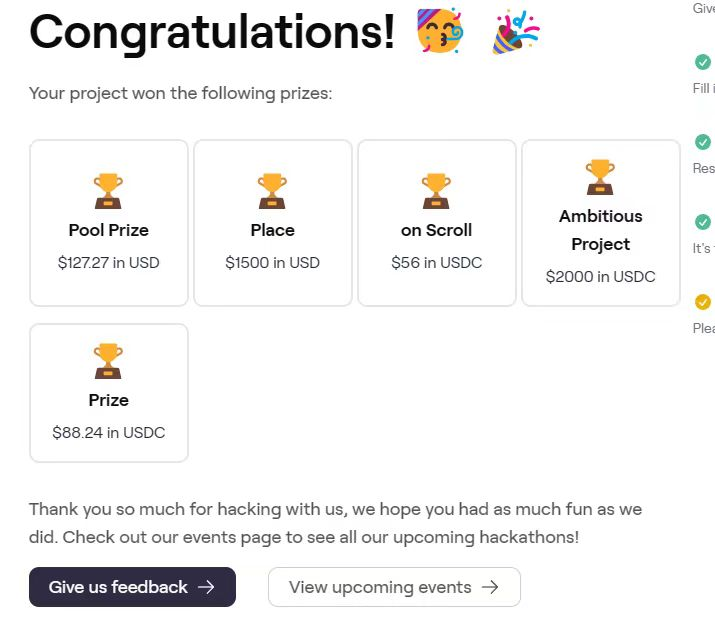
Although TagTrove didn’t make the main finalist list, Hardman remained confident before the sponsor bounty announcements—and rightly so. TagTrove secured $3,500 from Mask Network and WalletConnect, along with additional prizes from Scroll and WorldCoin, making it a highly rewarding experience.
Project Link:
https://ethglobal.com/showcase/tagtrove-kvtma
Zack: LensBet, the On-Chain Betting Game
Zack was one of the last-minute arrivals among the winners. He had already given up on traveling to Turkey when, in late October, he received news that GCC had selected him for flight sponsorship—prompting a last-minute change of plans. That impromptu decision turned out to be surprisingly fruitful. As Zack put it, “It was my first real taste of hackathon energy—chatting with fellow builders, bonding with teammates, and somehow I ended up winning a prize almost by accident.”
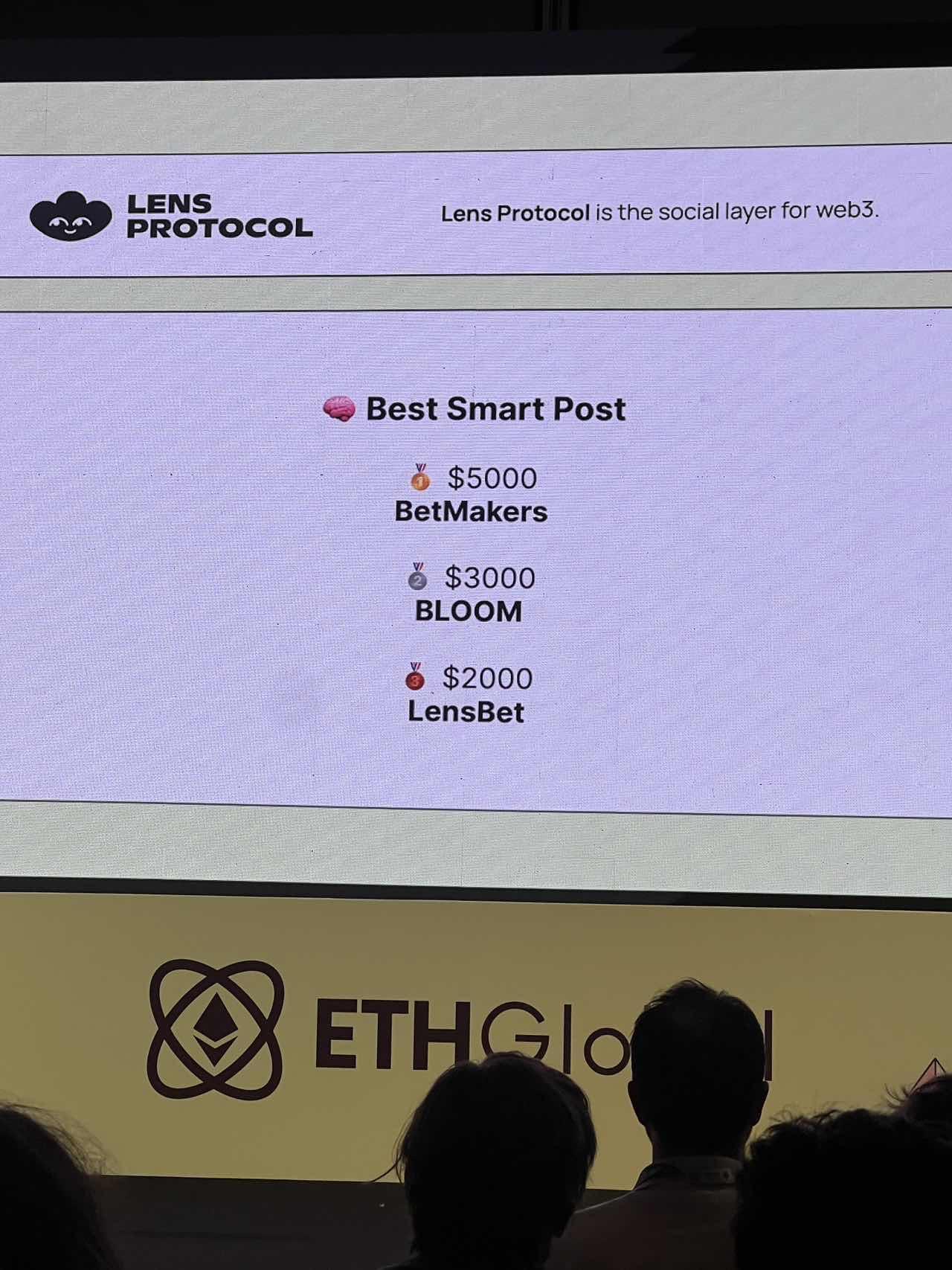
Having entered the industry in 2016, Zack has extensive development experience. He jokingly describes himself as “a bit lazy,” and indeed didn’t spend much time polishing code for this event—but the outcome was far from casual. LensBet is a decentralized betting game integrated with Reality.eth, a decentralized oracle. To ensure fair arbitration and prevent wealthy individuals from influencing outcomes through large bond deposits, the project implements quadratic voting. On the frontend, it integrates Lens Protocol’s Smart Post module, allowing users to interact with the betting game in a fully decentralized environment—delivering a deeply native crypto experience. The project ultimately won a $2,000 prize sponsored by Lens Protocol.
Project Link:
https://ethglobal.com/showcase/lensbet-cpp8p
Gink:
Like Hardman, Gink is also a student. Aside from academics, he focuses on research communities AW Research and RADAR, and contributes to the development of cross-chain games and autonomous worlds (AW). His trip to Istanbul had a clear focus: cross-chain gaming. Participating in Starknet Hackerhouse, he represented AW Research and teamed up with members from game developer community CheDAO to build a protocol called ryogae.
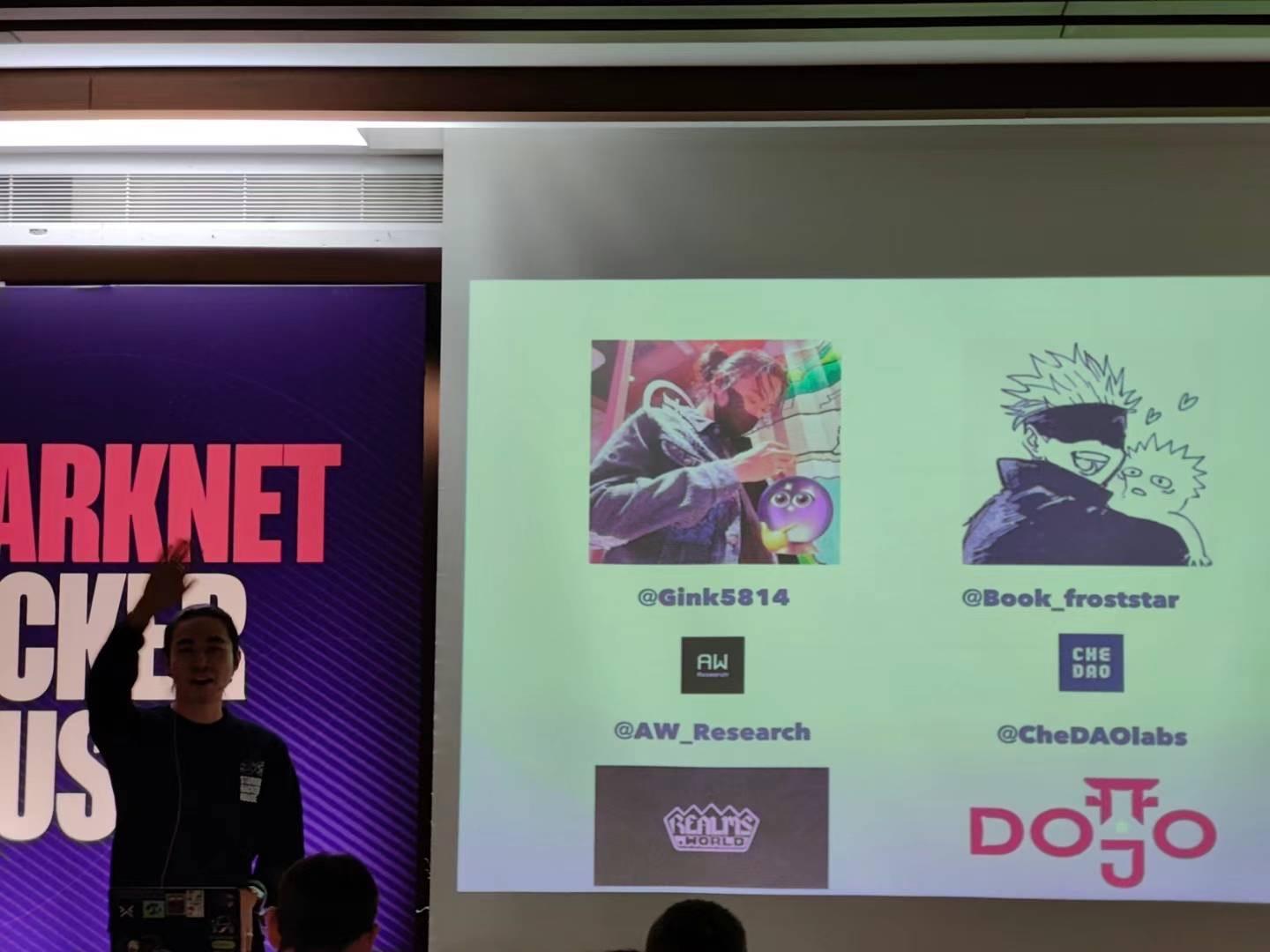
Ryogae is a non-invasive cross-chain game asset trading protocol. As Gink explained, this protocol allows in-game data to be traded directly—without needing to convert assets into ERC20, ERC721, or ERC1155 formats. Their testnet already supports purchasing in-game gear directly with ERC20 tokens. Based on scoring, the project placed fifth at Starknet Hackerhouse.
Project Link:
https://github.com/CheDAOLabs/Ryogae/
Both Gink and Pablo attended ZuConnect, which took place before DevConnect. Gink even served as a volunteer, and many participants remember the tall Asian guy—standing 1.9 meters—running around various event venues. Friends joke that Gink “didn’t miss a thing: volunteering, hacking, and partying.”
Whether ZuConnect or DevConnect, these events are more than just competitions or lectures—they’re platforms for builders to make friends and find teammates. Stepping outside one’s native-language bubble and engaging with multicultural, global communities is actually key to hackathon success, and this kind of integration builds over time through repeated participation in international events. For example, Pablo met his teammate Joy at Hack Zuzalu in Singapore. Joy, who has competed in over a dozen hackathons, brought invaluable project management skills that proved crucial to their victory. Hardman and his teammates Samuel and 0xJA already knew each other—they had hung out together during “Summer of the Wa Mao” in Dali. Samuel had previously won at ETH Global Paris, bringing seasoned expertise to the team. Pablo also shared how during DevConnect, he learned about how Lebanon has leveraged cryptocurrency to support public goods amid national financial collapse—giving him fresh insights into global collaboration on public goods.
At DevConnect, diverse and passionate minds collide and connect—building together, petting cats, playing poker, smoking hookah, eating grilled meat, experiencing Turkish baths… As Hardman reflected after meeting a founder he deeply admires at a rooftop bar: “Five years ago, I was just starting college, probably expecting to smoothly get into a CS graduate program and eventually work diligently at a big tech company. But life has brought me somewhere I love far more—a place of greater freedom and broader choices. I’m genuinely happy.”
*GCC stands for Global Chinese Community of Universal Digital Commons. We are a community grant fund dedicated to supporting digital public goods in the Chinese-speaking world.
If you have a public good project seeking funding, visit our website: https://www.gccofficial.org/.
For partnership inquiries, please DM us on X at @GCCofCommons or Telegram @HazelHu.
Join TechFlow official community to stay tuned
Telegram:https://t.me/TechFlowDaily
X (Twitter):https://x.com/TechFlowPost
X (Twitter) EN:https://x.com/BlockFlow_News
 @GCCofCommons