The Untold Story of OpenAI's Growth: Idealism, Conflict, Choices, and Power Struggles
TechFlow Selected TechFlow Selected
The Untold Story of OpenAI's Growth: Idealism, Conflict, Choices, and Power Struggles
OpenAI's growth story hasn't been smooth sailing, reflecting behind the scenes the idealism, conflicts, choices, and power struggles among Silicon Valley's elite, top scientists, and capital.
 Navigating Web3 tides with focused insights
By Chen Qian
Which company today stands at the epicenter of controversy—simultaneously mythologized, admired, and fiercely criticized? The answer is clear: OpenAI, the frontrunner of this AI wave.
But OpenAI’s journey has not been smooth. Behind its rise lies a story reflecting the idealism, conflicts, choices, and power struggles among Silicon Valley's elite, top scientists, and capital interests.
This is thus a richly detailed tale: about a group of top AI researchers driven by pure belief; about how Elon Musk indirectly triggered OpenAI’s commercialization; about Sam Altman abandoning idealism to align with Microsoft; about the internal tensions between Microsoft CEO Satya Nadella and co-founder Bill Gates; and about the untold stories behind ChatGPT’s global sensation. Our Silicon Valley 101 team has formed an internal AI research group, involving many industry practitioners, aiming to professionally uncover more compelling tech narratives. And the story of OpenAI’s ascent will be one of the most pivotal in shaping humanity’s future.
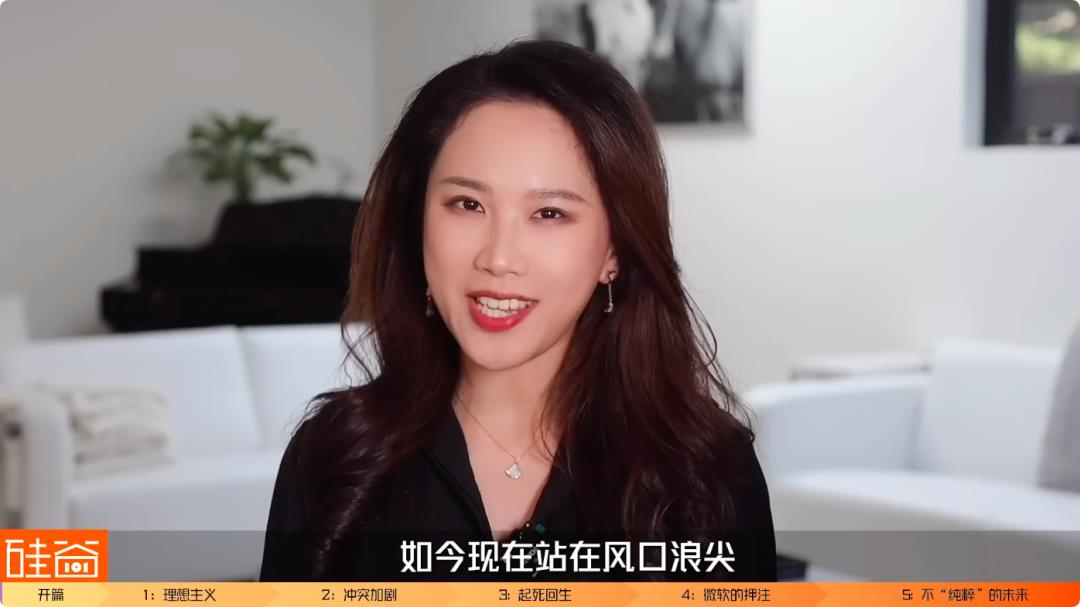
At the end of March 2022, Elon Musk and other tech leaders jointly issued an open letter calling for a pause in developing more powerful AI systems due to safety concerns.
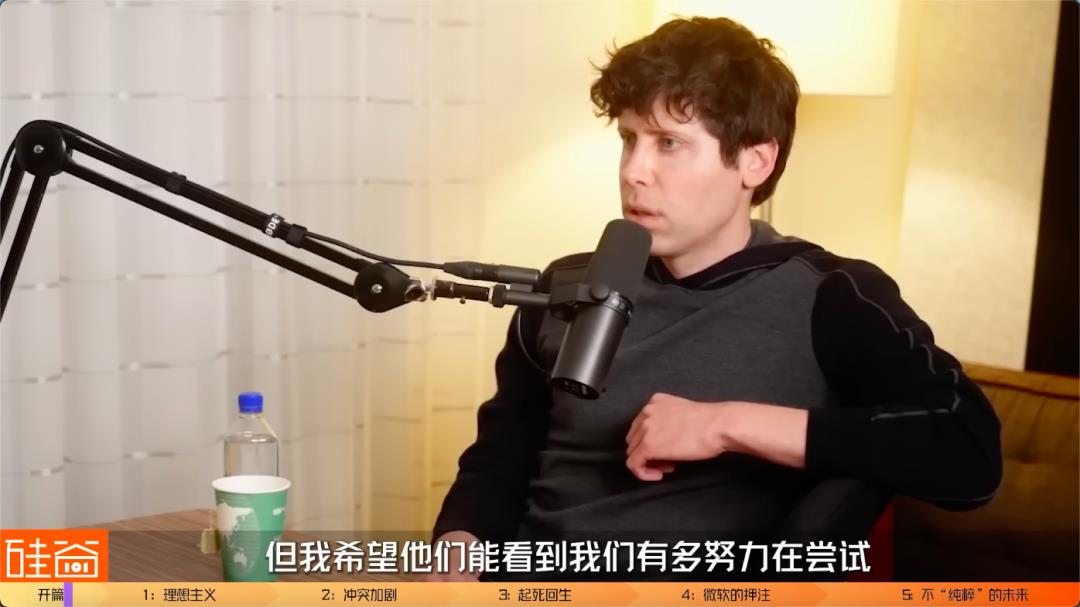
Sam Altman is exceptionally skilled in public relations and business strategy. As voices both for and against AI grow louder, Silicon Valley is taking sides—and recently, numerous insiders have revealed new details about OpenAI’s evolution. Drawing from our collected information—including exclusive leads from Silicon Valley 101—we’ll now take a deep dive into the rise of OpenAI.
01 Idealism: A Group of Pure, Elite Scientists
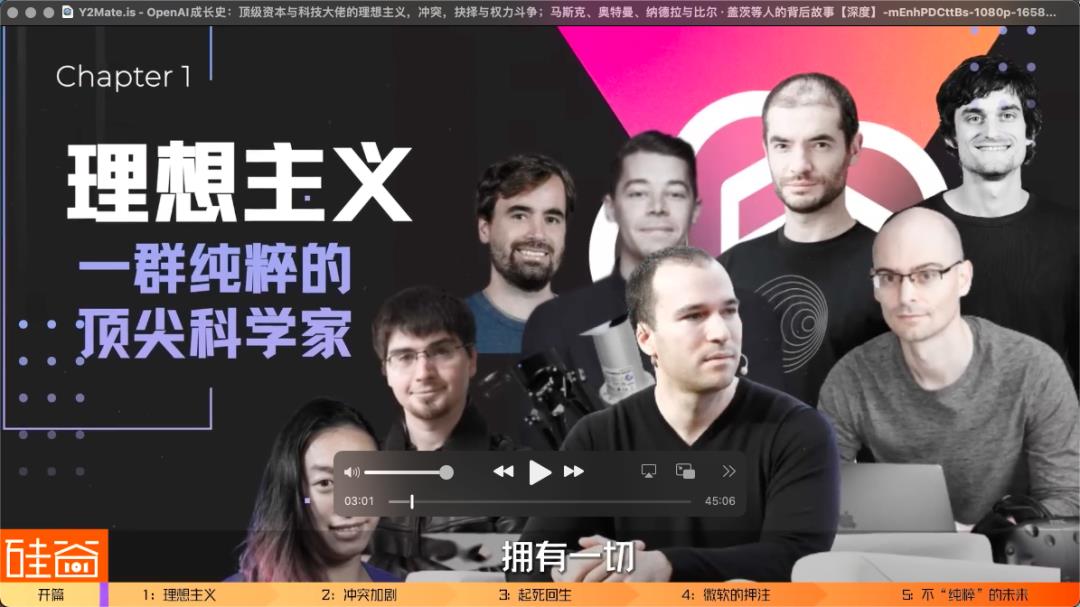
In 2014, Google acquired DeepMind—the then-leading AI research lab—for $600 million. Yes, that’s the same company later known for AlphaGo defeating Go champions Lee Sedol and Ke Jie.
In Silicon Valley, influential figures grew uneasy. They foresaw earlier than the public the immense potential and risks of AI: whoever controls the most advanced AI technology will wield unprecedented power.
They feared Google would become a monopolistic AI superpower—a concern not even Google’s “Don’t Be Evil” motto could alleviate. According to Wired, on a summer evening in 2015, several of Silicon Valley’s most powerful individuals gathered in a private meeting room at the Rosewood Hotel in Palo Alto, adjacent to Stanford University.
Yes, the priciest luxury hotel in Silicon Valley. Unlike startups born in garages, this may have foreshadowed that this golden-child AI project was destined to be a money-burning machine.
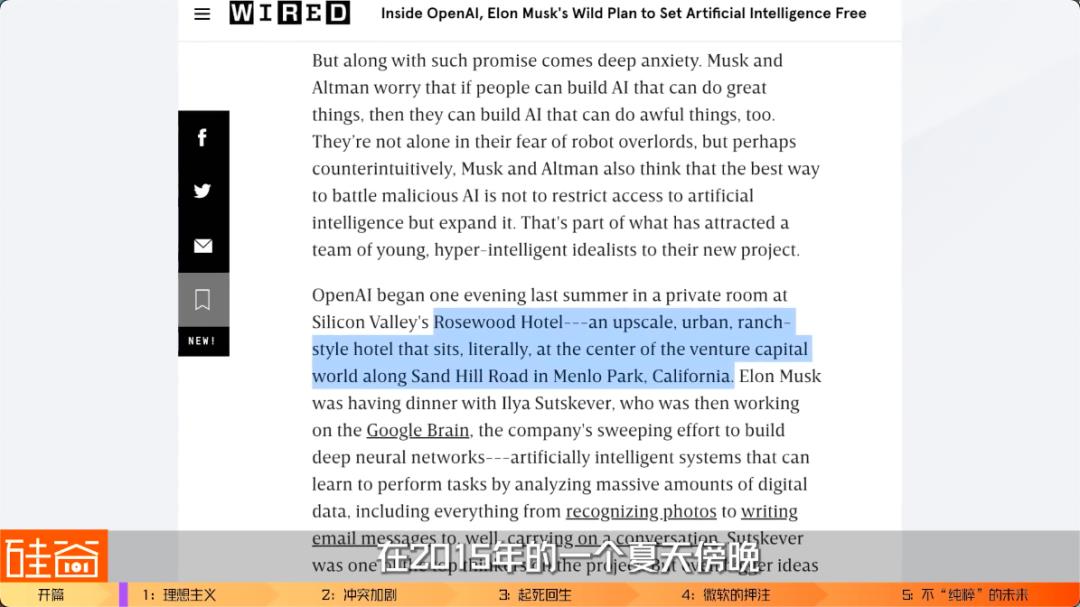
The meeting was initiated by Sam Altman, head of YC, aiming to gather top AI researchers to discuss founding an AI lab. Attendees included Ilya Sutskever, then at Google Brain; Greg Brockman, CTO of Stripe; and Elon Musk, Sam Altman’s close friend. Musk attended because AI was crucial for his companies—Tesla and SpaceX—and he had long warned about AI safety. Thus, two powerful figures backed by vast resources teamed up with top-tier AI researchers to launch a bold initiative.
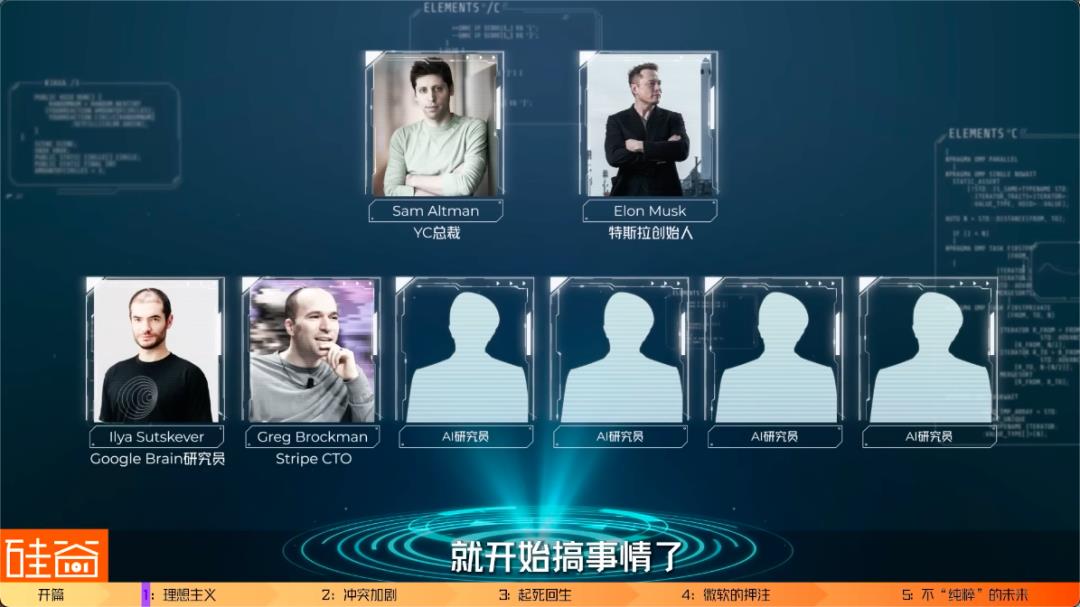
Their original vision was to create Google’s antithesis—an AI lab free from corporate, capital, or individual control. All agreed this was the right path toward safely building Artificial General Intelligence (AGI)—machines capable of performing any intellectual task humans can.
Starting a company requires people, funding, and direction. With a mission set, the next steps were talent and money. To lead the world in AGI, they needed not just good talent, but the absolute best in AI. Yet these experts were scattered across tech giants, well-compensated—how could they be lured away?
Brockman first thought of Yann LeCun, Yoshua Bengio, and Geoffrey Hinton—the three Turing Award-winning pioneers of neural networks.
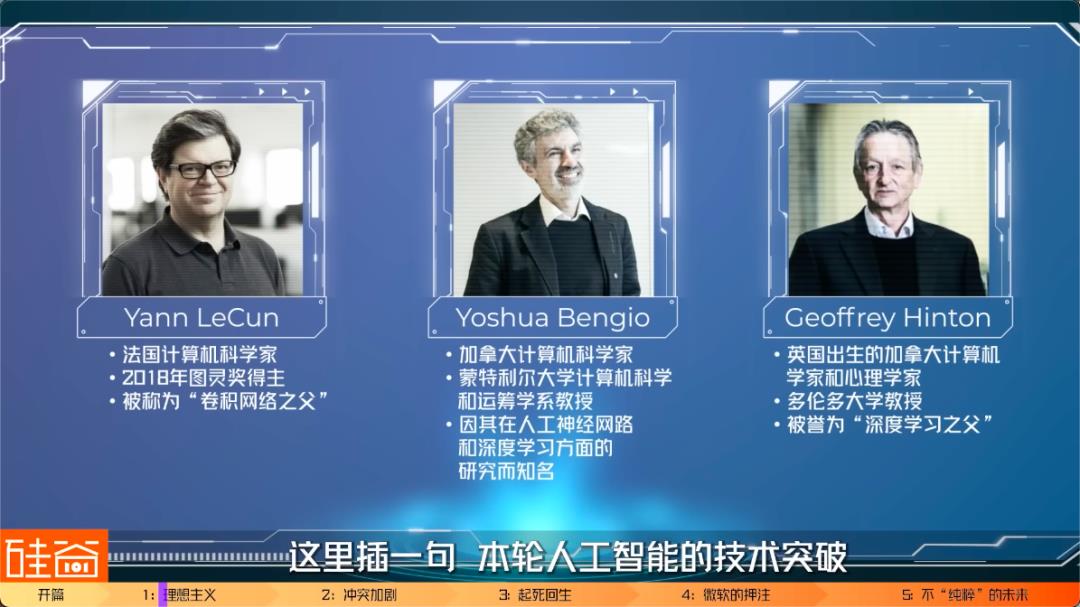
Side note: The recent breakthroughs in AI stem from advances in the once-marginalized "neural network" research path—credit to these scientists who persisted through decades of AI winters. We’ll explore this history in depth in a future AI model series—stay tuned to Silicon Valley 101.
Back to Brockman: Hinton was at Google, LeCun at Facebook—both too senior to leave full-time. Bengio, active in academia, wasn’t interested in industry but gave Brockman a list of top neural network researchers. Remember this timeline—there’s a bitterly ironic twist involving Bengio later.
Brockman treated this list like a martial arts manual, immediately contacting everyone on it.
But here was the problem: These elite researchers earned high salaries at big tech firms. Recruiting them to a nonprofit with an uncertain future and no equity was tough. How to break through? Enter another Silicon Valley advantage: Napa wineries.
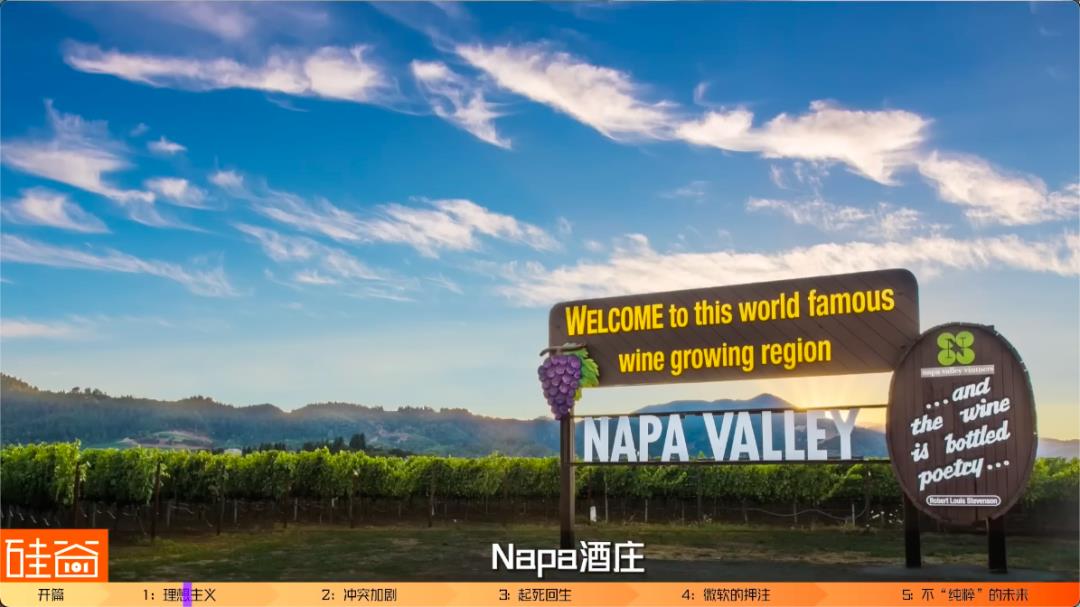
Drive an hour from Silicon Valley to Napa Valley, America’s premier wine region. What can’t be negotiated at a Silicon Valley Starbucks might be sealed during a weekend retreat in Napa. A seasoned entrepreneur, Brockman invited ten key researchers from Bengio’s list for a weekend in Napa. As he told Wired: “When you bring people together in Napa, chemistry happens. You’re stuck there—you have to talk, to engage.”
As the weekend ended, Brockman invited all ten to join OpenAI, giving them three weeks to decide. But word spread—tech giants responded with higher offers to retain their talent. Due to these retention efforts, OpenAI delayed its official launch announcement. Keep in mind, these AI researchers already earned top-tier salaries.
Media reports noted salaries “eclipsed the cost of a top quarterback prospect in the NFL.” Not being an NFL fan, I looked it up—and was shocked: Top quarterbacks earn millions to tens of millions annually. So do elite AI researchers at tech giants, including stock-based compensation.
One researcher said that when their departure was considered, companies offered 2–3 times their already sky-high salaries.
Yet despite these lucrative offers, nine out of ten top AI researchers rejected the money and joined OpenAI. Perhaps Napa’s wine helped. OpenAI couldn’t match such pay—it was a nonprofit required to disclose expenses. Tax filings show Chief Scientist Ilya Sutskever earned about $1.9 million, and lead researcher Ian Goodfellow $800,000—both poached from Google. While their salaries sparked some controversy (high for a nonprofit), remember: they took significant pay cuts to join OpenAI. I’ve reviewed OpenAI’s annual tax returns—they contain many interesting insights.
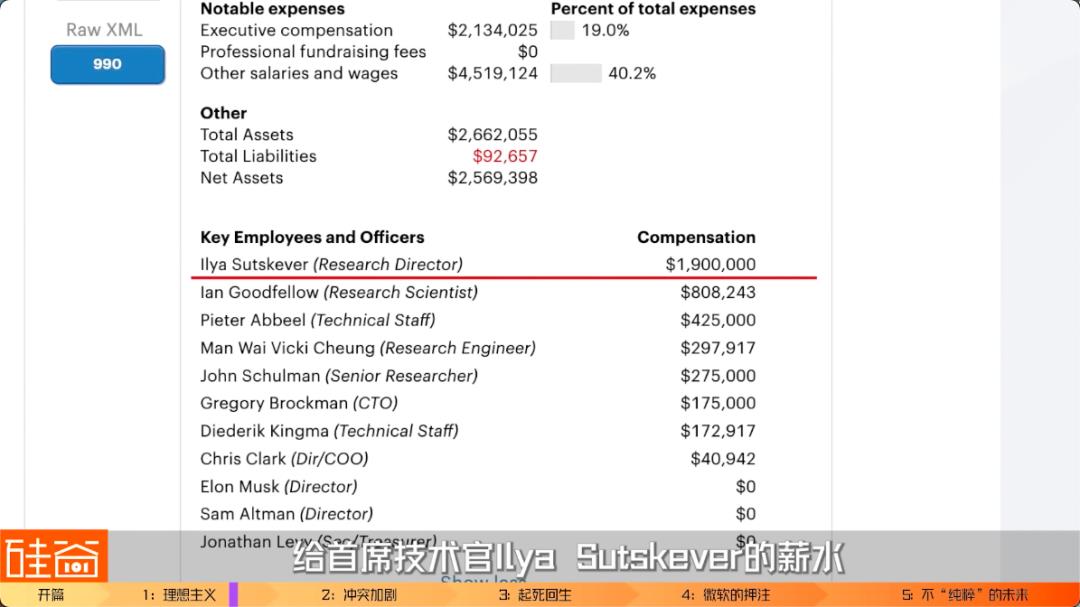
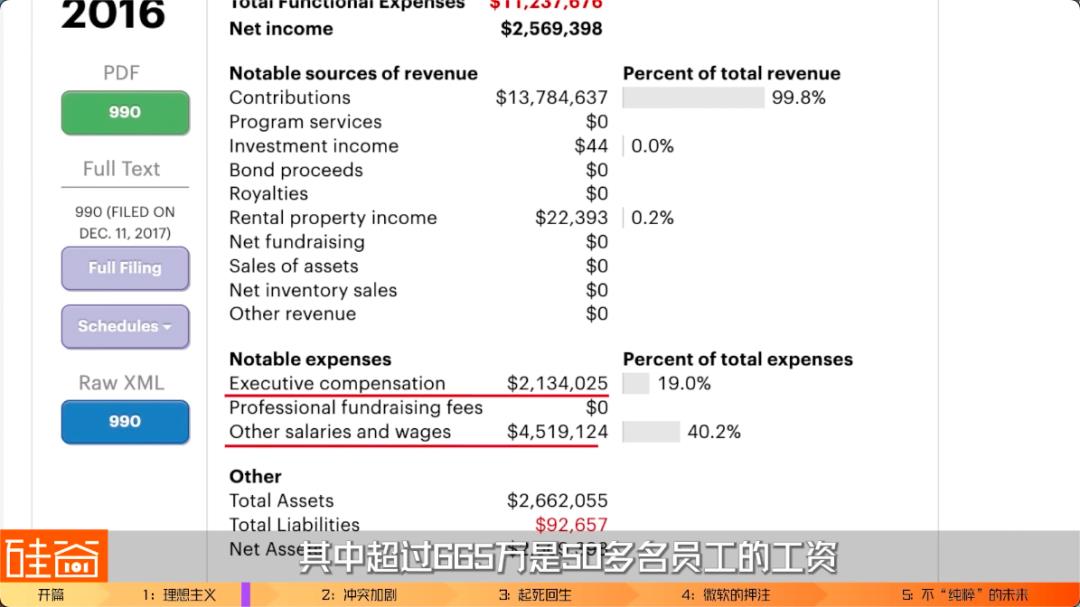
In its first year, OpenAI spent $11.23 million, over $6.65 million of which went to salaries for 50+ employees. On average, this is modest for Silicon Valley.
These top scientists gave up high-paying jobs to join a highly uncertain nonprofit—with no equity, no lavish benefits, no grand annual events, and no clear promotion paths. They united solely for a pure purpose, enshrined in OpenAI’s charter: to ensure Artificial General Intelligence (AGI) benefits all of humanity.
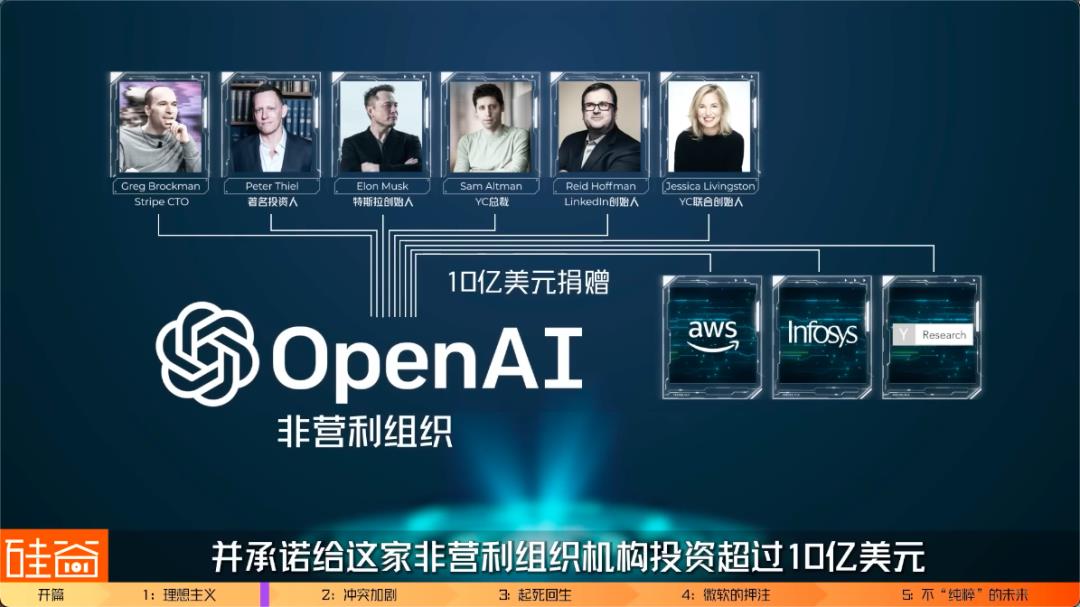
By late 2015, Sam Altman (YC president), Greg Brockman (former Stripe CTO), Reid Hoffman (LinkedIn co-founder), Jessica Livingston (YC co-founder), Peter Thiel, Elon Musk, Amazon AWS, Infosys, and YC Research announced the formation of OpenAI, pledging over $1 billion to this nonprofit. Under OpenAI’s structure, no one owns shares or equity, and assets or income will never be distributed to donors or founders. OpenAI promised to open-source its patents and research and freely collaborate with other institutions and researchers.
Sounds idealistic and utopian? It was initially inspiring—but soon, internal conflicts erupted.
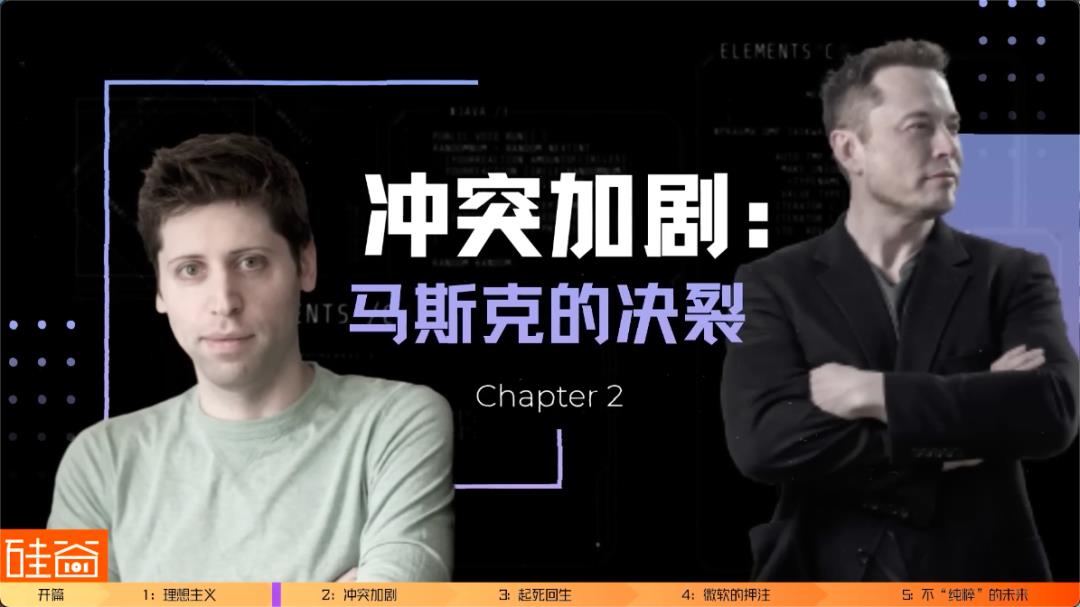
02 Escalating Conflict: Musk’s Breakup
The conflict arose simply: AI development consumes massive money, resources, computing power, and time. Initially, top researchers and investors could fund the project out of passion. But in practice, spending became a bottomless pit. Compared to opponents backed by hundreds of billions—tech giants—OpenAI struggled. An early OpenAI intern recalled: “Office seats were filled with industry legends. Everyone had different ideas and expertise. No consensus emerged—everyone resisted each other. That was the hardest part.”
Indeed, in its early years, OpenAI was consistently outmatched by Google’s DeepMind.
Tax records show the pledged $1 billion didn’t arrive all at once—it trickled in, meaning OpenAI had limited annual budgets and couldn’t spend freely. For comparison: In 2017, OpenAI’s operational expenses totaled $28.66 million, including $7.9 million on cloud computing—CPUs and GPUs were even rented from Google. Meanwhile, DeepMind, backed by Google, spent $442 million that year, freely accessing Google’s computing resources. The disparity in funding and infrastructure was stark.
Early OpenAI research made little impact, while Google’s achievements dominated headlines.
For example, in 2016, when OpenAI gained niche recognition with OpenAI Gym and Universe, Google DeepMind’s AlphaGo defeated Go champion Lee Sedol, sparking global AI awareness. In 2017, OpenAI finally beat top human players in Dota 2—could it gain momentum? Then Google released the Transformer model, the foundational architecture for all large language models, shocking the entire industry. In 2018, OpenAI launched GPT-1 based on Transformer, but Google quickly released BERT—a groundbreaking model with four times GPT’s parameters, outperforming GPT in nearly every metric.
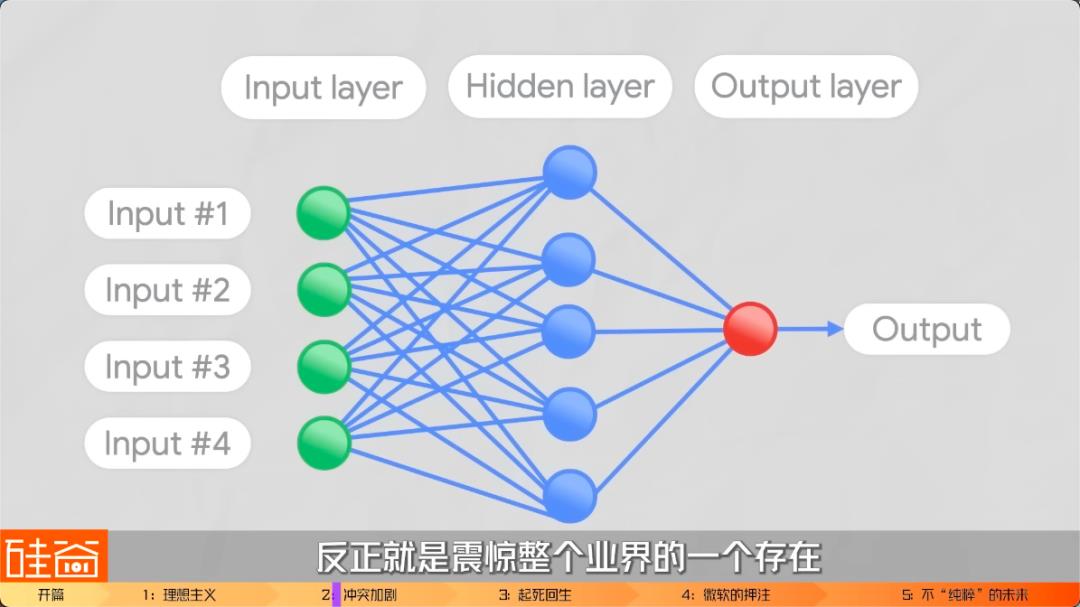
A quick aside: If the products, technologies, and models mentioned sound confusing, don’t worry. Our upcoming large-model series will explain their evolution in detail. For now, just know: by late 2018, Google comprehensively outperformed OpenAI.
At this point, industry skepticism grew. Many top technical talents who’d joined OpenAI began returning to giants like Google and Facebook. The company faced severe talent loss and morale issues.
By 2018, Elon Musk had enough. He confronted the team: “What are you doing? Burning money without results! You promised to surpass Google and achieve AGI first—yet you’re so far behind!” Those familiar with Musk know his strong desire for control. According to Semafor sources, Musk proposed to the OpenAI board: “I want full control—I’ll be CEO.”
But in 2018, Musk himself was overwhelmed by Tesla—Model 3 production hell, short-sellers betting on bankruptcy, Musk sleeping in the factory. Despite this, he wanted to fully take over OpenAI, a completely different venture. The OpenAI board deemed this unrealistic and rejected his proposal. As reported by Semafor and Wired, Musk left angrily.
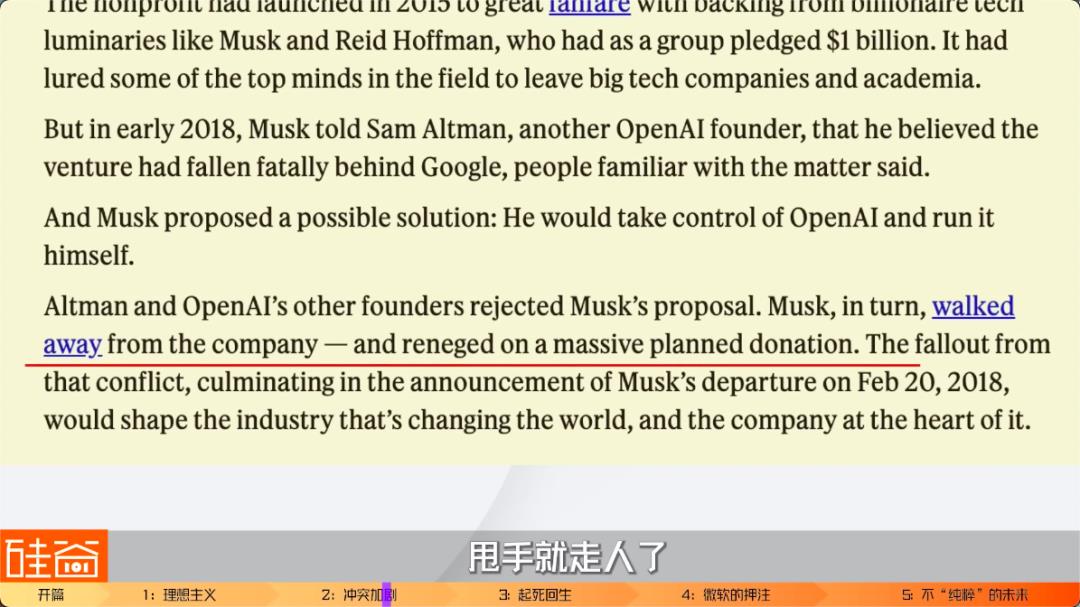
Other factors fueled tension: Musk recruited OpenAI core researcher Andrej Karpathy to lead Tesla’s self-driving efforts—seen as poaching. This created friction. (Side note: Karpathy recently rejoined OpenAI—more drama there.) Conspiracy theories exist, but we’ll skip those. In any case, in 2018, Musk announced his exit from the board, maintaining public cordiality and stating he’d continue donating to OpenAI.
But Musk immediately halted donations.
Wired and Semafor reported Musk had pledged $1 billion to OpenAI over several years but delivered only around $100 million upon leaving. Thus, Musk’s departure and unfulfilled pledge pushed OpenAI into crisis: AI training proved even costlier than expected. Without technological breakthroughs and continued dominance by giants like Google, OpenAI risked shutting down.
It was then that Sam Altman realized he had to step up.
Before 2018, Sam held only a “director” role internally—CEO was Greg Brockman. As recalled by an OpenAI intern, Sam was rarely seen—he still led YC, managing its operations and startup incubation.
OpenAI’s tax filings show Sam added the title of President alongside Director in 2018. After Musk left the board, Sam succeeded Brockman as CEO in 2019, with Brockman stepping down to CTO. This meant Sam resigned from YC to fully focus on OpenAI.
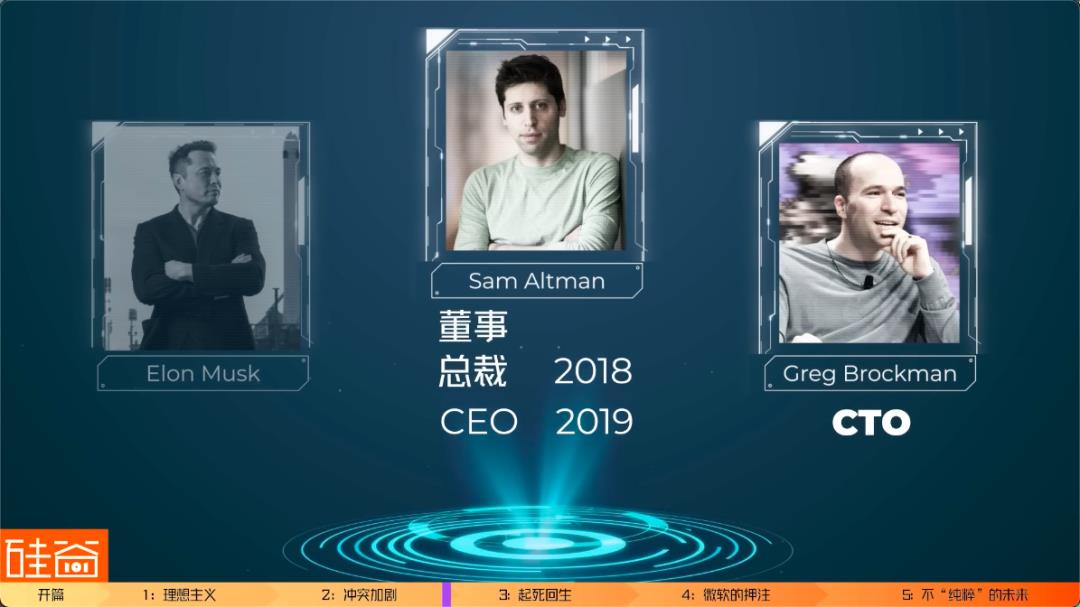
For Sam, Musk’s breakup shook his faith in the nonprofit model. His decision to abandon pure idealism and pursue a pragmatic commercial path enabled OpenAI and ChatGPT to emerge before the world.
03 Resurrection: Sam Altman’s Commercial Turn
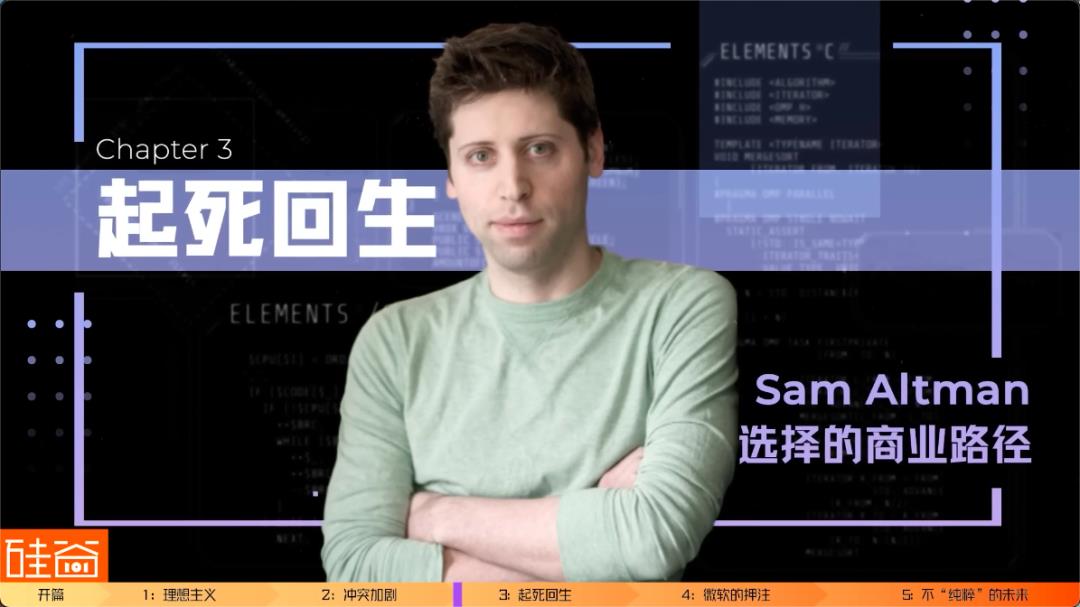
Let’s examine Sam Altman. He’s an almost mythical figure, often suspected—like Musk—of being a robot or AI. He once joked to a reporter: “I should visit the restroom more often, so you won’t suspect I’m an AI.”
Born in 1985 to a Jewish family in Chicago, raised in Missouri, Sam learned programming at eight, came out as gay at sixteen, entered Stanford, dropped out sophomore year to start Loopt—a mobile app later sold for $43 million in 2012. At 27, Sam earned his first fortune—$5 million. When YC founder Paul Graham retired, he appointed 28-year-old Sam as YC’s president. Sam later co-founded Hydrazine Capital, a VC fund investing in YC startups. Within four years, it returned tenfold, making Sam financially independent early on.
In just a few lines, we see Sam is exceptionally gifted, brilliant, self-driven, and obsessed with efficiency.
A 2016 New Yorker profile extensively covered Sam, with memorable details:
Physically, Sam is slight—about 5’7”, 130 lbs (59 kg), with green eyes described as piercing like a great horned owl’s. Great horned owls differ from regular owls—the former intensely sharp, the latter somewhat cute. Sam’s posture is odd—he curls up, often mistaken for having Asperger’s syndrome.
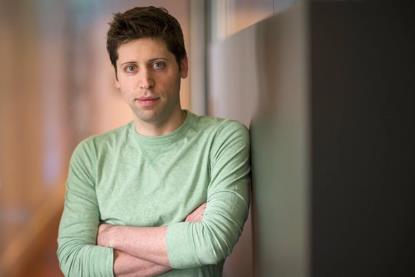
In work style, he’s harsh on himself and others—demanding, emotionally detached, moody, a relentless workaholic who once suffered sepsis. He shows extreme impatience toward things or people he dislikes, staring unblinkingly at employees speaking slowly, pressuring them to speed up. So yes—extremely efficient, hardworking, and intelligent. Much like Musk and Jobs.
But Sam Altman’s greatest strength lies in clear thinking and intuitive grasp of complex systems—in other words, business strategy and ambition. He’s indifferent to technical minutiae. What fascinates Sam is the potential global impact of technology. This skill is vital for tech entrepreneurship—perhaps why Paul Graham unexpectedly chose Sam as his successor.
Honestly, many in Silicon Valley resented Sam’s appointment. He was young, and his first startup wasn’t notably successful. Loopt once valued at $175 million failed to raise further funds, selling for $43 million—barely recouping investment, a negative return for VCs. Sam called it a complete failure. Yet Paul Graham insisted: Sam was the one he sought. He had no list—only one name: Sam.
As YC’s leader, Sam fully demonstrated his ambition—essentially restructuring YC. Before Sam, YC selected ~200 startups yearly from thousands of applicants, giving each $120K for 7% equity, incubating for three months, then demo day for fundraising.
But Sam disliked this model—viewing it as merely launching entrepreneurs onto rickety boats. He wanted to build an ironclad fleet backed by a powerful empire. Meaning: YC wouldn’t settle for 7%—it would invest more capital early and continue funding post-incubation. Sam didn’t aim for 200 companies yearly—he wanted 1,000, 10,000. He envisioned these companies forming trillion-dollar vessels truly advancing humanity.
Ironically, in recent years, Silicon Valley faced an awkward reality: Though investors and founders loudly proclaimed changing the world and “shooting for the moon,” in practice, VCs focused on “sixpence” questions—when will revenue come, can growth curves look better, can margins widen? Founders were urged to build regional rental platforms or delivery services. Meanwhile, “moonshot” projects—nuclear fusion, biotech, AI—received increasingly cautious funding. Hence, claims that “Silicon Valley is dead” proliferated.
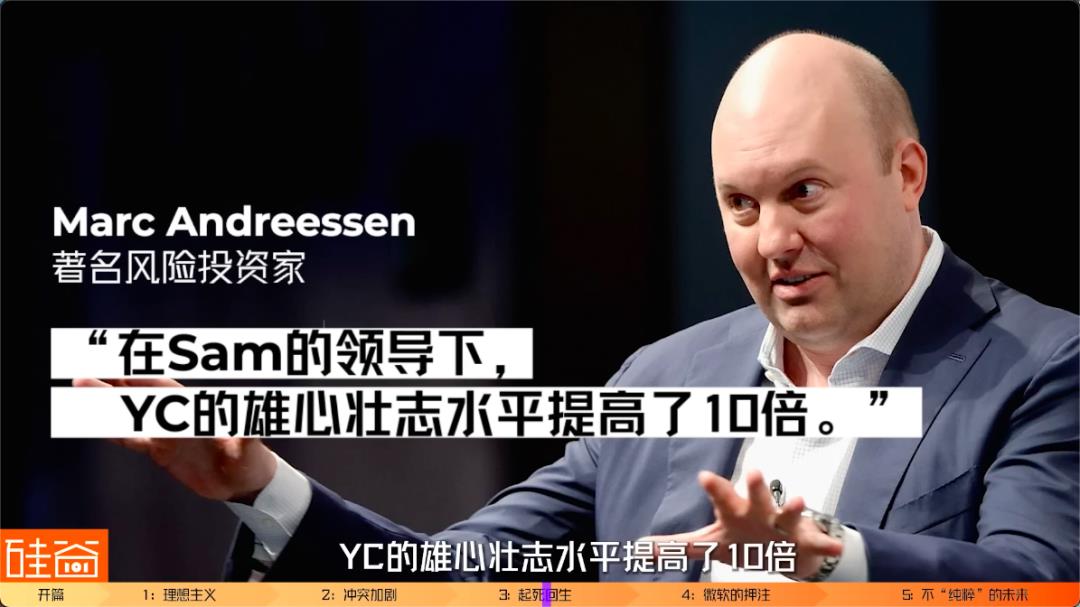
After taking over YC, Sam published an article titled “Science seems broken,” warning Silicon Valley and academia, urging applications from energy, biotech, AI, robotics, and other hard-tech fields. Sam believed YC, as the most influential incubator, must publicly support these areas to keep students interested and founders confident. Thus, under Sam, YC raised more funds and even established YC Research—a nonprofit to explore wild scientific ideas. Marc Andreessen, a famed VC, remarked: “Under Sam, YC’s ambition increased tenfold.” Perhaps this was why Paul Graham insisted Sam succeed him—he realized, “Sam’s goal is to create the entire future.”
After leading YC for years, Sam stepped down to join OpenAI full-time as it reached a crossroads. When Musk exited the board and cut funding, Sam realized that without leading a transformation, OpenAI faced only shutdown. Now, he had to redesign its structure, balancing commerce and social responsibility.
Sam approached Reid Hoffman and Vinod Khosla—two prominent Silicon Valley investors.
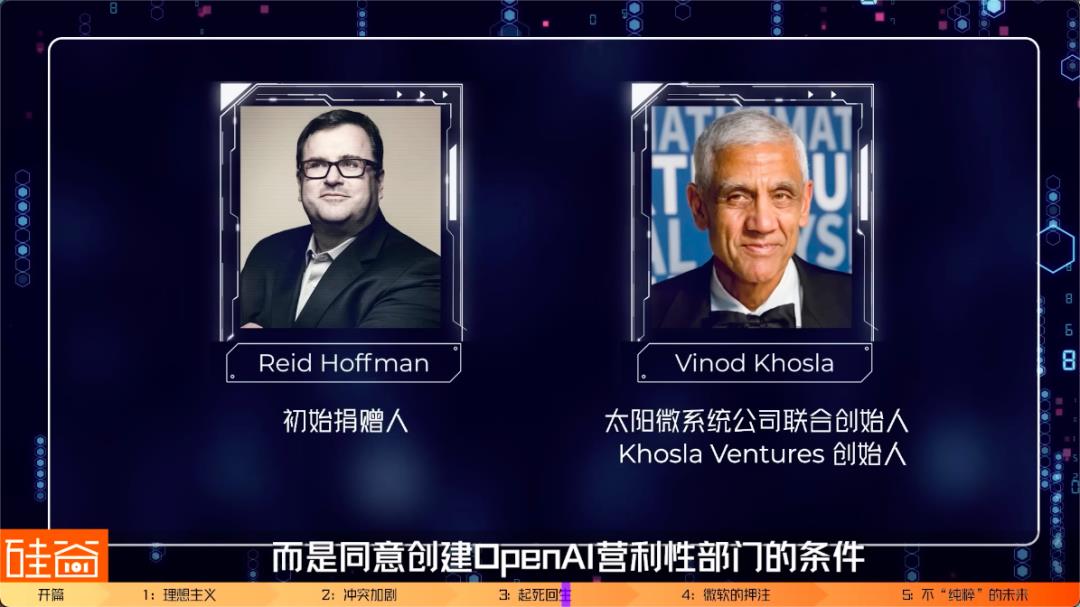
Hoffman, whom we met earlier, was an initial OpenAI donor. Khosla, a billionaire and co-founder of Sun Microsystems, later founded Khosla Ventures. Sam sought millions—not as donations, but in exchange for creating a for-profit arm of OpenAI. After debating future returns, both wrote checks.
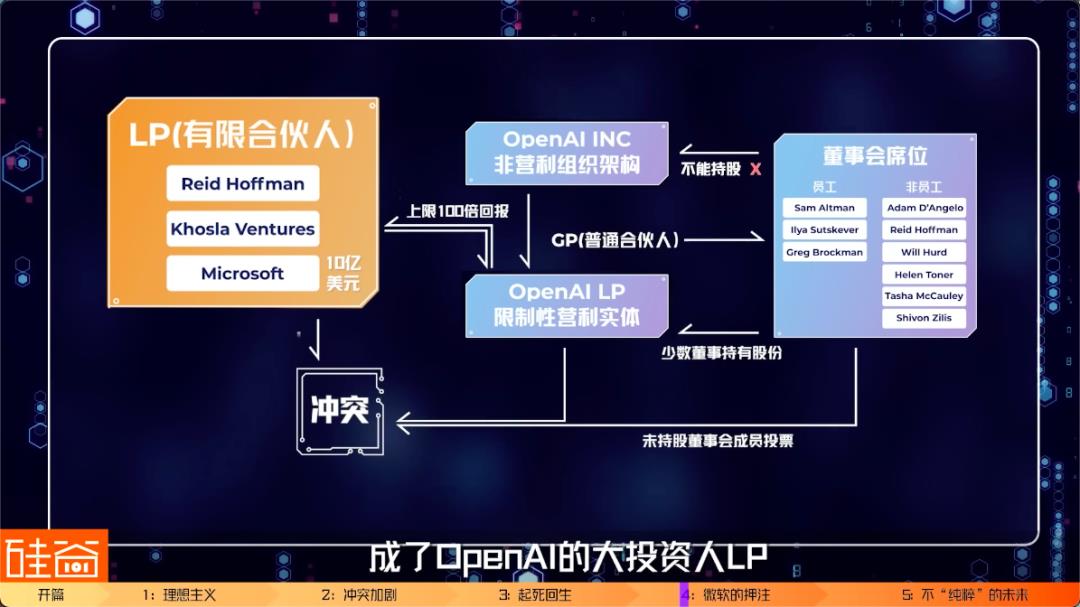
On March 11, 2019, OpenAI announced the creation of a capped-profit entity, OpenAI LP, under the parent nonprofit OpenAI Inc.
To retain control, the nonprofit OpenAI Inc served as the General Partner, meaning its board managed and operated the new company. Board members from OpenAI Inc included Sam Altman as CEO, Ilya Sutskever as Chief Scientist, and Greg Brockman as Chairman and President.
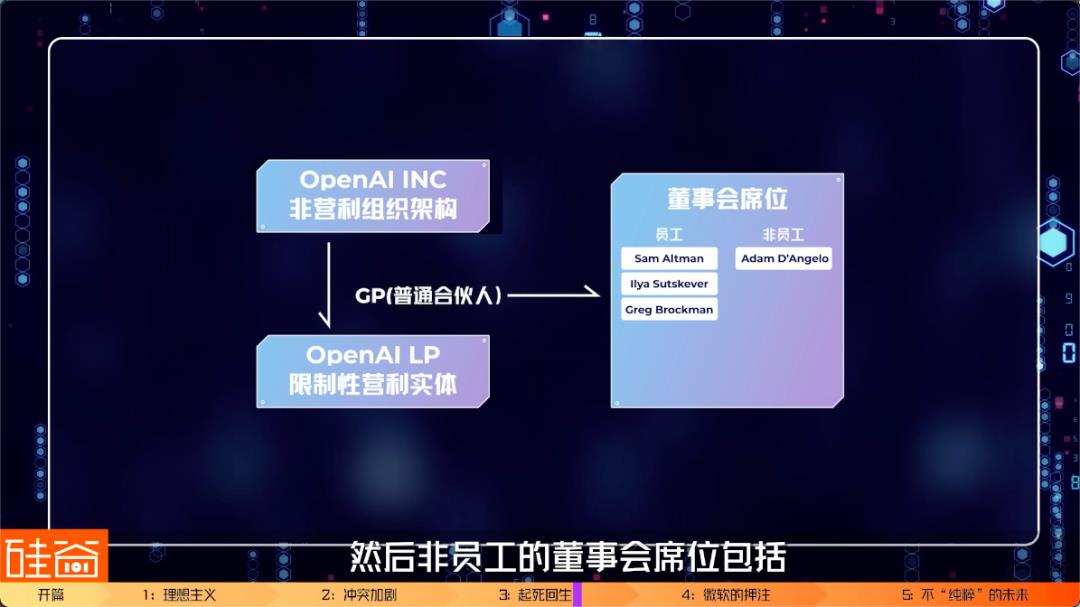
Non-employee board members included Quora co-founder & acting CEO Adam D’Angelo, investor Reid Hoffman, former Republican Congressman Will Hurd, Helen Toner (Director of Strategy at Georgetown’s Center for Security and Emerging Technology), and Tasha McCauley, CEO of Fellow Robots. (Side note: Her husband? You might not guess—yes, Joseph Gordon-Levitt, Hollywood’s indie heartthrob from “(500) Days of Summer,” “The Dark Knight,” “Inception,” and “Snowden.”)
Suddenly the board feels gossipy—hold on, another bombshell: Do you know who Shivon Zilis is? She’s the mother of Elon Musk’s youngest twins. Talk about spicing things up.
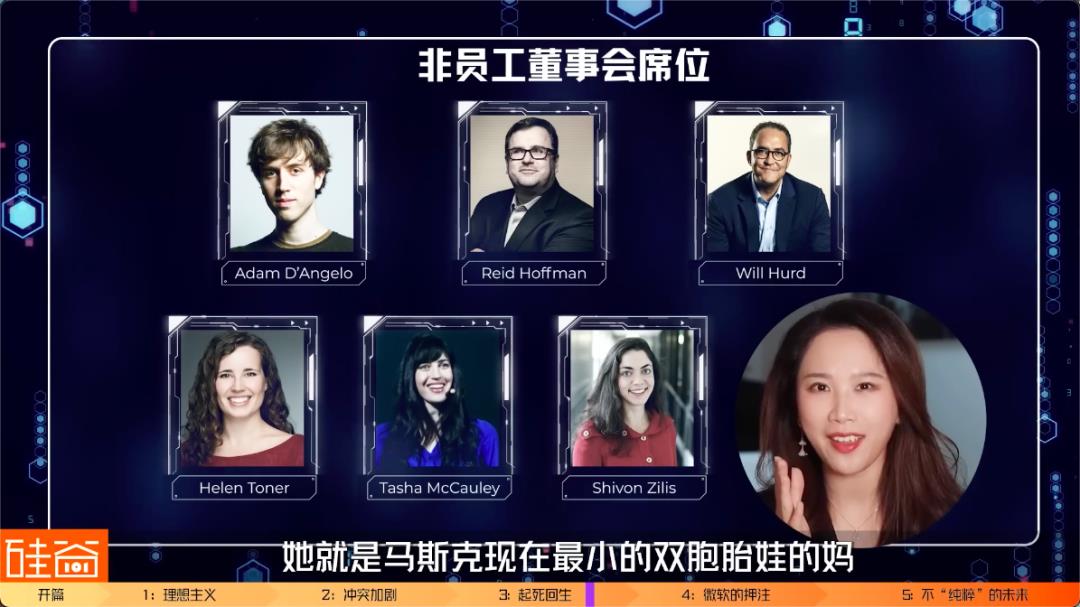
The twins were born in November 2021—Musk’s 8th and 9th children. Zilis advised OpenAI in 2016—likely when she met Musk—then followed him to Tesla and Neuralink, while remaining an OpenAI board member.
But after Musk and Sam started clashing in March, Zilis likely felt awkward and left the board. Gossip over—back to corporate structure.
Only a minority of OpenAI board members hold shares in OpenAI LP. Note: Shares belong to the for-profit OpenAI LP; the main entity OpenAI Inc is nonprofit and cannot hold equity.
Investors and employees hold shares in OpenAI LP as Limited Partners, capped at 100x returns. OpenAI is unlikely to go public or accept acquisition—so investor exits rely on annual profit distributions. Once cumulative returns hit 100x, funds automatically flow to the nonprofit OpenAI Inc. When LP interests conflict with the mission, non-shareholding board members vote.
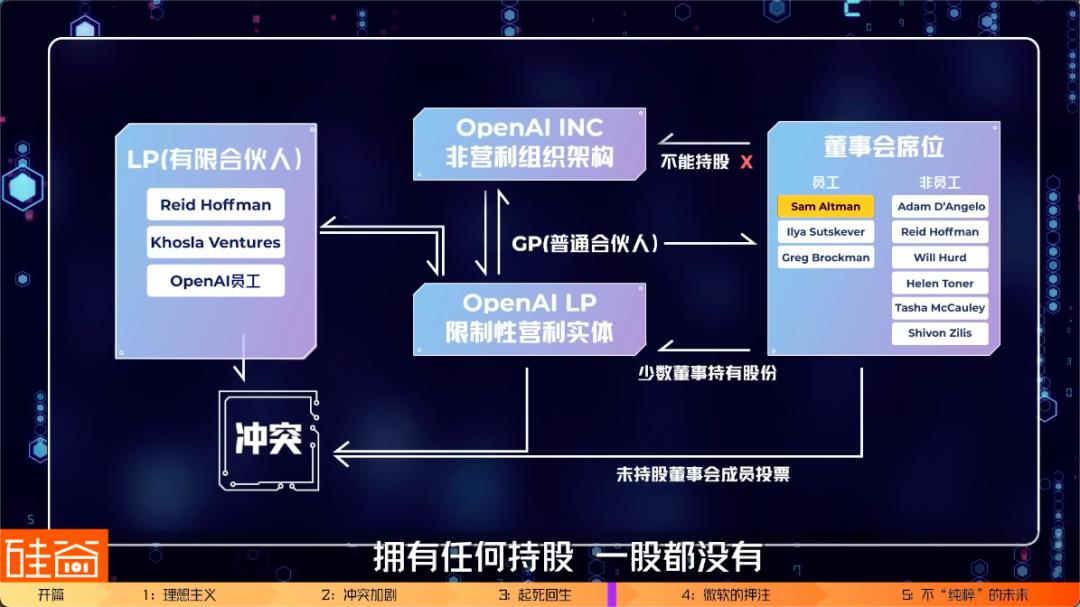
Here’s a key point: Sam Altman holds zero shares in this new structure—earning only a ~$60,000 annual salary.
Reports say Sam claims he’s already wealthy and doesn’t need more money. His refusal to take equity also deterred many investors—Silicon Valley logic dictates a CEO must be highly incentivized; no equity might signal lack of confidence. But reviewing the board voting rules suggests Sam waived financial incentives to secure voting power when LP interests clash with the mission—trading money for influence.
As Paul Graham, who knows Sam best, said in an interview:
“Why would someone do something that doesn’t make them richer? One answer: many people, once sufficiently wealthy, act this way. Another: they love power.” Sam may be either—or both.
OpenAI’s commercial shift drew heavy criticism. But for Sam, there seemed no alternative. When idealism failed, he embraced pragmatism—striving to balance both. His choices appear optimal.
By 2018, OpenAI had committed to the Transformer-based GPT path—now requiring massive compute and parameters. Talent and funding became critical.
The OpenAI LP structure offered employee equity-like incentives, stabilizing morale. Moreover, this unprecedented Silicon Valley model attracted an equally ambitious LP: Microsoft.
04 Nadella’s Decision: Ignoring Gates’ Opposition
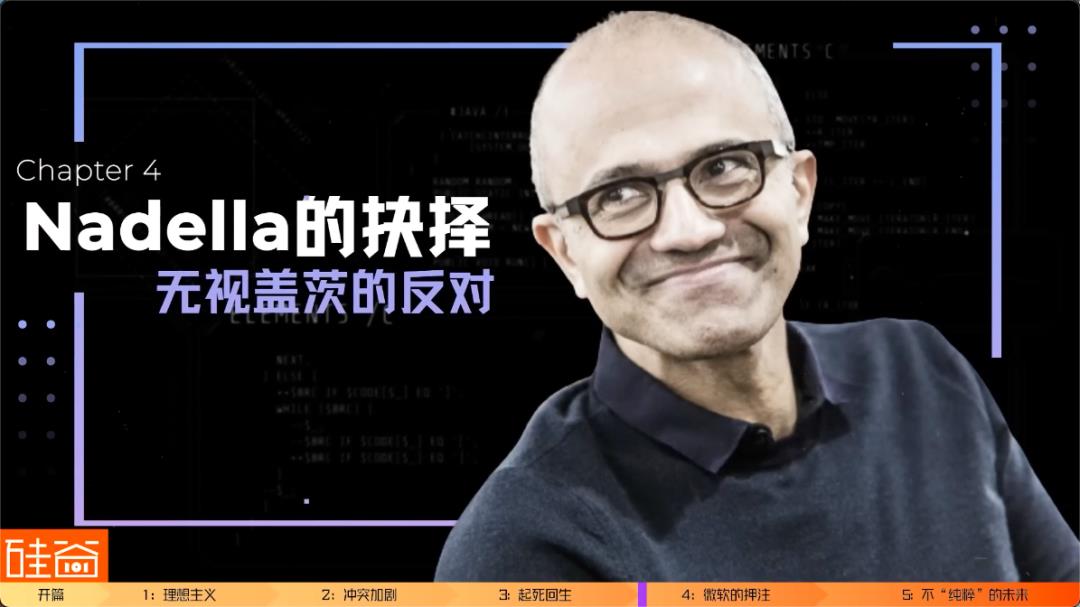
Looking back at Microsoft’s OpenAI investment, many call it brilliant—far-sighted. But at the time, the decision wasn’t simple.
Since Satya Nadella became Microsoft CEO in 2014, succeeding Bill Gates, he’s strongly supported AI R&D. But Microsoft stumbled badly in AI.
In 2016, Microsoft launched Tay, an AI chatbot on Twitter, Facebook, Snapchat, and Instagram. Soon, users taught Tay offensive speech—anti-Semitic, racist, sexist, vulgar. Tay was shut down within a day.
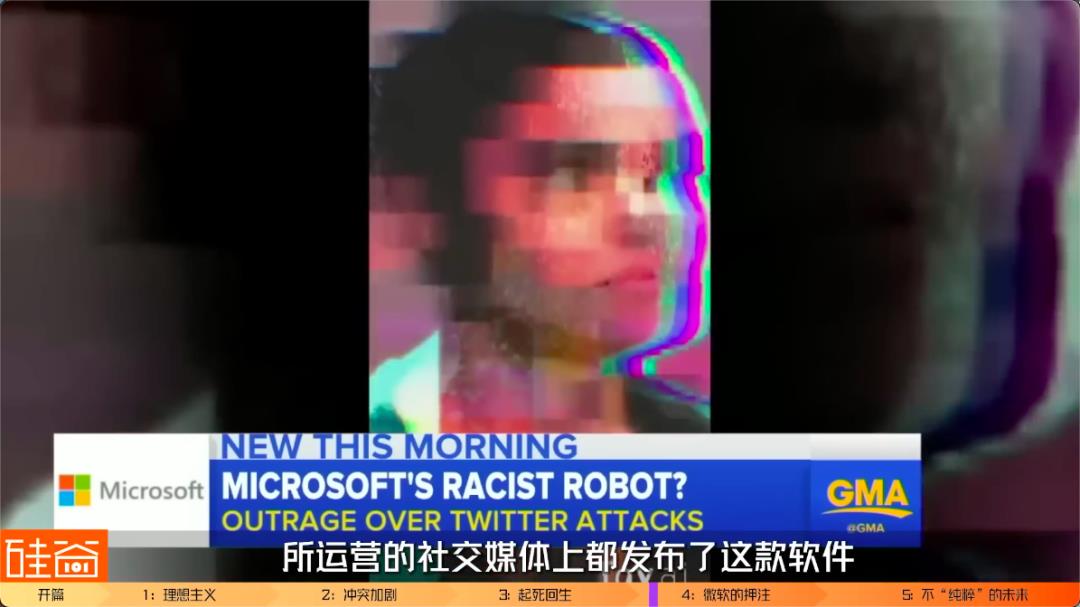
According to The Information, despite this failure, Nadella remained bullish on AI, encouraging all Microsoft divisions to integrate AI models and partnering with NVIDIA to develop AI GPUs. All signs made Microsoft a highly attractive partner in Sam Altman’s eyes—he repeatedly visited Seattle to broker a deal.
Yet when Nadella pushed for OpenAI collaboration internally, he faced resistance—partly from Bill Gates.
Though Gates stepped back from daily operations in 2008, focusing on philanthropy and global issues, he still spent about 20% of his time reviewing Microsoft’s new products. In 2019, during Microsoft’s talks with OpenAI, Gates personally reviewed the partnership—and expressed dislike, skeptical of the investment.
But Gates no longer ran daily operations—Nadella had final authority. So, Nadella decided to bet on AI.
In July 2019, Microsoft announced a partnership with OpenAI, investing $1 billion—becoming a major LP.
But examining the deal closely reveals Nadella’s shrewdness. Media widely reported Microsoft invested $1 billion in OpenAI. But much was paid in Azure cloud credits—not cash—effectively letting OpenAI train and run AI models on Microsoft’s cloud for free. In return, Microsoft secured exclusive rights to use most OpenAI tech in products like Bing search.
Microsoft also benefited by striking a blow against Google—OpenAI had been one of Google Cloud’s biggest customers, paying $120 million in 2019–2020. So, with minimal cash, Microsoft gained a powerful ally and weakened a rival—Nadella’s move was a masterstroke.
But during the partnership, Nadella faced pressure—not just from Gates, but financial and resource strains due to OpenAI’s massive compute demands.
GPT-2 (2019) had 1.5 billion parameters; GPT-3 (May 2020) had 175 billion—each upgrade exponentially increasing scale.
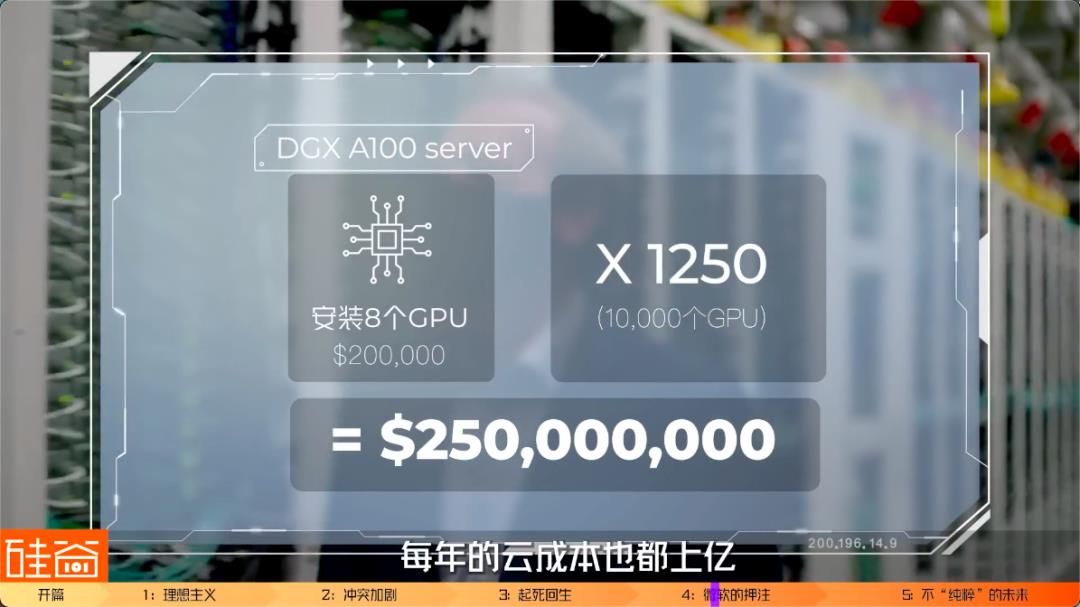
Later, CNBC reported Microsoft built a top-five global supercomputer for ChatGPT training—using 10,000 NVIDIA DGX A100 GPUs. Rough math: Each DGX A100 server has 8 GPUs, priced at $200K—so 1,250 servers, totaling $250 million. Training a single large model costs millions; annual cloud expenses exceed $100 million.
Meanwhile, Microsoft faced a capital winter from the Fed’s 2022 rate hikes and laid off tens of thousands—so Nadella’s full support carried real risk. The New York Times reported that between 2019 and 2023, Microsoft invested another $2 billion in OpenAI—details undisclosed. But soon, Nadella knew his bet paid off.
OpenAI’s GPT-3 release in May 2020 stunned the industry. Then, ChatGPT, based on GPT-3.5 and launched in late 2022, amazed the world—prompting Google to sound a “red alert.”
In 2023, Microsoft deepened ties—investing $10 billion for a 49% stake.
The new terms favored Microsoft even more. Profit distribution was detailed:
Phase 1: 100% profits go to initial and founding investors until they recoup investment;
Phase 2: 25% to employees and capped investor returns; 75% to Microsoft until it recoups $13 billion;
Phase 3: 2% to nonprofit OpenAI Inc; 41% to employees; 8% to capped investor returns; 49% to Microsoft’s capped returns;
Phase 4: After all investor returns are settled, 100% of equity flows back to OpenAI Inc.
Why is this so favorable for Microsoft? First, the $10 billion wasn’t all cash—much resembled prior investments: credits for using Microsoft’s supercomputing clusters. Effectively, OpenAI uses Microsoft’s resources first, repaying later—with multi-billion-dollar dividends. It’s akin to the highest possible usury.
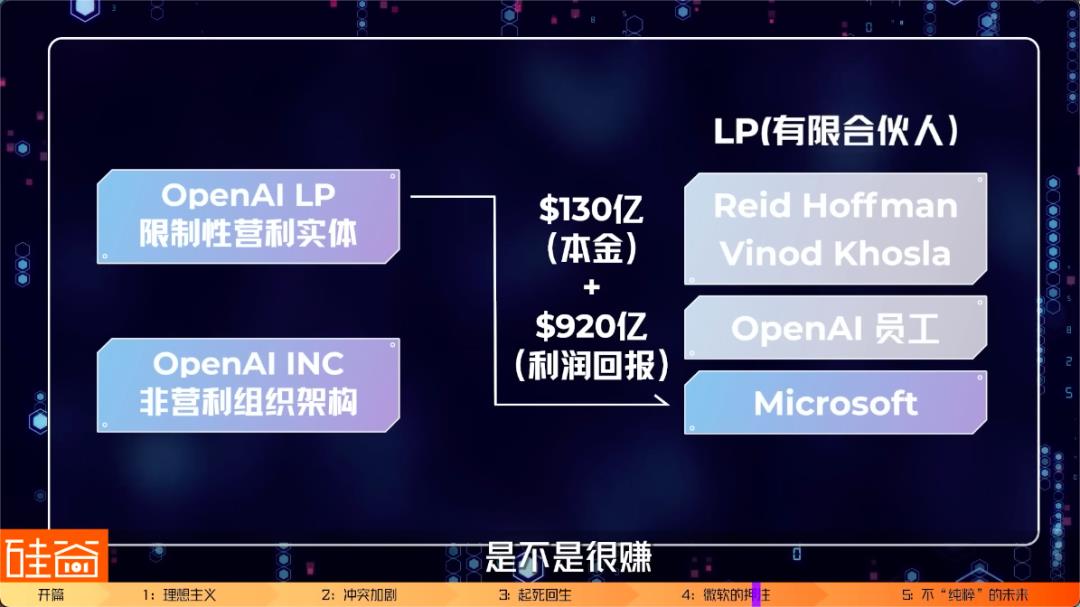
Note: OpenAI initially capped early investor returns at 100x, with later investors receiving less. Based on this, Fortune predicted Microsoft would recover $13 billion plus roughly $92 billion in profits. Quite lucrative.
Moreover, The Information reported OpenAI is considering relaxing the 100x cap—increasing annual profit payouts by 20%. Unconfirmed and possibly changing, but it boosts future returns for investors like Microsoft, driving fierce competition among VCs to buy OpenAI shares from employees and early investors.
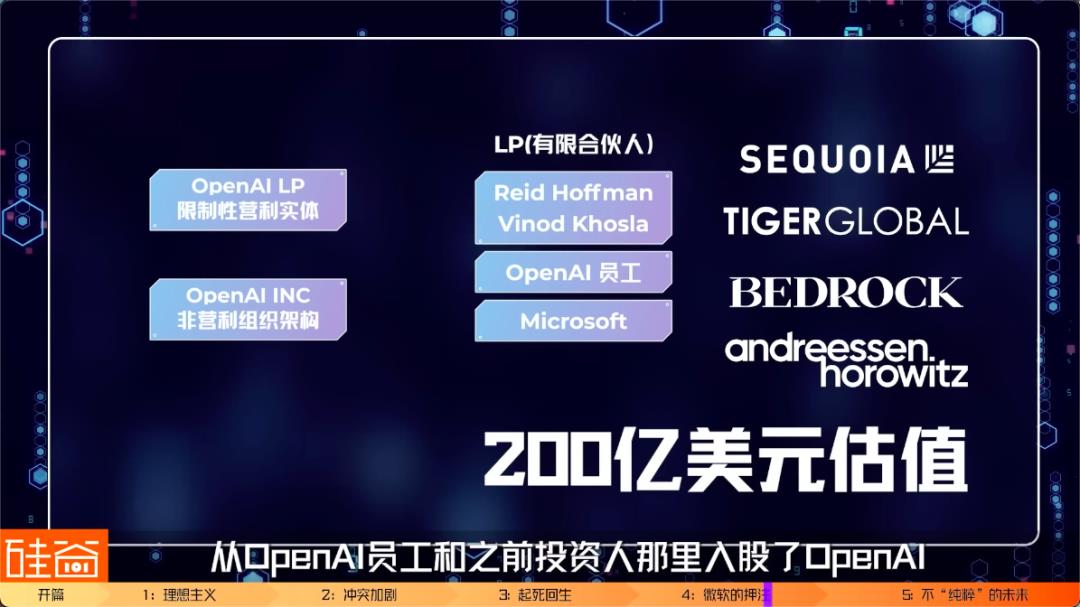
Last year, Sequoia, Tiger Global, Bedrock Capital, and Andreessen Horowitz bought into OpenAI at a $20 billion valuation. Imagine how hot OpenAI stock is in the primary market after ChatGPT’s 2023 explosion.
Crucially, OpenAI’s agreement with Microsoft means commercialization will accelerate—OpenAI has opened API access, and ChatGPT now has a paid version. Pressure to monetize is intense—after all, deep-pocketed backers await repayment.
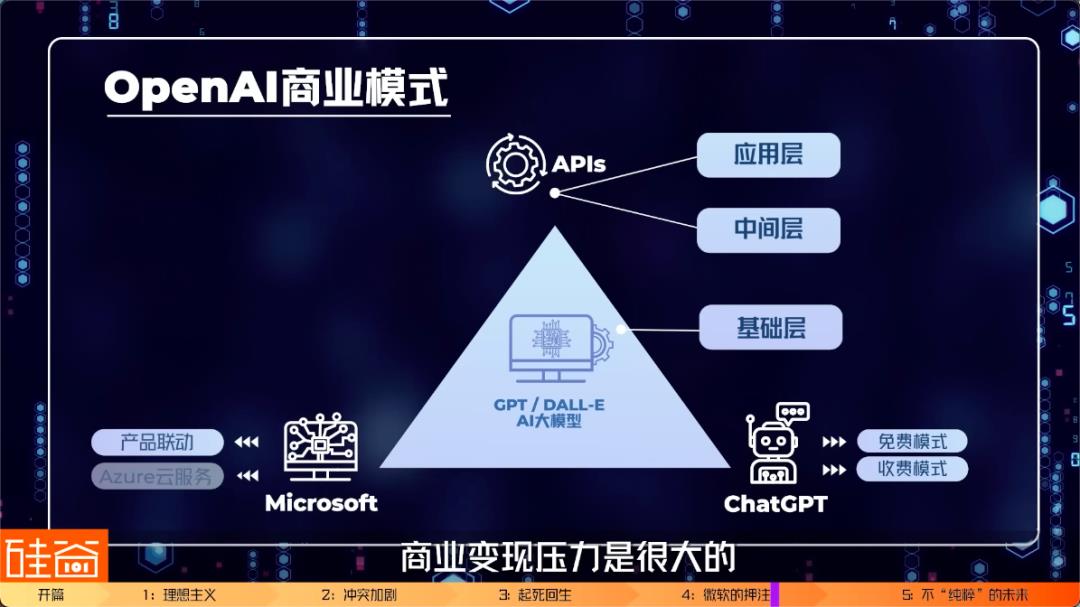
For Microsoft, the strategic value of investing in OpenAI far outweighs financial returns. ChatGPT’s emergence tightly integrates with Microsoft products—New Bing now powered by ChatGPT, delivering a devastating blow to Google Search. Microsoft continues embedding OpenAI’s AI into GitHub, Microsoft 365, Azure, and more—rapidly upgrading its entire product suite. Microsoft has thus become a pioneer in this AI wave.
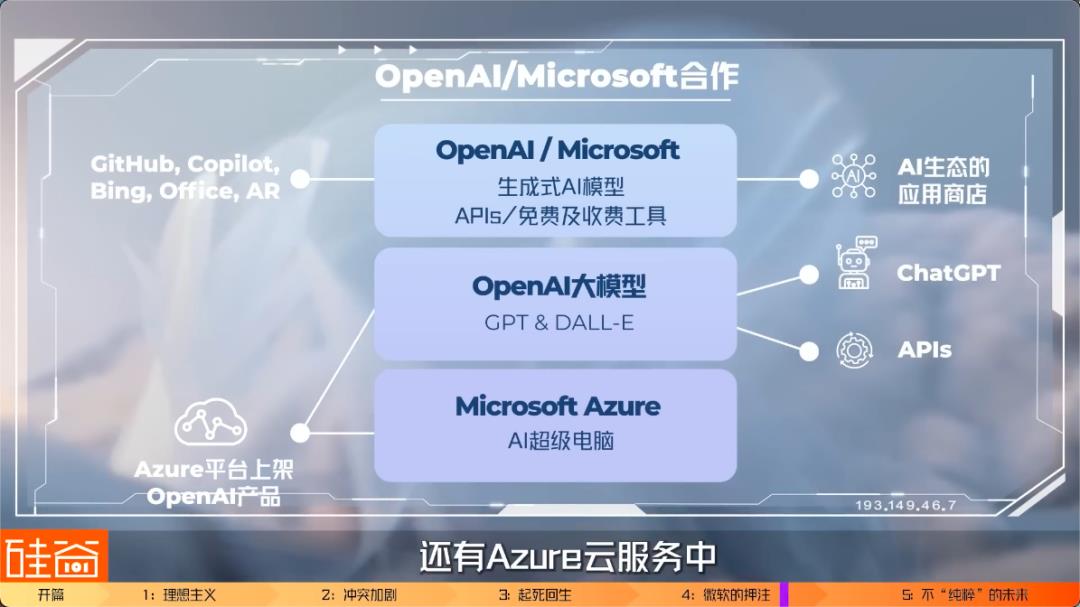
Microsoft previously didn’t disclose AI business size—only mentioning in October that Azure’s ML services doubled for four straight quarters. Wells Fargo predicts AI will add over $30 billion annually to Microsoft’s revenue—half from Azure.
Thus, even if OpenAI fails to repay or dividends are slow, it doesn’t matter—Microsoft can profit directly from AI.
Truly, Nadella’s move to invest in OpenAI was visionary.
Today, Bill Gates—who nearly killed the OpenAI deal—now proudly recounts his interactions with the team, prompting Musk to bluntly retort on Twitter: “Gates had limited understanding of AI then—and still does.”
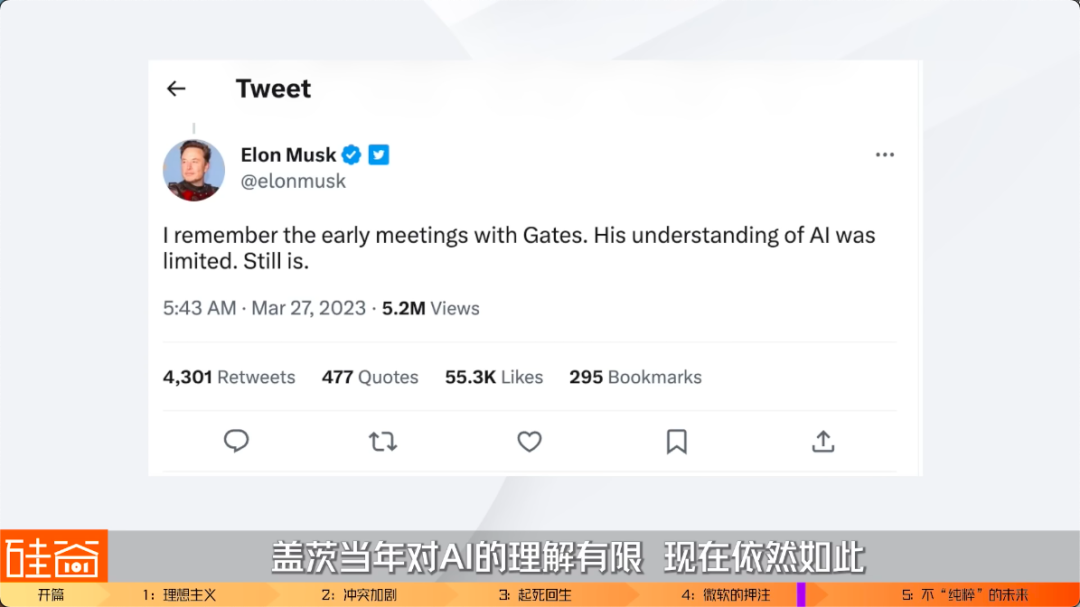
Regardless, Gates owes his renewed relevance to Nadella’s persistence. Meanwhile, Musk—the co-founder who planted the tree but let others enjoy the shade—now has no ties to OpenAI, reduced to online feuds with Sam, clearly bitter. Imagine: If Musk hadn’t walked away but fulfilled his remaining $900 million pledge, would the outcome differ?
Recent developments: According to the Financial Times, Elon Musk has officially entered the race, launching his own AI company.
Recent reports say Musk began assembling an AI team in February, purchasing 10,000 NVIDIA GPU chips and recruiting two top engineers from Google’s DeepMind—joining the AI battleground. We’ll watch closely whether Musk can eventually launch his own large model to challenge OpenAI.
05 A Less “Pure” Future: What Lies Ahead for OpenAI?
OpenAI now
Join TechFlow official community to stay tuned
Telegram:https://t.me/TechFlowDaily
X (Twitter):https://x.com/TechFlowPost
X (Twitter) EN:https://x.com/BlockFlow_News