Burning $1 Million Daily Yet Still Losing Users, OpenAI Axes Sora—Disney’s $1 Billion Partnership Collapses
TechFlow Selected TechFlow Selected
Burning $1 Million Daily Yet Still Losing Users, OpenAI Axes Sora—Disney’s $1 Billion Partnership Collapses
All this is happening against the backdrop of OpenAI’s intensive preparations for its IPO.
 Navigating Web3 tides with focused insights
Author: TechFlow
Last week, OpenAI officially shut down its AI video-generation application Sora—just six months after its standalone app launched. According to an investigation by The Wall Street Journal, Sora’s daily operating cost was approximately $1 million. Its global active user base plummeted from a peak of roughly 1 million to fewer than 500,000, and total in-app purchase revenue over its entire lifecycle amounted to only $2.1 million. Disney had previously committed a $1 billion investment and character-licensing partnership for Sora—but learned of the shutdown less than one hour before the official announcement, causing the deal to collapse immediately. OpenAI is now reallocating computational resources toward enterprise tools and programming products, lightening its load ahead of a potential IPO later this year.
OpenAI announced Sora’s shutdown on March 24—with no lengthy explanation, only a brief farewell post on X.
This AI video-generation tool, once ubiquitous across the tech world, went from dazzling debut to quiet exit in just six months. Per The Wall Street Journal’s latest investigation, the real reason wasn’t the data-privacy controversies previously speculated about in external commentary—but a simple arithmetic problem: Sora burned cash too fast and attracted too few users; continuing operations risked falling behind competitors in the AI arms race.
Burning $1 Million Daily, Generating Just $2.1 Million Total Revenue: The Economic Dead End of AI Video
Sora’s cost structure was unsustainable from day one. As reported by The Wall Street Journal, its average daily operating cost stood at around $1 million. Video generation consumes vastly more compute than text generation—each short video generated by a user devoured OpenAI’s limited GPU resources.
Deepak Mathivanan, an analyst at investment bank Cantor Fitzgerald, broke down the costs further: generating a 10-second video required approximately four GPUs running in parallel for about 40 minutes, costing roughly $1.30 per GPU. This figure appeared manageable when user numbers were low—but scaled rapidly as millions of users began generating multiple videos simultaneously. According to estimates from Forbes and Cantor Fitzgerald, Sora’s inference costs during peak usage reached approximately $15 million per day—equivalent to an annualized $5.4 billion.
In stark contrast, revenue remained meager. Mobile analytics firm Appfigures reported that Sora’s total in-app purchase revenue across its entire lifecycle amounted to approximately $2.1 million—not per month, not per quarter, but the cumulative total from launch through shutdown.
Bill Peebles, Sora’s head, candidly acknowledged back in October 2025 on social media that Sora’s economic model was “completely unsustainable.”
Downloads Plummeted 66% in Three Months—User Enthusiasm Faded Faster Than Expected
After Sora 2 launched as a standalone iOS app at the end of September 2025, initial metrics were exceptionally strong. According to Appfigures, it surpassed 100,000 downloads on its first day and crossed the 1-million mark within five days—outpacing even ChatGPT’s record-breaking debut. Downloads peaked at approximately 3.33 million in November 2025.
Yet the decline was equally swift. Downloads dropped 32% month-on-month in December, fell another 45% in January to roughly 1.2 million, and slid further to approximately 1.13 million by February 2026—a 66% plunge from the peak. Consumer spending followed suit: revenue dropped to about $367,000 in January, down 32% from the December peak of $540,000.
On the active-user front, The Wall Street Journal cited Similarweb data showing Sora’s global user count peaked at roughly 1 million before steadily declining to under 500,000. Early users flooded the platform with controversial videos featuring well-known IP characters (e.g., Mario, Pikachu), fueling viral traction—but this buzz failed to translate into sustained retention.
Disney’s $1 Billion Partnership Collapsed—Notified Less Than One Hour Before Shutdown
Sora’s shutdown directly triggered the collapse of a high-profile collaboration.
In December 2025, Disney signed a three-year licensing agreement with OpenAI, permitting Sora and ChatGPT Images to use over 200 characters from Disney, Marvel, Pixar, and Star Wars franchises. Disney also planned to invest $1 billion in OpenAI. At the time, Disney CEO Bob Iger told CNBC that the deal offered Disney a chance to participate in AI’s rapid growth.
According to The Wall Street Journal, Disney executives learned of the shutdown decision less than one hour before the public announcement. The $1 billion investment never materialized, and the partnership froze instantly.
A Disney spokesperson stated in a press release that the company “respects OpenAI’s decision to exit the video-generation business and shift its priorities,” and will continue exploring collaborations with other AI platforms. Reports indicate that under new CEO Josh D’Amaro, Disney is currently negotiating new partnerships with over a dozen AI companies.
Anthropic Closing In—Sora Became OpenAI’s “Unaffordable Side Project”
The deeper reason behind Sora’s cancellation lies directly in the competitive pressure OpenAI faces on its core battlefield.
As reported by The Wall Street Journal, while the Sora team poured energy into video generation, Anthropic quietly captured large numbers of software engineers and enterprise customers with its Claude Code programming tool. Anthropic’s annualized revenue has now surpassed $19 billion—roughly 80% from enterprise clients—and it added $6 billion in revenue alone in February 2026. By comparison, OpenAI’s ~$25 billion annualized revenue includes only about $10 billion from enterprise customers.
Fidji Simo, CEO of OpenAI’s applications division, bluntly called Anthropic a “wake-up call” during an all-hands meeting on March 16. In a subsequent internal memo, she wrote that the company had “spread its attention across too many applications and technology stacks” and needed to simplify and refocus. Prior to the shutdown, OpenAI had rolled out a flurry of products—including Sora, the Atlas browser, hardware devices, and e-commerce features—leaving internal employees struggling to discern the company’s core strategic direction.
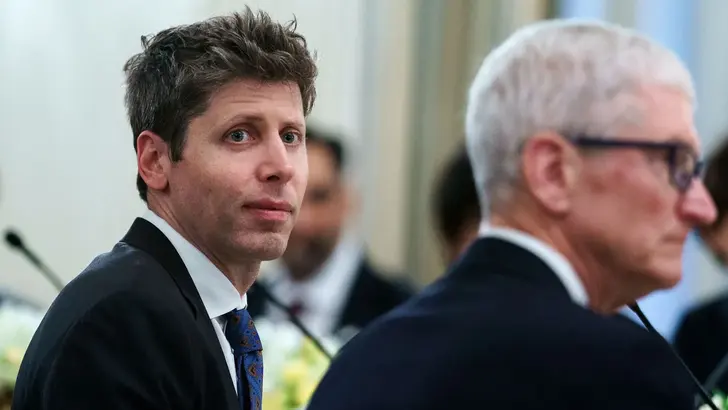
CEO Sam Altman ultimately decided to shutter Sora, free up compute, and concentrate resources on higher-strategic-value areas: enterprise productivity tools, programming assistance, and autonomous AI agents. OpenAI plans to integrate ChatGPT, the Codex programming platform, and the Atlas browser into a single desktop “super app.”
IPO Countdown: Cutting the $5.4-Billion-Annual “Money Pit”
All this unfolds against the backdrop of OpenAI’s intensive IPO preparations. CNBC confirmed that OpenAI could go public as early as Q4 2026, having already completed a $110 billion funding round valuing the company at approximately $730–830 billion.
A product burning $1 million daily yet generating only $2.1 million in total revenue would be precisely the kind of number institutional investors dread seeing in an IPO prospectus’s financial statements. Internal staff could see the problem plainly via Sora’s compute-allocation dashboard: massive GPU resources were being allocated to a low-revenue product offering no direct contribution to OpenAI’s core language-model capabilities.
Simo stated in the all-hands meeting: “Our opportunity is to turn our 900 million users into high-compute users—and the way to do that is to build ChatGPT into a productivity tool.”
The Sora team was not disbanded but redirected toward “world simulation research,” supporting robotics applications. According to OpenAI’s official announcement, the Sora app and website will shut down on April 26, and its API will be retired on September 24. The Sora 2 model will remain available in ChatGPT’s paid tier.
Other players in the AI video space are likewise retrenching. ByteDance’s Seedance has paused its global expansion due to copyright concerns. Sora’s rise and fall may signal a fundamental reality for the consumer-facing AI video sector: stunning demos don’t equal sustainable business models—and the gap between video-generation compute costs and consumer willingness to pay remains difficult to bridge in the near term.
Join TechFlow official community to stay tuned
Telegram:https://t.me/TechFlowDaily
X (Twitter):https://x.com/TechFlowPost
X (Twitter) EN:https://x.com/BlockFlow_News
 深潮TechFlow