Cosmos Deflation Proposal Sparks Controversy: Community Civil War, Opposition Gains Upper Hand
TechFlow Selected TechFlow Selected
Cosmos Deflation Proposal Sparks Controversy: Community Civil War, Opposition Gains Upper Hand
Is it an opportunity to improve the ecosystem, or does it harm the interests of certain stakeholders?
 Navigating Web3 tides with focused insights
Written by: TechFlow
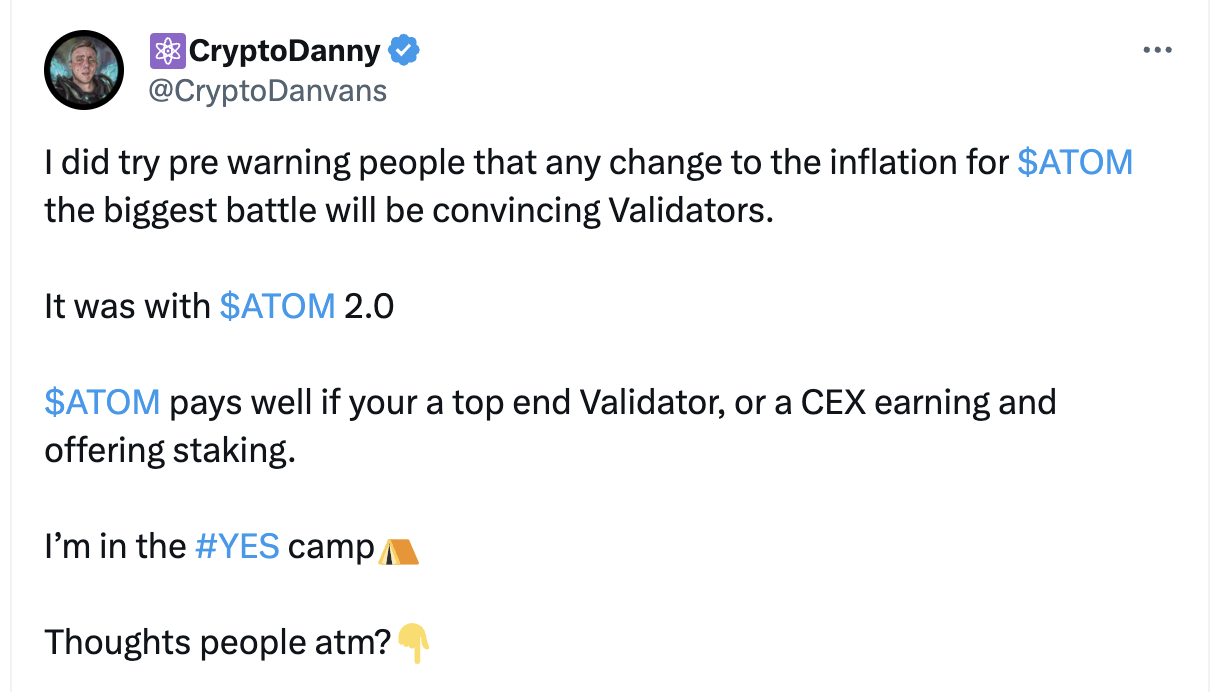
As unease over inflation intensifies, ATOM holders appear to have found a glimmer of hope amid widespread market anxiety. Recently, Inflation Halving Proposal #848 was officially launched, aiming to reduce ATOM's inflation rate from approximately 14% to 10%. If passed, this proposal would lower the ATOM staking annual percentage rate (APR) from around 19% to about 13.4%. While reduced inflation could ease selling pressure, it has sparked intense debate over its potential benefits and drawbacks. Is this a golden opportunity to improve the ecosystem, or does it harm certain stakeholders?
Background
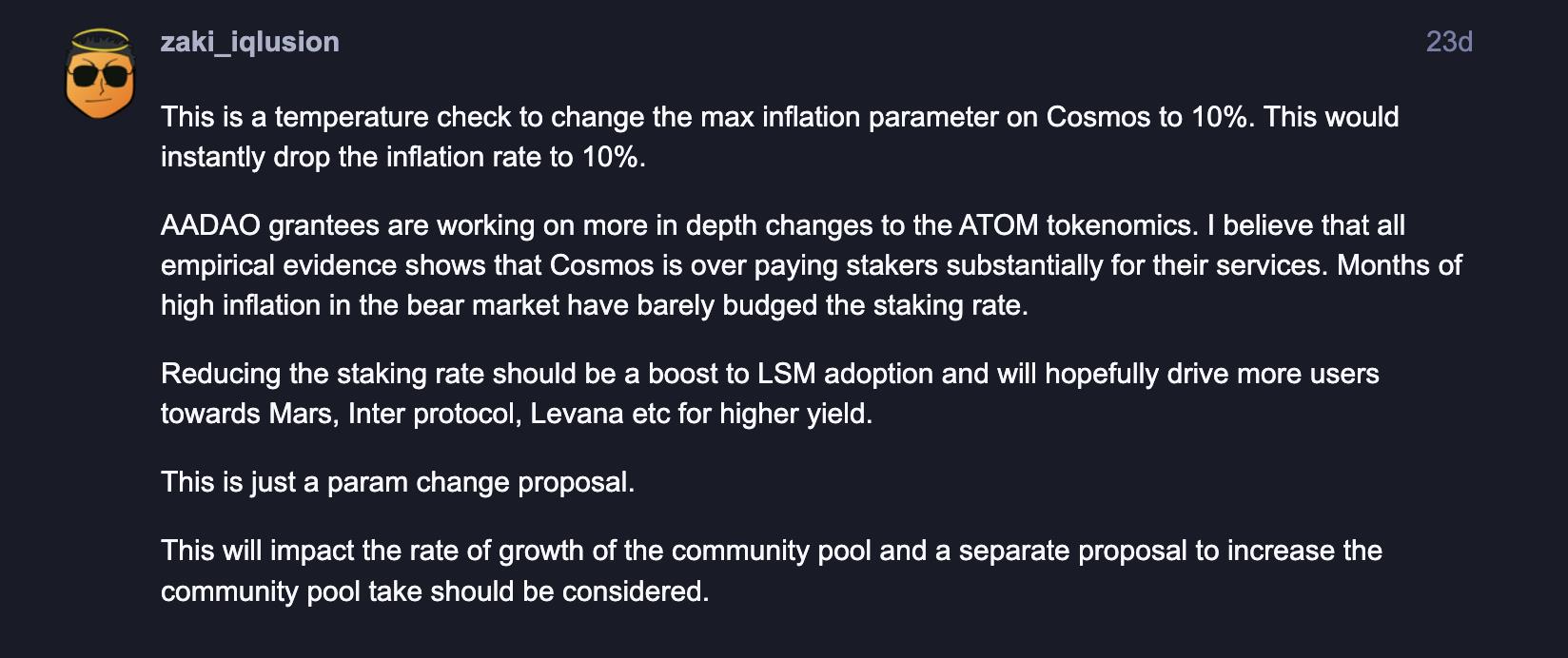
Research conducted by Blockworks Research indicates that ATOM incurs excessively high costs for security payments, suggesting a transition to a fixed supply model. According to the study, nearly all 180 validator nodes could achieve break-even or profitability solely through commission fees under a maximum inflation rate of 10%. Against this backdrop, Zaki (the current steward of Atom) introduced this notable proposal.
In Favor (Yes)
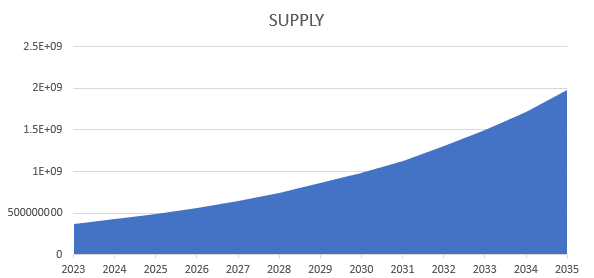
For the Cosmos community, reducing the inflation rate represents a long-term benefit. Investors generally dislike high-inflation tokens. Historically, Atom has lacked strong value capture mechanisms, and excessive inflation has been one of the key reasons behind its persistently weak price performance. Earning APR through staking is among the few use cases available for Atom. Historically, high-inflation tokens also tend to carry negative reputations. If Atom maintains its current inflation trajectory, its total supply would grow from today’s 370 million to 2 billion by 2035.
If the proposal passes, it could reduce selling pressure from large holders and validators, while promoting broader adoption of Liquid Staking Modules (LSM). This would allow ATOM to be widely utilized across all chains welcoming it—not just locked in staking—thereby fostering positive development for the entire ecosystem.
Opposed (No)
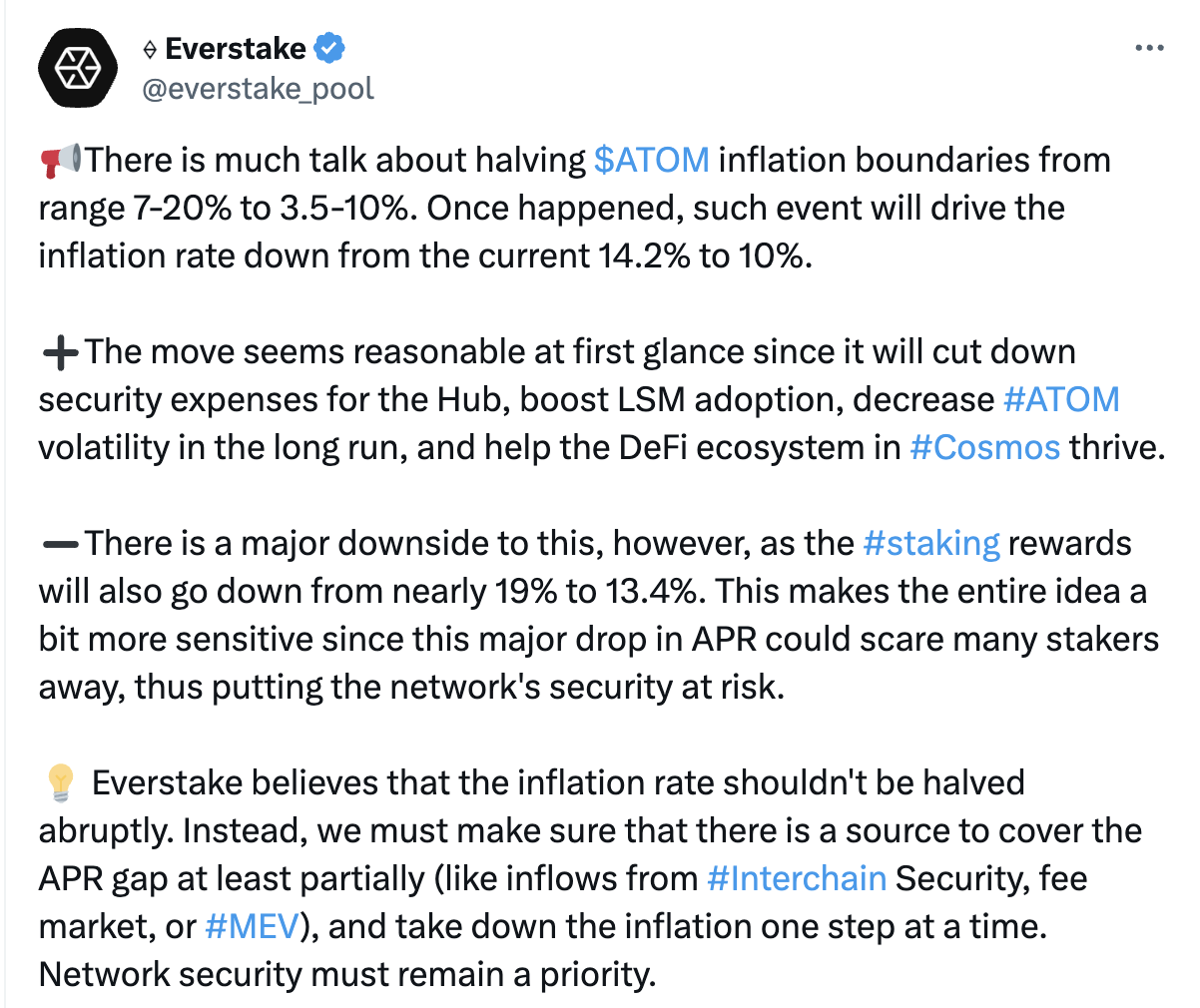
However, opponents argue that the proposal has a critical flaw: slashing staking rewards from nearly 19% down to 13.4%. Such a significant drop in APR may deter many stakers, potentially threatening network security. Therefore, they advocate against abruptly halving inflation, arguing that higher inflation helps maintain robust security levels.
On the other hand, examples from projects like JUNO, OSMO, and Stargaze serve as supporting arguments for the opposition. They point out that despite drastically lowering inflation, these tokens still experienced sharp price declines.
Stakeholder Conflict: Whales vs. Retail
This proposal has triggered a fierce battle within the Cosmos network between retail investors and whales. Some major validators are unpopular within the community, as they dump hundreds of thousands of newly earned ATOM onto the market each month. Maintaining a high APR ultimately benefits only the whales. As mentioned earlier, most validators can already break even or profit purely from commissions, yet large validators continue to oppose changing inflation—using concerns over network security as a convenient excuse.
Outlook and Decision Time
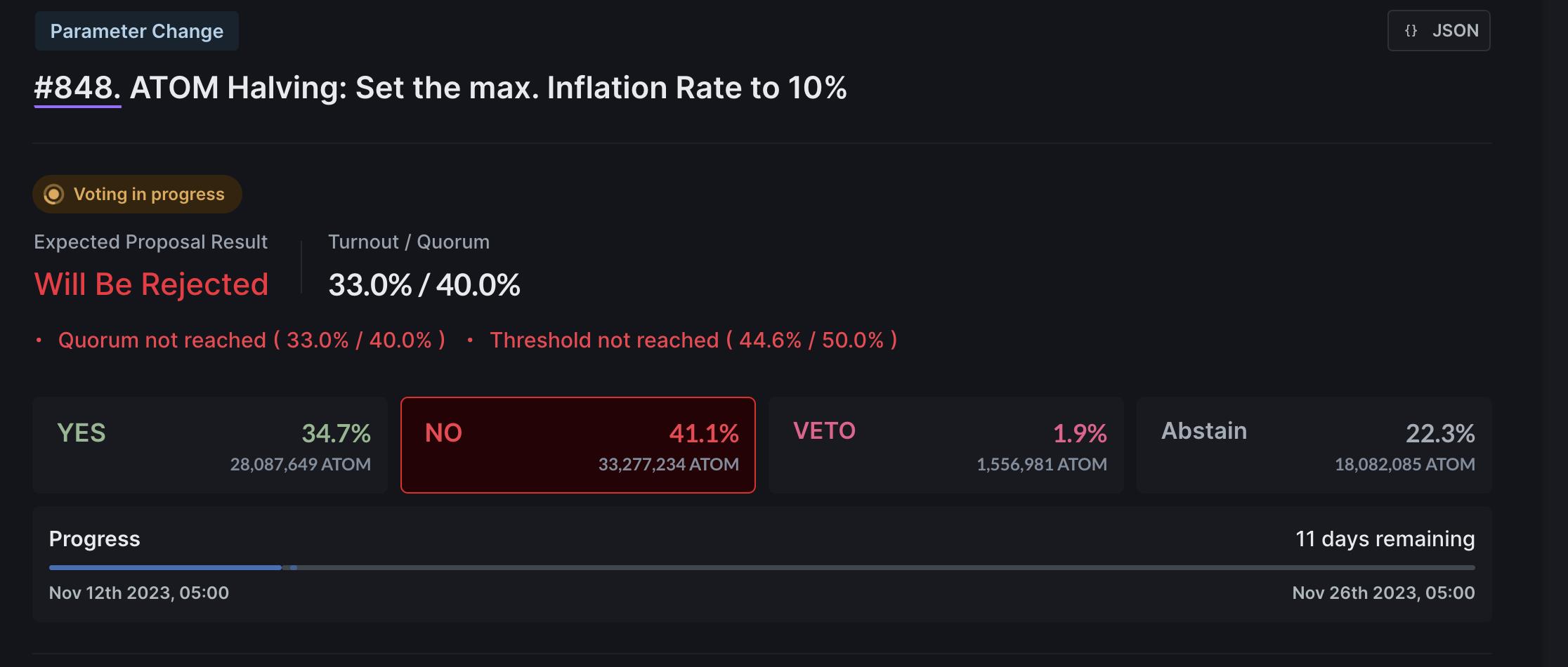
A pivotal博弈 over the future of the Cosmos network is unfolding. Currently, the "NO" vote holds majority support. With 11 days remaining until the proposal concludes, the choice remains: continue with high inflation, or reduce inflation to potentially boost ATOM’s price?
In my view, reducing inflation is a crucial step toward the long-term development of the Cosmos ecosystem. High inflation is detrimental to ATOM’s long-term value and overall ecosystem health. Although balancing lower inflation with network security remains challenging, years of 20% inflation have not brought meaningful progress to ATOM—instead, it has merely served as a zero-cost printing machine for whales. Why not try a new approach? Reduce ATOM inflation while leveraging the broader Cosmos ecosystem to unlock alternative sources of yield for ATOM holders? The battle has just begun, and the outcome remains uncertain. Let the chips fall where they may.
Join TechFlow official community to stay tuned
Telegram:https://t.me/TechFlowDaily
X (Twitter):https://x.com/TechFlowPost
X (Twitter) EN:https://x.com/BlockFlow_News
 深潮TechFlow