









Is it a good thing to have high expectations for spot ETFs?
TechFlow Selected TechFlow Selected
Is it a good thing to have high expectations for spot ETFs?
They claimed that investors simply don't want cryptocurrency futures ETFs because they are a suboptimal way of tracking asset prices compared to spot products.
 Navigating Web3 tides with focused insights
Written by: Jack Inabinet
Compiled by: TechFlow

Participants in the crypto market are highly excited, knowing that the approval of spot ETFs for crypto’s largest assets (ETH and BTC) is imminent, and hoping that outside investors are merely waiting for the right moment to begin investing.
Reflecting broad bullish expectations around the approval of spot crypto ETFs, analysts at legendary crypto investment firm Galaxy predict that the approval of a spot BTC ETF will generate $14.4 billion in demand, pushing BTC’s price up by 74.1% within just the first year!
Today, we aim to temper these expectations and highlight why evidence does not support the widespread belief that the approval of spot crypto ETFs will trigger massive capital inflows.
Canadian Disappointment
The launch of spot crypto ETFs in the U.S. is far from revolutionary—Canada has already had these products for over two years!
If unprecedented demand were expected following the approval of spot crypto ETFs in the U.S., one would anticipate significant growth in holdings of Canadian spot Bitcoin products. However, they have remained virtually unchanged since July 2022.
Canadian investors face the exact same investment narrative as Americans. Their lack of demand for spot BTC products signals likely apathy among U.S. investors too, suggesting that Bitcoin’s appeal as a hedge against inflation and devaluation is insufficient for non-native audiences in the current market environment.
Form Doesn't Matter
ETF experts may convince you that launching a slightly better investment vehicle will lead billions of dollars to flood in, seeking exposure—but there's little evidence to support this claim.
They argue that investors simply don’t want crypto futures ETFs because they’re suboptimal compared to spot products in tracking asset prices—due to the effects of rolling expiring futures contracts, which expose investors to contango and backwardation (i.e., next month’s contract price may be higher or lower than the expiring one).
Yet the reality is, if the narrative is strong enough, investors simply do not care about the format of the instrument they’re using. Investment vehicles tied to compelling narratives attract inflows regardless of how poor the product quality may be!
A prime example proving this point is the explosive growth of the Grayscale Solana Trust (GSOL), which currently trades at an 869% premium.
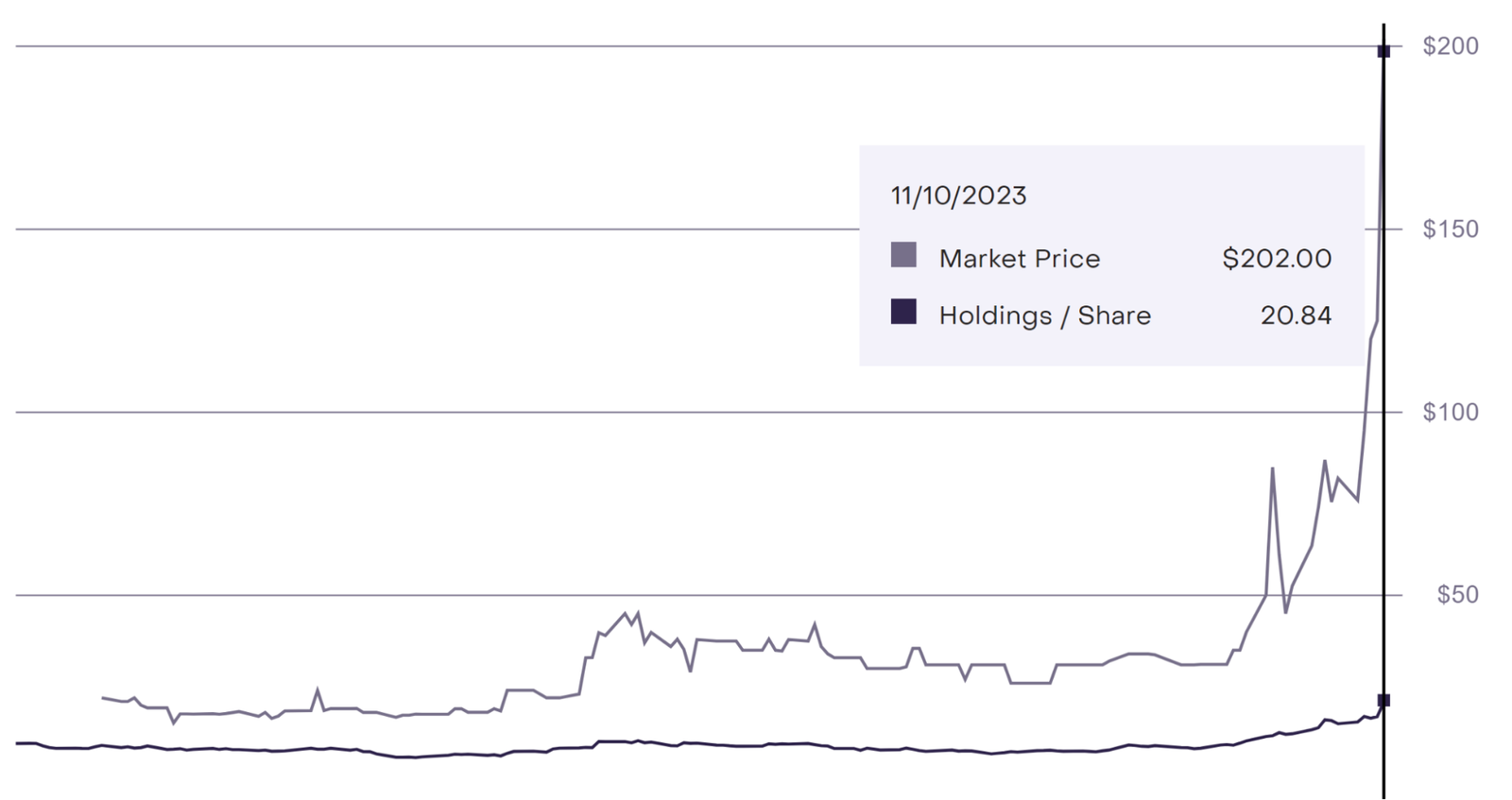
Compared to existing crypto futures ETFs, Grayscale’s trust products like GSOL and GBTC are arguably worse, due to their lack of a redemption mechanism—meaning the market value of shares you buy could actually fall below the underlying value held by the trust.
Despite these drawbacks, investors found the Solana narrative compelling enough to buy the instrument heavily at a steep premium, causing the market price to diverge further, especially since private placements (the mechanism for creating new shares) are currently closed, meaning supply cannot meet demand.
Stagnant Demand for Bitcoin Futures
If the approval of spot crypto ETFs were truly set to drive massive inflows into this asset class, we would expect to see sustained interest in futures-based products as well.
However, the number of outstanding shares in BITO, the largest BTC futures ETF, has remained largely unchanged since July 2022, with only brief deviations occurring in June 2023 (the month BlackRock first applied for a spot BTC ETF) and early November 2023 (when the crypto market began pricing in the likelihood of spot BTC approval).
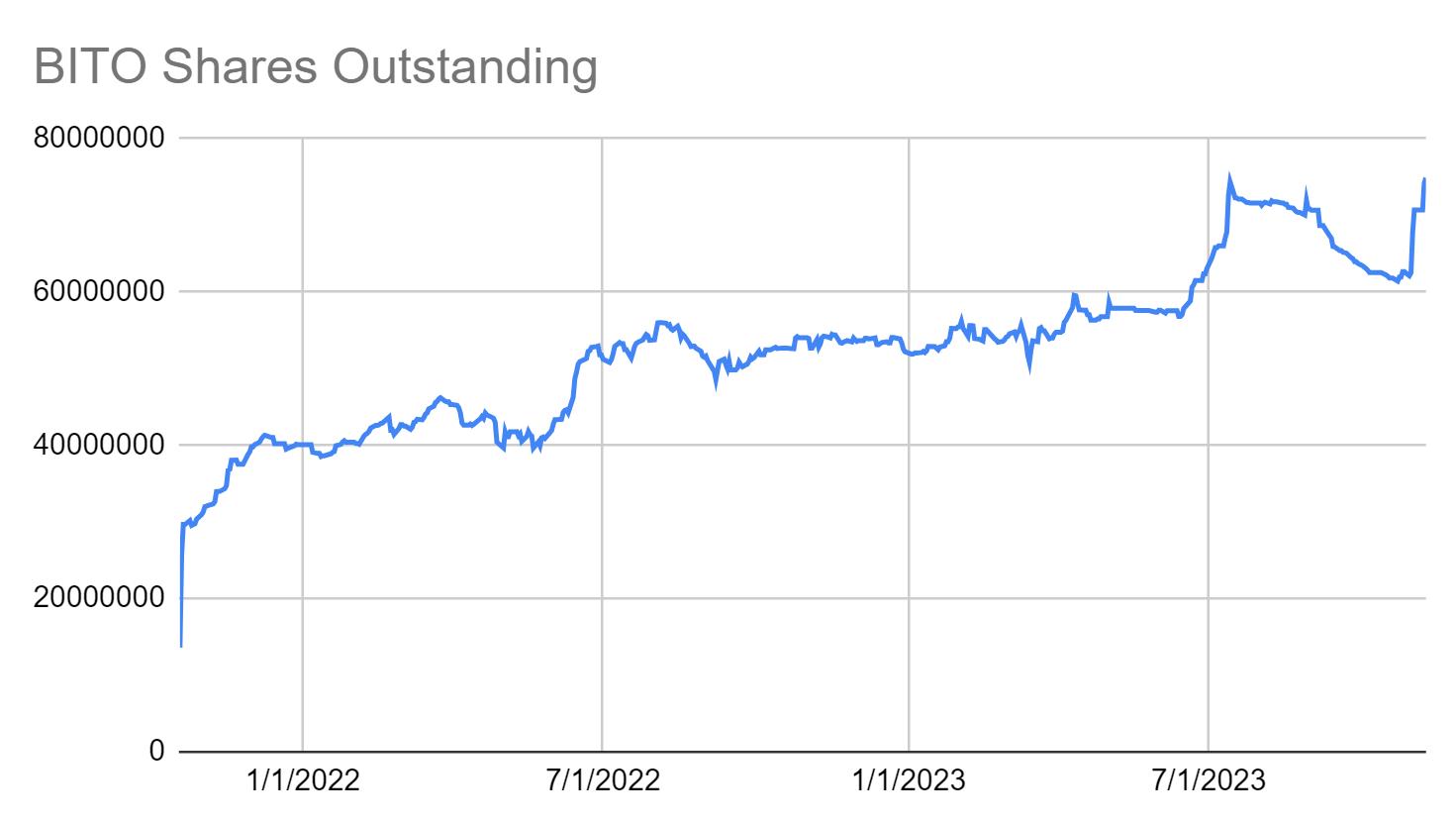
External capital is using BITO to front-run the launch of spot BTC ETFs—the increase in outstanding shares can serve as a proxy for market sentiment toward spot BTC ETF approval. But in reality, there is no organic external demand for Bitcoin futures products, especially considering that before the latest wave of speculation around spot ETF approvals, outstanding shares had already dropped below 60 million.
The Bottom Line
While anticipation of spot crypto ETF approvals drove prices throughout the second half of 2023, with spot BTC ETFs now nearing launch, the market’s demand thesis will finally be tested.
Traders were caught off guard weeks ago by failing to price in the potential impact of spot BTC ETFs. But when approval arrives, they may again make incorrect trades—and the resulting capital inflows could prove disappointing.
Given the limited evidence that external capital wants to buy crypto assets amid uncertain macroeconomic conditions—where potential buyers are more focused on preserving financial stability amid rising debt concerns than chasing the next 100x speculative opportunity—it makes sense to wait and see whether spot ETFs truly live up to expectations before increasing your crypto exposure.
Join TechFlow official community to stay tuned
Telegram:https://t.me/TechFlowDaily
X (Twitter):https://x.com/TechFlowPost
X (Twitter) EN:https://x.com/BlockFlow_News
 Bankless






