








A New Era of Compliance for Cryptocurrency Asset ETFs
TechFlow Selected TechFlow Selected
A New Era of Compliance for Cryptocurrency Asset ETFs
As spot Bitcoin ETFs draw closer, the cryptocurrency industry's compliance efforts could achieve a breakthrough from 0 to 1.
 Navigating Web3 tides with focused insights
Author: Dr. Yi, Special Researcher at OKLink
Since the market plunged into a deep bear phase in 2022, news has struggled to generate any significant impact—even the growth of Bitcoin futures ETFs has stalled. However, BlackRock’s application for a spot Bitcoin ETF sent shockwaves through the market, quickly reigniting investor sentiment and keeping related discussions highly active. Investors often look to the historical development of gold ETFs as a blueprint for imagining the transformative potential of a spot Bitcoin ETF approval. Meanwhile, Bitcoin is playing an increasingly pivotal role in the upcoming 2024 U.S. presidential election, prompting the Republican Party to soften its stance in an effort to win over voters from the crypto community. Furthermore, the future of spot crypto ETFs is drawing attention, with major asset management firms quietly filing applications for a spot Ethereum ETF—investors should also monitor this progress closely.
1. Learn from History: The Evolution of Gold ETFs
Recently, amid strong market anticipation for a spot Bitcoin ETF, the current state of Bitcoin futures ETFs appears bleak. The SEC has approved seven Bitcoin futures ETFs based on CME contracts, giving them a clear first-mover advantage. However, due to slippage, trading fees, and contango associated with rolling futures contracts, these products incur high holding costs, resulting in sluggish growth in assets under management (AUM). As of now, their total AUM remains just over $1 billion.
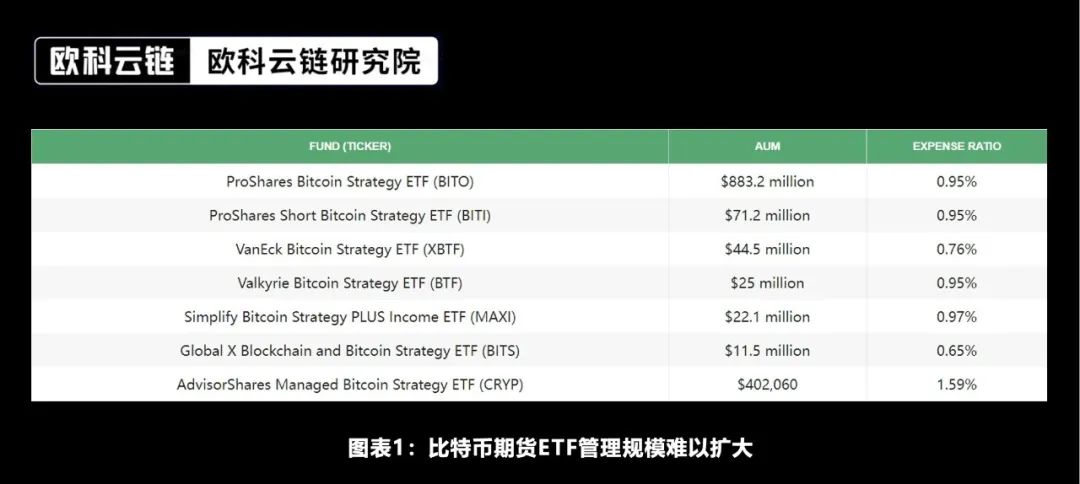
Source: USA TODAY, OKLink Research Institute
In contrast, spot Bitcoin ETFs do not suffer from these drawbacks. On June 15, 2023, BlackRock, the world’s largest asset manager, filed an application with the SEC for its iShares spot Bitcoin ETF. With nearly $10 trillion in AUM and a track record of 575 approvals out of 576 ETF filings, the firm rekindled market hopes for the approval of a spot Bitcoin ETF. Following BlackRock's lead, other traditional finance (TradFi) giants such as WisdomTree, Invesco, and Galaxy have also submitted similar applications.
However, the SEC initially rejected BlackRock’s application, citing insufficient qualifications and the absence of disclosure regarding which cryptocurrency exchanges had signed "surveillance-sharing agreements" (SSAs).
Subsequently, BlackRock designated Coinbase as its SSA partner and resubmitted the application in response to the SEC’s concerns.
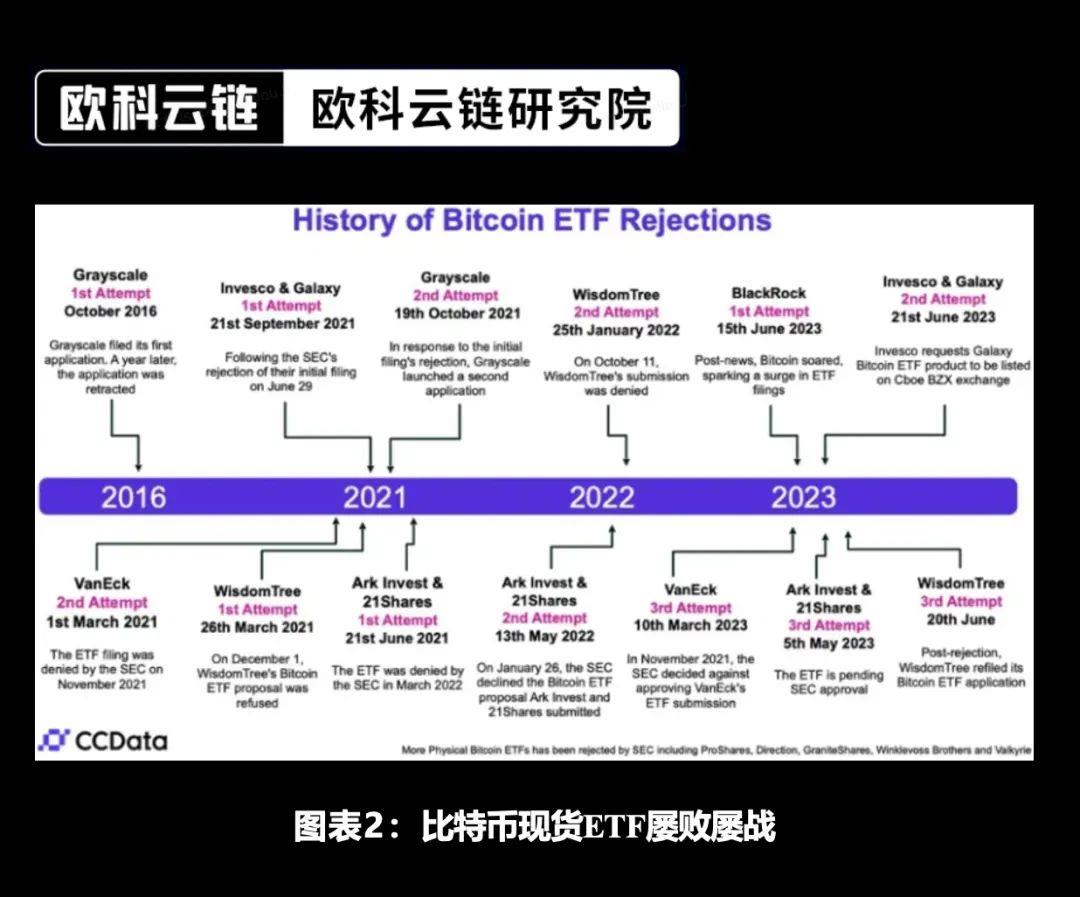
Source: CCData, OKLink Research Institute
According to the SEC’s response deadlines, the final date for it to respond to the iShares application is March 9, 2024.
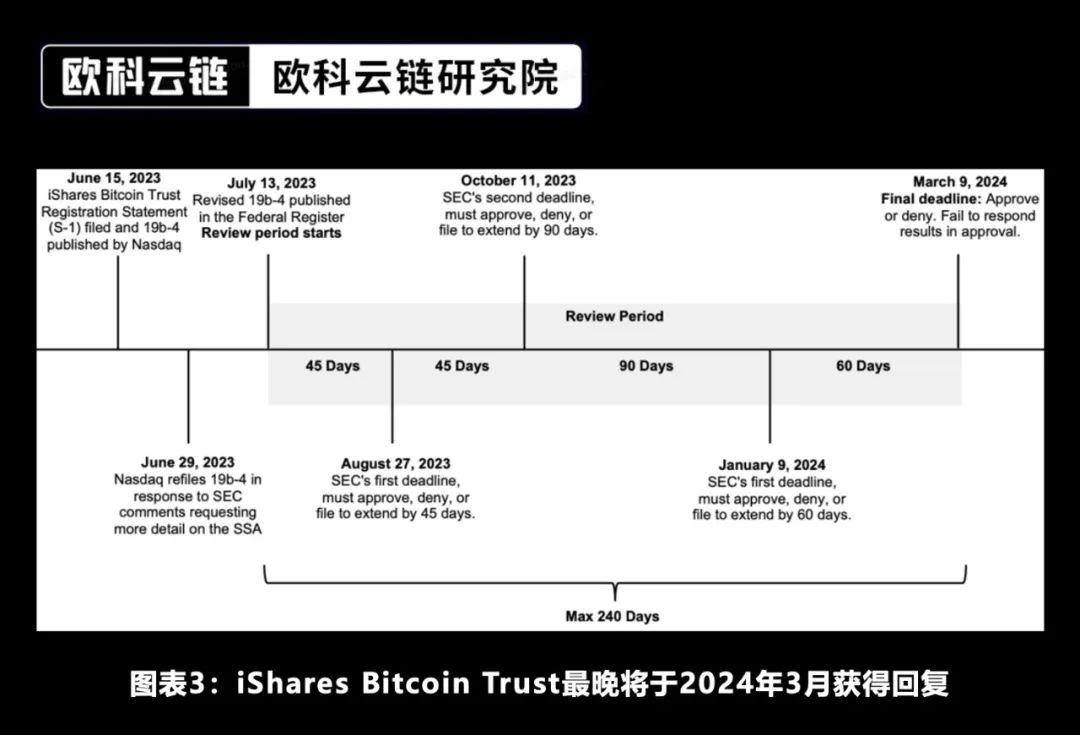
Source: GSR, OKLink Research Institute
The outcome of the iShares application remains uncertain, but given that BlackRock’s CEO has referred to Bitcoin as “digital gold for the 21st century,” reviewing the history of gold ETFs offers valuable insights.
By analogy with the transformative impact of gold ETFs on the gold market, a spot Bitcoin ETF could trigger a fundamental shift in the crypto market. On November 18, 2004, State Street launched the first gold ETF, SPDR Gold Trust (GLD), which began trading on the NYSE. This product dramatically lowered investment barriers, solving longstanding issues around storage and transportation. While history may not repeat itself, it often rhymes—spot Bitcoin ETFs may spark a similar revolution. Investors would be able to hold Bitcoin long-term via an ETF without worrying about private keys or custody.
In terms of price performance, gold ETFs attracted substantial new investors and capital inflows, driving rapid price appreciation. From GLD’s launch until mid-2011, gold prices remained in a sustained uptrend, peaking in August at approximately $1,900 per ounce—an increase of over 300% from its initial level of around $450, representing an average annual compound growth rate of about 8%. Although GLD fell 45% in the five years leading up to late 2020, it eventually recovered to previous highs. This demonstrates how easier market access and greater transparency can attract more participants, leading to generally stable long-term price appreciation.
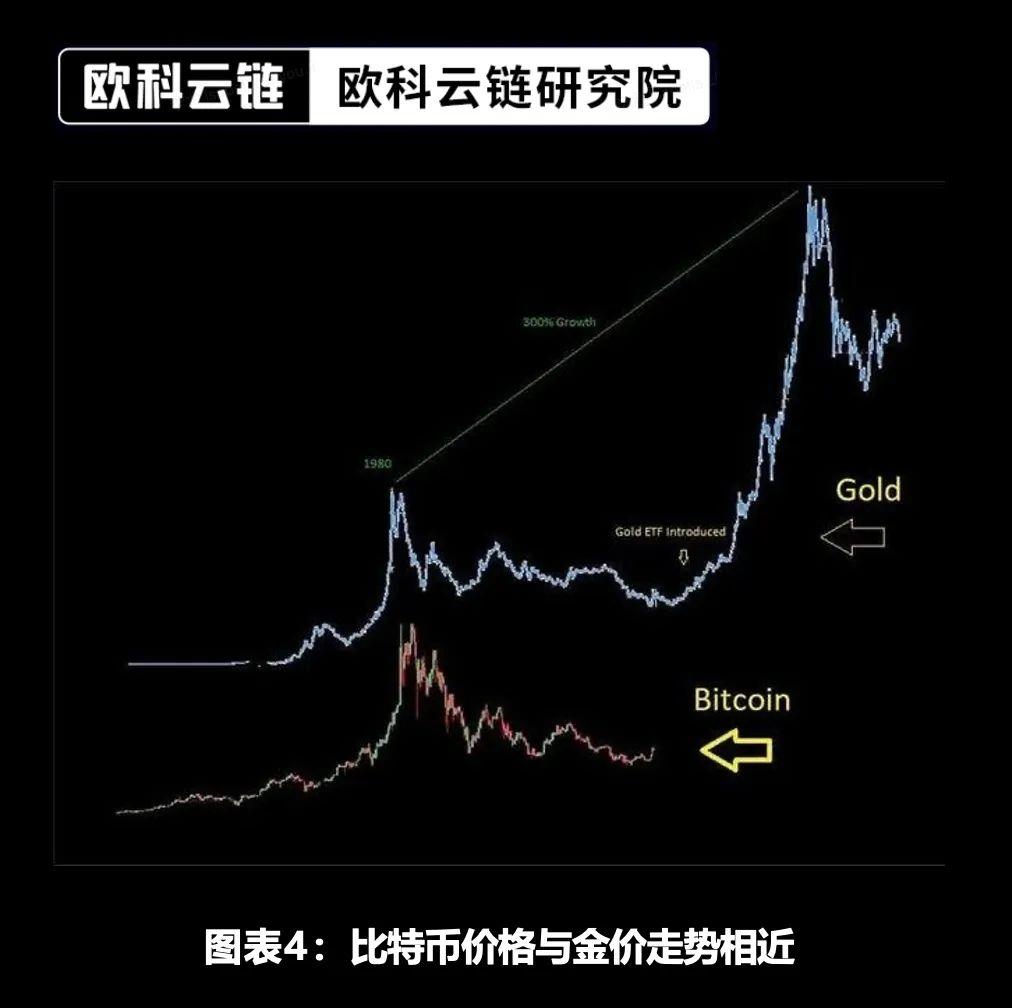
Source: Crypto Goose, OKLink Research Institute
From the perspective of AUM growth, a spot Bitcoin ETF could set new records. The first gold ETF surpassed $1 billion in AUM within just three days—a record that stood for 18 years. Another ETF to achieve this milestone rapidly was ProShares’ Bitcoin futures ETF BITO, which attracted $1 billion in liquidity within two days in 2021. Given the inherent advantages of a spot Bitcoin ETF, there is a high probability it will break even BITO’s short-lived record.
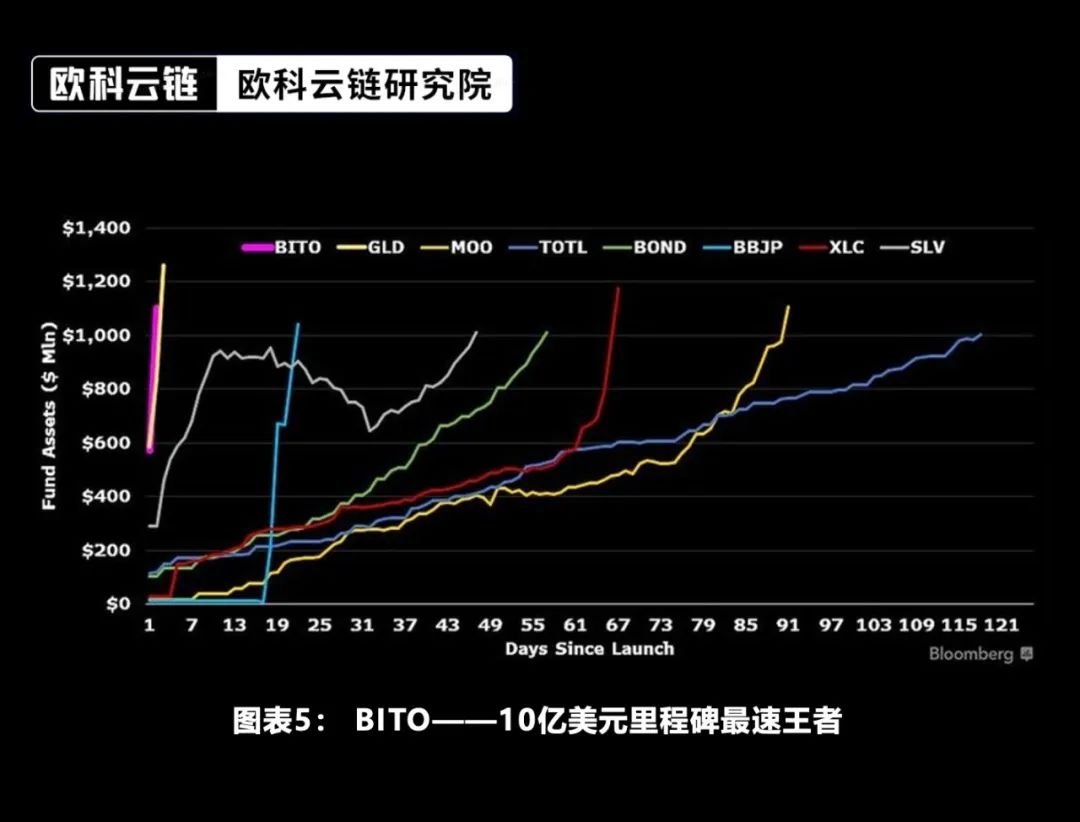
Source: Bloomberg, OKLink Research Institute
Increased capital inflows will likely strengthen Bitcoin’s price. As more funds flow into ETFs, net buying pressure will provide strong momentum for price appreciation. This effect becomes especially pronounced during periods of extreme inflows. Large-scale capital injections can significantly boost market confidence, while sustained outflows may exert downward pressure.
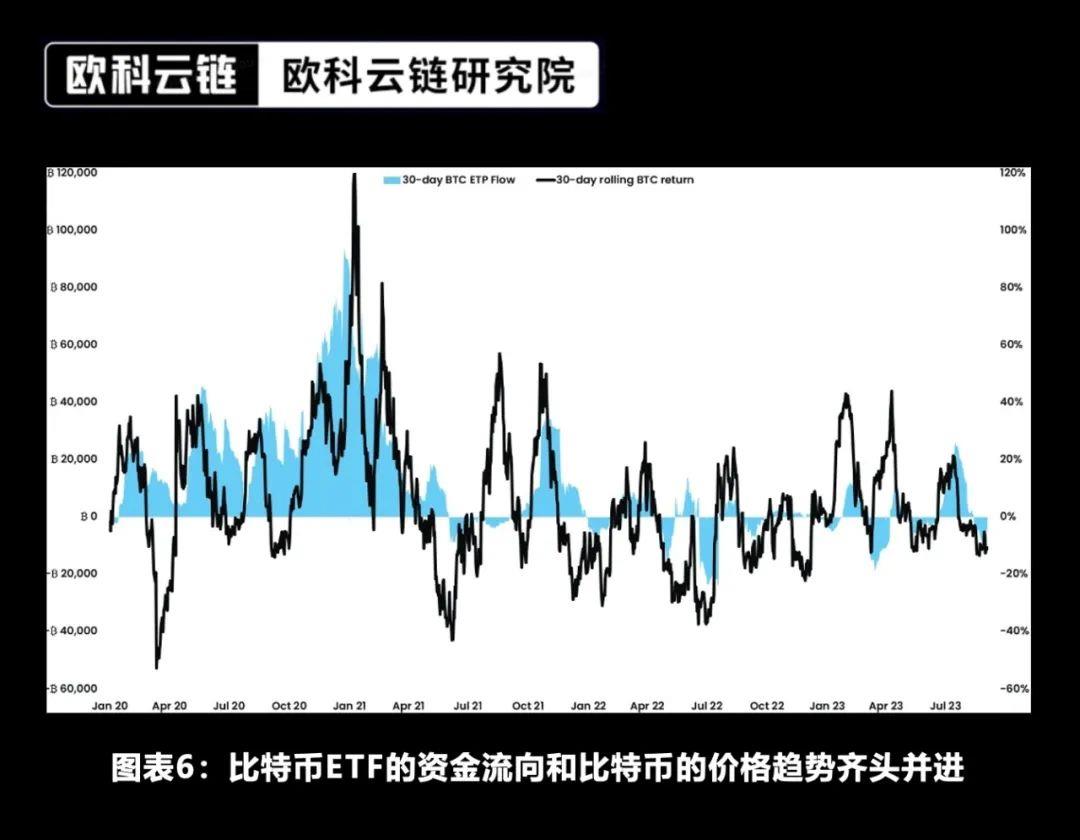
Source: K33 Research, Grayscale, Bloomberg, Bytetree, OKLink Research Institute
2. The Hidden Political Variable—The U.S. Presidential Election
Given the high regulatory risks facing a spot Bitcoin ETF, the U.S. presidential election will be a key political factor influencing the SEC’s decision. According to Federal Reserve estimates, 8%–11% of Americans use cryptocurrencies—enough to sway electoral outcomes.
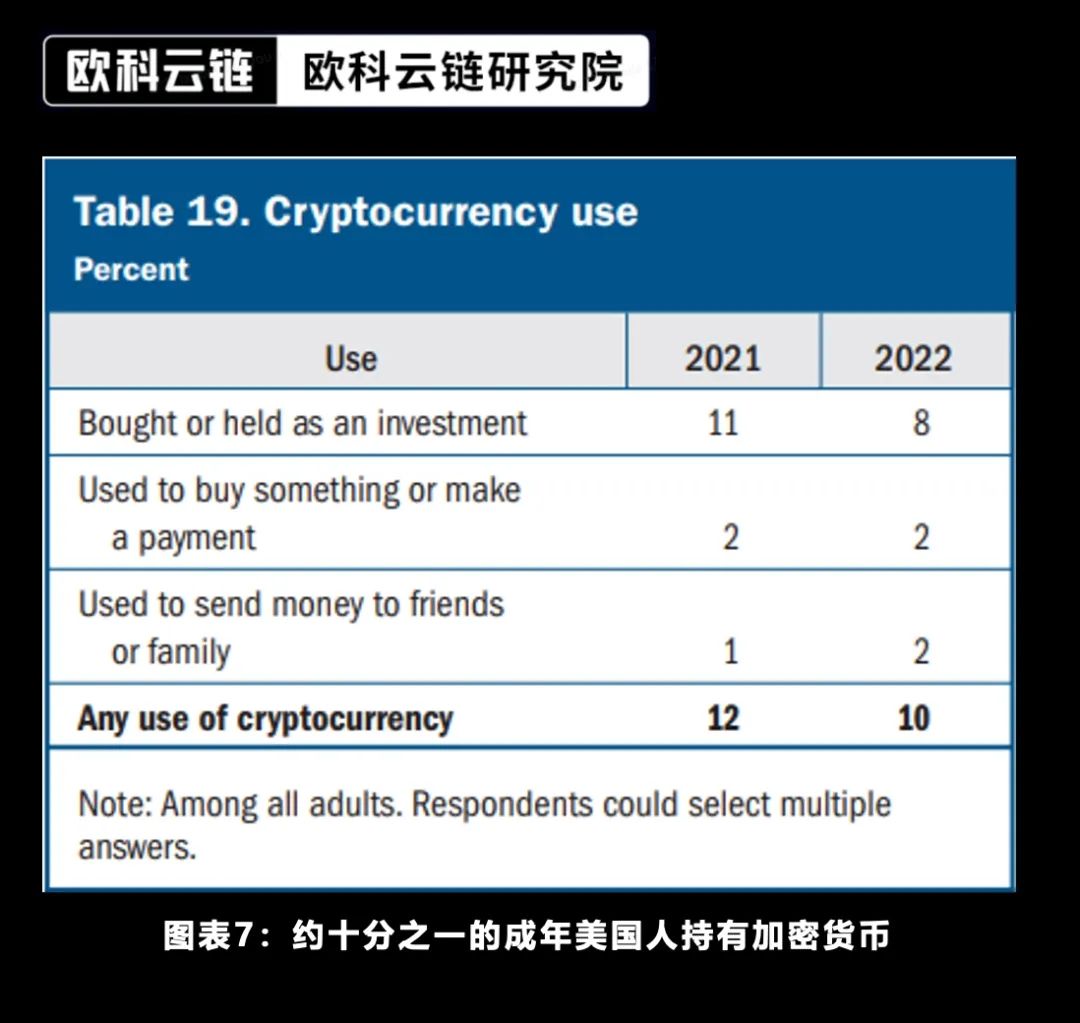
Source: Federal Reserve, OKLink Research Institute
Minority groups are crucial swing voters in presidential elections. Their significance increases further when candidates’ crypto policy stances directly affect investment portfolios. According to Plaid’s report *The Fintech Effect*, 44% of Hispanic and 46% of African American respondents believe crypto is more accessible than traditional finance (TradFi).
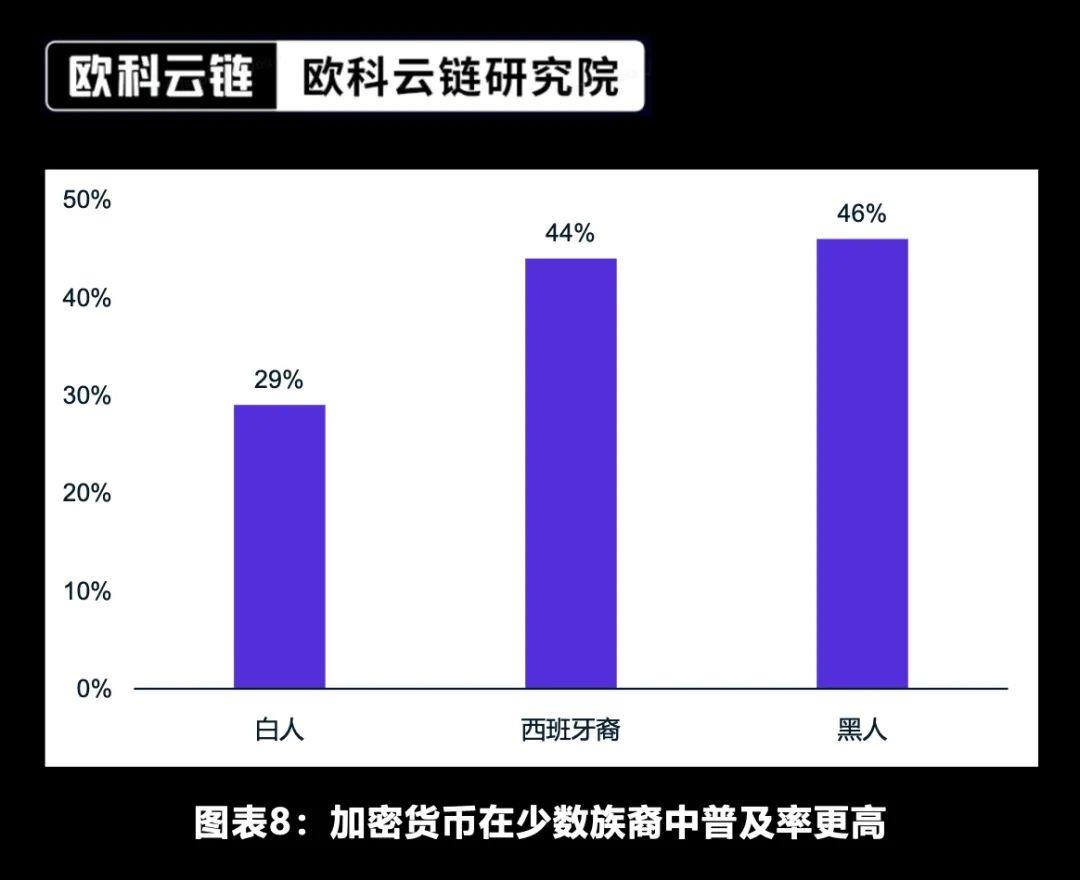
Source: Plaid, OKLink Research Institute
Moreover, comparative data from Pew Research Center shows that cryptocurrency ownership is the only asset class where minority voters hold higher per capita levels than white Americans.
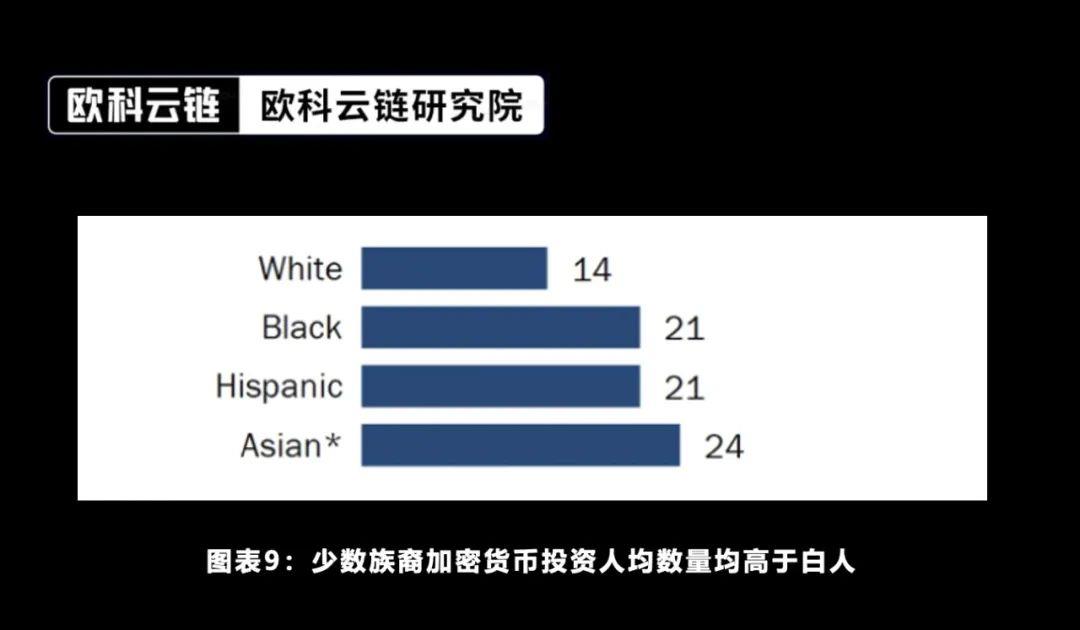
Source: Pew Research Center, OKLink Research Institute
Besides, anti-Bitcoin mining policies could negatively affect candidates in the 2024 election. A significant number of Bitcoin mining operations are located in swing states, collectively accounting for about 40.2% of the U.S. total hash rate—making them critical battlegrounds in the election. Mining companies employ many local residents, contribute to tax revenues, and revitalize economically depressed regions.
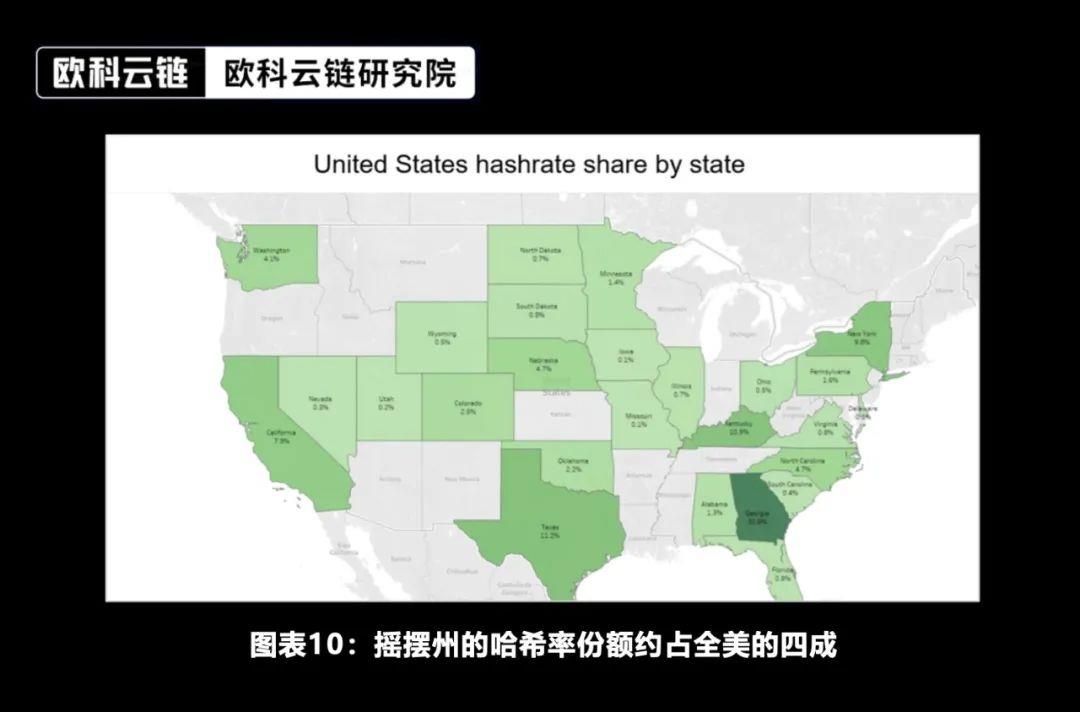
Source: Cambridge Digital Assets Programme, OKLink Research Institute
Policies such as a tax targeting Bitcoin mining could threaten jobs and economic revitalization in key swing states, potentially provoking backlash from affected constituencies.
Notably, demographic shifts are also underway in swing states. States like Georgia and North Carolina are experiencing continuous immigration flows, primarily from Latin America. The combination of mining hubs and minority communities’ investment preferences could significantly influence election outcomes—and thereby affect the SEC’s stance on spot Bitcoin ETF approvals.

Source: Institute of International Relations, Tsinghua University, OKLink Research Institute
Since taking office in January 2021, the Biden administration has maintained a hardline stance toward cryptocurrencies, proposing a 30% digital asset mining energy tax specifically targeting Bitcoin miners, while exempting other similar data centers from the same standard.
From a game theory perspective, very few U.S. voters would support a candidate solely because they oppose Bitcoin—after all, Bitcoin doesn’t affect most people. However, there may be a group of pro-Bitcoin citizens who would vote for a candidate simply because they support Bitcoin.
Compared to the Democratic Party’s continued crackdown on crypto, the Republican Party’s shift in tone is particularly noticeable. Jay Clayton, former Republican SEC chair who once sued Ripple, now argues that the agency has engaged in excessive regulation and believes spot Bitcoin ETFs should be approved.
Typically, around six months after a new president takes office, a new SEC commission team is formed—similar to the current administration led by President Biden and SEC Chair Gary Gensler. As a result, Democrats currently hold a majority on the SEC commission.
To reduce partisan imbalance within the SEC, political representation must be balanced. Former SEC lawyer John Reed Stark predicts that if Republicans win the election, Gary Gensler will likely step down early, and Hester Pierce—the most senior official in the current team—will serve as acting chair, restoring bipartisan balance at the SEC.
Notably, Hester Pierce, also known as “Crypto Mom,” has advocated for the U.S. to adopt Europe’s MiCA regulatory framework and opposed several of the SEC’s enforcement actions against the crypto industry. If she becomes acting SEC chair, regulatory enforcement against the sector may not halt entirely, but it would likely ease significantly.
Under such a scenario: 1) The SEC may shift focus from registration violations—such as centralized exchanges, broker-dealers, or clearing agencies failing to register as crypto trading platforms—to cases involving fraud; 2) There could be favorable developments for the potential approval of a spot Bitcoin ETF, along with other pro-crypto regulatory measures.
3. One More Thing—Spot Ethereum ETF
Over the past week, two major events occurred that could alter the trajectory of spot Bitcoin ETF approvals. On October 14, 2023, the SEC decided not to appeal a court ruling supporting GBTC’s conversion into an ETF, increasing the likelihood of spot Bitcoin ETF approval. This news greatly boosted market sentiment, pushing Bitcoin above $27,000. Two days later, another major positive emerged when leading industry media Cointelegraph announced on X (formerly Twitter) that the SEC had approved BlackRock’s iShares spot Bitcoin ETF, further lifting the market and sending Bitcoin close to $30,000. On October 24, Bloomberg ETF analyst Eric Balchunas reported on social media that BlackRock’s spot Bitcoin ETF had been listed on the Depository Trust & Clearing Corporation (DTCC) under the ticker IBTC—a key step in the ETF listing process and the first spot Bitcoin ETF to appear on DTCC. Following this news, Bitcoin reclaimed $30,000 and briefly surged toward $35,000.
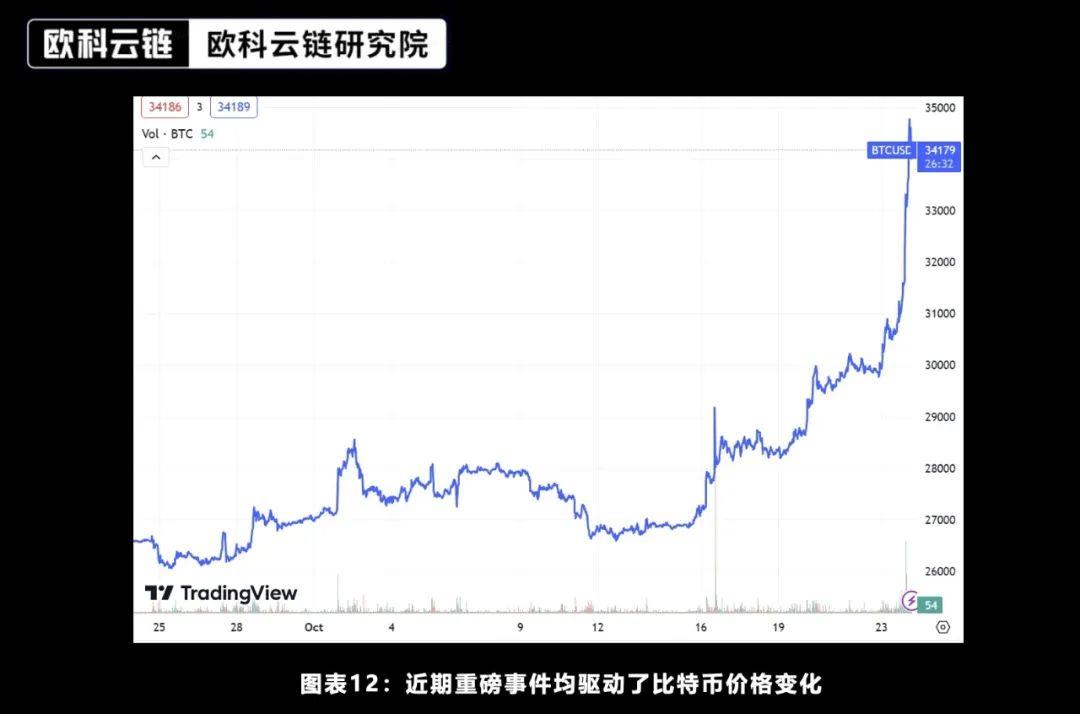
Source: TradingView, OKLink Research Institute
Beyond the progress on spot Bitcoin ETFs, Ethereum—the second-largest cryptocurrency—also continues to attract strong interest from traditional financial markets.
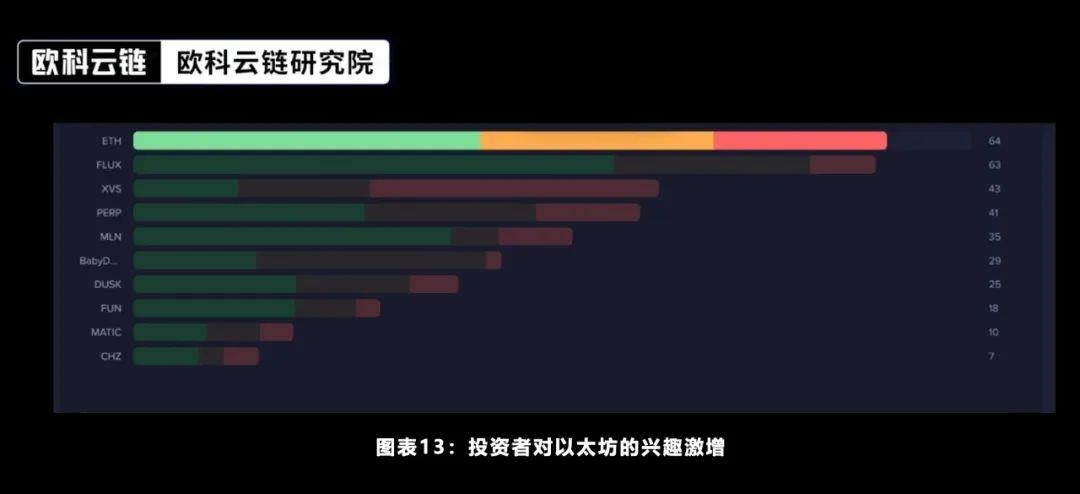
Source: Santiment, OKLink Research Institute
Moving forward, in addition to monitoring the spot Bitcoin ETF, investors should also pay attention to the development of a spot Ethereum ETF. On September 7, 2023, Ark Invest and 21Shares jointly filed for the first spot Ethereum ETF. Then, on October 2, Grayscale applied to convert its Ethereum Trust into a spot ETF. Currently, this trust is the largest Ethereum investment vehicle globally, managing nearly $5 billion in assets—approximately 2.5% of Ethereum’s circulating supply.
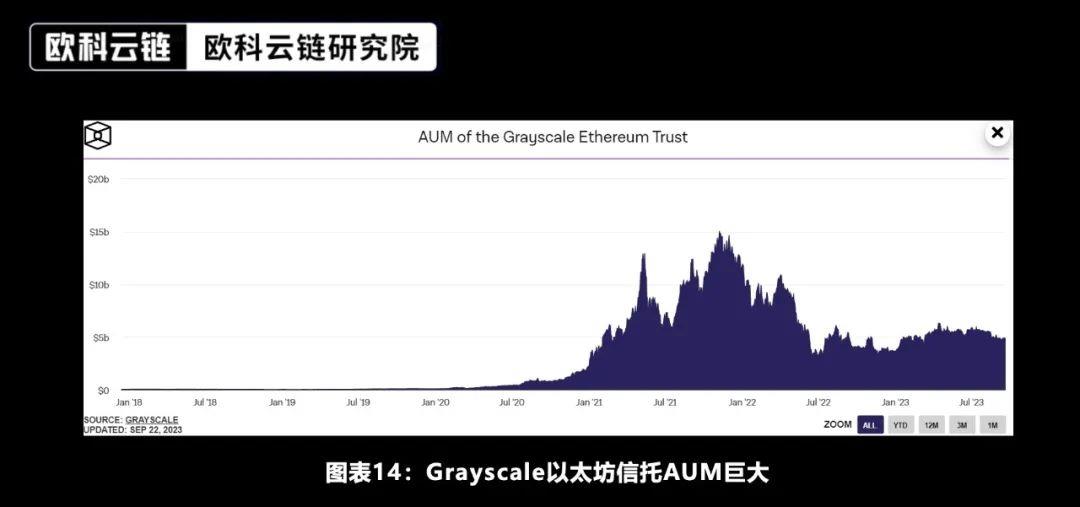
Source: THE BLOCK, OKLink Research Institute
Due to Ethereum’s staking rewards mechanism, it carries yield-bearing characteristics and may therefore be classified as a security. Indeed, the SEC has consistently treated Ethereum as a security. By the law of excluded middle: if the SEC approves a spot Bitcoin ETF, it should apply the same standard to Ethereum; conversely, if the SEC maintains that Ethereum qualifies as a security under the Howey Test, it would have even less justification to reject a spot Ethereum ETF. Therefore, purely from a probabilistic standpoint, the likelihood of a spot Ethereum ETF being approved may actually be higher than that of Bitcoin.
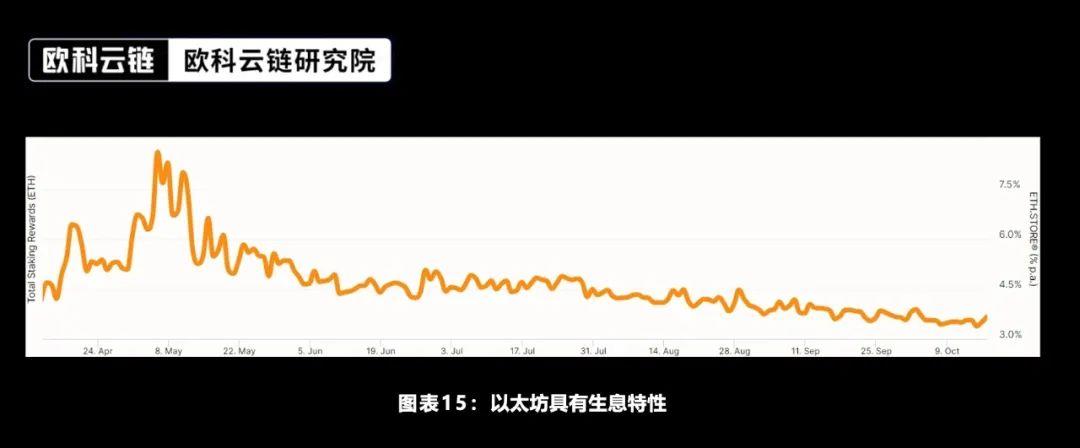
Source: Beaconcha.in, OKLink Research Institute
Ethereum’s innovative staking mechanism will drive investor demand, encouraging participation in liquid staking to enhance ETF returns. Even when assets are locked via liquid staking protocols, stakers retain liquidity, as the protocol issues tradable derivative tokens. In contrast, funds locked in government bonds lose liquidity. Generally, investors prefer shorter lock-up periods, and liquid staking allows them to earn staking rewards while maintaining liquidity—without requiring full asset lockups.
4. Conclusion—The Future is Coming
As spot Bitcoin ETFs draw closer, the crypto industry may finally achieve a breakthrough in compliance—from zero to one. This means mainstream digital assets like Bitcoin and Ethereum could join stocks, bonds, and commodities as legitimate investment options for institutional and retail investors alike. For digital assets, this could unlock significant new capital inflows; for traditional financial institutions, it offers additional investment avenues in a high-interest-rate environment—an outcome beneficial to all parties.
From a long-term perspective, as the convergence between crypto and traditional finance accelerates, an important question arises: Will the ultimate form of integration involve wrapping crypto assets in traditional financial structures to meet regulatory standards? We believe this may be a gradual “convergence” process—on one hand, crypto assets becoming more compliant and acceptable to mainstream investors; on the other, blockchain-based finance expanding by tokenizing real-world assets (RWA) and serving as a complement to traditional banking, injecting new vitality into the traditional financial system. While this future has not yet arrived, we believe it is inevitable. The future is coming.
Join TechFlow official community to stay tuned
Telegram:https://t.me/TechFlowDaily
X (Twitter):https://x.com/TechFlowPost
X (Twitter) EN:https://x.com/BlockFlow_News
 @OKGResearch






