








1kx: Exploring the design space of dynamic NFTs
TechFlow Selected TechFlow Selected
1kx: Exploring the design space of dynamic NFTs
Dynamic NFTs are an exciting form factor for digital objects that is independent of category.
 Navigating Web3 tides with focused insights
Author: Nichanan Kesonpat
Translation: TechFlow
Today, most NFTs are static assets. Their media and metadata immutability is enforced either socially or programmatically. While this suffices for storing cultural artifacts designed to be immutable—static art, music, writing, collectibles—there remains vast experimental design space for dynamic on-chain assets whose appearance, metadata, or state can evolve continuously according to immutable rules.
Dynamism enables NFTs to transcend static links and media, behaving more like software that responds to external factors. This creates new layers of interactivity for digital goods and media, enabling greater individual and collective expression, dynamic utility, and sustained innovation around digital objects.
Dynamic NFTs can be procedural (reflecting algorithmic inputs) or interactive (reflecting user inputs). Depending on the intended use case, dynamism can span multiple verticals.
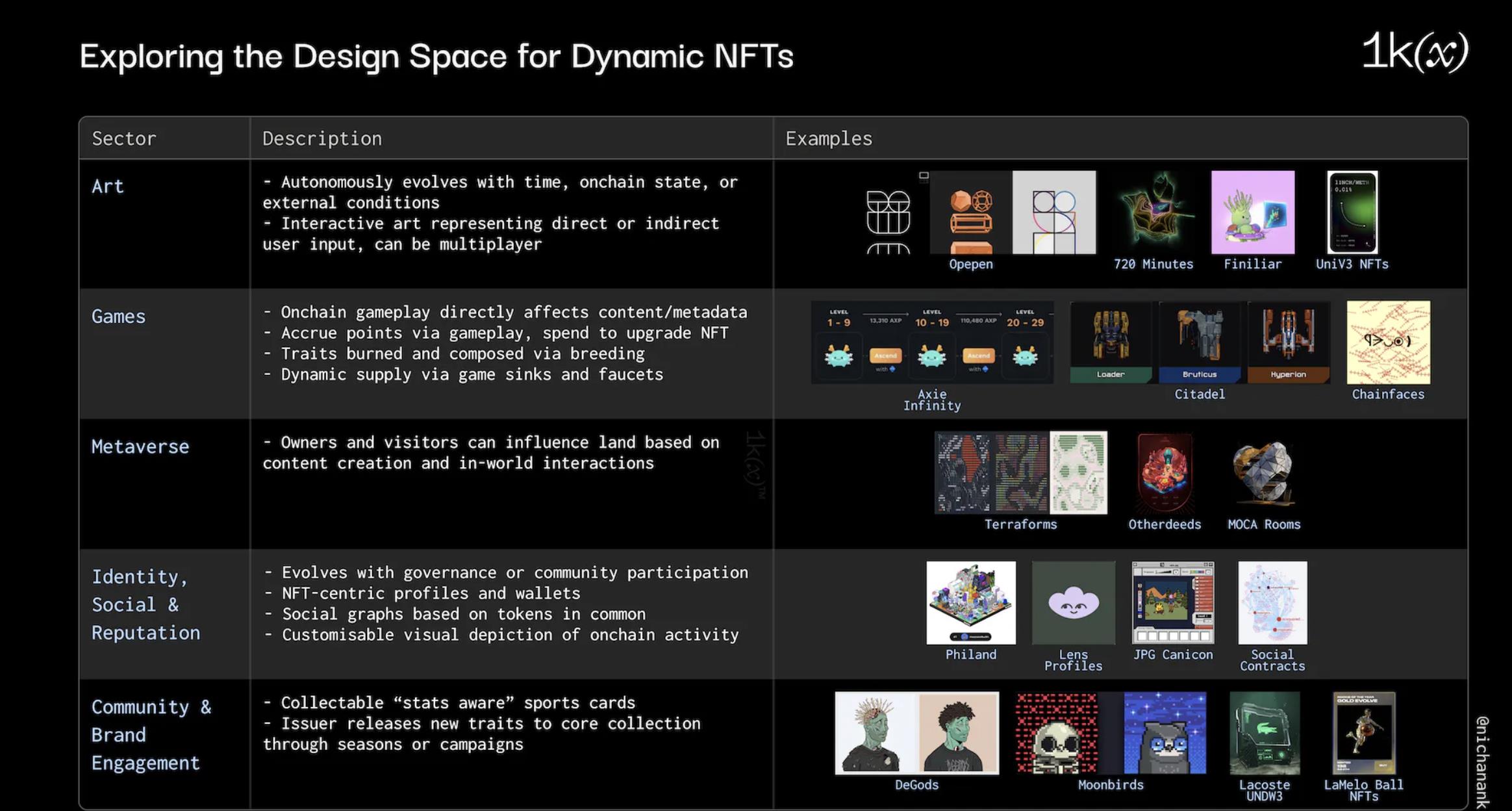
We have already seen various experiments in fields such as art, gaming, identity and reputation, metaverse, and community and brand engagement.
Performance or Conceptual Art
Dynamic collections can be viewed as a subset of generative art, which also includes "parameterized input" multi-artist works where mint time or minter address serve as sources—though the NFT itself does not update post-mint. Dynamic art NFTs offer collectors continuous surprise and act as collaborative tools between artists and collectors, serving as a new medium for collective storytelling.
-
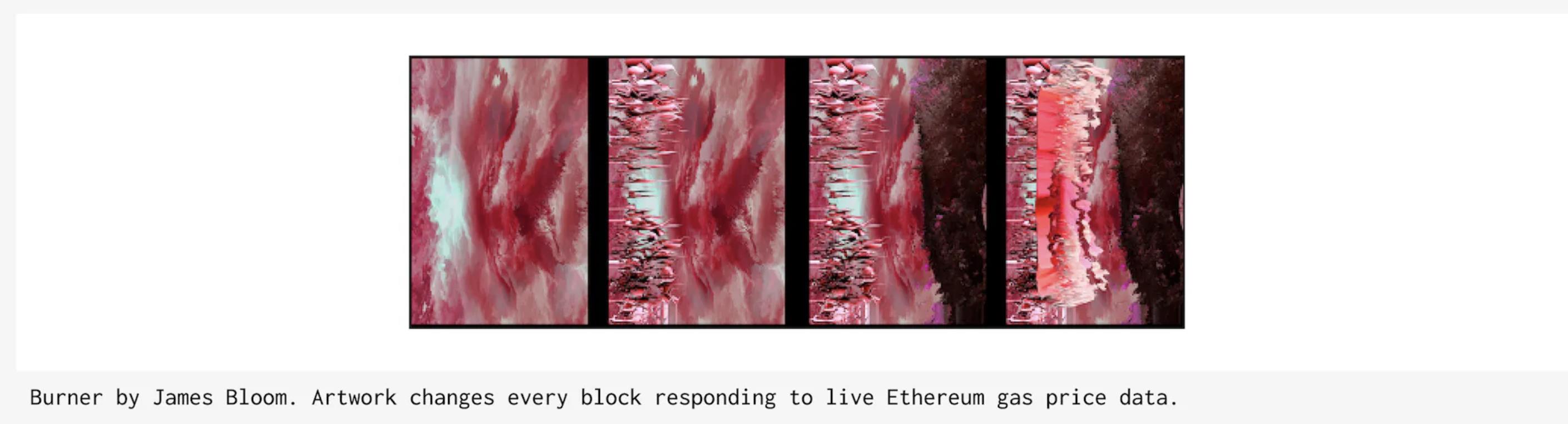
Art that evolves automatically over time, lunar cycles, on-chain states, or off-chain conditions—e.g., Alexis Andre’s 720 Minutes, crashblossom’s BURNER, Takens Theorem’s Gaussian Timepieces, Ed Forneiles’ Finiliars, Matt Kane’s Gazers, Harm van den Dorpel’s Mutant Garden Seeder.
-
Art that evolves with chain transfers and ownership changes—e.g., Animal Coloring Book, dom.eth’s Corruptions, Joan Heemskerk’s Chameleon, Entropes, OG Crystals, w1nter.eth and Tyler Anglert’s Watchfaces.
-
Art where collectors directly influence visuals—e.g., divergence’s Brotchain, Mathcastles’ Terraforms, John Palmer’s Shields, Async Art’s Forever Supper or Classic, where holders can alter layers displayed in the main artwork.
-
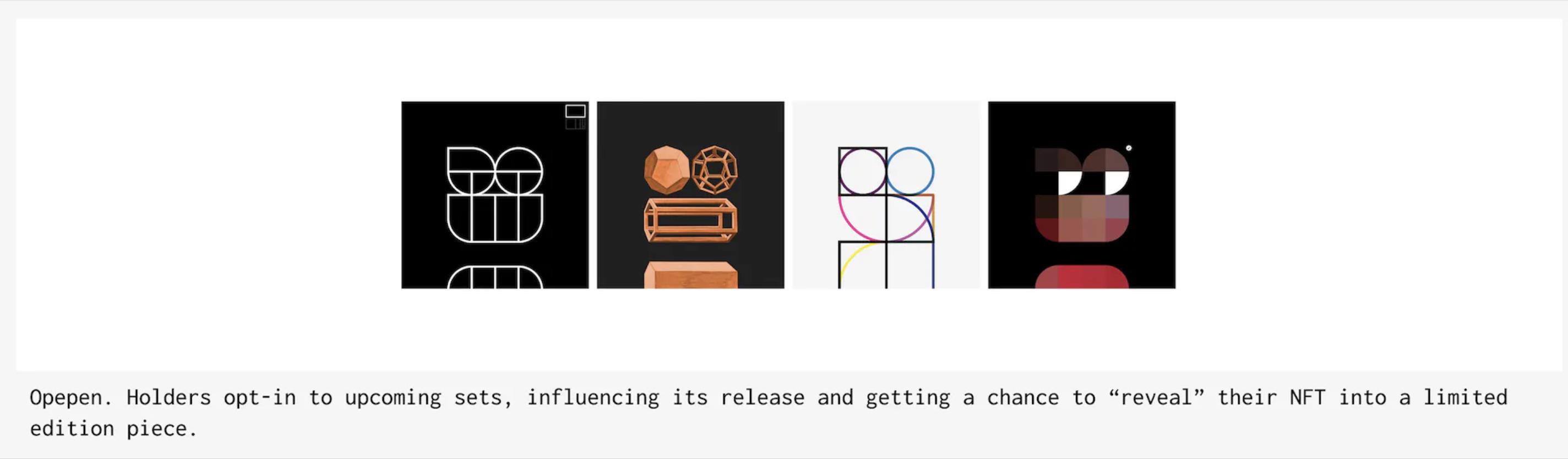
Art with stylistic options released periodically, each drop unveiling limited-edition styles that holders may choose to "switch" their NFT into—e.g., Opepen.
-
Real-time generated, non-repeating audiovisual art—e.g., 404.eth’s In Noise We Trust, and various works by DEAFBEEF.
Gaming
Beyond serving as upgradable assets within games, dynamic NFTs can function as canvases for gameplay, reflecting game states within their media and metadata. Combined with physical digital merchandise, NFTs can be updated based on IRL activities to unlock new consumption experiences.
-
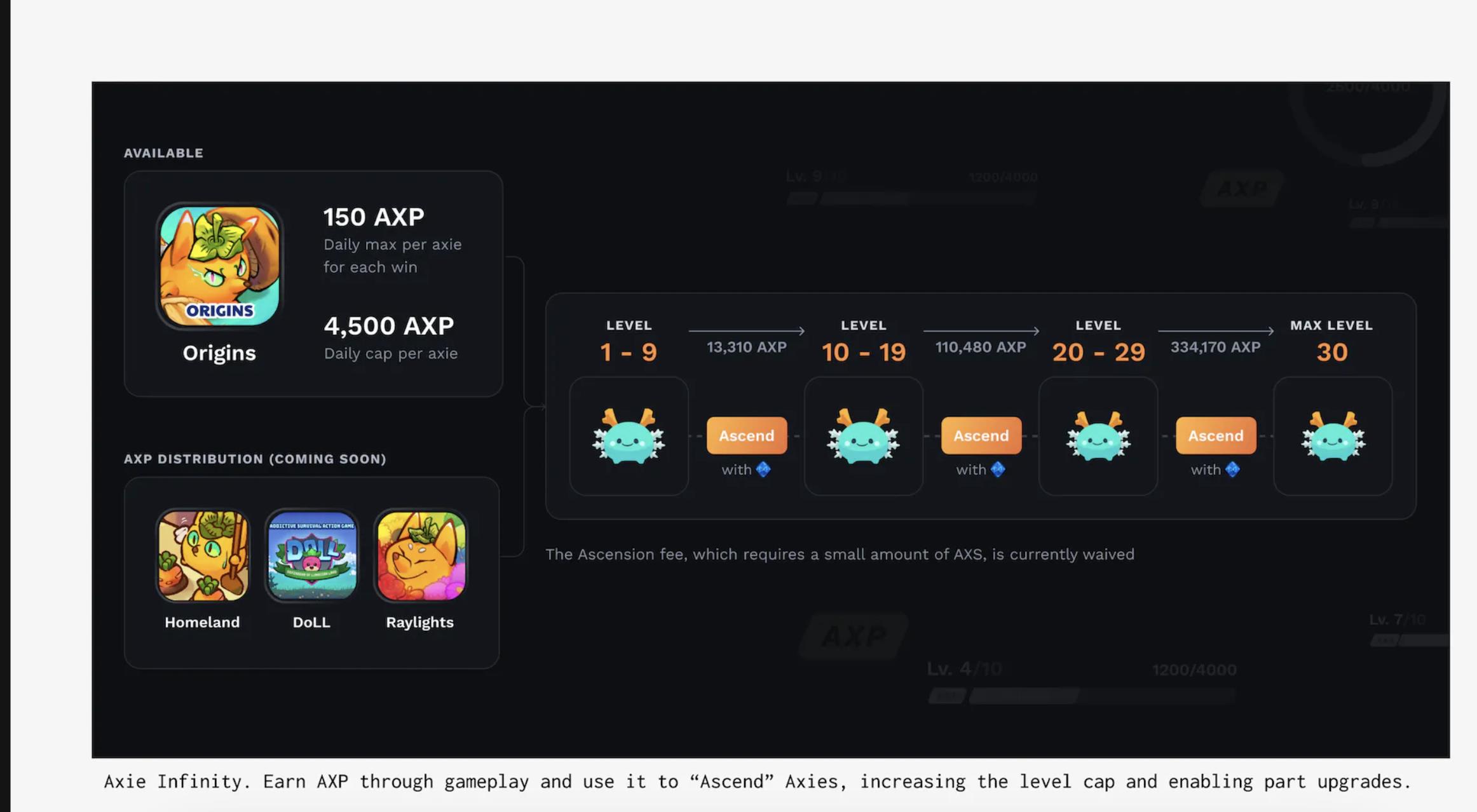
Axies that win ranked battles earn Axie-bound experience (AXP), which can be used to "level up" Axies. This synchronizes off-chain game progress on-chain, increases an Axie's level cap, and allows players to upgrade Axie parts.
-
Citadel ships can be upgraded to increase power, speed, and fuel efficiency. Each upgrade requires different amounts of time and raw materials (ore). Part of the gameplay involves pilots planning trips to asteroid belts to mine ore, with every action and game state reflected on-chain.
-
"Actions" as on-chain transactions that affect the world—e.g., Straylight.
-
Battle arenas where gameplay leaves visual marks on the media—e.g., Chainfaces Arena.
-
Viral propagation/distribution mechanisms spreading infection—e.g., FoliaVirus, Viper.
-
Mechanics of collecting, breeding, and merging to produce rarer versions—e.g., Avastars, VV Checks.
-
Placement games using on-chain AI, where collectors compete for top-score NFTs—e.g., Miragenesi’s ArcadeGlyphs.
-
IRL games and physical activity upgrading NFTs—e.g., STEPN, Loot LARP.
-
Avatar rarity hunting and community engagement—e.g., Manny’s Game.
-
NFTs consuming, infecting, or enhancing each other to grow stronger—e.g., Etholvants and Booster Syringes, Viper.
Identity and Reputation
Dynamic NFTs can also represent certain identities and associated reputations within communities, evolving with continued contributions and governance activities. This fosters intentional interactions both within and across communities and lays the foundation for social gamification.
-
Cross-application on-chain activity directly affecting NFT traits—e.g., Zerion DNA.
-
Lens v2 includes plug-and-play support for token-bound (ERC-6551) standards, giving each Lens Profile NFT its own smart account. This decouples profiles from their holders, allowing the NFT itself to accumulate access rights, assets, and reputation.
-
Burak Arikan’s Social Contracts tracks collectors’ holdings and shared connections with other collectors, generating collection graphs to predict future acquisitions.
-
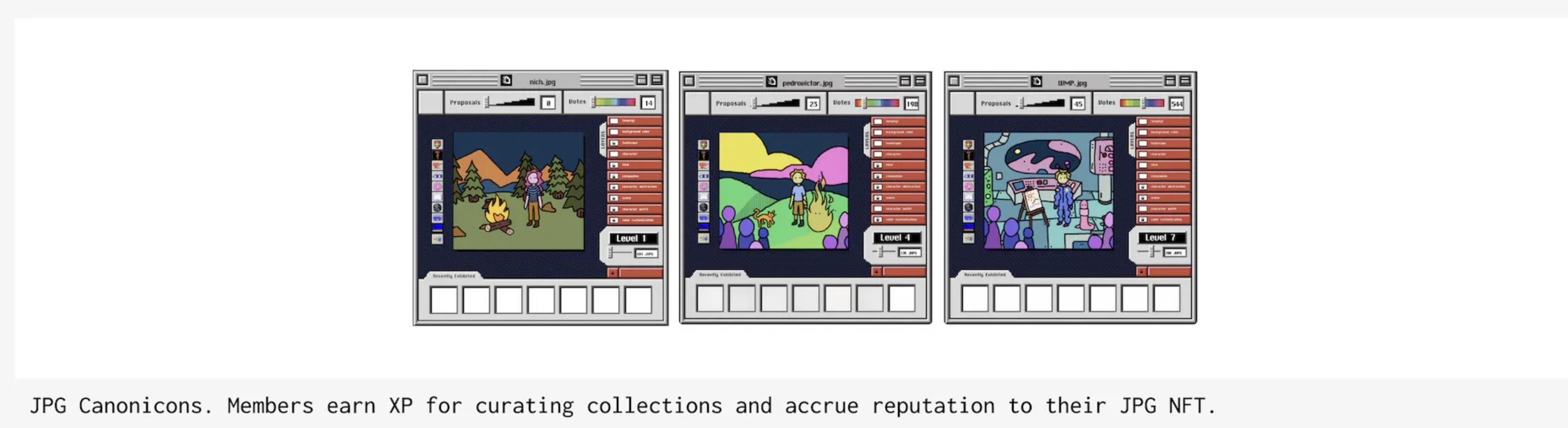
JPG Canonicons artworks represent unique, cumulative expressions of individual participation in Canons curation. Similarly, Deca Decagons can be upgraded by consuming Deca Experience Points (DXP) earned through completing daily tasks on the platform.
-
Mercle and The Metagame enable gamification and trait unlocking based on individuals’ behaviors and roles within communities.
Metaverse
-
Land where holders can directly influence and overwrite on-chain media—e.g., Mathcastles’ Terraforms.
-
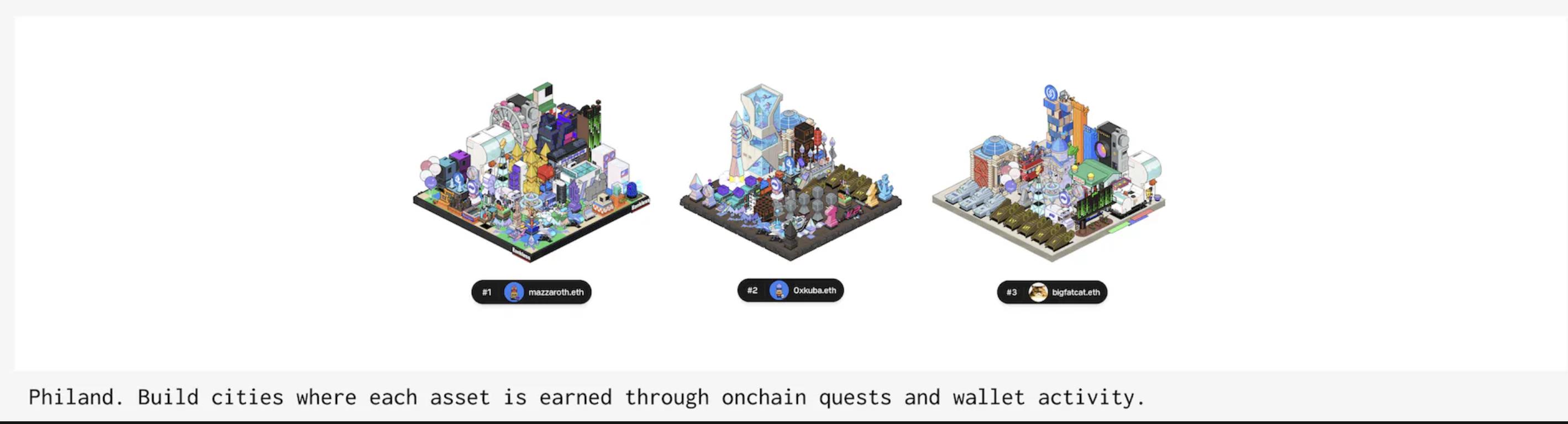
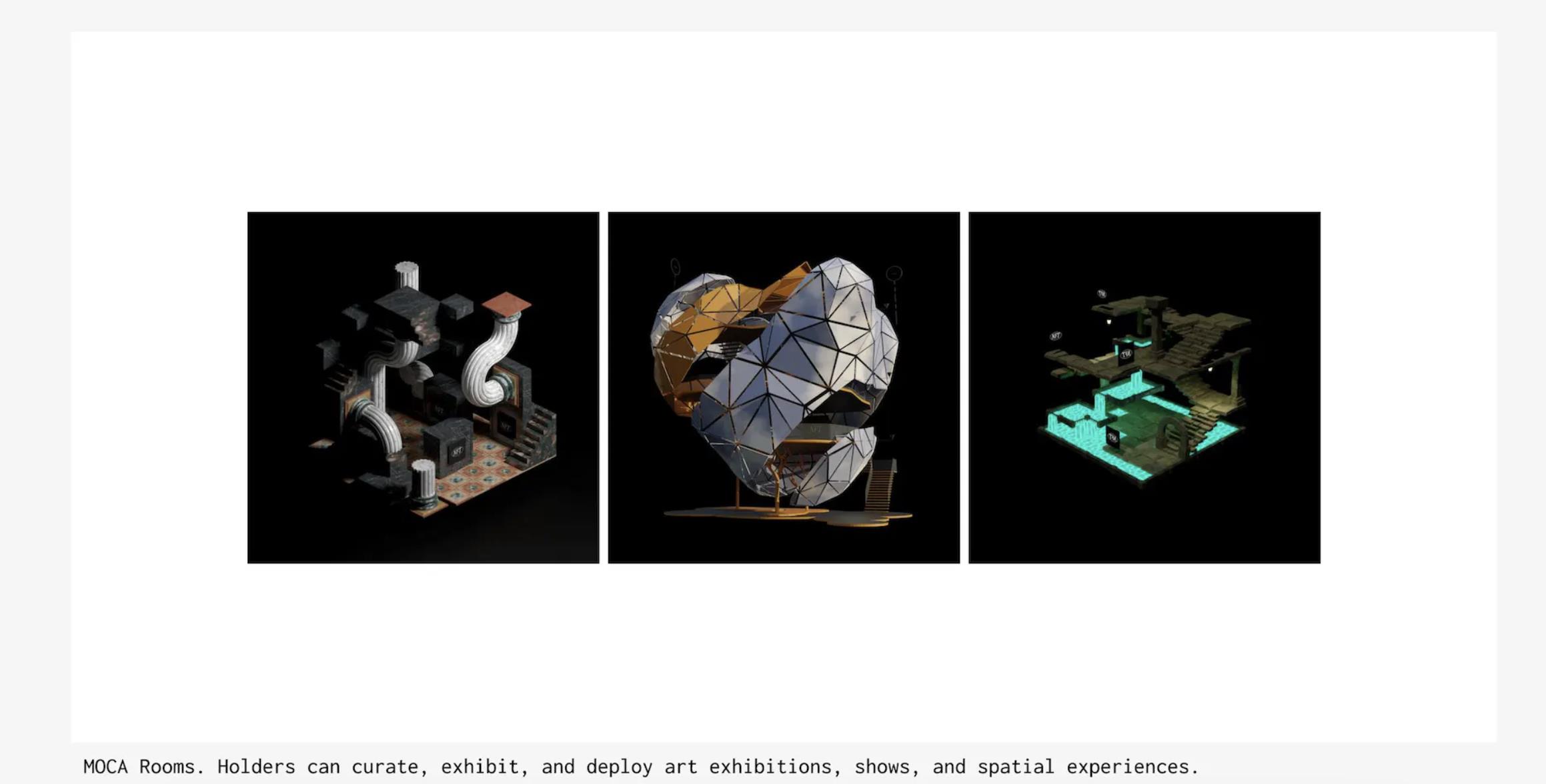
Land that evolves as holders and visitors interact via art curation—e.g., MOCA ROOMS—or through parcel building and gameplay interaction—e.g., Upstreet, Hyperfy, Otherdeeds, Voxels.
-
Virtual fashion NFTs transformable between 3D wearables and artworks—e.g., RSTLSS.
Community and Brand Engagement
Major brands have experimented with dynamic NFTs to engage mainstream audiences, linking assets to external data or increasing utility through ongoing activities.
-
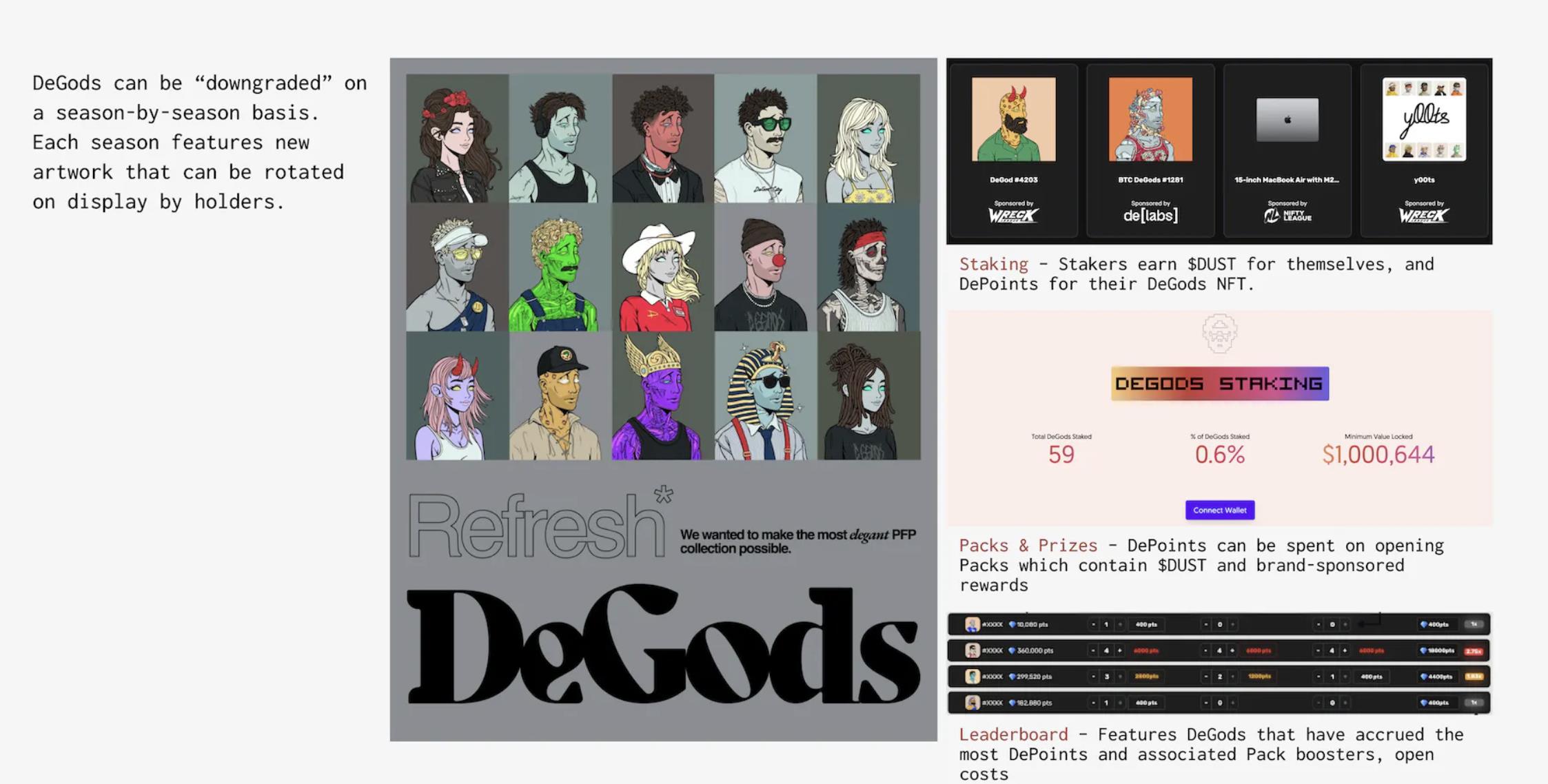
DeGods reveals new artwork and traits for its PFP collection each season. Holders spend $DUST to upgrade their NFTs and may choose which metadata to display. Staking DeGods accumulates more $DUST for holders and DePoints for the staked NFT. DePoints can be spent in-game, opening packs containing $DUST or branded sponsor rewards. DeGods earning the most points in a season appear on leaderboards.
-
LaMelo Ball’s collectible athlete cards feature "upgrade" functionality tied to real basketball data (e.g., Rookie of the Year announcement). As the player’s career progresses, so does the collectible, dynamically integrating stats and milestones.
-
Adidas ATLS is a PFP from Adidas’ Into the Metaverse series. Over time, new traits are gradually revealed to tokens as part of an interactive storyline.
-
Lacoste UNDW3 tracks community engagement via conversation, gamification, task completion, and co-creation.
What Are Dynamic NFTs Changing?
Content
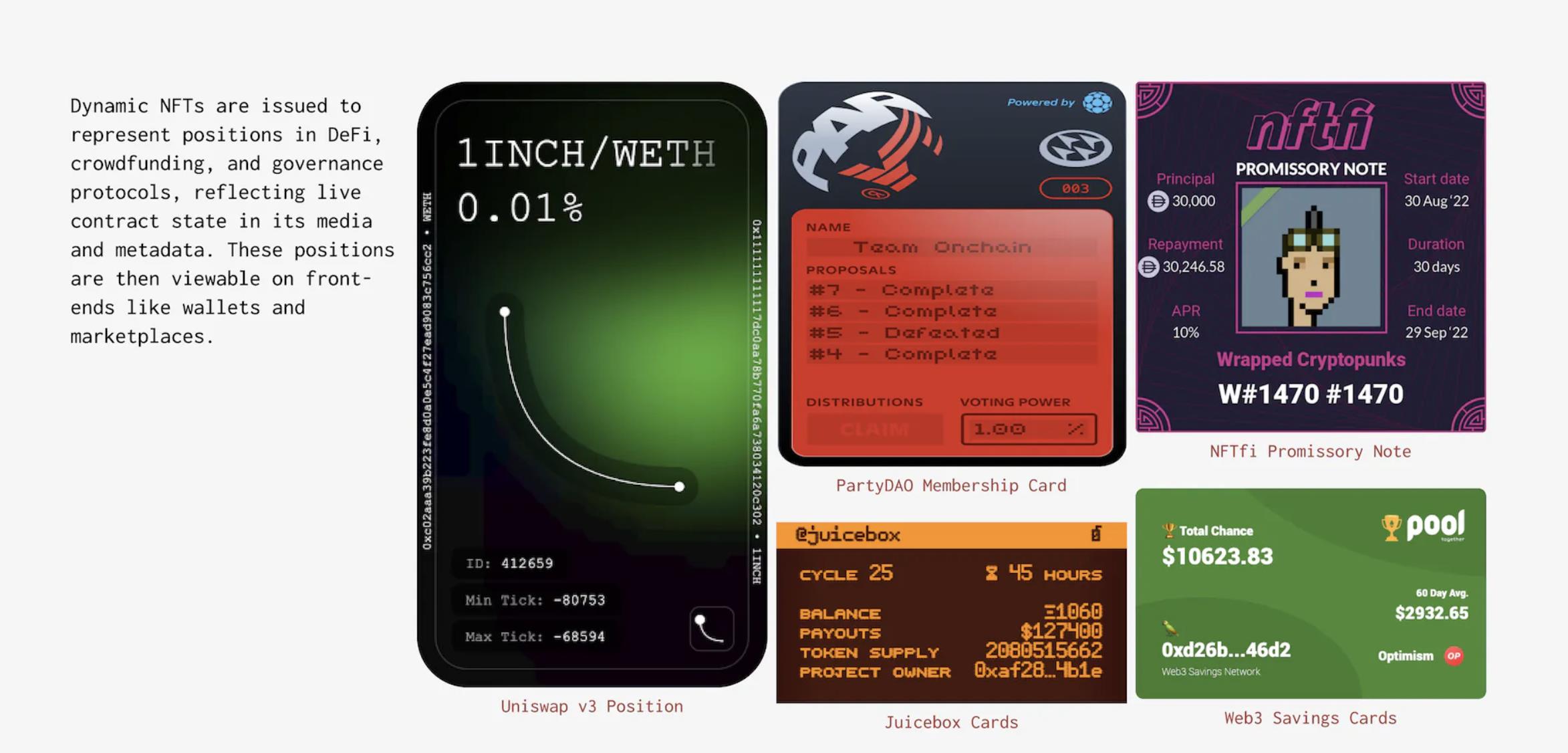
NFTs rendering media solely from on-chain data evolve automatically based on parameters such as time, block hash, wallet address, etc., deterministically influencing the artwork. Beyond custom-built on-chain art and games—which typically require bespoke implementations per collection—NFTs whose media reflect on-chain states can serve as commemorative or "receipt" NFTs representing DeFi positions (Uni v3 Positions, Web3 savings cards), governance rights (PartyDAO membership cards, Juicebox cards), or community membership tied to accumulated reputation (JPG Canonicons, Deca).
Tokenizing protocol positions as NFTs makes these positions themselves tradable assets, turning them into foundational elements for new products and services. For example, Metastreet deposits third-party NFT acceptance notes into collateral pools for its automated bond issuance protocol.
Allowing media to reflect real-time contract state enables end-users on wallets and marketplaces to read contract status. SVG framework code is deployed once as part of the NFT contract, while the rest of the image is programmatically updated using on-chain data.
Metadata
Game items seem naturally suited for mutable metadata, as players can evolve or enhance assets through gameplay. Compared to virtual items in centralized servers, implementing this via NFTs offers advantages: metadata can be tracked and stored on decentralized infrastructure, so game records persist when items are traded.
Supply
Minting and burning mechanisms that elevate child assets to higher "tiers" generate new assets derivable only from specific lower-tier combinations (e.g., VV Checks), or inherit traits from parent assets (e.g., CryptoKitties, Avastars).
Neolastics and Clovers are generative art projects introducing dynamic supply and autonomous economies to collections. For Neolastics, anyone can mint new tokens and inflate supply following a bonding curve that raises subsequent mint prices. 99.5% of each mint cost goes into a community reserve, acting as a predictable floor price and quasi-buyer when anyone chooses to burn their Neolastic.
In Citadel, new ships enter the game via a weekly sealed-bid (blind auction) Dutch auction system. Players risk ship destruction by venturing into more dangerous in-game zones for greater rewards. Inflation is tightly bounded by the number of new ships offered in auctions, while ship destruction trends toward a percentage-based burn relative to total supply. As total supply grows, total ship burns increase until they roughly equal new ships introduced via auctions.
On-Chain Functionality
Interesting games can be designed where certain abilities or functions on an NFT contract remain dormant until specific conditions are met. For instance, a dynamic collection whose supply initially decreases only via merging two tokens could include a "birth" function callable only after NFTs reach a certain size through merging (reflected in contract state). Token codes and parent token IDs from merged tokens can serve as seeds for deterministic renderers, creating infinitely visually distinct rounds—e.g., VV Checks.
NFTs can also be altered for a period before being "locked" and rendered immutable.
How Can Creators Build Dynamic NFTs?
Dynamic Art Platforms
-
Async Art and OG Protocol introduced novel mechanisms like master/layer NFTs and metadata update pipelines, specifically helping artists launch multi-contributor collections and dynamic NFT projects.
-
Transient Labs has led experimentation in interactive and updatable media art. With ERC-721TL, they outlined a method allowing both creators and collectors to vote on metadata updates, letting collectors approve or reject proposed metadata changes from artists. The standard also provides Story Inscriptions, enabling creators and collectors alike to append on-chain text to artworks—preserving narratives, exhibition provenance, and sales history. Michelle Viljoen’s Hidden Stories serves as a demonstration.
Oracles, Decentralized Cloud Functions, and Dedicated Middleware
These can feed off-chain data into smart contracts so NFTs respond to off-chain events. For more complex interactions—such as user-generated content in virtual land—NFTs represent world coordinates and write permissions. But the content itself is usually processed and stored on hosting servers, with tokens referencing it in their metadata.
-
Chainlink feeds can deliver information like crypto prices and weather, making NFTs "environmentally aware." Through integration with Space & Time, developers can execute scripts pushed on-chain via Chainlink Functions.
-
Using Gelato Web3 Functions or Lit Actions, developers can write logic to conditionally update NFTs based on off-chain events or fixed intervals. Gelato nodes continuously run functions and can trigger metadata changes if specific conditions are met. Similarly, Lit Actions execute on Lit’s threshold cryptography network, where each node independently verifies results and automatically signs transactions for on-chain updates upon reaching a 2/3 threshold. For example, fetching live sports data from an API and upgrading a player’s skill traits as they win matches.
-
Mentaport offers SDKs for "location-aware" smart contracts, supporting time- and location-based feature access, minting, and dynamic updates—useful for time-limited IRL events and access verification mechanisms.
Integrated NFT Management Platforms
Sparkblox, Evalon, and Metafuse offer all-in-one solutions for launching and managing interactive NFT collections, enabling holders to interact with assets or evolve dynamic NFTs based on real-world data and connected APIs.
-
Kairos provides a GraphQL API to programmatically create, mint, and sell NFTs, optionally with updatable metadata, along with developer tools for dynamic NFTs whose metadata and images are stored on Kairos servers.
-
Paima allows game developers to create upgradable, experience-earning, equipment-gaining, and time-evolving stateful NFTs. Paima’s NFT compression protocol mints a minimal set of NFTs on L1 and evolves them based on game state on L2.
-
Lync offers out-of-the-box tools for game developers to integrate web3, including cross-chain wallet SDKs, marketplace SDKs, and NFT management tools, where updates to game assets can be automatically triggered using Chainlink.
-
Syndicate’s Metadata API gives creators options to store NFT metadata and batch-update collection traits.
Decentralized Metadata Registries
Playground is building infrastructure to connect brands to existing NFT communities by publishing traits to collections. By pointing a collection’s tokenURI to Playground’s metadata registry, collection managers can opt-in to receive traits for their NFTs, offering holders exclusive benefits like rewards and discounts.
Standards and On-Chain Primitives
-
EIP-4906: Metadata Update Extension provides a standard MetadataUpdate event to facilitate third-party platforms updating NFT metadata. OpenSea supports this, ideal for NFTs updated via contract calls—but impractical if changes are recursive.
-
Transient Labs’ ERC-721TL provides a method for creators and collectors to append on-chain text (Story Inscriptions) to NFTs, alongside a proposal mechanism for metadata updates (Synergy), in addition to optimized implementations for batch minting and airdrops.
-
EIP-721k: Dynamic On-Chain Images and Metadata uses composable on-chain SVG modules and data streams to construct, render, and evolve NFTs. NFTs encode dynamic instructions relayed to SVG elements and data stream modules. An SVG rendering engine builds sub-elements from a public registry, encoding/decoding inputs in real time from multiple external smart contract sources to construct SVGs. This allows NFTs to be incrementally updated and improved. Expansion packs and additional game features can be easily introduced once product-market fit is achieved. Seen in practice with Web3 Savings Cards and Pixel Pooly.
-
EIP-7496 defines methods for setting and retrieving dynamic on-chain attributes associated with NFTs. By defining these attributes on-chain and standardizing how they can be changed, they become usable and modifiable by other contracts.
-
EIP-6551: Token-bound accounts received significant attention this year. Though it doesn’t address the NFT’s own dynamism, it enables NFTs to hold other assets and become their own on-chain identities. Token-bound accounts work out-of-the-box with any NFT collection. Any smart account implementation can be deployed to an NFT and begin holding assets.
-
RMRK proposes a suite of standards for multi-asset, nested, composable, emotive, and soulbound NFTs.
-
merklejerk’s zipped-contracts is a clever technique to cheaply deploy contracts that are always invoked off-chain within eth_call context. Contracts are compressed off-chain; at runtime, the contract decompresses the zipped contract, deploys it, then forwards the original call to the deployed instance. Results bubble up within revert() payloads, rolling back deployment and avoiding permanent state changes. This approach saves about 50% gas, useful for text-heavy primitives like composable SVG metadata.
-
w1nter.eth’s hot-chain-svg is a toolkit for building on-chain SVG projects, featuring a simple rendering engine and hot reload for rapid visual QA of NFT content by developers.
-
On-chain fonts and design systems serve as building blocks—deployed once, then composed into more complex on-chain media—though it may take some time before enough such deployments exist to give creators a broad selection.
Conclusion
Dynamic NFTs represent an exciting, category-agnostic form factor for digital objects. Although supporting infrastructure is still immature, the ecosystem continues actively innovating technologically—bringing generative media and metadata on-chain and building composable primitives reusable by other projects.
Early dynamic NFT projects required deep technical skills and custom implementations. But as middleware and creator tools grow more powerful, we expect dynamic NFTs to become as ubiquitous as "regular" NFTs themselves, serving diverse use cases. Some open questions...
-
How can frontends—markets, portfolio trackers, wallets—add support for real-time evolving NFTs?
-
How can we improve decentralization of solutions that render or run generative code?
-
How can issuers and collectors manage permissions and scope for changes made to specific NFTs?
-
How general-purpose can dynamic NFT infrastructure become? Current minting engines and storefront builders offer neutral tools to launch collections across media formats. But as dynamism varies increasingly across contexts, what will dynamic modules look like?
The breakout moment for NFTs arguably wasn't ERC-721 itself, but rather the rapid rise of CryptoKitties, which successfully brought the standard to market. Even before Ethereum itself, Colored Coins, Quantum, and Counterparty NFTs showed that mere technological innovation isn't sufficient to trigger widespread experimentation atop the technology. Instead, it is versatility, strong community dissemination, and killer applications that turn a standard into a Schelling point for builders in the years ahead.
For dynamic NFTs, both the technology and use cases already exist.
Join TechFlow official community to stay tuned
Telegram:https://t.me/TechFlowDaily
X (Twitter):https://x.com/TechFlowPost
X (Twitter) EN:https://x.com/BlockFlow_News
 1kx
1kx






