How to seek value in FriendTech's forked projects?
TechFlow Selected TechFlow Selected
How to seek value in FriendTech's forked projects?
If people lose money on the FT fork, it could lead to disillusionment with SocialFi.
 Navigating Web3 tides with focused insights
Written by: IGNAS | DEFI RESEARCH
Compiled by: TechFlow
When Friend Tech first launched, I shared that FT was just another way to transfer wealth from the poor to the rich, since the most popular crypto figures ended up earning the most from FT.
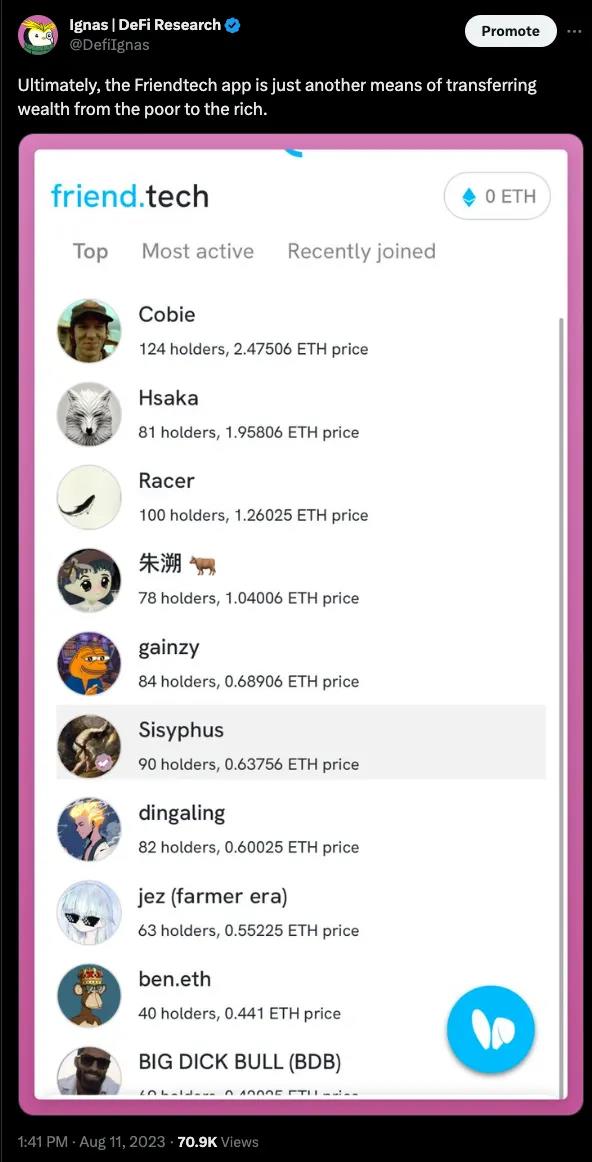
I largely still hold these views, as having a large following on X almost guarantees some income from trading fees. I earned over $2,000 just by trying out the app. But what surprised me about FT was how seemingly obscure individuals on X achieved notable success. Levi is one example, with his Key priced around $8,000.
He started with proof-of-friendship (a better narrative than 3,3), buying cheap Keys from new users and chatting with them to encourage them to buy his Key too. He eventually became the first full-time content creator on FT, building the “most valuable” group chat on the platform.
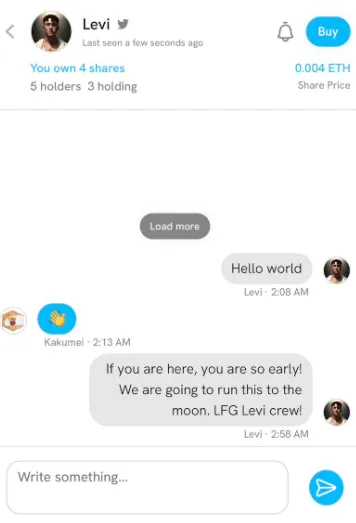
His strategy involved buying Keys of the “most valuable” accounts, consolidating “Alpha,” and sharing it with his Key holders. He became the proxy Key holder for all top-tier accounts on FT. This was a risky bet, as top Keys are expensive and require upfront capital to succeed. Other influencers and scammers adopted different strategies:
-
Vombat is buying his own Keys to pump the price and later selling them to his Key holders.
-
Some offer users free access to blockchain services or promise potential airdrops.
-
Running lotteries where a lucky Key holder wins a share of trading fee revenue.
-
Building alternative UIs and services on FT like Friendex, FriendMex, etc., for Key holders.
I have a question for you: Do you actually care about any of this? How much Alpha can you really get from FT that isn’t easily accessible on X or blogs? Is access to blockchain services truly important to you? Airdropping Key holders might be tempting, but it’s hard to determine the precise ROI of an airdrop.
All these use cases aim to justify why you should buy a Key, which generates volume and fees for KOLs.
Maybe it’s to chat with a KOL? Perhaps chasing an FT airdrop, or simply speculating on rising Key prices. Whatever the reason, it’s crucial to clarify your true motivation and goals for using the app.
To be honest, I’m still developing a value proposition for my Key holders. Currently, I’m sharing speculative opportunities in real time, which feels easier within a smaller circle of friends. Interestingly, I find chatting on these SocialFi platforms more natural—like talking online with a group of friends.
But how can I climb to the top of the leaderboard? My aspiration is to become a Meme! Because meme coins like Dogecoin have no fundamentals attached to them.
FriendTech Forks
Uniswap V2 is the most forked protocol in DeFi. To date, 493 Uni forks have launched. As initial excitement faded, most have quietly disappeared, though a few like Pancakeswap and Sushiswap remain standing.
Will the same fate await FT forks? I believe so. While many will come and go, a few that manage to establish unique value propositions will survive.
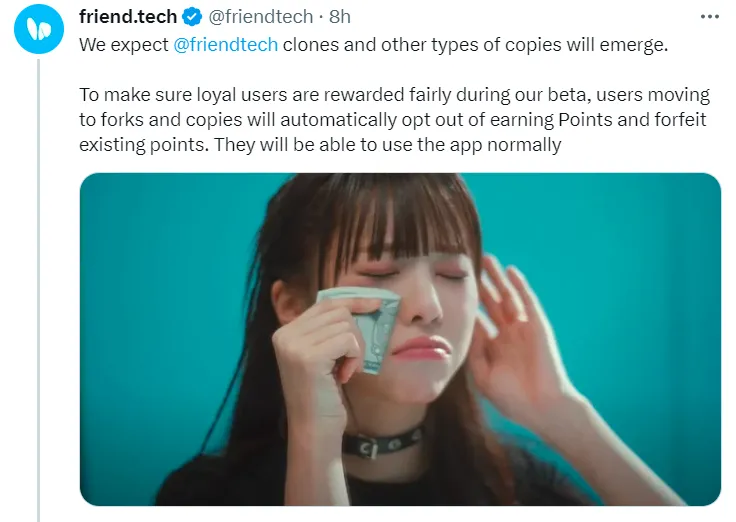
Current FT fork ecosystem and their unique features:
Post Tech
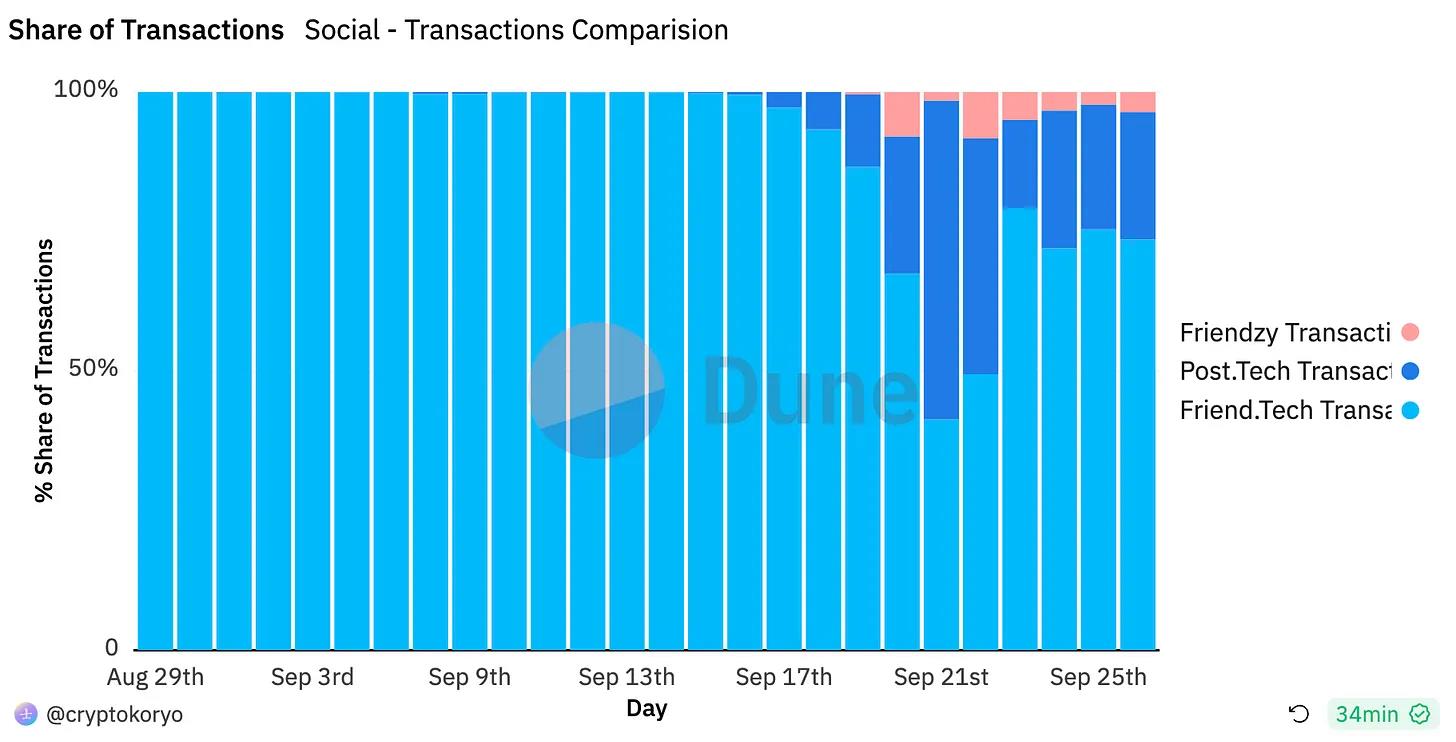
In my view, Post Tech is the first fork I’ve taken seriously. On September 21, its trading volume even surpassed FT, and PT still maintains a 23% share of trading volume.
Here are the things I like and dislike about PT:
-
Better, smoother UI (since FT’s UI is quite poor).
-
I appreciate the open chat feature available to all Key holders—I don’t feel like I’m talking to myself when chatting. Other forks have this too.
-
Built on Arbitrum, which is better suited for deposits and withdrawals than Base.
-
The feed algorithm needs tuning, as only a few people appear on my timeline.
-
Holding incentives are better here, as holding my Key benefits holders (they receive a portion of trading fees).
-
The referral system incentivizes sharing to attract big KOLs to try the platform.
Alpha — A DeFi Community for Bitcoin
I like Alpha because I’m bullish on Bitcoin DeFi.
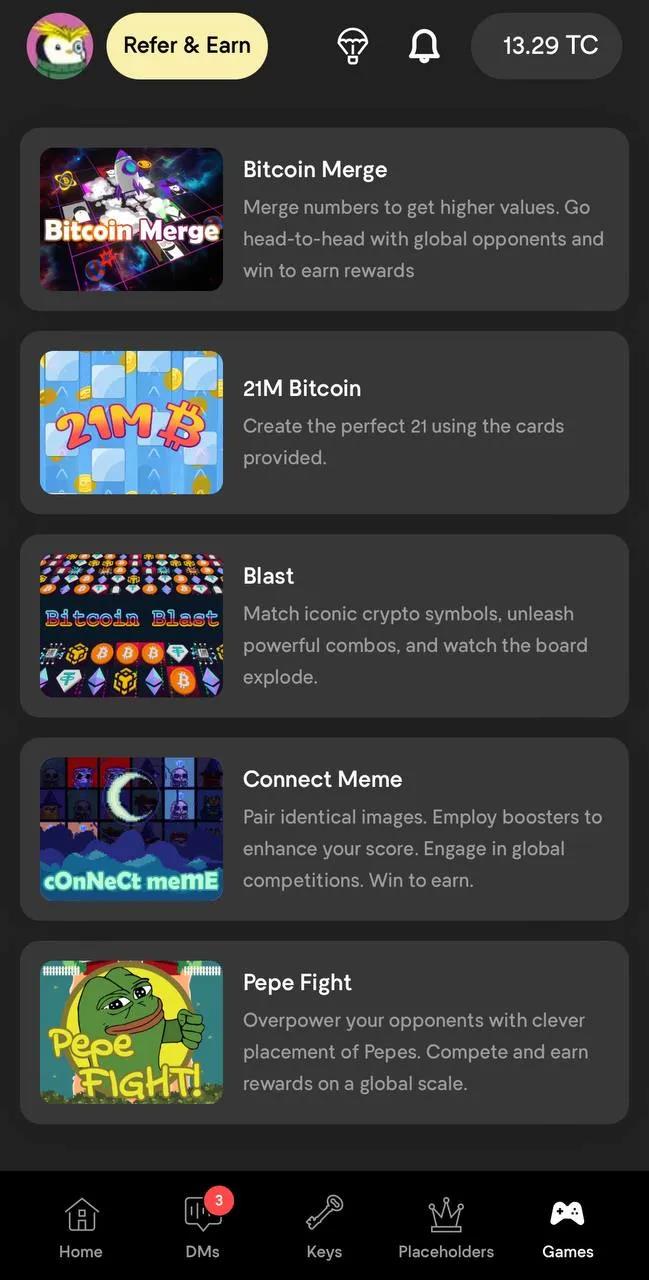
Alpha is New Bitcoin City and the Bitcoin community’s attempt to provide an alternative to Friend Tech. Its logic is to unite Bitcoin, Ordinals, and BRC-20 fans with influencers.
It’s genuinely cool. It has a DM function for one-on-one chats with Key holders, plus gaming features!
Alpha is tightly linked to Bitcoin, similar to the BRC-20 model. The underlying system, Trustless Computer (TC), is an “Optimistic rollup” integrated with Bitcoin. But Alpha itself is built on NOS (similar to L3), with a 2-second block time and gas fees of just one cent.
This sounds complex, but there’s an easy-to-use ETH<>NOS bridge available. Keys and fees are paid in TC tokens, which you can bridge and trade on the New Bitcoin DEX.
Fan Tech
You may have noticed that nearly every chain now has an FT fork. Mantle is no exception.
Mantle L2, backed by Bybit, has a DeFi TVL of only $37 million, so the chain needs something exciting to attract more users. Fan Tech is definitely an interesting option.
Key differences compared to FT include:
-
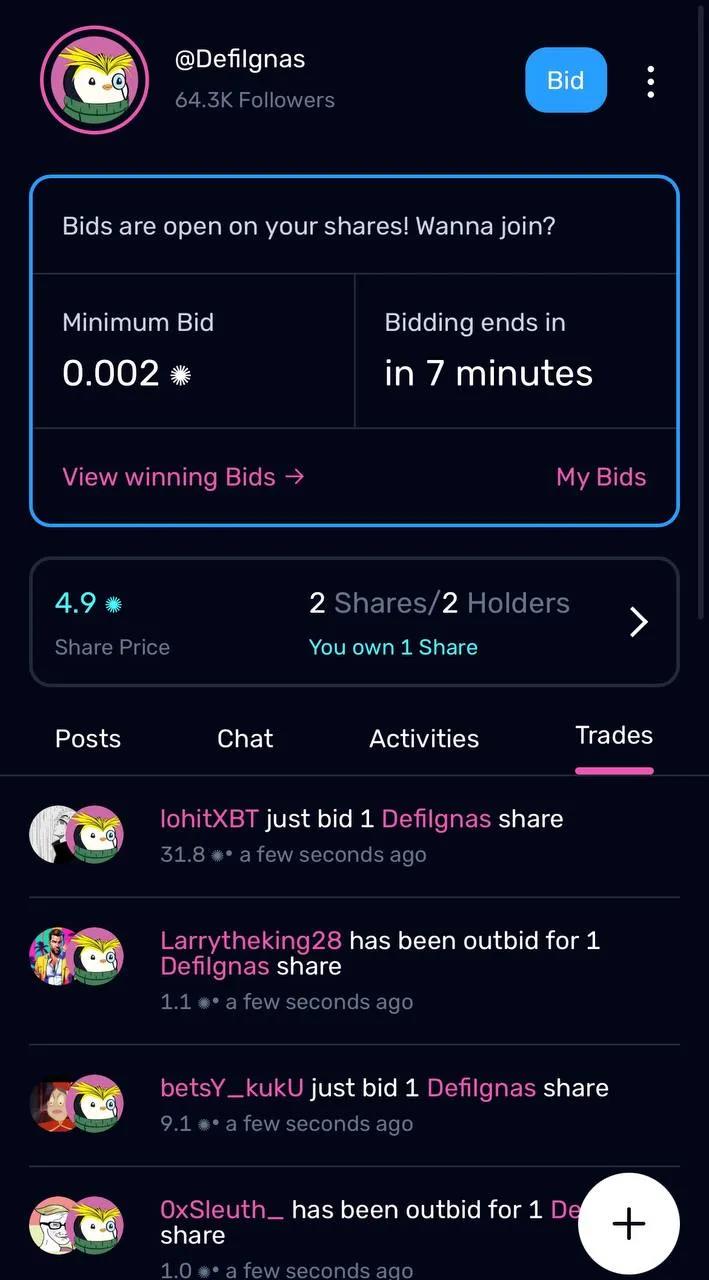
Share Launch Event: Introduces a bidding mechanism for new accounts to prevent bots.
-
Smooth UI/UX: Includes public/private posts, ability to see accounts you follow on X, statistics page, dark mode, and more...
-
Referral System: Earn 1% of taxes from shares traded by invitees, plus a portion of their shares.
StarShares
Built on Avalanche, it’s the closest clone to the original Friend Tech—at least at first glance. It also has a “Feed” section, like Twitter, where creators can share posts with their Key holders.
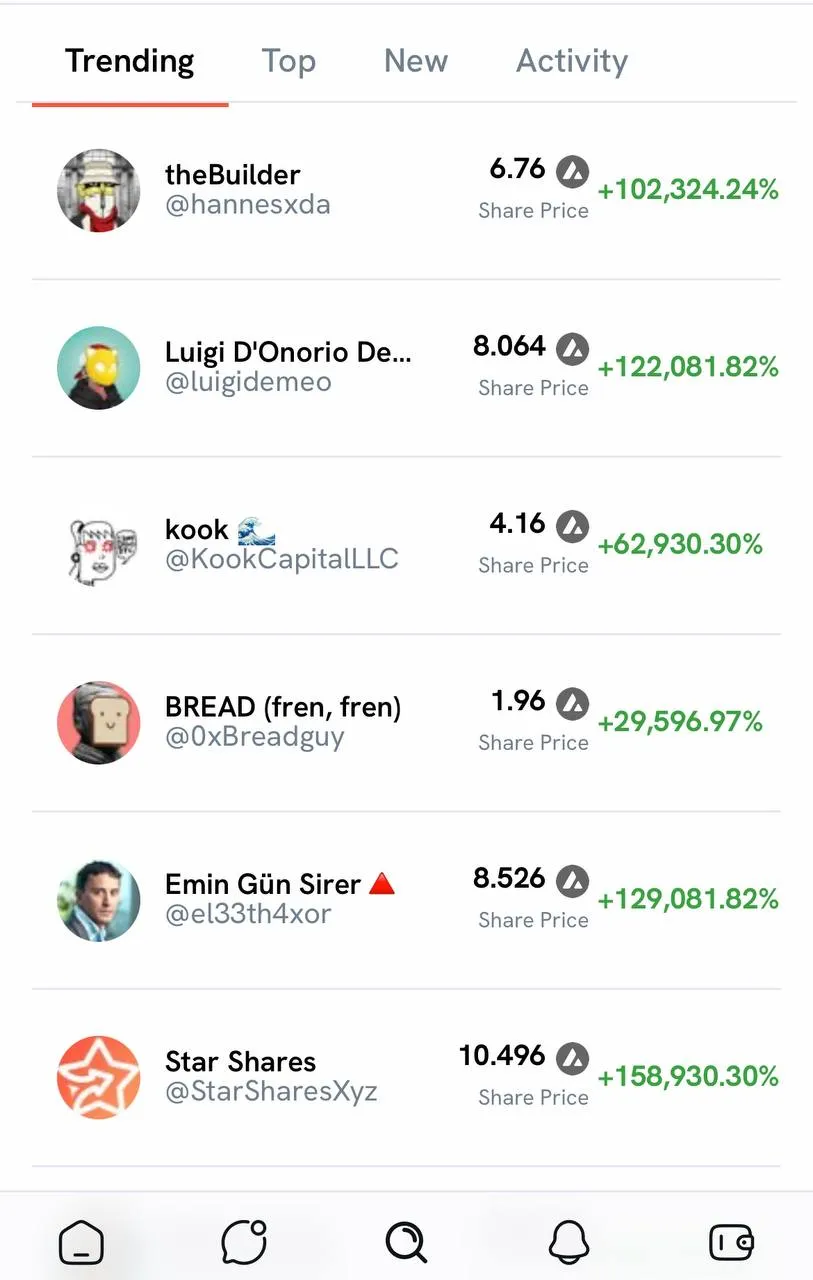
However, at this stage, StarShares’ value proposition lies in access to Avalanche thought leaders such as Luigi, with whom I did an AMA on Avalanche’s endgame vision, and Avalanche founder Emin.
So if you want to promote something to the Avalanche community, StarShares might be your best bet.
Friendzy
Friendzy on Solana is currently one of the most disappointing FT forks. Its bonding curve is very flat, causing minimal price changes when new buyers purchase Keys.
Moreover, the lack of a chat function is a major flaw. Thus, it falls short on both key aspects of SocialFi: social interaction and finance.
Value of SocialFi and FT Forks
You may have noticed I haven’t extensively compared these apps based on their trading fees or differences in bonding curves (except Friendzy, which lacks a proper bonding curve).
That’s because I firmly believe these apps should prioritize social aspects. Their main goal should be attracting members of specific communities who feel a strong sense of connection with each other. These communities should be able to share both financial and social value. This aspect is critical to the success of SocialFi forks.
Therefore, it’s no surprise that forks are emerging across different chains. But do you actually feel a connection with a particular L1 or L2? Maybe forks should target specific user groups rather than being defined by the chain they’re built on. That’s why overcoming Friend Tech’s first-mover advantage will be challenging.
That’s also why my Key price is higher on FT than on other platforms. You can get my Key cheaper on a fork and ask me the same questions. But it’s not just about me—it’s also about the entire community, the app’s potential, and possible airdrops.
I’m not suggesting bonding curves or trading fee percentages are irrelevant. They matter—otherwise, Twitter would be sufficient. Speculation is the primary motivator for most of us joining these apps. But competing solely over minor differences in trading fees, referral programs, or token airdrop speculation won’t determine an app’s success or failure.
Speculation serves as an initial motivator for newcomers to join and engage with the app. However, I believe (or at least hope) that the social interactions and relationships formed on these platforms will ultimately be the key to their long-term success.
In the short term, the growing number of new forks negatively impacts Key/share prices, as dollars and attention become overly diluted.
If people lose money on FT forks, it could lead to disillusionment with SocialFi. That’s why I hope FT forks encourage meaningful social engagement beyond mere speculation. I suppose that’s wishful thinking.
Overall, SocialFi is still in its early stages. It attracts new audiences and offers something exciting to do during this bear market. Personally, I’ll continue researching, testing dApps, and sharing my insights on Twitter and apps like FT, PT, Alpha, Fan Tech, and others.
Join TechFlow official community to stay tuned
Telegram:https://t.me/TechFlowDaily
X (Twitter):https://x.com/TechFlowPost
X (Twitter) EN:https://x.com/BlockFlow_News
 Ignas | DeFi Research