








Quick Overview of 13 Finalist Projects from ETH Global New York Hackathon: Application-Layer Innovation Trends Emerge
TechFlow Selected TechFlow Selected
Quick Overview of 13 Finalist Projects from ETH Global New York Hackathon: Application-Layer Innovation Trends Emerge
This article summarizes and highlights some of the outstanding projects from this hackathon, along with their core innovations.
 Navigating Web3 tides with focused insights
By TechFlow
The recent ETH Global New York hackathon showcased developers' creativity in building DApps. This article highlights some of the standout projects from the event and their core innovations.
1. FRAMED!
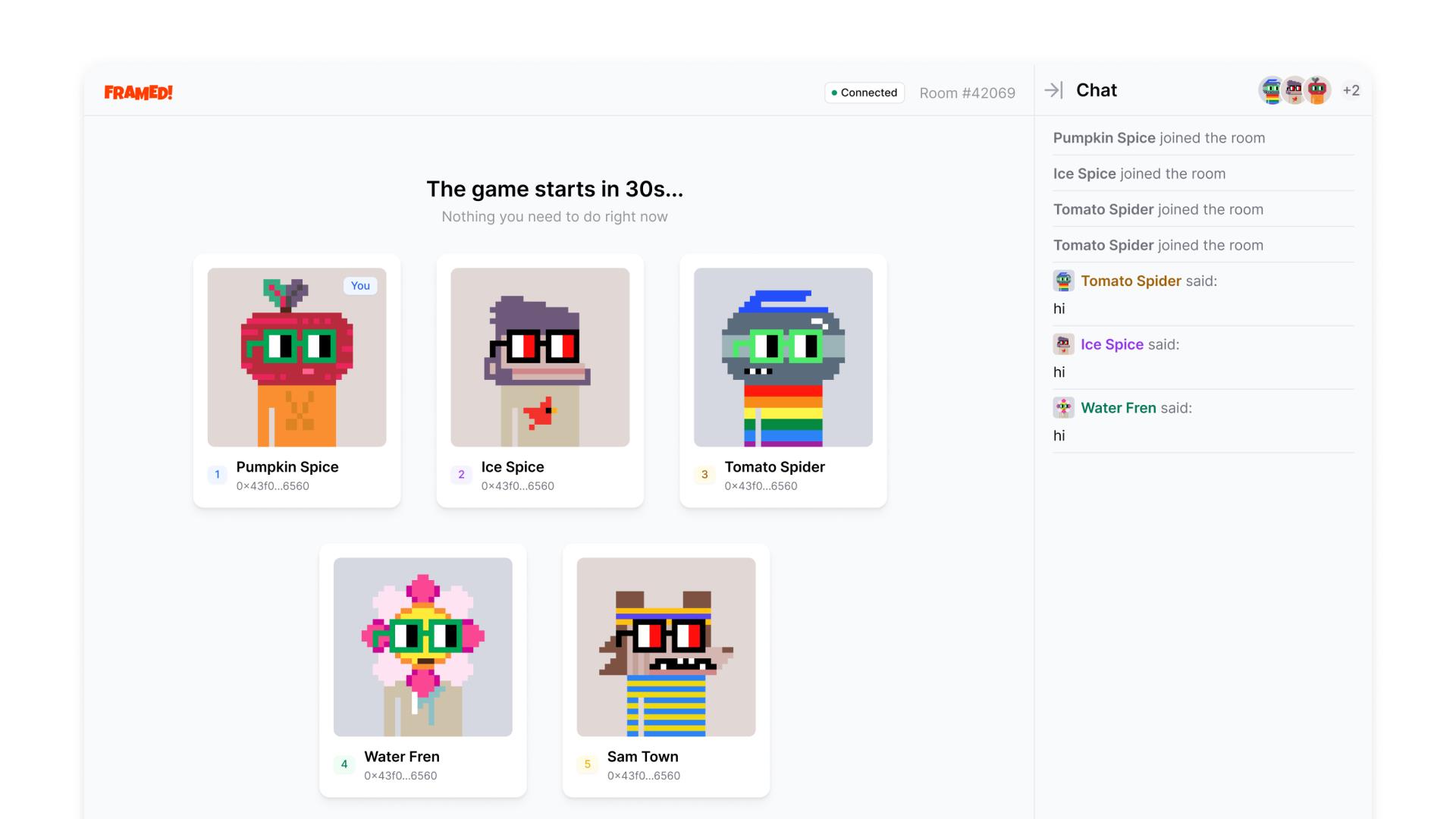
FRAMED! is a fully on-chain trust game (similar to Mafia) that hides information using fhEVM.
Blockchain's transparency enables decentralized finance and trustless economies. However, this also makes it difficult to build engaging experiences on-chain. Recent advances in fully homomorphic encryption now allow new types of gaming experiences where players can hide information and play in a completely trustless way!
In FRAMED!, players are randomly assigned roles such as civilian, thief, police, or detective, with role data encrypted and stored on-chain. The thief aims to eliminate civilians, while civilians must cooperate to identify and vote out the hidden thief through discussion and social deduction.
What sets this game apart is its ability to store encrypted state directly on-chain. Fully homomorphic encryption-enabled smart contracts allow computations on encrypted data without decryption. This innovation overcomes privacy limitations and ushers in a new era for smart contract development.
2. F.A.S.T.
F.A.S.T. offers the fastest blockchain interaction method between users. Users register by taking a photo, then simply take a group photo with others to easily exchange wallet addresses.
The idea originated from a conversation at the hackathon, where someone joked that sending money by photographing someone’s face would be interesting.
The F.A.S.T. team took that idea and started building. Their core observations were simple:
-
Web3 adoption remains low due to significant technical barriers;
-
Users don't know their own addresses, let alone others’.
Their hypothesis is that AI will enable ultra-distribution in web3 by:
-
Providing simpler chat-based interfaces instead of complex UX;
-
Using AI to better link people with their addresses.
3. ZeroTrustBounty
ZeroTrustBounty solves key problems with traditional bug bounty platforms: companies must disclose sensitive data to third parties, while white hats have no payment guarantees.
They leverage TLS Notary and the Lit Protocol. Suppose you discover an SQL injection vulnerability—ZeroTrustBounty allows you to hide critical attack details (e.g., the malicious HTTP request) while publicly revealing the HTTP response. Affected companies can then cryptographically verify your report and understand the impact. For payments, ZeroTrustBounty uses the Lit Protocol to encrypt the HTTP request/response, allowing companies to decrypt only after paying a specified address or holding a certain NFT. This ensures white hats get paid if the company chooses to fix the issue, prevents third-party services from stealing vulnerability details, and eliminates the need for companies to expose sensitive data to external platforms.
4. Doom Arena
Inspired by the original Doom game, this project introduces a novel way to host gaming competitions—fully on-chain and decentralized—opening new pathways for the gaming developer economy. Game developers and influencers can launch tournaments for their games with attractive prize pools to incentivize participation.
With millions of games released annually, developers need unique ways to attract players. This project provides a solution by enabling developers to host competitions that reward players while generating revenue.
Organizers start a tournament by contributing an initial APE token prize pool. Players log in using their ENS avatar and pay an entry fee in APE tokens. 90% of the fees go into the prize pool, 10% to the organizer. On average, the organizer breaks even once 100 players have joined and paid the entry fee.
In summary, this project creates a decentralized platform for hosting gaming tournaments, giving developers an innovative way to promote their games and engage players, while establishing a sustainable economic model for game promotion. Anyone can organize or join tournaments, contributing to a thriving gaming ecosystem.
When launching a tournament, organizers must set the following parameters:
-
Tournament name;
-
Initial prize pool provided by the organizer;
-
Entry ticket price;
-
Game difficulty;
-
Doom game level;
-
Tournament duration;
-
Duration for submitting gameplay records.
After launch, players buy tickets, growing the prize pool and attracting more participants. After completing the game, players submit a hash of their gameplay record and can view other participants via ENS, but cannot see their scores. After the time limit ends, players submit their final gameplay records to verify their scores, which are then publicly verifiable.
For reward distribution, each player receives 0.5% of the previous player's total prize until all players are rewarded. Any remaining funds go to the tournament organizer.
5. AirTracker
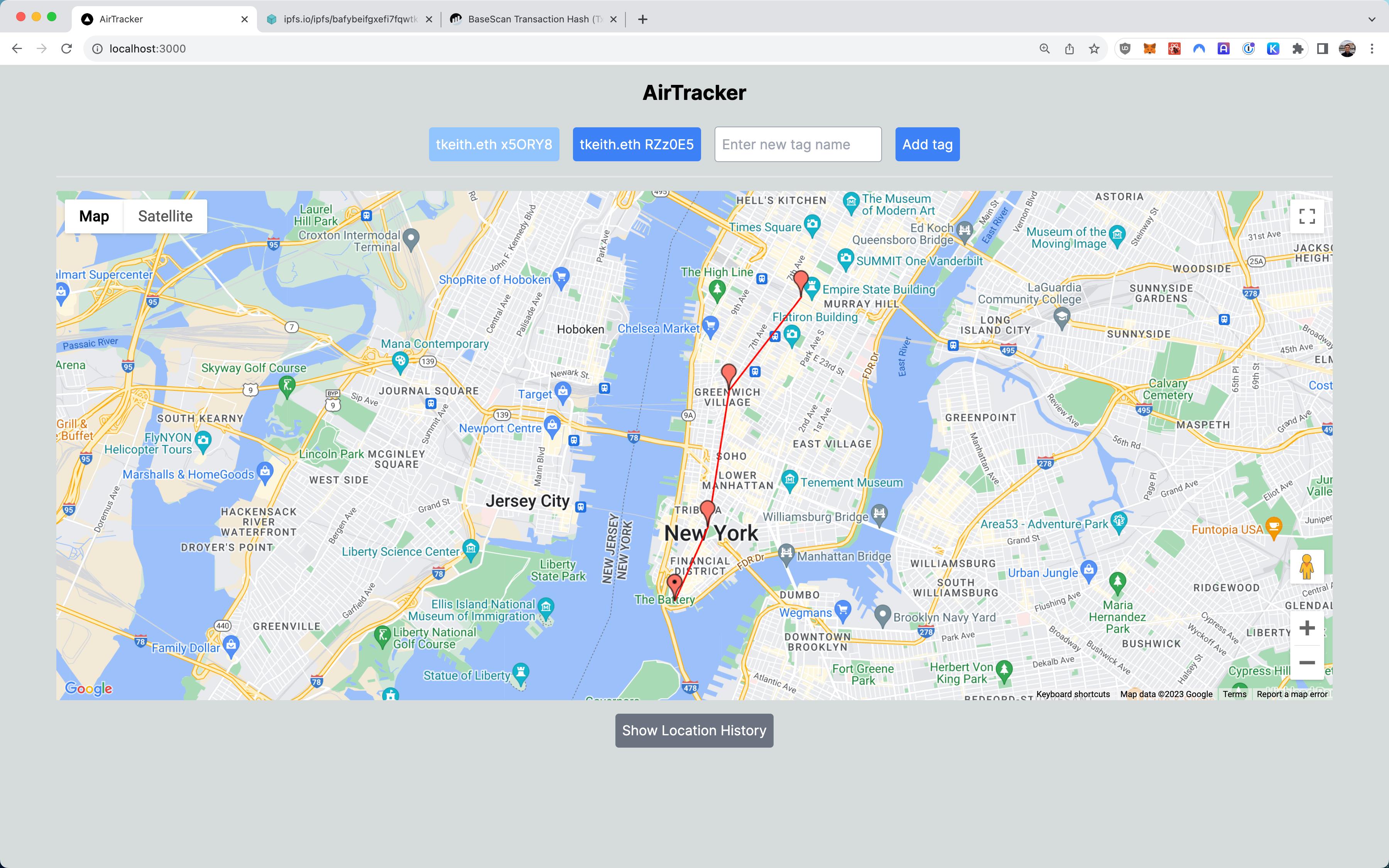
AirTracker allows you to use AirTags to maintain an immutable record of physical asset locations. It retrieves location data from Apple for each AirTag asset, encrypts it, and stores it on-chain and on IPFS. Location updates are also sent via XMTP with ENS lookups using AirStack.
You can log into a web interface to view each asset’s historical locations on a map, along with timestamps and update history.
You can share asset locations with anyone or any app by sharing a randomly generated tag name, which also acts as the encryption key for the location data.
6. SafeCreate2
Deploying permissioned multi-chain contracts is difficult. SafeCreate2 enables a Safe on one chain to deploy smart contracts to the same address across all chains without requiring cross-chain asset transfers. It also allows a single-chain Safe to execute administrative functions on any multi-chain contract. This gives projects the best of both worlds—extremely simple multi-chain deployment with the security of a single Safe.
7. ConsciousNFT
ConsciousNFT provides founders and owners of NFT projects with an AI-powered toolkit to collaboratively build immersive worlds for their NFT art. By giving each NFT a unique personality, backstory, conversational ability, and narrative depth, it transforms static images into sentient characters.
Create challenges and quests for NFTs to compete and earn generative NFT rewards. Craft interactive narratives where conscious NFTs form relationships, compete, or seek adventures.
With ConsciousNFT, your community can collectively create legends that bring NFT collections to life. Trained LLM models can be minted on-chain to preserve interactive personalities.
Awaken a unique conscious identity within each NFT, co-create interactive stories and narratives, design challenges and tasks to drive engagement, mint LLM models on-chain to preserve storytelling, give each PFP conversational personality, integrate with social media for organic discovery, empower PFPs to build fanbases and followers, transform static NFT art into perceptive digital personas, and bridge art into the metaverse through lifelike character identities.
8. Space Guardians
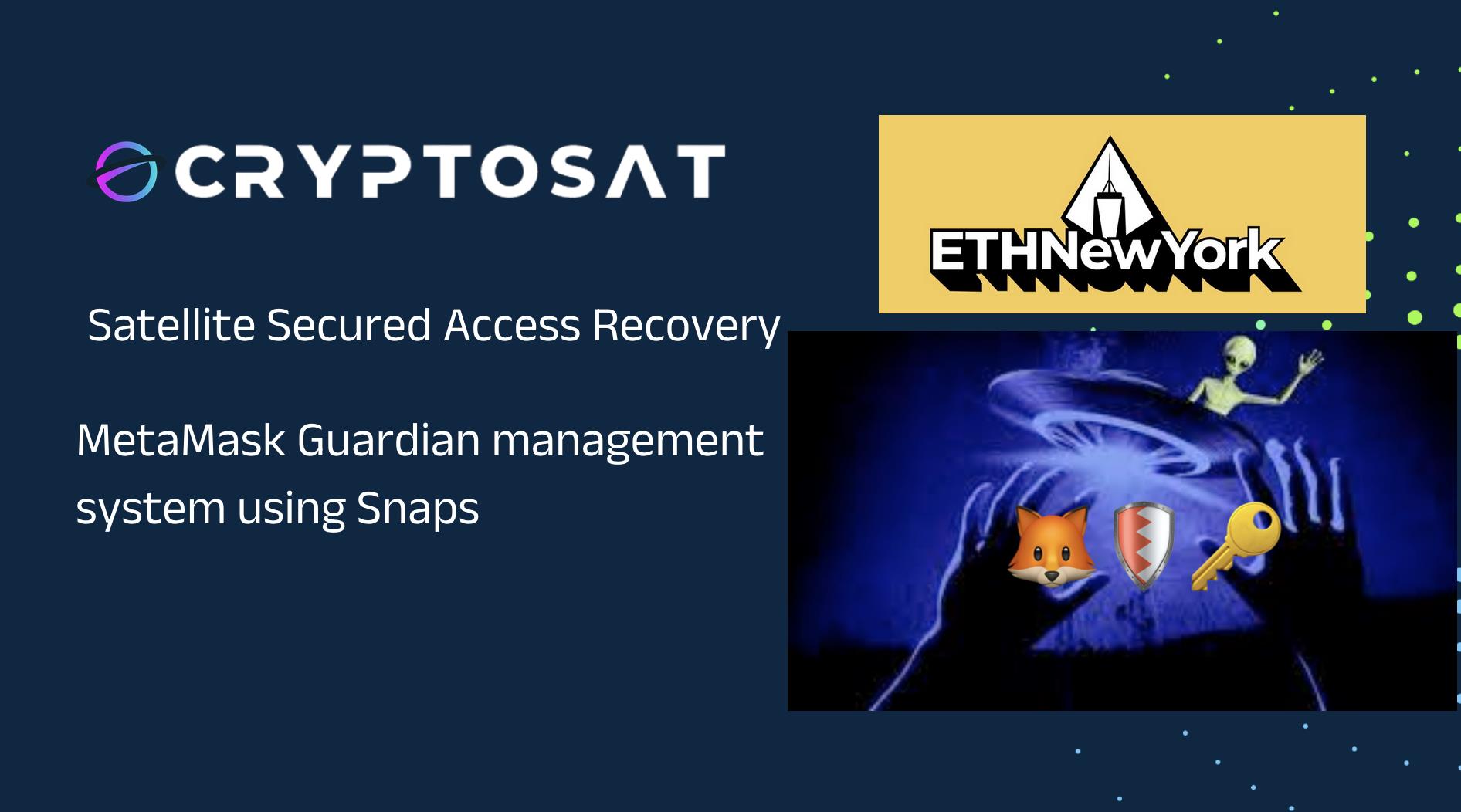
In Web3, there is no "forgot password" option. Existing solutions are vulnerable:
1. Guardian security may be compromised;
2. Notifications—reduce collusion risks.
Space Guardians developed a secure solution for social key recovery: MM Snaps + encrypted satellites. This addresses notification management and audit trails, reducing the likelihood of collusion.
9. A.S.R.
What if contracts were owned by people rather than addresses? A.S.R. allows users to deploy smart contracts whose ownership is bound to a unique human identity (e.g., World ID). After verification via World ID, users can deploy contracts as owners and later transfer ownership from different EOAs.
This design pattern can extend to many use cases. While starting with a simple self-owned contract, the same principle applies to any smart contract role. Additionally, World ID can be swapped with other identity providers. A.S.R. envisions applying this to ERC-20, allowing users to claim balances from new addresses. Currently supported operations:
1. Login with wallet
2. Verify human identity via World ID
3. Deploy smart contract as owner
4. Import existing contract
5. Transfer contract ownership to a new EOA linked to the World ID holder.
10. MEVictim Rebate
This project identifies victims of MEV attacks on the Goerli chain and grants them ERC-721 tokens, making holders eligible for rebates when they provide liquidity in Uniswap v4 pools on Scroll. Ultimately, it incentivizes better behavior on Scroll based on users’ historical on-chain activity on Goerli.
This is a powerful new primitive—proving claims about historical on-chain behavior and using that proof to grant privileges on advanced DeFi platforms.
First, a Goerli subgraph identifies potential MEV victims (those front-run, sandwiched, or back-run). Transaction hashes and log IDs are fed into an Axiom circuit.
The Axiom circuit uses transaction hashes to prove a wallet was indeed an MEV victim. Eligible wallets receive an ERC-721 token (a Nouns NFT contract named MEVictim built with Unlock Protocol).
Hyperlane Warp Route then bridges the ERC-721 token to Scroll. Only token holders can trade on the token-gated Uniswap v4 pools on Scroll.
11. RealReturn
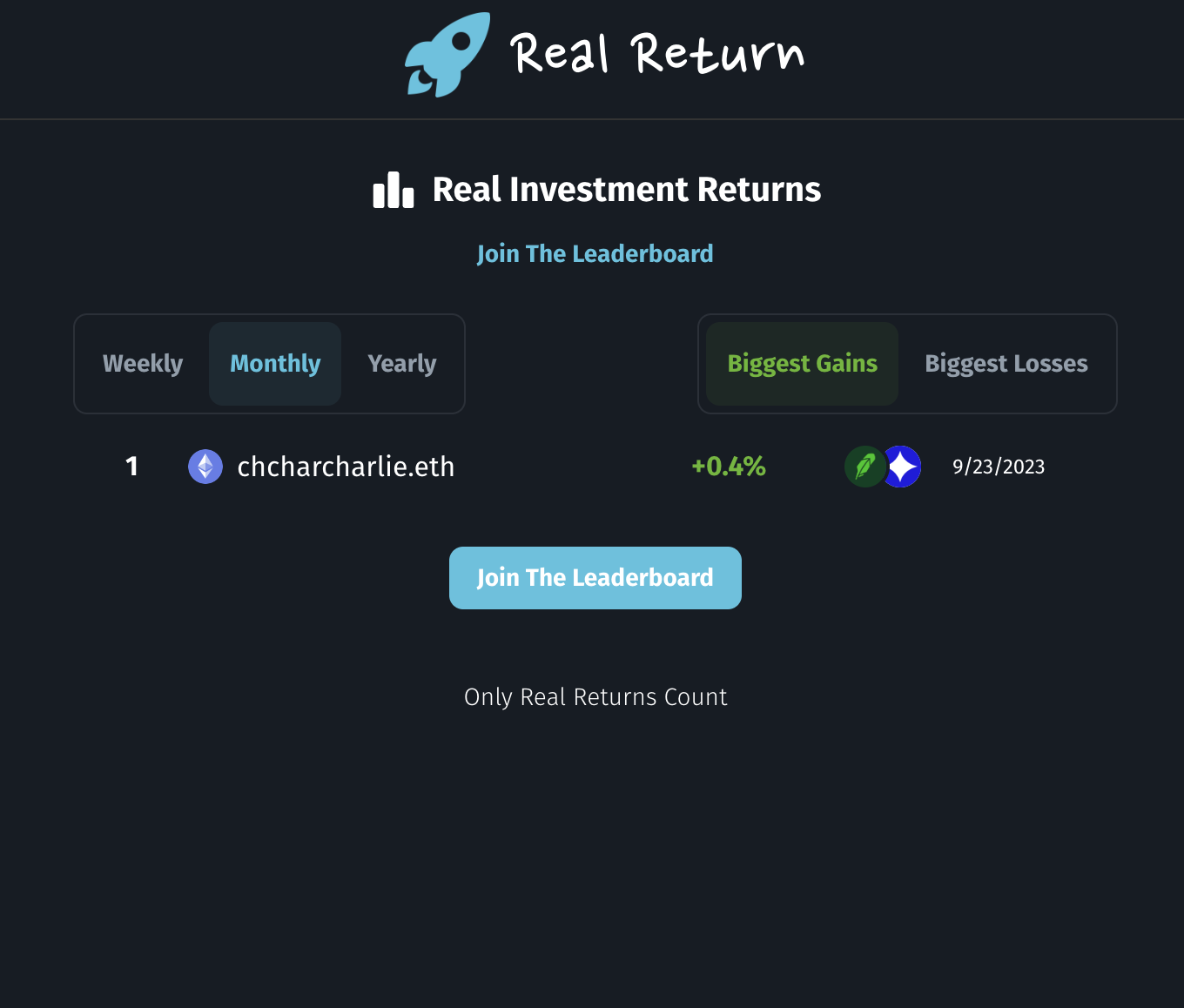
RealReturn is a verified public leaderboard for real investment returns, powered by TLSNotary and Jomo.
The space is filled not just with gambling, but misinformation and fake FOMO.
Until now, people could only detect falsehoods by checking screenshots or applying common sense. Without account holders willingly sharing credentials, neither side could truly prove their claims.
Now, with RealReturn using Jomo and TLSNotary, anyone can prove their investment returns without sharing credentials with anyone or anywhere. This cryptographic method—such as three-party TLS or MPC—is applied to TLS sessions between users and application servers, enabling notaries to generate proofs that logs haven’t been tampered with, even as session content remains visible to user and server.
Privacy and verifiability—we no longer need to sacrifice one for the other, but can embrace both simultaneously.
12. Abstract Wallet
This project offers users completely frictionless one-click login. It combines Solidity FCL library for WebAuthn-based Userop. Abstract Wallet integrates this with Infinitism's ERC4337 Entrypoint and a custom PayMaster to cover user fees, making it accessible even to complete beginners.
13. XSafe
X-Safe is a solution designed to optimize Gnosis Safe’s multisig framework for cross-chain transactions. Its core goal is to reduce the time and complexity of executing the same administrative functions across multiple blockchain networks. With X-Safe, users can propagate a single signature and single transaction across multiple chains, reducing overhead and accelerating workflows. Technical features:
-
Gnosis Safe Integration: X-Safe builds on the Gnosis Safe multisig framework, inheriting its robust security while adding streamlined cross-chain capabilities.
-
Single Signature Propagation: Traditional multisig requires separate signatures per chain. X-Safe simplifies this by enabling one signature to automatically propagate across all integrated blockchains.
-
Single Transaction Broadcast: Similar to signature propagation, X-Safe allows one transaction to be broadcast across multiple chains—especially useful for executing the same smart contract method or admin function on different networks.
-
Chain-Agnostic: X-Safe is blockchain-agnostic, meaning it can integrate with any blockchain supported by Gnosis Safe.
Workflow:
-
Initialization: Users integrate X-Safe as a custom module via the Gnosis Safe UI (one-time setup).
-
Transaction Creation: A user or admin creates a transaction to be executed across multiple chains.
-
Signature Generation: The user signs the transaction via the X-Safe interface using their private key.
-
Signature Propagation: X-Safe propagates the generated signature to the corresponding Gnosis Safe contracts on all integrated chains.
-
Transaction Execution: Once the required number of signatures is collected, X-Safe triggers execution across all chains simultaneously or sequentially based on user settings.
Use Cases:
-
Deploying the same smart contract across multiple blockchains.
-
Updating governance parameters on DAOs existing across multiple chains.
-
Managing cross-chain assets for diversified portfolios.
Advantages:
-
Efficiency: Significantly reduces time for cross-chain operations.
-
Cost Savings: Reduces transaction costs by eliminating redundant signing and broadcasting.
-
Security: Leverages Gnosis Safe’s strong security while adding cross-chain functionality.
By implementing X-Safe, developers can significantly optimize their cross-chain operations, making systems more efficient, secure, and cost-effective.
Join TechFlow official community to stay tuned
Telegram:https://t.me/TechFlowDaily
X (Twitter):https://x.com/TechFlowPost
X (Twitter) EN:https://x.com/BlockFlow_News
 深潮TechFlow






