








On-Chain Data Insights: Aave's Business Expansion, Asset Holdings, and Market Trends
TechFlow Selected TechFlow Selected
On-Chain Data Insights: Aave's Business Expansion, Asset Holdings, and Market Trends
Aave has shown no significant on-chain accumulation activity in the past 30 days. Some large holder addresses have performed unstaking actions, and the price is currently in a relatively low range.
 Navigating Web3 tides with focused insights
Author: LD Capital
I. Project Overview
Aave is the leading lending protocol on Ethereum and is currently deployed across nine chains including Polygon, Arbitrum, and Optimism. Founded in 2017, its initial version offered peer-to-peer lending but was later redesigned due to inefficient matching. Drawing inspiration from Compound’s liquidity pool model, Aave now provides high liquidity. The current version is Aave V3, designed to enhance capital efficiency, improve security, and enable cross-chain lending capabilities.
-
Higher capital efficiency refers to the eMode (Efficient Mode), which categorizes assets and sets risk parameters based on asset type. When a borrower's collateral and borrowed asset belong to the same category, they can access higher borrowing limits.
-
Higher security refers to Isolation Mode. Newly listed assets added via on-chain voting first enter Isolation Mode, where debt caps are enforced. When used as collateral, these assets only allow borrowing of approved stablecoins. This mechanism enables the inclusion of more long-tail assets while safeguarding protocol security.
-
Both features are already implemented in V3. The cross-chain lending feature (Portal) has been technically ready since the launch of V3 in March 2022, but the team has exercised caution due to security concerns and has not yet officially deployed it. Notably, Aave’s cross-chain lending does not rely on an internally developed bridge but instead integrates third-party cross-chain bridge protocols.
II. Business Data
1) Lending
According to DefiLlama data, Aave’s current TVL stands at $4.672 billion, making it the dominant player in the lending sector. In its early development, Aave supported a broader range of altcoins, but later froze certain tokens due to potential risks. Currently, Ethereum V3 supports approximately 20 tokens—comparable to Compound V2—and achieves higher capital utilization for both stablecoins and altcoins than Compound. Additionally, Aave was among the first to support Ethereum derivative tokens such as stETH.
Aave’s rapid growth in lending can be attributed to its aggressive expansion strategy and early adoption of a multi-chain approach. Having launched on chains like Polygon as early as 2021, Aave has maintained a leading position across most platforms, capturing significant market share. Nevertheless, Ethereum remains its primary lending environment.
2) Stablecoin
Aave’s native stablecoin GHO launched on July 15 this year. With a 1.5% borrowing rate, GHO holds a competitive edge over other stablecoins. AAVE stakers receive a 30% interest discount, and all GHO interest income flows directly into the protocol treasury. The initial borrowing cap was set at $100 million; currently, $23.37 million has been borrowed, representing a very small market share within the stablecoin sector.
3) RWA
Aave is the second DeFi protocol after Maker to introduce real-world asset (RWA) exposure, partnering with Centrifuge Tinlake. The RWA market operates independently from Aave’s main lending markets. Current funding amounts to approximately $7.1 million, significantly smaller than Maker’s $2.3 billion RWA portfolio. Only the USDC market currently offers deposit and borrow APYs; other markets have ceased yield incentives. KYC-approved users who deposit USDC in the USDC market earn a base annual yield of 1.64% plus a 3.23% wCFG liquidity mining reward.
III. On-Chain Holdings Data
The total supply of Aave (AAVE) tokens is 16 million, primarily used for staking and governance. Aave includes a built-in Safety Module (SM), allowing token holders to stake their AAVE as a backstop in case of protocol shortfalls. In return, stakers receive AAVE token rewards and a share of protocol revenue.
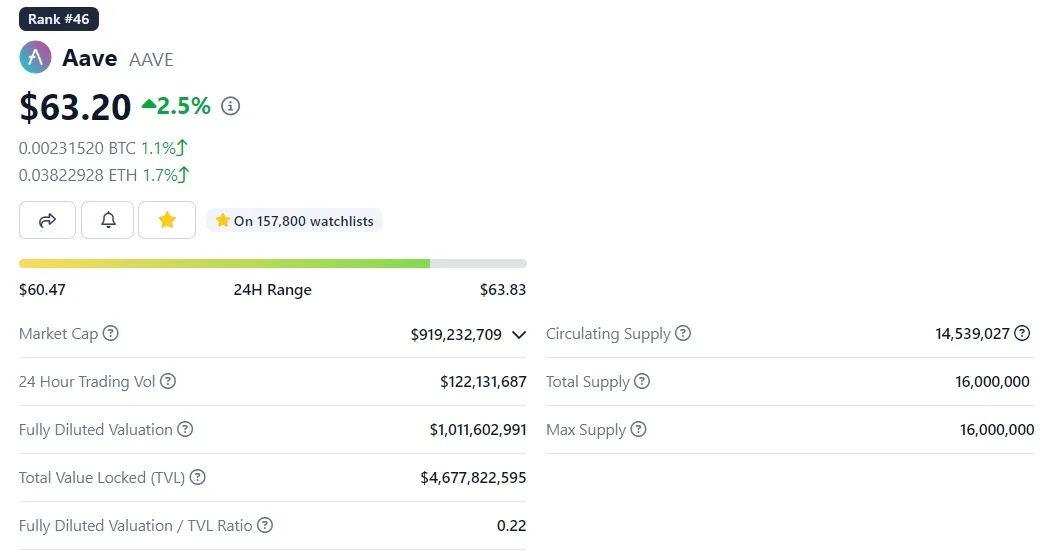
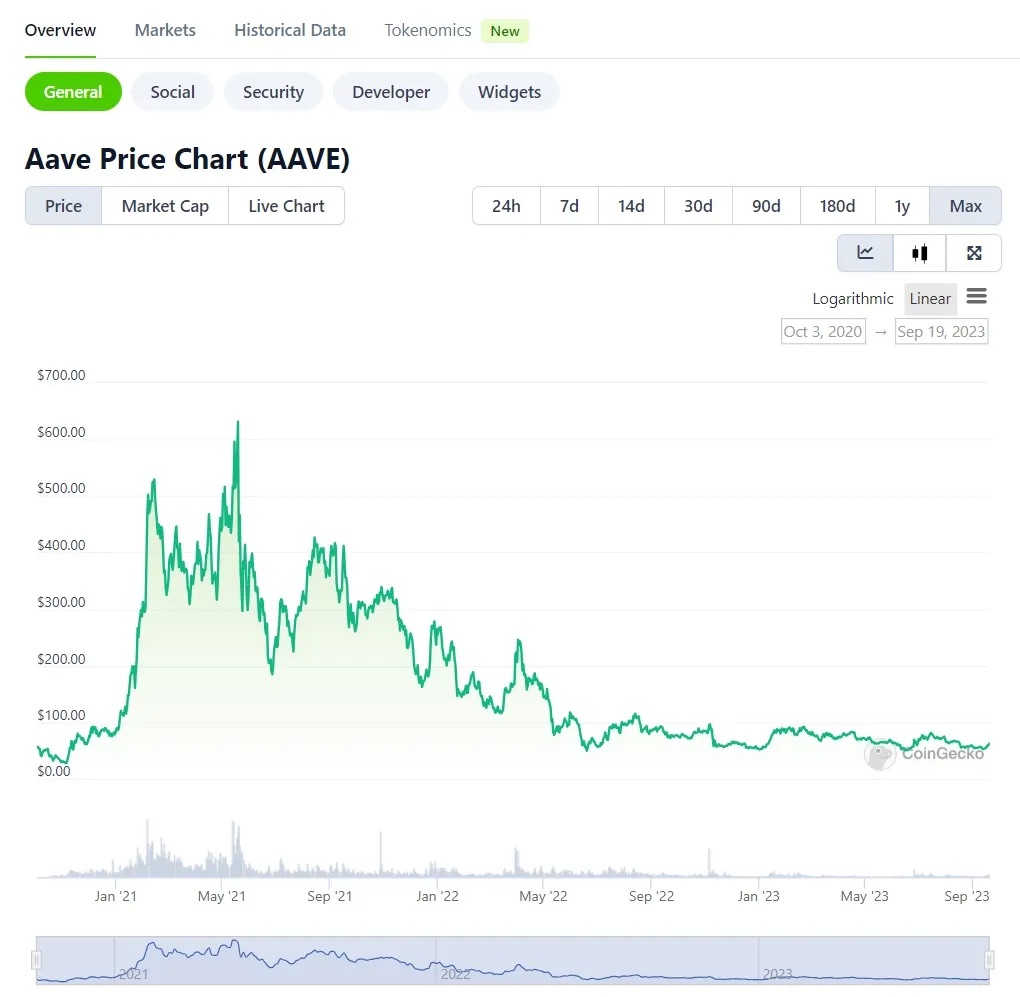
According to the official staking dashboard, the current daily emission of AAVE tokens is 1,100. At the current CoinGecko price of $63.2, this equates to approximately $695,000 per day. The circulating supply of AAVE has reached 90.88%, with a 24-hour trading volume of $120 million.
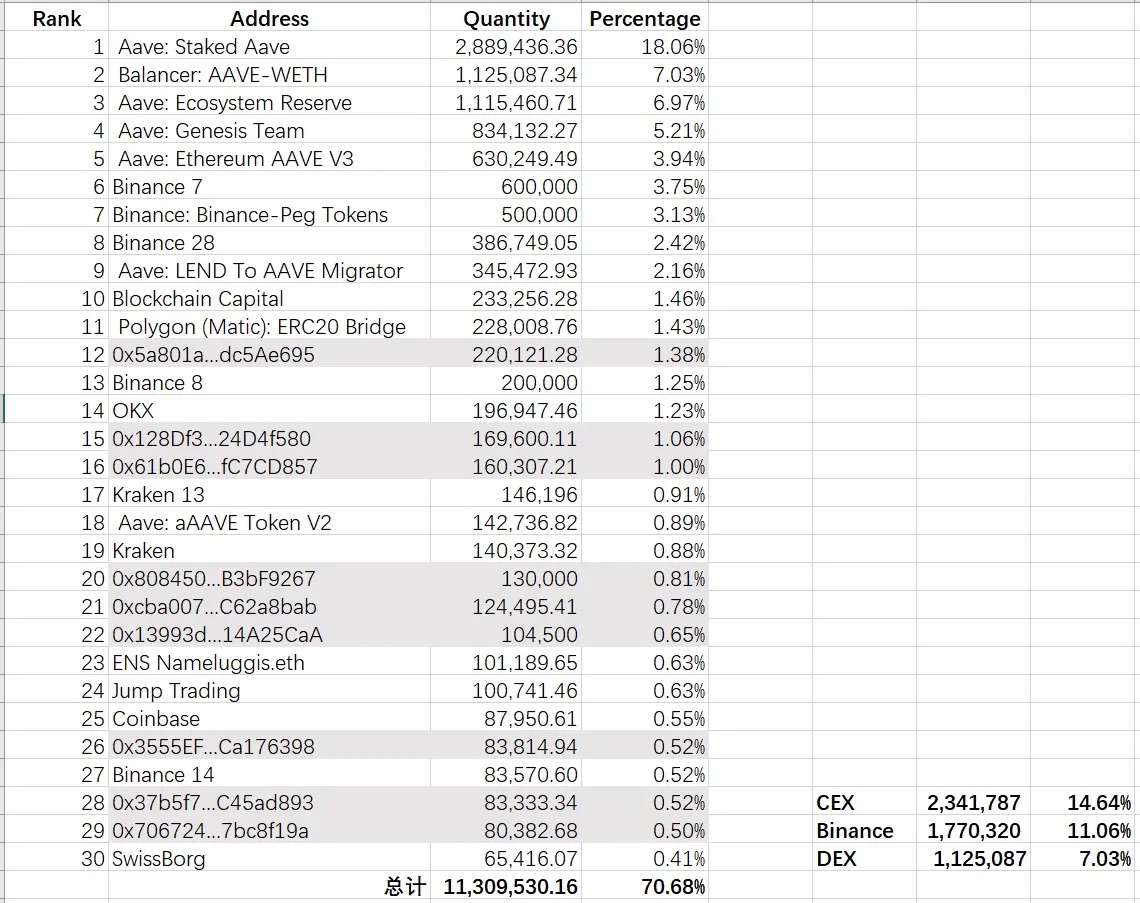
The top 30 addresses hold 70.68% of the total AAVE supply. Exchange holdings account for 14.64%, with Binance alone holding 11.06%. Binance is the most liquid trading venue for AAVE. Large holder ("whale") addresses collectively hold 7.23%, while institutional holdings represent 2.09%, primarily held by Blockchain Capital and Jump Trading. Whale balances have seen minimal changes over the past 30 days.
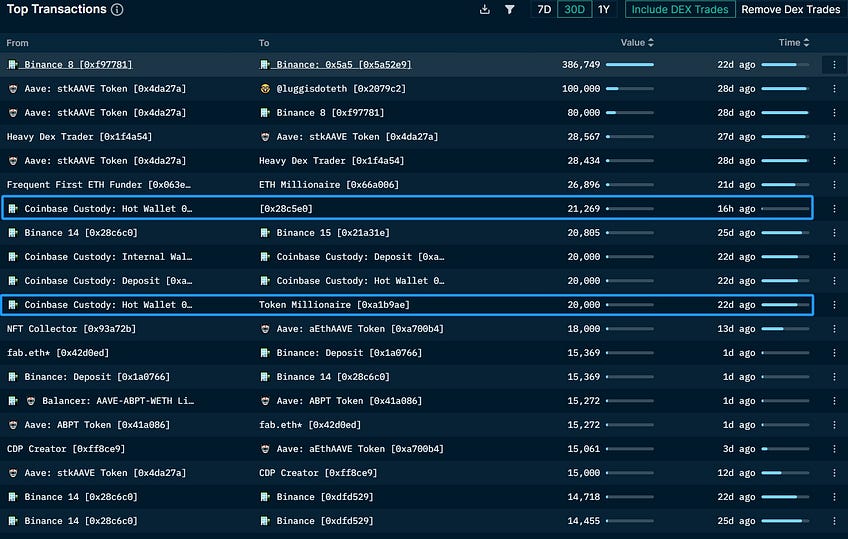
In terms of new positions opened over the past 30 days, there has been no significant accumulation activity. One notable anomaly occurred when AAVE staker @luggisdoeth redeemed 100,000 tokens worth approximately $6.38 million from Aave V2 on August 22. These tokens remain in the wallet without movement, warranting continued monitoring of this address.
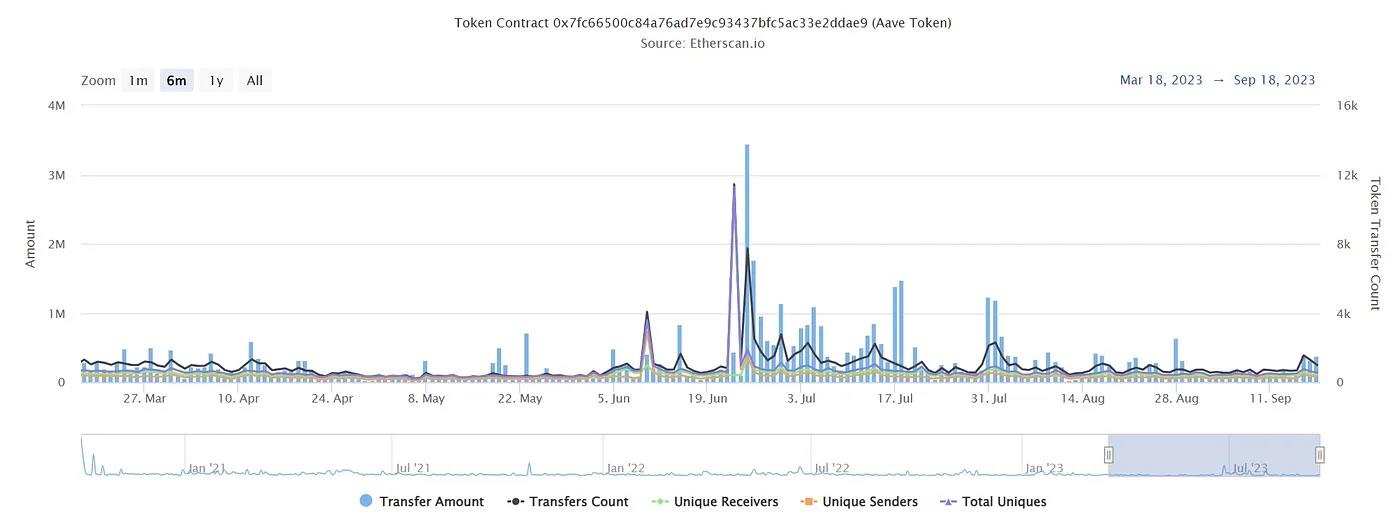
Looking at contract interactions over the past six months, the peak period of activity occurred between June 25 and July 18. During this time, news of Compound’s founder launching a new RWA project sparked market enthusiasm around RWAs, contributing to a recovery in AAVE’s token price, which reached a high of $81.
From a price trend perspective, AAVE is currently trading in a relatively low price range.
Conclusion
Aave is the leading on-chain lending project, with steady business growth. There has been no significant accumulation activity on-chain over the past 30 days, though one large holder initiated an unstaking event. The token is currently trading in a relatively low price range.
Join TechFlow official community to stay tuned
Telegram:https://t.me/TechFlowDaily
X (Twitter):https://x.com/TechFlowPost
X (Twitter) EN:https://x.com/BlockFlow_News
 Cycle Capital Research






